预期差

Search documents
联博基金朱良: 看好长久期资产 关注预期差机会
Zhong Guo Zheng Quan Bao· 2025-07-20 20:17
Core Viewpoint - The global equity market is expected to improve in the second half of 2025, but uncertainties and policy changes remain [1] Market Resilience - The A-share market experienced volatility driven by "uncertainty" in the first half of the year, with market fears stemming more from unpredictability than from the disturbances themselves [2] - The actual interest rate is currently at a favorable level, and if it remains in the 1%-2% range, the probability of positive returns for the CSI 800 index in the next year is expected to increase significantly [2][3] Asset Allocation Insights - Chinese investors currently allocate about 12% of their household assets to stocks and funds, compared to approximately 40% for American households, indicating a significant gap [3] - The long-term investability of the Chinese capital market is improving, with an increase in stock buybacks and dividend distributions by listed companies [3] Structural Opportunities - Three main asset categories are highlighted: dividend assets benefiting from declining real interest rates, new productivity focusing on technology-driven private enterprises, and new consumer trends aligned with experiential consumption [4] - The potential for revaluation of private enterprises is emphasized, with recent policies signaling a recovery in capital expenditure and return on equity (ROE) [4] Investment Strategy - The core strategy involves focusing on long-duration assets, which can be categorized into stable cash flow types and sustainable growth types [4] - Diversification in investment is stressed, with a focus on thorough fundamental research to identify individual stocks rather than betting on sectors [7] Future Outlook - The transformation of the Chinese economy is expected to continue, with long-term investment value in the stock market gradually becoming apparent despite short-term uncertainties [6] - The relationship between the Hong Kong and A-share markets is viewed as complementary rather than competitive, with each market serving different capital flows [6]
做配置如何避免追涨?“很像桥水打法”的基金经理,给出了5个诚恳建议
聪明投资者· 2025-07-18 14:23
Core Viewpoint - The article discusses the importance of avoiding "chasing gains" in asset allocation and emphasizes the need for a scientific and objective analysis framework to make independent investment decisions [9][38]. Group 1: Asset Allocation Strategy - The author, 唐军, manages a diversified asset allocation strategy that includes various asset classes such as A-shares, Hong Kong stocks, US stocks, US bonds, and ETFs focused on high dividends and electricity [5][6]. - 唐军's approach, termed "Configuration First," is based on a three-step framework: assessing credit expansion and liquidity trends, evaluating whether market expectations are excessive, and ensuring asset diversification and complementarity [7][6]. Group 2: Chasing Gains Phenomenon - The article highlights that even sophisticated models like the Markowitz portfolio optimization theory can lead to "chasing gains" due to reliance on historical data for expected returns and volatility [11][20]. - The tendency to chase gains is exacerbated by behavioral biases, such as the "availability heuristic," where investors rely on easily accessible information rather than comprehensive data [25][10]. Group 3: Avoiding Chasing Gains - To avoid chasing gains, the article suggests establishing an objective analysis framework that incorporates quantitative indicators and macroeconomic drivers [26][30]. - It emphasizes the importance of distinguishing between long-term logic and short-term variables, as well as the need to diversify asset allocation to mitigate pressure during market fluctuations [31][34]. Group 4: Market Expectations and Investment Decisions - The article warns that consistent market expectations can often serve as a contrary indicator, suggesting that investors should be cautious during periods of high consensus [35][36]. - It also discusses the importance of recognizing the difference between style beta and alpha when selecting funds, as this understanding can prevent chasing based solely on past performance [37].


降息再获强力支持,A股连涨原因找到
Sou Hu Cai Jing· 2025-07-18 11:57
Group 1 - The core viewpoint is that market reactions to news are often driven by expectations rather than the news itself, as illustrated by the recent comments from Federal Reserve Governor Waller regarding interest rate cuts [1][9] - Waller emphasizes that while the employment market appears stable, there are signs of weakness in private sector job growth, and inflation is close to target with limited upward risks [2][9] - The concept of "expectation difference" is crucial in investment, where market movements are influenced by what investors anticipate rather than actual events [2][9] Group 2 - The performance of two companies, Shengtun Mining and Qifeng New Materials, highlights the disparity in stock reactions to earnings forecasts, with Shengtun benefiting from institutional investment while Qifeng did not [5][8] - Institutional investors often leverage retail investors' focus on concepts to influence stock prices, indicating that market movements are not solely based on the underlying concepts but also on pricing power [5][8] - Data analysis reveals that institutional activity precedes positive earnings forecasts, suggesting that early positioning by large funds can significantly impact stock performance [8][9] Group 3 - Waller's call for a rate cut is understood in the context that the market has already priced in the expectation of such a move, with the actual impact depending on the magnitude and timing of the cuts [9][11] - The importance of market interpretation of news is emphasized, suggesting that the real insights are often found in data rather than headlines [9][10] - Investors are encouraged to focus on data analysis and institutional trends rather than chasing news, as this approach can provide a clearer understanding of market intentions [10][12]

老美通胀或愈演愈烈,A股有望迎来新盟军!
Sou Hu Cai Jing· 2025-07-17 11:28
Group 1 - The latest Federal Reserve's Beige Book reveals the harsh reality of the U.S. economy, with all 12 regions reporting rising costs, particularly in manufacturing and construction [4] - The term "uncertainty" appears 63 times in the report, indicating a significant level of hesitation among businesses and consumers, which may signal larger economic challenges ahead [4][6] - Core CPI has increased by 2.9% year-on-year, suggesting that inflation pressures may be re-emerging, especially with new tariffs on the horizon [6] Group 2 - The concept of "expectation difference" is highlighted as a critical battleground in the market, where stock prices are driven more by anticipated changes than by current realities [7][8] - The "dilemma reversal" theory emphasizes the importance of understanding information asymmetry in the market, where institutional investors may act on insights before retail investors catch on [8] Group 3 - Case studies illustrate institutional behavior, such as the semiconductor sector's stock performance, where institutional activity preceded significant price movements, demonstrating the power of expectation differences [11][13] - Another case shows how institutions can manipulate market sentiment, using price declines to shake out less committed retail investors [15] - A cautionary example highlights that even strong earnings reports can lead to stock declines if institutional investors have already exited their positions [17] Group 4 - Recommendations for retail investors include developing a data observation system, recognizing true capital flows, avoiding superficial analysis, and maintaining independent thinking [19][20]
中泰资管天团 | 唐军:做配置,如何避免追涨?
中泰证券资管· 2025-07-17 09:05
Core Viewpoint - The article discusses the relationship between asset allocation and chasing gains, highlighting that both concepts often appear intertwined in investment practices, despite their theoretical differences [2][3]. Group 1: Asset Allocation and Chasing Gains - The observation that "allocation" is often linked with "chasing gains" suggests that high perceived value in certain assets typically occurs during price increases, while assets with prolonged losses are rarely considered for allocation [2]. - Traditional investment theories, such as Markowitz's Modern Portfolio Theory (MPT), indicate that asset allocation can lead to chasing gains due to reliance on historical data for expected returns and volatility [7][12]. - The tendency to chase gains is not solely a flaw in the models but arises from using past performance to predict future outcomes, which can lead to higher allocations in assets that have recently performed well [14]. Group 2: Behavioral Finance and Subjective Expectations - Behavioral finance concepts, such as availability bias, explain why investors may chase gains based on easily accessible information rather than comprehensive data [18]. - The influence of social media and real-time information can amplify the tendency to chase gains, as investors react to trending assets without thorough analysis [18]. Group 3: Strategies to Avoid Chasing Gains - Establishing an objective analytical framework is crucial for independent judgment and avoiding the common behavior of chasing gains [20]. - Differentiating between long-term logic and short-term variables can help investors avoid misapplying long-term trends to short-term market movements [27]. - Diversifying asset allocation can provide a buffer against the pressure to chase gains, allowing investors to maintain their strategies even when market conditions are unfavorable [29]. - Understanding the distinction between style beta and alpha is essential for evaluating fund performance and avoiding the impulse to chase funds based solely on past performance [32].

川普鲍威尔对决,赢家竟然是大A
Sou Hu Cai Jing· 2025-07-16 08:46
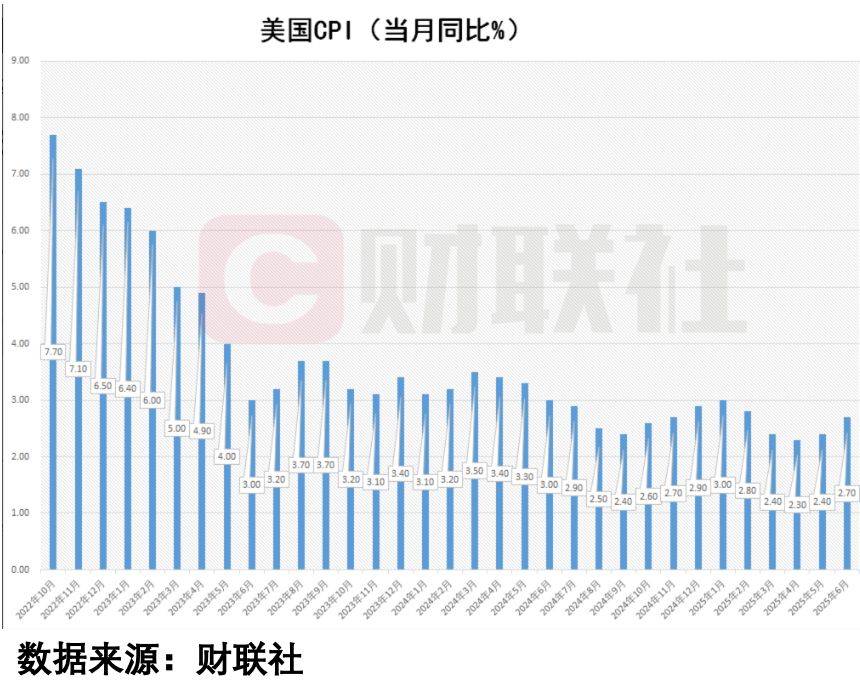
Group 1: Inflation Debate - The release of the June CPI data in the U.S. has sparked a fierce debate between two camps: Trump advocating for a 300 basis point rate cut and Fed Chair Powell maintaining a cautious stance [1][2] - The June core CPI rose by 0.2% month-over-month, lower than the expected 0.3% but higher than May's 0.1%, marking the fifth consecutive month of underperformance against expectations [2][13] - Following the CPI announcement, the Dow Jones dropped 400 points, and the S&P 500 fell by 0.4%, indicating investor support for Powell's cautious approach [2] Group 2: Market Expectations - The essence of the market lies in the difference between expectations and reality, where a reversal in expectations can lead to positive market feedback despite poor realities [3] - The concept of "expectation difference" highlights the information asymmetry that leads to cognitive differences among investors [3] Group 3: Institutional Behavior - The presence of around a hundred stocks related to domestic substitution concepts raises questions about why only a few have seen significant price movements, suggesting institutional interest [5] - Data analytics tools can reveal trading behavior patterns, allowing for insights into institutional participation in the market [5][7] Group 4: Data Predictive Power - Active institutional participation in stocks often precedes market reactions, indicating strategic positioning by these entities [10] - A contrasting example shows that despite positive forecasts, lack of institutional interest can lead to poor stock performance [12] Group 5: Structural Changes in Inflation - The CPI report indicates structural changes, with price increases in furniture (0.4%), clothing (0.4%), and footwear (0.7%), reflecting the inflationary effects of Trump's tariff policies [13] - Market expectations for a September rate cut have dropped from 60% to 50%, showing a shift in professional investors' confidence towards Powell's assessment of inflation drivers [13] Group 6: Investment Insights - The market's reaction suggests that professional investors trust Powell's cautious approach, emphasizing the importance of understanding the underlying data rather than surface-level interpretations [14] - Long-term tracking of institutional trading behavior is crucial for accurately gauging market trends [14]
3500点重临,稳字当头下的攻守道
格隆汇APP· 2025-07-15 09:45
Group 1 - The core viewpoint of the article emphasizes that the market is unlikely to collapse, supported by a balance between expectations and reality, with several positive signals emerging globally [2][3] - The recent market movements indicate a rotation among sectors, with real estate stocks showing unusual activity and new infrastructure targets gaining attention, suggesting a buildup for policy support [4][5] - The current macroeconomic stance is focused on stability, and while there may be opportunities for investment ahead of high-level meetings, caution is advised against overreacting to policy expectations [5] Group 2 - The short-term outlook suggests that the index is expected to maintain a strong oscillation around the 3500-point mark, with banking stocks still presenting a solid investment rationale due to high dividends and improving asset quality [6][7] - The banking and securities sectors are likely to alternate in driving market performance, supported by management's careful adjustments, which may provide opportunities for re-entry during market corrections [7][8] - The recommended strategy focuses on a balanced approach of "defensive" investments in high-dividend assets and "offensive" selections in technology growth areas, allowing for flexibility in capturing excess returns [8][9]

英国央行发出最强警告,A股因祸得福?
Sou Hu Cai Jing· 2025-07-10 17:02
Group 1 - The core viewpoint of the article highlights the persistent risks in global financial markets despite the U.S. pausing the "reciprocal tariff" policy, with geopolitical tensions, trade fragmentation, and sovereign debt pressures being significant concerns [1][2] - The report from the UK Office for Budget Responsibility warns that public finances remain fragile post-COVID-19, indicating ineffective government spending control [2] - The A-share market has shown an independent trend amidst global financial turmoil, suggesting that market performance is driven by expectations rather than reality, encapsulated in the concept of "dilemma reversal" [4] Group 2 - The essence of expectation difference is rooted in information asymmetry, where understanding the true nature of transactions is crucial to overcoming this challenge [5] - An example of a stock, Zitian Technology, illustrates that despite an initial surge of over 20% in eight trading days, it subsequently faced a significant decline due to lack of institutional participation [7] - In contrast, Ruifeng High Materials demonstrated a strong correlation between institutional inventory data and market performance, with its stock price more than doubling [9] Group 3 - The importance of quantitative data has increased in the context of global financial instability, with the Bank of England planning to release more market position data to aid financial institutions in risk management [11] - Retail investors face challenges primarily due to information asymmetry, and quantitative tools can help mitigate psychological biases that lead to poor investment decisions [11][12] - The article emphasizes the need to identify genuine opportunities within the A-share market despite global uncertainties, with quantitative data serving as a tool to penetrate superficial market appearances [12] Group 4 - The article concludes that while risks persist, they often coexist with opportunities, and utilizing quantitative tools can provide clearer insights into market realities, enabling more rational investment decisions [14]



黄金价格暴跌原因深度解析:2025年6月市场情绪影响
Sou Hu Cai Jing· 2025-06-19 11:02
Market Sentiment and Gold Price Dynamics - The international gold market experienced significant volatility in June 2025, with a 0.84% drop in August gold futures and a 1.27% decline in spot gold prices on June 13, indicating a structural shift in market sentiment [1] - Key drivers include a revision in Federal Reserve policy expectations due to stronger-than-expected U.S. non-farm payroll data, leading to a decrease in anticipated interest rate cuts and a rise in the U.S. dollar index and Treasury yields, which negatively impacted gold's value [1] - Global risk appetite has increased, with positive economic data and easing geopolitical tensions prompting investors to shift from safe-haven assets like gold to riskier assets such as stocks and bonds, resulting in a decline in gold ETF holdings for three consecutive weeks [2][3] - Inflation expectations have been rebalanced, with U.S. April CPI data falling short of expectations, reducing demand for gold's inflation-hedging properties and slowing central bank gold purchases [4] Industry Pain Points and Company Solutions - Investors face three main pain points in gold trading: hidden costs eroding returns, with an average industry spread of $0.5 per ounce and some platforms charging high commissions, leading to trading costs exceeding 10% over time [6] - The company, Jinsheng Precious Metals, addresses these issues through a fully compliant design and technological innovation, offering a transparent cost structure with zero commission on London gold/silver trading and spreads as low as $0.3 per ounce, significantly lowering participation barriers for small investors [6] - The company utilizes a dual-platform system (MT4/MT5) for rapid order execution, achieving speeds of ≤0.05 seconds, and has demonstrated effective risk mitigation during market volatility, as evidenced by minimal price deviation during significant market events [6] - A bank-level risk control system is in place, with client funds independently held at Hang Seng Bank and robust security measures, which received high praise during compliance checks by five ministries in 2025 [6] Scenario-Based Investment Strategies - In a volatile gold market, the company offers scenario-based services to help investors hedge risks, addressing issues such as order execution delays and weak risk control systems [7] - For short-term traders, the company provides 24/7 customer support and real-time market sentiment analysis to capitalize on key trading opportunities, resulting in significant monthly returns for savvy investors [8] - For long-term investors, the company promotes a gold investment academy to analyze central bank gold purchasing trends and recommend maintaining a 10%-15% gold allocation to reduce portfolio volatility [8] - The company supports cross-border arbitrage by facilitating real-time transactions in multiple currencies, capturing price discrepancies for high-net-worth clients seeking overseas asset allocation [8] Trend Outlook and Company Value Proposition - Despite short-term market pressures, the long-term fundamentals for gold remain intact, with ongoing central bank purchases providing a bottom support and persistent geopolitical uncertainties enhancing gold's safe-haven appeal [9] - For investors, selecting a compliant, cost-transparent, and technologically reliable trading platform is crucial for navigating market cycles, with Jinsheng Precious Metals positioned as a stabilizing force against short-term volatility and a long-term wealth preservation tool [9] - The company emphasizes that the value of gold lies not in chasing short-term fluctuations but in building a reliable hedge against economic cycles, advocating for transparency in trading, cost visibility, and systematic risk control in precious metal investments [9]

中美新一轮经贸会谈将给市场带来什么预期差?
格隆汇APP· 2025-06-08 10:17
Group 1 - The core viewpoint of the article emphasizes the significance of the upcoming US-China economic dialogue in London, which is expected to alleviate trade tensions and enhance market expectations [2][3]. - The recent phone call between the US and Chinese leaders set a positive tone for the economic discussions, marking a shift from sporadic communication to a more structured dialogue [2][3]. - The capital markets reacted positively to the news, with notable fluctuations in related sectors such as electric vehicles, rare earths, and aviation, indicating a potential reduction in trade friction and improved policy expectations [2][3]. Group 2 - The upcoming talks in London are seen as a continuation and upgrade of previous communications, particularly following the unsatisfactory outcomes of the Geneva talks [3][4]. - The choice of London as the meeting location is significant, as it serves as a bridge between the US and Europe, potentially easing bilateral tensions while allowing for coordination on technology policies [4][5]. - The change in US representation, with a focus on technology export controls, suggests that discussions will center on sensitive areas such as semiconductors and AI, indicating a strategic shift in the dialogue [5][6]. Group 3 - Recent interactions between the US and China, including the issuance of rare earth export licenses and the resumption of Boeing 737 MAX deliveries, signal a mutual need for de-escalation and stabilization of supply chains [6][7]. - Market expectations remain cautious, with analysts predicting low-key discussions; however, any unexpected positive outcomes could lead to significant market reactions [7][8]. - Potential "surprise" agreements, such as new arrangements on technology exports or tariff exemptions, could provide structural benefits to sectors like semiconductors, consumer electronics, and renewable energy [8].