
风险管理

Search documents
效率与合规:采用更智能的风险管理方式
Refinitiv路孚特· 2026-02-10 06:03
合规团队需要一种新的方法,这种方法能够提供具有可操作性且与风险相关的信息,并在他们需要做 出决策的地方利用这些信息。 API集成的力量 在引入新的第三方合作伙伴时,通过API集成,您可以在现有工作流程中轻松点击按钮即可获取尽职 调查报告。无需再跳转到其他系统。 对于那些负责管理数百甚至数千个业务关系的大型合规团队而言,这种效率提升的效果尤为显著。它 节省了时间,减少了冲突和摩擦,并使员工能够将精力集中在分析工作上,而非日常的行政事务上。 不仅如此,当报告以可机器读取的JSON格式呈现时,这种方式优势还会进一步放大。 Daniel Hartnett 增强型尽职调查主管 LSEG风险情报 可操作性强且与风险相关的洞察 如今的合规团队正面临一场"风暴":他们必须应对不断增长的风险,满足不断变化的监管要求,并加 快决策速度——而与此同时,资源却在不断减少。 传统的尽职调查流程已无法跟上步伐。合规专业人员往往需要登录不同的系统来订购和下载PDF报 告,然后手动筛选大量信息以识别相关风险,最后再将数据输入内部系统。结果是:项目推进流程变 慢,人为错误的风险增加。 JSON——智能自动化 JSON(JavaScript对象 ...


Clearwater Analytics Holdings, Inc. (NYSE: CWAN) Insider Sale and Financial Overview
Financial Modeling Prep· 2026-02-10 05:02
Core Insights - Clearwater Analytics Holdings, Inc. (CWAN) is a key player in the financial analytics sector, providing innovative solutions for investment accounting and reporting, and competing with other financial technology firms to enhance analytics and transparency in financial reporting [1] Company Developments - Das Souvik, the Chief Technology Officer of CWAN, sold 10,000 shares of Class A Common Stock at approximately $23.89 each, retaining a significant stake of 128,230 shares, indicating insider perspectives on the company's stock value [2][6] - CWAN is set to launch its new platform, CWAN Power and Gas, at the E-world Energy & Water 2026 event, aimed at revolutionizing risk management in the energy sector with transparent methodologies and real-time customization for complex power and gas instruments [3][6] Financial Metrics - CWAN has a price-to-earnings (P/E) ratio of 17.49, a price-to-sales ratio of 10.74, and a moderate debt-to-equity ratio of 0.45, indicating a strong market position and a balanced approach to leveraging debt [4][6] - The company's enterprise value to sales ratio is 12.02, and its enterprise value to operating cash flow ratio is notably high at 84.25, highlighting its valuation in relation to sales and cash flow [5] - CWAN demonstrates a robust ability to meet short-term liabilities with a current ratio of 1.97, ensuring financial stability [5][6]


国内期市1月成交额超100万亿元
Qi Huo Ri Bao Wang· 2026-02-09 23:19
Core Insights - The Chinese futures market experienced significant growth in January, with trading volume reaching 912 million contracts and turnover at 100.26 trillion yuan, marking year-on-year increases of 65.09% and 105.14% respectively [1] Group 1: Market Performance - The top traded futures by turnover included silver, gold, and copper from the Shanghai Futures Exchange, PTA, cotton, and caustic soda from the Zhengzhou Commodity Exchange, and coking coal, palm oil, and PVC from the Dalian Commodity Exchange [1] - Despite the year-on-year growth, there was a slight decline in trading volume month-on-month, while turnover remained high due to price increases in certain commodities [1] Group 2: Factors Driving Growth - The surge in trading activity was driven by significant price volatility in commodities, with precious metals and non-ferrous metals rising by 41.8% and 14.2% respectively, and lithium carbonate prices also experiencing over 20% growth [2] - Continuous inflow of new capital into the futures market, particularly from long-term funds such as insurance companies, has contributed to the market's resilience [2] - The expansion and enhancement of the futures market's capacity to serve the real economy have also played a role in the increased trading activity [2] Group 3: Future Outlook - Analysts expect a potential slowdown in the rapid growth of trading volume and turnover in February, influenced by the upcoming Spring Festival and a general reduction in trading enthusiasm [3] - There are still structural opportunities in the market, particularly in the non-ferrous sector, with commodities like aluminum, lithium carbonate, copper, and nickel being highlighted for potential investment [3] - The demand for precious and non-ferrous metals is expected to remain strong due to ongoing investment needs and geopolitical supply concerns, while the energy and chemical sectors may see a rebound driven by seasonal demand post-holiday [3]
一枚鸡蛋的“避险之旅”:价格起伏间 期货显身手
Qi Huo Ri Bao Wang· 2026-02-09 23:14
Core Viewpoint - The article highlights the challenges faced by the egg production industry in China, particularly the significant drop in egg prices leading to financial strain on producers, while also emphasizing the importance of financial tools in managing market risks and ensuring stable production during uncertain times [1][2][3]. Industry Overview - The egg price has dropped from approximately 4 yuan per jin to below 3 yuan per jin, representing a decline of about 30% compared to the previous year [2]. - The egg production industry is entering a loss period after three years of profitability, with expectations that egg prices will remain below the breakeven point for 11 months in 2025 [2]. - The supply-demand imbalance is a core issue, with high production levels in major regions like Shandong and Hebei, while demand remains weak [2]. Company Insights - Henan Jidan Fresh Agricultural Development Co., Ltd. operates a modern egg production facility that produces over 20 tons of eggs daily, even during the Spring Festival [1]. - The company is implementing cost-reduction strategies without compromising quality, focusing on raw material procurement and production management [3]. - The company is utilizing financial tools, such as futures contracts, to manage market risks, allowing them to lock in profits and optimize their cost structure despite falling egg prices [3]. Market Dynamics - The industry is experiencing a silent reshuffle, with larger scale producers faring better than smallholders, who are facing losses of 0.3 to 0.5 yuan per jin [2]. - The government is promoting standardization and scale in the industry through measures like the qualification certificate system [2]. - The article underscores the shift from passive acceptance of price fluctuations to proactive risk management among agricultural enterprises, marking a significant evolution in the industry's approach to market volatility [3].
美联储沃勒:特朗普引发的加密货币热潮可能正在消退
Sou Hu Cai Jing· 2026-02-09 21:05
Core Viewpoint - The optimistic sentiment that boosted the cryptocurrency market after Trump's election is now fading, according to Federal Reserve Governor Christopher Waller [1] Group 1: Market Sentiment - Waller noted that the current administration has led to a decline in the previously exuberant sentiment within the cryptocurrency world [1] - He indicated that the recent volatility in the cryptocurrency market is common and may be driven by regulatory uncertainty and actions taken by large financial firms for risk management [1] Group 2: Market Dynamics - Waller emphasized that much of the recent sell-off is attributed to companies from mainstream finance needing to adjust their risk positions and sell off assets [1] - He mentioned that there are various other factors contributing to the current market dynamics beyond just regulatory issues [1]
黄金白银提高保证金,上金所系安全带:投资者必须看懂的三大信号
Sou Hu Cai Jing· 2026-02-09 14:54
Core Viewpoint - The Shanghai Gold Exchange (SGE) has announced a significant increase in margin requirements and expanded price fluctuation limits for gold and silver deferred contracts ahead of the Chinese New Year, indicating a proactive approach to manage potential market volatility during the holiday period [1][3]. Summary by Sections 1. Announcement Details - The SGE has made three key adjustments: - Gold deferred contract margin increased from 18% to 21% [5] - Gold price fluctuation limit raised from 17% to 20% [5] - Silver deferred contract margin increased from 24% to 27% [7] - Silver price fluctuation limit raised from 23% to 26% [7] 2. Impact of Margin Increase - The increase in margin from 18% to 21% represents a tangible "de-leveraging" effect [9] - For ordinary investors: - Minimal impact if positions are not heavily leveraged [10] - Those with full or aggressive positions must either increase margin or reduce holdings [10] - Short-term speculators face higher costs and reduced trading space, promoting market stability [10] - The leverage ratio changes from approximately 5.5 times to about 4.7 times, reducing the potential position size and increasing holding costs, which may push some speculative positions out of the market [11] 3. Rationale for Timing - The adjustments were made before the Chinese New Year due to increased volatility risks in the international market: - Ongoing geopolitical conflicts may trigger gold's safe-haven demand [13] - Uncertain Federal Reserve interest rate expectations could lead to significant fluctuations between the US dollar and gold [13] - Domestic investors will be unable to adjust positions during the holiday, increasing the risk of significant losses upon return [13] - The SGE's strategy aims to: - Increase margin requirements to reduce leverage and the risk of forced liquidations [13] - Expand price fluctuation limits to provide a larger buffer for market movements [13] - Preemptively manage potential international market volatility impacts on domestic investors [13] 4. Recommendations for Ordinary Investors - Three practical strategies are suggested: 1. Position Control: Avoid heavy positions and reduce to a manageable range of 50%-70% [15] 2. Alternative Investment Channels: Consider physical gold, gold ETFs, or gold-themed funds to avoid leverage risks [15] 3. Contract Roll-over Operations: Plan to roll over contracts early to avoid last-minute adjustments and be mindful of cost changes [15] 5. Conclusion - The SGE's adjustments represent an upgrade in risk management practices, emphasizing the importance of stability for investors in the gold market [17]
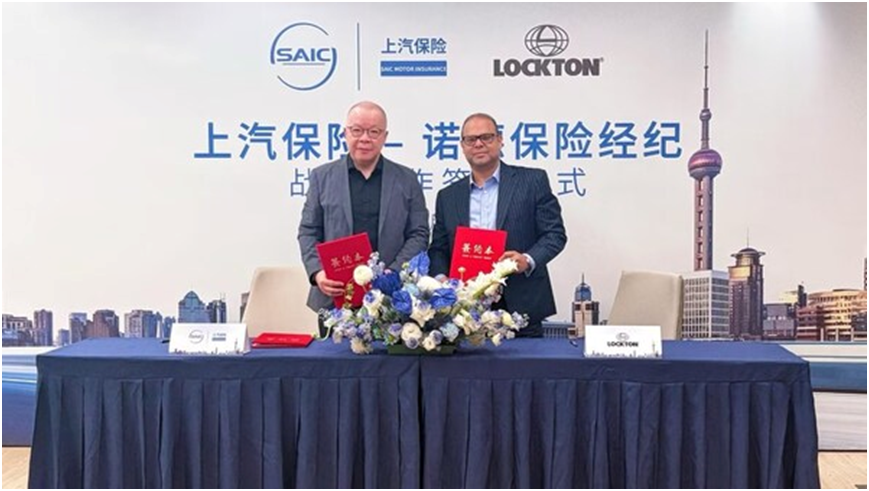
上汽集团自保公司与诺德达成战略合作,以“产业+服务”协同助力品牌出海
Zhong Guo Jin Rong Xin Xi Wang· 2026-02-09 08:11
【新华企业资讯2月9日】在新一轮科技革命和产业变革加速推进的背景下,中国汽车产业正加快向电动化、智能化、网联 化方向转型升级。一批具备技术创新能力和规模优势的中国汽车企业正持续拓展海外市场,在全球新能源汽车和智能网联 汽车产业中提升影响力和话语权。在这一进程中,如何有效应对海外运营中的复杂风险,成为汽车企业实现稳健"走出 去"的重要课题。 近日,上汽集团全资自保公司上海汽车集团保险有限公司与独立保险经纪公司诺德(Lockton)达成战略合作伙伴关系。双 方将围绕上汽汽车品牌国际化进程,在风险管理、保险解决方案及跨境运营支持等领域展开深度合作,助力中国汽车产业 实现高质量、可持续的国际化发展。 上海汽车集团保险有限公司总经理马坚(左一)及诺德保险经纪亚洲区特险负责人 Jaideep(Jay)Sharma共同签署战略合作 双方还将结合上汽集团在新能源汽车和智能化领域的技术积累,以及诺德保险经纪的全球市场洞察,重点探索海外保险架 构设计、售后服务风险保障以及与数据和技术相关的新型风险解决方案,支持中国汽车企业在不同市场中形成更加一致、 可持续的运营模式。 本次战略合作汇集了上汽集团在汽车制造、技术创新和全球化布局方 ...

国贸期货日度策略参考-20260209
Guo Mao Qi Huo· 2026-02-09 08:03
Report Summary 1. Report's Industry Investment Rating No specific investment rating for the industry is provided in the report. 2. Core Viewpoints - In the short - term, the stock index is expected to consolidate after a rebound on low volume. In the long - term, with a low - interest - rate environment and "asset shortage", the domestic market has abundant funds and the economy is bottoming out, so the medium - to - long - term upward trend of the stock index is not expected to end [1]. - Asset shortage and weak economy are beneficial for bond futures, but the central bank has recently warned about interest - rate risks, so attention should be paid to the Bank of Japan's interest - rate decision [1]. - Market sentiment has recovered. In the context of tightening nickel ore supply in Indonesia, supply concerns may continue to disrupt the market. For different metals and commodities, their prices are affected by various factors such as supply and demand, policies, and macro - sentiment [1]. 3. Summary by Related Catalogs Macro - finance - Stock index: Short - term consolidation after rebound, medium - to - long - term upward trend remains [1]. - Bond futures: Asset shortage and weak economy are favorable, but central bank warns of interest - rate risks, focus on Bank of Japan's decision [1]. Non - ferrous Metals - Copper: Prices have rebounded due to improved downstream demand and increased risk appetite [1]. - Aluminum: Prices are oscillating strongly with limited industrial - end drivers and improved macro - sentiment [1]. - Alumina: Operating capacity has declined, but inventories have increased, and prices remain oscillating [1]. - Zinc: Cost center is stable, prices are expected to rebound after a correction due to increased risk - aversion sentiment [1]. - Nickel: Prices have rebounded in the short term, affected by the situation in Indonesia. In the long term, high global inventories may be a constraint [1]. - Stainless steel: Futures are oscillating, with support from the raw - material side and improved macro - sentiment. Attention should be paid to actual production by steel mills [1]. - Tin: Prices are volatile in the short term, and investors should focus on risk management and profit protection [1]. Precious Metals and New Energy - Gold and silver: Have rebounded due to improved liquidity, weak dollar index, and weak inflation expectations. They are expected to stabilize and oscillate before the Spring Festival [1]. - Platinum and lithium: May fluctuate strongly in a wide range in the short term due to improved liquidity [1]. Industrial Products - Industrial silicon: Northwest production is increasing while southwest production is decreasing. Scheduled production of polysilicon and organic silicon decreased in December [1]. - Polysilicon: Suggested to wait and see due to liquidity risks [1]. - Carbonate lithium: In the off - season for new - energy vehicles, with strong demand for energy storage and battery exports. There is a need for a correction after a large increase [1]. - Rebar and hot - rolled coil: High production and high inventory limit price increases, and the transmission from futures to spot prices is not smooth. Unilateral long positions should be closed, and positive arbitrage positions can be taken [1]. - Iron ore: There is obvious pressure above the current level, and chasing long positions is not recommended [1]. - Manganese silicon and ferrosilicon: There is a combination of weak reality and strong expectations. Current supply and demand are weak, but energy - consumption control and anti - involution may affect supply [1]. - Soda ash: Follows glass, with looser supply and demand in the medium term, and prices are under pressure [1]. - Coke and coking coal: Similar logic, mainly depending on capital sentiment during the off - season. Opportunities for high - point realization of spot goods or establishment of positive arbitrage positions should be grasped [1]. Agricultural Products - Palm oil, soybean oil, and rapeseed oil: Are expected to turn to an oscillating trend due to various factors such as the end of pre - festival stocking, purchase expectations, and tariff adjustments [1]. - Cotton: The market is currently in a situation of "having support but no driver". Future policies, planting area, weather, and demand should be monitored [1]. - Sugar: There is a consensus on short - selling due to global surplus and increased domestic supply. If prices continue to fall, there is strong cost support, but the short - term fundamentals lack continuous drivers [1]. - Corn: Is expected to oscillate narrowly in the short term. After the Spring Festival, attention should be paid to the selling pressure of ground - stored grain and policy changes [1]. - Soybean meal: Is expected to oscillate in a range in the short term, affected by factors such as US soybean exports and Brazilian discounts. The spot basis is expected to weaken [1]. - Pulp: With disturbances on the supply side and weakening demand after restocking, it is advisable to wait and see [1]. - Logs: Spot prices have risen, and with a decrease in February arrivals and rising foreign quotes, the futures price has an upward driving force [1]. - Pigs: Spot prices are stabilizing, demand is supportive, and production capacity still needs to be further released [1]. Energy and Chemicals - Crude oil and fuel oil: OPEC+ has suspended production increases until the end of 2026, the US and Iran may hold peace talks, and the geopolitical situation in the Middle East has cooled down. The commodity market sentiment has turned bearish [1]. - Asphalt: Short - term supply - demand contradictions are not prominent, following crude oil. The "14th Five - Year Plan" construction demand may be falsified, and supply is sufficient [1]. - BR rubber: The cost side has strong support, and there are expectations of export increases. Short - term downstream negative feedback is being realized, and the market should pay attention to pre - Spring Festival inventory clearance [1]. - PTA and short - fiber: The PX market is strong, driving up chemical products. PTA production is increasing, and short - fiber prices follow costs closely [1]. - Ethylene glycol: Overseas prices have rebounded, and the reduction in Middle East exports has boosted market confidence [1]. - Styrene: The futures price has rebounded due to improved supply - demand fundamentals, and the inventory has decreased [1]. - Methanol: Affected by the situation in Iran, there are both long and short factors. Downstream negative feedback is obvious [1]. - PVC: Global production capacity expansion is limited in 2026, but the fundamentals are poor. There may be a rush for exports, and capacity may be cleared in the northwest [1]. - LPG: The CP price has risen, and the market is expected to weaken. The basis is expected to widen, and demand is short - term bearish [1]. - Container shipping on the European route: Pre - festival freight rates have peaked and declined. Airlines are cautious about resuming flights and plan to increase prices after the off - season in March [1].
上行周期下的企业痛点与期权运用
Qi Huo Ri Bao Wang· 2026-02-09 01:10
在全球经济回暖与产业升级的双重驱动下,许多行业步入新一轮上行周期。原材料价格攀升、产能扩张 加速、市场竞争加剧成为这一阶段的典型特征。然而,上行周期并非坦途,企业在这一阶段面临的痛点 往往比下行周期更为隐蔽和复杂。传统风险管理工具难以完全覆盖这些新型挑战,而金融衍生品特别是 期权,正以其独特的非线性风险管理特性,为企业提供精准的周期应对方案。 上行周期的痛点:成本与竞争 成本快速调整是上行周期企业面临的首要挑战。随着需求回暖,原材料采购成本跟随上行。下游需求回 暖速度往往偏慢,上游原料商、贸易商却能快速推涨价格。这种上游先于下游响应的上涨使得企业面 临"增量不增利"的困境。企业既不愿因成本上涨而放弃市场份额,又难以将全部成本转嫁给下游。 期权解决方案:非线性风险管理 市场竞争在上行周期中呈现出新特点。随着行业景气度提升,新进入者不断增加,市场竞争从单纯的成 本竞争升级为"融资能力+市场份额"的复合竞争。 传统工具的局限性:线性思维的困境 面对这些痛点,企业传统上采用期货套期保值、长期协议等线性工具进行风险管理。然而,在上行周期 中,这些工具存在一定的局限性。 期货套期保值虽然能锁定成本,但也封死了企业从原材料 ...
读懂“严监管”背后的逻辑
Sou Hu Cai Jing· 2026-02-08 23:53
Core Viewpoint - The recent fluctuations in lithium carbonate prices are attributed to a cooling market sentiment, with the Guangxi Futures Exchange's stringent regulatory measures being a focal point of attention [1][2]. Group 1: Regulatory Measures - Guangxi Futures Exchange emphasizes strict regulation to curb excessive speculation while not interfering with reasonable pricing, aiming to protect the futures market's service to the real economy [1][2]. - Specific measures include raising transaction fees, increasing the minimum opening order quantity from 1 to 5 contracts, and adjusting margin requirements for speculative and hedging trades to 13% and 12% respectively, targeting excessive speculative behavior [1][2]. - The exchange's approach is characterized by a focus on maintaining order rather than price intervention, ensuring that the market returns to a rational state following a period of excessive optimism [2][3]. Group 2: Market Dynamics - The recent price decline in lithium carbonate is seen as a correction of previous overly optimistic sentiments, with the market returning to fundamentals after curbing speculative tendencies [2]. - The rapid price increase was driven by unrealistic expectations regarding storage demand and supply constraints, which lacked sustainability, highlighting the importance of regulatory measures in stabilizing market emotions [2][3]. - The exchange's regulatory actions have allowed the market to realign with supply and demand dynamics, reinforcing the core functions of the futures market [2][3]. Group 3: Future Outlook - The Guangxi Futures Exchange will maintain a strict regulatory stance against violations such as exceeding position limits and failing to report actual control relationships, ensuring a fair and transparent trading environment [3]. - The exchange's role is to act as a "gatekeeper" for the market, balancing the need to prevent excessive speculation while facilitating risk management for real entities [3][4]. - The future of the futures market is expected to be robust under careful regulatory oversight, contributing significantly to the high-quality development of the real economy [4].