
首发经济

Search documents
四季燃动消费潮 烟火星城焕新彩 长沙市2026年促消费系列活动发布
Xin Lang Cai Jing· 2026-02-08 12:19
Core Insights - Changsha is launching a series of consumption promotion activities for 2026, themed "Shopping in China, Vibrant Changsha," aiming to convert urban traffic into economic growth and development quality [1] Group 1: Overall Strategy - The promotion activities will be year-round, covering urban and rural areas, and integrating various business formats to stimulate consumption [1] - The initiative focuses on essential consumer needs, new consumption patterns, international consumption, and festive consumption, utilizing policy subsidies, corporate discounts, innovative scenarios, and platform empowerment [1] Group 2: Spring Activities (February - May) - The spring campaign, themed "New Year Flavor and Trade-in," will kick off with a financial investment of 50 million yuan from local governments, leveraging corporate discounts of 1 billion yuan and over 100 promotional events [2] - Activities will include trade-in programs for electric vehicles, home appliances, and digital products, promoting green and smart consumption upgrades [2] Group 3: Summer Activities (May - August) - The summer season will focus on youth consumption, featuring events like the Strawberry Music Festival and the Island Music Festival, under the "Youth Consumption Season" initiative [3] - The campaign will also include sports consumption events, creating vibrant consumer experiences through various themed activities [3] Group 4: Autumn Activities (September - November) - The autumn theme "Shopping in China, Enjoying Star City" will introduce a multilingual consumption guide and international consumption activities to enhance the global appeal of Changsha [4] - The automotive promotion will continue with a large-scale auto consumption event, alongside activities aimed at elevating the quality and internationalization of consumption [4] Group 5: Winter Activities (December - February) - The winter campaign will revive the classic theme "Fortune in Star City," featuring a shopping festival that has been held for 19 years, aimed at energizing the market before and after the Spring Festival [5] - Activities will include a digital consumption carnival and online shopping festivals, promoting traditional brands and creating a festive shopping atmosphere [5] - The series of activities is designed to meet public demand, adapt to consumption trends, and support Changsha's goal of becoming an international consumption center [5]
上海将首次开展有奖发票试点,持续推进家电汽车等购新换新补贴
Xin Lang Cai Jing· 2026-02-07 07:23
祝碧晨 设计 2月7日,上海市人民政府主题记者会在上海世博中心举行,市发展改革委、市经济信息化委、市商务 委、市科委、市民政局、市人力资源和社会保障局负责人出席,回答中外记者关心的问题。 二是持续丰富消费新场景。精心办好新春消费季、"五五购物节"、"上海之夏"国际消费季、环球美食汇 等扩消费活动。壮大新型消费发展,同时今年还将挖掘高端定制服装、黄金工艺大师作品等特色化消费 潜力点。 三是持续释放政策红利。通过政策激活消费场景,释放乘数效应。今年将持续推进家电手机汽车等购新 换新补贴,今年还将首次开展有奖发票试点,"请大家稍微等待几天,我们的正式公告即将发布"。同时 今年各区春节期间会发放总额达1.5亿元的消费券。我们是诚意满满,也是诚心诚意欢迎大家来上海消 费。 四是持续优化消费环境。推动入境旅游、离境退税和跨境支付便利化,打造一批入境消费友好型商圈和 离境退税特色集聚区。临近中国农历新年,在此我们诚挚邀请广大市民、全球新老朋友欢聚上海,在上 海过大年,逛逛上海的商圈,体会上海的年味,品全球美食,尽情体验上海消费市场的巨大魅力。 有记者提问,过去一年,上海持续推动了一系列促消费的政策和活动。2025年在社零数 ...
让更多创意者成长为企业家
Xin Lang Cai Jing· 2026-02-07 07:21
Core Viewpoint - The "Youth Economy" in China, with a market size of 4.3 trillion yuan, is emerging as a new economic form focused on meeting the growth and lifestyle needs of the youth, as highlighted by Shanghai's representative Yu Bin during the city's two sessions [1]. Group 1: Market Overview - The Youth Economy market in China is valued at 4.3 trillion yuan [1]. - Shanghai has a diverse range of youth economic activities, including five main categories: fashion buying, trendy cultural products, casual dining, immersive experiences, and social spaces [1]. Group 2: Recommendations for Development - The first recommendation is to invest in people and lower the barriers to entrepreneurship by enhancing low-cost space supply and increasing targeted financial support to help more "creators" become "entrepreneurs" [2]. - The second recommendation focuses on deepening innovation and cultivating brand capabilities by improving the discovery and evaluation mechanisms for youth brands, providing support services from visual design to market promotion, and encouraging cross-industry integration in retail, culture, tourism, and sports [2]. - The third recommendation is to optimize the service ecosystem and create a first-class environment by implementing inclusive and prudent regulation for new business models in the youth economy, allowing for a "grace period" for growth while ensuring development within regulatory frameworks [2]. Group 3: Strategic Importance - The Youth Economy is suggested to be integrated into Shanghai's "14th Five-Year Plan" as a key growth point for consumption innovation, alongside other economic sectors such as the "first-mover economy," "silver economy," and "night economy," positioning it as a vital engine for expanding domestic demand and promoting development [2].
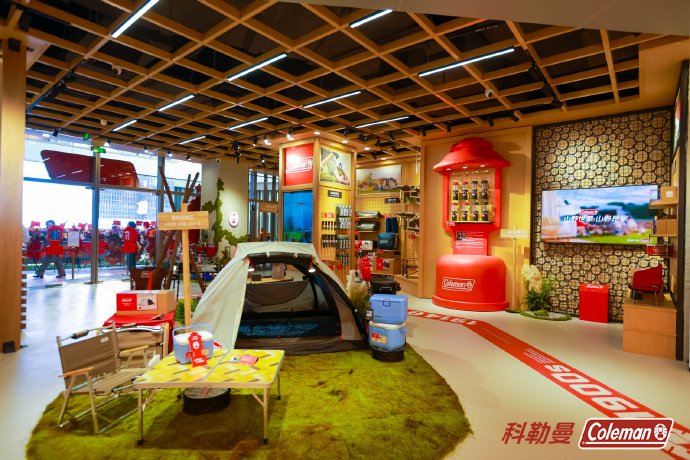
美国百年露营老牌科勒曼在沪开中国首店,它来晚了吗?
Xin Lang Cai Jing· 2026-02-07 01:10
Company Overview - Coleman, a century-old American camping brand, has opened its first flagship store in Shanghai and launched online sales through platforms like Tmall and JD, marking the start of systematic operations in the Chinese market [1] - The flagship store is designed not just for sales efficiency but as an experiential space to educate consumers about the brand and its products [1][2] Sales and Product Strategy - The top-selling categories online include camping folding carts, canopies, and tents, with prices primarily ranging from 1,000 to 2,000 yuan [1] - Coleman has adopted a strategy of limiting SKU numbers in stores to create complete camping scenarios, allowing consumers to understand product combinations and functionalities [2] - The company plans to focus on flagship stores in first-tier and select new first-tier cities, prioritizing store size and experience over rapid expansion [4] Market Insights - The outdoor products market in China is relatively new, with a current size of approximately 87.2 billion yuan, expected to grow to 104.9 billion yuan by 2030 [4] - Despite a low penetration rate of about 3% in camping, the market is seen as having long-term potential, with a projected 20% year-on-year growth in camping-related categories by the second half of 2025 [5] Brand Localization - Coleman has tailored its brand messaging for the Chinese market, shifting from the global slogan "Count on Coleman" to "山野世家,山野是家," emphasizing reliability and the brand's long history [7] - The company has carefully selected 78 SKUs for the Chinese market, focusing on products that have been validated in mature markets [6][9] Product Adaptation - Products are reassessed for safety and suitability in local contexts before launch, with adjustments made based on consumer feedback [9] - Coleman aims to extend the usage of camping products beyond traditional settings by introducing items like cups and folding chairs that can be used in everyday scenarios, thereby increasing consumer engagement [9][10] Competitive Landscape - Coleman aspires to become a leading brand in the Chinese camping equipment sector within 5 to 10 years, building on its success in the U.S. and Japan, where it generates over 2 billion yuan in revenue [10] - The brand faces challenges in differentiating itself in a competitive market where established players like Snow Peak and local brands dominate [11]

四川省政协委员胡裕华:建议提升服务消费 深化成都国际消费中心城市建设
Zhong Guo Jing Ying Bao· 2026-02-06 07:55
Core Viewpoint - The Sichuan provincial government is focusing on boosting consumption as a key topic during the "Two Sessions," with specific actions outlined in the 2026 government work report to enhance traditional and new consumption, as well as service consumption [1] Group 1: Consumption Boosting Initiatives - The Sichuan government plans to implement special actions to stimulate consumption and increase urban and rural residents' income [1] - Chengdu aims to deepen its construction as an international consumption center city, with discussions on enhancing consumption scenarios including landmark shopping districts and unique cultural experiences [1] - Chengdu's retail sales of consumer goods exceeded 1 trillion yuan in 2023, making it the sixth city in China to reach this milestone, with a target of 1.1 trillion yuan by 2025 [2] Group 2: Service Consumption Development - The government report emphasizes the need to expand service consumption by tapping into potential areas such as transportation, housekeeping, and online audio-visual services [2] - Chengdu is accelerating the development of service consumption, focusing on integrating cultural, commercial, and tourism experiences, and promoting nighttime economy [2][3] Group 3: Enhancing the Value Chain - Recommendations include enhancing the service consumption value chain by focusing on high-value, experiential services, particularly in healthcare and professional services [3] - The development of "low-altitude economy" is suggested, with plans for low-altitude tourism and drone performances to create new consumption scenarios [3] Group 4: Optimizing Existing Commercial Spaces - There is a need to shift from "incremental construction" to "stock optimization" in Chengdu's commercial landscape, addressing the vitality of existing commercial entities [4] - Suggestions include transforming traditional commercial spaces into multi-functional areas that incorporate cultural and social experiences [4] Group 5: Global Consumption Hub - Chengdu is encouraged to transition from "buying globally" to "selling globally," aiming to establish itself as a global hub for consumer goods distribution and innovation [5] - The city should strengthen its role in promoting local products internationally and attract regional headquarters and R&D centers for brands [5][6] Group 6: New Retail Experiences - The promotion of a "front store, back warehouse" retail model is suggested to enhance consumer convenience and create a new benchmark for offline shopping [6] - Recommendations include establishing night markets featuring local cuisine to enrich the nighttime economy and enhance tourism appeal [6]
理响中国|创意图解:供需“双向奔赴”,激活消费增长主引擎
Huan Qiu Wang· 2026-02-06 02:58
Core Viewpoint - The article emphasizes the importance of boosting consumption as a key strategy for building a strong domestic market, highlighting various initiatives proposed in the "14th Five-Year Plan" to enhance consumer spending and supply of quality goods and services [2][13]. Group 1: Consumption Boosting Strategies - The "14th Five-Year Plan" suggests implementing special actions to boost consumption, expanding the supply of quality consumer goods and services, and promoting the upgrade of commodity consumption [2][13]. - The Central Economic Work Conference has also prioritized boosting consumption as a crucial element in constructing a robust domestic market [2]. Group 2: Supply and Demand Adaptation - Supply and demand adaptation is defined as a mutual effort where the supply side provides products and services that accurately match consumer needs, while also innovating to lead and create demand [4]. - The article notes that the capability of the supply side has significantly improved, allowing for a wider range of traditional products to be available [5][6]. Group 3: Changing Consumer Characteristics - Current consumer characteristics are evolving, with service consumption expenditure as a percentage of per capita consumption rising from 39.7% in 2013 to an expected 46.1% by 2025 [9]. - Consumption is shifting from merely meeting basic needs to pursuing quality, experience, and self-actualization [9]. Group 4: Emerging Consumer Markets - The article highlights the emergence of new consumer markets such as RV camping, cruise tourism, and the silver economy, which are expected to grow steadily [11]. - It also mentions the importance of developing the "first launch economy" and the "ice and snow economy" to stimulate consumption [11]. Group 5: Infrastructure and Regulatory Enhancements - Strengthening urban and rural logistics infrastructure is essential to address rural logistics shortcomings and build an efficient logistics network covering both urban and rural areas [12]. - The article calls for increased regulation of e-commerce platforms and live-streaming sales to enhance immediate consumption [11].

【数说经济】50万亿元不是中国消费故事的全部
Xin Lang Cai Jing· 2026-02-05 23:23
Group 1 - The core viewpoint is that China's retail sales of consumer goods have surpassed 50 trillion yuan in 2025, reflecting the sustained role of consumption as a key driver of economic development, with a year-on-year growth of 3.7% [2] - The increase in retail sales is attributed to policy efforts, supply-demand coordination, and structural optimization, with significant contributions from the replacement of old consumer goods, leading to sales of 2.61 trillion yuan in related products [2] - The penetration rate of new energy passenger vehicles reached 53.9%, with retail sales amounting to 12.81 million units, indicating a shift towards green and intelligent consumption [2] Group 2 - The structure of consumption is shifting from a focus on goods to a dual-driven model of "goods + services," with service retail sales growing by 5.5% year-on-year, outpacing goods retail sales by 1.7 percentage points [3] - The proportion of service consumption expenditure in per capita consumption reached 46.1%, highlighting the increasing importance of service sectors such as culture, tourism, education, and healthcare [3] - New consumption formats and models are emerging, with innovations in technology such as AI and VR enhancing consumer experiences, and a growing trend towards personalized and quality consumption [3][4] Group 3 - The focus for economic work in 2026 will be on strengthening domestic markets and expanding consumption, emphasizing the need to address real market demands and development trends [4] - Strategies will include optimizing the replacement of consumer goods and enhancing the supply of quality services in sectors like healthcare and education to meet new service consumption demands [5] - The future of China's consumption market is expected to be more diverse and rich, with a transition from scale advantages to quality advantages, and a simultaneous expansion of market depth and breadth [5]

50万亿元不是中国消费故事的全部
Jing Ji Ri Bao· 2026-02-05 22:11
Group 1 - The core viewpoint emphasizes that the true nature of the consumer market in China is complex and multifaceted, requiring a comprehensive understanding beyond just total volume data [1][2][4] - By 2025, China's total retail sales of consumer goods are projected to exceed 50 trillion yuan, with a year-on-year growth of 3.7%, highlighting the sustained role of consumption as a key driver of economic development [1][4] - The growth in retail sales is attributed to a combination of policy initiatives, supply-demand collaboration, and structural optimization, with significant contributions from the replacement of old consumer goods and the rise of green and smart products [1][2] Group 2 - The shift in the consumption structure indicates that service consumption is becoming a significant source of growth, with service retail sales expected to grow by 5.5% year-on-year by 2025, outpacing goods retail sales [2][4] - The proportion of service consumption expenditure in per capita consumption is projected to reach 46.1%, reflecting a transition towards a dual-driven model of "goods + services" [2][4] - The government is actively responding to this trend by focusing on key areas such as transportation, home services, and digital consumption, aiming to cultivate new growth points in service consumption [2][4] Group 3 - New consumption formats and models are emerging, with innovations such as AI and VR enhancing consumer experiences, leading to a shift from mere transactions to experiential consumption [3][4] - The rise of personalized and quality-driven consumption trends, including the popularity of domestic products and rural consumption growth, illustrates the evolving landscape of the consumer market [3][4] - The emphasis on domestic demand and the construction of a robust domestic market is identified as a primary task for economic work in 2026, focusing on optimizing consumption environments and enhancing consumer capabilities [4]
2025年天津首发经济量质齐升 全年引入576家首店
Zhong Guo Xin Wen Wang· 2026-02-05 13:47
中新网天津2月5日电 (记者王君妍)记者5日从天津市商务局获悉,2025年,天津市首发经济发展势头强 劲,全年引入576家首店,其中引入品质首店超300家,同比增长96%。天津首发经济进入加速上行通 道,首店引进实现量质齐升。 2025年,天津累计引入49家非标首店,较去年同期增长63%。沉浸式、策展式、体验式等一批创新非标 首店集中亮相,首店经济呈现多元化发展态势,成为融合消费与特色场景的城市新空间。 据悉,2025年,天津以"业态融合"为抓手,将科技、体育、文旅等元素深度融入首店场景打造,吸引多 批特色首店入驻,为城市商业生态注入了强劲的跨界活力。全年累计引入餐饮品质首店164家,占全部 品质首店引入的48%。一大批网红餐饮首店集中亮相,围绕全时段运营与津味创新,有力推动了区域餐 饮消费升级和多元化发展。 从区域位置来看,中心城区为首店承载主阵地,和平区、河西区、南开区合计占据全市引入首店总量的 一半以上。从商圈来看,金街商圈、文化中心商圈、老城厢-古文化街商圈合计引入194家品质首店,三 大商圈首店集聚效应显著。 此外,2025年,天津成功举办各类首发、首秀、首展重点活动125场,涵盖时尚发布、艺术展览 ...
粤开市场日报-20260205
Yuekai Securities· 2026-02-05 07:58
Market Overview - The A-share market saw a majority of indices decline today, with the Shanghai Composite Index down by 0.64% closing at 4075.92 points, the Shenzhen Component Index down by 1.44% at 13952.71 points, the Sci-Tech 50 down by 1.44% at 1432.52 points, and the ChiNext Index down by 1.55% at 3260.28 points [1][10] - Overall, there were 1616 stocks that rose and 3715 stocks that fell, with a total market turnover of 21762 billion, a decrease of 3048 billion compared to the previous trading day [1] Industry Performance - Among the Shenwan first-level industries, the leading sectors included Beauty Care, Banking, Food & Beverage, Retail, and Textile & Apparel, with respective gains of 3.21%, 1.57%, 1.31%, 0.90%, and 0.74% [1] - Conversely, the sectors that experienced the largest declines were Non-ferrous Metals, Electric Equipment, Communication, Coal, and Steel, with respective losses of 4.57%, 3.41%, 2.39%, 2.22%, and 2.15% [1] Concept Sectors - The top-performing concept sectors today included Cross-Strait Integration, Selected Banks, Travel & Outing, and others, while sectors like Power Equipment Selection and BC Battery experienced pullbacks [2][12]