黑天鹅事件

Search documents
突发,黑天鹅!股汇双杀!
Zhong Guo Ji Jin Bao· 2025-12-06 16:32
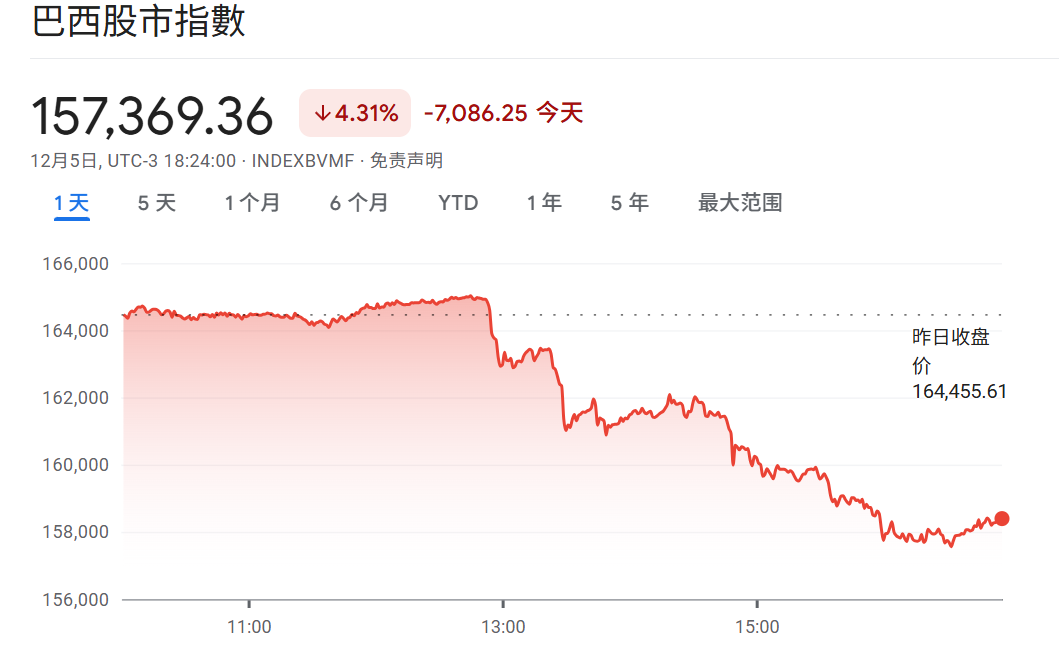
Core Viewpoint - A significant "black swan" event occurred in Brazil, leading to a sharp decline in both the stock market and currency, triggered by former President Bolsonaro's endorsement of his son as a candidate for the upcoming presidential election [1]. Group 1: Market Reaction - Brazil's stock market experienced its worst day since 2021, with the Ibovespa index dropping by 4.3% [1]. - The Brazilian currency, the real, depreciated by approximately 2.5% following the news of Bolsonaro's endorsement [1]. - Interest rate swap contracts surged over 50 basis points, indicating a major shift in investor sentiment and a withdrawal of previous bets on Bolsonaro supporting candidate Tarcísio de Freitas [1]. Group 2: Political Context - The market had previously been optimistic about the potential candidacy of Tarcísio de Freitas, viewing him as the best chance for the right-wing to defeat the current leftist president, Lula [2]. - Analysts noted that the right-wing is now more fragmented than before, correcting the previously overly optimistic sentiment in the market [2]. - Discussions about the succession of the right-wing leadership intensified after Bolsonaro began serving a 27-year prison sentence for attempting to overturn the results of the 2022 election [2]. Group 3: Candidate Dynamics - Flávio Bolsonaro confirmed his father's support and will challenge the current president as a candidate for the Liberal Party [1]. - Despite the speculation around his candidacy, Tarcísio de Freitas has remained cautious, indicating he would only run for president if Bolsonaro explicitly supports him [2]. - Analysts expressed concerns that Flávio Bolsonaro may be less competitive against Lula and that his economic policy expectations are weaker, which could negatively impact Brazilian assets [3].
黑天鹅!股汇双杀!
Zhong Guo Ji Jin Bao· 2025-12-06 16:20
Core Viewpoint - A significant political event in Brazil has led to a sharp decline in both the stock market and currency, triggered by former President Bolsonaro's endorsement of his son as a candidate for the upcoming presidential election [1][4]. Group 1: Market Reaction - The Brazilian stock market experienced its worst day since 2021, with the Ibovespa index dropping by 4.3% [1]. - The Brazilian real depreciated approximately 2.5% following the news of Bolsonaro's endorsement [1]. - Interest rate swap contracts surged over 50 basis points, indicating a shift in investor sentiment regarding monetary policy expectations [1]. Group 2: Political Context - Flávio Bolsonaro confirmed his candidacy for the presidency, supported by his father, positioning himself as a candidate for the Liberal Party against incumbent President Lula [4]. - The market had previously shown optimism regarding the potential candidacy of São Paulo Governor Tarcísio de Freitas, who was seen as a unifying figure for the right-wing [4]. - Analysts noted that the division within the right-wing, following Bolsonaro's endorsement of Flávio, has led to a correction of previously overly optimistic market sentiments [4][5]. Group 3: Candidate Dynamics - Tarcísio de Freitas has been cautious about his presidential ambitions, indicating he would only run if explicitly supported by Bolsonaro [5]. - Analysts believe Flávio Bolsonaro is less competitive against Lula and has weaker economic policy expectations, which could negatively impact Brazilian assets [5].

塔勒布:我从未见过有钱的预言家,在“肥尾”世界里普通人该怎么投?
雪球· 2025-12-06 13:00
Core Viewpoint - Taleb's investment philosophy emphasizes the significance of "fat tail" events, which are extreme occurrences that have a disproportionate impact compared to regular events, highlighting the unpredictability of such events and the importance of risk management in investment strategies [5][9][19]. Group 1: Fat Tail Concept - Taleb's main research focuses on the application of "fat tails," where a small number of extreme events have a greater impact than the majority of ordinary events, akin to the idea that "one sentence can replace a thousand" [9]. - Financial markets do not conform to the normal distribution of thin tails; instead, they exhibit fat tails, meaning the likelihood of extreme price movements is significantly higher than traditional models suggest [15][38]. - The COVID-19 pandemic is cited as a recent fat tail event that had a substantial global economic impact, reaffirming Taleb's predictions and the importance of tail risk management [17][19]. Group 2: Fat Tail Philosophy - Taleb argues that decisions should be based on "mathematical expectations of the future" rather than "spontaneous optimism," emphasizing the role of uncertainty and randomness in decision-making [21]. - He asserts that the understanding of the world is often superficial, leading to easier decision-making, which can be misleading [22]. - The complexity of systems means that what is perceived as harmful can sometimes be beneficial, and vice versa, indicating that universal rules may not apply effectively in complex scenarios [24]. Group 3: Investment Strategy - In a fat tail world, prediction fails, and the key to long-term survival is structural resilience, meaning investment portfolios must be capable of withstanding extreme events [42]. - The emphasis is placed on asset allocation and rebalancing to maintain stability during market fluctuations, rather than attempting to predict market movements [43]. - The "three-part method" of investment is highlighted as a strategy that allows continued success across various market conditions by diversifying assets, markets, and timing [44].

日本首相一句话,我的民宿订单“旺季腰斩”
虎嗅APP· 2025-11-22 03:12
Core Viewpoint - The article discusses the significant impact of political statements on the tourism industry in Japan, particularly focusing on the cancellation of bookings for winter accommodations in Hokkaido due to rising tensions related to Taiwan. This has led to substantial financial losses for local businesses that rely heavily on winter tourism revenue. Group 1: Impact of Political Statements - The cancellation wave was triggered by Japanese Prime Minister Kishi Nobuo's remarks linking Taiwan issues to Japan's national security, causing public unrest and protests against his leadership [7][8]. - The immediate effect was a sharp increase in booking cancellations, with one business reporting a loss of over 200,000 yuan due to a 50% cancellation rate across its properties [9][15]. Group 2: Business Operations and Financial Losses - The winter season is critical for the business, accounting for 90% of annual revenue, and the legal framework limits operations to 180 days a year [5][17]. - By November 18, the cancellation rate reached nearly 50%, with losses per property estimated between 50,000 to 80,000 yuan, totaling over 200,000 yuan across four properties [15][17]. Group 3: Market Conditions and Future Outlook - The article highlights the competitive landscape in the accommodation sector, particularly in Osaka, where the number of registered properties has surged, leading to price reductions and increased competition [26]. - Despite the current challenges, there is hope for recovery as the business prepares for potential stabilization in the market, aiming to attract both local and international tourists once the political situation improves [33][34].

美联储面临严重的内部观点分歧
Sou Hu Cai Jing· 2025-11-13 09:13
JerryZang 笔者认为,美国经济的现状并非强劲,其中会引发重大经济问题爆发的痛点很多,同时来自内部和外部 的负面冲击也不少,如果再叠加可能出现的"黑天鹅事件"的负面影响,那么美国经济的前景并非光明一 片,而是堪忧。 据媒体报道,近日美国亚特兰大联储主席博斯蒂克宣布他将在2026年2月28日任期届满时退休。同时, 博斯蒂克表示,通胀仍然是美国经济面临的更大风险,他倾向于在12月维持利率不变。 在不久前召开的美联储10月议息会议上,有两张分别主张更大幅度降息和维持利率不变的反对票。这凸 显出美联储内部在货币政策走向方面的巨大分歧。一方面,特朗普总统正在不断向美联储施压,希望美 联储尽快降息;另一方面,美联储主席鲍威尔在不久前的讲话中再次强调了其在货币政策方面的谨慎态 度,并明确表示12月降息并非铁板钉钉。 虽然近期由于美国政府停摆而造成一些重要的经济数据缺失,但是种种迹象表明美国经济面临的下行压 力正在加大,消费者信心也在下降。在这样的背景下,美联储在货币政策问题上的犹豫不定会增加美国 经济面临的不确定性,甚至会错失及时支撑经济的良机。 免责声明:本文内容及观点仅供参考,不构成任何投资建议。投资者据此操作, ...
AI热潮中“黑天鹅”若隐若现:数据中心能耗攀升或将推高利率
智通财经网· 2025-10-30 07:09
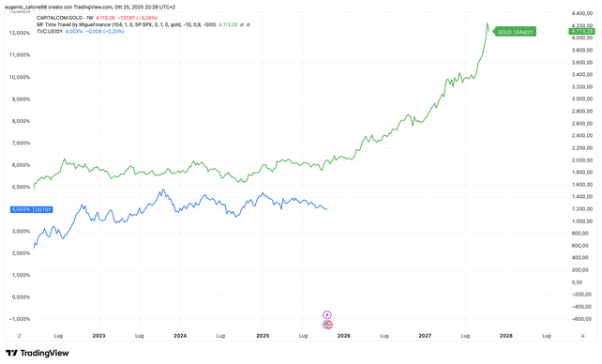
Core Insights - The current AI development wave is exciting but poses potential black swan events, with companies investing billions and the stock market rising, while the Federal Reserve appears to be considering interest rate cuts and ending quantitative tightening [1][25]. Economic Context - The U.S. GDP is experiencing strong growth, and the impact of tariffs on inflation is lower than expected, with energy prices remaining relatively low [1]. - The shadow of economic recession seems distant, but analysts warn that AI could face unforeseen challenges [1][25]. Inflation Concerns - Historical parallels are drawn between current inflation trends and those of the 1970s and 1980s, suggesting a potential second wave of inflation [5][27]. - Four main reasons for the potential inflation spike include delayed effects of tariffs, the Federal Reserve's policy decisions, geopolitical tensions affecting energy prices, and the significant energy consumption from AI infrastructure investments [6][25]. Energy Consumption and AI - AI's integration into daily life is leading to a surge in energy demand, reminiscent of the internet boom from 1990 to 2005 [7][8]. - The International Energy Agency (IEA) estimates that data centers' electricity consumption will rise from 415 terawatt-hours (TWh) to 945 TWh by 2030, increasing their share of global electricity consumption from 1.5% to 3% [8][10]. Infrastructure Challenges - Existing energy infrastructure may not support the anticipated demand growth from AI, necessitating significant investments from utility companies, which may pass costs onto consumers [12][14]. - The capacity price in the PJM region has surged fivefold, indicating rising electricity costs due to infrastructure upgrades needed for data centers [17]. Oil Price Dynamics - The current low oil prices may not last in a high-demand energy environment, with historical trends showing significant oil price increases during periods of rising energy consumption [19][21]. - The market's current bearish sentiment towards oil is paradoxical given the high energy demand, yet hedge funds are increasing their long positions in oil [23]. Conclusion - The AI boom is driving stock market highs, but correlations between gold prices and U.S. Treasury yields suggest potential economic challenges ahead, particularly if energy prices rise due to increased electricity demand from AI infrastructure [25][27].
张尧浠:金价牛市前景仍不变、但需警惕灰犀牛风险调整
Sou Hu Cai Jing· 2025-10-27 00:41
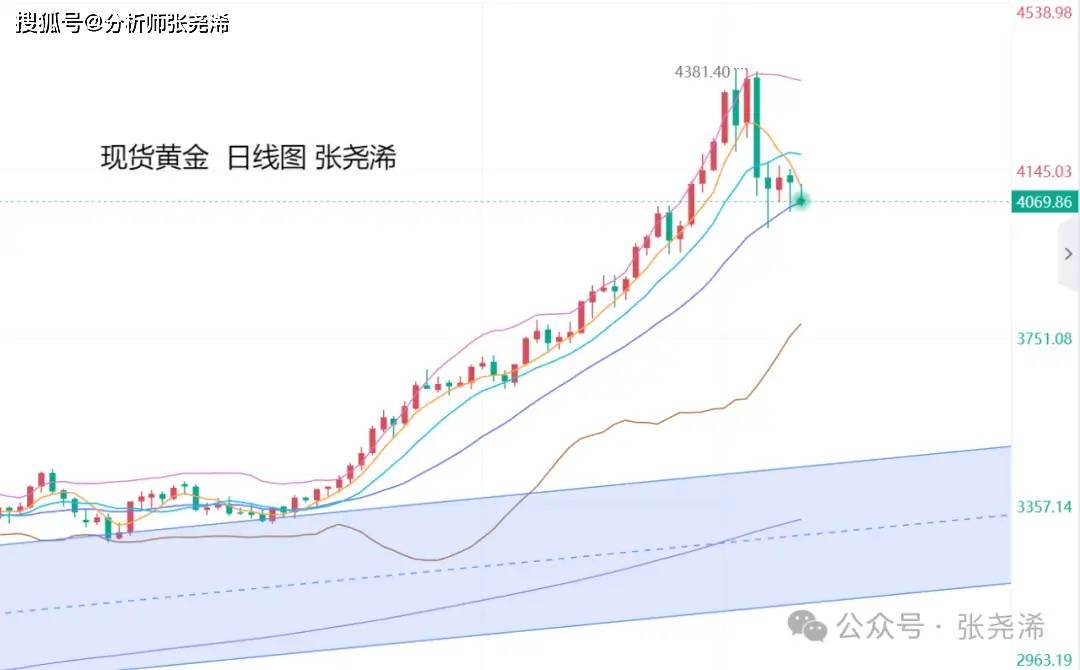
Core Viewpoint - The international gold market experienced significant fluctuations last week, with prices showing signs of potential decline despite not breaking the 5-week moving average support, indicating a possibility for further upward movement if certain resistance levels are breached [1][3]. Price Movements - Gold opened at $4249.96 per ounce, reached a historical high of $4381.24, then fell nearly $300 to a low of $4004.11 before closing at $4108.63, resulting in a weekly decline of $141.33 or 3.32% [1][3]. Market Influences - The ongoing U.S. government shutdown and the failure of the Senate to pass funding bills have heightened economic uncertainty and increased safe-haven demand for gold [3][7]. - Investor expectations for further interest rate cuts by the Federal Reserve have also contributed to gold's price movements [3][6]. Technical Analysis - The gold price is currently facing upward trend line resistance, and a breakthrough is necessary to open up further bullish potential [1][11]. - The market is expected to maintain a weak adjustment phase until it surpasses key resistance levels, with potential support around $3950 and $3700 if it falls below [9][11]. Future Outlook - The market is anticipated to react to the Federal Reserve's interest rate decision and the resolution of the government shutdown, which could provide opportunities for bullish positions [8][10]. - Long-term risks include the potential for a government shutdown resolution, which may not alter the overall trend but could present new buying opportunities [6][8].
10亿身家换不来10分钟!上午签大单下午猝死,他的悲剧戳中多少人
Sou Hu Cai Jing· 2025-10-26 15:22
Core Insights - The article discusses the tragic story of a successful businessman, Zhuang Hua, who suddenly passed away despite his immense wealth and recent business success, highlighting the balance between wealth and health [1][22][35] Group 1: Business Model and Philosophy - Zhuang Hua viewed the world as a vast balance sheet, focusing on optimizing assets and transforming everything into quantifiable investments [1][4] - He prioritized "human" capital, emphasizing strategic thinking over traditional qualifications, and only targeted high-performing professionals [4][6] - His business model was highly selective, treating talent acquisition like stock trading, aiming for the highest return on investment [4][6] Group 2: Personal Management and Health - Zhuang Hua maintained a rigorous fitness regimen, viewing his body as a tool for sustaining high work intensity, but neglected the inherent risks of health [10][14] - He underestimated the unpredictability of life, failing to account for potential health crises in his meticulously calculated life model [13][19] - His tragic demise serves as a cautionary tale about the dangers of equating management with control, particularly regarding personal health [13][20] Group 3: Societal Reflection - The incident resonated with many, reflecting a broader societal trend of quantifying life through metrics like KPIs and fitness apps, mirroring Zhuang Hua's approach [24][26] - The story raises critical questions about the pursuit of precision in life versus the need for stability and the importance of unquantifiable aspects like rest and uncertainty [33][35] - It emphasizes the necessity of allocating sufficient value to health and relaxation in one's life balance sheet, suggesting that these may yield the highest returns [35]

美国10月密歇根大学消费者信心指数下修
Sou Hu Cai Jing· 2025-10-25 12:30
Core Viewpoint - The final consumer confidence index for October from the University of Michigan was revised down from an initial value of 55 to 53.6, indicating a risk of contraction in consumer spending, a critical driver of the U.S. economy [2] Economic Indicators - The persistent weakness in the U.S. job market and the low consumer confidence index reflect significant downward pressure on the U.S. economy [2] - The Federal Reserve's recent decision to cut interest rates by 25 basis points in September may lead to further small rate cuts in response to economic conditions [2] Monetary Policy Implications - There are doubts about the effectiveness of gradual rate cuts by the Federal Reserve in alleviating pressures on the real economy, as the Fed's monetary policy often lags behind market conditions [2] - The potential for "black swan" events could exacerbate economic volatility, suggesting that even accelerated rate cuts may not suffice, leading to the possibility of a new round of quantitative easing (QE) and a return of the federal funds rate to zero [2]
巨头游戏公司宣布重大更新后,暴跌!崩盘!有人一夜之间亏了好几万……
第一财经· 2025-10-24 13:33
Core Viewpoint - The recent update to Counter-Strike 2 (CS2) by Valve has led to a significant devaluation of in-game items, causing turmoil in the virtual item trading market, with total market valuation dropping from approximately $59 billion to $42 billion in a single day [5][7][15]. Group 1: Market Impact - The update allows players to exchange cheaper items for rare skins, drastically increasing supply and reducing costs [6][7]. - The total market valuation of CS2 items plummeted by nearly $20 billion, with high-end items experiencing a drop of over 50% in value [7][9][15]. - Specific items like the "Butterfly Knife" saw their prices drop from over ¥40,000 to around ¥10,000, while "Sport Gloves" fell by over ¥27,000 [9][10]. Group 2: Player Reactions - Many players reported significant losses, with some losing tens of thousands of yuan due to the sudden market crash [10][14]. - The trading platforms experienced heavy traffic and even temporary shutdowns due to mass sell-offs by players holding high-value items [14]. Group 3: Historical Context - CS2 has a long-standing history, being a popular game since the late 1990s, and has maintained a large player base over the years [18]. - Unlike many games where items can be purchased directly, CS2 items were traditionally obtained through a random drop system, making them scarce and valuable [19][20]. Group 4: Market Dynamics - The CS2 item market has been compared to stock markets due to its speculative nature, with players engaging in buying, selling, and renting items for profit [21]. - The introduction of a T+7 selling mechanism adds to market volatility and participant risk, as items cannot be sold immediately after purchase [21].