VLA模型

Search documents
华为又投了一家具身智能机器人领域创企
Robot猎场备忘录· 2025-11-24 05:21
Core Viewpoint - The article highlights that GigaAI, a leading physical AI company in China, has successfully completed a series of financing rounds, including a recent A1 round of financing amounting to hundreds of millions, led by Huawei and Huakong Fund. This marks the company's fourth financing round in 2025, showcasing its rapid growth and strong investor interest in the physical AI sector [2][3][4]. Financing History - GigaAI has completed a total of six financing rounds, with four rounds occurring in 2025 alone. The recent A1 round raised approximately 100 million, while previous rounds included Pre-A and Pre-A+ rounds that raised several hundred million [2][3]. - The company has attracted investments from notable firms such as Guozhong Capital, CICC Capital, and others, indicating strong confidence from the investment community [3][4]. Company Overview - Founded in January 2023, GigaAI focuses on world model-driven physical intelligence and is the first company in China to specialize in the "world model x embodied brain" direction [6]. - The core team consists of experienced professionals with backgrounds in AI and robotics, including a founder with a PhD from Tsinghua University and a chief scientist recognized as a top global researcher [10][12]. Technology and Product Development - GigaAI is developing a comprehensive suite of products, including the GigaWorld platform for world modeling and the GigaBrain foundational model for embodied intelligence. These products aim to address data bottlenecks in embodied AI [10][15]. - The company plans to release the GigaWorld-0 platform and has already launched the GigaBrain-0 model, which utilizes world models for data generation and has achieved significant advancements in flexible long-range operations [15][16]. Hardware Development - GigaAI is set to launch its next-generation humanoid robot, the Maker H01, which features advanced sensor configurations and open interfaces for task adaptation [17][21]. - The robot's specifications include a size of 650mm x 550mm x 1620mm, multiple degrees of freedom, and a payload capacity of up to 5 kg, showcasing its potential for various applications [21]. Market Position and Future Outlook - GigaAI is positioned as a leader in the world model and VLA (Vision-Language-Action) model sectors, with significant collaborations established with major automotive manufacturers and other companies in the embodied intelligence space [22][24]. - The article suggests that the integration of world models into decision-making processes will be a key trend in the evolution of humanoid robots, with GigaAI at the forefront of this development [24][25].


2025商用具身智能白皮书
艾瑞咨询· 2025-11-20 00:04
Core Insights - Embodied intelligence has gained significant traction globally, with Figure achieving a valuation of $39 billion despite zero revenue, while domestic players are securing commercial orders and projecting substantial revenue growth [1][2][9] - The Chinese government has integrated embodied intelligence into its strategic planning, emphasizing its importance in the industrial landscape [1][9] - The market for embodied intelligence is projected to reach trillions, with both China and the U.S. competing vigorously in this emerging sector [1][6] Definition and Understanding - Embodied intelligence is recognized as a crucial development in artificial intelligence, characterized by agents that interact with their environment through a physical body, showcasing autonomy and adaptability [2] - It represents a convergence of machine learning, computer vision, and robotics, marking a significant step towards practical AI applications [2] Commercial Applications - Different forms of embodied intelligence robots are evolving to meet diverse needs across sectors such as retail, dining, logistics, and healthcare [4] - Commercial applications focus on enhancing service experiences and operational flexibility in dynamic environments, while industrial applications prioritize efficiency and safety in structured settings [4] Strategic Importance - Embodied intelligence is pivotal in narrowing the technological gap between China and the U.S., driving innovation across various industrial sectors [6] - The competition in embodied intelligence is not only about economic benefits but also about enhancing national competitiveness and technological self-reliance [6] Policy Support - The Chinese government has actively promoted the development of embodied intelligence through various policies, funding initiatives, and standardization efforts [9] - Local governments are also implementing plans and pilot projects to support the industry, establishing funds and alliances to foster collaboration [9] Development Stages - The evolution of embodied intelligence can be categorized into three phases: conceptual development, technological accumulation, and application expansion driven by large models [11] - The current phase is characterized by rapid advancements, with the U.S. leveraging its computational advantages while China accelerates its catch-up through policy support and industrial collaboration [11] Bottlenecks and Challenges - The industry faces significant challenges, including data scarcity, technological maturity, and high costs associated with core components and computational resources [13][16] - The lack of high-quality operational data and the need for advancements in dexterous manipulation and generalization capabilities are critical hurdles [13] Data Acquisition and Solutions - Current data acquisition methods include remote operation, simulation, motion capture, and internet video, but high-quality data remains scarce [16] - The industry is exploring solutions such as "world models" and data collection training grounds to alleviate data challenges, with cities like Beijing and Shanghai accelerating the establishment of these facilities [19] Model Evolution - The VLA model is emerging as a consensus for development, integrating large language model reasoning with real-world perception and action capabilities [21] - This evolution is expected to lead to a significant leap in embodied intelligence capabilities, akin to the breakthroughs seen with large language models [21] Commercialization Trends - The commercialization of embodied intelligence is progressing through various stages, with initial applications focusing on low-complexity, high-ROI scenarios [31] - The industry is transitioning from hardware sales to service subscription models, indicating a shift towards more integrated business approaches [35] Global Market Outlook - The global market for embodied intelligence is anticipated to experience exponential growth, with projections indicating a market size of approximately 192 billion RMB by 2025 and a compound annual growth rate of 73% over the next five years [46] - China's market is expected to see significant growth, potentially reaching over 280 billion RMB by 2035, driven by a robust industrial ecosystem and competitive supply chains [50] Competitive Landscape - The competition in the embodied intelligence sector is characterized by three main players: AI-native challengers, traditional industrial players, and cross-industry giants [55] - The market is witnessing a trend towards consolidation, with product homogenization emerging as a concern, suggesting an impending wave of industry consolidation [57] Initial Players and Innovations - Companies like Tesla and Figure AI are leading the charge in developing humanoid robots, with Figure AI's valuation reaching $39 billion [64] - Innovations in dexterous manipulation and core component integration are critical for advancing the capabilities of humanoid robots [83][88]

优必选预计今年人形机器人营收4亿元,明年交付两千至三千台
Nan Fang Du Shi Bao· 2025-11-18 09:23
Core Insights - UBTECH Robotics has delivered approximately 200 humanoid robots in 2023, with an estimated revenue contribution of around 400 million yuan from this business. The company plans to deliver 500 units in 2025 and aims for 2,000 to 3,000 units in 2026 [1] - The company has set a production capacity ramp-up plan, targeting an annual production capacity of 5,000 humanoid robots by 2026 and expanding to 10,000 units by 2027 [1] - As of November 10, 2023, the total order value for the Walker series humanoid robots has exceeded 800 million yuan, primarily from clients in the automotive industry [1] Delivery and Production - UBTECH released a video showcasing the assembly of over a hundred humanoid robots, which faced skepticism from Figure AI's founder regarding its authenticity. UBTECH responded with a continuous shot video to counter the claims [2][4] - The company has conducted over a year of factory training for its humanoid robots, focusing on tasks such as handling, sorting, and quality inspection. The success rate for box handling tasks is reported at 99%, with an average handling time of 1.5 minutes, an improvement from 2 minutes in the first half of 2025 [4] Technological Developments - The VLA (Vision-Language-Action) model for intelligent operations is not yet commercially ready, with an accuracy of about 70%, which does not meet customer demands. The company plans to equip different tasks with corresponding specialized models [4] - A new version of the Walker series (Walker S3) is set to launch in the first half of 2026, featuring the Thor chip from NVIDIA, while another new model with high-performance mobility is also planned for release in the same timeframe [5]

小鹏成“最像特斯拉的中国公司”?
Di Yi Cai Jing Zi Xun· 2025-11-13 04:22
Core Insights - Xiaopeng Motors aims to redefine its identity beyond just an automotive company, focusing on becoming a leader in "physical AI" technology, which integrates digital and physical worlds [2][3] - The company recently held a technology day where it unveiled its second-generation VLA model and introduced products like Robotaxi, humanoid robots, and flying cars, indicating a shift towards broader technological ambitions [2][3] Company Strategy - Xiaopeng Motors' new slogan emphasizes its transition from being merely an AI automotive company to a "physical AI" company, reflecting its ambition to lead in various tech sectors [2] - The second-generation VLA model is designed to enhance the company's autonomous driving capabilities, with significant investments in computational power and data training [5][6] Market Position - Xiaopeng Motors briefly surpassed Li Auto in market capitalization, becoming the highest-valued new energy vehicle company in China, with a market cap of approximately $21.4 billion [3] - The company is perceived as the most similar to Tesla among Chinese automakers, with Tesla's market cap at $1.4 trillion, highlighting the competitive landscape [3] Product Development - The second-generation VLA model aims to improve the efficiency of autonomous driving by reducing information loss during data processing, although it still incorporates elements of the previous model [5][6] - Xiaopeng plans to launch three Robotaxi models by 2026, marking its entry into the Robotaxi market, which is currently untested by other new energy vehicle companies in China [12][14] Technological Innovation - The second-generation VLA is expected to outperform its predecessor in complex driving scenarios, with a reported 13-fold improvement in average takeover mileage on complicated roads [11] - Xiaopeng's humanoid robot, IRON, showcases advancements in locomotion but faces challenges in manipulation, which is crucial for broader applications [18][20] Future Outlook - The year 2026 is identified as a critical milestone for Xiaopeng Motors, with plans for mass production of its new technologies, including the second-generation VLA and humanoid robots [4][11] - The company is strategically avoiding the complexities of industrial applications for its robots, focusing instead on service-oriented roles in the initial phase of commercialization [20]
从交通工具到智能体,具身智能开启了汽车产业万亿新赛道
3 6 Ke· 2025-11-10 08:01
Core Insights - The "14th Five-Year Plan" identifies embodied intelligence as a core growth point for future industries, marking a significant transition in the automotive sector from "transportation tools" to "intelligent mobility entities" [1][2] - The synergy between policy support and technological advancements is reshaping the automotive industry, driving a shift from traditional manufacturing to a comprehensive "intelligent manufacturing + services" model [1][2] Policy and Hardware Empowerment - The strategic positioning of embodied intelligence in the "14th Five-Year Plan" is part of a systematic approach to strengthen manufacturing and digitalization in China, with the automotive industry as a key application area [2] - The Ministry of Industry and Information Technology is focusing on critical technologies such as automotive AI and operating systems, while pilot cities for "vehicle-road-cloud integration" are being rapidly developed to support the application of embodied intelligent vehicles [2] Technological Synergy - The Xiaopeng Iron Robot utilizes AI chips and systems that leverage the company's long-term investments in intelligent driving, showcasing a shared technological foundation between automotive and robotics sectors [3][5] - The collaboration between automotive companies and robotics is becoming a trend, with companies like Changan and Huawei extending their technological capabilities across both domains [5][6] Industry Transformation - The emergence of embodied intelligence is shifting the competitive landscape of the automotive industry from hardware manufacturing to intelligent capabilities, prompting traditional automakers to evolve into "intelligent operators" [6][9] - The integration of robotics into automotive manufacturing processes is demonstrating the feasibility of transferring automotive technologies to robotics, thereby creating natural technological barriers for automotive companies [6][8] Market Expansion and Future Potential - The integration of embodied intelligence is leading to diverse application scenarios, expanding the automotive industry's boundaries from manufacturing to service sectors [10][12] - The market potential for embodied intelligence in the automotive sector is projected to grow significantly, with estimates suggesting a shift from a billion-dollar to a trillion-dollar market, driven by advancements in technology and supportive policies [12][13]


小鹏美女机器人自证“非人扮演”,最懂直男心?
首席商业评论· 2025-11-10 06:51
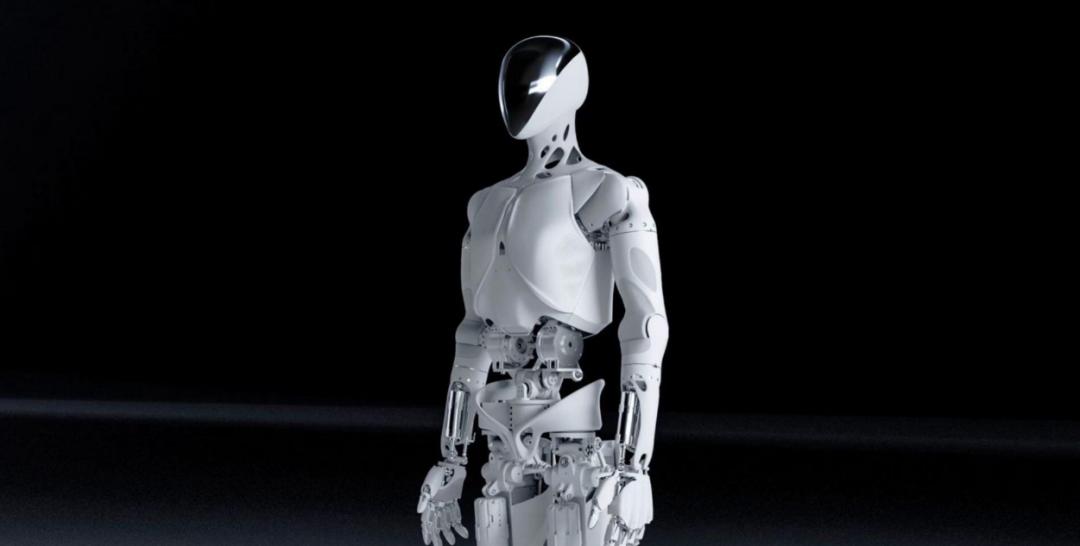
Core Viewpoint - The article discusses the recent launch of the IRON robot by Xiaopeng Motors, highlighting its humanoid design and the significant media attention it has garnered, while also addressing the skepticism surrounding its capabilities and production readiness [3][5][11]. Group 1: Xiaopeng's Robot Launch - Xiaopeng Motors unveiled the IRON robot, which resembles a humanoid figure, generating excitement comparable to major tech events like those of Elon Musk [3][5]. - The launch event led to a surge in Xiaopeng's stock price, increasing by 14%, indicating a positive market reaction and renewed interest from institutional investors [5][9]. - The event was strategically designed to capture public interest, with social media discussions reaching over 200 million views [5][9]. Group 2: Technical Aspects of the IRON Robot - The IRON robot features a fully humanoid structure, including a skeletal system that mimics human spine curvature, allowing for natural movements [14]. - It incorporates innovative materials, such as lattice structures for muscle layers, providing both rigidity and flexibility, and a skin-like covering with tactile sensors for emotional interaction [14][21]. - Xiaopeng's approach to robotics emphasizes the need for humanoid designs to fit into human-centric environments, marking a significant shift from previous four-legged designs [11][14]. Group 3: Industry Context and Competition - The automotive industry is increasingly venturing into humanoid robotics, with companies like Xiaomi and FAW Group also developing their own humanoid robots [16][18]. - Xiaopeng Motors leverages its existing automotive technology and expertise to reduce research and development costs in the robotics sector, as both fields share significant technological overlaps [18][19]. - Despite the advancements, Xiaopeng's automotive business is still facing challenges, including a reported net loss of 1.14 billion yuan in the first half of the year [22][25].
人形机器人,如何跨越规模交付瓶颈?
财联社· 2025-11-08 05:06
Core Insights - The year 2024 is anticipated to be a pivotal year for humanoid robots, with expectations for more applications in various sectors, particularly in industrial and commercial settings [1][2][4] - The humanoid robot industry is evolving from basic manufacturing to more specialized and complex applications, aiming to establish a complete humanoid robot industry chain [1][6] Group 1: Industry Trends - Humanoid robots are currently utilized in performance, interaction, and exhibition guide roles, but face challenges in large-scale delivery in industrial settings [1][2] - The integration of embodied intelligence with industrial robots is seen as crucial for addressing challenges in flexible manufacturing and efficiency [2][6] - The industry is moving towards more refined and technically intensive applications, with a focus on enhancing the flexibility and capabilities of robots [6][9] Group 2: Market Opportunities - There is a significant opportunity for Chinese robot companies to expand internationally, leveraging their manufacturing and scenario advantages [6][4] - The development of autonomous logistics vehicles is expected to address last-mile delivery challenges, although they face hurdles in accurately processing a large number of SKUs [4][6] - Small humanoid robots are gaining traction in entertainment and education, with potential factory applications within five years [4][6] Group 3: Technological Challenges - The large-scale delivery of humanoid robots is hindered by the need for a complete closed-loop control system that includes perception, decision-making, and execution [6][9] - Current challenges include the need for improved performance parameters and mass production capabilities in emerging fields like tactile sensors [6][9] - The transition from traditional automation to intelligent partners requires significant advancements in software algorithms and integration of ecosystem resources [9][10]

特斯拉已不是智驾行业“标准答案”
3 6 Ke· 2025-10-31 00:25
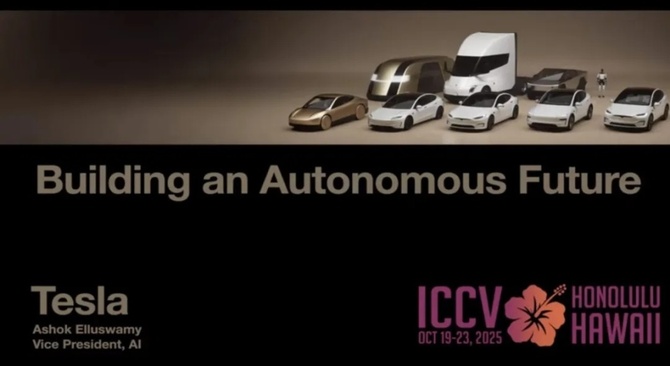
Core Insights - Tesla has resumed sharing updates on its autonomous driving algorithms after a two-year hiatus, presenting at the ICCV conference instead of its previous AI Day events [1] - The company is facing challenges with its end-to-end architecture for autonomous driving, particularly regarding the "black box" nature of the model and the quality of training data [3][7] Group 1: Technical Developments - Tesla's end-to-end system must address the mapping from high-dimensional to low-dimensional outputs, which is complex due to the nature of the data [5][7] - The company has implemented optimizations in its architecture, including the introduction of OCC occupancy networks and 3D Gaussian features to enhance decision-making [3][8] - Tesla has developed a "neural world simulator" that serves as both a training and validation environment for its algorithms, allowing for extensive testing and refinement [12][15] Group 2: Competitive Landscape - Other companies in the industry, such as Xpeng and Li Auto, have also adopted similar models, indicating a shift in the competitive dynamics of the autonomous driving sector [4][11] - Tesla's previous position as a leader in autonomous driving technology is being challenged, with other players no longer closely following its developments [18] Group 3: Market Reception and Challenges - The subscription rate for Tesla's Full Self-Driving (FSD) feature is low, with only about 12% of users opting for it, raising concerns about the technology's acceptance [4][24] - Despite price adjustments for FSD, consumer interest has waned, with many potential buyers citing concerns over the technology's maturity and reliability [24][25] - Recent investigations into Tesla's FSD have highlighted safety issues, further complicating the company's efforts to promote its autonomous driving capabilities [24][25]
HuggingFace联合牛津大学新教程开源SOTA资源库!
具身智能之心· 2025-10-27 00:02
Core Viewpoint - The article emphasizes the significant advancements in robotics, particularly in robot learning, driven by the development of large models and multi-modal AI technologies, which have transformed traditional robotics into a more learning-based paradigm [3][4]. Group 1: Introduction to Robot Learning - The article introduces a comprehensive tutorial on modern robot learning, covering foundational principles of reinforcement learning and imitation learning, leading to the development of general-purpose, language-conditioned models [4][12]. - HuggingFace and Oxford University researchers have created a valuable resource for newcomers to the field, providing an accessible guide to robot learning [3][4]. Group 2: Classic Robotics - Classic robotics relies on explicit modeling through kinematics and control planning, while learning-based methods utilize deep reinforcement learning and expert demonstration for implicit modeling [15]. - Traditional robotic systems follow a modular pipeline, including perception, state estimation, planning, and control [16]. Group 3: Learning-Based Robotics - Learning-based robotics integrates perception and control more closely, adapts to tasks and entities, and reduces the need for expert modeling [26]. - The tutorial highlights the challenges of safety and efficiency in real-world applications, particularly during the initial training phases, and discusses advanced techniques like simulation training and domain randomization to mitigate risks [34][35]. Group 4: Reinforcement Learning - Reinforcement learning allows robots to autonomously learn optimal behavior strategies through trial and error, showcasing significant potential in various scenarios [28]. - The tutorial discusses the complexity of integrating multiple system components and the limitations of traditional physics-based models, which often oversimplify real-world phenomena [30]. Group 5: Imitation Learning - Imitation learning offers a more direct learning path for robots by replicating expert actions through behavior cloning, avoiding complex reward function designs [41]. - The tutorial addresses challenges such as compound errors and handling multi-modal behaviors in expert demonstrations [41][42]. Group 6: Advanced Techniques in Imitation Learning - The article introduces advanced imitation learning methods based on generative models, such as Action Chunking with Transformers (ACT) and Diffusion Policy, which effectively model multi-modal data [43][45]. - Diffusion Policy demonstrates strong performance in various tasks with minimal demonstration data, requiring only 50-150 demonstrations for training [45]. Group 7: General Robot Policies - The tutorial envisions the development of general robot policies capable of operating across tasks and devices, inspired by large-scale open robot datasets and powerful visual-language models [52][53]. - Two cutting-edge visual-language-action (VLA) models, π₀ and SmolVLA, are highlighted for their ability to understand visual and language instructions and generate precise control commands [53][56]. Group 8: Model Efficiency - SmolVLA represents a trend towards model miniaturization and open-sourcing, achieving high performance with significantly reduced parameter counts and memory consumption compared to π₀ [56][58].
手把手带你入门机器人学习,HuggingFace联合牛津大学新教程开源SOTA资源库
机器之心· 2025-10-26 07:00
Core Viewpoint - The article emphasizes the significant advancements in the field of robotics, particularly in robot learning, driven by the development of artificial intelligence technologies such as large models and multi-modal models. This shift has transformed traditional robotics into a learning-based paradigm, opening new potentials for autonomous decision-making robots [2]. Group 1: Introduction to Robot Learning - The article highlights the evolution of robotics from explicit modeling to implicit modeling, marking a fundamental change in motion generation methods. Traditional robotics relied on explicit modeling, while learning-based methods utilize deep reinforcement learning and expert demonstration learning for implicit modeling [15]. - A comprehensive tutorial provided by HuggingFace and researchers from Oxford University serves as a valuable resource for newcomers to modern robot learning, covering foundational principles of reinforcement learning and imitation learning [3][4]. Group 2: Learning-Based Robotics - Learning-based robotics simplifies the process from perception to action by training a unified high-level controller that can directly handle high-dimensional, unstructured perception-motion information without relying on a dynamics model [33]. - The tutorial addresses challenges in real-world applications, such as safety and efficiency issues during initial training phases, and high trial-and-error costs in physical environments. It introduces advanced techniques like simulator training and domain randomization to mitigate these risks [34][35]. Group 3: Reinforcement Learning - Reinforcement learning allows robots to autonomously learn optimal behavior strategies through trial and error, showcasing significant potential across various scenarios [28]. - The tutorial discusses the "Offline-to-Online" reinforcement learning framework, which enhances sample efficiency and safety by utilizing pre-collected expert data. The HIL-SERL method exemplifies this approach, enabling robots to master complex real-world tasks with near 100% success rates in just 1-2 hours of training [36][39]. Group 4: Imitation Learning - Imitation learning offers a more direct learning path for robots by replicating expert actions through behavior cloning, avoiding complex reward function designs and ensuring training safety [41]. - The tutorial presents advanced imitation learning methods based on generative models, such as Action Chunking with Transformers (ACT) and Diffusion Policy, which effectively model multi-modal data by learning the latent distribution of expert behaviors [42][43]. Group 5: Universal Robot Policies - The article envisions the future of robotics in developing universal robot policies capable of operating across tasks and devices, inspired by the emergence of large-scale open robot datasets and powerful visual-language models (VLMs) [52]. - Two cutting-edge VLA models, π₀ and SmolVLA, are highlighted for their ability to understand visual and language instructions and generate precise robot control commands, with SmolVLA being a compact, open-source model that significantly reduces application barriers [53][56].