可持续发展

Search documents
贯彻“双碳”与创新驱动,如新集团2025年荣誉见证ESG实践
Xin Lang Cai Jing· 2026-01-06 04:00
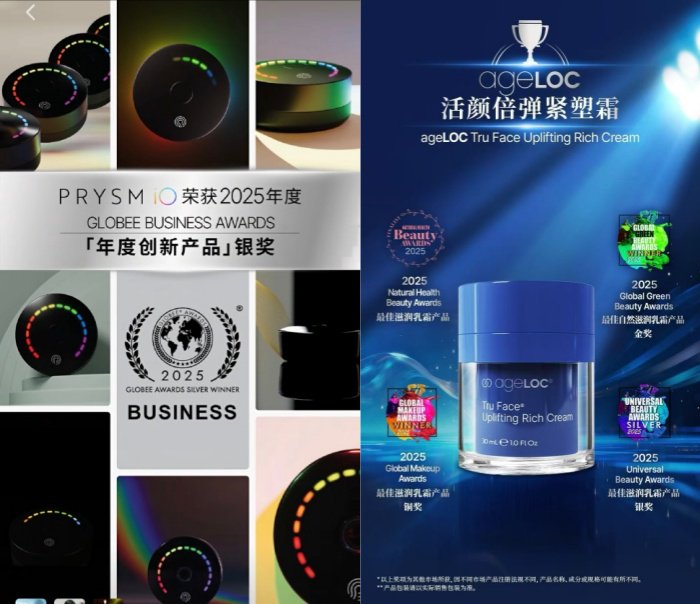
Core Viewpoint - The recent Central Economic Work Conference emphasized the importance of innovation-driven growth and green transformation, highlighting the need for companies to align with national strategies for sustainable development [1]. Group 1: Company Performance and Recognition - The company has been recognized as the global leader in the beauty and health instrument sector for two consecutive years (2023 and 2024) according to Euromonitor International, showcasing its strong market position [3]. - The company received multiple prestigious awards at the 2025 Global Makeup Awards, including silver for the best skincare product and bronze for the best moisturizing cream, reflecting its commitment to product excellence [3]. - The company has been awarded the title of "National Product and Service Quality Integrity Commitment Enterprise" by the China Quality Inspection Association, underscoring its dedication to quality management and consumer experience [5]. Group 2: Innovation and Product Development - The company integrates green principles into product innovation, focusing on sustainable raw material selection and eco-friendly packaging, which enhances consumer trust [5]. - The company has launched innovative products like the Prysm iO, which won the 2025 Blobee Business Awards for innovation, demonstrating its commitment to technological advancement [3]. Group 3: ESG Practices and Sustainability - The company has implemented comprehensive ESG practices, including carbon footprint management and green supply chain management, aligning with national goals for green transformation [9]. - The company has received multiple certifications for its sustainable practices, such as ISO 14064 for greenhouse gas management and recognition as a "Waste-Free Factory" [9]. - The company actively engages in social responsibility initiatives, receiving accolades for its charitable contributions and commitment to community welfare [11]. Group 4: Future Outlook - The company plans to continue responding to national economic strategies by focusing on technological innovation, green practices, and social responsibility, aiming to contribute to sustainable development and enhance consumer trust [13].

中经评论:中国不是“冲击”是机遇
Jing Ji Ri Bao· 2026-01-06 00:12
Core Viewpoint - The narrative of "China Shock 2.0" is a politically constructed discourse that misrepresents China's rapid development as a threat, while ignoring the benefits and opportunities it brings to the global economy [1][5]. Group 1: Economic Performance and Innovation - China's high-tech manufacturing profits increased by 10% year-on-year from January to November 2025, outpacing the average growth of all industrial sectors by 9.9 percentage points [2]. - The growth in China's high-tech sector is attributed to a mature innovation ecosystem, a complete industrial chain, and a large pool of R&D personnel, rather than "unfair competition" [2]. Group 2: Contribution to Global Sustainability - China has become a core player in global clean energy deployment, with renewable energy capacity leading the world and contributing significantly to climate crisis mitigation [3]. - By providing affordable solar panels and batteries, China is helping developing countries reduce reliance on fossil fuels, establishing itself as a reliable source of clean technology products [3]. Group 3: Open Market and Foreign Investment - China is committed to high-level openness, expanding access in sectors like telecommunications and healthcare, and has seen significant foreign investment in high-tech industries, amounting to 221.26 billion RMB in the first 11 months of 2025 [4]. - The Belt and Road Initiative and international capacity cooperation are enhancing infrastructure in developing countries, reducing global logistics and transaction costs [4]. Group 4: Global Economic Relations - In response to the U.S. imposing tariffs on Chinese products, China has taken decisive countermeasures while also engaging in dialogue to maintain communication channels between the two largest economies [4]. - The narrative of "China Shock 2.0" reflects anxieties in some Western circles about their declining competitiveness, which leads to a misallocation of blame towards China instead of addressing internal economic issues [5].
国际传播新话语赋能青海生态旅游
Xin Lang Cai Jing· 2026-01-05 18:44
Core Viewpoint - Qinghai Province is tasked with the strategic mission of becoming an "international ecological tourism destination," which requires not only physical infrastructure but also effective international communication capabilities [1]. Group 1: Strategic Importance of International Communication - International communication serves as a vital carrier for the national ecological civilization strategy and showcases China's governance wisdom [1]. - Qinghai, known as the "Water Tower of China," plays a crucial role in ecological protection, impacting national ecological security and global ecological well-being [1]. - Systematic international communication aims to redefine Qinghai's image from a "remote and mysterious" place to a rich ecological tourism destination, promoting high-quality, responsible tourism [1][2]. Group 2: Current Bottlenecks in Qinghai's International Communication - There is insufficient collaboration among diverse communication entities, leading to fragmented efforts and a lack of a coherent "Qinghai voice" in the international arena [3]. - The existing communication content primarily focuses on visual displays of natural landscapes and lacks depth in conveying Qinghai's unique ecological ethics and community-led tourism practices [3]. - The modernity and adaptability of communication forms and channels need improvement, particularly in utilizing dominant international social media platforms and producing multilingual content [4]. Group 3: Proposed Innovations for Qinghai's International Communication System - Establishing a collaborative and efficient communication mechanism is essential, integrating various stakeholders such as government, enterprises, and academic institutions [5]. - There is a need to deeply explore and innovate the narrative of local values, moving beyond mere scenic promotion to articulate Qinghai's sustainable development model [6]. - The integration of advanced technologies and diverse channels is crucial for enhancing communication effectiveness, including the use of VR/AR and AI for content creation [6][7].
一根纤维里的中国方案:盛虹如何用“负碳T恤”引领全球绿色创新
财富FORTUNE· 2026-01-05 13:02
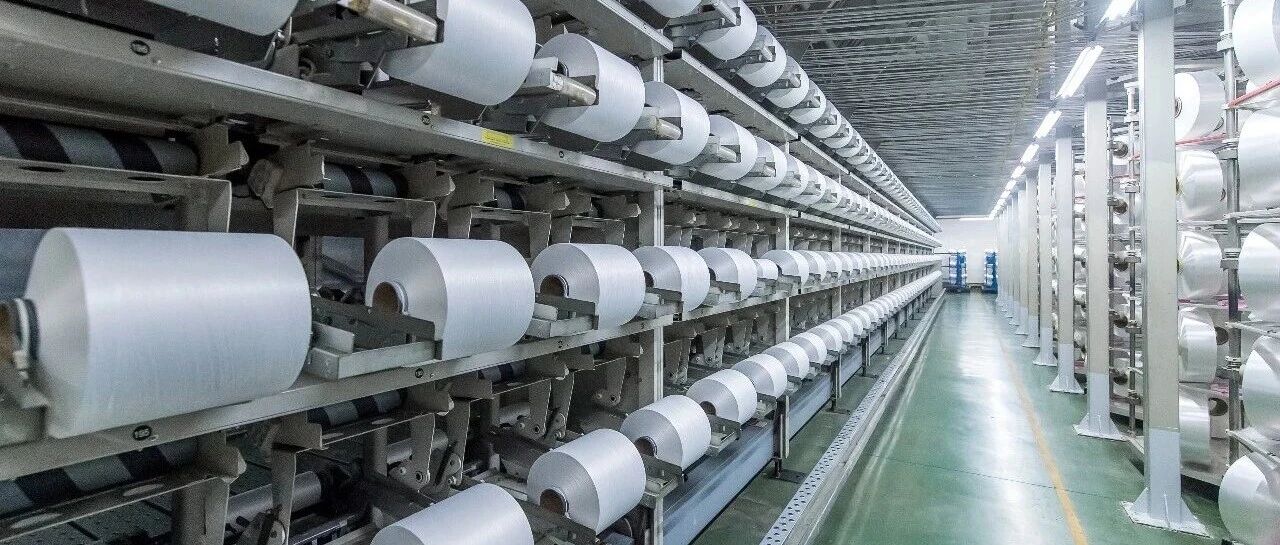
Core Viewpoint - The article highlights the transformation of Chinese companies from "catching up" to "leading" in global climate governance, exemplified by Shenghong Holding Group's innovative approach to carbon capture and utilization, which turns industrial waste CO2 into sustainable materials [3][15]. Group 1: Innovation in Carbon Capture - Shenghong Holding Group has developed a "negative carbon" pathway that actively captures and utilizes CO2, positioning the company as a contributor to environmental sustainability rather than merely balancing emissions [9][19]. - The company’s carbon capture technology allows for the production of green methanol from CO2 and hydrogen, achieving a near 100% conversion rate, which indirectly reduces CO2 emissions by 55,000 tons per year, equivalent to planting 37,000 hectares of forest [13][21]. Group 2: Production Capacity and Environmental Impact - Shenghong's first phase of production is set at 30,000 tons per year, capturing nearly 10,000 tons of CO2, which is comparable to the annual CO2 absorption of 1 million trees, effectively "recreating" 15,000 acres of forest [6][19]. - The company plans to increase production capacity to 200,000 tons per year to meet customer demand and further reduce CO2 emissions [8]. Group 3: Recognition and Market Position - Shenghong's carbon capture fiber project was recognized by Fortune as one of China's best designs, emphasizing the importance of technology in addressing social vulnerabilities and sustainable development [15]. - The company has redefined the green boundaries of the chemical fiber industry, achieving a 28.4% reduction in carbon emissions compared to traditional fibers, and has received the 2024 International Textile Federation Sustainability and Innovation Award [17]. Group 4: Comprehensive ESG Practices - Shenghong's approach encompasses a full lifecycle ESG practice, from clean energy alternatives to intelligent carbon reduction and resource recycling, creating a complete ecological loop for the petrochemical industry [23]. - The company has implemented nuclear steam to replace coal steam, resulting in an annual reduction of 1.07 million tons of CO2 emissions, and is actively investing in offshore wind and solar power [23]. Group 5: Circular Economy and Consumer Engagement - Shenghong is not only focused on CO2 capture but also on recycling waste materials, producing 600,000 tons of recycled fiber annually from PET bottles and textile waste, which represents half of the global recycled fiber capacity [26][27]. - The company collaborates with global brands to promote negative carbon fibers, integrating sustainability into consumer products and demonstrating that manufacturing can be part of the solution to climate challenges [27].

中国运动产品消费升级,需要一条怎样的供应链
第一财经· 2026-01-05 12:53
Core Viewpoint - The article emphasizes the importance of sustainable packaging solutions in the e-commerce sector, particularly through the example of China Dongxiang Group's KAPPA brand, which is adapting its packaging to enhance efficiency and reduce environmental impact [1][5][6]. Group 1: Sustainable Packaging Innovations - In 2025, China's express delivery volume is projected to exceed 180 billion packages, highlighting the need for efficient packaging solutions to save costs and reduce carbon emissions [1][8]. - China Dongxiang Group has implemented a new packaging design that optimizes resource utilization by creating custom packaging for multiple pairs of shoes, significantly improving packing efficiency and reducing costs [5][6]. - The company has achieved a notable reduction in packaging box procurement costs, saving tens of thousands of yuan annually through precise packaging solutions [5]. Group 2: Supply Chain Responsibility - The company maintains a high standard for supplier management, with an 8% elimination rate for underperforming suppliers, ensuring compliance with environmental regulations [9]. - A rigorous evaluation process for potential suppliers includes assessments of product quality, delivery efficiency, and cost control, categorizing them into A, B, and C levels [9]. - The company promotes the use of eco-friendly materials and has established a management system for harmful chemicals, aiming to minimize their usage and emissions [9]. Group 3: Industry Trends and Future Outlook - The Chinese government is pushing for a green and sustainable approach in the express delivery sector, with regulations aimed at reducing packaging waste and promoting recycling [8][12]. - The focus on upgrading consumer goods supply structures is expected to enhance the quality of offerings in the leisure and sports product sectors, aligning with evolving consumer demands [12][13]. - The transition towards a consumption-driven economy in China necessitates that companies like China Dongxiang Group align their operations with international sustainability standards to remain competitive [13].

倒计时2天 | 时光为证 价值同行——思维财经&投资者网邀您共赴2025荣耀盛典之约
Xin Lang Cai Jing· 2026-01-05 10:32
Group 1 - The global technological revolution and industrial transformation are deeply integrated, with AI models reshaping industry boundaries, quantum computing breaking through computing power bottlenecks, and green technology leading new sustainable development tracks [1][18] - Chinese enterprises are accelerating breakthroughs in "hard technology" and transitioning from "Made in China" to "Intelligent Manufacturing in China" driven by digitalization and intelligence [1][18] - The "Belt and Road" initiative and the restructuring of global value chains have upgraded the outbound strategy from a single product output to a comprehensive output of technology standards, business models, and cultural values [1][18] Group 2 - The 18th anniversary of the company will be celebrated with the "2025 Investor Conference and Achievement and Glory Ceremony" on January 7, 2026, in Shanghai, focusing on the theme "Time as Evidence, Value Together" [3][20] - The conference will gather top economists, industry leaders, and representatives from over a hundred listed companies and financial institutions to explore new industrial opportunities under the waves of technology and global perspectives [3][20] - The event will highlight the latest achievements of three strategic alliances: technology-driven manufacturing, new energy, and outbound enterprises, while also featuring a public welfare segment exploring innovative applications of AI technology in sustainable development [3][20]
中国社会科学院国家全球战略智库:在开放合作中推动全球绿色发展
Jing Ji Ri Bao· 2026-01-05 10:21
Core Viewpoint - Green development has become a global consensus, emphasizing the need for cooperation in promoting low-carbon transitions amidst climate change and economic challenges [1] Group 1: Historical Context and Development - Environmental issues have transitioned from the periphery to the mainstream agenda since the 1960s, with significant milestones such as the publication of "Silent Spring" in 1962 and the 1972 UN Conference on the Human Environment [2] - The concept of sustainable development was first articulated in the 1987 report "Our Common Future," leading to frameworks like the 1992 UN Conference on Environment and Development [2] - From the early 2000s to 2015, green trade and clean energy investments surged, with emerging market economies playing a crucial role in global climate negotiations [3] Group 2: Current Trends in Green Development - A comprehensive green low-carbon policy framework is being established globally, with countries setting carbon neutrality goals and developing carbon markets [4] - The scale of green investments is expanding, with global renewable energy investments projected to reach $807 billion in 2024, including solar investments exceeding $554 billion [4] - Green trade is emerging as a new growth point, with exports of solar and wind products expected to reach $443 billion and $245 billion respectively in 2024 [5] Group 3: Regional Practices and Innovations - Different regions are exploring diverse paths for green transformation, with the EU focusing on a market-driven approach and the Asia-Pacific region emphasizing industrial upgrades and financial collaboration [6][7] - Africa is leveraging its renewable energy resources through initiatives like the African Green Energy Initiative, with clean energy investments projected to reach $40 billion in 2024 [8] - Latin American countries are implementing green development plans based on their resource endowments, with Argentina's lithium exports expected to grow by 26% in 2024 [9] Group 4: China's Role in Global Green Development - China is committed to a green low-carbon development path, actively participating in global green governance and contributing to sustainable development [10] - The country has established a comprehensive carbon reduction policy framework and is enhancing its international cooperation in green technology and standards [11] - China's green investment initiatives, such as the "Belt and Road" initiative, are aimed at supporting global green infrastructure and energy projects [12] Group 5: Future Opportunities and Challenges - The urgency of climate change and rising consumer awareness are driving demand for green products, with new growth points emerging in green technology services and carbon trading [13][14] - The transition to a low-carbon economy is expected to increase investment needs across various sectors, including renewable energy and smart transportation [14] - However, international competition in the green sector is intensifying, with trade protectionism and geopolitical tensions posing challenges to global green development [15]
锚定“双碳”目标引领 加快推进能源强国建设
Zhong Guo Neng Yuan Wang· 2026-01-05 08:13
Core Viewpoint - The "dual carbon" goal serves as a strategic engine for accelerating the construction of an energy powerhouse in China, emphasizing the need for a comprehensive approach across production, technology, systems, consumption, and institutional frameworks to achieve energy security and high-quality economic development [1][2]. Group 1: Strategic Importance of the "Dual Carbon" Goal - The "dual carbon" goal transcends mere environmental commitments, becoming a core strategic pivot for reshaping China's energy development logic and driving the construction of an energy powerhouse [2]. - It aims to establish a modern energy system characterized by "clean, low-carbon, safe, and efficient" attributes, addressing the challenges of high carbon dependency and low efficiency in traditional energy [2][3]. - The goal provides a clear value framework and action plan through rigid carbon constraints and guiding resource allocation, facilitating a new pattern of green and low-carbon development [2][3]. Group 2: Technological Innovation and Energy Transition - The "dual carbon" goal reinforces the need for technological innovation, particularly in the renewable energy sector, acting as a catalyst for disruptive breakthroughs [3][5]. - It emphasizes the importance of developing efficient photovoltaic cells, large-capacity wind turbines, and advanced hydropower equipment to enhance the competitiveness of the renewable energy industry [5]. - The goal promotes a virtuous cycle of "technological innovation—industrial upgrading—efficiency improvement," establishing a solid technological foundation for the energy powerhouse [3][5]. Group 3: Five-Dimensional Collaborative System - The construction of an energy powerhouse requires a five-dimensional collaborative system encompassing production transformation, technological breakthroughs, system optimization, consumption upgrades, and institutional guarantees [4][6]. - A multi-faceted clean supply system is essential, focusing on the large-scale development of non-fossil energy and the clean utilization of fossil fuels [4][6]. - The system aims to enhance operational efficiency through integrated energy systems, smart grid technologies, and cross-regional energy interconnections [6]. Group 4: Economic and Environmental Benefits - The "dual carbon" goal contributes to energy security by establishing a diverse clean supply system, reducing reliance on traditional fossil fuels and enhancing energy independence [8][9]. - It supports high-quality economic development by fostering new strategic industries such as renewable energy and smart grids, driving technological breakthroughs and job growth [8][9]. - The goal facilitates the transition to a low-carbon society through industrial green transformation and the promotion of electric transportation, thereby supporting innovative practices for achieving zero-carbon models [8][9]. Group 5: Global Governance and Responsibility - The "dual carbon" goal positions China to actively participate in global governance, showcasing its commitment to emission reduction and enhancing its role in international energy climate discussions [9]. - It aims to create favorable conditions for a fair and reasonable international energy climate order through technology standard exports and international cooperation in green energy [9].
中国市场经济30年(2002-2006)——使命创新:入世,开启全新的思考:你的责任所在?
Sou Hu Cai Jing· 2026-01-05 04:06
Core Insights - The article discusses the evolution of Chinese entrepreneurs' missions and values since China's accession to the WTO in 2001, highlighting the shift from a focus on size and revenue to a broader understanding of social responsibility and sustainable development. Group 1: Historical Context - China's entry into the WTO in 2001 marked a significant turning point, prompting entrepreneurs to reassess their business missions and values in a global context [1] - The number of Chinese companies on the Fortune Global 500 list increased from fewer than ten in 1999 to 145 by 2022, making China the country with the most companies on the list [2] - The early 2000s saw a trend among Chinese companies to prioritize rapid growth and scale, often at the expense of efficiency and profitability [3] Group 2: Evolving Business Missions - The realization that merely growing in size was not sufficient led to a new focus on becoming stronger and more sustainable, with some companies adopting the motto "not to be in the top 500, but to last for 500 years" [3] - A segment of forward-thinking entrepreneurs began to consider their social responsibilities and the broader impact of their businesses on society and the environment [3] - The values and missions that emerged during the early years of WTO membership have become essential for Chinese companies to thrive in the global market [3] Group 3: Economic Developments - In 2002, China was officially recognized as the "world's factory," but faced unprecedented challenges in meeting international standards and benchmarks [5] - The year 2002 also marked the beginning of a significant increase in mergers and acquisitions, with China becoming a vibrant player in the global M&A market [9] - The introduction of the Civil Code in 2002, which clarified private property rights, laid a legal foundation for market economy and globalization [8]

一周要闻·阿联酋&卡塔尔|奇瑞iCAUR环保型SUV首次亮相阿联酋/小鹏汽车正式进军卡塔尔
3 6 Ke· 2026-01-05 01:08
Group 1: Chery iCAUR and Electric Vehicle Market - Chery's electric vehicle brand iCAUR launched its first SUV model V27 in the UAE, which is a range-extended electric vehicle (REEV) with a total range exceeding 900 kilometers and a pure electric range of 150 kilometers [2] - The V27 features a 1.5L turbocharged engine as a backup generator, achieving a maximum power of 449 horsepower and a top speed of 180 km/h for the all-wheel-drive version [2] - The UAE's second-hand electric vehicle market is projected to grow by 41% by 2025, driven by increased consumer confidence and the expansion of charging infrastructure [2] Group 2: UAE Bond Market - The UAE's fixed income market is expected to reach a total issuance of $64.9 billion in 2025, slightly higher than the $63.4 billion in 2024, reinforcing its position as a regional bond issuance hub [3] - Corporate bonds, particularly bank debt, are the main drivers, with green bonds and sukuk totaling $5.6 billion [3] - The total issuance of corporate bonds in the GCC reached a historic high of $128.6 billion, while government bond issuance decreased to $77.9 billion [3] Group 3: Xpeng Motors and Qatar Market Entry - Xpeng Motors officially entered the Qatari market with a brand launch event in Doha, showcasing models G9 and G6, and previewing the upcoming P7+ model [3] - The entry into Qatar is part of Xpeng's strategic initiative to strengthen its presence in the Middle East and North Africa region [3] Group 4: Qatar Economic Growth - Qatar's GDP is projected to grow by 2.9% year-on-year in the third quarter of 2025, with the non-oil and gas economy growing at 4.4% [4] - The construction sector is showing significant activity, with over 7,138 building permits issued in the first nine months of 2025, reflecting a 13.7% increase [4] Group 5: AI in Qatar's SMEs - Artificial intelligence is enhancing supply chain efficiency and reliability for small and medium enterprises (SMEs) in Qatar, helping to reduce waste and improve inventory management [5] - AI systems are being utilized to predict shortages and ensure product availability, thereby increasing business resilience and economic diversification [5]