
国内国际双循环

Search documents
以港产城融合为引擎 天津港打造双循环战略支点
Bei Jing Shang Bao· 2025-09-11 14:39
Core Insights - The event "Tianjin Port-Industry-City Integration Development Service Matching Conference" was held during the 2025 China International Service Trade Fair, emphasizing the importance of Tianjin Port as a key player in the Belt and Road Initiative and its role in high-quality development [1][4] Group 1: Port and Trade Development - Tianjin Port is a modern comprehensive port with a deep-water harbor, featuring over 220 berths and maintaining trade relations with more than 500 ports in over 180 countries [1][2] - The port's container throughput is projected to grow at an average annual rate of 6.1%, reaching 23.29 million TEUs by 2024, ranking it 8th globally [2] - Total cargo throughput is expected to grow at an average annual rate of 3.7%, reaching 579 million tons by 2024, placing it 9th in the world [2] Group 2: Economic Impact and Services - In the first half of 2025, Tianjin Port achieved a container throughput of 12.248 million TEUs and a cargo throughput of 29.6 million tons, indicating strong growth [2] - The port offers a wide range of services, including logistics, warehousing, cold chain logistics, and various transportation modes, supporting a comprehensive logistics ecosystem [2] - The integration of port, industry, and city is aimed at transforming hard advantages into high-quality development, making Tianjin a strategic hub for domestic and international dual circulation [3] Group 3: Future Development and Urban Planning - The Tianjin government aims to leverage its port and trade resources to foster collaboration and development among enterprises, enhancing the city's attractiveness for investors [4] - Urban renewal initiatives are being implemented to improve living standards and governance, positioning Tianjin as a model for sustainable and innovative urban development [4]

利安隆:坚持国内国际双循环的发展战略 出口收入占比约为42%
Quan Jing Wang· 2025-09-11 11:24
Core Viewpoint - The company is focusing on enhancing its global service capabilities through the construction of a project in Malaysia, aimed at meeting the increasing demand for anti-aging additives driven by the development of polymer materials [1] Group 1: Company Strategy - The chairman and president of the company, Li Haiping, emphasized that the Malaysian project is designed to better serve global customer product needs [1] - The company has established a comprehensive international marketing system to quickly serve international clients, reflecting its commitment to a dual circulation development strategy [1] Group 2: Market Demand and Performance - The company noted a consistent annual demand increase for anti-aging additives, aligning the Malaysian production capacity with downstream market needs [1] - The company's export revenue accounts for approximately 42%, indicating a significant reliance on international markets [1] Group 3: Investor Engagement - During the investor meeting, questions were raised regarding the conversion rate of orders obtained from international trade shows and the establishment of localized technical service centers in Southeast Asia [1] - The company is actively participating in international professional exhibitions to enhance its market presence and order conversion [1]

瑞达期货集运指数(欧线)期货日报-20250911
Rui Da Qi Huo· 2025-09-11 08:49
Report Industry Investment Rating No relevant content provided. Core View of the Report - The freight index (European line) futures prices dropped significantly on Thursday, with the main contract EC2510 down 5.28% and the far - month contracts down 1 - 4%. The spot indicators continued to decline with a widening decline, further weakening the support for futures prices. The "price war" in the shipping market has put continuous pressure on the fundamentals. The U.S. labor market is weakening, increasing the market's expectation of an interest rate cut this month. The eurozone's internal demand is still weak. Overall, due to the uncertainty of the trade war, the demand expectation for the freight index (European line) is weak, and the futures price fluctuates greatly. Investors are advised to be cautious, pay attention to the operation rhythm and risk control, and track geopolitical, shipping capacity and cargo volume data in a timely manner [1] Summary by Relevant Catalogs Futures Market Data - EC main contract closing price: 1203.800, down 67.1; EC second - main contract closing price: 1609.1, down 68.2 - EC2510 - EC2512 spread: - 405.30, up 1.30; EC2510 - EC2602 spread: - 293.60, down 37.00 - EC contract basis: 362.66, up 63.60 - EC main contract open interest: 49507, up 2187 [1] Spot Market Data - SCFIS (European line) (weekly): 1566.46, down 207.14; SCFIS (U.S. West Coast line) (weekly): 980.48, down 33.42 - SCFI (composite index) (weekly): 1444.44, down 0.62; Container ship capacity (10,000 TEUs): 1227.97, up 1.75 - CCFI (composite index) (weekly): 1149.14, down 7.18; CCFI (European line) (weekly): 1638.77, down 47.03 - Baltic Dry Index (daily): 2112.00, down 33.00; Panama freight index (daily): 1975.00, down 52.00 - Average charter price (Panamax ship): 14227.00, up 486.00; Average charter price (Capesize ship): 28045.00, up 265.00 [1] Industry News - China's National Development and Reform Commission Director reported on the implementation of the national economic and social development plan, emphasizing the need to balance various aspects of economic work to achieve the annual economic and social development goals - U.S. President Trump criticized the Fed Chairman and urged a significant interest rate cut. The U.S. Treasury Secretary also called on the Fed to re - evaluate its policy stance - The U.S. August PPI inflation unexpectedly declined, with a month - on - month decrease of 0.1% (first negative in four months, expected to rise 0.3%) and a year - on - year increase of 2.6% (expected to be flat at 3.3%) [1] Key Events to Watch - September 12, 14:00: Germany's August CPI monthly rate final value - September 12, 14:00: UK's July three - month GDP monthly rate - September 12, 14:00: UK's July manufacturing output monthly rate - September 12, 14:00: UK's July industrial output monthly rate - September 12, 14:45: France's August CPI monthly rate final value - September 12, 22:00: U.S. September one - year inflation rate expectation initial value - September 12, 22:00: U.S. September University of Michigan consumer confidence index initial value [1]
申银万国期货早间策略-20250911
Shen Yin Wan Guo Qi Huo· 2025-09-11 05:11
1. Report Industry Investment Rating - No investment rating information provided in the report 2. Core View of the Report - The U.S. three major indices showed mixed performance. The previous trading day saw the stock index rebound with oscillations, with the communication sector leading the gains and the power equipment sector leading the losses. The market turnover was 2.00 trillion yuan. On September 9, the margin trading balance increased by 5952 million yuan to 2303.495 billion yuan. In 2025, domestic liquidity is expected to remain loose, and it is in a policy window period. In the fourth quarter, more incremental policies may be introduced to boost the real economy, and external risks are gradually easing. The increasing probability of the Fed's interest - rate cut in September further enhances the attractiveness of RMB assets. The current market is in a resonance period of "policy bottom + capital bottom + valuation bottom", but one needs to adapt to the accelerating sector rotation and structural differentiation. The CSI 500 and CSI 1000 indices, which are mostly composed of technology - growth stocks, are more offensive, with larger fluctuations but potentially higher returns. The SSE 50 and CSI 300, which are mostly composed of dividend blue - chip stocks, are more defensive, with smaller fluctuations but relatively weaker price elasticity. Since July, the stock index has continued to rise with a large increase, and it may undergo shock consolidation in the short term, but the probability of a long - term market continuation is high [2] 3. Summary by Relevant Catalogs 3.1 Stock Index Futures Market - **IF Contracts**: The previous two - day closing prices of IF contracts (current month, next month, next quarter, and far - quarter) were 4426.20, 4419.20, 4399.60, and 4379.20 respectively, and the previous day's closing prices were 4432.40, 4422.80, 4400.60, and 4378.20 respectively. The price increases were 11.60, 10.00, 7.40, and 4.60 respectively, and the corresponding increases in the CSI 300 were 0.26, 0.23, 0.17, and 0.11. The trading volumes were 76988.00, 6115.00, 38360.00, and 9217.00 respectively, and the open interest was 113485.00, 15085.00, 106452.00, and 40453.00 respectively. The changes in open interest were 944.00, 828.00, 4011.00, and 1524.00 respectively [1] - **IH Contracts**: The previous two - day closing prices of IH contracts (current month, next month, next quarter, and far - quarter) were 2925.40, 2925.80, 2924.80, and 2926.60 respectively, and the previous day's closing prices were 2937.80, 2936.20, 2936.80, and 2939.80 respectively. The price increases were 15.80, 14.60, 15.00, and 16.60 respectively, and the corresponding increases in the SSE 50 were 0.54, 0.50, 0.51, and 0.57. The trading volumes were 33015.00, 2270.00, 14970.00, and 2994.00 respectively, and the open interest was 48255.00, 5673.00, 32649.00, and 9310.00 respectively. The changes in open interest were - 159.00, - 802.00, 623.00, and 245.00 respectively [1] - **IC Contracts**: The previous two - day closing prices of IC contracts (current month, next month, next quarter, and far - quarter) were 6872.80, 6813.60, 6696.40, and 6550.00 respectively, and the previous day's closing prices were 6863.40, 6803.00, 6682.80, and 6531.20 respectively. The price decreases were 3.40, 5.00, 9.20, and 15.20 respectively, and the corresponding decreases in the CSI 500 were 0.05, 0.07, 0.14, and 0.23. The trading volumes were 75803.00, 7440.00, 39131.00, and 12223.00 respectively, and the open interest was 105294.00, 15435.00, 88732.00, and 37927.00 respectively. The changes in open interest were 1013.00, 556.00, 801.00, and - 638.00 respectively [1] - **IM Contracts**: The previous two - day closing prices of IM contracts (current month, next month, next quarter, and far - quarter) were 7165.80, 7100.60, 6956.40, and 6776.80 respectively, and the previous day's closing prices were 7151.00, 7088.60, 6938.20, and 6750.00 respectively. The price decreases were 2.40, 3.80, 10.60, and 19.80 respectively, and the corresponding decreases in the CSI 1000 were 0.03, 0.05, 0.15, and 0.29. The trading volumes were 161976.00, 14887.00, 74810.00, and 23421.00 respectively, and the open interest was 154502.00, 30109.00, 132535.00, and 66557.00 respectively. The changes in open interest were - 826.00, 1901.00, 1429.00, and 539.00 respectively [1] - **Inter - month Spreads**: The current values of the inter - month spreads of IF (next month - current month), IH (next month - current month), IC (next month - current month), and IM (next month - current month) were - 9.60, - 1.60, - 60.40, and - 62.40 respectively, and the previous values were - 7.00, 0.40, - 59.20, and - 65.20 respectively [1] 3.2 Stock Index Spot Market - **Major Indexes**: The previous values of the CSI 300, SSE 50, CSI 500, and CSI 1000 indexes were 4445.36, 2939.59, 6932.11, and 7230.17 respectively, and the previous two - day values were 4436.26, 2928.63, 6928.97, and 7226.03 respectively. The increases were 0.21, 0.37, 0.05, and 0.06 respectively. The trading volumes (in billions of lots) were 203.60, 56.40, 189.92, and 252.67 respectively, and the total trading amounts (in billions of yuan) were 5355.39, 1338.02, 3596.67, and 3961.05 respectively [1] - **Industry Indexes**: Among the CSI 300 industry indexes, the energy, raw materials, industrial, and optional consumption sectors had decreases of - 0.47%, - 1.21%, - 0.88%, and - 0.61% respectively. The major consumption, medical and health, real - estate finance, and information technology sectors had increases of 0.31%, - 0.71%, - 0.08%, and 2.13% respectively. The telecommunications business and public utilities sectors had increases of 4.05% and 0.00% respectively [1] 3.3 Futures - Spot Basis - **IF Contracts and CSI 300**: The previous values of the basis of IF (current month - CSI 300), IF (next month - CSI 300), IF (next quarter - CSI 300), and IF (far - quarter - CSI 300) were - 12.96, - 22.56, - 44.76, and - 67.16 respectively, and the previous two - day values were - 10.06, - 17.06, - 36.66, and - 57.06 respectively [1] - **IH Contracts and SSE 50**: The previous values of the basis of IH (current month - SSE 50), IH (next month - SSE 50), IH (next quarter - SSE 50), and IH (far - quarter - SSE 50) were - 1.79, - 3.39, - 2.79, and 0.21 respectively, and the previous two - day values were - 3.23, - 2.83, - 3.83, and - 2.03 respectively [1] - **IC Contracts and CSI 500**: The previous values of the basis of IC (current month - CSI 500), IC (next month - CSI 500), IC (next quarter - CSI 500), and IC (far - quarter - CSI 500) were - 68.71, - 129.11, - 249.31, and - 400.91 respectively, and the previous two - day values were - 56.17, - 115.37, - 232.57, and - 378.97 respectively [1] - **IM Contracts and CSI 1000**: The previous values of the basis of IM (current month - CSI 1000), IM (next month - CSI 1000), IM (next quarter - CSI 1000), and IM (far - quarter - CSI 1000) were - 79.17, - 141.57, - 291.97, and - 480.17 respectively, and the previous two - day values were - 60.23, - 125.43, - 269.63, and - 449.23 respectively [1] 3.4 Other Domestic and Overseas Indexes - **Domestic Indexes**: The previous values of the Shanghai Composite Index, Shenzhen Component Index, Small and Medium - sized Board Index, and ChiNext Index were 3812.22, 12557.68, 7686.96, and 2904.27 respectively, and the previous two - day values were 3807.29, 12510.60, 7676.37, and 2867.97 respectively. The increases were 0.13%, 0.38%, 0.14%, and 1.27% respectively [1] - **Overseas Indexes**: The previous values of the Hang Seng Index, Nikkei 225, S&P 500, and DAX Index were 26200.26, 43837.67, 6532.04, and 23632.95 respectively, and the previous two - day values were 25938.13, 43459.29, 6512.61, and 23718.45 respectively. The increases were 1.01%, 0.87%, 0.30%, and - 0.36% respectively [1] 3.5 Macroeconomic Information - China's CPI in August was flat month - on - month and decreased by 0.4% year - on - year due to the high base and the drag of food prices. The core CPI increased by 0.9% year - on - year, with the increase expanding for the fourth consecutive month. The PPI decreased by 2.9% year - on - year, with the decline narrowing by 0.7 percentage points compared with the previous month, and was flat month - on - month, ending the eight - month downward trend [2] - The report on the implementation of the national economic and social development plan since this year pointed out that in the second half of the year, it is necessary to better coordinate domestic economic work and international economic and trade struggles, coordinate high - quality development and high - level security, maintain policy continuity and stability, enhance flexibility and predictability, focus on stabilizing employment, enterprises, the market, and expectations, and promote the domestic and international dual - cycle, aiming to promote a reasonable recovery of the price level, social employment stability, and economic growth [2] - China will unswervingly expand high - level opening - up, actively align with international high - standard economic and trade rules, accelerate pilot implementation in platforms such as free trade pilot zones and national service trade innovation and development demonstration zones, and promote high - quality development of service trade [2] - China opposed the negative words and deeds of the US side, which damaged China's legitimate rights and interests and interfered in China's internal affairs [2] 3.6 Industry Information - Six departments including the Ministry of Industry and Information Technology jointly launched a special rectification action on network chaos in the automotive industry, focusing on issues such as online trolls and "black public relations" [2] - China has made major breakthroughs in prospecting for strategic emerging industry minerals, discovering an "Asian lithium belt" spanning four provinces and regions and multiple large and super - large lithium mines [2] - In August, the comprehensive inventory coefficient of automobile dealers was 1.31, a 3% month - on - month decrease and a 12.9% year - on - year increase. The inventory level was below the warning line but higher than the reasonable range. The passenger car terminal retail sales in September are expected to increase steadily month - on - month [2] - The China E - commerce Logistics Index in August was 112.3 points, up 0.3 points from the previous month, reaching a new high this year, and has increased for six consecutive months [2]
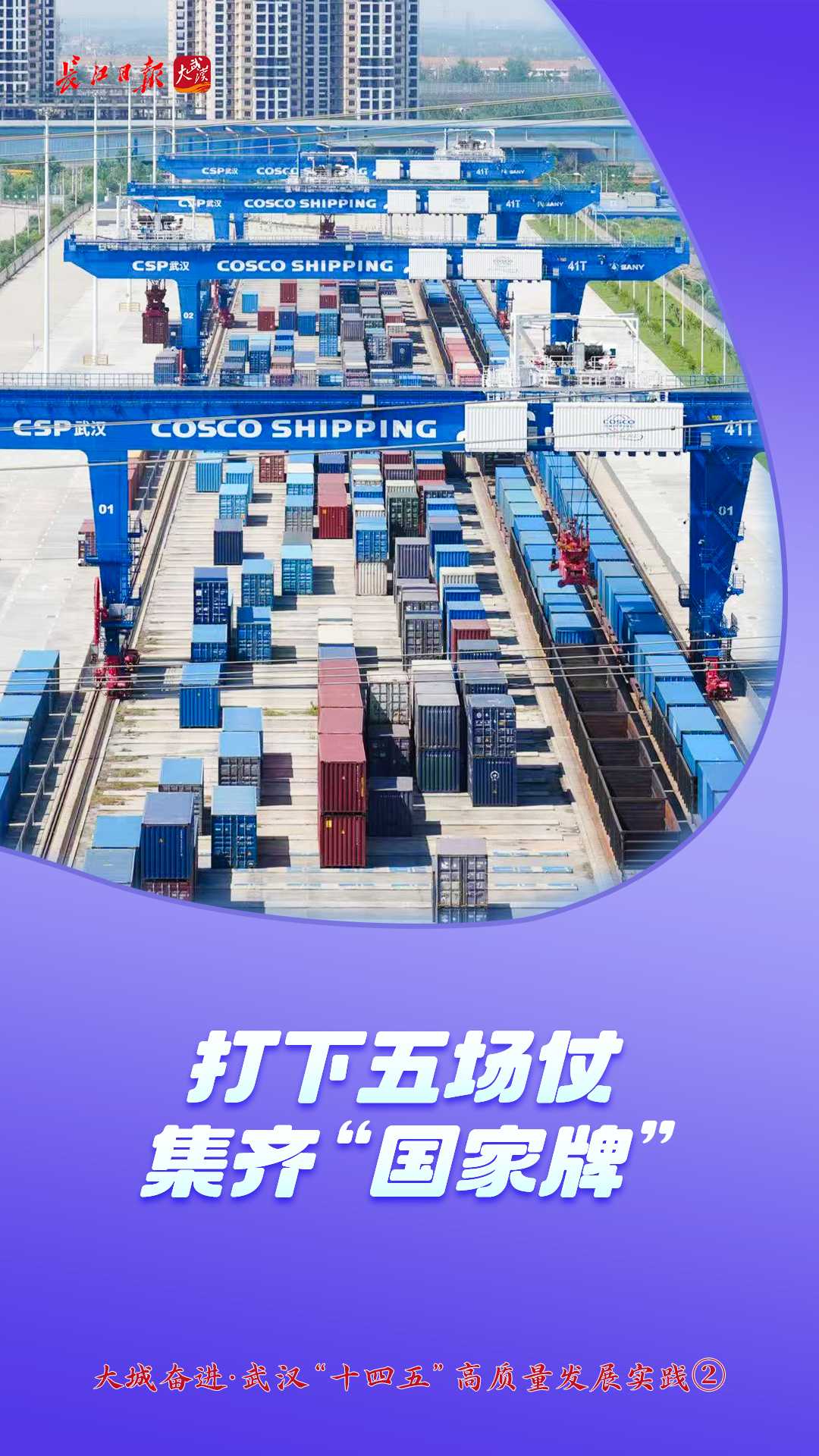
五张“王牌”,枢纽武汉竞逐全球
Chang Jiang Ri Bao· 2025-09-11 04:25
Core Insights - Wuhan has been approved to build a production service-type national logistics hub, completing the layout of five types of national logistics hubs during the "14th Five-Year Plan" period, making it unique among provincial capital cities in China [1][2] - The city is positioned as a key player in reshaping China's economic geography, serving as a "super interface" that connects global resources and markets [1][2] Logistics Hub Development - Wuhan's geographical advantage along the Yangtze River has been crucial in establishing its logistics hubs, differentiating it from other inland cities like Zhengzhou and Changsha [1][2] - The city has successively been approved for five types of national logistics hubs: port-type, land port-type, air port-type, commercial service-type, and production service-type, becoming the second city in China to achieve this after Chongqing [2][3] Economic Connectivity - Wuhan serves as a critical node in the "Belt and Road" initiative, facilitating the movement of goods from inland China to global markets [1][6] - The city has developed a robust logistics network, including 58 stable cross-border routes for the China-Europe Railway Express, enhancing its role in international supply chains [6][7] Infrastructure and Efficiency - The construction of logistics facilities like the Hano International Logistics Park and the Tianhe Airport Bonded Logistics Center has significantly improved customs efficiency and logistics capabilities [6][7] - The logistics system in Wuhan has integrated data management, allowing for seamless transitions between different transport modes, which has improved inventory turnover rates and reduced logistics costs [7][8] Future Prospects - Wuhan aims to leverage its logistics hubs to enhance domestic and international economic circulation, positioning itself as a global logistics center [8][9] - The city is focusing on developing high-tech industries and enhancing service trade, digital trade, and green trade to support its growth as an inland open highland [8][9]


王炸!五大王牌,武汉集齐了
Chang Jiang Ri Bao· 2025-09-11 04:06
Core Viewpoint - Wuhan has been approved to build a production service-type national logistics hub, completing the layout of five types of national logistics hubs, making it a key player in reshaping China's economic geography and connecting global resources [1][7][30] Group 1: Logistics Hub Types - Wuhan has achieved the status of a city with five types of national logistics hubs: port-type, land port-type, air port-type, commercial service-type, and production service-type [1][7] - The port-type hub leverages Wuhan's unique Yangtze River coastline, facilitating the export of goods from central and western China to global markets [8] - The land port-type hub, represented by the China-Europe Railway Express (Wuhan), enhances the city's role as an inland "coastal city" by transporting high-value goods across Eurasia [9] - The air port-type hub, with Tianhe and Huahu airports, supports rapid global distribution of high-tech products, emphasizing speed as a critical factor [10] - The commercial service-type hub has transformed Han Kou Bei into a national-level commercial hub, attracting cross-border e-commerce enterprises [11] - The production service-type hub focuses on high-quality manufacturing and supply chain security, aligning with national strategic needs [12] Group 2: Strategic Advantages - Wuhan's geographical location in central China provides a significant advantage over other non-river cities like Zhengzhou and Changsha, which lack access to the Yangtze River [4] - The city aims to create a highly efficient logistics network that connects domestic and international markets, positioning itself as a crucial node in the global supply chain [16][25] Group 3: Infrastructure and Connectivity - The establishment of the Han-Europe International Logistics Park and the Tianhe Airport Bonded Logistics Center enhances logistics efficiency and supports international trade [17] - Wuhan's logistics network includes 58 stable cross-border railway lines, connecting to 120 cities across 40 countries in Eurasia [17] - The expansion of Wuhan Port and the opening of new shipping routes strengthen its role as a distribution hub in the global supply chain [18] Group 4: Economic Impact - The integration of logistics systems has improved inventory turnover rates for local manufacturers, resulting in significant cost savings [20] - The logistics network supports the growth of key industries such as new energy vehicles, optical electronics, and biomedicine, facilitating their global expansion [26] - The city is actively developing service trade, digital trade, and green trade to enhance its position as an inland open highland [25]
万联晨会-20250911
Wanlian Securities· 2025-09-11 01:03
Core Insights - The report highlights a positive performance in the A-share market, with the Shanghai Composite Index rising by 0.13% to 3,812.22 points, and the Shenzhen Component Index increasing by 0.38% to 12,557.68 points. The ChiNext Index saw a notable rise of 1.27% to 2,904.27 points. The total trading volume in the A-share market reached 1.98 trillion RMB, with net purchases from southbound funds amounting to 7.566 billion HKD [1][6] - The report indicates that the high-end beer segment is experiencing significant growth, with the company achieving a revenue of 3.198 billion RMB in the first half of 2025, reflecting a year-on-year increase of 7.09%. The net profit attributable to shareholders reached 612 million RMB, up by 22.51% year-on-year [7][12] - The company has reported a steady increase in both gross and net profit margins, with the gross margin for the first half of 2025 at 51.85%, an increase of 2.81 percentage points year-on-year, and a net margin of 19.44%, up by 2.34 percentage points year-on-year [7][12] - The report emphasizes the company's strategic focus on high-end products, with revenue from high-end beer reaching 2.364 billion RMB, a year-on-year increase of 15.86%, accounting for 76.25% of total revenue [10][11] - The company is actively enhancing its product matrix and brand presence through various cultural and promotional events, aiming to strengthen its market position and consumer engagement [11] Industry Overview - The report notes that the overall market for high-end beer is expanding, driven by changing consumer preferences and an increasing focus on premium products. The company is well-positioned to capitalize on this trend, with a robust growth strategy in place [7][12] - The food and beverage industry is witnessing a shift towards high-quality and innovative products, with companies like the one under review adapting their strategies to meet evolving consumer demands [13][18] - The report also highlights the competitive landscape within the food and beverage sector, where companies are increasingly focusing on product differentiation and channel diversification to enhance market share [14][15]
武汉GDP每年跃升一个千亿台阶
Chang Jiang Ri Bao· 2025-09-11 00:13
Economic Growth and Transformation - Wuhan's economy has achieved a significant transformation, with GDP surpassing 2 trillion yuan, and an annual increase of 100 billion yuan over the past five years [1] - The city's GDP growth rate for the first half of 2025 is projected at 5.5%, ranking 5th among 15 sub-provincial cities in terms of both scale and growth [1] - The average annual growth rate of social retail sales increased from 3.0% during the 13th Five-Year Plan to 8.8% during the 14th Five-Year Plan [1] Innovation and Industrial Development - Wuhan is shifting its development model from factor-driven to innovation-driven, with the number of high-tech enterprises expected to reach 16,500 by 2024, doubling in three years [1] - The city's industrial output value exceeded 1.67 trillion yuan during the first four years of the 14th Five-Year Plan, with an average annual growth rate of 7.1% [2] - Industrial investment surpassed 200 billion yuan, accounting for nearly 25% of the city's total investment [2] Service Sector and New Economy - The service sector's value added accounted for 92% of GDP last year, with a focus on high-end, digital, and green services [3] - The Hanyang District has developed a multi-level venture capital system, with the pharmaceutical supply chain platform achieving over 27 billion yuan in transactions within a year [3] - The East Lake High-tech Zone has established a strategic emerging industry system, with 5,850 high-tech enterprises and 172 national-level specialized "little giant" companies [3]
国家发改委:推进重点行业产能治理,综合整治无序非理性竞争
Xin Hua Cai Jing· 2025-09-10 23:59
Core Insights - The report indicates that the overall execution of the national economic and social development plan is satisfactory, with positive progress in various indicators such as economic growth, employment, consumption, foreign trade, and residents' income [1][2] Economic Performance - Key areas of performance include proactive macro policies, expansion of domestic demand, optimization of industrial development, deepening of reform and opening-up, and steady progress in regional coordination and urban-rural integration [1][2] Challenges and Risks - The report acknowledges the complex and severe external and internal challenges affecting economic stability, highlighting the increasing uncertainty in the development environment [1][2] Policy Recommendations - Emphasis on maintaining a stable yet progressive approach in economic work, focusing on domestic and international economic coordination, and ensuring policy continuity and flexibility [2][3] Implementation Strategies - The report outlines strategies for the second half of the year, including the implementation of central policies, enhancing consumer spending, and promoting technological and industrial innovation [3][4] Focus Areas - Specific focus on stabilizing employment, businesses, markets, and expectations, while also addressing structural issues in key industries and promoting green and low-carbon development [3][4]
国家发展改革委:要保持政策连续性稳定性 着力稳就业、稳企业、稳市场、稳预期
Xin Hua She· 2025-09-10 23:37
Core Viewpoint - The report indicates that the overall execution of the national economic and social development plan is satisfactory, with positive progress in various economic indicators despite external and internal challenges [1] Group 1: Economic Performance - Economic growth, employment, consumption, foreign trade, and residents' income are progressing well, supported by proactive macro policies and expanded domestic demand [1] - The report highlights six key areas of achievement: proactive macro policies, comprehensive expansion of domestic demand, optimization of industrial development, deepening reform and opening up, steady progress in regional coordination and urban-rural integration, and solid efforts in ensuring people's livelihoods [1] Group 2: Future Economic Work - The focus for the second half of the year is to maintain stability while seeking progress, implementing policies to enhance domestic demand, and promoting high-quality development [2][3] - Key tasks include stabilizing employment, enterprises, markets, and expectations, while ensuring the continuity and flexibility of policies to support economic growth [2] Group 3: Policy Implementation - The report emphasizes the need for effective implementation of central government policies, including proactive fiscal and moderately loose monetary policies to maximize policy effects [3] - It calls for the release of domestic demand potential through consumption initiatives, investment in infrastructure, and support for private enterprises in major projects [3]