高端化

Search documents
金融机构定制化服务助长三角高端装备先进制造领域优质项目落地
Zhong Guo Xin Wen Wang· 2025-10-11 01:32
Core Viewpoint - The 2025 Yangtze River Delta High-Value Patent Operation Competition finals showcased 16 high-quality projects in advanced manufacturing, emphasizing the region's shift towards high-end, intelligent, and green manufacturing [1][2] Group 1: Event Overview - The competition featured projects in various sectors, including industrial robots, smart sensors, and precision equipment [1] - The event was organized by the National Intellectual Property Operation (Shanghai) International Service Platform, highlighting the integration of key technology patents and industrialization solutions [1] Group 2: Support and Resources - The platform aims to enhance intellectual property layout and connect with technology transaction market resources in the Yangtze River Delta [1] - Financial institutions participated in the event, offering customized services such as intellectual property pledge financing and industry chain finance [1][2] - The competition established a service ledger for tech enterprises to provide lifecycle funding support [1]
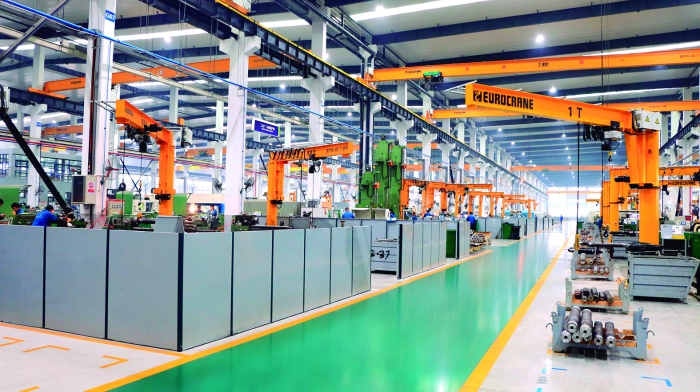
浙江华业夏增富:推动中国螺杆走向世界
Shang Hai Zheng Quan Bao· 2025-10-10 18:20
Core Viewpoint - Zhejiang Huaye aims to strengthen its position in the manufacturing sector by focusing on high-quality production and technological innovation, as expressed by its founder, Xia Zengfu [1][6]. Company Overview - Founded in 1994, Zhejiang Huaye has evolved from a small workshop in Zhoushan to a leading player in the plastic machinery sector, specializing in screw and barrel components [6][7]. - The company has established a strong market presence, achieving a market share increase from 10% in 2021 to 13.2% in 2024, maintaining its position as the industry leader for four consecutive years [8]. Strategic Positioning - Initially focused on producing reliable screws, the company has shifted its strategy to become a technology leader and solution provider in the plastic machinery parts sector, adapting to the growing demands of downstream industries [7][8]. - The company has successfully collaborated with major clients, such as Yizhiming, to develop advanced equipment, showcasing its capability in producing high-quality, high-precision components [8]. Innovation and Development - In 2016, the company partnered with McKinsey to modernize its operations, leading to significant improvements in production capacity and competitiveness [9]. - Zhejiang Huaye is committed to continuous innovation, with 14 ongoing projects focused on new products and processes related to screws and barrels [10][11]. Market Outlook - The company is expanding its focus to include new materials like PEEK, aiming to enhance product value and market coverage [12]. - The overall market for screw barrels in China is projected to grow from 10.8 billion yuan in 2023 to over 20 billion yuan by 2030, indicating a robust growth trajectory for the industry [12]. Future Vision - Zhejiang Huaye envisions a future where manufacturing emphasizes high-end, intelligent, and green development, leveraging digital technologies and AI to enhance efficiency and quality [13]. - The company is dedicated to promoting Chinese manufacturing on a global scale, aspiring to transform Zhoushan into a hub for advanced manufacturing [13].

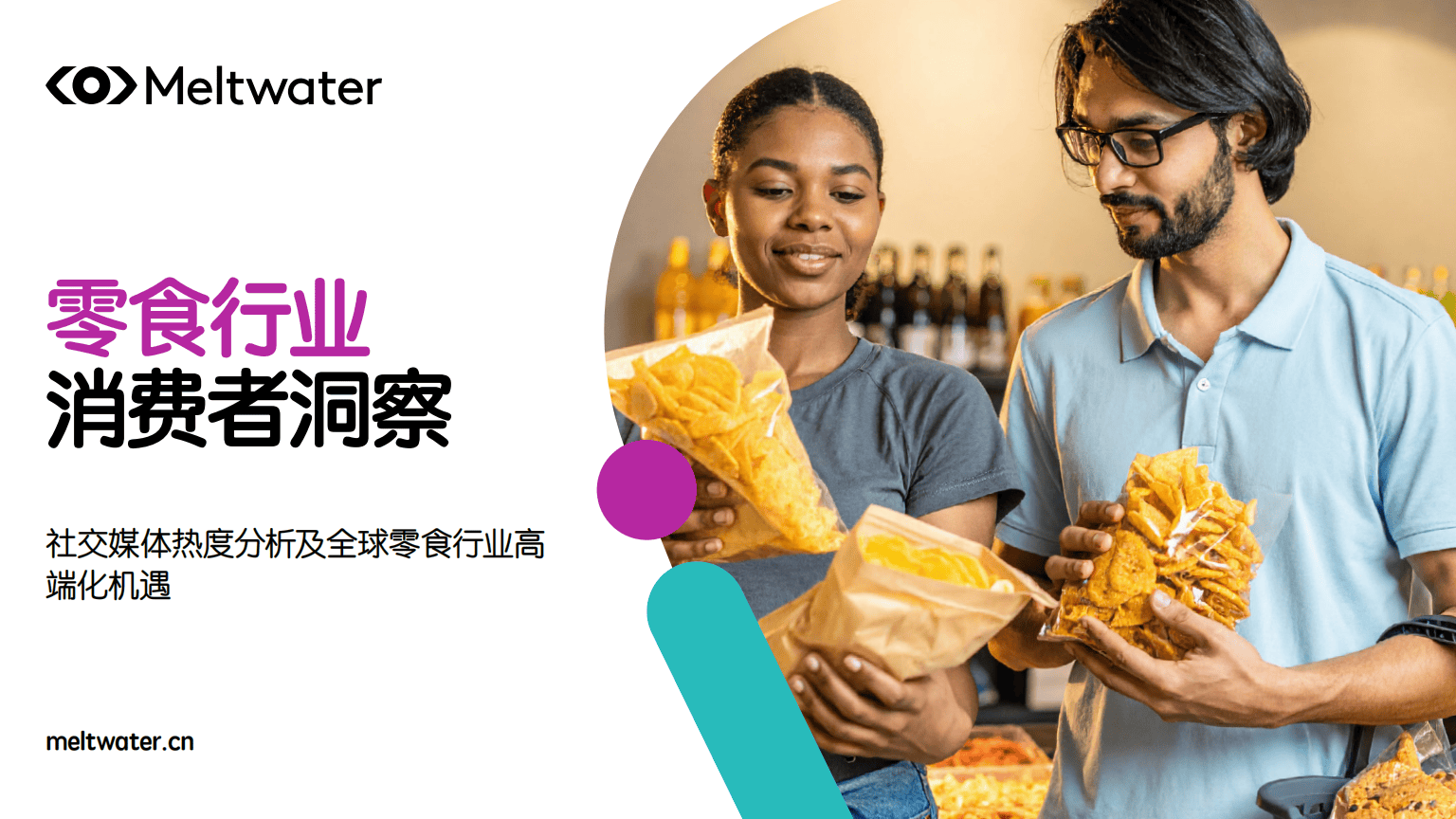
2025年零食行业消费者洞察报告
Sou Hu Cai Jing· 2025-10-09 14:08
Core Insights - The report titled "2025 Snack Industry Consumer Insights" by Meltwater highlights the motivations behind consumer snack consumption, current industry discussions, and marketing directions based on social media data from January 1 to June 30, 2025. The global discussion volume on snack-related topics reached 27.7 million, a 50% increase from the second half of 2024, although interaction volume decreased by 2% [1][4]. Group 1: Consumer Motivations - Three core motivations for snack consumption are identified: 1. For physical and emotional satisfaction, with a preference for convenient and nostalgic snacks, leading to a rise in private label mentions by 31% and discussions on food labeling and safety regulations increasing by 192% [1][10][20]. 2. For exploration and trying new flavors, with taste and texture being the primary focus (33.8% of discussions), and limited edition and regional snacks gaining popularity, exemplified by the Dubai-flavored chocolate which saw a 105% increase in discussion volume and a 341% increase in interaction due to influencer marketing [1][11][36]. 3. For health maintenance, with discussions on health and nutrition topics rising, particularly around protein, iron, and vitamin D, indicating a willingness to pay a premium for health-oriented snacks [1][12][36]. Group 2: Market Trends and Regional Insights - The global snack-related discussion volume in the first half of 2025 was 27.7 million, with significant regional variations: - China saw a 110% increase to 244,000 mentions, Japan increased by 170% to 13.7 million, while the U.S. and U.K. experienced declines of 8% and 13% respectively [1][17]. - The report suggests that understanding the motivations behind snack choices is crucial for marketers to analyze consumer behavior and identify new opportunities for premium products [4][15]. Group 3: Marketing Recommendations - Brands are encouraged to leverage influencer marketing, precisely target audiences, and explore cross-industry collaborations to align with consumer needs and capitalize on premiumization opportunities [1][4].
“双节”高端手机酣战:热门机型一机难求,旗舰店竞相升级体验
2 1 Shi Ji Jing Ji Bao Dao· 2025-10-09 10:26
Core Insights - The opening of Honor's flagship store in Shenzhen marks the implementation of its "Alpha Strategy," enhancing offline experiences and reflecting the competitive landscape of the Chinese smartphone industry ahead of the National Day and Mid-Autumn Festival [1][2] - The smartphone market is experiencing a surge in demand due to the simultaneous launch of high-end flagship models from various manufacturers, creating a concentrated market effect [1][3] Market Trends - The offline consumer traffic has significantly increased, with Suning's sales data showing a 61% year-on-year growth in overall sales and a 73% increase in sales of appliances priced over 10,000 yuan [1] - The demand spike is driven by the release of new models and policies like "trade-in" incentives, leading to a peak in short-term demand [1][4] Supply Chain Dynamics - Popular models are facing shortages, with some having delivery times extending up to two months, particularly for Huawei's Mate XT and Pura 80 series [3][4] - Apple also experiences high demand, with many models out of stock and long wait times for delivery, indicating strong consumer interest in high-end devices [4] Competitive Landscape - The competition in the high-end smartphone market is intensifying, with Counterpoint Research reporting an 8% year-on-year growth in global high-end smartphone sales for the first half of 2025, outpacing the overall market growth [7] - Apple maintains a leading position with a 62% market share in the high-end segment, but faces increasing competition from Huawei and Xiaomi in China [7][8] Consumer Behavior - There is a noticeable shift towards high-end devices, with consumers showing increased loyalty and willingness to upgrade, supported by innovations in technology and brand positioning [8] - Xiaomi reported over a 20% increase in sales of its 17 series during the holiday period compared to previous years, highlighting the trend towards premium products [7][8] Future Outlook - The smartphone market is expected to maintain high demand in the fourth quarter, driven by upcoming sales events like "Double Eleven," with AI technology and ecosystem integration becoming key drivers for brand premiumization [6][9]


2025年中国西服行业发展历程、产业链、市场现状、竞争格局及发展趋势研判:个性化定制是行业发展方向,需求不断增加[图]
Chan Ye Xin Xi Wang· 2025-10-09 01:37
Core Insights - The production and demand for suits in China have been declining due to decreased industry prosperity, widespread market saturation, and increased competition from foreign markets. In 2015, the production of suit sets was 594 million pieces, while it is projected to be approximately 165 million pieces by 2024 [1][5]. Industry Overview - Suits, also known as western-style clothing, are characterized by features such as lapels and pockets, and are typically worn in formal settings. They can be categorized by gender, occasion, production process, and button style [2][3]. Current Industry Status - The suit industry in China is experiencing a downward trend in both production and demand. The production of suit sets is expected to decline by 8.61% year-on-year in the first half of 2025 [5][6]. Consumer Demand - There is a growing demand for personalized and comfortable suits, particularly among younger consumers, especially Generation Z. Key preferences include unique styles (53%), body-shaping designs (51%), and high-quality fabrics (48%) [6][7]. Customization Trend - Personalized customization is identified as the future direction of the suit industry, with the high-end custom suit market expected to reach 6.8 billion yuan in 2024 and potentially 8 billion yuan in 2025 [7][11]. Industry Chain - The upstream of the suit industry includes raw materials like cotton, viscose, and wool, while the midstream involves manufacturing. The downstream consists of retail and customization channels, serving consumers through both online and offline methods [8][9]. Historical Development - The suit entered China in 1911 and has evolved from a single style to a diverse range of options, reflecting cultural shifts. The industry is currently transitioning from scale expansion to category restructuring, driven by technological innovation [9][10]. Competitive Landscape - The Chinese suit industry has shifted from OEM production for foreign brands to developing independent brands with advanced technology. The market is competitive, with major players including HLA, Hongdou, Youngor, and Kute Intelligent [10][11]. Future Trends - The demand for suits is expanding beyond business professionals to the general public, with a focus on quality. Future trends include high-end, eco-friendly, and customized products, supported by advancements in smart manufacturing technology [10][11].


打破“枷锁” 看见未来
Qi Huo Ri Bao· 2025-10-09 00:46
Core Viewpoint - The Chinese glass industry, the largest in the world, is facing unprecedented structural pressures, necessitating a transformation from quantity accumulation to quality enhancement, and from being large to becoming strong [1] Group 1: Industry Challenges - The glass industry is deeply tied to the real estate sector, making it a cyclical industry with a sharp structural imbalance in demand despite high supply [1] - There is an oversupply of low-end float glass while high-end glass, such as ultra-thin electronic glass, remains heavily reliant on imports, leading to a "bottleneck" risk in advanced fields [1][2] - The glass manufacturing process is energy-intensive, with fuel costs accounting for 30% to 40% of total production costs, making companies sensitive to energy price fluctuations [2] Group 2: Environmental and Regulatory Pressures - The glass industry contributes approximately 2% of China's total industrial carbon emissions, facing increasing pressure from stricter environmental regulations and carbon trading markets [2] - The traditional high-energy, high-emission development model for construction glass is becoming unsustainable due to intense market competition and lack of pricing power [2] Group 3: Path to Transformation - High-end development is essential for the glass industry to break through, requiring a shift of resources from low-end to high-value sectors, such as electronic information display glass [3] - Green transformation is viewed as a future competitive necessity, focusing on energy revolution through methods like "coal-to-gas" conversions and exploring disruptive low-carbon technologies [3] - Smart manufacturing is crucial for enhancing competitiveness, involving the use of automation and AI to optimize production processes and reduce human error [4] Group 4: Service-oriented Approach - Transitioning from being mere suppliers of glass to providing comprehensive solutions for end-users is vital for overcoming product homogenization and enhancing value chains [4] - The future leaders in the glass industry will be those that integrate high-end materials, green technology, digital intelligence, and service solutions into their business models [4]
资本赋能产业升级 豫企军团提质焕新
Sou Hu Cai Jing· 2025-10-08 22:15
Core Viewpoint - The capital market in Henan province has played a crucial role in enhancing the quality and efficiency of local enterprises during the "14th Five-Year Plan" period, facilitating technological upgrades and strategic industry improvements [1][2]. Group 1: Capital Market Development - The number of A-share listed companies in Henan increased from 87 at the end of 2020 to 112, with 13 companies listed on the Beijing Stock Exchange, leading the central six provinces [2]. - Since 2021, Henan enterprises have consistently raised over 100 billion yuan in bond financing annually, with the total bond issuance reaching 4,958 billion yuan, doubling since 2021 [2]. - The average cost of bond issuance has decreased to 2.66%, down 212 basis points from its peak [2]. Group 2: Industry Upgrades and Innovations - Leading companies like Muyuan Foods have leveraged capital markets for significant growth, with revenues projected to rise from 56.3 billion yuan in 2020 to 137.9 billion yuan by 2024 [3]. - Muyuan Foods has invested in R&D for smart farming and disease prevention, supported by a 300 million yuan technology innovation bond issued in May [3]. - The company has filed a total of 2,276 patents, with 138 new patents granted in 2024 alone [3]. Group 3: Financial Performance and Returns - By August 2025, the number of A-share listed companies in Henan with a market value exceeding 10 billion yuan reached 35, doubling from the previous year [6]. - Nearly 80% of listed companies reported profits in the first half of the year, with total revenues exceeding 100 billion yuan for 13 companies, and a combined net profit of 447.95 billion yuan, up 39.83% year-on-year [6]. - Companies like Shuanghui Development and Muyuan Foods have significantly increased their dividend payouts, with Shuanghui distributing 22.52 billion yuan in cash dividends in 2025 [7]. Group 4: Financial Tools and Services - The Zhengzhou Commodity Exchange has listed 27 futures and 20 options, capturing 35.03% of the national futures market share [8]. - The exchange has attracted 2.2 trillion yuan in settlement funds and has introduced seven products for foreign traders [8]. - Over 700 enterprises have received risk management services from Henan's futures companies, with agricultural insurance and futures business covering goods worth 39.14 billion yuan [10]. Group 5: Policy Support and Future Directions - The Henan government has implemented policies to support mergers and acquisitions, aiming to enhance traditional industries and foster emerging sectors [11][12]. - The "14th Five-Year Plan" has seen the issuance of various REITs to support infrastructure and promote digital and green transformations [11]. - The province aims to deepen cooperation with major stock exchanges to facilitate more companies in listing and financing [12].
古越龙山(600059):黄酒行业步入结构性拐点 古越龙山三轮驱动价值重估在望
Xin Lang Cai Jing· 2025-10-07 10:27
Core Insights - The yellow wine industry in China is experiencing a structural turning point driven by five key factors: technological breakthroughs, brand value reassessment, channel reconstruction, policy empowerment, and generational change [1] Brand Development - The company leverages its core area advantages as "China's Yellow Wine Capital" to build a strong competitive barrier through a five-brand collaborative matrix, with "Guyue Longshan" as the high-end benchmark brand [1] - "Guyue Longshan" is the only yellow wine brand that holds the titles of "China Famous Trademark," "Chinese Time-honored Brand," and "Asia's Top 500 Brands," continuously supplying the state banquet at Diaoyutai since 1988 [1] - The brand system has undergone three advancements in the past decade, enhancing communication models, optimizing cross-border strategies, and deepening international operations [1] Product Strategy - The company is advancing both high-end and youth-oriented product lines, creating a diversified product matrix [2] - High-end products include "Guoniang 1959" and "Qinghua Zui" series, with successful launches like "Only This Green" leveraging popular cultural IPs [2] - Youth-oriented innovations include yellow wine ice cream, tea-wine fusion, and trendy experiences like coffee yellow wine and sparkling yellow wine [2] Channel Strategy - The company has restructured its channel system to create an efficient network, moving from a fragmented offline channel to a more organized structure [3] - The channel strategy focuses on the restaurant sector as the lead, with supermarkets and distribution channels as core drivers, while also exploring diverse channels like group buying and online sales [3] - The company is transitioning its marketing model from B2B to B2C, enhancing digital marketing and integrating online and offline sales [3] Market Outlook - The yellow wine market is expected to benefit from generational shifts and cultural changes that reshape alcohol consumption patterns [3] - The company aims to capture part of the social demand traditionally dominated by white liquor, leveraging its historical and cultural significance [3] Financial Projections - The company is currently in a critical phase of "quality investment for long-term premium," with expectations for gross margin improvement as national and high-end strategies progress [4] - Revenue projections for 2025 and 2026 are estimated at 2.05 billion and 2.21 billion yuan, respectively, with year-on-year growth rates of 5.7% and 7.8% [4] - Net profit forecasts for the same years are 223 million and 243 million yuan, with growth rates of 8.6% and 9.1% [4]

《关于推进能源装备高质量发展的指导意见》解读丨推动能源装备产业高端化、智能化、绿色化发展 加快培育和发展能源新质生产力
国家能源局· 2025-10-07 02:32
Core Viewpoint - The article emphasizes the importance of advancing the energy equipment industry towards high-end, intelligent, and green development to foster new energy productivity in China [3][4]. Group 1: Development Requirements - High-end development is urgently needed as traditional advantages in the energy equipment sector are diminishing, necessitating breakthroughs in key technologies to support the evolving demands of energy production and consumption [5][6]. - Intelligent development is a trend driven by the integration of new information and communication technologies, which is transforming energy production and consumption methods, leading to significant growth in electricity demand from sectors like new energy vehicle manufacturing [6][7]. - Green development is essential, especially under the dual carbon goals, requiring a shift towards low-carbon and efficient energy production methods, and the adoption of green technologies across the energy supply chain [7][8]. Group 2: Strategies for New Energy Productivity - The focus should be on high-quality development of energy equipment, leveraging major technological advancements and innovations to create a virtuous cycle of equipment upgrades, investment expansion, and industry quality enhancement [9][10]. - Strengthening the quality and brand of dominant industries like nuclear power and new energy is crucial, promoting a cluster-based and ecological development approach to enhance competitiveness [11][12]. - Resources should be directed towards green and digital energy sectors, fostering innovation in key technologies such as advanced nuclear energy and hydrogen energy, while integrating emerging digital technologies into the energy industry [12][13].

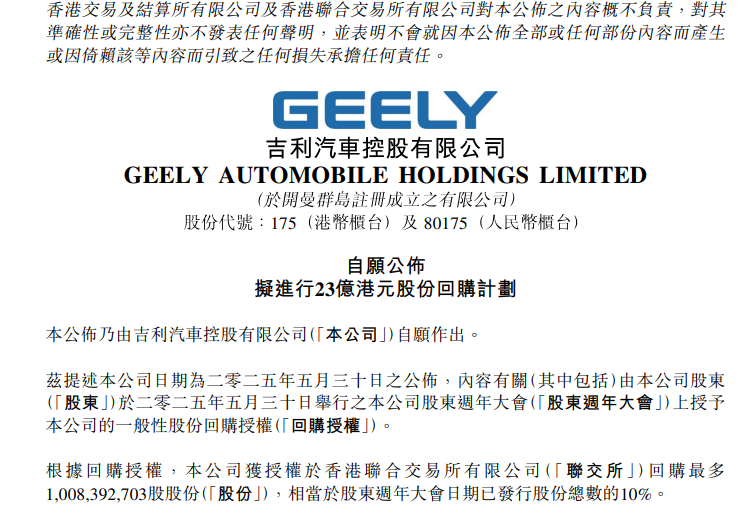
吉利汽车:拟23亿港元回购
Zheng Quan Shi Bao· 2025-10-06 23:29
Core Viewpoint - Geely Automobile announced a share repurchase plan of HKD 2.3 billion, aiming to enhance shareholder value and demonstrate confidence in its business outlook [1][3]. Group 1: Share Repurchase Plan - The board of Geely believes that the share repurchase plan aligns with the best interests of the company and its shareholders, especially in the current uncertain market environment [3]. - The plan will be executed through an automated mechanism in the open market and is subject to certain conditions, including compliance with the Hong Kong Stock Exchange regulations [3]. - The company plans to repurchase up to 1.008 billion shares, representing 10% of the total shares issued as of the date of the 2025 annual general meeting [3]. Group 2: Sales Performance - In September, Geely's monthly sales reached 273,125 units, marking a year-on-year increase of 35% and a month-on-month increase of 9%, with overseas exports accounting for 40,665 units [3]. - The sales of new energy vehicles (NEVs) reached 165,201 units in September, reflecting a year-on-year growth of 81% and a month-on-month increase of 12%, achieving a historical high [3]. - The total sales for 2025, including all brands, are projected to reach 2,170,189 units, representing a year-on-year increase of 46% [4]. Group 3: Market Outlook - Analysts from Guohai Securities view the company's fuel vehicle base as resilient, with expectations for growth driven by electrification, globalization, and premiumization [4]. - According to Kaiyuan Securities, the performance of new vehicles in the second half of 2025 is expected to exceed expectations, with the company's platform-based manufacturing cost advantages translating into the ability to continuously create popular models [4].