
净息差

Search documents
牛市就到这了?
Sou Hu Cai Jing· 2025-07-17 00:54
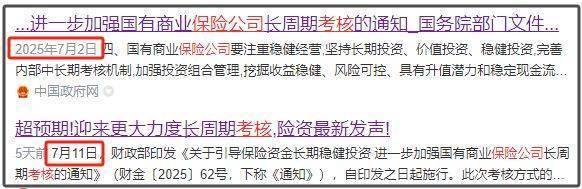
Group 1 - The core viewpoint is that the recent decline in bank stocks is influenced by changes in insurance company assessment periods, encouraging long-term investment strategies rather than short-term risk aversion [2][4][11] - The adjustment in bank stocks began on July 11, coinciding with a government policy announcement [3][4] - The banking sector is experiencing a historical shift, with non-performing loan rates expected to exceed net interest margins for the first time, indicating potential underlying issues [7][8] Group 2 - In the first quarter of this year, bank profits saw a decline for the first time in years, with the six major banks averaging a 2% decrease [9] - The banking sector has historically been conservative in profit reporting, with banks releasing hidden profits during economic downturns to stabilize the market [11] - Current valuations of bank stocks are considered average, but they still outperform other investment options like deposits, bonds, and real estate [12][13] Group 3 - Pop Mart reported a significant increase in revenue and profit for the first half of the year, yet its stock price fell due to market dynamics [14][15] - The high degree of market crowding in sectors like new consumption, pharmaceuticals, and non-bank financials is noted, which can lead to short-term adjustments [19][20] - Despite high growth expectations, Pop Mart's current valuation appears reasonable compared to historical standards, with a projected PE ratio of 34 based on anticipated growth [22][23][29]

花旗:香港银行业资本充足率处于历史高位 升恒生银行(00011)评级至“买入” 上调中银国际(02388)等目标价
智通财经网· 2025-07-16 01:20
Group 1: Core Insights - Citigroup reports that the capital adequacy ratio of the Hong Kong banking sector is at a historical high, providing better visibility for shareholder returns [1] - The Hong Kong banking sector has risen 37% year-to-date, outperforming the Hang Seng Index, with Bank of China Hong Kong showing the strongest gains due to strong buying from southbound funds chasing high dividend stocks [1][2] - Despite recent declines in Hong Kong Interbank Offered Rate (HIBOR) potentially pressuring net interest margins, Citigroup expects profitability in the banking sector to improve as HIBOR gradually normalizes by Q4 2025 [1][2] Group 2: Ratings and Forecasts - Citigroup upgraded Hang Seng Bank's rating from "Neutral" to "Buy" based on three key factors: market consensus reflecting an average credit cost expectation of 50 basis points from 2025 to 2027, a core Tier 1 capital adequacy ratio (CET1) of 21% as of Q1 2025, and revenue forecasts exceeding market expectations by 4% for 2026-2027 [3] - The target price for Hang Seng Bank has been raised from HKD 105 to HKD 135, while the target price for Bank of China Hong Kong has been increased from HKD 33.9 to HKD 40.8 due to stable revenue prospects and asset quality [3] - East Asia Bank's target price has been adjusted from HKD 11 to HKD 11.6 [3]



银行股不可盲目追高
Hua Xia Shi Bao· 2025-07-11 10:23
Group 1 - The core viewpoint of the articles indicates that bank stocks have replaced long-term government bonds as the preferred investment choice in 2025, with all banks experiencing price increases and many reaching historical highs [1][2] - In 2025, 18 banks have set historical highs, with 16 banks increasing by over 20% and 32 banks by over 10%, while the Shenwan Bank Index has risen by 35.49% in the past year [1] - The rise in bank stocks is attributed to economic pressures leading investors to seek high-dividend sectors, similar to the previous year's trend with long-term bonds [1][2] Group 2 - Insurance funds, which were previously focused on local government bonds and real estate bonds, have shifted to bank stocks due to their high dividends that cover liability costs [2] - As of Q1 2025, insurance institutions hold A-share bank stocks valued at 265.78 billion, accounting for 45.05% of their heavy industry allocation [2] - Policy changes have facilitated insurance investments in bank stocks, with multiple instances of insurance companies increasing their stakes in banks in 2025 [2] Group 3 - The issuance of secondary capital bonds and perpetual bonds by commercial banks has accelerated, with over 800 billion issued in 2025, indicating strong capital-raising efforts [3] - The average price-to-book ratio for A-share listed banks was 0.74 as of July 11, 2025, with the highest being 1.09 for China Merchants Bank [3] Group 4 - The price-to-book ratio for major banks has nearly doubled since its lowest point in November 2022, driven by policy support and asset scarcity [4] - The sustainability of the current rise in bank stocks is questioned, as policy support has limits and is aimed at improving the financial health of banks [4] Group 5 - Despite the current profitability of commercial banks, net interest margins are declining, and asset growth is slowing, which may lead to reduced profit growth in the future [5] - The total assets of commercial banks grew by 7.2% year-on-year in Q1 2025, but this is a significant decrease from the previous year's growth of 11.7% [5] Group 6 - Future banking strategies may involve reducing asset scales to alleviate capital pressure, suggesting limited upward momentum for bank stock prices [6] - The rise in bank stock prices is viewed as a temporary phenomenon, and investors are advised to approach with caution [6]






广西贵港农商银行2025年拟发行1亿元同业存单,3月末不良率为2.8%
Sou Hu Cai Jing· 2025-07-11 09:25
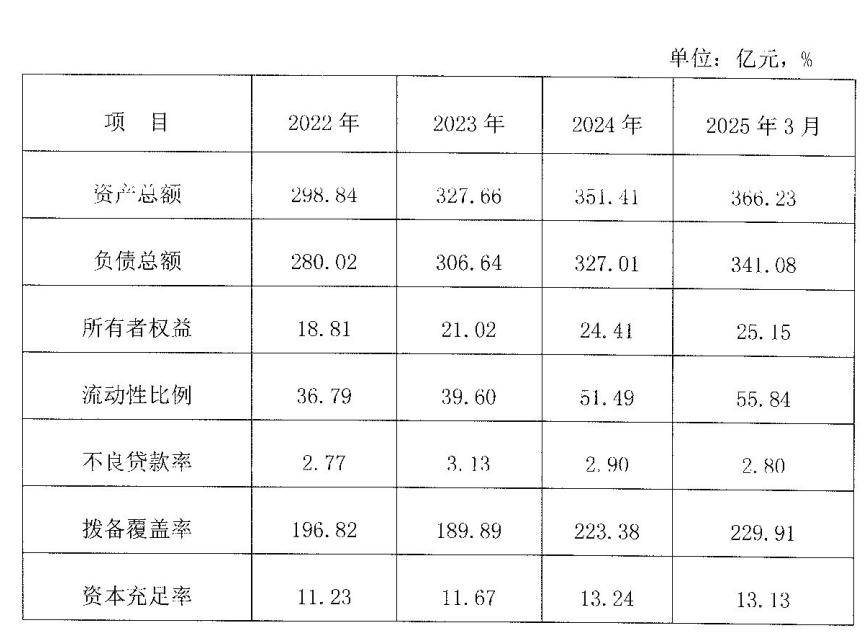
Group 1 - Guangxi Guigang Rural Commercial Bank plans to issue interbank certificates of deposit worth 100 million yuan for 2025 [1] - The bank's total assets reached 34.998 billion yuan in 2024, with a growth rate of 7.28%, and loan balance was 23.859 billion yuan, growing at 5.6% [1] - The bank achieved an operating profit of 716 million yuan in 2024, a year-on-year increase of 3.77%, and as of March 2025, total assets reached 36.623 billion yuan [1] Group 2 - The bank's net interest margin has been declining, from 3.25% in 2022 to 2.72% in 2024, although it slightly rebounded to 2.83% in Q1 2025 [2] - The cost-to-income ratio increased from 30.06% in 2023 to 34.59% in Q1 2025, indicating challenges in cost control [2] - The non-performing loan ratio was 3.13% in 2023, decreasing to 2.90% in 2024 and 2.80% in Q1 2025, but still remains at a relatively high level [2] Group 3 - The bank was established in March 2007, evolving from the Guigang City Rural Credit Cooperative, and was renamed several times, with the latest being Guangxi Guigang Rural Commercial Bank in June 2021 [2] - The bank is under the Guangxi Guigang Steel Group, with a registered capital of 503 million yuan [2] - The top four shareholders hold more than 5% of the shares, with Guangxi Guigang Steel Group holding 9.69% [3]
ETF复盘0710-沪指重返3500点,场内孤品·香港银行LOF(501025)涨超2%
Sou Hu Cai Jing· 2025-07-10 12:26
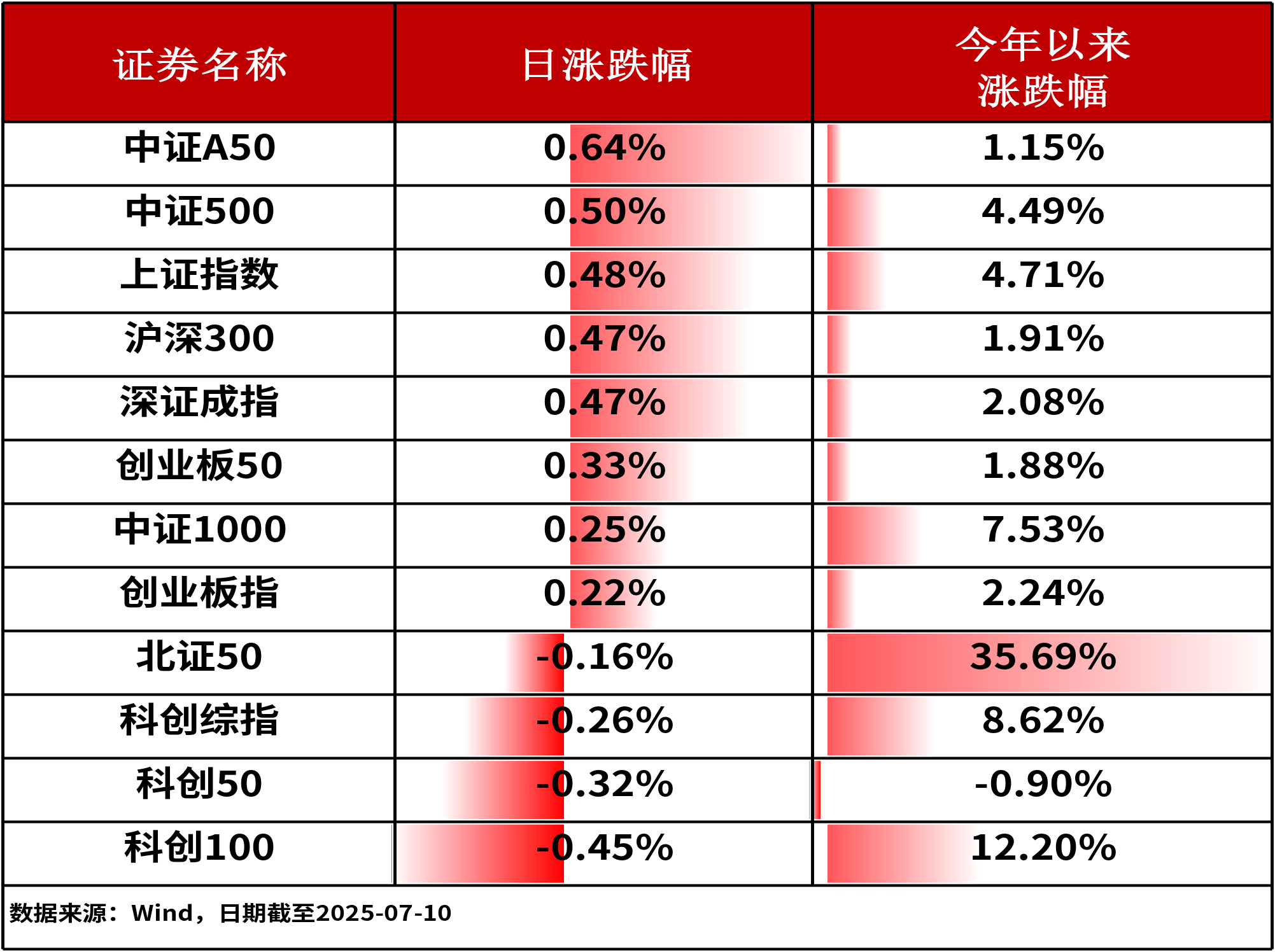
Market Overview - On July 10, A-shares saw all three major indices rise, with the Shanghai Composite Index up by 0.48%, the Shenzhen Component Index up by 0.47%, and the ChiNext Index up by 0.22%, continuing a warming trend [1] - The China A50 Index led the mainstream indices with a rise of 0.64% [2] - In the Hong Kong market, the Hang Seng China Enterprises Index increased by 1.66%, while the Hang Seng Index rose by 0.57% [4][5] Sector Performance - The real estate sector led the gains with an increase of 3.19%, followed by oil and petrochemicals at 1.54%, and steel at 1.45%. Conversely, the automotive sector fell by 0.62%, media by 0.54%, and defense and military by 0.41% [7] Industry Highlights Photovoltaic Industry - The photovoltaic sector is witnessing a positive shift towards breaking the "involution" competition, with leading silicon material companies forming a platform company to acquire excess capacity in the industry. This aims to balance supply and demand by unifying production and sales [7] - Analysts suggest that this transformation will significantly alter the industry ecosystem, moving from "price wars" to "quality pricing," which could lead to an orderly exit of backward production capacity and improve supply-demand dynamics [7] Banking Sector - On July 10, A-share bank stocks strengthened, with the four major state-owned banks reaching historical highs. The banking sector is attracting funds due to its high dividend yield and stable operations [8] - Financial policies are accelerating, with a more flexible monetary policy expected to support credit growth. The focus on the cost of bank liabilities may alleviate net interest margin pressures, indicating positive fundamentals for the banking sector [8]
债市展望:三季度或为债市做多窗口
Sou Hu Cai Jing· 2025-07-10 01:18
Monetary Policy - The central bank implemented a double reduction on May 7, lowering the reserve requirement ratio by 50 basis points and the interest rate by 10 basis points, indicating limited room for aggressive monetary policy adjustments [1] - Future expectations include a potential interest rate cut of 20 basis points and a reserve requirement ratio cut of 50 basis points due to economic downturn pressures in the third quarter [2] - The weighted net interest margin for commercial banks has narrowed to 1.43%, significantly below the acceptable level of 1.8%, raising concerns about bank profitability [2] Fiscal Policy - Government bond issuance has reached nearly 8 trillion yuan by mid-year, a significant increase from approximately 4-5 trillion yuan last year, primarily for debt resolution rather than project financing [1] - The expectation is for accelerated issuance of special bonds for projects in the second half of the year, with an additional 1 to 1.5 trillion yuan in government bonds likely to be issued [3] Bond Market Outlook - The ten-year government bond yield is seen as a key indicator, currently hovering around 1.65%, which is considered a suitable level by the central bank [3] - The bond market is expected to experience a downward trend in yields, with a potential drop to around 1.5% if interest rates are cut by more than 20 basis points [5] - The recommendation for investment includes the ten-year government bond ETF (511260), which reflects the bond market's performance and offers advantages such as T+0 trading [5]
东莞银行IPO“迷雾”:净息差失守、不良攀升,17年冲刺恐成空?
Sou Hu Cai Jing· 2025-07-08 01:33
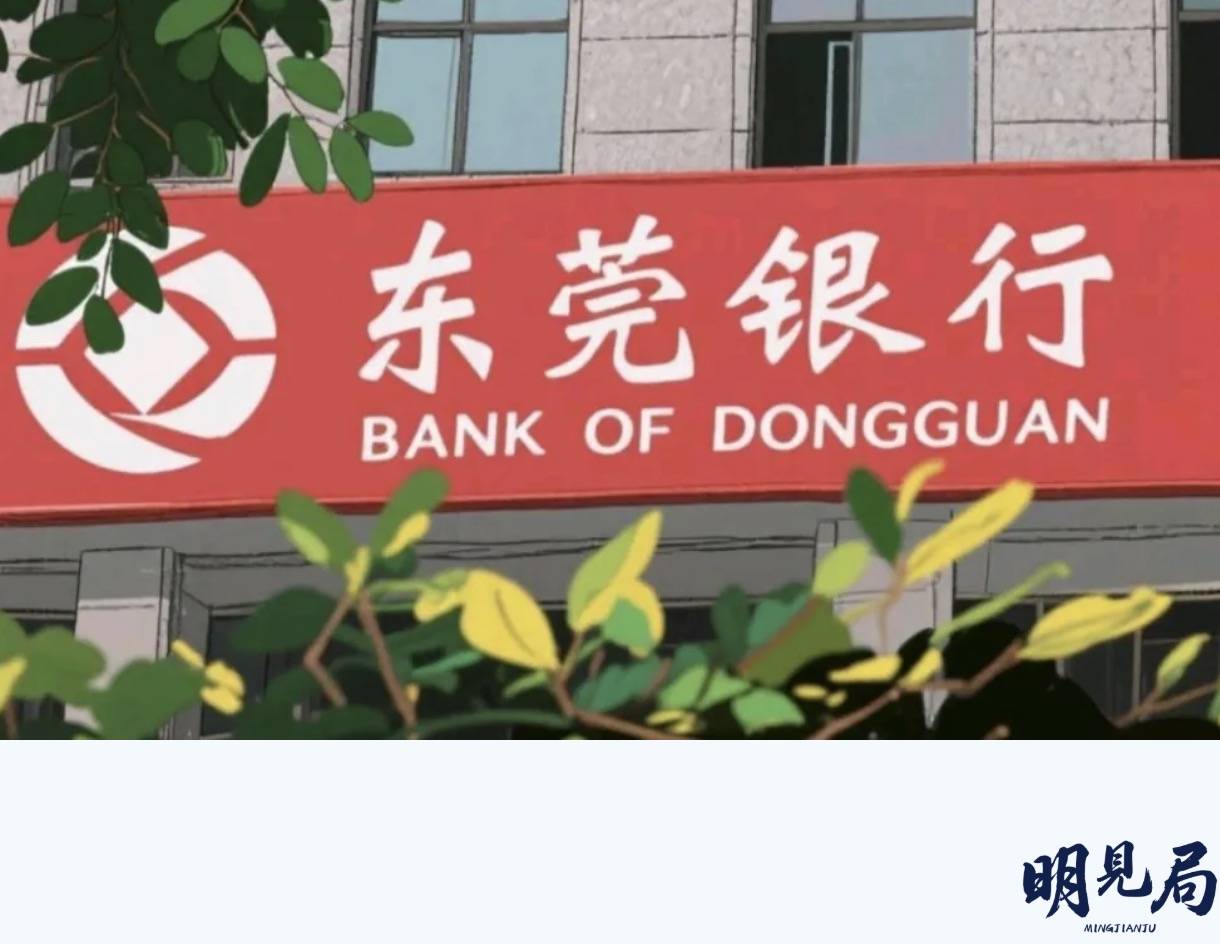
Core Viewpoint - Dongguan Bank has faced a lengthy IPO journey since 2008, with its application recently accepted by the Shenzhen Stock Exchange, reigniting market interest [2] Financial Performance - Dongguan Bank's total assets are projected to grow from 538.42 billion to 672.73 billion from 2022 to 2024, a rise of over 130 billion, with a year-on-year growth of 6.97% in 2024 [3] - The bank's operating income for 2024 is reported at 10.197 billion, down 3.68% from 10.587 billion in 2023, marking the first decline in both revenue and net profit in five years [3] - The net profit attributable to shareholders is 3.738 billion in 2024, down 8.09% from 4.067 billion in 2023 [3] Interest Margin and Income - The net interest margin decreased from 1.61% in 2023 to 1.26% in 2024, with the average yield on loans dropping to 4.01%, a decline of 0.41 percentage points [4] - Interest income fell to 7.119 billion by the end of 2024, a decrease of 14.57% compared to the previous year [4] Non-Interest Income - Non-interest income increased significantly to 3.078 billion in 2024, a growth of 36.50% year-on-year, primarily driven by investment income [4][5] - Investment income reached 2.086 billion, up 35.90%, while fair value changes shifted from a loss of 55 million in 2023 to a profit of 233 million in 2024 [5] Asset Quality - The non-performing loan ratio rose to 1.01% in 2024, up from 0.93% in 2023, with non-performing loans increasing from 2.715 billion in 2022 to 3.707 billion in 2024 [5] - Special mention loans surged to 7.639 billion in 2024, more than doubling from 3.652 billion in 2023, indicating potential future risks [5] Regulatory and Management Issues - Dongguan Bank faced significant regulatory penalties, with fines increasing from 1 million in 2023 to 5.882 million in 2024, reflecting internal management issues [6] - Despite declining performance, the total compensation for senior management rose by 9.8% to 25.15 million in 2024 [6] Industry Context - The banking sector is experiencing intense competition, particularly for small and medium-sized banks, which are struggling with profitability and risk management amid a slowing economy [6][7] - Dongguan Bank must enhance its competitive edge and address its weaknesses to succeed in the IPO process and navigate the challenging market landscape [7]
银行业周度追踪2025年第26周:如何展望银行中报业绩?-20250706
Changjiang Securities· 2025-07-06 09:42
Investment Rating - The industry investment rating is "Positive" and maintained [12]. Core Insights - The Yangtze Bank Index increased by 3.8% this week, outperforming the CSI 300 Index by 2.2% and the ChiNext Index by 2.3%. The bank index has accelerated its rise since July, indicating that the brief adjustment at the end of June was mainly due to institutional rebalancing, with solid fundamentals and core investment logic for bank stocks [2][6][18]. - The performance of city commercial banks exceeded expectations, primarily due to improved net interest margins and stable non-interest income amid bond market impacts. Overall, bank performance is expected to remain stable, with narrowing declines in net interest margins being a key highlight [8][36]. Summary by Sections Market Performance - The Yangtze Bank Index has shown a significant increase, reflecting a strong market sentiment towards bank stocks, particularly those with low price-to-book ratios such as Zheshang Bank, Minsheng Bank, and Pudong Development Bank [2][6][18]. - As of July 4, the average dividend yield of the five major state-owned banks' A-shares has decreased to 3.94%, with a spread of 229 basis points over the 10-year government bond yield. The average dividend yield for H-shares is 5.08%, indicating a more pronounced advantage for H-shares [20][23]. Earnings Outlook - The overall performance of banks is expected to remain stable, with city commercial banks maintaining their strong performance due to improved net interest margins and stable non-interest income. The decline in net interest margins is anticipated to narrow, supporting stable or improved interest income in the first half of the year [8][36][37]. - The asset quality of listed banks is expected to remain stable, with the overall non-performing loan ratio stabilizing due to rapid balance sheet expansion and write-offs. The retail loan non-performing pressure is expected to remain stable compared to last year [9][39][42]. Trading Dynamics - The trading congestion indicators for bank stocks have remained stable compared to the previous week, with a notable rotation towards low PB valuation stocks. The market's overall risk appetite has strengthened compared to previous quarters, indicating a recognition of the core investment logic [28][29].
兰州银行(001227) - 2025年7月3日投资者关系活动记录表
2025-07-03 11:10
Strategic Planning and Development - The bank has established a comprehensive development strategy termed "1363," focusing on becoming a "respected and distinctive boutique bank" through three main directions: "lightweight, digital, and green" [2] - Key initiatives include "customer construction, retail transformation, asset quality improvement, external enhancement, technology empowerment, and management strengthening," aiming to create a business structure driven by small and micro enterprises, retail, and financial markets [2][3] - The bank has seen significant growth in green loans for three consecutive years and a notable increase in manufacturing loans, with supply chain financing achieving new breakthroughs [2] Market Value Management - The bank's market value management includes optimizing corporate governance, encouraging long-term shareholder support, and promoting shareholding stability [4] - Since its listing, the bank has completed three rounds of share increases by major shareholders, totaling 34.87 million shares and 94.22 million yuan [4] - Cumulative dividends since listing amount to 2.398 billion yuan, representing 1.18 times the funds raised during the IPO [4] Capital Supplementation Plans - The bank employs a dual approach for capital supplementation, combining internal capital accumulation with external capital sourcing, and has successfully issued 3 billion yuan in secondary capital bonds [5] - Plans for 2025 include issuing up to 5 billion yuan in perpetual bonds and exploring other capital-raising methods [5] - The bank maintains a balanced dividend policy to ensure shareholder interests while accumulating internal capital for sustainable development [5] Loan Issuance and Structure - In Q1 2025, the bank issued loans and advances totaling 17.621 billion yuan, marking a growth rate of 7.18%, the highest in five years [5] - Corporate loans increased by 15.759 billion yuan (8.12%), while personal loans rose by 2.011 billion yuan (3.38%) [5] Net Interest Margin Trends - The bank's net interest margin (NIM) was 1.43% in 2024 and increased to 1.46% in Q1 2025, despite ongoing downward pressure [6][8] - Strategies to mitigate NIM compression include enhancing liability management, exiting high-cost deposits, and optimizing the deposit structure [6][8] Deposit Rate Adjustments - The bank initiated a new round of deposit rate reductions on May 30, 2025, with expectations for continued declines in the deposit interest rate throughout the year [7] - The bank has managed to slow deposit growth while achieving a sustained decrease in interest rates, aligning with industry trends [7] Bond Market Outlook - The bond market is expected to experience limited downward movement in interest rates, with the 10-year government bond yield stabilizing between 1.65% and 1.7% [9][10] - The bank will continue to engage in bond trading and maintain a stable growth rate in its bond portfolio to ensure liquidity management [10]
★LPR下调呵护经济回升 部分银行同步调降存款利率
Zheng Quan Shi Bao· 2025-07-03 01:56
Group 1 - The Loan Prime Rate (LPR) and deposit rates of large commercial banks have decreased, leading to a reduction in overall financing costs and improving banks' liability costs [1][2] - The 1-year and 5-year LPR have both dropped by 0.1 percentage points to 3.0% and 3.5% respectively, while deposit rates for demand deposits decreased by 0.05 percentage points and term deposit rates fell by 0.15 to 0.25 percentage points [1] - The decline in LPR is expected to stimulate effective financing demand, stabilize credit levels, and support economic recovery [1][2] Group 2 - The average weighted interest rate for new corporate loans in April was approximately 3.2%, down about 50 basis points year-on-year, while the rate for personal housing loans was around 3.1%, down about 55 basis points [2] - The reduction in the 5-year LPR is anticipated to alleviate the interest burden for mortgage borrowers, thereby promoting consumption [2] - For existing mortgage borrowers, the benefits from the 5-year LPR decrease are expected to be realized on the next loan repricing date, enhancing their consumption capacity [2] Group 3 - The banking sector has experienced a rapid decline in net interest margins, currently at historical lows, due to falling loan rates [3] - The recent decrease in deposit rates is a strategic move by banks to maintain a reasonable net interest margin, which is essential for supporting the real economy [3] - The new round of deposit rate cuts, along with recent reserve requirement ratio reductions, provides banks with more room to adjust LPR pricing and alleviate net interest margin pressures [3]