智能化

Search documents
埃泰克沪市主板IPO即将上会 市场份额双冠领跑国产化
Zheng Quan Shi Bao Wang· 2026-01-18 11:51
Core Viewpoint - Wuhu E-Tech Automotive Electronics Co., Ltd. (E-Tech) is set to undergo an IPO review on January 20, focusing on its leading position in the automotive electronic control systems market, particularly in body domain controllers and other electronic products [1] Group 1: Company Overview - E-Tech, established in 2002, specializes in the research, production, and sales of automotive electronic products across four main domains: body, intelligent cockpit, power, and intelligent driving [1] - The company has built a comprehensive independent innovation system over more than 20 years, playing a significant role in the localization of automotive electronics and leading in several niche markets [1] Group 2: Market Position and Performance - According to statistics from the Gaogong Intelligent Automotive Research Institute, E-Tech holds a 25.5% market share in the body domain controllers for China's self-owned brand passenger vehicles in 2024, ranking first for three consecutive years [1] - The company also leads with a 13.83% share in the market for remote physical keys and ranks third with a 6.41% share in cockpit domain and display assembly for self-owned brand passenger vehicles [1] - E-Tech has established a strong customer base, including major domestic automakers like Chery, Changan, and Great Wall, as well as new energy vehicle manufacturers such as Li Auto and Xpeng [2] Group 3: Financial Performance - E-Tech has shown steady revenue growth, with revenues of 2.174 billion yuan, 3.003 billion yuan, and 3.467 billion yuan from 2022 to 2024, and a net profit of 77.44 million yuan, 171 million yuan, and 202 million yuan for the same years [2] - In the first half of 2025, the company achieved a revenue of 1.522 billion yuan and a net profit of 85.61 million yuan [2] Group 4: R&D and Innovation - E-Tech has developed a complete product matrix covering four functional domains, with a focus on smart control and entry systems, digital dashboards, and vehicle display screens [3] - The company has invested heavily in R&D, employing 874 researchers, which constitutes 46.29% of its total workforce, and has allocated 111 million yuan for R&D in the first half of 2025, representing 7.31% of its revenue [3] - E-Tech holds 182 patents, including 49 invention patents, and has established a comprehensive R&D system across multiple locations [3] Group 5: Future Outlook - E-Tech aims to align with the trends of electrification, intelligence, and connectivity in the automotive industry, exploring new applications for next-generation electronic and electrical architectures [4] - The company plans to expand its domestic and international markets, seeking partnerships with more quality clients to enhance its market share and contribute to the high-quality development of China's automotive industry [4]
“难以解释”!业绩暴增,股价微涨......
中国基金报· 2026-01-18 11:02
【导读】上汽集团业绩大幅预增后股价微涨,上市车企集体遭遇市值烦恼 中国基金报记者 邱德坤 1月16日开盘,上汽集团一度涨超3%,但收盘涨幅仅有0.81%,并且仍处于破净状态。 这发生在上汽集团刚抛出"惊艳"市场的业绩预告之后。1月15日晚间,上汽集团发布公告称,预计2025年的归母净利润同比增长438%至 558%。 "我们也觉得难以解释,(公司)发的业绩也是还可以的。"上汽集团证券部工作人员向中国基金报记者表示,公司认为在资本市场是被低 估了。 作为国内头部上市车企,上汽集团遭遇的市值与业绩不匹配问题,也是多家上市车企共同面临的烦恼。多位车企人士表示,资本市场应该 重估其所在车企的价值。 上汽集团是一家国有控股的上市车企。近年来,从国务院国资委到各个地方国资委均要求,国有控股的上市公司要加强市值管理。 问题在于,国有控股上市车企在资本市场较为弱势。截至1月16日收盘,上汽集团以1723亿元的市值排名国有控股上市车企首位,但比亚 迪的市值达8740亿元,两者差距明显。 | 证券简称 | 市盈率(倍) | | 市净率(倍)总市值(亿元) 近一年涨幅(%) | | | --- | --- | --- | --- ...



5.0%、2倍、64%!从跳跃数字感知103682亿千瓦时背后经济发展向新、向智、向绿
Yang Shi Wang· 2026-01-18 08:39
Core Insights - In 2025, China's total electricity consumption is projected to exceed 10 trillion kilowatt-hours, maintaining its position as the world's largest electricity consumer [1][4] - The annual electricity consumption is expected to reach 10,368.2 billion kilowatt-hours, representing a year-on-year growth of 5.0% [4] - China's electricity consumption in a year is more than double that of the United States and surpasses the combined total of the EU, Russia, India, and Japan for 2024 [4] Industry Developments - The second industry remains the primary electricity consumer, accounting for 64% of total consumption, with high-end manufacturing emerging as a new growth point [9] - The electricity consumption for new energy vehicles and wind power equipment manufacturing has seen year-on-year growth rates exceeding 20% and 30%, respectively, indicating a positive trend in industrial upgrading and green development [9] - The third industry and urban-rural residential electricity consumption are rapidly increasing, contributing to 50% of the growth in total electricity consumption [12] Energy Supply and Infrastructure - The achievement of over 10 trillion kilowatt-hours in electricity consumption is supported by a clean and efficient energy supply system, with non-fossil energy installations exceeding 60% of total capacity [15] - In 2025, China will enhance its ultra-high voltage project construction, completing four ultra-high voltage transmission lines, with cross-regional and cross-provincial transmission capacity reaching 370 million kilowatts [17] - The national energy transmission network, characterized by "West-to-East Power Transmission" and "North-to-South Power Supply," is becoming increasingly integrated [17]
豪车“印钞机”熄火?保时捷销量暴跌10%,中国市场四连降
Ge Long Hui· 2026-01-18 06:28
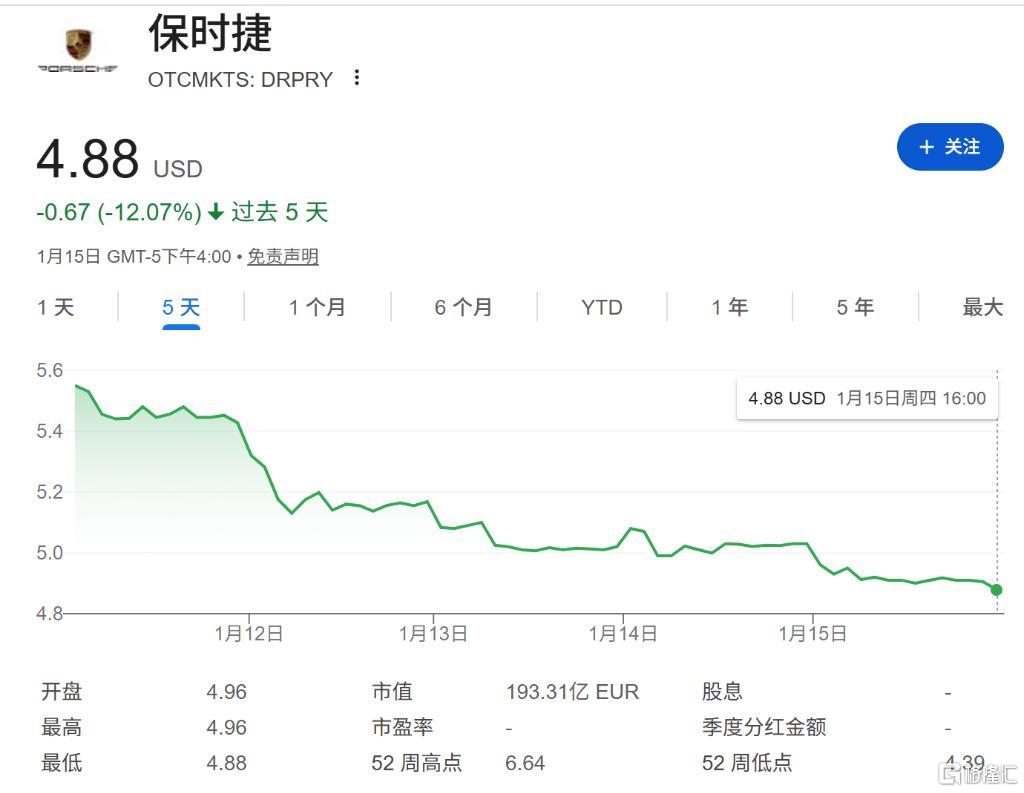
Core Viewpoint - Porsche, once considered a "money printing machine" in the luxury car market, is currently facing unprecedented challenges, with a significant decline in global deliveries and stock price pressure [1][3]. Sales Performance - In 2025, Porsche's global deliveries totaled 279,449 units, a 10% decrease from 310,718 units in 2024 [3][4]. - The most significant decline occurred in the Chinese market, where deliveries fell to 41,938 units, down 26% year-over-year [4][5]. - Sales in the German market dropped by 16% to 29,968 units, while sales in the rest of Europe decreased by 13% to 66,340 units [4][5]. - North America remained Porsche's largest single market, with sales of 86,229 units, showing no significant change compared to the previous year [4]. Market Challenges - The decline in sales is attributed to several factors, including a lack of competitive products in the luxury segment and increased competition from domestic brands in China [5][6]. - Porsche's sales director, Matthias Becker, indicated that the company is facing challenges due to a product line gap, particularly with the 718 and Macan fuel models, and a sustained weak demand for high-end products in China [5][6]. - The company has also been impacted by tariffs on imported cars in the U.S., which have affected profitability [3]. Strategic Adjustments - Porsche plans to close approximately 200 self-built charging stations in China starting March 2026, reflecting the company's struggle in the Chinese market [6][8]. - The company is also considering reducing the number of 4S stores in China to 80, indicating a significant shift in its operational strategy [8]. - Porsche aims to accelerate its electrification strategy, targeting over 80% of new vehicles to be electric by 2030, while continuing to produce existing fuel models until the 2030s [8].
经纬王华东表示是与范皓宇的对话让其坚决要投理想
理想TOP2· 2026-01-18 05:10
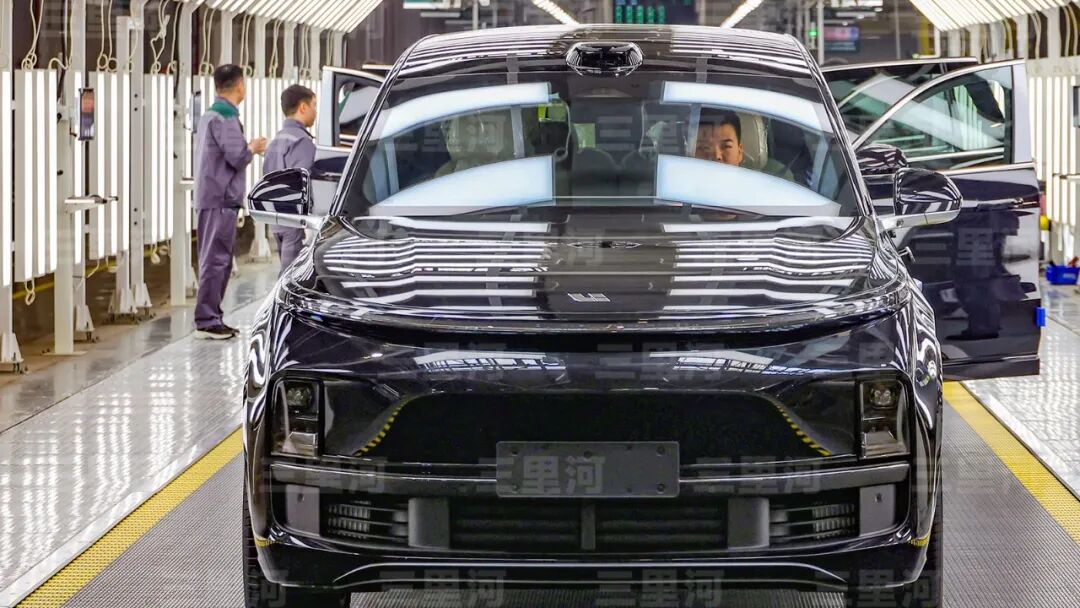
Core Viewpoint - The investment decision in Li Auto was significantly influenced by the organizational structure and management approach of the company, particularly the emphasis on aligning the team and fostering communication among employees [2][3]. Group 1: Organizational Structure and Management - The importance of organizational alignment in the electric vehicle industry was highlighted, as it is crucial for integrating diverse talents from automotive, software, and AI backgrounds [2][3]. - Li Auto's CEO, Li Xiang, invested considerable effort in establishing a clear organizational system that ensures all employees understand the company's direction, which instilled confidence in potential investors [3][4]. - Conversations with team members, such as Fan Haoyu, provided deeper insights into the company's internal dynamics, which were deemed more persuasive than discussions with the CEO alone [5][7]. Group 2: Investment Philosophy - The investment strategy focused on identifying companies capable of producing smart electric vehicles rather than traditional electric vehicle manufacturers, emphasizing the need for a strong software development team [9]. - The decision to invest in Li Auto over competitors like Xiaopeng was influenced by Li Xiang's understanding of consumer preferences and his strategic approach to product development [10]. - The company's ability to efficiently utilize funds was recognized as a significant advantage, particularly in a capital-intensive industry like automotive manufacturing [5][11]. Group 3: Funding Challenges and Support - Li Auto faced significant funding challenges, particularly in 2018 and 2019, where external support from investors like Zhang Ying was crucial for the company's survival and growth [10][11]. - The narrative of seeking financial support from influential figures in the industry, such as Wang Xing from Meituan and Zhang Yiming from ByteDance, illustrates the importance of networking and relationships in securing funding [11].


中国,两个连续全球第一
Xin Lang Cai Jing· 2026-01-18 04:04
Core Insights - The automotive industry is undergoing a significant transformation, with 2025 set to be a pivotal year for China's automotive sector [2][15] - China is expected to maintain its position as the world's largest automotive market, with total vehicle production and sales surpassing 34 million units, and new energy vehicle (NEV) production and sales exceeding 16 million units by 2025 [2][4] Industry Position - China's dominance in the automotive market is reinforced by its leadership in the NEV sector, marking a new era where it holds substantial influence over technology standards, supply chain management, and innovation pace [4][5] - The global automotive competition has shifted from product-centric to an ecosystem competition focused on electrification, intelligence, and connectivity [6] Market Dynamics - The rapid growth of China's automotive industry is characterized by the integration of electrification and intelligent connectivity, creating a competitive advantage during the "14th Five-Year Plan" period [7] - By 2025, NEVs are projected to account for 47.9% of total new vehicle sales, with over 50% market penetration in domestic new car sales, surpassing international forecasts [9] Contributing Factors - The success of the automotive sector is attributed to proactive policy frameworks, significant corporate investments, enhanced consumer awareness, and improved infrastructure [10] - Key advancements include leading battery technologies, the emergence of next-generation batteries, and the expansion of smart driving technologies into lower-tier cities [10] Global Context - China's automotive achievements occur amidst a backdrop of global economic slowdown and complex trade environments, demonstrating resilience against challenges such as de-globalization and trade barriers [11][12] - Chinese automakers are actively expanding into overseas markets through local production, technology partnerships, and brand acquisitions [13] Export Growth - By 2025, China is expected to export over 7 million vehicles, with NEV exports reaching 2.615 million units, marking a significant milestone in global recognition of "Made in China" automotive products [14] - This transition signifies a shift from scale advantages to technological advantages in manufacturing, with NEVs evolving into platforms for smart, connected, and energy-efficient technologies [14] Environmental Impact - The automotive industry's green transformation supports China's dual carbon goals, as NEVs have over 40% lower lifecycle carbon emissions compared to traditional fuel vehicles [14] Future Outlook - The automotive industry's journey continues, with the achievements of 2025 serving as both a significant breakthrough and a new starting point for future advancements [15][16] - China's established advantages in electrification are expected to carry over into the next phase of competition focused on intelligence [16]
新能源车的“硬核”战事,2026年卷向何处?
Xin Lang Cai Jing· 2026-01-18 02:02
Core Insights - The electric vehicle (EV) industry in China is transitioning from reliance on government policies to market-driven growth, marking the end of the "policy infusion" era and the beginning of "self-sustaining" operations [2][4][17] Group 1: Market Dynamics - In 2025, the penetration rate of new energy vehicles (NEVs) in China surpassed 50%, reaching 59.5% by November, indicating a significant shift towards electric vehicles [5][25] - The charging infrastructure has improved significantly, with a total of 19.32 million charging points by the end of November 2025, a 52% year-on-year increase, and over 5,000 battery swap stations established [5][25] - The competition landscape has changed, with Tesla's retail sales in China declining by 4.8% to 625,698 units, while domestic brands like BYD, Geely, and Changan have seen substantial growth [5][27] Group 2: Sales Performance - BYD led the NEV sales in 2025 with 3.48 million units sold, despite a 6.3% year-on-year decline, holding a market share of 27.2% [6][27] - Geely and Changan reported significant sales increases of 81.3% and 26.8%, respectively, with Geely selling 1.56 million units and Changan 789,141 units [6][27] - New entrants like Leap Motor and Xiaomi have emerged as strong competitors, with Leap Motor's sales increasing by 86.3% to 529,503 units and Xiaomi entering the rankings with 411,837 units, a 200.9% increase [6][27] Group 3: Technological Advancements - The focus on "intelligent driving" has intensified, with companies like BYD, NIO, and Xpeng launching advanced driver-assistance systems and AI-driven models [11][32] - Despite advancements, there remains a gap between technology and user experience, with consumers expressing concerns over the reliability of intelligent driving systems [11][35] - The industry is witnessing a shift towards more comprehensive AI models that aim to enhance decision-making capabilities in complex driving scenarios [12][33] Group 4: Future Outlook - Starting in 2026, the EV industry will face new challenges as the government reduces subsidies, shifting the focus to market-driven strategies and user experience [15][38] - The competitive landscape is expected to evolve with a mix of pure electric, hybrid, and range-extended vehicles, as traditional automakers and new entrants adapt to changing consumer preferences [19][40] - Companies are increasingly looking to expand internationally, marking a new phase of competition that emphasizes technology depth, cost efficiency, and brand loyalty [20][41]





中国成为全球首个年用电量突破10万亿千瓦时的国家
Yang Guang Wang· 2026-01-18 00:52
Group 1 - The core viewpoint of the articles highlights that China is projected to become the first country to exceed an annual electricity consumption of 10 trillion kilowatt-hours by 2025, with a cumulative growth of 5.0% year-on-year [1][2] - In 2022, the electricity consumption in the primary industry was 149.4 billion kilowatt-hours, showing a year-on-year increase of 9.9%, while the secondary industry consumed 6,636.6 billion kilowatt-hours, growing by 3.7% [1] - The tertiary industry consumed 199.42 billion kilowatt-hours, with a year-on-year growth of 8.2%, and urban and rural residential electricity consumption reached 158.8 billion kilowatt-hours, increasing by 6.3% [1] Group 2 - The secondary industry remains the dominant electricity consumer, accounting for 64% of total consumption, with high-end manufacturing emerging as a new growth point [1] - The electricity consumption in the new energy vehicle and wind power equipment manufacturing sectors grew by over 20% and 30% year-on-year, respectively, indicating a positive trend in the high-end, intelligent, and green development of industries [1] - The contribution rate of the tertiary industry and urban-rural residential electricity consumption to the overall growth of electricity consumption reached 50%, with the internet and related services showing a growth rate exceeding 30% [2]
安徽三大产业实施方案落地 推动传统产业优化升级
Zhong Guo Jin Rong Xin Xi Wang· 2026-01-17 04:06
Group 1: Core Insights - The Anhui provincial government has issued three implementation plans focusing on the optimization and upgrading of the non-ferrous metals, building materials, and textile industries, aiming for high-quality development through targeted policies [1][4]. - The non-ferrous metals industry aims to achieve a revenue target of 500 billion yuan by 2027, with plans to cultivate two trillion-level industries (copper and aluminum) and two hundred billion-level industries (magnesium and lead) [2]. - The building materials industry targets a revenue of 270 billion yuan by 2027, promoting the synergy between traditional and new materials, with a focus on ultra-low emissions and the elimination of inefficient production capacities [3]. - The textile industry aims for a revenue of 120 billion yuan by 2027, positioning itself as a significant hub for innovative textile manufacturing and fashion branding, with a focus on technology, sustainability, and health [4]. Group 2: Strategic Initiatives - The non-ferrous metals plan emphasizes five key tasks, including optimizing industrial structure, promoting green transformation, and enhancing investment effectiveness, while establishing a comprehensive recycling system for copper and aluminum [2]. - The building materials plan outlines 14 measures to drive innovation and set standards, including the development of high-performance fibers and special glasses, transitioning from scale expansion to quality enhancement [3]. - The textile plan includes seven special actions focusing on innovation, structural optimization, and green quality improvement, with significant achievements in establishing innovation centers and smart factories [4]. Group 3: Policy Support and Implementation - The three plans emphasize policy coordination and integration of resources, aiming to enhance the competitiveness of the entire industrial chain in the three sectors [4]. - The Anhui provincial government will strengthen inter-departmental collaboration and ensure the effective implementation of these initiatives, contributing to the province's industrial foundation and the cultivation of new productive forces [4].
贾国龙、罗永浩微博被禁言,微博CEO回应;谷歌DeepMind CEO:中国的AI模型仅落后美国几个月;2025年漫剧市场规模有望突破200亿元丨邦早报
创业邦· 2026-01-17 01:36
Group 1 - The article discusses the resignation of Song Xuan, the Vice President of Public Relations at Xibei, and the response from founder Jia Guolong, who emphasized that all decisions are ultimately his responsibility and expressed support for Song's future endeavors [3] - Jia Guolong and Luo Yonghao's Weibo accounts have been silenced, with Jia planning to respond to allegations made by Luo regarding Xibei [6] - Smart car has suspended its charging partnerships with several operators, including Star Charging and Teld, due to potential financial pressures, leading to the removal of these charging stations from the Smart app [7] Group 2 - Romashi is clearing inventory of power banks at significantly reduced prices, indicating a slight loss on clearance sales due to previous production before a certification was revoked [9] - Huawei, Xiaomi, and other brands have been included in Apple's trade-in program, allowing users to receive discounts on new iPhones when trading in older devices [9] - GAC Group has established a new business unit for the Trumpchi brand, with a leadership team composed of experienced personnel from within the company [9] Group 3 - Beijing Hyundai plans to launch four new products by 2026, including two electric vehicles, and is collaborating with Momenta to enhance advanced driver assistance systems [10] - WeRide has announced that its global fleet of Robotaxis has surpassed 1,000 units, with operations in cities like Guangzhou and Abu Dhabi [10] - Anthropic has appointed a former Microsoft executive as the General Manager for India, indicating its expansion plans in the region [11] Group 4 - The Japanese government has requested social media platform X to take measures against the misuse of its AI tool Grok for creating inappropriate content [13] - Google's DeepMind CEO stated that Chinese AI models are only a few months behind those in the US, highlighting the rapid advancements in China's AI sector [13] - Ford is in talks with BYD for battery supply for its overseas hybrid vehicle production, indicating a strategic partnership in the electric vehicle supply chain [15] Group 5 - The market for animated short dramas (manga) is projected to exceed 20 billion yuan by 2025, attracting a significant influx of talent into the industry [22] - Porsche has announced a 10% decrease in global deliveries for 2025, primarily due to supply chain issues related to EU regulations affecting certain models [23]