净息差

Search documents
Vatee外汇:欧洲银行股还能在“2025年下半场”继续狂飙吗?
Sou Hu Cai Jing· 2025-07-02 10:45
Group 1 - The European banking sector delivered its best performance since 1997 in the first half of 2025, with the Stoxx 600 Bank Index rising by 29%, and many leading stocks reaching their highest levels in a decade [1] - The net interest margin, which had benefited from the European Central Bank's interest rate hikes and recovering loan demand, is expected to decline as interest rates are projected to decrease, potentially compressing banks' profit margins [1][4] - Investors will focus on cost control and non-interest income as banks face the challenge of maintaining profitability without the tailwind of significant interest rate hikes [1][4] Group 2 - Valuation recovery has been largely priced in, with Deutsche Bank, UniCredit, and Santander seeing stock price increases between 50% and 80% year-to-date, and their price-to-book ratios moving above the ten-year average [3] - If economic growth falls short of expectations or credit costs rise, current valuations may lack a safety cushion, especially given the weak manufacturing sentiment and ongoing geopolitical risks [3] - M&A-driven premiums are becoming harder to replicate, as evidenced by the cautious stance of potential buyers regarding high premiums and capital usage, with UniCredit's CEO stating they are no longer considering acquiring Deutsche Bank [3] Group 3 - The second half of the year will be determined by the quality of real earnings, cost management, and asset quality cycles, as the market transitions into a period of interest rate cuts and regulatory changes [4] - The key question is which banks can maintain stability and profitability in a cooling market, as this will dictate the sector's performance in the latter half of the year [4]


货币市场日报:7月1日
Xin Hua Cai Jing· 2025-07-01 14:01
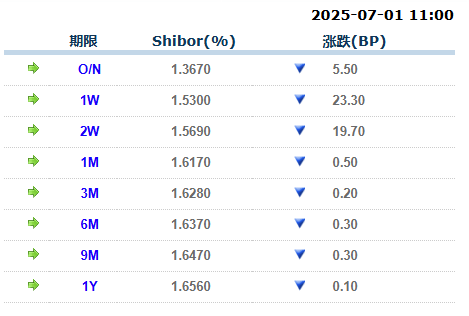
Group 1 - The People's Bank of China conducted a 131 billion yuan 7-day reverse repurchase operation at an interest rate of 1.40%, maintaining the previous rate, resulting in a net withdrawal of 275.5 billion yuan due to 406.5 billion yuan of reverse repos maturing on the same day [1] - The Shanghai Interbank Offered Rate (Shibor) saw declines across all maturities, with the 7-day and 14-day rates leading the drop; specifically, the overnight Shibor fell by 5.50 basis points to 1.3670%, the 7-day Shibor decreased by 23.30 basis points to 1.5300%, and the 14-day Shibor dropped by 1.10 basis points to 1.7660% [1][2] Group 2 - In the interbank pledged repo market, the R001 rate plummeted by over 80 basis points, with significant increases in transaction volumes; the weighted average rates for DR001 and R001 fell by 14.3 basis points and 84.6 basis points, respectively, with transaction amounts rising to 9.64 billion yuan and 222.68 billion yuan [6] - The money market rates showed a trend towards easing, with overnight rates trading around 1.40% and 7-day rates around 1.58% by the end of the day, indicating a shift to a more relaxed liquidity environment [10] Group 3 - The China Banking Research Institute reported that the net interest margin for commercial banks in the first quarter of 2025 was 1.43%, a year-on-year decrease of 0.11 percentage points, marking a historical low; however, the decline rate has narrowed compared to the same period in 2024 [13] - The China Fund Industry Association indicated that in May 2025, 132 new asset-backed special plans were registered, with a total new registration scale of 120.619 billion yuan [13]
中国银行研究院:净息差下降趋势收窄 商业银行利息业务下行趋势将缓解
Zhong Guo Jin Rong Xin Xi Wang· 2025-07-01 11:56
Core Insights - The report from the Bank of China Research Institute indicates that the net interest margin (NIM) of Chinese commercial banks is expected to be 1.43% in Q1 2025, a year-on-year decrease of 0.11 percentage points, marking a historical low [1] - However, the downward trend in NIM is expected to ease compared to the same period in 2024, with pressures on interest income anticipated to persist in the first three quarters of 2025 but with some alleviation [1] Group 1: Factors Affecting Net Interest Margin - The decline in NIM is attributed to several factors: the adjustment of the Loan Prime Rate (LPR) leading to the repricing of existing loans, the orderly resolution of implicit debt, and weakened demand increasing pricing pressure on bank assets [2] - Positive factors contributing to alleviating the downward pressure on NIM include major banks reducing deposit rates, with significant cuts in both current and fixed deposit rates in May 2025 [2] Group 2: Loan Rates and Trends - The weighted average interest rate for new corporate loans in March 2025 was 3.26%, down 0.47 percentage points year-on-year, while the rate for new personal housing loans was 3.13%, down 0.56 percentage points year-on-year [1] - The report suggests that the pricing of new loans is stabilizing, indicating a potential shift in the interest rate environment [1] Group 3: Profitability Outlook - It is projected that the net profit and operating income of commercial banks in the first three quarters of 2025 will remain largely unchanged compared to the same period in 2024 [3]

洪偌馨: 招行难返2%,银行净息差「临界点」在哪儿?
Xin Lang Cai Jing· 2025-06-30 03:25
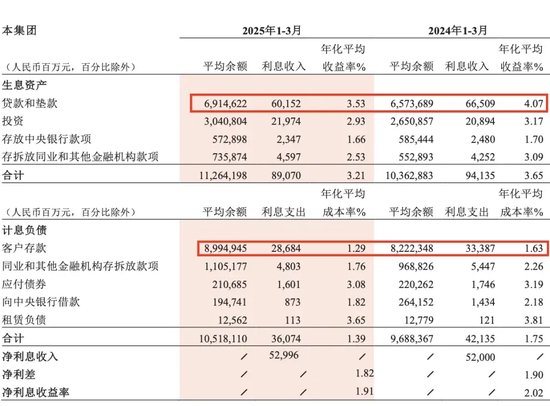
Core Viewpoint - The recent shareholder meeting of China Merchants Bank (CMB) highlighted significant concerns regarding the downward pressure on net interest margin (NIM), with management acknowledging the challenges in returning to a NIM above 2% [1][2][3]. Financial Performance - CMB's NIM decreased from 1.98% in 2024 to 1.91% in Q1 2025, with the bank's president admitting the difficulty in recovering to previous levels [2][5]. - In Q1 2025, the annualized average yield on loans and advances was 3.53%, down 0.54 percentage points year-on-year [4]. - The average cost of customer deposits fell to 1.29%, a decrease of 0.34 percentage points, but this was insufficient to counteract the narrowing NIM [5]. Industry Context - The overall banking sector's NIM was reported at 1.43% in Q1 2025, with the average non-performing loan (NPL) ratio at 1.51%, indicating a concerning trend where NIM is below NPL rates [6][7]. - A significant number of listed banks (80%) reported NIMs below the regulatory threshold of 1.8%, with some banks, like Shengjing Bank, dropping to as low as 0.8% [10][11]. Challenges and Comparisons - The current environment reflects a broader trend in the banking industry, reminiscent of Japan's prolonged period of declining NIMs, which saw rates drop to historical lows [18]. - CMB's situation is compounded by insufficient credit demand and the impact of interest rate adjustments on asset yields, leading to a more competitive and challenging landscape [5][12]. Strategic Insights - Some banks, particularly private banks, maintain higher NIMs, often due to their focus on personal loans, which are subject to intense competition and risk [13][14]. - The need for banks to adapt their business structures and strategies is evident, as many face pressures to maintain sustainable operations amidst declining NIMs [15][19].

香港金管局:一季度香港零售银行整体除税前经营溢利同比增加15.8% 净息差收窄至1.51%
智通财经网· 2025-06-27 11:22
Core Insights - The Hong Kong banking system remains robust with ample capital and liquidity as of Q1 2025 [1][2] - Retail banking operating profit before tax increased by 15.8% year-on-year, driven by growth in foreign exchange and derivative income, as well as fees and commissions [1] - The net interest margin for retail banking narrowed to 1.51% from 1.53% in the same period last year [1] Loan and Deposit Trends - Total loans in the Hong Kong banking sector increased by 0.6% year-on-year, with loans used in Hong Kong and outside Hong Kong rising by 0.8% and 1.1% respectively [1] - Trade financing saw a decline of 4.7% year-on-year [1] - Total deposits increased by 3.5% year-on-year, with Hong Kong dollar deposits and US dollar deposits rising by 5.1% and 1.7% respectively [1] Asset Quality and Liquidity - The specific classified loan ratio in the Hong Kong banking system slightly increased from 1.96% at the end of Q4 2024 to 1.98% at the end of Q1 2025 [2] - The average liquidity coverage ratio for Class 1 institutions was 182.5%, significantly above the 100% regulatory minimum [2] - The total capital ratio for locally registered authorized institutions was 24.2% as of March 2025, well above the 8% international minimum requirement [2]
中长期大额存单为何纷纷退场
Jing Ji Ri Bao· 2025-06-26 22:04
Core Insights - Recent trends show that many medium and large banks, as well as urban commercial banks, are withdrawing five-year large-denomination certificates of deposit (CDs), with three-year CDs also becoming less available, leaving two-year CDs as the most common option [1] - The interest rates for large-denomination CDs have dropped to the "1s," indicating a significant decline in their attractiveness as a savings tool for banks [1] - The narrowing of banks' net interest margins, which fell to 1.43% in Q1 2023, is a key factor driving this trend, as banks seek to lower long-term funding costs to alleviate operational pressures and support the real economy [1][2] Group 1 - The withdrawal of medium and long-term large-denomination CDs will effectively relieve pressure on banks' net interest margins and optimize their financial structures [2] - Banks are expected to adjust their liability structures by increasing short-term deposits, structured deposits, and short-term wealth management products to replace the high-cost long-term CDs [2] - This shift allows banks to allocate more resources to support the real economy, reduce overall operating costs, enhance profitability, and mitigate financial risks [2] Group 2 - In response to market demand, banks are likely to accelerate the development of financial markets and introduce new financial products and services [2] - Customers can diversify their investment portfolios based on their risk tolerance and investment goals, with options such as government bonds for low-risk preferences and cash management products or money market funds for those needing higher liquidity [2] - When building investment portfolios, customers should consider their actual circumstances, including investment experience, expected returns, risk tolerance, and liquidity needs [2]
减费让利转向花式增收,银行借中收业务求突围
Di Yi Cai Jing· 2025-06-26 11:22
Core Insights - The banking industry is facing challenges in balancing profitability and customer satisfaction due to shrinking net interest margins, prompting a shift towards increasing fee-based income from intermediary services [1][4][6] Group 1: Fee Adjustments and Revenue Generation - Several banks, including both small and large institutions, have recently announced new or adjusted service fees, such as charging for credit reports and ATM withdrawals [2][3] - The adjustments in service fees are primarily aimed at enhancing intermediary business income to counteract the pressure from declining net interest margins [5][6] - Regulatory data indicates that the net interest margin for commercial banks fell to 1.43% in Q1 2025, marking a historical low, while non-performing loan rates increased, further squeezing traditional interest income [4] Group 2: Compliance and Customer Relations - Banks are required to comply with the "Commercial Bank Service Price Management Measures," ensuring that any new or adjusted fees are properly registered and publicly announced [7] - The importance of service fees has grown among consumers, influencing their choice of banking services, which may lead to a shift towards providers offering better value [7][8] - The introduction of new fees is seen as a necessary measure to cover operational costs and improve service quality, but it also raises the challenge of managing customer experience effectively [6][8]



招商银行王良谈错失ETF基金先机:加大布局多种基金产品
Sou Hu Cai Jing· 2025-06-26 06:25
Group 1: Core Views - The net interest margin (NIM) of the banking industry in China has dropped to 1.43%, which is below the average non-performing loan (NPL) ratio of 1.51%, posing significant challenges for sustainable development in the banking sector [5][6][7] - The bank aims to maintain a leading position in NIM while ensuring it covers all costs and continues to create value in its asset and credit businesses [7] - The bank acknowledges past shortcomings in proactively engaging with ETF funds and plans to enhance its product offerings in the future [8][9] Group 2: Financial Investments - As of the end of the reporting period, the bank's financial investments amounted to 617.018 billion yuan, with a proportion of 16.65%, reflecting a gradual increase from previous years [3] - The increase in financial investment assets is attributed to proactive asset allocation and changes in the financing needs and market conditions [3][4] - The bank is focusing on low-risk, low-capital-consuming bonds due to the structural changes in financing and the need for stable returns [4] Group 3: Net Interest Margin - The bank's NIM was reported at 1.91% for Q1, down from 1.98% the previous year, indicating a continuing downward trend [6][7] - The bank's NIM is expected to face difficulties in returning to the 2%-3% range due to low loan yields and already low funding costs [7] - The bank is adapting to the low-interest-rate environment by accelerating its transformation in various areas, including internationalization and digitalization [7] Group 4: Fund Sales - The bank has recognized its past lack of foresight in the ETF market and is now working to correct this by expanding its range of fund products [8][9] - The bank has strengthened partnerships with leading asset management companies and improved its fund distribution capabilities [9] - Recent sales of newly launched public funds have shown promising results, indicating the bank's strong sales capabilities in the fund market [9]

银行“断舍离”!低波固收类产品或补位中长期大额存单
2 1 Shi Ji Jing Ji Bao Dao· 2025-06-26 05:03
Core Viewpoint - The decline in interest rates has diminished the attractiveness of large-denomination certificates of deposit (CDs) compared to regular fixed-term deposits, leading to a reduction in their availability as banks adjust their liability management strategies in response to pressure on net interest margins [1][4]. Group 1: Interest Rate Trends - As of May 2025, the average interest rates for various fixed-term deposits have decreased significantly, with the 3-month average rate at 1.004%, 6-month at 1.212%, and 1-year at 1.339%, among others [2]. - The average interest rates for large-denomination CDs have also fallen below 2%, with the 3-month average at 1.239% and the 5-year average at 1.700% [2][3]. Group 2: Supply and Demand Dynamics - The supply of large-denomination CDs is declining, with many banks, including major national banks, ceasing to offer medium- to long-term CDs [3][4]. - Some banks have limited the availability of even short-term large-denomination CDs, with only a few institutions offering them under strict conditions [3]. Group 3: Strategic Adjustments by Banks - Banks are actively adjusting their product structures by phasing out medium- to long-term large-denomination CDs to manage high liability costs and stabilize net interest margins [4][5]. - The overall net interest margin for banks has reached historical lows, prompting a shift in strategy to reduce high-cost long-term liabilities [4][5]. Group 4: Market Outlook and Investment Alternatives - The ongoing decline in deposit rates suggests that large-denomination CDs may continue to lose their appeal, with analysts predicting further decreases in their rates [5]. - In the current low-interest environment, investors are advised to adjust their expectations and consider alternative investment options, such as low-volatility fixed-income products with maturities between six months and three years [5].
银行大额存单加速“消失”?
Sou Hu Cai Jing· 2025-06-26 03:04
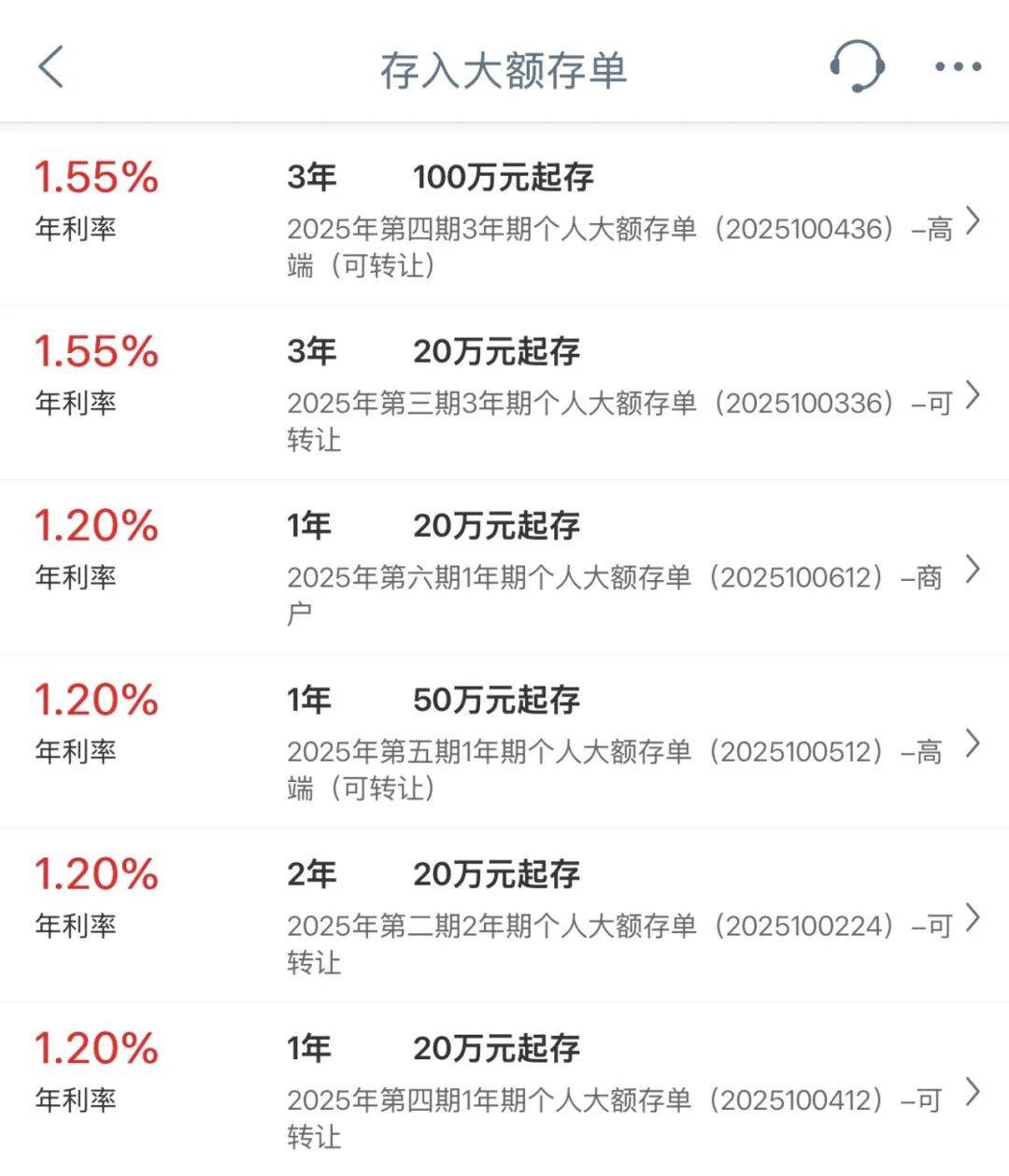
Core Viewpoint - A new wave of interest rate cuts has begun, leading to a decline in fixed deposit rates across commercial banks, making large-denomination certificates of deposit (CDs) less attractive than before [1][2]. Group 1: Deposit Rate Trends - The average interest rates for fixed deposits have dropped significantly, with medium to long-term rates entering the "1% era." The average rates for various terms in May are as follows: 3-month at 1.004%, 6-month at 1.212%, 1-year at 1.339%, 2-year at 1.428%, 3-year at 1.711%, and 5-year at 1.573% [1]. - For large-denomination CDs, the average rates in May are: 3-month at 1.239%, 6-month at 1.459%, 1-year at 1.561%, 2-year at 1.648%, 3-year at 2.069%, and 5-year at 1.700% [1]. Group 2: Changes in Large-Denomination CDs - Major banks like ICBC, ABC, and BOC have reduced the interest rates for 3-year large-denomination CDs to 1.55%, while 1-year and 2-year products are now at 1.2% [2]. - Several banks have removed 5-year large-denomination CDs from the market, and some have limited the purchase of high-rate products or even discontinued certain offerings [4]. Group 3: Market Dynamics and Future Trends - The decline in long-term large-denomination CDs reflects banks' proactive adjustments in response to pressure on net interest margins, indicating a shift in cost control and liquidity management strategies [5]. - Analysts suggest that the low interest rate environment is prompting banks to restructure their liabilities and business models, moving from a focus on scale to quality and efficiency [5]. - Future fund flows from depositors are expected to shift towards non-bank financial products, return to the real economy, and temporarily favor small and medium-sized banks due to delayed rate adjustments [6].