
智能化

Search documents
销量下滑,却高调争“第一”,一汽奥迪真的翻身了吗?
Xin Jing Bao· 2026-01-16 07:57
转自:贝壳财经 一汽奥迪的销量颓势,会延续到2026年吗?燃油豪华车市场第一的含金量又有多高?@新浪眼 全文>> 表面上来看,奥迪似乎是打了一场漂亮的翻身仗。不过,仔细看来却是另一番风景。一汽奥迪在华57万 的年度销量,仍是连续第二年下滑,且自2020年来首次跌破60万辆。 同时,在电动化和智能化如火如荼的当下,传统豪华汽车品牌的竞争力正在下降,市场份额不断被蚕 食。面对严峻的形势,BBA们也在积极转型以求增长。 #一汽奥迪销量连续两年下滑#【销量下滑,却高调争"第一",一汽奥迪真的翻身了吗?】#一汽奥迪自 宣销冠数字迷局#一汽奥迪躺着赚钱的日子,正在渐行渐远。 近日,一汽奥迪发布了2025年的销量数据,宣称燃油车销量时隔六年重回燃油豪华车市场第一。消息传 出后引发广泛关注,并一度登上了微博热搜。 ...
新闻1+1丨产销十七连冠 中国汽车下一步怎么走
Yang Shi Xin Wen· 2026-01-16 06:46
Group 1 - The core viewpoint of the articles highlights that China's automotive industry is set to achieve record production and sales figures in 2025, with production reaching 34.53 million vehicles and sales at 34.40 million vehicles, marking a year-on-year growth of 10.4% and 9.4% respectively, maintaining its position as the world's largest automotive market for 17 consecutive years [1][3][11] - The production and sales of new energy vehicles (NEVs) are projected to reach 16.63 million and 16.49 million units respectively in 2025, reflecting a year-on-year growth of 29% and 28.2%, indicating strong government support and technological advancements in the NEV sector [3][5][11] - The Chinese automotive industry is undergoing a significant transformation, focusing on enhancing core competitiveness and creating new growth opportunities amidst increasing competition and market saturation [1][5] Group 2 - The rapid development of NEVs is attributed to advancements in technology, a shift in consumer preferences towards sustainable vehicles, and supportive government policies that favor NEVs over traditional fuel vehicles [13][15] - The industry is witnessing a shift towards smart and connected technologies, with many NEVs adopting "AI+" models to enhance user experience and operational efficiency [11][14] - The export of NEVs is accelerating due to rising global demand, favorable policies in various countries, and the increasing competitiveness of Chinese NEVs in international markets [15][16] Group 3 - The average range of NEVs in China is nearing 500 kilometers, with over 12.82 million charging stations established, and fast-charging technology enabling 80% charge in just 15 minutes [13][11] - The introduction of a licensing system for the export of pure electric passenger vehicles aims to enhance brand image and international competitiveness, ensuring better service and support for overseas customers [16][17] - Predictions for 2026 suggest stable high-level sales of approximately 34.75 million vehicles, supported by favorable policies and a steady international market [18]

新能源车ETF(159806)飘红,新能源汽车销量有望延续高景气趋势
Mei Ri Jing Ji Xin Wen· 2026-01-16 06:23
Core Viewpoint - The Chinese automotive industry is expected to achieve record production and sales, with significant growth in the new energy vehicle (NEV) sector, driven by strong domestic demand and supportive government policies [1]. Industry Summary - According to the China Association of Automobile Manufacturers, by 2025, China's automotive production and sales are projected to exceed 34 million units, setting a new historical high [1]. - In 2025, NEV production and sales are expected to reach 16.626 million and 16.49 million units, respectively, reflecting year-on-year growth of 29% and 28.2% [1]. - NEVs accounted for over 50% of new car sales in the domestic market [1]. - The automotive export market remains resilient, with total exports exceeding 7 million units, including 2.615 million NEVs [1]. Policy Impact - The vehicle trade-in subsidy policy for 2026 has been implemented as scheduled, maintaining the upper limit for subsidies per vehicle. The subsidy for mass-market models priced below 200,000 yuan will decrease, while support for mid-to-high-end models priced above 200,000 yuan will continue, potentially boosting automotive market consumption [1]. Market Trends - With the recovery in demand and trends in intelligence, connectivity, and fast charging, product iterations in the NEV sector are expected to maintain a high growth trend [1]. ETF Overview - The New Energy Vehicle ETF (159806) tracks the CS New Energy Vehicle Index (399976), which selects listed companies involved in lithium batteries, charging stations, and new energy vehicles to reflect the overall performance of the NEV sector [1]. - The CS New Energy Vehicle Index focuses on the NEV industry, covering sectors such as battery materials, upstream materials, motor control, and charging stations, showcasing the characteristics of technological innovation and market competitiveness within the industry [1].
智能化迎来全球共振与产业加速,智能车ETF泰康(159720)红盘上涨1.25%,三花智控涨超6%
Xin Lang Cai Jing· 2026-01-16 06:01
Group 1 - The core viewpoint is that the smart electric vehicle (EV) sector is undergoing significant transformation, with a strong emphasis on the globalization of components and the rise of autonomous driving technologies, which are expected to enhance market penetration by 2026 [1][2] - The smart electric vehicle ETF, TaiKang (159720), has shown a 1.25% increase, tracking the CSI Smart Electric Vehicle Index, which rose by 1.17%, indicating strong performance among key component stocks [1] - The report highlights that the automotive chip sector is becoming a critical technological barrier, with ongoing domestic replacement strategies and rapid growth in the new energy vehicle market supporting the automotive parts industry [2] Group 2 - The ETF covers key aspects of smart driving, with the top ten weighted stocks accounting for over 58%, allowing investors to mitigate individual stock volatility while benefiting from overall industry growth [3] - The industry is expected to experience a positive cycle driven by technological breakthroughs, policy support, and scale expansion, positioning the smart car ETF as a long-term beneficiary [3] - The report anticipates that by 2025, the trend of intelligent driving will solidify, with significant advancements in high-level autonomous driving technologies and increased market penetration expected by 2026 [1][2]


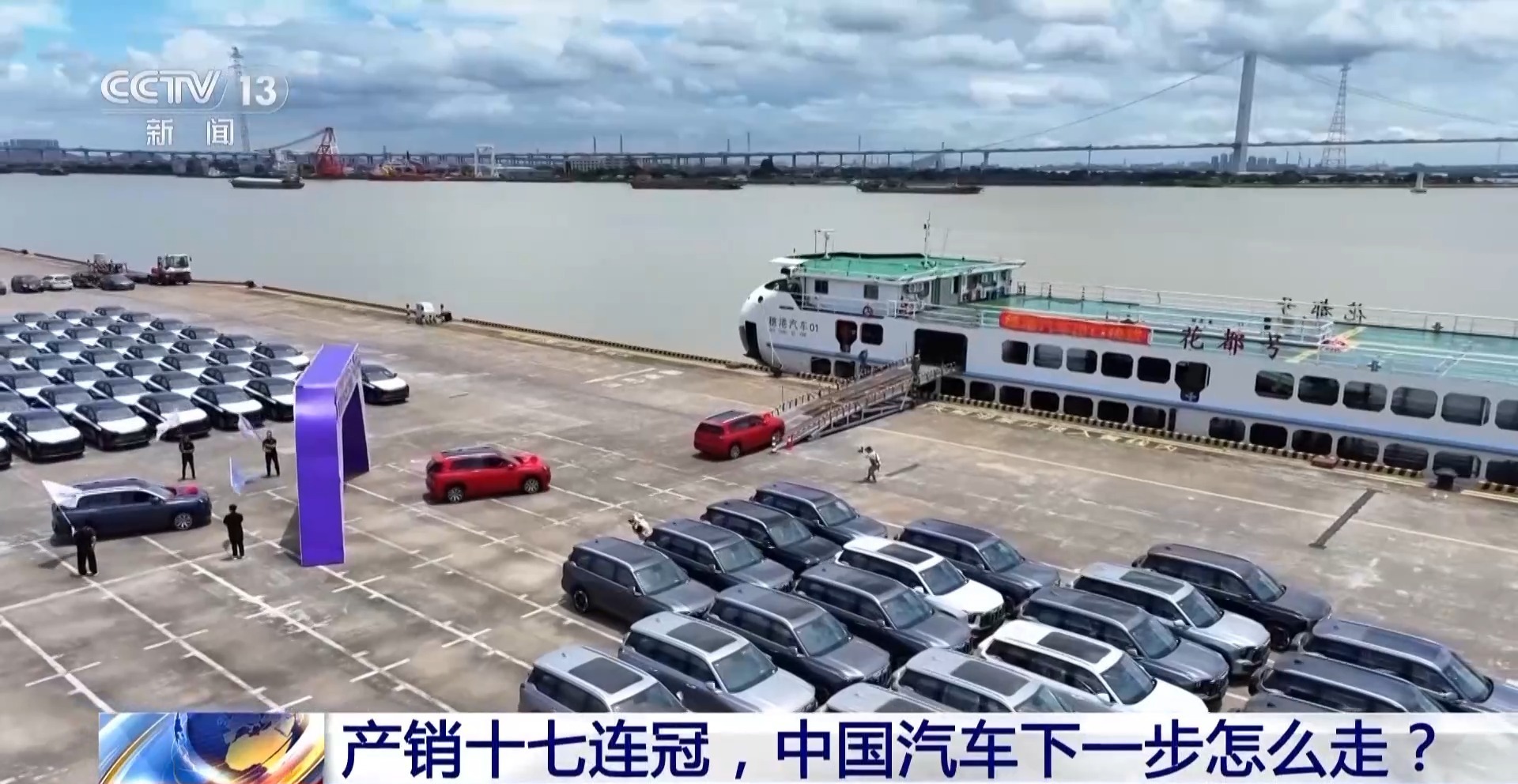
新闻1+1|产销十七连冠,中国汽车下一步怎么走?
Yang Shi Wang· 2026-01-16 03:42
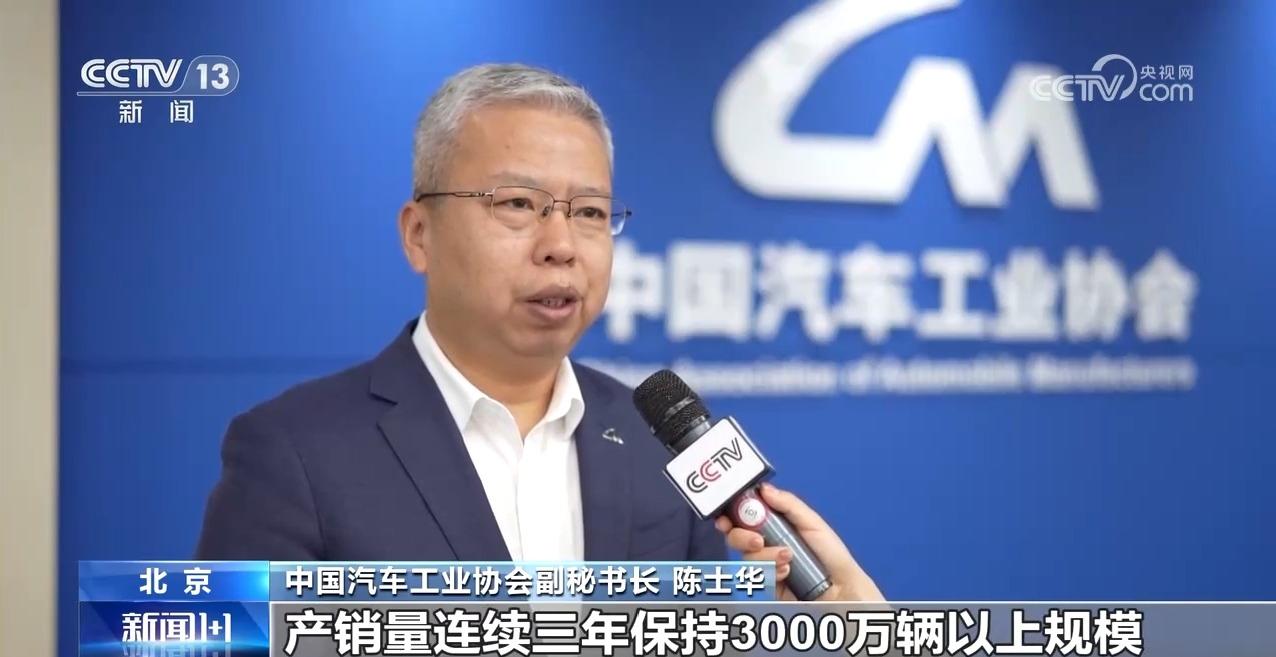
Core Insights - The Chinese automotive industry is projected to achieve record production and sales of 34.53 million and 34.40 million vehicles respectively in 2025, marking a year-on-year growth of 10.4% and 9.4%, maintaining its position as the world's largest market for 17 consecutive years [1][2] - The industry is undergoing a significant transformation, focusing on overcoming homogenization and creating new growth opportunities [1] Industry Performance - During the 14th Five-Year Plan period, the automotive sector has maintained production and sales above 30 million units for three consecutive years, with revenue surpassing 10 trillion yuan, and exports ranking first globally [4] - New energy vehicles (NEVs) have seen production and sales of 16.63 million and 16.49 million units respectively, reflecting year-on-year growth of 29% and 28.2% [4] Technological Advancements - The industry is rapidly advancing in electric, intelligent, and connected technologies, with NEVs becoming the dominant force in the domestic market [4] - Significant R&D investments are being made in battery technology, including the development of solid-state batteries, which offer higher safety, energy density, longevity, and faster charging compared to traditional lithium-ion batteries [6] Market Dynamics - NEVs have surpassed 50% in the sales ratio compared to traditional fuel vehicles, driven by improved product competitiveness, changing consumer perceptions, and supportive government policies [8] - The average range of NEVs in China is nearing 500 kilometers, with over 12.82 million charging stations established, and fast-charging technology enabling 80% charge in 15 minutes [6] Export Growth - The rapid growth in NEV exports is attributed to increasing global demand, favorable policies in various countries, and the rising competitiveness of Chinese NEVs [12] - Chinese automotive companies are actively pursuing international markets, enhancing their global presence and brand image [17] Future Outlook - The forecast for 2026 anticipates stable high-level sales of approximately 34.75 million vehicles, with domestic demand expected to remain robust and international markets continuing to grow [20]
迁安先进钢铁产业集群向“新”发力
Xin Hua Cai Jing· 2026-01-16 01:39
Core Viewpoint - Hebei Province's Qian'an City is focusing on the high-end, intelligent, and green development of the steel industry, significantly enhancing the quality and strength of its steel sector [1] Group 1: Industry Development - Qian'an City is promoting the steel industry's transformation towards high-end manufacturing, emphasizing shared production, inspection, collective procurement, and logistics trade [1] - The city is establishing a steel-sharing economic industrial park that integrates "Internet + IoT + big data," creating an "online + offline" sharing platform [1] Group 2: Product Focus - The advanced steel manufacturing industrial cluster in Qian'an has developed four high-end product segments: electrical steel, high-end rolled sheets, premium wire rods, and specialty steel [1] - The proportion of premium steel products has reached 46% [1]
研判2025!中国医用中心吸引系统行业相关政策、市场现状及未来趋势分析:作为现代医院基础生命支持设备,行业加速国产化[图]
Chan Ye Xin Xi Wang· 2026-01-16 01:20
Core Insights - The Chinese medical centralized vacuum supply system industry is experiencing steady market expansion, accelerated localization, and deepening technological applications, with a projected market size of approximately 6.279 billion yuan in 2024, representing a year-on-year growth of 7.39% [1][10]. Industry Overview - The centralized vacuum supply system is essential for modern hospitals, providing negative pressure for the removal of medical waste and improving the medical environment [2]. - The system consists of a central suction station, pipeline network, valves, and terminal devices, and must comply with specific medical device standards [2][3]. Industry Policies - The policy framework for the industry features a combination of mandatory regulations, technical standards, and industrial guidance, with recent adjustments aimed at enhancing product quality and compliance [4]. Industry Chain - The upstream of the industry includes components such as vacuum pump units, vacuum containers, and control cabinets, while the midstream focuses on manufacturing, and the downstream applications are primarily in surgical rooms, ICUs, and other medical settings [6]. Market Size - The market size for the medical centralized vacuum supply system is expected to reach approximately 6.279 billion yuan in 2024, driven by increased medical infrastructure investment and the growing demand for healthcare services among the aging population [10][11]. Key Companies - Sichuan Portong Medical Equipment Group Co., Ltd. specializes in medical gas and clean systems, reporting a revenue of 344 million yuan in the first three quarters of 2025, a decrease of 30.06% year-on-year [12]. - Wuhan Huakang Century Clean Technology Co., Ltd. reported a revenue of 1.431 billion yuan in the first three quarters of 2025, an increase of 32.59% year-on-year [12]. Industry Development Trends 1. The industry is moving towards smart and modular technologies, with AIoT systems enhancing monitoring and maintenance efficiency [13]. 2. Environmental policies and domestic substitution are driving the adoption of oil-free and dry vacuum pumps, aligning with green medical trends [14]. 3. The industry is transitioning from equipment sales to full lifecycle services, enhancing customer loyalty and optimizing product structures for grassroots healthcare [15].

北京现代李凤刚:2026年,还有三场硬仗要打
Xin Lang Cai Jing· 2026-01-16 00:32
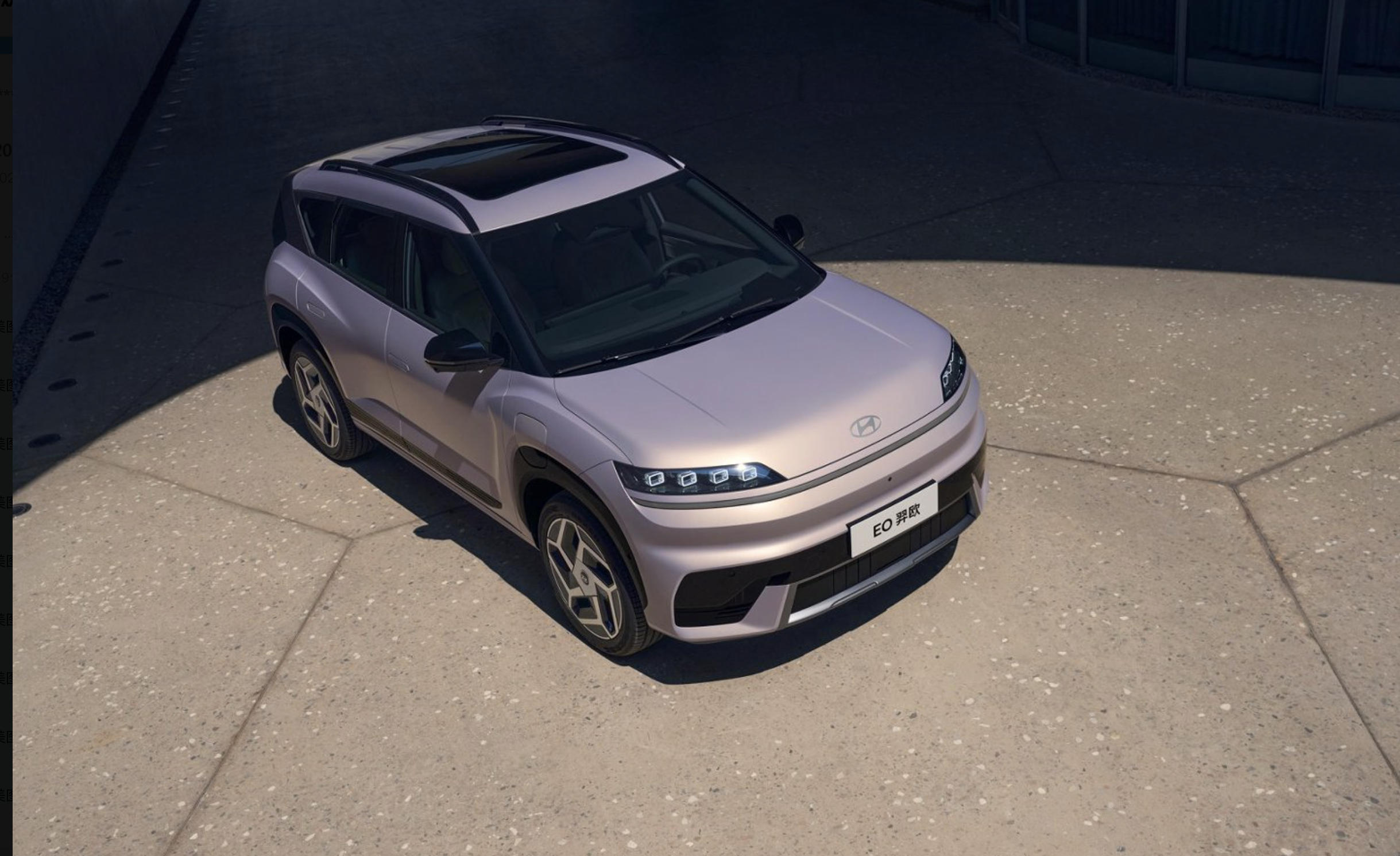
Core Insights - The new general manager of Beijing Hyundai, Li Fenggang, acknowledges that the company is significantly lagging behind Hyundai's global average performance in the Chinese market [2] - Despite a total annual sales of 210,000 units, the growth is seen as a stopgap rather than a sustainable recovery, with the real test expected in 2026 [3][4] Sales Performance - In 2025, Beijing Hyundai achieved a total sales volume of 210,000 units, with a remarkable 58% year-on-year increase in the second half of the year and six consecutive months of positive growth [5] - The sales performance is attributed to a low base from the previous year, where sales fell by 35.5% to under 160,000 units, marking the largest decline among Hyundai's global markets [5] Product Strategy - The company has adjusted its product lineup, discontinuing several models while maintaining a diverse range of nine active models, including sedans, SUVs, and electric vehicles [5] - Key models such as the Elantra and the KUSHTU have shown strong sales, with the Elantra selling over 60,000 units and the KUSHTU achieving a 75.3% year-on-year increase [5] Future Challenges - Beijing Hyundai faces three critical battles to ensure its survival: marketing innovation and channel stability, product transformation, and cost efficiency [8][9] - The company plans to restore its dealer network to over 380 by 2027 and establish an exclusive service system for electric vehicles [8] New Energy Transition - The first electric platform SUV, EO Yiyou, launched in October 2024, has seen disappointing sales, with only 221 units sold in November, highlighting the pressure of transitioning to new energy vehicles [7] - In 2026, Beijing Hyundai aims to launch two new energy models with competitive specifications, including a pure electric range exceeding 600 kilometers [9] Localization and R&D - The company is enhancing its local operations by collaborating with top Chinese tech firms and expanding its R&D team in China to better adapt to local market needs [10] - The three critical battles are interconnected, focusing on how to sell, what to sell, and how to sustain operations in a rapidly changing market [10]
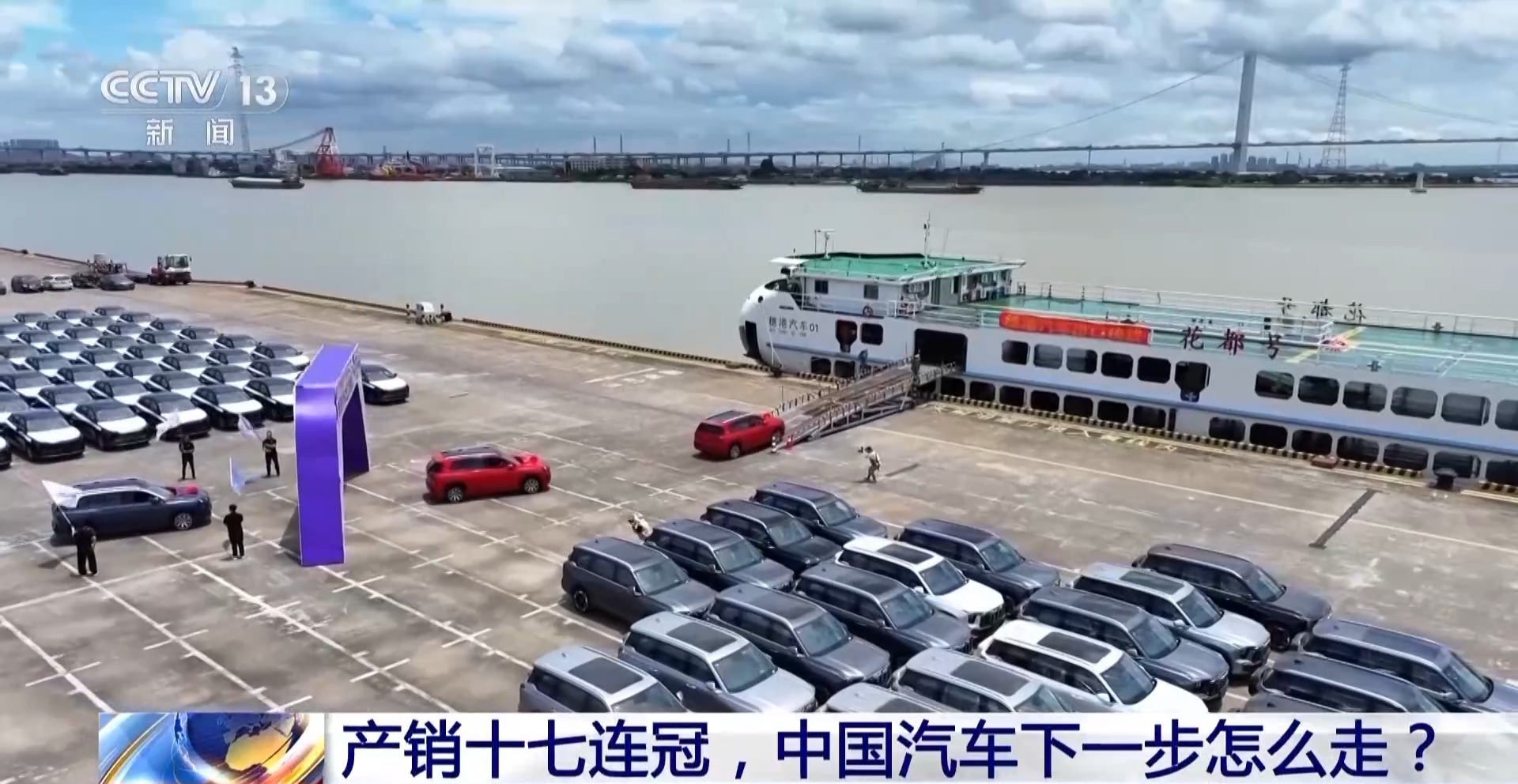
产销十七连冠 中国汽车下一步怎么走
2 1 Shi Ji Jing Ji Bao Dao· 2026-01-15 23:05
Core Insights - The Chinese automotive industry is projected to achieve record production and sales figures of 34.53 million and 34.40 million vehicles respectively by 2025, marking a year-on-year growth of 10.4% and 9.4%, maintaining its position as the world's largest market for 17 consecutive years [1][2] Industry Overview - During the 14th Five-Year Plan period, the automotive sector has seen significant breakthroughs, with production and sales consistently exceeding 30 million units for three consecutive years and revenue surpassing 10 trillion yuan [2] - The integration of electrification, intelligence, and connectivity is accelerating, establishing a competitive advantage for the industry [2] New Energy Vehicles (NEVs) - NEVs are expected to reach production and sales of 16.63 million and 16.49 million units respectively in 2025, reflecting year-on-year growth of 29% and 28.2%, driven by continuous policy support and technological advancements [4][6] - Chinese brands have captured nearly 70% of the passenger car market, with NEVs becoming the dominant force in the domestic market [6] Industry Initiatives - The automotive industry has initiated measures to promote fair competition and healthy development, including product consistency checks and support for companies to adhere to 60-day payment commitments [8] - Increased R&D investments by NEV companies are leading to multiple technological breakthroughs [8] Battery Technology - Research is accelerating in solid-state battery technology, which offers higher safety, energy density, longevity, and faster charging compared to conventional lithium-ion batteries [10] AI and Smart Connectivity - An increasing number of NEVs are adopting "AI+" models, leveraging vehicle networking for enhanced intelligence [12] Market Dynamics - The average range of NEVs in China is approaching 500 kilometers, with 12.82 million charging stations established, and fast-charging technology enabling 80% charge in 15 minutes [14] - NEVs have surpassed 50% in terms of sales replacement of traditional fuel vehicles, attributed to technological advancements, changing consumer perceptions, and supportive policies [14] Strategic Focus Areas - Key areas for industry advancement include enhancing technological capabilities, evolving business models beyond vehicle sales, and pursuing international market opportunities [15] - The rapid growth of NEV exports is driven by improved product competitiveness, changing consumer preferences, and favorable policies [15][19] Future Projections - The automotive market is expected to maintain a high level of stability in 2026, with projected sales of 34.75 million vehicles, supported by policy optimizations and sustained international demand [18]
从“蔚小理”到“零鸿米”(小经说汽车)
Ren Min Ri Bao· 2026-01-15 22:04
Group 1 - The new rankings of car manufacturers in 2025 show significant changes, with Leap Motor leading in sales, followed by Hongmeng Zhixing, and Xiaomi entering fourth place, while XPeng, Li Auto, and NIO rank third, fifth, and sixth respectively [1] - The shift in rankings reflects changes in the comprehensive competitiveness of car manufacturers and indicates a transformation in the automotive market competition landscape [2] - The rise of "Zero, Hongmeng, and Xiaomi" signifies a new trend in the integration and development of the automotive industry, supported by leading ICT companies like Huawei and Dahua, which provide technological advantages and efficient supply chain capabilities [3] Group 2 - The automotive industry is transitioning from the "first half" of electrification to the "second half" of intelligence, with competition now focusing on technological differentiation, cost efficiency, and global capabilities [2] - Huawei's role in the automotive sector is emphasized, as it provides smart solutions and collaborates with various car manufacturers to enhance their product development and marketing processes [4] - The integration of ICT technologies into the automotive industry is expected to foster continuous innovation and potentially create world-class Chinese intelligent mobility brands [4]