
货币政策

Search documents
降息缩表并行,“沃什冲击”如何影响资本市场
Di Yi Cai Jing· 2026-02-11 06:27
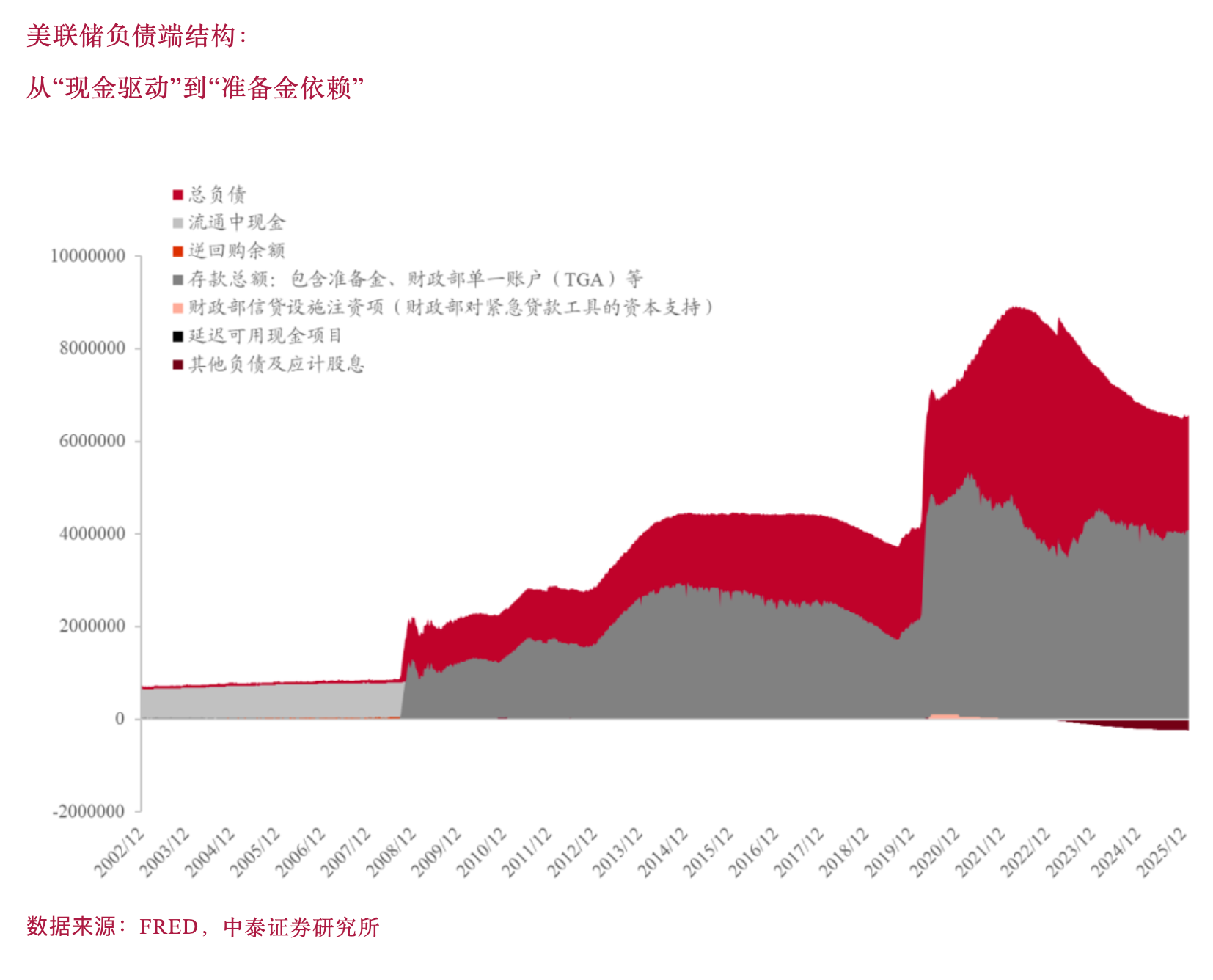
Core Viewpoint - The nomination of Kevin Warsh as the next Federal Reserve Chairman by President Trump signals a significant shift in the Fed's communication style and its approach to interest rate cuts, potentially altering market expectations and reactions to monetary policy changes [1][2]. Group 1: Warsh's Monetary Policy Approach - Warsh is characterized as a "disciplinarian" who prioritizes the long-term consequences of financial conditions and the institutional costs of balance sheet expansion, showing a natural aversion to the normalization of unconventional tools like quantitative easing (QE) [2][3]. - He believes that the threshold for initiating QE will be significantly raised in response to general economic fluctuations, as he views QE as distorting asset prices and exacerbating wealth inequality [2][3]. - Warsh emphasizes that while interest rate cuts may be necessary, they do not equate to excessive monetary easing, suggesting that current rates could be 50-100 basis points above the neutral rate, which is around 3% [2][3]. Group 2: Impact of Balance Sheet Reduction - Warsh advocates for using balance sheet reduction to create room for interest rate cuts, arguing that inflation stems from fiscal deficit expansion and excessive monetary issuance rather than an overheated labor market [3][4]. - His approach suggests that the Fed's intervention threshold will be raised during market turbulence, contrasting with the current trend of the Fed acting as a market backstop [3][4]. - The transition to a framework focused on price adjustment rather than quantity support could lead to increased volatility in money markets, as banks will need to manage liquidity more actively without relying on the Fed's unlimited supply [6][7]. Group 3: Political Considerations and Market Reactions - Trump's choice of Warsh reflects a desire for a candidate who is loyal and willing to cut rates while also being credible enough to navigate Senate confirmation and maintain market confidence [8][9]. - Warsh's "hawkish reputation" is seen as a competitive advantage, as it reassures the market that any future rate cuts will be based on monetary discipline rather than political compromise [9][10]. - The upcoming midterm elections in 2026 create a political imperative for Warsh to align his actions with the administration's goals, particularly in managing inflation and living costs for voters [10][14]. Group 4: Future Market Implications - The midterm elections are expected to serve as a natural dividing line for policy pacing, with Warsh likely to adopt a gradual approach to reforms post-election, regardless of the election outcome [15][16]. - The Fed's communication style is anticipated to shift, with less frequent guidance and a reduction in the predictability of rate cuts, leading to increased market volatility and uncertainty [16][18]. - Overall, while the narrative of a weak dollar remains intact, the focus on fundamental performance in the stock market may increase, with a notable return to value sectors as high valuations and leverage are scrutinized [18].

央行四季度货币政策报告6大信号【国盛宏观熊园团队】
Xin Lang Cai Jing· 2026-02-11 06:04
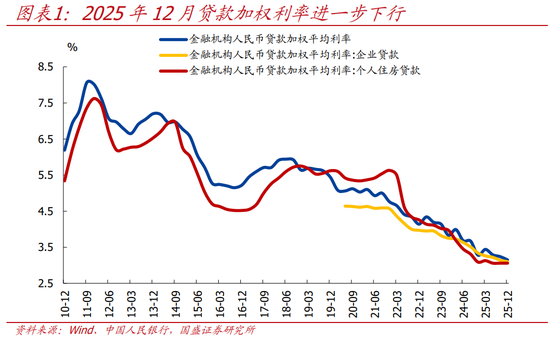
Core Viewpoint - The report maintains an optimistic outlook on the domestic economy and continues to advocate for a moderately loose monetary policy, emphasizing the importance of promoting stable economic growth as a key consideration for future monetary policy adjustments [2][18]. Group 1: Global Economic Outlook - The central bank has alleviated concerns regarding the global economy, believing that "global economic growth still has resilience in the short term," while noting the divergence in performance among major economies [6][22]. - The central bank continues to highlight persistent inflation, a cooling labor market, and increasing global trade uncertainties as significant issues [6][22]. - The report indicates that the central bank will enhance counter-cyclical and cross-cyclical adjustments to improve macroeconomic governance effectiveness [6][23]. Group 2: Domestic Economic Conditions - The central bank remains optimistic about the domestic economy, stating that "the economy is expected to continue to stabilize and improve in 2026," supported by a solid foundation for stable development, the growth of new economic drivers, and strong policy support [7][23]. - The report emphasizes the need to address the intertwining of old problems and new challenges in the domestic economy, as well as the deepening impact of external environmental changes [7][23]. Group 3: Inflation Insights - The central bank acknowledges that "inflation still has stickiness," and the process of reducing inflation remains to be observed [3][19]. - Domestic price trends are showing positive changes, with the central bank emphasizing the importance of promoting reasonable price recovery as a key consideration for monetary policy [3][19]. Group 4: Monetary Policy Adjustments - The monetary policy stance largely continues previous reports, with an added focus on promoting stable economic growth as a key consideration [9][25]. - The report indicates a cautious approach to interest rate cuts, shifting from "promoting a decrease in social financing costs" to "promoting low-level operation of social financing costs" [11][27]. - The weighted average interest rate for new loans in December was reported at 3.15%, a decrease of 0.09 percentage points from September, with corporate loan rates hitting a new low [20][28]. Group 5: Financial System Dynamics - The report discusses the "loss" of bank deposits, indicating that the reallocation of resident assets affects the structure of bank liabilities but does not equate to significant changes in the liquidity status of the entire financial system [13][29]. - The central bank outlines three main ways to enhance the coordination of monetary and fiscal policies, including maintaining market liquidity, optimizing financial resource allocation, and sharing risk costs to increase financing support for enterprises [14][30].
国债期货日报:资金面宽松,国债期货大多收涨-20260211
Hua Tai Qi Huo· 2026-02-11 05:42
Report Summary 1. Report Industry Investment Rating No investment rating is provided in the report. 2. Core Viewpoints - The bond market is oscillating between stable growth and easing expectations. It is affected by the stock market, the broad - money signal released by the Politburo meeting, the unchanged LPR, the continued expectation of the Fed's interest - rate cut, and the increased uncertainty of global trade, which adds uncertainty to foreign capital inflows. Short - term attention should be paid to the policy signals at the end of the month [1][3]. - The fiscal policy in 2026 is expected to remain proactive, with an emphasis on "increasing the total amount and optimizing the structure". The expenditure intensity is expected to increase, and the rhythm will continue to be advanced, providing support for stable growth [2]. 3. Summary by Directory I. Interest Rate Pricing Tracking Indicators - **Price indicators**: China's monthly CPI has a month - on - month increase of 0.20% and a year - on - year increase of 0.80%; the monthly PPI has a month - on - month increase of 0.20% and a year - on - year decrease of 1.90% [9]. - **Monthly economic indicators**: The social financing scale is 442.12 trillion yuan, with a month - on - month increase of 2.05 trillion yuan and a growth rate of 0.47%; M2 year - on - year growth is 8.50%, with a month - on - month increase of 0.50% and a growth rate of 6.25%; the manufacturing PMI is 49.30%, with a month - on - month decrease of 0.80% and a decline rate of 1.60% [10]. - **Daily economic indicators**: The US dollar index is 96.86, with a month - on - month increase of 0.01 and a growth rate of 0.01%; the US dollar against the offshore RMB is 6.9106, with a month - on - month increase of 0.003 and a growth rate of 0.04%; SHIBOR 7 - day is 1.53, with a month - on - month increase of 0.03 and a growth rate of 1.73%; DR007 is 1.56, with a month - on - month increase of 0.02 and a growth rate of 1.23%; R007 is 1.56, with a month - on - month decrease of 0.12 and a decline rate of 6.95%; the 3 - month inter - bank certificate of deposit (AAA) is 1.58, with a month - on - month increase of 0.01 and a growth rate of 0.34%; the AA - AAA credit spread (1Y) is 0.09, with a month - on - month increase of 0.00 and a growth rate of 0.34% [10]. II. Overview of the Treasury Bond and Treasury Bond Futures Market - **Closing prices and price changes**: On February 10, 2026, the closing prices of TS, TF, T, and TL were 102.48 yuan, 106.02 yuan, 108.49 yuan, and 112.68 yuan respectively. The price changes of TS, TF, T, and TL were 0.00%, 0.00%, 0.01%, and 0.01% respectively [3]. - **Net basis spread**: The average net basis spreads of TS, TF, T, and TL were 0.014 yuan, 0.004 yuan, 0.017 yuan, and - 0.069 yuan respectively [3]. III. Overview of the Money Market Liquidity - **Central bank operations**: On February 10, 2026, the central bank conducted 311.4 billion yuan of 7 - day reverse repurchase operations at a fixed interest rate of 1.4% through quantity tendering [2]. - **Repo rates**: The main - term repo rates of 1D, 7D, 14D, and 1M were 1.362%, 1.531%, 1.604%, and 1.551% respectively, and the repo rates have recently declined [2]. IV. Spread Overview - The report presents various spread data, including inter - period spreads of treasury bond futures and spreads between spot and futures of different maturities, such as 4*TS - T, 2*TS - TF, 2*TF - T, 3*T - TL, and 2*TS - 3*TF + T [32][38][39]. V. Two - Year Treasury Bond Futures - The report shows the implied interest rate of the two - year treasury bond futures main contract and the treasury bond yield to maturity, the IRR of the TS main contract and the funding rate, and the three - year basis spread and net basis spread trends of the TS main contract [41][45][50]. VI. Five - Year Treasury Bond Futures - It includes the implied interest rate of the five - year treasury bond futures main contract and the treasury bond yield to maturity, the IRR of the TF main contract and the funding rate, and the three - year basis spread and net basis spread trends of the TF main contract [51][54]. VII. Ten - Year Treasury Bond Futures - The report provides the implied yield of the ten - year treasury bond futures main contract and the treasury bond yield to maturity, the IRR of the T main contract and the funding rate, and the three - year basis spread and net basis spread trends of the T main contract [55][56]. VIII. Thirty - Year Treasury Bond Futures - It shows the implied yield of the thirty - year treasury bond futures main contract and the treasury bond yield to maturity, the IRR of the TL main contract and the funding rate, and the three - year basis spread and net basis spread trends of the TL main contract [62][63]. 4. Strategies - **Single - side strategy**: As the repo rate declines, the prices of treasury bond futures oscillate [4]. - **Arbitrage strategy**: Pay attention to the decline of the 2603 basis spread [4]. - **Hedging strategy**: There is medium - term adjustment pressure, and short - sellers can use far - month contracts for appropriate hedging [4].
股指缩量震荡
Hua Tai Qi Huo· 2026-02-11 05:29
Report Industry Investment Rating - Not provided in the content Core Viewpoints - The central bank will continue to implement a moderately loose monetary policy, using various policy tools such as reserve requirement ratio and interest rate cuts to maintain ample liquidity [1] - The A-share market shows mixed trends, with the Shanghai Composite Index rising and the ChiNext Index falling, and different industries having different performances [2] - Before the holiday, the market trading volume gradually shrinks. The performance of the CSI 500 index is increasingly correlated with the cyclical sector. Attention should be paid to the trend of the non - ferrous metal industry [3] Summary by Directory Macro - economic Charts - The central bank will continue to implement a moderately loose monetary policy and use various policy tools to maintain liquidity. The adjustment of residents' asset allocation will eventually flow back to the banking system. Overseas, US retail sales in December 2025 were weaker than expected [1] Spot Market Tracking Charts - On February 10, 2026, the Shanghai Composite Index rose 0.13% to 4128.37 points, the Shenzhen Component Index rose 0.02%, the ChiNext Index fell 0.37%, the CSI 300 Index rose 0.11%, the SSE 50 Index rose 0.18%, the CSI 500 Index fell 0.06%, and the CSI 1000 Index rose 0.20%. The trading volume of the Shanghai and Shenzhen stock markets was about 2 trillion yuan [2][12] Futures Market Tracking Charts - In the futures market, the current - month contract basis of stock index futures maintains a premium. The trading volume and open interest of stock index futures continue to decrease simultaneously. The trading volume and open interest of IF, IH, IC, and IM contracts all decline [2][14] - The basis and inter - period spreads of different contracts of stock index futures have different values and changes [39][43][44]
广发宏观:2025年四季度货政报告的四个关注点
GF SECURITIES· 2026-02-11 05:17
Group 1: Monetary Policy Adjustments - The central bank plans to lower the policy interest rate by 0.1 percentage points throughout 2025, with the 7-day reverse repurchase rate reduced from 1.5% to 1.4% in May 2025, aiming to decrease overall financing costs[3] - Short-term market interest rates are expected to operate within a range of 20 basis points below to 50 basis points above the policy rate, indicating a more stable operation of the monetary market[3] - The central bank emphasizes the need to guide short-term money market rates to better align with the central bank's policy rates, enhancing the effectiveness of monetary policy[3] Group 2: Financing Costs and Economic Stability - The report highlights the goal of maintaining low comprehensive financing costs for society, indicating that current financing costs are already at a relatively acceptable low level[3] - There is a focus on stabilizing and expanding bank interest margins while ensuring sufficient liquidity for the banking system, suggesting limited probability for significant increases in short-term rates[3] - The central bank aims to improve the interest rate adjustment framework and strengthen the transmission mechanism of market interest rates, ensuring effective financial support for key sectors like domestic demand and innovation[3] Group 3: Exchange Rate Management - The central bank stresses the importance of the exchange rate as an automatic stabilizer for macroeconomic conditions and international balance of payments, advocating for a managed floating exchange rate system[5] - Emphasis is placed on maintaining exchange rate flexibility to absorb external shocks and provide room for independent domestic monetary policy operations[5] - The report calls for reinforcing expectations management to prevent excessive fluctuations in the exchange rate, aiming for basic stability of the RMB at a reasonable equilibrium level[5] Group 4: Risk Considerations - Potential risks include unexpected changes in the external environment, misinterpretations of the "deposit migration" issue, and unforeseen fluctuations in the financial market[6] - The report warns of possible underperformance in real estate sales and fixed asset investments, as well as the effects of anti-involution policies not meeting expectations[6]

2025年四季度货币政策报告解读:强化政策协同
GUOTAI HAITONG SECURITIES· 2026-02-11 05:12
Group 1: Monetary Policy Overview - The domestic interest rate policy maintains a generally loose trend, but the pace is relatively steady, considering both internal and external environments and policy coordination effects[1] - The main targets of the policy include maintaining reasonable liquidity (M2), nurturing stable expectations (exchange rate), and gradually repairing balance sheets (capital markets)[1] Group 2: Economic Insights - The central bank acknowledges increasing external uncertainties, with the US economy showing resilience and inflation risks rising, while domestic economic fundamentals remain stable and strong[8] - Despite challenges such as "strong supply but weak demand," the long-term positive trend of the Chinese economy is unchanged, with consumer prices (CPI) showing a mild recovery, rising by 0.8% year-on-year in December 2025[12] Group 3: Policy Focus - The policy emphasizes strengthening domestic demand and coordinating supply and demand relationships, aiming to consolidate and expand the economy's stable upward momentum[9] - Future targeted easing measures are expected to focus on specific areas such as domestic demand, technology innovation, and small and micro enterprises, supported by fiscal subsidies[9] Group 4: Credit and Financial Support - Credit issuance continues to focus on five key areas to support economic transformation, including optimizing loans for technological innovation and promoting green finance standards[10] - The central bank's innovative one-time credit repair policy aims to support personal credit restoration, enhancing consumer demand and aiding in the repair of banks' balance sheets[10] Group 5: Risk Considerations - There is a risk of misinterpretation of policies, which could impact the effectiveness of the monetary measures[13]
邦达亚洲:美联储官员发表鹰派言论 美元指数止跌企稳
Xin Lang Cai Jing· 2026-02-11 04:39
Group 1: Federal Reserve Insights - Federal Reserve official Logan expresses "cautious optimism" regarding the ability of current policy rates to stabilize the labor market while bringing inflation down to the 2% target, emphasizing that upcoming economic data will validate this judgment [1][6] - Logan indicates that if inflation continues to decline while the labor market remains stable, the current policy stance is appropriate, and no further rate cuts are necessary to achieve dual mandates [1][6] - She notes that the downward risks to the labor market have "significantly eased" after three rate cuts last year, but this has added upward pressure on inflation [1][6] Group 2: European Central Bank Research - Recent research from European Central Bank economists shows that U.S. tariff policies are dragging down economic growth and inflation levels in the Eurozone [2][7] - The study estimates that a 1% decline in Eurozone exports to the U.S. due to tariff impacts could lead to a cumulative 0.1% decrease in the consumer price index approximately 18 months later [2][7] - It highlights that the sectors most affected by tariffs, such as machinery, automotive, and chemicals, are also the most sensitive to interest rate changes, providing potential space for the ECB to use monetary policy tools to mitigate external trade shocks [2][7] Group 3: Currency Market Movements - The U.S. dollar index experienced slight gains, trading around 96.80, supported by short covering and hawkish comments from Federal Reserve officials that tempered rate cut expectations [3][8] - The euro saw a slight decline, trading around 1.1900, influenced by profit-taking and the stabilization of the dollar index due to the Fed's hawkish stance [4][9] - The British pound also faced downward pressure, trading around 1.3650, affected by profit-taking and concerns over political uncertainty in the UK [5][10]
——2025年四季度货币政策执行报告学习理解:降准降息的前提是什么?
Huachuang Securities· 2026-02-11 04:14
Group 1: Economic Outlook - The global economy shows resilience, but uncertainty factors have increased, with inflation remaining sticky and labor markets cooling down[8] - In 2025, major economies are in a rate-cutting cycle, leading to significant increases in global stock indices and a decline in the US dollar index[8] - China's economic growth is supported by exports, which are expected to remain a key demand factor in 2026[2] Group 2: Monetary Policy - The central bank emphasizes the need for a moderately loose monetary policy, focusing on stable economic growth and reasonable price recovery[15] - New goals include guiding reasonable growth in financial totals and balanced credit allocation to address supply-demand challenges[15] - The central bank plans to flexibly and efficiently use various policy tools, including rate cuts and reserve requirement ratio adjustments, to maintain liquidity and support economic growth[15] Group 3: Structural Policies - The central bank has shifted its focus to expanding domestic demand as a priority in structural monetary policy, moving away from an earlier emphasis on technological innovation[19] - There is potential for new policies related to domestic demand, particularly through re-lending tools aimed at supporting key sectors[21] Group 4: Capital Market Insights - The midstream sector is expected to benefit the most from exports, with data indicating a faster contraction in midstream supply compared to upstream and downstream sectors[2] - Long-term loans to the industrial sector have decreased, while loans to the service sector have marginally increased, reflecting a shift in credit allocation[11]
Q4货政报告显示政策稳增长诉求提升但宽松落地时点仍需观察
Huafu Securities· 2026-02-11 04:11
Group 1: Report Industry Investment Rating - The report doesn't explicitly mention the investment rating for the fixed - income industry [1][2][3] Group 2: Report's Core View - The Q4 monetary policy report shows an increased demand for stable growth, but the timing of policy easing needs further observation. The central bank may still be in the observation period of the fundamentals and has not provided clues for the timing of subsequent reserve requirement ratio cuts and interest rate cuts. The short - term bond market may continue to fluctuate strongly, and the follow - up situation depends on the clarification of the fundamentals and policy environment after the Two Sessions and post - holiday resumption of work [2][5][7] Group 3: Summary of Related Catalogs Concerns about risk prevention have weakened, and the demand for stable growth has increased - The Q4 report maintains confidence in the domestic economy but mentions the problem of strong supply and weak demand. In the next - stage policy tone, the central bank removed the relationship of "balancing stable growth and risk prevention" and adjusted the consideration from "promoting a reasonable recovery of prices" to "promoting stable economic growth and a reasonable recovery of prices". After the release of the Q4 GDP growth rate dropping to 4.5%, the central government's demand for stable growth has increased, and the central bank's concern about the risks brought by easing has decreased, which may be the reason for the overall loose monetary policy recently [2][3] The central bank has not revealed signals for the implementation of aggregate policies, and reserve requirement ratio cuts and interest rate cuts may depend on the overall central government deployment - The report continues the spirit of the Central Economic Work Conference at the overall policy level, but many statements in the text are the same as those in the Q3 monetary policy report. This may reflect that although the central government's tone has changed, the central bank may not have fully conceived the specific time for policy implementation and is still in the observation period of the fundamentals. Subsequent reserve requirement ratio cuts and interest rate cuts may depend on the overall policy deployment [4] The central bank pays attention to changes in long - term yields and flexibly controls the scale of treasury bond trading operations - The central bank mentioned the coordination between monetary policy and fiscal policy in Column 1. It will normalize the trading of treasury bonds, pay attention to changes in long - term yields, and flexibly control the operation scale. After the interest rate central point rose from 1.75% - 1.85% to 1.8% - 1.9%, the central bank increased its bond purchase scale. However, after the interest rate breaks through 1.8%, further decline may rely more on its own strength [4] Deposit transfer, overnight interest rate, and exchange rate appreciation - The phenomenon of financial disintermediation and deposit transfer may affect the bank liability structure but will not impact the overall liquidity. The central bank emphasizes guiding short - term money market interest rates to run smoothly around the policy rate, and 1.3% of DR001 may be considered within the policy rate range. The report shows that the central bank may tolerate a certain degree of RMB exchange rate appreciation [5]
哈马克警示独立性受侵沪金震荡
Jin Tou Wang· 2026-02-11 04:08
2月10日,克利夫兰联储主席哈马克在俄亥俄州银行家联盟峰会中将美国银行业喻为支撑经济的"秘制酱 料",强调其分散多元的结构对实体经济与货币政策传导至关重要,但当前政治变局正侵蚀"酱料"的关 键调味剂——美联储独立性,引发对长期价格稳定与经济韧性的担忧。 她盛赞社区银行与区域银行的地方支柱作用:全美4000余家银行(含州/联邦双牌照)形成大中小互补生 态,俄亥俄州便是缩影——既有全球系统重要性银行分支,也有150家社区银行、34家互助机构等。社 区银行凭关系型借贷成小企业(占美企99%、贡献近半就业)融资主力,小企业信贷调查显示其全额批准 率高于大行,伍斯特婚纱店主因社区银行贷款起步即为例证;区域银行则填补中型企业融资空白,辛辛 那提酒店老板利率上行期获其更优再融资,且资产回报率平均高于大行,还活跃于社区再投资与本地赞 助。 【要闻速递】 哈马克对2026年经济"谨慎乐观":劳动力市场趋稳(12月失业率4.4%)、消费具韧性、增长获金融宽松等 支撑,通胀虽高于目标但回落,当前利率近中性,倾向"相当长时间"不变,但独立性风险或放大不确定 性,削弱银行传导能力。 今日周三(2月11日)亚盘时段,黄金期货目前交投于1 ...