
智能体

Search documents
用友金融王琦媛:金融机构对AI的期待,已延伸至发现新价值增长点与创造点
Bei Jing Shang Bao· 2025-08-01 10:25
Group 1 - The current focus of AI application in the financial industry is on improving efficiency and risk control operations while ensuring compliance and safety [2] - Financial institutions are primarily exploring AI in areas such as intelligent investment advisory, customer service, and intelligent decision analysis and forecasting, with efficiency improvements ranging from 20% to 40% in applications like email classification and intelligent contracts [2] - By 2028, it is predicted that at least 15% of daily decisions will be made by intelligent agents, indicating a shift from auxiliary business support to integrated business functions [2] Group 2 - The expectations of financial institutions regarding AI have evolved from merely cost reduction and efficiency enhancement to discovering new value growth and creation points [3] - Despite not fully achieving this goal, there is a clear desire within the industry to continue exploring the potential of AI to deliver these outcomes [3]


“湘超”联赛将于今年9月至12月举办|首席资讯日报
首席商业评论· 2025-08-01 03:57
Group 1 - The "Xiangchao" league will be held from September to December this year, featuring a two-phase structure: a regular season and a knockout stage, with 14 teams participating in a single round-robin format [1] - In 2024, the Ministry of Civil Affairs reported that 6.106 million marriage registrations were processed nationwide, resulting in a marriage rate of 4.3‰, while 3.513 million divorce registrations were processed, leading to a divorce rate of 2.5‰ [3] Group 2 - Meta's CEO Mark Zuckerberg hinted at a shift away from open-source strategies towards developing a "super intelligence" that empowers individuals, indicating a potential move to closed-source AI development [2][5] - Aston Martin Lagonda is in discussions to sell a minority stake in its F1 team for an estimated valuation of approximately £2.4 billion ($3.2 billion), reflecting strong market interest in F1 assets [4][6] Group 3 - JD.com confirmed plans to make a voluntary public acquisition offer for CECONOMY AG, valuing the company at nearly €2.2 billion, aiming to establish a strategic investment partnership [7][8] - BlackRock increased its holdings in China International Capital Corporation (CICC) by purchasing 1.2624 million H-shares, maintaining a stake above 5% [9] Group 4 - A small detector weighing less than 3 kilograms successfully detected rare neutrino scattering effects, marking a significant advancement in neutrino detection research [10] - The U.S. President's Digital Asset Market Working Group released a report aimed at positioning the U.S. as the "world's cryptocurrency capital" [11] - Analysts suggest that any dovish signals from the Federal Reserve in September could stimulate Bitcoin prices, as the cryptocurrency is viewed as a hedge against currency devaluation [12] Group 5 - Tata Motors plans to acquire non-defense businesses from Iveco Group NV for approximately €3.8 billion, indicating strategic expansion in the automotive sector [12] - Baidu is testing an AI application entry point on its search homepage, integrating various AI applications, with plans for full rollout soon [13]

智能体穿透企业生产与消费场景,AI龙头配置价值凸显
Sou Hu Cai Jing· 2025-07-31 12:05
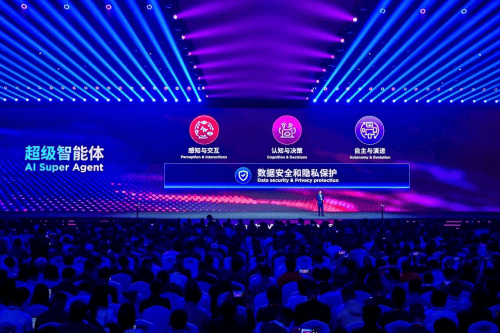
Group 1 - The core viewpoint of the articles emphasizes the impending wave of AI Agent deployment by 2025, driven by advancements in technology and the establishment of standardized frameworks for AI Agents [1][3][4] - The AI Agent market is expected to experience significant growth, with IDC predicting that the enterprise-level AI Agent application market in China will conservatively reach over $27 billion by 2028, characterized by multi-modal capabilities, embodied intelligence, and multi-agent collaboration [3][4] - Companies like Lenovo are positioning themselves as leaders in the AI Agent space, showcasing innovations in personal and enterprise AI at events like WAIC 2025, which has garnered significant attention [1][6] Group 2 - The development of AI Agents is transitioning from technology validation to large-scale application, with major tech companies accelerating their efforts, which is expected to benefit industry leaders significantly [6][9] - Lenovo is focusing on three main business areas: AI-embedded smart terminals, AI-driven infrastructure, and AI-native solution services, aiming to leverage AI opportunities effectively [6][8] - Lenovo's personal AI, Tianxi, is designed with three core capabilities: perception and interaction, cognition and decision-making, and autonomy and evolution, enhancing user experience and task management [6][8]

智能体侵入办公软件,再也不用受写PPT折磨
2 1 Shi Ji Jing Ji Bao Dao· 2025-07-31 09:02
21世纪经济报道记者骆轶琪 上海报道 大模型的风正持续吹入大众日常生活。 作为业界公认的Agent(智能体)元年,2025世界人工智能大会(WAIC)期间不少企业展示了多种智能 体应用。比如打工人还在为PPT烦忧的当下,Agent加持下的新一代办公软件正着手解决这一重要痛 点。 当然,Agent被公认目前仍处在发展早期。因此即便是近两年来引发大众关注的重点Agent产品,最终仍 然面临续费率和留存率不足的挑战。 接受21世纪经济报道等记者采访时,田然分析道,从发展阶段来说,目前的AI产业更像是2010-2011年 间的移动互联网发展时期,尚未走到2013-2014年那般呈现破圈态势。 这显示出,不同厂商对产品具体场景化并逐步融合工具的能力,仍在迭代探索阶段。这本质上正走向产 品结合技术迭代与消费者诉求持续磨合的螺旋式上升演化进程。 探路智能体 将更多AI能力植入办公系统或者软件中,正成为当前的一大重要趋势。 平安证券指出,当前AI+办公的战略重心正从广度扩张转向深度运营,具备行业Know-how沉淀、能提 供全链路解决方案的产品,正在高价值用户争夺中建立不可替代性。此外,产品形态加速向集成化方向 演进,主流产 ...

AI概念股走势强劲 近期AI应用迎来多重催化 机构称下半年AI主线具充分投资机遇
Zhi Tong Cai Jing· 2025-07-31 03:33
Group 1 - AI concept stocks have shown strong performance, with notable increases in share prices for companies such as Meitu (up 13.05% to HKD 12.3), Kingdee International (up 9.92% to HKD 18.4), and Huya Technology (up 9.74% to HKD 9.58) [1] - The World Artificial Intelligence Conference (WAIC 2025) commenced on July 26 in Shanghai, highlighting various AI applications such as embodied intelligence, intelligent agents, and AI glasses [1] - Alibaba and Zhipu have recently released significant AI models, with Alibaba open-sourcing its latest programming model Qwen3-Coder, which surpasses GPT-4.1 and is on par with Claude4 [1] Group 2 - Dongfang Securities is optimistic about user growth and commercialization acceleration for vertical AI products in the second half of the year, emphasizing the importance of domestic companies with overseas AI application layouts [2] - CITIC Securities noted that the lifting of H20 restrictions is expected to boost capital expenditure (CAPEX) investments by leading firms, creating multiple catalysts for AI model iteration and application explosion in the second half of the year [2]
人工智能跨越“炫技”分水岭
Bei Jing Ri Bao Ke Hu Duan· 2025-07-31 03:30
Group 1 - The core viewpoint of the article emphasizes the evolution of artificial intelligence (AI) from being merely a tool to becoming empathetic partners, highlighting the importance of responsible AI usage in gaining a competitive edge [1][2] - The development of AI is moving towards deeper understanding and interaction with the physical world, with significant advancements in models that can simulate real-world scenarios, such as the "绝影开悟" model which can generate data equivalent to 10 real vehicles or 100 road-tested vehicles daily [2][3] - The focus on AI agents is becoming a popular trend, with companies targeting the next battlefield in AI capabilities, where large models serve as the brain and AI agents provide the necessary action [3] Group 2 - Concerns regarding the safety and reliability of large models are increasingly being raised, as their accuracy in critical fields like healthcare and finance still falls short of required standards [4][5] - Experts suggest that the challenges of reliability in AI models should not be simplified to mere "hallucinations," but rather addressed through the establishment of engineering frameworks to ensure their effectiveness [5] - The potential risks associated with advanced AI systems necessitate global collaboration to ensure that AI remains beneficial to humanity, with a focus on developing AI that can assist rather than dominate human intelligence [5]
被理想i8撞到四轮弹起!乘龙卡车:被摆了一道;前毫末智行产品副总裁蔡娜已加入Momenta;乐道高管:L90顶配不超过32万元
雷峰网· 2025-07-31 00:55
Group 1 - Li Xiang, CEO of Li Auto, reflects on being ousted by a trusted partner during a financial crisis at Autohome in 2008, ultimately choosing reconciliation over resentment [4][5][6] - Li Xiang emphasizes the importance of understanding others' perspectives to avoid self-harm and achieve personal peace [5][6] Group 2 - Former Vice President of Product at Haomo.ai, Cai Na, has joined Momenta, bringing valuable experience from her previous roles [9][10] - Momenta aims to achieve profitability by 2026 and is involved in various autonomous driving projects [10] Group 3 - Li Auto's new electric SUV, the Li i8, has undergone rigorous safety testing, showcasing its structural integrity during crash tests [11] - Controversy arose when the truck used in the testing was identified as a Chenglong truck, leading to safety concerns and legal responses from the truck manufacturer [11] Group 4 - Alibaba has adjusted its stock vesting schedule for new employees to 15%, 25%, 30%, and 30% over four years, effective from April 1, 2024 [14][15] - This change aims to provide more immediate stock benefits to employees compared to the previous vesting schedule [14][15] Group 5 - ByteDance's AI programming tool, Trae, has been accused of unauthorized data collection, prompting concerns over user privacy [16][17] - ByteDance responded by stating that data collection practices are in line with industry standards and do not involve personal identification [17] Group 6 - Xiaomi's new end-to-end driving assistance system for its SU7 series has been launched, with a reminder that it is not equivalent to full autonomous driving [13] - The system has seen significant improvements in highway scenarios, but users are urged to remain attentive while driving [13] Group 7 - Stellantis reported a net loss of €2.3 billion in the first half of the year, with a 13% decline in net revenue compared to the previous year [35][36] - The company faces challenges in various markets, including China and India, and plans to launch several new models by the end of the year [36][37] Group 8 - Samsung is reconsidering a $7 billion investment in advanced packaging production in Texas, driven by demand for advanced process chips [44] - This move aligns with the growing need for localized chip production in the U.S. market, particularly for companies like Tesla [44]


智能体助联想东桥缓堵
Bei Jing Ri Bao Ke Hu Duan· 2025-07-30 23:41
Group 1 - The "Double Intelligence" traffic intelligent system has been implemented at the Liandongqiao intersection in Haidian District, achieving a daily traffic volume increase of 24.8% and a reduction of over 40% in congestion index during peak hours [1] - A total of 21 intelligent systems were launched, including the "Double Intelligence" traffic system, "Law Eye" case review system, and smart building systems, which cover five major categories: urban governance, urban services, public safety, education and health, and government affairs [1] - These intelligent systems are developed based on the accumulation of practices from Haidian's AI innovation district and various explorations across the country, representing a new digital and intelligent form accompanying urban development [1] Group 2 - A collaborative initiative involving 24 organizations, including Beijing University of Posts and Telecommunications, Baidu, Tencent Cloud, and others, has been launched to promote the intelligent system ecosystem [2] - The collaboration will focus on three key dimensions: co-creating integrated application scenarios, nurturing a prosperous innovation ecosystem, and enhancing the transformation of scientific and technological achievements [2] - The initiative aims to support the broader and deeper ecological cooperation necessary for the construction of smart cities [2]
互联网行业高质量发展成效显著
Jing Ji Ri Bao· 2025-07-30 22:20
Group 1: Industry Overview - The 2025 China Internet Conference highlighted the rapid evolution of network technology in China, emphasizing a shift towards data-driven and intelligent advancements, with 5G-A technology development leading globally [1] - The number of telecom and internet operators in China doubled from 94,000 to 187,000 during the 14th Five-Year Plan, while the total revenue of the top ten internet companies increased from 2.4 trillion yuan to over 4 trillion yuan [1] - China has established the world's largest 5G network and gigabit optical network, with 5G base stations reaching 4.549 million and mobile internet traffic totaling 1,867 billion GB, a year-on-year increase of 16.4% [1] Group 2: AI and Smart Agents - The number of internet users in China surpassed 1.1 billion, with over 250 million users of generative AI, and the AI industry nearing 270 billion yuan in scale [2] - Smart agents are recognized as a core symbol of internet evolution, reshaping the underlying logic of research, production, and daily life, with a closed-loop system comprising "large models + memory systems + tool invocation + planning capabilities" [2] - The concept of "smart agents as a service" is emerging, shifting user operations from manual control to AI-driven decision-making, necessitating upgrades in internet architecture for enhanced bandwidth and low latency [2] Group 3: Practical Applications and Innovations - Smart agents are penetrating various sectors, including industrial manufacturing, government services, content creation, and cybersecurity, driving a revolution in efficiency [3] - Companies like Tencent showcased applications of smart agents, such as the "anti-fraud assistant," which enhances user experience in fraud prevention [3] - China Unicom is developing government-focused smart models and intelligent services to automate simple inquiries and intelligently allocate complex tasks [3] Group 4: Future Directions - The need for deep integration of the internet with "artificial intelligence +" is emphasized, alongside the promotion of new information infrastructure and enhanced AI service capabilities [4]
商业路径逐渐清晰,大厂AI开始“赚钱”
Guang Zhou Ri Bao· 2025-07-30 16:17
Core Insights - Major internet companies in China, including JD.com, Tencent, Kuaishou, Baidu, Ant Group, and NetEase, have recently showcased their latest AI advancements and product iterations, indicating a shift from experimental phases to real commercial applications of AI across various industries [1] Group 1: AI Development and Commercialization - Tencent has unveiled a comprehensive AI ecosystem featuring over ten vertical intelligent agents and a 3D world model, aiming to accelerate the transition of AI from technological breakthroughs to practical applications [2] - JD.com has launched an enterprise-level intelligent agent called JoyAgent, with over 20,000 internal intelligent agents deployed across various scenarios such as customer service and logistics [2] - The focus on intelligent agents is driven by their role as a direct link between technology, application, and business, facilitating the final steps of AI implementation [2] Group 2: Market Opportunities in AI - The AI toy market in China is projected to exceed 10 billion yuan by 2030, with an annual growth rate surpassing 70%, as evidenced by the successful pre-sale of AI toy Fuzozo [3] - Various vertical industries, including advertising, e-commerce, retail, industrial, video, manufacturing, finance, and healthcare, are emerging as lucrative sectors for AI applications [3] - Tencent's commercial AI solution, "Qimiao Digital Human," has provided diverse and realistic digital human experiences, significantly reducing live-streaming costs for businesses by up to 90% [3] Group 3: AI in Video Generation - Kuaishou has reported that its AI service has been utilized by over 20,000 enterprise clients, indicating a growing trend of AI integration across the entire video production industry [4] - The use of AI in short drama production is expected to enhance the creative process, with significant projects planned for 2025 [4]