
经济复苏

Search documents
在市场窄幅波动中保持适度谨慎
鲁明量化全视角· 2025-06-08 06:02
Core Viewpoint - The article emphasizes maintaining a cautious stance in a market characterized by narrow fluctuations, with a focus on the current economic conditions and market trends [1]. Weekly Recommendations - Suggested positions for the main board and small-cap sectors are both at low allocations, indicating a conservative approach [2]. Market Performance Summary - In the first week of June, the market saw a rebound with the CSI 300 index rising by 0.88%, while the Shanghai Composite Index fell by 1.13%, and the CSI 500 index increased by 1.60%. Despite the macroeconomic challenges following April's tariff impacts, market trading activity has improved [3]. Fundamental Analysis - The U.S. unemployment rate has stabilized, and Trump is expected to nominate a new Federal Reserve Chair. In China, the central bank is set to disclose monthly reverse repurchase amounts, with June's scale rising to 1 trillion, which is seen as a rolling support for economic stability. The market is closely monitoring production and consumption data following May's export surge [4]. - Recent U.S. employment data shows a flat unemployment rate and a decline in labor participation, indicating a cooling job market. The upcoming nomination of a new Federal Reserve Chair may influence market expectations, particularly regarding potential interest rate cuts. However, a significant economic recession is anticipated before any major rate cuts occur, as the dollar's credibility could be at risk [4]. Technical Analysis - The market continues to exhibit a narrow oscillation pattern without a clear new trend direction. Institutional funds have flowed into both the main board and small-cap sectors, but these movements have not yet confirmed a new trend [4]. Summary of Market Outlook - The market experienced a slight rebound amid expectations of a U.S.-China summit, with increased trading activity. However, the Chinese economy is still grappling with insufficient domestic demand and fluctuating external demand, while the U.S. faces fiscal challenges amid significant external shocks. The global economic landscape remains fragile, and any changes in expectations regarding major legislative actions or trade tensions could trigger a new round of equity adjustments [5]. - The main board's timing perspective suggests maintaining a low allocation until new signals emerge, while the small-cap sector also remains at a low allocation due to a lack of reversal signals, with a preference for the main board [5]. Short-term momentum models recommend focusing on the banking and telecommunications sectors [5].


德国4月工业订单环比增长0.6%
Zhong Guo Xin Wen Wang· 2025-06-05 17:53
Core Insights - Germany's industrial orders increased by 0.6% month-on-month in April 2025, marking the second consecutive month of growth, contrary to expert expectations of a 1.5% decline [1] - Domestic orders rose by 2.2%, while foreign orders decreased by 0.3%, with orders from the Eurozone increasing by 0.5% and those from outside the Eurozone declining by 0.9% [1] - The main drivers of the order growth were in the data processing equipment and electronic and optical products sectors, which saw a significant increase of 21.5% in new orders compared to March [1] Industry Analysis - The manufacturing of other transportation equipment (including aircraft, ships, trains, and military vehicles) and metal products also contributed positively to the overall growth [1] - Conversely, the electrical equipment manufacturing, machinery manufacturing, and pharmaceutical sectors negatively impacted the overall data [1] - Economic experts view the April industrial order growth as a positive signal, although caution remains due to ongoing trade policy uncertainties and low business confidence [2]
银价再冲高位今年涨超20%,需留意市场波动
Guang Zhou Ri Bao· 2025-06-05 16:27
Group 1 - The core viewpoint is that silver prices have surged due to safe-haven demand, reaching a new high since October 2012, with a year-to-date increase of over 20% as of June 5 [1][2] - Analysts believe that the improvement in macroeconomic indicators, such as the rise in China's manufacturing PMI and new orders, will directly boost silver demand as the economy recovers [2][3] - Silver is viewed as a more elastic alternative to gold, especially in the context of easing global trade tensions, making it an attractive investment opportunity [2] Group 2 - Various investment channels for silver are available, including physical silver, silver futures, silver ETFs, and silver mining stocks, allowing investors to choose based on their risk preferences and investment goals [3] - Physical silver, such as bars and coins, is suitable for long-term holding, but investors should be aware of limited repurchase channels and storage costs [3] - Financial derivatives like silver futures offer high leverage and capital efficiency, but they also come with significant risks, while silver ETFs provide convenience and lower fees but may have tracking errors and overall market risks [3]
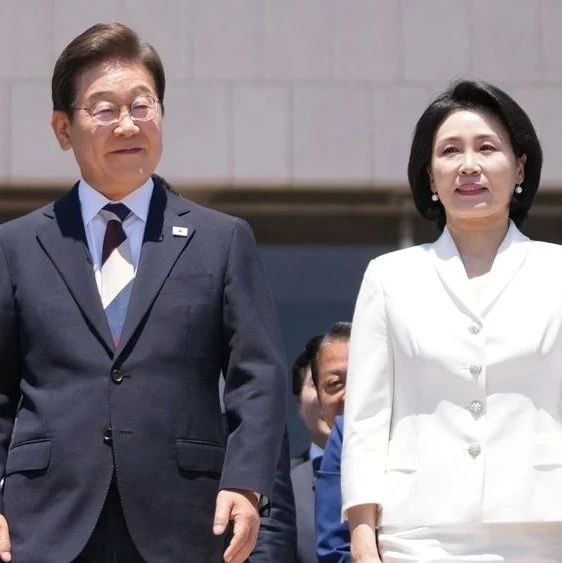
李在明三战总统终登顶,他能否治愈韩国?
虎嗅APP· 2025-06-05 10:53
Core Viewpoint - The article discusses the recent presidential election in South Korea, highlighting the election of Lee Jae-myung and his vision for the country, which includes economic recovery, constitutional reform, and balanced foreign diplomacy, particularly regarding relations with China and the United States [2][10][12]. Election Results - Lee Jae-myung won the presidential election with a vote share of 49.42%, receiving 17.2875 million votes, the highest in South Korean history, surpassing the previous record held by former President Yoon Suk-yeol [2][3]. - The election followed a period of political turmoil, including the impeachment of former President Yoon, leading to a significant public desire for healing and unity [3][6]. Economic Policies - Lee emphasized economic recovery during his campaign, proposing the establishment of an "Emergency Economic Response Task Force" to address domestic demand issues [7]. - His top campaign promise was to transform South Korea into a leading global economic power, with a focus on artificial intelligence (AI) and increasing private sector investment to 100 trillion won [7][8]. Constitutional Reform - Lee expressed a strong desire for constitutional reform, stating that failure to do so would lead to historical condemnation [8]. - This reflects a broader trend among presidential candidates who acknowledge the need for reform but often fail to act due to political divisions [8]. Foreign Relations - Lee's foreign policy approach is characterized by balanced diplomacy, aiming to repair and stabilize relations with China, which he views as a crucial trade partner [12][13]. - He intends to maintain a strong alliance with the United States while also addressing domestic economic interests, indicating a shift from the previous administration's more rigid stance [10][12]. Social Climate - The article notes a rising anti-China sentiment in South Korea, which has affected the Chinese community there, highlighting the complex social dynamics surrounding the election [11]. - Lee's pragmatic approach to China aims to normalize relations and enhance economic cooperation, countering the polarized views within South Korean politics [12].
市场分析:成长行业领涨,A股小幅波动
Zhongyuan Securities· 2025-06-05 10:22
Market Overview - On June 5, the A-share market experienced slight fluctuations, with the Shanghai Composite Index facing resistance around 3381 points[3] - The Shanghai Composite Index closed at 3384.10 points, up 0.23%, while the Shenzhen Component Index rose 0.58% to 10,203.50 points[8] - Total trading volume for both markets reached 13,172 billion yuan, above the median of the past three years[4] Sector Performance - Strong performers included consumer electronics, internet services, semiconductors, and communication equipment, while jewelry, beauty care, food and beverage, and chemical pharmaceuticals lagged[4] - Over 50% of stocks in the two markets saw gains, with notable increases in computer equipment, electronic components, and software development sectors[8] Economic Indicators - The average price-to-earnings (P/E) ratios for the Shanghai Composite and ChiNext indices are 13.83 times and 36.51 times, respectively, indicating a suitable environment for medium to long-term investments[4] - Industrial profits for large-scale enterprises grew by 3.0% year-on-year in April, with significant improvements in steel, agricultural products, and TMT manufacturing sectors[4] Investment Strategy - The market is expected to maintain a steady upward trend in the short term, with a focus on consumer electronics, internet services, electronic components, and communication equipment for investment opportunities[4] - Recent monetary policies, including interest rate cuts and structural tools, aim to support technology innovation and consumer sectors, enhancing market liquidity confidence[4] Risks - Potential risks include unexpected overseas economic downturns, domestic policy changes, and macroeconomic disturbances that could impact recovery[4]
李在明三战总统终登顶,他能否治愈韩国?
Hu Xiu· 2025-06-04 10:02
Core Points - The newly elected South Korean President Lee Jae-myung aims to bridge divisions and promote coexistence, reconciliation, and unity in his inaugural speech [1] - Lee won the presidential election with a record 49.42% of the votes, totaling 17.2875 million votes, surpassing the previous record but falling short of the highest percentage achieved by former President Park Geun-hye [1] Group 1: Political Landscape - Lee Jae-myung's rise is seen as a result of the collapse of traditional progressive structures rather than their reconstruction, indicating a tactical rather than ideological consolidation within the Democratic Party [2] - Lee's campaign slogan emphasizes building a proud democratic nation, reflecting a strong desire for constitutional reform [5] - The Democratic Party's political spectrum has shifted from center-left to center-right, leading to internal criticism regarding its positioning [4] Group 2: Economic Policies - Lee has prioritized economic recovery, pledging to establish an emergency economic response team and implement immediate economic measures to address domestic demand issues [5] - His campaign promises include transforming South Korea into a leading economic power, with a focus on AI and emerging industries, aiming to increase AI-related investments significantly [5] Group 3: Foreign Relations - Lee's foreign policy is characterized by a balanced approach, aiming to repair and stabilize deteriorated relations with China while maintaining a strong alliance with the U.S. [7][10] - He has avoided taking a firm stance on Taiwan, indicating a pragmatic approach to international relations [11] - Lee's administration is expected to prioritize human rights in North Korea while maintaining close cooperation with the U.S. on denuclearization efforts [13]
韩国总统李在明:经济复苏的关键在于额外预算。
news flash· 2025-06-04 05:41
Core Viewpoint - The key to economic recovery in South Korea lies in the implementation of an additional budget [1] Group 1 - President Lee Jae-myung emphasizes the necessity of an extra budget to stimulate economic growth [1] - The additional budget is seen as a crucial measure to address current economic challenges [1] - The government aims to enhance fiscal policies to support recovery efforts [1]
6月4日电,韩国总统李在明表示,经济复苏的关键在于额外预算。
news flash· 2025-06-04 05:37
Core Viewpoint - The key to economic recovery in South Korea is additional budget allocation [1] Group 1 - South Korean President Lee Jae-myung emphasizes the importance of extra budget for economic recovery [1]
金融期货早班车-20250604
Zhao Shang Qi Huo· 2025-06-04 03:42
Report Summary 1. Market Performance - **Stock Market**: On June 3rd, the four major A-share stock indices all rose, with the Shanghai Composite Index up 0.43% to 3361.98 points, the Shenzhen Component Index up 0.16% to 10057.17 points, the ChiNext Index up 0.48% to 2002.7 points, and the Science and Technology Innovation 50 Index up 0.48% to 981.71 points. Market turnover was 1.1638 trillion yuan, a decrease of 400 million yuan from the previous day. The sectors of beauty care (+3.86%), textile and apparel (+2.53%), and comprehensive (+2.02%) led the gains, while household appliances (-2.1%), steel (-1.37%), and coal (-0.84%) led the losses. From the perspective of market strength, IM > IC > IH > IF, and the numbers of rising, flat, and falling stocks were 3,390, 240, and 1,782 respectively. The net inflows of institutional, main, large - scale, and retail investors in the Shanghai and Shenzhen stock markets were -2.5 billion, -6.6 billion, -1.8 billion, and 11 billion yuan respectively, with changes of +16.8 billion, +9.3 billion, -11.5 billion, and -14.6 billion yuan respectively [2]. - **Stock Index Futures**: The basis of the next - month contracts of IM, IC, IF, and IH were 160.24, 127.04, 64.41, and 49.3 points respectively, and the annualized basis yields were -19.41%, -16.4%, -12.3%, and -13.49% respectively, with the three - year historical quantiles being 4%, 5%, 1%, and 5% respectively. The futures - spot price difference remained at a relatively low level [2]. - **Treasury Bond Futures**: On June 3rd, the yields of treasury bond futures showed a pattern of short - term rising and long - term falling. Among the active contracts, the implied interest rate of the two - year bond was 1.408, up 3.06 bps from the previous day; the implied interest rate of the five - year bond was 1.512, up 1.08 bps; the implied interest rate of the ten - year bond was 1.625, down 3.19 bps; and the implied interest rate of the thirty - year bond was 1.982, down 0.18 bps [3]. 2. Trading Strategies - **Stock Index Futures**: In the short term, due to the deep discount of small - cap stock indices, which is presumably the result of the expansion of neutral product scale since this year, and considering that the proportion of short positions in neutral products may still be high as the bond bull market has not restarted, the deep discount may continue, leading to market fluctuations. A short - cycle band strategy is recommended. In the long - term, the report maintains the view of being bullish on the economy. It is recommended to allocate IF, IC, and IM forward contracts on dips. For near - month contracts, there is a risk of a decline in micro - cap stocks, which may drag down the IC and IM indices, so caution is advised [3]. - **Treasury Bond Futures**: The current situation of the spot bond market is one of strong supply and weak demand, but this pattern is expected to change. Firstly, the maturity scale of government bonds in June will increase, and the net supply rhythm of government bonds may become more stable. Secondly, there is a possibility of a reduction in the long - term liability cost of insurance in July. Thirdly, the domestic market risk preference has returned to a defensive style, which may increase the demand for bond market allocation. On the futures side, the CTD bond price of near - month contracts is low, and combined with the relatively high IRR level recently, short - sellers have a strong willingness to deliver, putting pressure on the prices of near - month contracts and leading to a premium in far - month contracts. The long - end long - position power is strong, possibly betting on a further decline in future policy interest rates. It is recommended to be short - term long and long - term short, buying T and TL on dips in the short - term and hedging T and TL on rallies in the long - term [4]. 3. Economic Data - High - frequency data shows that in May, the prosperity of imports and exports and social activities declined, while the prosperity of the real estate market increased [11]. 4. Tables and Figures - **Table 1**: Presents the performance of stock index futures and spot markets, including details such as code, name, percentage change, current price, trading volume, open interest, etc. [6] - **Table 2**: Displays the performance of treasury bond futures and spot markets, with information on code, name, percentage change, current price, trading volume, open interest, etc. [7] - **Table 3**: Shows the changes in short - term capital interest rates, including overnight SHIBOR, DR001, one - week SHIBOR, and DR007 [11] - **Figure 1**: Depicts the term structure of treasury bond spot prices [8][9] - **Figure 2**: Tracks domestic meso - level data, based on the comparison of meso - level data in each module with the same period in the past five years, and scores the changes in prosperity [12][13][14]
分析人士:市场风险偏好有望回升
Qi Huo Ri Bao· 2025-06-03 22:19
Market Overview - A-shares experienced a rebound in April, with significant decline in volatility in May, and analysts expect a strong oscillation in June, focusing on liquidity, policy implementation, and economic expectations [1] - The A-share market currently exhibits a "strong reality, weak expectation" characteristic, with improved economic data due to policies like "two new, two heavy," "automobile replacement subsidies," and "consumption vouchers" [1] Economic Indicators - In Q1, the net profit growth rate for all A-shares excluding financials was 3.4%, reversing two years of negative growth, indicating clear fundamental support for the index [1] - However, internal demand remains insufficient, and asset price declines pose constraints on economic recovery [1] - April's PPI fell by 2.7% year-on-year, with a widening month-on-month decline, and recent social financing growth primarily relies on government debt issuance, with new RMB loan scales being relatively small [1] Future Outlook - The second quarter is expected to maintain basic data without significant decline, while the third quarter will be a critical period to validate the strength of economic recovery [1] - Previously announced government debt quotas may bottom out in Q3, with new policy measures likely to be introduced, making it a key period for index direction [1] Liquidity and Policy Measures - In May, the central bank implemented a series of monetary policies to provide ample liquidity to the market, with significant policies expected to be released by the Shanghai government during the 2025 Lujiazui Forum [2] - The economic data from April and May indicates that US-China trade tensions have not fundamentally impacted China's stable economic development, highlighting the resilience of the economy [2] Long-term Investment Trends - Policies are continuously guiding "long money, long investment," with ongoing updates on insurance fund long-term investment reform trials [3] - The inflow of "long money" is expected to stabilize the market and reduce stock market volatility, with public funds projected to increase their A-share holdings by at least 10% annually over the next three years [3] - The correlation between A-share valuations and medium to long-term RMB loans is significant, particularly for small-cap indices like the CSI 1000, which are notably influenced by liquidity [3] Investment Preferences - Long-term funds tend to have longer holding periods, lower capital costs, and place greater emphasis on the stability of equity assets, benefiting large-cap broad-based indices and dividend low-volatility themes [4]