
自由现金流

Search documents
机构:建议采取“逆向布局”策略,低费率的自由现金流ETF(159201)迎布局良机
Mei Ri Jing Ji Xin Wen· 2025-06-12 02:16
Market Overview - On June 12, A-shares opened lower with the Shanghai Composite Index down 0.13%, Shenzhen Component Index down 0.37%, and ChiNext Index down 0.23% [1] - The National Index of Free Cash Flow fluctuated downwards, dropping over 0.5%, with constituent stocks showing mixed performance [1] ETF Performance - The low-fee Free Cash Flow ETF (159201) followed the index decline and was actively traded, leading in scale and share among similar products [1] - The fund management fee is set at an annual rate of 0.15%, and the custody fee at 0.05%, both being the lowest in the market, maximizing benefits for investors [1] Investment Strategy - According to Zhongtai Securities, the index remains in a dense trading area, suggesting that the oscillating market may continue [1] - Funds are rapidly rotating around four mid-term trending sectors: dividend assets, safe assets, technology chains, and new consumption [1] - A "reverse layout" strategy is recommended, where significant sector gains indicate a time for profit-taking, while sector adjustments present opportunities for positioning [1] Index Characteristics - The Free Cash Flow ETF (159201) closely tracks the National Index of Free Cash Flow, selecting stocks with positive and high free cash flow after screening for liquidity, industry, and ROE stability [1] - The index is characterized by high quality and strong risk resistance, making it suitable for core portfolio allocation and long-term investment needs [1]
适配低利率时代,同类规模最大的自由现金流ETF(159201)成交额率先突破1亿元
Mei Ri Jing Ji Xin Wen· 2025-06-11 04:46
Group 1 - The A-share market opened high and rose, with the Guozheng Free Cash Flow Index increasing over 0.6% during the session, led by stocks such as Laofengxiang, Jinhong Group, Shandong Haihua, and Huanxu Electronics [1] - The largest free cash flow ETF (159201) saw active trading, with transaction volume exceeding 100 million yuan, and an average daily transaction of 307 million yuan over the past week, ranking first among comparable funds [1] - Free cash flow (FCF) is defined as the cash remaining after all cash expenditures, including operating costs and capital expenditures, which reflects the true profitability of a company [1] Group 2 - The free cash flow index typically excludes financial and real estate sectors, selecting companies with stable free cash flow and positive enterprise value, adjusting quarterly based on free cash flow weight [1] - The free cash flow ETF (159201) closely tracks the Guozheng Free Cash Flow Index, focusing on listed companies with high and stable free cash flow levels, characterized by high long-term returns and low volatility, suitable for the current phase of high-quality economic growth [1] - The fund's management and custody annual fee rates are among the lowest in the market [1]
资产荒下的配置革命:高股息与自由现金流“双轮驱动”破局
Xi Niu Cai Jing· 2025-06-11 01:08
Core Viewpoint - The central theme of the articles is the increasing popularity of dividend assets in the current low-interest-rate environment, driven by the recent monetary policy adjustments and regulatory changes that enhance cash dividend practices among listed companies [2][3][12]. Group 1: Market Conditions and Trends - In May 2025, the central bank unexpectedly implemented a "double reduction" policy, lowering the reserve requirement ratio by 0.5 percentage points and the policy interest rate by 0.1 percentage points, releasing over one trillion yuan in liquidity [2]. - The ten-year government bond yield fell to a historical low of 1.64%, contributing to a capital market "asset shortage" [2]. - The dividend yield of the S&P China A-share Large Cap Dividend Low Volatility 50 Index surpassed 6%, nearing a ten-year high, making dividend ETFs attractive to institutional and individual investors [2][3]. Group 2: Performance of Dividend Assets - As of June 9, 2025, the net asset value of the Southern S&P China A-share Large Cap Dividend Low Volatility 50 ETF (code: 515450) exceeded 9.2 billion yuan, representing a growth of over 300% compared to the same period in 2024 [2]. - The S&P China A-share Large Cap Dividend Low Volatility 50 Index had a dividend yield of 5.47% as of June 9, 2025, with a risk premium of 3.82% over the ten-year government bond yield [5]. - The index demonstrated strong performance from 2021 to 2024, with annual returns consistently outperforming the CSI 300 Index by over 10 percentage points [8]. Group 3: Investment Tools and Strategies - The Southern S&P China A-share Large Cap Dividend Low Volatility 50 ETF aims to minimize tracking deviation and error while focusing on high-dividend, low-volatility large-cap stocks [4]. - The introduction of the Free Cash Flow Index addresses the limitations of dividend-focused indices by considering both dividends and share buybacks as measures of shareholder returns [9]. - The Free Cash Flow Index has shown a cumulative increase of 595.68% since its inception on December 31, 2013, with an annualized return of 19.06% as of June 9, 2025 [9]. Group 4: Fund Management and Future Outlook - The Southern Fund's passive index funds are managed with precision, achieving an industry-leading tracking error of only 0.38% in 2024 [11]. - The recent approval of the Southern Free Cash Flow ETF (code: 159232) on April 23, 2025, reflects growing interest in cash flow-based investment strategies [10]. - The combination of the Dividend Low Volatility ETF and the Cash Flow ETF is positioned as a strategic choice for investors navigating through economic cycles, serving as a "safe haven" in volatile markets [12].

环保行业深度报告:垃圾焚烧板块的提分红逻辑验证:从自由现金流增厚看资产质量的改善
Soochow Securities· 2025-06-11 00:23
Investment Rating - The report maintains an "Accumulate" rating for the waste incineration sector [1] Core Insights - The report emphasizes analyzing waste incineration assets from a cash flow perspective, highlighting that improvements in asset quality are reflected in increased free cash flow and enhanced ROE. The marginal changes in cash flow represent variations in asset valuation within DCF models, supporting the potential for increased dividends [10][1] - The waste incineration sector is expected to see a steady increase in dividend potential due to declining capital expenditures and improved cash flow management, with projected dividends for 2024 showing significant increases across various companies [3][24] Summary by Sections Cash Flow Analysis - The waste incineration sector has experienced a decline in capital expenditures, leading to a positive trend in free cash flow. The operating cash flow net amount for 2024 is projected to be 15% higher than the previous year, reaching 157 billion [21][19] - Free cash flow is expected to increase significantly, from 27 billion in 2023 to 66 billion in 2024, indicating a robust capacity for dividend distribution [21][24] ROE and Profitability - The report notes a recovery in ROE and PB ratios, with 2024 ROE projected at 11.53%, a slight increase from 11.32% in 2023. This recovery is attributed to reduced capital expenditures and improved operational efficiency [2][40] - The waste incineration sector's total revenue for 2024 is estimated at 457 billion, with a 1% increase year-on-year, and a net profit of 88 billion, reflecting a 13% growth [30][35] Investment Recommendations - The report suggests that the solid waste sector has significant potential for increased dividends, with companies like Green Power and Hanlan Environment expected to raise their dividends substantially in 2024 [3][24] - The analysis indicates that several companies within the sector could achieve dividend potentials exceeding 100%, with specific companies identified for their strong dividend capabilities [15][14]


自由现金流基金今年以来募资151亿元 ,业内认为这类产品适合长期持有
Shen Zhen Shang Bao· 2025-06-09 12:12
Group 1 - The first batch of free cash flow strategy funds was announced in February, with 26 funds established so far, raising a total of over 15 billion yuan [1] - The established funds are passive index funds tracking various free cash flow indices, with 12 funds tracking the CSI All Share Free Cash Flow Index [1][3] - The market is seeing an expansion of free cash flow strategy funds, with new products being launched and applications submitted for additional funds [2] Group 2 - Analysts believe that free cash flow is well-suited to the current macroeconomic environment, as companies with ample free cash flow are expected to see stronger valuation increases [2] - Free cash flow indices have shown strong long-term performance, with lower volatility compared to dividend indices, and are concentrated in sectors like energy and consumer goods [3][4] - The National Free Cash Flow Index has outperformed other indices, while the CSI 300 Free Cash Flow Index is noted for its low volatility and stable performance [4]
国信证券晨会纪要-20250609
Guoxin Securities· 2025-06-09 03:09
Group 1: Macro and Strategy - The macroeconomic environment shows a slight weakening in high-tech manufacturing, with the National Securities weekly high-tech manufacturing diffusion index A recording -0.2 and index B at 51.0, indicating a small decline [9][10] - The macroeconomic weekly report indicates that high-frequency indicators are weak, but consumer performance remains relatively stable, with the domestic GDP growth rate for April estimated at 4.1%, down 0.8% from March [11][12] - The fixed income weekly report highlights that the total market value of public REITs has surpassed 200 billion yuan, with the REITs index showing a weekly increase of 1.6% [13][14] Group 2: Industry and Company Insights - The internet industry report discusses JD's stablecoin progress, which is entering the second phase of sandbox testing, potentially enhancing its international e-commerce business [3] - The textile and apparel industry report notes that Lululemon's first-quarter performance in the Chinese market has shown a sequential decline, leading to a downward adjustment in revenue guidance for the year [3] - The automotive industry investment strategy for June 2025 emphasizes the acceleration of RoboX commercialization and suggests focusing on this sector [3] Group 3: Financial Engineering - The financial engineering weekly report indicates that the Hong Kong stock market has seen a 4.07% increase this week, with a year-to-date rise of 36.51% [6] - The report on private equity bonds highlights a new project from Liaoning Chengda Co., Ltd. for a non-public offering of exchangeable bonds, with a proposed issuance scale of 5 billion yuan [12] - The report on the convertible bond market notes that the yield to maturity (YTM) of bond-type convertible bonds has dropped to a near historical low, warranting attention to rating adjustments [13][17] Group 4: ESG and Sustainability - The ESG report highlights global developments centered around carbon reduction, with various companies and initiatives focusing on green energy and sustainable practices [26][28] - In China, significant progress has been made in the ESG field, including the implementation of green financial standards and initiatives aimed at promoting low-carbon development [28] - The academic frontier research indicates that ESG characteristics significantly influence the monetary policy transmission mechanism, suggesting a growing importance of ESG in investment strategies [29]
自由现金流ETF(159201)年内第二次调仓在即,如何把握投资机遇
Sou Hu Cai Jing· 2025-06-09 02:15
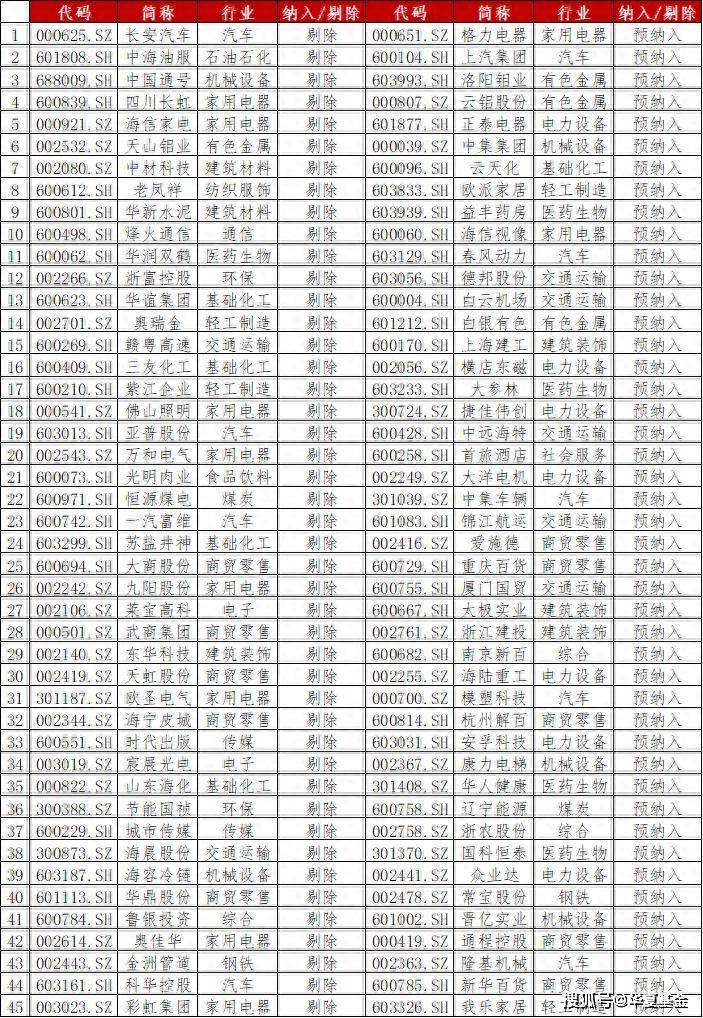
国证自由现金流指数(代码:980092)即将于2025年6月16(六月的第二个星期五的下一个交易日)日 进行季度样本调整,这是该指数年内第二次调仓,预计涉及45只成分股变动,合计权重占比达 24.33%。此次调整延续了该指数每季度动态优化的机制,旨在通过高频筛选及时捕捉企业基本面变 化,确保指数成分股始终聚焦自由现金流稳定且增长潜力突出的优质标的。(本文所述个股仅做展示, 不作为个股推荐) | | 代码 | 简称 | 行业 | 纳入/剔除 | 代码 | 简称 | 行业 | 纳入/剔除 | | --- | --- | --- | --- | --- | --- | --- | --- | --- | | 1 | 000625. SZ | 长安汽车 | 汽车 | 刷除 | 000651. SZ | 格力电器 | 家用电器 | 荧纳入 | | 2 | 601808. SH | 中海油服 | 石油石化 | 刷除 | 600104. SH | 上汽泉团 | 汽车 | 澳纳入 | | 3 | 688009 SH | 中国通号 | 机械设备 | 刷 全 | 603993 SH | 洛阳朝业 | 有色金属 | 顶纳入 | | ...
梁杏:下半年配置该重科技还是红利?
Mei Ri Jing Ji Xin Wen· 2025-06-09 01:12
Group 1: Tariff Policy and Economic Outlook - The article suggests a relatively neutral to optimistic outlook on future tariff policies, indicating that the potential cancellation of reciprocal tariffs and negotiation space for the 20% fentanyl tax is likely [1] - It highlights three key investment themes: government support in the consumer sector focusing on social welfare, an increase in free cash flow due to declining capital expenditure willingness, and growth in high-end manufacturing driven by artificial intelligence investments [1] Group 2: ETF Market Trends - The ETF market has seen a shift from broad-based ETFs to sector-specific thematic ETFs, indicating an increased risk appetite among investors, particularly in technology, artificial intelligence, chips, and military sectors [2] - The article identifies artificial intelligence as a key economic driver, with potential market gains in the context of U.S.-China relations, while the military sector is viewed positively despite weak current fundamentals [2] Group 3: Cash Flow and Dividend Strategies - The article emphasizes the importance of free cash flow, suggesting that as economic growth slows, companies may reduce investment willingness, leading to increased free cash flow [3] - It argues that free cash flow is a strong investment factor, outperforming dividend-focused strategies, and recommends a focus on large and medium-sized state-owned enterprises with ample cash flow as a potential investment theme [3] Group 4: Investment Recommendations - For the second half of the year, the article recommends a diversified asset allocation strategy, suggesting technology for aggressive investors and dividend or cash flow strategies for conservative investors [4] - Specific ETF recommendations include the CSI A500 ETF for broad exposure, the Guotai Science and Technology Index ETF for technology, and a combination of dividend and cash flow ETFs for income generation [4]
金融工程专题研究:中证800自由现金流指数投资价值分析:从现金流到“现金牛”,值投资的新思路
Guoxin Securities· 2025-06-08 14:43
Quantitative Models and Construction Methods 1. Model Name: Free Cash Flow (FCF) - **Model Construction Idea**: Free cash flow represents the maximum cash amount distributable to capital providers without affecting the company's sustainable development. It is a key indicator of a company's ability to convert profits into freely distributable cash flow[1][10] - **Model Construction Process**: The formula for free cash flow is: $ FCF = EBITDA - CAPEX - NWC - Taxes $ Where: - EBITDA: Earnings before interest, taxes, depreciation, and amortization - CAPEX: Capital expenditures - NWC: Net working capital changes - Taxes: Tax payments Alternatively, the simplified formula is: $ FCF = Operating Cash Flow - CAPEX $ This simplification assumes that NWC changes are negligible compared to other components[10][11] Additionally, the Free Cash Flow Yield (FCF Yield) is calculated as: $ FCF Yield = FCF / Enterprise Value $ Where enterprise value is defined as: $ Enterprise Value = Market Capitalization + Total Debt - Cash $[11] - **Model Evaluation**: The FCF metric reduces the impact of financial manipulation and reflects the company's true operating conditions. It is more responsive to changes in company fundamentals compared to traditional metrics like net profit or revenue[11][24] 2. Model Name: CSI 800 Free Cash Flow Index - **Model Construction Idea**: This index selects 50 stocks with the highest free cash flow yield from the CSI 800 Index to reflect the performance of companies with strong cash flow generation capabilities[31][32] - **Model Construction Process**: - Sample Space: CSI 800 Index constituents - Screening Criteria: - Exclude financial and real estate sectors - Positive free cash flow and enterprise value - Positive net cash flow from operating activities for the past 5 years - Top 80% in profitability ranking - Selection Method: Rank stocks by free cash flow yield and select the top 50 - Weighting Method: Free cash flow-weighted - Rebalancing: Quarterly adjustments[32] - **Model Evaluation**: The index avoids exposure to financial and real estate sectors, focusing on industries with stable cash flows like energy and home appliances. It demonstrates a large-cap style and concentrated holdings, with long-term outperformance against the market and peer indices[33][36][40] --- Model Backtesting Results 1. Free Cash Flow (FCF) - **Annualized Return**: The FCF strategy shows strong performance in both loose monetary and tight credit environments, consistently delivering excess returns relative to the market[20][23] - **Macro Environment Suitability**: - In a low-interest-rate environment, companies with high FCF benefit from valuation uplift - During credit tightening, companies with strong internal FCF generation exhibit resilience[23] 2. CSI 800 Free Cash Flow Index - **Annualized Return**: 19.16% - **Annualized Sharpe Ratio**: 0.87 - **Annualized Volatility**: 23.16% - **Maximum Drawdown**: 43.56% - **Valuation Metrics**: - Price-to-Earnings (P/E): 10.95 - Price-to-Book (P/B): 1.48 - Dividend Yield: 4.32% Compared to the CSI 800 Index, the CSI 800 Free Cash Flow Index has lower valuation metrics, indicating a value-oriented style[47][48] --- Quantitative Factors and Construction Methods 1. Factor Name: Free Cash Flow Yield (FCF Yield) - **Factor Construction Idea**: FCF Yield is a valuation metric that adjusts free cash flow by enterprise value, providing a normalized measure of cash flow generation relative to the company's size[11] - **Factor Construction Process**: $ FCF Yield = FCF / Enterprise Value $ Where enterprise value is calculated as: $ Enterprise Value = Market Capitalization + Total Debt - Cash $[11] - **Factor Evaluation**: FCF Yield is more responsive to changes in company fundamentals compared to dividend yield, helping to avoid value traps where declining fundamentals lead to artificially high dividend yields[24][29] --- Factor Backtesting Results 1. Free Cash Flow Yield (FCF Yield) - **Performance in Macro Environments**: - Outperforms in loose monetary conditions (low interest rates) - Outperforms in tight credit conditions (declining social financing growth)[20][23] - **Sector Allocation Sensitivity**: - Reduces exposure to sectors like coal during downturns, avoiding potential losses - More responsive to fundamental changes compared to dividend yield factors[28][29] --- Composite Strategies and Results 1. Fixed Income Plus ("Fixed Income+") Strategy - **Construction**: Combine the CSI 800 Free Cash Flow Index (20%) with the ChinaBond Total Treasury Wealth Index (80%), rebalanced monthly[51] - **Performance**: - Annualized Return: 7.09% - Annualized Sharpe Ratio: 1.67 - Annualized Volatility: 4.16% - Maximum Drawdown: 4.60% Compared to the Wind Mixed Bond Secondary Index, the "Fixed Income+" strategy delivers higher returns with lower drawdowns[54] 2. Growth + Value "Barbell" Strategy - **Construction**: Combine the CSI 800 Free Cash Flow Index (50%) with the A-Share Advantage Growth 50 Index (50%), rebalanced monthly[56] - **Performance**: - Annualized Return: 20.15% - Annualized Sharpe Ratio: 0.91 - Annualized Volatility: 23.10% - Maximum Drawdown: 40.80% The strategy balances the strengths of growth and value styles, achieving higher overall returns with improved risk metrics compared to individual indices[59][60]





资金布局现金流防御,现金流ETF(159399)盘中翻红,盘中迎大额净流入,关注全市场规模最大的现金流ETF
Mei Ri Jing Ji Xin Wen· 2025-06-05 04:13
现金流ETF(159399)是以自由现金流作为选股因子的Smart Beta ETF,紧密跟踪富时中国A股自由 现金流聚焦指数,剔除金融和地产行业,优选自由现金流率最高的50只股票,为投资者筛选出了一批 A 股市场中的 "现金牛" 企业,为长期投资收益奠定了坚实基础。 根据wind数据,现金流ETF(159399)盘中实时净流入超2000万,资金抢筹现金流资产。当前现金 流ETF规模超36亿元,是全市场规模最大的现金流ETF,值得关注。 每日经济新闻 相关机构表示,与红利对比的话,自由现金流是红利的前提,因为只有账上有足够多的钱才有可能 分红。并且自由现金流本身就是一个非常强的因子,它的超额收益不来自于风格上的暴露,而来自于它 选股上面的区别。红利指数可能只选到了自由现金流较高的股票的其中一部分,还有很多表现优秀,但 是没有做高分红的股票被遗漏了,这就是为什么自由现金流指数的历史回撤和表现比红利要好很多的原 因。往后看,我们觉得"大中市值+央国企+充裕现金流"很有希望能成为全年投资主线,也符合政策鼓 励的方向。 值得注意的是,现金流ETF(159399)在分红机制上设置了"月月评估分红"的条款,近期也已经完 ...