
全国统一大市场

Search documents
新华述评·聚焦中央经济工作会议|必须做到既“放得活”又“管得好”——学习领会“五个必须”做好明年经济工作
Xin Hua She· 2025-12-17 14:48
Group 1 - The core idea emphasizes the need for a balance between "letting go" and "managing well" in economic work, highlighting the importance of breaking down institutional barriers while ensuring a rule-based economy [1][10] - The "Five Musts" outlined by Xi Jinping provide a framework for addressing development challenges, stimulating internal dynamics, and mitigating risks [1][10] - The focus on creating a fair and competitive market environment is essential for promoting high-quality development, as indicated by the increase in the bidding success rate of private enterprises in Hunan from 73.65% to 82.9% [2] Group 2 - The establishment of a high-standard market system is crucial for maximizing resource allocation efficiency, as stated by experts [3] - Recent measures, such as the approval of the Administrative Law Enforcement Supervision Regulations, aim to clarify responsibilities and enhance market vitality through reduced administrative approvals [4] - The importance of market rules and a conducive environment for fair competition is emphasized, ensuring equal access to production factors for all business entities [5] Group 3 - The government's role is essential in regulating market order, with recent policies focusing on risk prevention and maintaining economic stability [12] - The ongoing reforms aim to enhance the efficiency of resource allocation and reduce institutional costs, as seen in various regional initiatives [16] - The need for continuous improvement in the relationship between an effective market and a proactive government is highlighted as a key focus for future reforms [15]
新华述评·聚焦中央经济工作会议丨必须做到既“放得活”又“管得好”——学习领会“五个必须”做好明年经济工作
Xin Hua Wang· 2025-12-17 14:40
Group 1 - The core idea emphasizes the need for a balance between "letting go" and "managing well" in economic work, as highlighted by Xi Jinping during the Central Economic Work Conference [1] - The goal of "letting go" is to eliminate institutional barriers that hinder productivity, while "managing" focuses on building a rule-of-law economy [1] - The combination of an effective market and a proactive government is essential for stimulating economic vitality and ensuring sustainable growth [1] Group 2 - In Hunan, the implementation of machine-based bidding processes has increased the winning rate of private enterprises from 73.65% to 82.9% [2] - The "14th Five-Year Plan" suggests fully leveraging the market's decisive role in resource allocation while enhancing government functions to create a unified, open, competitive, and orderly market system [2][3] - The establishment of a legal framework to ensure fair competition and equal access to resources is crucial for achieving the goal of "letting go" [5] Group 3 - The recent approval of the Administrative Law Enforcement Supervision Regulations aims to clarify responsibilities and enhance market order by holding officials accountable for abuse of power [4] - The government is focused on reducing administrative approvals to boost market vitality, indicating a shift towards a more efficient regulatory environment [4][5] - The emphasis on a well-regulated market is seen as a necessary condition for the effective functioning of the economy [9] Group 4 - The Central Economic Work Conference has outlined measures to stabilize the real estate market and manage local government debt risks, emphasizing the importance of risk prevention [11] - The introduction of various reforms, such as the Fair Competition Review Regulations, aims to eliminate barriers to the free flow of resources and enhance market efficiency [10][11] - The government is committed to improving the legal and institutional framework to support the development of a fair and competitive market environment [9][10] Group 5 - The establishment of a high-standard market system is crucial for maximizing resource allocation efficiency and effectiveness [3][15] - The ongoing reforms aim to address the challenges of an underdeveloped market system, including inefficient resource allocation and barriers to factor mobility [14][15] - The focus on deepening reforms and enhancing governance capabilities is essential for building a mature and well-defined socialist market economy [15][16]
中央财办十问十答,一起来学习!
Xin Lang Cai Jing· 2025-12-17 14:25
Economic Outlook - The central economic work conference indicates that 2025 will be a significant year, with China's economy showing strong resilience and vitality while facing challenges [3][38] - The expected annual economic growth is around 5%, maintaining China's position among the world's major economies, with the total economic output projected to reach approximately 140 trillion yuan [4][39] - Active flows of factors and innovation are expected to inject new momentum into development, with investment and consumption growth anticipated to recover next year [4][41] Macro Policy Implementation - The central economic work conference has decided to continue implementing a more proactive macro policy next year, focusing on stability and quality improvement [6][42] - A more active fiscal policy will be maintained, ensuring necessary fiscal deficits and total debt levels while leaving room to address future risks [6][44] - An appropriately loose monetary policy will be continued, with a focus on stabilizing economic growth and allowing for reasonable price recovery [7][44] Key Tasks for Economic Work - Expanding domestic demand is prioritized as the key task for next year, focusing on structural changes in consumption and boosting investment [9][45] - Investment in both physical and human resources will be combined to stimulate consumption and expand investment, with an emphasis on building consumer infrastructure [9][47] International Technology Innovation Centers - Significant achievements have been made in the construction of international technology innovation centers in Beijing, Shanghai, and the Guangdong-Hong Kong-Macao Greater Bay Area, which support China's innovation capabilities [12][48] - The expansion of these centers aims to enhance their global influence and competitiveness [12][49] Unified National Market - Targeted measures will be taken to enhance the effectiveness of the unified national market, ensuring efficient allocation of resources [15][52] - Continuous improvement of market operation rules and the establishment of a foundational institutional framework for the unified market will be prioritized [15][53] High-Level Opening Up - The focus will be on steadily advancing institutional opening up, expanding service sector autonomy, and promoting diverse open platforms [18][59] - Efforts will be made to achieve a basic balance in international payments and to hold numerous import promotion activities [18][60] Regional Coordinated Development - Implementation of regional development strategies will be guided to promote urban-rural integration and regional linkage [20][63] - Support for major economic provinces and coordinated regional development will be emphasized to create a complementary and interconnected development pattern [20][63] Green Transition - Collaborative efforts will be made to reduce carbon emissions, pollution, and enhance green growth [23][66] - The first year of transitioning to dual control of carbon emissions will focus on solidifying statistical foundations and implementing control measures [23][66] High-Quality Employment - Employment policies will prioritize stability and quality, focusing on promoting employment for key groups such as graduates and migrant workers [29][70] - Support for flexible employment and new employment forms will be strengthened, including labor rights protection [29][71] Real Estate Development - There is significant potential for high-quality development in the real estate sector, with a focus on new models to drive growth [32][72] - Measures will be taken to control new supply, revitalize existing stock, and encourage the acquisition of existing properties for reasonable uses [32][73]


山西“十四五”期间累计新增经营主体122.7万户
Zhong Guo Jing Ji Wang· 2025-12-17 07:55
保护知识产权,创新动能更加澎湃。5年来,山西完善保护机制、加快转化运用,着力推动科技创新和 产业创新深度融合。深入实施高价值专利培育工程,全省有效发明专利达3.69万件,增长124%;有效 注册商标达45.64万件,增长104%;快速专利预审1.39万件,平均授权周期从15.5个月缩短至两个月。 深入开展专利转化运用专项行动,实施重点专利导航项目16个,全省共盘点存量专利2.1万件,转让专 利1.3万件、受让1.8万件,推动更多创新成果转化为新质生产力。深入推进国家专利侵权纠纷行政裁决 试点,建成维权援助工作站131个、海外知识产权工作站7个,为山西企业"走出去"保驾护航。 严守安全底线,治理基础更加稳固。5年来,山西健全责任体系、防范风险隐患,着力推动高质量发展 和高水平安全相互促进、相得益彰。聚焦食品安全,严格落实"两个责任",全力办好"大型农贸批发市 场全面实行农产品快速检测"这一省政府民生实事,拦截阳性产品5500余批次,销毁不合格产品1.2万余 公斤。聚焦药品安全,不断加大疫苗、血液制品等重点领域监管力度,持续深化药品医疗器械监管改 革,全省药品抽查合格率提升至99.68%。聚焦工业产品质量安全,深 ...
国海证券杨仁文:锚定新质生产力 筑牢“十五五”高质量发展根基
Zheng Quan Ri Bao Zhi Sheng· 2025-12-17 07:48
在畅通经济循环层面,杨仁文进一步分析,发展新质生产力,是激发有效需求、畅通国内大循环的强劲 引擎。近年来,中国经济面临供强需弱的发展问题。"十五五"时期需重视新质生产力通过创造新产品、 新服务、新场景、新业态,激发和引领新消费需求的重要作用。同时,新质生产力催生的智慧物流、工 业互联网等也能极大提升流通效率,畅通国民经济循环。此外,发展新质生产力要求市场化要素跨区配 置,也将推动消除地方保护和市场分割,破除阻碍全国统一大市场建设的卡点堵点,加快全国统一大市 场推进建设。 本报讯 (记者周尚伃)2026年是"十五五"规划的开局之年。近日,国海证券首席研究官兼研究所所长 杨仁文发文表示,"十五五"时期是基本实现社会主义现代化夯实基础、全面发力的关键时期,战略机遇 和风险挑战并存。为破解国内发展面临的诸多结构性难题,需坚定不移发展新质生产力,推动高质量发 展。 "发展新质生产力,是解决发展不平衡不充分问题的重要途径。"在杨仁文看来,当前,我国区域发展差 距依然客观存在。"十五五"时期,要增强区域发展协调性,促进东中西、南北方协调发展,需因地制宜 发展新质生产力,通过新质生产力强大的渗透性和赋能效应,打破地理空间限制 ...

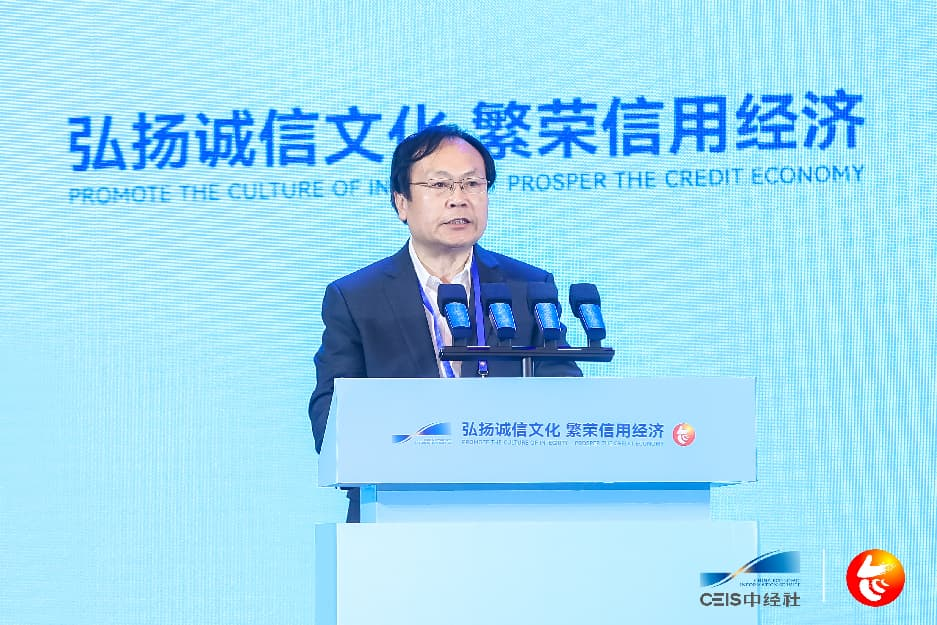
薛方:城市信用治理创新的三重维度 ——制度化、资本化和人的现代化
Xin Hua Cai Jing· 2025-12-17 03:17
Core Viewpoint - The China Urban Credit Construction Summit held from December 12 to 14 in Taizhou, Zhejiang Province, introduced a governance framework of "institutionalization, capitalization, and modernization of people" for urban credit system development in the context of Chinese-style modernization [1][3]. Group 1: Credit System Development - China's social credit system has evolved over 26 years, starting from information construction to forming a national credit information sharing platform, recognized as a foundational market economy system in the 20th National Congress report [3]. - The 14th Five-Year Plan emphasizes the equal importance of integrity construction and legal system building, focusing on developing new productive forces and establishing a unified national market [3]. Group 2: Governance Innovation - The proposed governance path addresses new challenges in the digital era, such as "credit white households," "sleeping credit assets," and "credit gaps," facilitating the modernization of cities with Chinese characteristics [3][4]. - Institutionalization focuses on legal frameworks to promote integrity values, enhance mechanisms for joint punishment, credit restoration, and supervision, preventing credit misuse [4]. Group 3: Capitalization and Economic Applications - The capitalization aspect aims to define and strengthen the value of credit as "trust capital, social capital, reputation capital, and future capital," expanding credit economic applications like "credit loans," "credit healthcare," and "pay after use" [4]. - The concept of "credit as wealth" is promoted to benefit enterprises and the public, positioning credit as a "hard currency" in the market economy [4]. Group 4: Modernization of People - The modernization of people focuses on groups such as 300 million new citizens, farmers, and small and medium enterprises, promoting digital, ecological, and inclusive credit systems to address the "credit white household" issue [4]. - It aims to fill gaps in credit services across various sectors, including agriculture, employment, marriage, food safety, elderly care, and e-commerce [4]. Group 5: Innovative Practices and Outcomes - Several innovative practices have been implemented, such as Zhejiang's "Qinghe Station" providing job-seeking accommodation for students, Shenzhen's establishment of the first "credit economy experimental zone," and Wuhan's carbon points exchange for mortgage policies [5]. - These initiatives leverage "credit + livelihood," "credit + digital," and "credit + ecology" models to enhance public services and grassroots governance modernization [5]. Group 6: Summit Objectives - The China Urban Credit Construction Summit serves as a high-level exchange platform for social credit system development, aiming to foster dialogue, build consensus, and promote practical applications in credit construction [5].
扩大内需的深层逻辑与战略意义——中央经济工作会议解读
Sou Hu Cai Jing· 2025-12-17 03:16
Core Viewpoint - The article emphasizes the strategic importance of expanding domestic demand in China as a response to both internal and external economic challenges, positioning it as a key driver for sustainable economic growth and modernization [1]. Group 1: Strategic Logic of Expanding Domestic Demand - The strategy of expanding domestic demand is rooted in a deep understanding of the economic laws governing large nations and is a proactive response to current internal and external challenges [2]. - Expanding domestic demand aligns with the universal pattern of large economies, where internal demand typically drives growth, as evidenced by the experiences of the US, Germany, and Japan [3]. - It serves as a strategic foundation to address uncertainties in the external environment, such as rising protectionism and geopolitical risks, thereby enhancing economic autonomy and resilience [4]. - The strategy is crucial for resolving the current economic contradictions in China, particularly the mismatch between supply and demand, which has led to persistent low consumer spending and investment confidence [5]. Group 2: Multiple Significances of Expanding Domestic Demand - Expanding domestic demand is a core engine for driving high-quality economic development, as it stimulates supply upgrades and innovation [6]. - It fosters a positive interaction between "investment in people" and improvements in living standards, linking economic growth directly to social welfare [9]. - The strategy is a strategic pivot for constructing a new development pattern, enhancing domestic market strength, and improving international competitiveness [10]. - It is inherently linked to enhancing public welfare, with policies aimed at improving income, social security, and supply quality to elevate living standards [10]. Group 3: Future Pathways for Expanding Domestic Demand - Future efforts to expand domestic demand should transcend traditional stimulus approaches, focusing on a systematic and structural policy framework that integrates income growth, quality supply, smooth circulation, and security [11]. - Implementing a plan to increase income for urban and rural residents is essential to address the "ability to consume" issue, emphasizing reforms in income distribution and enhancing labor compensation [12]. - Creating high-quality supply to generate and lead new demand is necessary to resolve the structural mismatch between supply and demand, particularly in the service sector [13]. - Building a unified national market is crucial to eliminate barriers to consumption and enhance market efficiency [14]. - Coordinating "investment in people" with macroeconomic policies is vital to stabilize consumer confidence and spending expectations [16]. Conclusion - Expanding domestic demand is a strategic necessity for China to leverage its large market advantages, adhere to economic laws, and pursue high-quality development, requiring profound reforms in income distribution, market unification, and service sector openness [17].
黑色建材日报-20251217
Wu Kuang Qi Huo· 2025-12-17 01:28
黑色建材日报 2025-12-17 黑色建材组 陈张滢 从业资格号:F03098415 交易咨询号:Z0020771 0755-23375161 chenzy@wkqh.cn 郎志杰 从业资格号:F3030112 交易咨询号:Z0023202 0755-23375125 langzj@wkqh.cn 万林新 从业资格号:F03133967 0755-23375162 wanlx@wkqh.cn 赵 航 从业资格号:F03133652 0755-23375155 zhao3@wkqh.cn 螺纹钢主力合约下午收盘价为 3081 元/吨, 较上一交易日涨 7 元/吨(0.227%)。当日注册仓单 57057 吨, 环比增加 15157 吨。主力合约持仓量为 161.5142 万手,环比减少 12524 手。现货市场方面, 螺纹钢天津 汇总价格为 3150 元/吨, 环比减少 0/吨; 上海汇总价格为 3280 元/吨, 环比增加 10 元/吨。 热轧板卷主 力合约收盘价为 3246 元/吨, 较上一交易日涨 13 元/吨(0.402%)。 当日注册仓单 103404 吨, 环比减少 0 吨。主力合约持仓量为 12 ...
深入解读2025年中央经济工作会议精神
Xin Hua She· 2025-12-17 00:51
Core Viewpoint - The Central Economic Work Conference emphasizes the resilience and vitality of China's economy, projecting a stable growth rate of around 5% for 2025, with a total economic output expected to reach approximately 140 trillion yuan [2][3]. Economic Performance - The overall economic operation is stable, with major indicators meeting expectations, and employment remains generally stable [2]. - Foreign trade is growing rapidly, with significant diversification in exports [2]. - The construction of a modern industrial system is progressing, with advancements in sectors like artificial intelligence and biomedicine [2]. - Reforms and opening-up measures are making headway, with a focus on building a unified national market [2][3]. Risk Management - Positive progress has been made in addressing risks in key areas, including the orderly replacement of local government hidden debts and the completion of housing security tasks [2][3]. Macroeconomic Policies - The government will continue to implement proactive fiscal and monetary policies, maintaining necessary fiscal deficits and debt levels while enhancing the precision and effectiveness of fiscal spending [4][5][6][7]. - Monetary policy will focus on stabilizing economic growth and ensuring reasonable price recovery, utilizing various tools to maintain liquidity and support key sectors [7]. Domestic Demand - Expanding domestic demand is a top priority, with domestic consumption contributing 71% to economic growth in the first three quarters [8]. - Policies will be implemented to boost consumption and investment, focusing on new consumption patterns and enhancing residents' income [8][9]. Regional Development - The construction of international technology innovation centers in Beijing, Shanghai, and the Guangdong-Hong Kong-Macao Greater Bay Area is a significant strategic deployment to enhance global competitiveness [11][12]. - The government will promote coordinated regional development, focusing on the integration of urban and rural areas and supporting economic provinces in their development roles [18][19]. Green Transition - The government aims to advance a comprehensive green transition, with specific measures to achieve carbon peak and neutrality goals, including the development of a new energy system and green low-carbon industries [21][22]. Employment Stability - Employment remains a priority, with over 12 million new urban jobs created this year, and policies will be strengthened to support key groups such as college graduates and migrant workers [23][24]. Real Estate Market - The real estate market is stabilizing, with a focus on balancing supply and demand, encouraging the transformation of real estate companies, and developing a new model for high-quality real estate development [26][27][28].
省委理论学习中心组(扩大)学习会议强调深学细悟笃行习近平法治思想 加快建设更高水平的法治陕西
Shan Xi Ri Bao· 2025-12-16 22:59
会议指出,习近平法治思想深刻回答了新时代为什么实行全面依法治国、怎样实行全面依法治国等 一系列重大问题,是马克思主义法治理论中国化时代化的最新成果,是中国特色社会主义法治理论的重 大创新发展。要坚持读原著、学原文、悟原理,深刻领会"十二个坚持"的核心要义和实践要求,牢牢把 握贯穿其中的立场观点方法,更加自觉做习近平法治思想的坚定信仰者、忠实实践者。要把学习贯彻习 近平法治思想同学习贯彻党的二十届四中全会、中央全面依法治国工作会议精神和习近平总书记历次来 陕考察重要讲话重要指示结合起来,守正创新、稳中求进做好全面依法治省各项工作,为谱写陕西新 篇、争做西部示范提供有力法治保障。 会议强调,要更好发挥法治固根本、稳预期、利长远的重要作用,注重法治与改革、发展、稳定相 协同,聚焦因地制宜发展新质生产力、服务和融入全国统一大市场建设、推进城乡融合和区域联动发 展、扩大高水平对内对外开放、加强生态环境保护、保障和改善民生、防范化解各领域风险等重点任务 强化法治支撑,以高水平法治护航高质量发展现代化建设。要一体推进法治陕西、法治政府、法治社会 建设,持续优化立法供给,提升严格规范公正文明执法水平,完善司法公正实现和评价机 ...