生物制造

Search documents
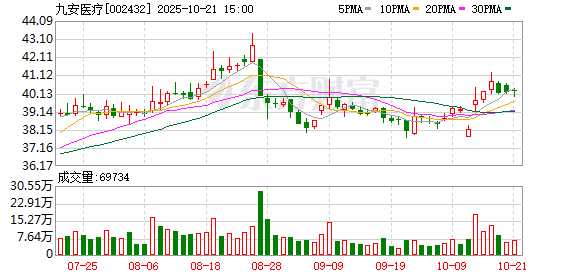
主业“受挫”转向投资“养家” 九安医疗再抛股份回购计划
2 1 Shi Ji Jing Ji Bao Dao· 2025-10-22 00:25
Core Viewpoint - After the decline of dividends, the company is shifting its focus towards investment opportunities, initiating a second share buyback plan in 2025 to maintain company value and protect shareholder rights [2][3]. Group 1: Share Buyback and Stock Performance - The company announced a share buyback plan on October 14, 2025, intending to use 300 million to 600 million yuan of its own funds and special loans [2]. - Despite the buyback, the company's stock price has decreased over 7% since the last buyback announcement, while the broader market has increased by over 20% during the same period [2]. - The company's stock price has fallen below its latest net asset value per share, prompting the buyback to protect shareholder interests [2]. Group 2: Financial Performance and Investment Strategy - The company experienced a significant increase in net profit, reaching 9.2 billion yuan in the first half of 2025, a year-on-year growth of over 50%, despite a decline in revenue from its core internet medical products and services [5]. - The unusual situation of declining revenue but rising profits is attributed to substantial investment income, with fair value changes contributing 734 million yuan, ten times the previous year's figure [5]. - The company has engaged in various investments, including venture capital funds, with a total estimated investment of approximately 4.363 billion yuan since September 2022 [6]. Group 3: Historical Context and Growth - The company’s growth trajectory began during the COVID-19 pandemic, achieving significant sales increases due to timely inventory management and product demand [4]. - In 2022, the company reported a revenue of 26.315 billion yuan, a staggering increase of 997.8% year-on-year, driven by large orders for COVID-19 testing kits [4]. - The company has received over 2.4 billion USD in orders from U.S. federal and state governments from December 2021 to 2023, marking a significant achievement in the IVD sector [4]. Group 4: Investment Expansion - The company has made strategic investments in various sectors, including hard technology, healthcare, artificial intelligence, and new materials, aiming for long-term returns [6][8]. - Recent investments include acquiring a 20% stake in iHealth from Xiaomi for approximately 459.1 million USD, increasing its ownership to 100% [8]. - The company is also exploring opportunities in the electric vehicle sector, holding shares in several automotive companies, including Tesla and NIO [9].


商品回吐近一个季度涨幅后的结构性判断
对冲研投· 2025-10-21 12:04
Core Viewpoint - The recent financial data indicates a structural change in credit, with signs of monetary activation emerging, but the foundation for economic recovery still needs to be solidified [4]. Financial Data Analysis - In September, new credit decreased year-on-year, but M1 growth rebounded significantly to 7.2%, the highest since March 2021. The gap between M2 and M1 growth narrowed to 1.2 percentage points, the lowest since January 2021, indicating increased fund activity [4]. - Social financing growth slightly declined to 8.7%, with government bond financing decreasing by 347.1 billion yuan year-on-year, reflecting the challenges and adjustments in policy during the economic recovery process [4]. Export and Fiscal Policy - Export faces downward pressure due to increasing global trade barriers, necessitating effective domestic policy responses. From January to September, net government bond financing reached 11.46 trillion yuan, an increase of 4.28 trillion yuan year-on-year. The remaining quota for the fourth quarter is approximately 3.2 trillion yuan, averaging 1.1 trillion yuan per month, which is lower than the previous three quarters [4]. Monetary Policy Outlook - With the Federal Reserve restarting interest rate cuts in September, the pressure from the China-U.S. interest rate differential has eased, providing more autonomy for domestic policy. There is a general expectation of a new round of interest rate cuts and reserve requirement ratio reductions before the end of the year [5]. - The introduction of 500 billion yuan in new policy financial tools and the easing of loan disturbances from "debt reduction" are expected to improve medium- and long-term corporate loans [5]. Commodity Market Insights - Domestic industrial products are currently underperforming compared to overseas markets, partly due to weak real estate demand, indicating that the internal recovery of the economy is not yet solid [6]. - The future economic trajectory will depend on the effectiveness of policy implementation and changes in the external environment, particularly the ongoing U.S.-China trade tensions [6]. Strategic Planning and Economic Goals - The upcoming 20th National Congress will set the tone for the 14th Five-Year Plan. If unexpected signals are released regarding technological independence and expanding domestic demand, it could boost market sentiment [7]. - The 14th Five-Year Plan (2026-2030) aims for an average economic growth target of 4.6%-4.8% and focuses on enhancing new productive forces, upgrading traditional industries, and promoting strategic emerging industries [7]. Trade and Pricing Dynamics - The escalation of U.S.-China tensions will directly impact the prices of commodities highly dependent on foreign trade. The market may price in the negative effects of a slowdown in global economic growth due to heightened U.S.-China confrontations [8]. - Given that most industrial product prices are currently at low levels, the market is likely to favor pricing in the impacts of resource protectionism over the negative effects of economic slowdown [8]. Timeline of Key Events - October 20-23: The Fourth Plenary Session will set the tone for the 14th Five-Year Plan, potentially boosting market sentiment if policies exceed expectations [9]. - Late October: The APEC meeting will influence global trade chain confidence based on the outcomes of U.S.-China discussions [9]. - November 1: The deadline for U.S. tariffs will affect sensitive commodities such as precious metals, copper, and protein meal [9].

10家!湖北省生物制造标志性产品名单(第一批)公示
合成生物学与绿色生物制造· 2025-10-21 10:09
Core Insights - The article discusses the first batch of bio-manufacturing landmark products announced by Hubei Province's Economic and Information Technology Department on October 9, highlighting significant advancements in the bio-manufacturing sector [2]. Group 1: Landmark Products - The first batch of landmark bio-manufacturing products includes: - Dongyang Sunshine: Thiocyanate Erythromycin - Tianji Bioenergy: Ultra-clean biodiesel - Bafeng Pharmaceutical: Amino acid raw materials - Xinhua Yang: Feed enzyme preparations - Guangji Pharmaceutical: High-quality riboflavin - China National Pharmaceutical Group: Inactivated vaccine for Porcine Circovirus Type 2 - Aibotai Bio: Research antibodies - Huisheng Biotechnology: Tylosin tartrate - Hite Bio-pharmaceutical: Injectable Epinephrine - Fuxing Biotechnology: Arachidonic acid (ARA) powder [2][3]. Group 2: Product Categories - The products are categorized into different types: - Scale Replacement Type: Thiocyanate Erythromycin, Ultra-clean biodiesel, Research antibodies, Tylosin tartrate - Key Improvement Type: Amino acid raw materials, Feed enzyme preparations, High-quality riboflavin, Arachidonic acid powder - Major Innovation Type: Inactivated vaccine for Porcine Circovirus Type 2, Injectable Epinephrine [3].




银行降息,10月20日股市要大涨?引得A股投资者们纷纷猜测
Sou Hu Cai Jing· 2025-10-20 20:01
Group 1 - The Federal Reserve announced a 25 basis point cut in the federal funds rate target range to 4.00%-4.25%, marking the first rate cut of 2025, which has led to speculation about its impact on the A-share market [1] - Market expectations for further rate cuts in October are high, with a probability of 78%, indicating a shift in global capital allocation [3] - The Chinese government is increasing local government debt limits by 100 billion yuan to 500 billion yuan, focusing on infrastructure projects, particularly in transportation and water conservancy, which account for over 60% of the funding [3] Group 2 - The Ministry of Industry and Information Technology has launched an initiative to reduce network latency in major cities to under 10 milliseconds by 2026, requiring an upgrade of over 2 million kilometers of fiber optic networks [5] - The A-share investor sentiment index dropped to 27.81%, nearing a historical low, with historical data suggesting an 85% probability of index increases in the following three months when the index is below 30% [5] - Insurance capital has shown a significant increase in bank stock purchases, with China Ping An and its subsidiaries investing 173 million HKD in China Merchants Bank and Postal Savings Bank, marking the largest single increase in bank stocks by insurance capital in 2025 [7] Group 3 - The financing balance in the A-share market shows divergence, with a total balance of 2.41 trillion yuan as of October 18, down 32 billion yuan from the end of September, while the ChiNext board saw an increase of 8.5 billion yuan [7] - The China Securities Regulatory Commission has emphasized maintaining market stability, with over 800 billion yuan of liquidity injected into the market since October [7] - The upcoming 14th Five-Year Plan is expected to focus on sectors like artificial intelligence, new energy, and biomanufacturing, as highlighted in recent surveys [9] Group 4 - The current price-to-earnings ratio for the ChiNext board is 35 times, below the historical average of 40 times, while the CSI 300 index is at 12 times, roughly in line with its historical average [9] - There is a notable divergence in trading behavior, with institutional investors net buying 18 billion yuan on October 14, while retail investors net sold 24 billion yuan, sparking discussions about market dynamics [9] - The recent policy measures are expected to be implemented in November, including tax incentives for offshore wind power and increased R&D expense deductions, potentially reducing corporate taxes by over 200 billion yuan [9] Group 5 - The structure of market participants is changing, with individual investors' trading share decreasing to 75% [11] - The communication equipment sector has seen an 8.7% increase since October, while the banking sector has declined by 1.2%, indicating a need for refined investment strategies [11] - The recent decline in SHIBOR rates, with the 1-week SHIBOR dropping to 1.8%, represents a new low for 2025, impacting corporate financing costs [11] Group 6 - Private equity funds currently have an average stock position of 75%, while public funds are at 88%, both at historically high levels, which may amplify market volatility [13] - The implementation of new rules for algorithmic trading has reduced high-frequency trading's share from 25% to 18%, potentially altering market liquidity characteristics [13] Group 7 - There is a noticeable regional disparity in economic development, with fixed asset investment growth in the eastern region at 5.8% and 7.2% in the central and western regions, suggesting different investment opportunities [14] - The correlation between A-shares and U.S. stocks has increased to 0.6 since 2025, up by 0.2 from 2024, indicating a need for a more global investment perspective [14] Group 8 - High-tech manufacturing investment growth reached 12.4% in the first three quarters, surpassing the overall manufacturing investment growth of 5.2%, indicating a structural shift in the industry [16] - The market is facing challenges in understanding the implications of these changes and how policy benefits can translate into actual corporate gains [16]

国泰海通|政策研究:“十五五”:新阶段、新环境与新使命
国泰海通证券研究· 2025-10-20 13:39
Core Viewpoint - The "15th Five-Year Plan" period (2026-2030) is crucial for China to achieve its 2035 modernization goals, emphasizing the need for high-quality development driven by new productivity and technological innovation [1] Group 1: International Environment - The "15th Five-Year Plan" will face unprecedented changes in the global landscape, with a shift in power dynamics and intensified competition in technology and industries [2] - The restructuring of global supply chains is characterized by regionalization, nearshoring, and localization, necessitating a proactive approach to adapt to these changes [2] - The weakening of multilateral mechanisms like the WTO and the intensifying competition in emerging fields such as digital economy and climate change require China to enhance its openness and adaptability [2] Group 2: Domestic Development Conditions - China is experiencing a new normal with both advantages and constraints, including challenges from population aging and diminishing traditional cost advantages [2] - The release of human capital and the transition from quantity to quality in the super-large market indicate a shift in economic growth drivers, with the digital economy now accounting for over 40% of GDP [2] - Despite advancements in R&D investment and patent output, China still faces risks in key core technology areas [2] Group 3: Strategic Goals and Policy Framework - The report outlines strategic goals for the "15th Five-Year Plan," aiming for an average annual economic growth rate of approximately 4.73% to double the economy or per capita income by 2035 [3] - Key quality and efficiency indicators include a rapid increase in labor productivity, R&D investment intensity reaching 3%, and a significant rise in the share of non-fossil energy consumption to around 25% [3] - The report proposes six policy recommendations, including building a modern industrial system centered on new productivity, deepening reform and opening up, promoting green transformation, and enhancing governance efficiency [3]

食品行业焕新提质 保持平稳运行
Jing Ji Ri Bao· 2025-10-20 00:31
Core Insights - The food industry has maintained stable operations this year, contributing significantly to domestic demand, consumption, economic growth, and livelihood protection through deep integration of technological and industrial innovation [1][2] Group 1: Industry Performance - From January to July this year, the revenue of large-scale food enterprises reached 5.1 trillion yuan, with profits exceeding 330 billion yuan and imports and exports surpassing 82 billion USD [1] - The investment in the agricultural and sideline food processing industry grew by 17.8%, while investment in the food manufacturing industry increased by 15.4% [1] - The food industry accounted for 35.6% of light industry assets, achieving 39% of operating income and creating 43.8% of profits [1] Group 2: Innovation and Technology - The food industry is accelerating its innovation pace, with 4 awards for technological invention and 56 for technological progress expected in 2024, marking a 140% increase in awards [1][2] - Companies are encouraged to enhance technological supply, support basic research, and accelerate breakthroughs in key technologies, focusing on digital and green technologies [2] - The digitalization rate of research and design tools in light industry is 86.2%, with a numerical control rate of 62.4% for key processes, and 47.2% for industrial internet platform applications, all exceeding national industrial averages [2] Group 3: Future Development and Trends - The food industry is urged to promote smart manufacturing, detection, and circulation to improve production efficiency and product quality [3] - There is a focus on developing functional foods, physiological regulation foods, personalized nutrition foods, and special diets to meet health demands [2][3] - The health food sector is projected to produce approximately 800,000 tons in 2024, with an industry scale of about 450 billion yuan [3] Group 4: Strategic Goals - The strategic task of food resource exploration is to achieve global food sustainability, ensure food supply security, and enhance public nutrition and health levels [4] - Food resource exploration includes the discovery and safety evaluation of new food resources, industrialization of functional and personalized food resources, and disruptive technological innovations [4]
数读“十四五”·产业新答卷 新型储能5年增30倍!这些“未来产业”引擎轰鸣
Ren Min Wang· 2025-10-18 03:23
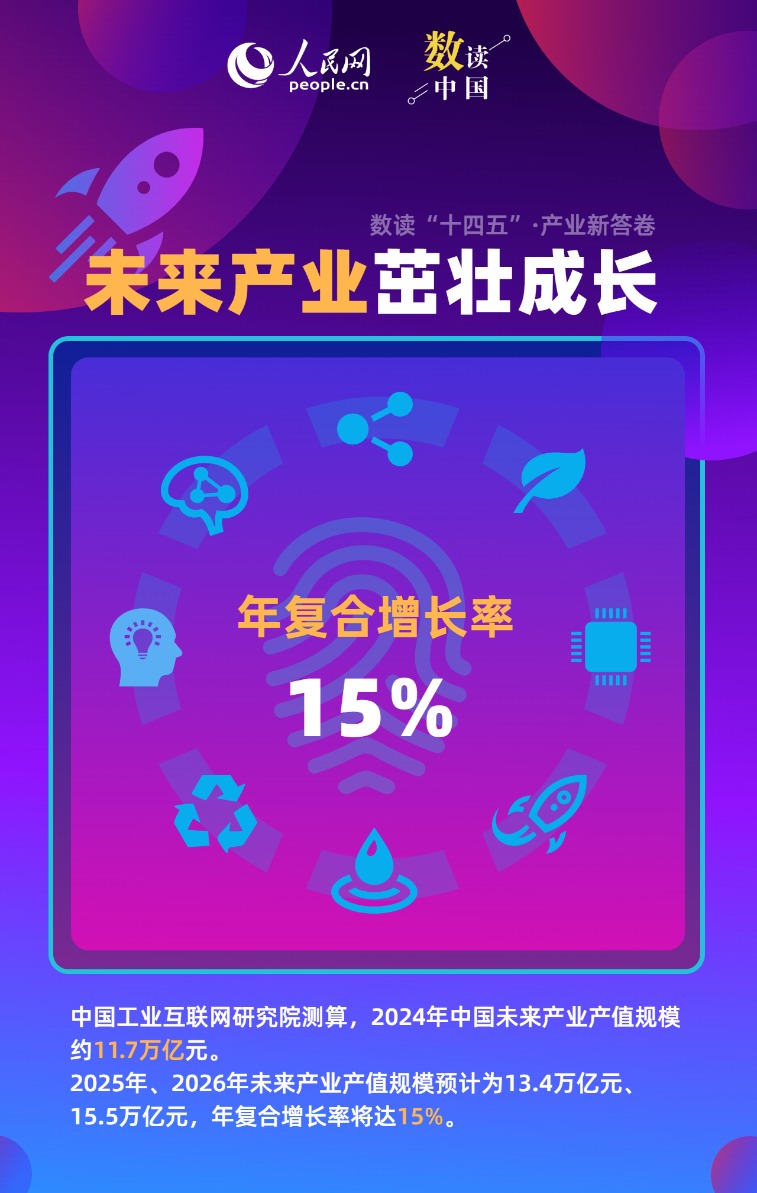
Core Insights - The "14th Five-Year Plan" marks a significant transformation in China's industrial landscape, with a focus on upgrading traditional industries and promoting emerging sectors [1] Group 1: Artificial Intelligence - By 2024, China's artificial intelligence industry is expected to exceed 700 billion yuan, maintaining a compound annual growth rate of 15% [3][6] - As of mid-2025, the total number of large model registrations in China reached 439, covering over 30 industries including healthcare, agriculture, education, smart manufacturing, and fintech [7] Group 2: Quantum Computing - China has established a leading position in quantum computing research, with superconducting and optical quantum computers achieving quantum superiority [10] - Sixteen key cities, including Hefei, Shanghai, Beijing, and Guangzhou, have developed quantum metropolitan networks [10] Group 3: Commercial Space - The number of commercial space enterprises in China has surpassed 500, with the market size expected to exceed 2.5 trillion yuan by 2025 [12] - The satellite internet sector is approaching a commercialization inflection point, with an anticipated market size of 45 billion yuan by 2025 [12] Group 4: Brain-Computer Interface - The brain-computer interface market in China is projected to reach 3.2 billion yuan by 2024, with expectations to grow to 6.14 billion yuan by 2028 [14] Group 5: Robotics - By the end of 2024, there will be approximately 451,700 smart robotics enterprises in China, with a registered capital totaling 6,444.557 billion yuan, reflecting a growth of 206.73% since the end of 2020 [17] Group 6: Biomanufacturing - China's biomanufacturing industry is nearing a total scale of 1 trillion yuan, with fermentation capacity accounting for over 70% of the global total [21] Group 7: Low-altitude Economy - The low-altitude economy market in China is projected to reach 1.5 trillion yuan by 2025, with expectations to grow to 3.5 trillion yuan by 2035 [24] Group 8: New Energy Storage - By mid-2025, China's new energy storage capacity is expected to reach approximately 95 million kilowatts, marking a nearly 30-fold increase over five years and accounting for over 40% of the global total [27] - In 2024, China's hydrogen production and consumption scale is anticipated to exceed 36 million tons, leading the world [27]
免费领取《2025中国合成生物制造产业发展白皮书》
synbio新材料· 2025-10-17 07:59
Core Viewpoint - The article emphasizes the rising importance of biomanufacturing as a strategic and innovative field that disrupts traditional production methods, presenting it as a new growth point for optimizing industrial structures and transforming economic models. The release of the "2025 China Synthetic Biomanufacturing Industry Development White Paper" highlights the current state, trends, and challenges of the biomanufacturing industry in China [1]. Group 1: Current State and Trends - The white paper outlines the development status and trends of biomanufacturing, analyzing the global landscape and key platform facilities [5]. - It compares the biomanufacturing sectors of China and the United States, identifying competitive advantages and areas for improvement [5]. - Future development trends in biomanufacturing are discussed, indicating a shift towards more integrated and innovative approaches [5]. Group 2: Policy Landscape - The report reviews major policies affecting biomanufacturing both domestically and internationally, providing insights into regulatory frameworks that shape the industry [5]. - It categorizes foreign and domestic policies, highlighting their implications for the growth of the biomanufacturing sector [5]. Group 3: Industry Map and Applications - A comprehensive map of the Chinese biomanufacturing industry is presented, detailing key players and their roles [5]. - The report identifies critical application areas for biomanufacturing, including pharmaceuticals, food, personal care, agriculture, chemicals, materials, and energy [5]. Group 4: Key Enterprises and Investment Landscape - The white paper lists the top 10 leading enterprises in China's biomanufacturing sector, showcasing their contributions and market positions [6]. - It also summarizes the strategic directions of 15 publicly listed companies in synthetic biology, along with their investment and development strategies [6]. Group 5: Challenges and Recommendations - The report discusses the challenges faced by the biomanufacturing industry in China, including technological, regulatory, and market-related issues [6]. - Targeted policy recommendations are provided to address these challenges and promote sustainable growth in the biomanufacturing sector [6].




湖北省生物制造产业科产融合对接活动举行
Zhong Guo Jing Ji Wang· 2025-10-17 07:48
Core Insights - The event held on October 15 in Hubei aimed to strengthen collaboration between universities, research institutions, and enterprises in the biomanufacturing sector, establishing a platform for innovation and competitiveness in the industry [1][2] - The event showcased three national-level and ten provincial-level biomanufacturing landmark products, highlighting the advanced technology and economic benefits of these innovations [2] - Hubei University is positioning itself as a leader in synthetic biology in Central China, focusing on breakthroughs in gene editing, enzyme development, and industrial strain design [3][4] Group 1: Event Overview - The event was organized by the Hubei Provincial Department of Economy and Information Technology and included participation from various government officials and industry leaders [1] - Keynote speeches were delivered by prominent scientists and representatives from major companies, emphasizing the importance of biomanufacturing [1] Group 2: Collaboration and Agreements - Hubei University signed multiple cooperation agreements with local governments and enterprises, focusing on technology research and development in areas such as strain modification and enzyme engineering [2] - The event included a signing ceremony for collaborative agreements, indicating strong industry-academia partnerships [2] Group 3: Industry Significance - Biomanufacturing is recognized as a "green engine" for new productive forces and a core area of global technological competition, reshaping industries like pharmaceuticals and food [3] - Hubei's biomanufacturing sector benefits from a multi-dimensional support system, with Hubei University playing a crucial role in advancing life sciences [3][4] Group 4: Achievements and Impact - Hubei University has made significant advancements in technology and innovation, leading multiple national research projects and achieving high rankings in academic performance [4] - The university's contributions have generated substantial economic benefits for the local region, with technology service revenues exceeding 250 million yuan annually [4]
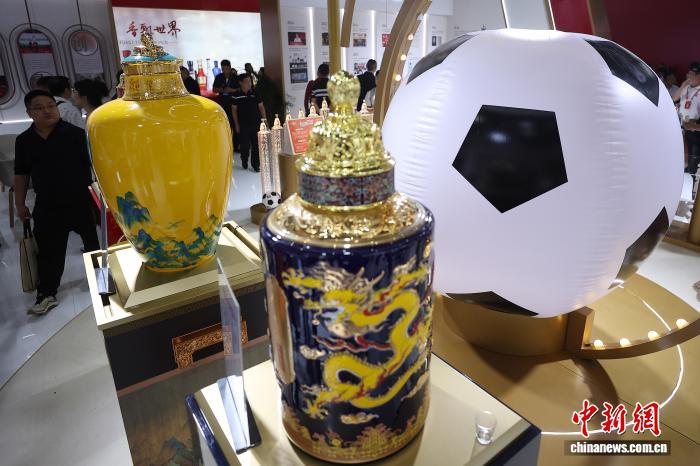
第113届全国糖酒商品交易会在南京开展
Zhong Guo Xin Wen Wang· 2025-10-16 13:25
Core Points - The 113th National Sugar and Wine Products Trade Fair is being held in Nanjing, showcasing a significant gathering of global enterprises in the food and beverage industry [1][2]. Group 1: Event Overview - The exhibition area for this year's trade fair is planned to cover 200,000 square meters, with approximately 4,000 enterprises from over 40 countries and regions participating [2]. - Chinese representation includes 30 exhibition groups and over 1,000 well-known enterprises, while 12 overseas exhibition groups from countries such as Italy, Russia, South Korea, Japan, and Thailand are also present [2]. Group 2: Industry Conferences and Activities - The event features 30 industry conferences, including the Food and Beverage Industry Conference and the Food Industry Digital Development Conference, alongside the inaugural China Food Industry Channel Conference [4]. - Key publications such as the "2025 China Food Trend White Paper" and the "Channel Merchant Survival Status Blue Book" were released during the event [4]. - A food technology achievement exchange meeting is being held, showcasing 1,500 technological achievements from 40 universities and research institutions, focusing on topics like smart processing and food safety [4]. Group 3: Historical Significance - The National Sugar and Wine Products Trade Fair has developed over 70 years into a comprehensive exhibition with significant global influence in the food and beverage sector [7]. - This year's fair marks the 10th anniversary of its first occurrence in Nanjing, themed "Exhibition-City Integration, Production and Sales Win-Win" [7].