碳达峰碳中和

Search documents
科学谋划实施应对气候变化重大工程
Zhong Guo Huan Jing Bao· 2025-10-12 23:15
Core Viewpoint - The implementation of major projects to address climate change is crucial for advancing national strategies and ensuring security in key areas, with a significant increase in investment and policy actions since the "dual carbon" goals were proposed in 2020 [1] Group 1: Challenges in Implementing Climate Change Projects - The scope of climate change involves multiple sectors, including energy, industry, agriculture, and waste management, requiring comprehensive coordination across departments to achieve effective collaboration [2] - Quantifying climate benefits presents challenges due to limitations in methods and data availability, making it difficult to assess the climate impact of certain projects, particularly in adaptation efforts [3] - There is a lack of dedicated public funding for climate change initiatives compared to other sectors, which hampers the ability to secure sufficient resources and policy support for these projects [4] Group 2: Recommendations for Climate Change Project Implementation - The global climate financing scale reached $1.9 trillion in 2023, indicating a strong growth trend, while China will require approximately 139 trillion yuan in investments by 2060 to meet carbon neutrality goals, averaging 3.48 trillion yuan annually [5] - It is essential to enhance top-level design by optimizing government functions related to climate change and establishing cross-departmental coordination mechanisms to support project management and financing [6] - Differentiated organizational strategies should be adopted to address regional variations in greenhouse gas emissions and climate risks, focusing on both large-scale and localized projects [7] - Strengthening funding integration and establishing dedicated climate change funds will provide targeted support for major projects, while promoting financial innovation in climate-related products and services [8] - Capacity building is necessary to support research and development in climate change project management and financing, enhancing the capabilities of government, investment firms, and financial institutions [9]
新一轮国家自主贡献意味着什么?看专家解读
Ren Min Ri Bao· 2025-10-10 23:08
Core Points - China's new round of Nationally Determined Contributions (NDCs) aims for a 7%-10% reduction in greenhouse gas emissions from peak levels by 2035, with a focus on achieving even better results [1][2] - Non-fossil energy consumption is targeted to exceed 30% of total energy consumption, with wind and solar power capacity expected to reach over 360 million kilowatts, six times the 2020 level [1][2] - The new NDCs include qualitative goals such as making new energy vehicles the mainstream of new vehicle sales and establishing a nationwide carbon trading market covering major high-emission industries [2][3] Summary by Categories Emission Reduction Goals - The NDCs represent a significant shift from intensity control to total emission control, marking the first time China has set absolute reduction targets for all greenhouse gases across the entire economy [2][3] - The new targets reflect China's commitment to addressing climate change and provide a clear direction for the country's green and low-carbon transformation [2][3] Energy and Renewable Resources - China aims to increase the share of non-fossil energy in primary energy consumption to over 30% and achieve a total installed capacity of wind and solar power that is six times that of 2020 [2][5] - The country has built the world's largest and fastest-growing renewable energy system, supplying over 80% of global photovoltaic components and 70% of wind power equipment [5] Carbon Trading and Market Development - China has established the largest carbon trading market globally, covering over 60% of national carbon emissions, with recent expansions to include industries such as steel, cement, and aluminum [5] - The carbon market's development is seen as a crucial step in enhancing the effectiveness of carbon emission management [5] International Cooperation and Climate Governance - The new NDCs are expected to boost international confidence in global climate governance and highlight China's leadership role in international climate action [4][7] - Achieving these goals will require a fair international environment, stable cooperation, and mutual trade relations, emphasizing the need for global collaboration in addressing climate change [7]
碳月报:全国碳市场价格承压震荡运行-20251010
Jian Xin Qi Huo· 2025-10-10 08:41
Report Date - October 10, 2025 [2] Research Team - Energy and Chemical Research Team includes researchers for different sectors such as crude oil, PTA/MEG, industrial silicon, polyolefins, pulp, and glass soda ash [3] Investment Rating - Not provided Core View - The national carbon market price is under pressure and fluctuating [4] Summary by Section 1. National Carbon Market Overview - In September, the national carbon market's highest price was 69.49 yuan/ton, the lowest was 57.72 yuan/ton, and the closing price dropped 16.35% from the last trading day of the previous month. The total trading volume was 32,700,907 tons, and the total turnover was 2,003,662,939.74 yuan. From January 1 to September 30, 2025, the trading volume was 98,098,802 tons, and the turnover was 6,797,362,256.82 yuan [7] - Fudan Carbon Index shows price expectations for October and December 2025 for national carbon emission allowances (CEA) and China Certified Emission Reductions (CCER), with some price indices showing declines [8] - From January to July 2025, thermal power generation decreased 1.30% year-on-year, cement production decreased 4.5% year-on-year, electrolytic aluminum production increased 2.54% year-on-year, pig iron production decreased 1.3% year-on-year, and crude steel production decreased 3.1% year-on-year [9][10] 2. Market News - At the 2025 China Carbon Market Conference, the Deputy Minister of Ecology and Environment introduced the progress and achievements of the national carbon market since 2024 and outlined future plans. The Minister reported on the significant achievements and challenges in climate change response and carbon peaking and neutrality work, highlighting issues like the resurgence of "two high" projects [11] 3. Data Summary - Not provided with specific summary information other than the mention of data sources and some chart references [13][17][22]
为全球气候治理合作注入更多正能量
Ren Min Ri Bao· 2025-10-10 00:51
Core Points - China aims to reduce its total greenhouse gas emissions by 7%-10% from peak levels by 2035, marking a significant shift from intensity control to total control of carbon emissions [1][2] - The new targets include increasing the share of non-fossil energy consumption to over 30%, expanding wind and solar power capacity to six times that of 2020, and achieving a forest stock of over 24 billion cubic meters [1][2] - The announcement reflects China's commitment to global climate governance and its role as a responsible major country [2][4] Group 1: National Contribution Goals - The "1+3+3" framework combines qualitative and quantitative targets, with the first goal being the reduction of total greenhouse gas emissions [2] - The three quantitative indicators represent an enhancement of previous 2030 targets, showcasing China's intensified efforts to combat climate change [2][3] - New qualitative indicators include making new energy vehicles the mainstream of new vehicle sales and establishing a nationwide carbon trading market covering major high-emission industries [2][3] Group 2: Global Climate Governance - The new national contribution is expected to boost international confidence in climate governance and enhance global cooperation [4] - China's renewable energy system is the largest and fastest-growing globally, providing over 80% of the world's photovoltaic components and 70% of wind power equipment [4] - The country has made significant progress in implementing its 2030 national contributions, with a continuous decline in carbon emissions per unit of GDP [4][5] Group 3: Challenges and Future Directions - Achieving the 2035 targets will require substantial efforts from China and a favorable international environment [6][7] - Experts emphasize the need for technological innovation and policy guidance to facilitate the transition to low-carbon energy sources [7] - The realization of national contribution goals depends on fair international conditions, stable cooperation, and secure supply chains [7]
让碳市场更好助力绿色低碳转型
Ren Min Ri Bao· 2025-10-09 23:06
Core Insights - The national carbon trading market in China is designed to convert emission reduction pressure into internal motivation, encouraging various sectors to participate in the green and low-carbon transition [1][2] - The market has become the largest in the world in terms of greenhouse gas emissions coverage, effectively managing over 60% of the national carbon dioxide emissions by including industries such as steel, cement, and aluminum [1][2] - The carbon market is expected to enhance trading vitality, with a projected transaction volume of 18.114 billion yuan in 2024, marking the highest level since its inception in 2021 [2] Group 1 - The carbon trading market allows companies to sell excess carbon emission allowances and reinvest the proceeds into energy-saving projects, creating a positive feedback loop [1] - The market aims to promote technological advancement and industrial upgrades by limiting carbon emissions in key sectors [2] - The establishment of a voluntary greenhouse gas reduction trading market broadens participation across various industries, complementing the mandatory carbon trading market [2] Group 2 - The construction of the carbon market is a significant institutional innovation that requires effective management mechanisms, comprehensive regulations, and reliable trading systems [3] - The government has issued guidelines to enhance the carbon market's effectiveness and international influence, aiming for a more vibrant and impactful system [3] - There is a focus on expanding the market's coverage and improving the quality of emission data while combating fraudulent activities [3]
为全球气候治理合作注入更多正能量(美丽中国)
Ren Min Ri Bao· 2025-10-09 22:22
Core Points - China has announced a new round of Nationally Determined Contributions (NDCs) aiming for a 7%-10% reduction in greenhouse gas emissions from peak levels by 2035, with a focus on achieving more ambitious targets [1][2][3] - The NDCs include a qualitative and quantitative framework termed "1+3+3," which encompasses absolute reduction targets and specific indicators for non-fossil energy consumption, renewable energy capacity, and forest carbon stocks [2][3] - The new targets signify a shift from intensity control to absolute control of carbon emissions, marking a significant step in China's climate strategy [2][4] Group 1: NDC Goals and Framework - The new NDCs cover all economic sectors, including energy, industry, transportation, and agriculture, and include non-CO2 greenhouse gases like methane and nitrous oxide [4] - The qualitative indicators include making new energy vehicles the mainstream in sales and establishing a nationwide carbon trading market covering major high-emission industries [2][4] - The targets are designed to align with China's long-term development strategy while addressing complex domestic and international factors [3][4] Group 2: Progress and Achievements - China has made significant progress in implementing its 2030 NDCs, establishing the world's largest renewable energy system and reducing the cost of wind and solar power generation [6] - The country has achieved a 19.8% share of non-fossil energy in primary energy consumption ahead of the 2030 target, and has built the largest carbon trading market covering over 60% of national emissions [6][5] - Experts emphasize the importance of technological innovation and international cooperation in achieving the new NDC goals [8][6] Group 3: Challenges and Future Directions - Achieving the 2035 NDCs will require substantial efforts from China, alongside a favorable international environment [7][8] - There is a need for further research on climate adaptation strategies, as well as coordination of policies and funding to address climate risks [7][8] - Experts advocate for a collaborative global approach to climate change, emphasizing the need for fair trade and stable international relations to support low-carbon transitions [8]
新一轮国家自主贡献宣布,一揽子应对气候变化 为全球气候治理合作注入更多正能量(美丽中国)
Ren Min Ri Bao· 2025-10-09 22:21
Core Points - China aims to reduce its total greenhouse gas emissions by 7%-10% from peak levels by 2035, marking a significant shift from intensity control to total control of emissions [2][3] - The new targets include increasing the share of non-fossil energy consumption to over 30%, expanding wind and solar power capacity to over 360 million kilowatts, and increasing forest stock to over 24 billion cubic meters [2][3] - The initiative emphasizes the importance of a comprehensive approach to climate change, covering all sectors of the economy and including non-CO2 greenhouse gases [4][3] Summary by Categories National Contribution Goals - The new national contribution goals are described as a "1+3+3" framework, combining qualitative and quantitative targets [2][3] - The qualitative targets include making new energy vehicles the mainstream in new vehicle sales and establishing a nationwide carbon trading market covering major high-emission industries [2][3] Global Climate Governance - China's new contribution is expected to enhance global confidence in climate governance and strengthen international cooperation on climate change [4][3] - The announcement aligns with the 10th anniversary of the Paris Agreement, marking a critical phase in global climate governance [1] Renewable Energy and Emission Reduction - China has built the world's largest and fastest-growing renewable energy system, providing over 80% of global photovoltaic components and 70% of wind power equipment [6] - The average cost of wind and solar power generation has decreased significantly, with reductions of over 60% and 80% respectively over the past decade [6] Challenges and Future Directions - Achieving the 2035 targets will require significant efforts domestically and a favorable international environment [7][8] - Experts emphasize the need for technological innovation and policy support to facilitate the transition to low-carbon energy sources [8]
“十五五”时期,碳排放双控制度体系建设如何推进?
Zhong Guo Huan Jing Bao· 2025-10-08 23:14
Core Viewpoint - The transition to a dual control system for carbon emissions is essential for achieving high-quality development and is a key task in the new round of ecological civilization reform in China [1] Challenges in Carbon Emission Dual Control System - The carbon emission accounting system is not yet fully developed, facing issues such as unclear statistical bases, inadequate methods, and a lack of timely data [2] - The evaluation and assessment mechanisms for carbon emissions are still underdeveloped, with insufficient accountability at local and industry levels [3] Strategies and Countermeasures for Carbon Emission Dual Control System - At the regional level, a dual control system for total carbon emissions and intensity should be implemented, focusing on accurate statistical accounting and dynamic updates of greenhouse gas emission factors [4] - At the industry level, there should be a focus on controlling fossil energy consumption and enhancing carbon emission monitoring in key sectors such as electricity, steel, and cement [5] - At the enterprise level, improving the quality of carbon emission data management and integrating it into a multi-tiered regulatory framework is crucial [6] - At the project level, establishing performance standards for carbon emissions and ensuring new projects meet advanced value levels is necessary [7] - At the product level, developing a carbon footprint labeling system and promoting low-carbon products through policy incentives and consumer education is essential [7]
专家解读!中国新一轮国家自主贡献目标意味着什么
Di Yi Cai Jing· 2025-10-07 03:00
Group 1 - The core viewpoint of the articles emphasizes China's new round of Nationally Determined Contributions (NDCs) announced at the recent UN Climate Change Summit, aiming for a 7%-10% reduction in greenhouse gas emissions by 2035 compared to peak levels, and a non-fossil energy consumption share of over 30% [1][5] - The new NDCs signify a comprehensive low-carbon resilient development journey for China, marking a shift towards absolute reduction targets across all sectors, including methane and nitrous oxide emissions [6][7] - China's renewable energy system is the largest and fastest-growing globally, contributing to 46% of jobs in the renewable energy sector, with significant reductions in the cost of wind and solar energy generation over the past decade [7][8] Group 2 - The announcement of the new NDCs is expected to enhance international confidence in global climate governance and strengthen international climate action [1][2] - China's proactive measures in climate change, including providing over 177 billion RMB in climate-related funding to developing countries since 2016, have garnered global recognition and praise [3][6] - The establishment of the largest carbon trading market in the world, which will cover approximately 80% of national CO2 emissions by 2035, is a significant step towards integrating carbon pricing into economic development [8]

以主要排放企业为重点 钢铁水泥铝冶炼行业配额方案将出炉
Di Yi Cai Jing· 2025-10-06 02:35
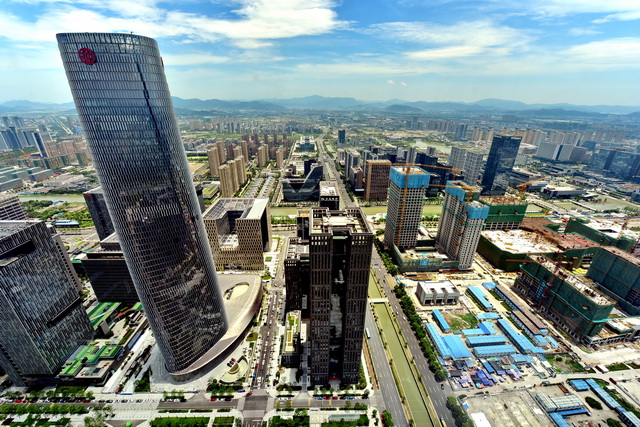
Core Viewpoint - The Ministry of Ecology and Environment is developing a quota allocation plan for the national carbon emissions trading market for the steel, cement, and aluminum smelting industries for the years 2024 and 2025, considering various factors such as economic development and historical emissions [1][2] Group 1: Quota Allocation Plan - The quota allocation plan is currently in the consultation phase, with input being sought from relevant parties [1] - The plan aims to align with national greenhouse gas emission control targets and will consider factors like industry development stages and market needs [2] - The allocation will be based on a gradual approach, focusing on major emitting enterprises and processes, with free allocation of quotas for 2024 and 2025 based on carbon emissions per unit output [2][5] Group 2: Industry Emissions and Market Dynamics - The steel industry accounts for 15% of the national carbon emissions, making it the highest-emitting sector in manufacturing [4] - The plan encourages a competitive market environment, rewarding companies with lower carbon emissions and promoting the adoption of green technologies [4] - The allocation method will differ by industry: steel will be based on enterprises, cement on clinker production lines, and aluminum on electrolysis processes, covering direct emissions only [5] Group 3: Market Performance and Statistics - As of September 2025, China's carbon emissions trading market has become the largest globally, covering over 60% of national emissions, with a cumulative trading volume of 714 million tons and a total transaction value of 48.961 billion yuan [6]