
产业结构升级

Search documents
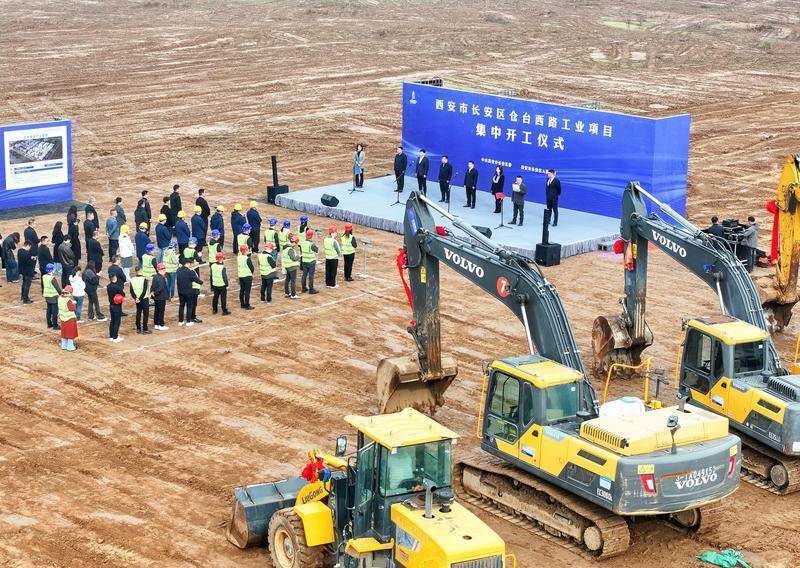
长安区工业项目集中开工 加速产业结构升级
Sou Hu Cai Jing· 2025-10-31 18:39
Core Insights - The launch of strategic emerging industry projects in Chang'an District, including smart manufacturing, satellite internet, and high-end equipment manufacturing, aims to optimize the industrial structure and promote high-quality regional economic development [1][3]. Group 1: Project Overview - The projects include the Yian Smart Manufacturing Industrial Base, Satellite Internet Terminal Industrial Base, and Novi High-end Special Equipment Manufacturing Base, with a total investment of 1.323 billion yuan, covering approximately 216 acres and a total construction area of about 360,000 square meters. The planned investment for this year is 310 million yuan [3]. - Upon completion, the projects are expected to create over 4,000 new jobs and establish a virtuous cycle of "industrial cluster - talent gathering - ecological improvement," significantly enhancing the industrial capacity and innovation momentum in Chang'an District [3]. Group 2: Strategic Goals and Initiatives - This year, Chang'an District focuses on building a "1+7+N" characteristic industrial cluster, driven by a three-year plan to improve industrial parks, emphasizing the integration of technological and industrial innovation [5]. - Various departments, including industry and information technology, development and reform, and environmental protection, are actively enhancing coordination with enterprises to ensure smooth project execution and sustainable development [5]. Group 3: Future Outlook - The projects are characterized by high technological content, strong industrial driving force, and broad market prospects, aligning closely with the direction of industrial transformation and upgrading in Chang'an District [7].

大江洪流姜昧军:把握未来十年投资主线,布局产业链优势核心领域
Sou Hu Cai Jing· 2025-10-30 04:45
Core Insights - The future ten years present significant investment opportunities for the Chinese economy, driven by advantages in the industrial chain, technological innovation, and infrastructure upgrades [1][2] - China's economic transition from factor-driven to innovation-driven growth is crucial for industrial structure upgrades, leading to a self-reinforcing development phase [1] - The capital market is expected to experience a prosperous development period, becoming a true barometer of the economy, with increased reliance from technology innovation enterprises [2] Investment Opportunities - Focus on strategic emerging industries such as new energy, new materials, high-end equipment, and low-altitude economy [3] - Attention to cutting-edge technology fields including quantum technology, biomanufacturing, hydrogen energy, brain-computer interfaces, embodied intelligence, and sixth-generation mobile communication [3] - Identify small and medium enterprises within the industrial chain ecosystem that can collaborate with leading companies and possess global perspectives and technological barriers [3]
新益昌:公司积极推进产业结构升级战略
Zheng Quan Ri Bao Wang· 2025-10-28 10:40
Core Viewpoint - The company is actively promoting an industrial structure upgrade strategy, focusing on core areas such as semiconductor and new display packaging technology [1] Group 1: Company Strategy - The company is concentrating resources on semiconductor and new display packaging technology [1] - The company is recognized as a leading domestic enterprise that has developed intelligent manufacturing equipment for Mini LED production [1] Group 2: Industry Position - The technical indicators of the company's related equipment are at the industry-leading level [1] - The company has received recognition from major industry players including BOE, TCL, Samsung, Zhouming Technology, Leyard, and Huike [1] Group 3: Future Outlook - The company advises stakeholders to pay attention to its upcoming regular reports for specific operational details in the third quarter [1]

差距这么大?美国前8个月出口额13148亿美元,中国出口额让人意外
Sou Hu Cai Jing· 2025-10-25 02:49
Core Insights - The export performance of the United States has significantly declined, with a total export value of $1.314868 trillion in the first eight months of 2025, showing a drop from a positive growth of 6.4% in Q1 to a negative growth of -7.7% in Q2, and further declining to an average of -14.1% in July and August [1][3][5] - In contrast, China's export value reached $2.31 trillion in the same period, maintaining a stable growth rate of 4.6%, showcasing resilience against global demand contraction [5][8] US Export Performance - In the first quarter, the US exports totaled $238.936 billion, with a year-on-year growth of 6.4%, driven by a high growth rate of 12.4% in January [3] - The second quarter saw a total export of $531.532 billion, with a negative growth of -7.7%, marking the first instance of negative growth [3] - The decline continued into July and August, with an average export growth rate of -14.1%, indicating a consistent downward trend over five months [5][8] Factors Affecting US Exports - The introduction of new tariff policies in April 2025 has significantly impacted US exports, particularly in agricultural products, which saw a 51.8% decrease in exports to China [10][12] - Energy products, while still showing a 3.2% growth, have seen a substantial decline from the previous year's growth of 10.2% [13] - The reliance on traditional export categories such as agriculture and energy has exposed the US to vulnerabilities in international market fluctuations and trade policies [30] China Export Performance - China's exports are bolstered by machinery and electronics, which accounted for 60.2% of total exports, with a growth rate of 9.2% in the first eight months [23] - Notable growth was observed in specific categories such as integrated circuits (23.3% growth) and automobiles (11.9% growth), contributing to the overall increase in machinery and electronics exports [23] - The home appliance sector has also shown strong performance, with a 14.7% increase in exports, supported by global demand for appliance upgrades and increased brand recognition [25] Emerging Trends in China - New categories related to advanced manufacturing have demonstrated impressive growth, with industrial robots and wind power equipment exports increasing by 54.9% and 23.9%, respectively [27] - Labor-intensive products have shown signs of recovery, with reduced export declines in textiles, plastics, and furniture, indicating a stabilization in these sectors [27] Comparative Analysis - The structural differences in exports between the US and China highlight the US's reliance on traditional sectors, while China is successfully transitioning towards high-tech and high-value-added products [30][32] - China's diversified export markets, including ASEAN, Africa, and Latin America, provide a buffer against fluctuations in demand from traditional markets, unlike the US, which is heavily dependent on a few key markets [34] Conclusion - The stark contrast in export performance between the US and China in the first eight months of 2025 is attributed to various factors, including export structure, trade partner diversification, and responses to external pressures [36][38] - The ongoing trade dynamics between the two nations underscore the importance of stable bilateral trade relations for mutual benefit in the global market [40]
21评论|从产业链优势视角发现未来十年重大投资机会
2 1 Shi Ji Jing Ji Bao Dao· 2025-10-24 13:03
Group 1 - The core viewpoint emphasizes the need for China to accelerate high-level technological self-reliance and innovation to enhance its production capabilities and seize opportunities in the new technological revolution [2] - The upgrading of industrial structure is identified as a key path for economic transformation from factor-driven to innovation-driven growth, with industrial chain advantages being crucial for national competitiveness [3] - The future decade will see China's industrial chain advantages enter a self-reinforcing "positive feedback" development phase, driven by the transition from agriculture to industry and the enhancement of technological capabilities through international market competition [4] Group 2 - Globalization provides the necessary conditions for maintaining China's industrial chain advantages, with trade statistics showing a 4% year-on-year increase in imports and exports, and a 7.1% growth in exports for the first three quarters of 2025 [5] - The rapid growth of high-tech exports, including a 104.7% increase in electric vehicles and a 174.7% increase in photovoltaic components, reflects the macroeconomic advantages and growth potential stemming from industrial chain upgrades [5] - Infrastructure development has created conditions for industrial clustering and factor mobility, with technological innovation becoming the key driver for industries to move up the value chain [6] Group 3 - The interaction of asset prices and labor costs serves as a balancing factor in the industrial upgrading process, with capital markets playing a crucial role in supporting the growth of the industrial chain advantages [7] - The long-term growth of China's economy is supported by the continuous rise in per capita GDP, which opens up long-term upward potential for capital markets [7] - The perspective of industrial chain advantages is seen as a lens for identifying investment opportunities over the next decade, with a focus on emerging strategic industries such as new energy and advanced manufacturing [8][9]

高志刚:数字经济赋能高质量发展的逻辑与实践
Jing Ji Ri Bao· 2025-10-24 00:01
Core Insights - The digital economy is a new economic form driven by technological revolution and industrial transformation, becoming a key engine for high-quality economic development [1] - The rapid growth of China's digital economy has seen its scale increase from 11.2 trillion yuan in 2012 to 53.9 trillion yuan in 2023, with a projected core industry value added accounting for about 10% of GDP by 2024 [1] Group 1: High-Quality Development - High-quality development meets the growing needs of the people and reflects the new development philosophy [2] - The digital economy enhances overall productivity through data-driven innovation, promotes green and low-carbon transformation, and deepens international cooperation through global digital trade [2] Group 2: Innovation and Transformation - The digital economy drives innovation by integrating data with traditional production factors, transforming production, distribution, circulation, and consumption processes [3] - It empowers the three primary industries' digital transformation, improving efficiency and product value [3] Group 3: Coordinated Development - The digital economy provides opportunities for underdeveloped regions and enterprises to leapfrog development through new business models like platform economy and gig economy [4] - Digital infrastructure improvements are bridging urban-rural gaps, enhancing income for farmers, and reducing income disparities [4] Group 4: Green Development - The digital economy supports green transformation by optimizing production processes and reducing energy consumption and emissions through technologies like industrial internet and AI [5] - It enables real-time environmental monitoring and efficient management of ecological resources [5] Group 5: Open Development - The digital economy facilitates trade digitization, allowing businesses to better understand overseas market demands and streamline cross-border transactions [6] - It promotes equitable access to education, healthcare, and employment opportunities, contributing to shared development [6] Group 6: Empowering Economic Development - The digital economy drives industrial structure upgrades and optimizes resource allocation, enhancing productivity and resilience [7][8] - It fosters a cycle of precise matching of resources, efficiency improvement, and value multiplication [8] Group 7: Strengthening the Digital Economy - There are challenges in China's digital economy, including governance issues and insufficient core technology innovation [9] - Future efforts should focus on enhancing digital infrastructure, fostering innovation, and improving digital skills [10][11]
景林资产总经理高云程:流动性改善与基本面复苏,推动港股科技与医药板块重回上升周期
Xin Lang Zheng Quan· 2025-10-23 10:50
Core Insights - The Hong Kong stock market is experiencing a strong rebound, particularly in the Hang Seng Technology Index and the biopharmaceutical sector, driven by long-term economic transformation and short-term liquidity improvements [3][4]. Group 1: Market Structure Changes - Over the past decade, the Hong Kong market has shifted from being dominated by financial and real estate sectors to a focus on technology companies, aligning with China's economic structural upgrades [3][4]. - The introduction of various institutional innovations has attracted more unique and high-quality companies to list on the Hong Kong Stock Exchange [3]. Group 2: Factors Driving Market Growth - Improved liquidity is identified as the most direct driving force, with a significant recovery in market conditions since last year, leading to a narrowing of the valuation gap between Hong Kong and A-share markets [4]. - Many companies are increasingly focusing on shareholder returns, with major blue-chip companies achieving annual shareholder yields of 5% to 10% through dividends and buybacks, reflecting a recognition of long-term value [4]. - The surge in the technology and biopharmaceutical sectors is closely linked to collaborations and acquisitions by international pharmaceutical companies with Chinese firms, supported by China's strong new drug pipeline [4][5]. Group 3: Market Resilience and Future Outlook - The risk of delisting for Chinese companies in the U.S. has pressured the market, but Hong Kong has successfully attracted many of these companies for secondary or dual listings, alleviating concerns and drawing international investment [5]. - The rise of the Hang Seng Technology and biopharmaceutical sectors is seen as a result of market structure optimization and a renewed prosperity in China's capital markets, indicating the start of a new development cycle [6].

博时市场点评10月23日:两市翻红上涨,成交继续缩量
Xin Lang Ji Jin· 2025-10-23 08:03
Market Overview - The three major indices in the A-share market rose, with the coal sector leading the gains. The total trading volume decreased to 1.66 trillion yuan, and the margin financing balance increased by 8.1 billion yuan from the previous day [1][4]. Economic Indicators - In the first three quarters of this year, China's foreign exchange receipts and payments totaled 11.6 trillion USD, a historical high for the same period. The net inflow of cross-border funds was 119.7 billion USD, and the bank's foreign exchange settlement surplus was 63.2 billion USD, both exceeding the levels of the previous year [2]. - The industrial added value of large-scale enterprises in China grew by 6.2% year-on-year in the first three quarters. The added value of the equipment manufacturing industry increased by 9.7%, accounting for 35.9% of the total industrial output, marking 31 consecutive months above 30% [2]. Policy Developments - Shenzhen has introduced an action plan to promote high-quality development of mergers and acquisitions, aiming to complete over 200 projects with a total transaction value exceeding 100 billion yuan by the end of 2027. The plan emphasizes support for strategic emerging industries and future industries [3]. Sector Performance - The coal, oil and petrochemical, and social services sectors showed the highest gains, increasing by 1.75%, 1.52%, and 1.07% respectively. In contrast, the communication, real estate, and construction materials sectors experienced declines of 1.51%, 0.99%, and 0.91% respectively [4].
从落后到反超全国4.2个百分点 上海外贸出口凭什么“逆袭”
Di Yi Cai Jing· 2025-10-22 04:45
Core Viewpoint - Shanghai's foreign trade has shown a strong recovery in the third quarter, with a 5.4% increase in imports and exports, surpassing the national growth rate by 1.4 percentage points. The export growth rate of 11.3% is 4.2 percentage points higher than the national average, while imports grew by 1.1%, exceeding the national rate by 1.3 percentage points [1][2]. Group 1: Trade Performance - In the first three quarters, Shanghai's import and export scale reached 1.01 trillion, 1.14 trillion, and 1.19 trillion yuan, showing a "stair-step" growth pattern with a significant increase of 21.2% in the third quarter [1]. - The third quarter's foreign trade scale reached a historical high, with September's monthly import and export volume exceeding 400 billion yuan [1]. - The contribution of private enterprises to Shanghai's foreign trade has been significant, with private enterprises' import and export volume reaching 1.32 trillion yuan, a substantial increase of 27.1% [3]. Group 2: Market Structure Changes - The market structure for Shanghai's exports has shifted, with a decrease in trade with the EU and the US, while trade with non-traditional markets grew by 8.7%, contributing 87.8% to the total trade [2]. - Exports to BRICS countries like Brazil and India increased by 27.7%, and exports to Africa surged by 79.2% [2]. - The global strategy of enterprises has evolved from merely selling products to a comprehensive value output that includes technology, capital, and management [2]. Group 3: Industry Contributions - Key industries such as integrated circuits, biomedicine, and artificial intelligence saw exports of 193.67 billion yuan, growing by 10.3% [4]. - High-end manufacturing exports, including industrial robots and aerospace equipment, showed significant growth, with industrial robots increasing by 41.6% [4][5]. - The export of green products, including lithium batteries and hybrid vehicles, has also seen substantial growth, contributing significantly to the overall export increase [5]. Group 4: Future Outlook - To sustain growth, Shanghai needs to maintain the proportion and capability of its industries while expanding into new markets [6]. - The resilience of the industrial chain and the added value of products will be crucial for continued foreign trade growth [6]. - Shanghai's port operations have also improved, with container throughput reaching over 41 million standard containers, indicating robust logistics capabilities [6][7].
9月份CPI环比上涨0.1% 消费市场运行总体平稳
Ren Min Ri Bao Hai Wai Ban· 2025-10-20 06:13
Group 1: Consumer Price Index (CPI) Insights - In September, the Consumer Price Index (CPI) increased by 0.1% month-on-month but decreased by 0.3% year-on-year, with the core CPI (excluding food and energy) rising by 1.0%, marking the fifth consecutive month of growth [1][2] - Food prices rose by 0.7% month-on-month, contributing approximately 0.13 percentage points to the CPI increase, while clothing prices increased by 0.8% due to seasonal changes [1] - Service prices declined by 0.3%, with significant drops in airfare, hotel accommodation, and tourism prices, collectively impacting the CPI by approximately 0.17 percentage points [1] Group 2: Producer Price Index (PPI) Insights - The Producer Price Index (PPI) remained flat month-on-month and decreased by 2.3% year-on-year, with the decline narrowing by 0.6 percentage points compared to the previous month [2][3] - The PPI's year-on-year decline was influenced by a lower comparison base from the previous year and the positive effects of macroeconomic policies, leading to price stabilization in certain industries [3] - Improvements in supply-demand structures and the impact of international oil price fluctuations contributed to the PPI trends, with coal processing prices rising by 3.8% month-on-month [2][3]