危机公关

Search documents
王乔“璩静式”发言,打了vivo本分文化的脸
Ge Long Hui· 2025-07-14 10:46
Core Viewpoint - Vivo is facing a public relations crisis similar to the one experienced by Baidu's former vice president, Qu Jing, due to a controversial response from its public relations director, Wang Qiao, regarding user complaints about product updates [2][3][6]. Group 1: Crisis Overview - Users of the Vivo X200 Ultra expressed dissatisfaction over the lack of a software update compared to competitors, leading to a significant drop in user ratings from 8.9 to 5.3 on a review platform [3][4]. - Wang Qiao's dismissive comments on social media sparked outrage among consumers, prompting some to threaten switching to rival brands like Xiaomi and OPPO [4][6]. - The controversy extended to other Vivo models, with users questioning the prioritization of updates and demanding explanations [5]. Group 2: Response and Management Issues - Wang Qiao eventually issued an apology, acknowledging a lack of empathy and announcing a pause on his social media activity, but the damage had already been done [6][8]. - Vivo's delayed response to the crisis, taking five days to address user concerns, contributed to the escalation of negative sentiment [8][10]. - The company's official communication was limited to a technical update announcement, lacking any meaningful engagement or compensation for affected users [11][12]. Group 3: Implications for Brand Strategy - The incident highlights Vivo's need to improve its public relations management, especially as it aims to penetrate the high-end market [7][20]. - Vivo's traditional focus on technical rationality may hinder its ability to connect emotionally with consumers, which is increasingly important in the current market landscape [14][19]. - The company's long-standing "modest" culture may limit its willingness to innovate and adapt, potentially affecting its competitiveness in the high-end segment [24][30]. Group 4: Market Position and Future Outlook - Vivo's strategy has historically relied on extensive distribution and market penetration, but this may not suffice in the evolving smartphone market [21][22]. - The brand's lack of self-developed SoC chips and limited ecosystem offerings could pose challenges in establishing a strong foothold in the high-end market [30][31]. - Despite these challenges, Vivo continues to produce competitive products and has a solid foundation, suggesting potential for future growth if it addresses its current shortcomings [34].
雷军,为何又成了?
混沌学园· 2025-07-05 07:35
Core Viewpoint - Xiaomi's resilience in the automotive market is highlighted by the successful launch of its first SUV model, YU7, which received 290,000 orders within an hour despite previous controversies and challenges [2][6][7]. Group 1: Sales Performance and Market Response - The YU7 model garnered 200,000 orders within just 3 minutes of its launch, and nearly 290,000 orders in one hour, achieving a lock-in rate exceeding 60% [2][6]. - This remarkable sales performance occurred despite a backdrop of negative publicity following a tragic accident involving the SU7 model, which had severely impacted Xiaomi's reputation [3][4][5]. Group 2: Trust and Brand Loyalty - Xiaomi's success can be attributed to a decade-long effort in building a trust "moat" with its users, who are familiar with its ecosystem of products, creating a strong emotional connection [8][9]. - The trust established through consistent product quality and user experience allowed customers to view the YU7 as a reliable investment, akin to a high-yield financial product [10]. Group 3: Leadership and Public Perception - Lei Jun's personal credibility plays a crucial role in Xiaomi's brand image, as he has effectively engaged with the public through social media, amassing a significant following [11][12]. - Despite facing backlash from previous incidents, Lei Jun's relatable persona has helped maintain user trust, as many customers see him as more than just a businessman [13]. Group 4: Crisis Management - In response to the negative publicity from the SU7 accident, Xiaomi's legal team acted swiftly to counter misinformation, while the technical team provided detailed vehicle data to address safety concerns [16]. - The company also managed subsequent controversies regarding product features by offering compensation and clarifying miscommunications, which helped mitigate backlash [20][21]. Group 5: Market Strategy and Consumer Insights - Xiaomi identified a key market opportunity by focusing on user comfort and convenience for family vehicles, rather than solely competing on technical specifications with brands like Tesla and NIO [24]. - Research indicates that younger consumers, particularly women, prioritize vehicle aesthetics, which aligns with Xiaomi's design approach for the YU7 [25][26]. Group 6: Production Challenges - Despite the initial sales success, Xiaomi faces significant production challenges, as the existing factory is already operating at full capacity, leading to potential delivery delays for YU7 orders [28][30]. - The company has initiated the construction of a second factory to alleviate capacity constraints, but it will not be operational until mid-2024, raising concerns about meeting demand [31][32][33]. Group 7: Future Outlook - The long-term success of Xiaomi in the automotive sector will depend on its ability to convert initial market enthusiasm into sustained brand loyalty, which hinges on resolving production bottlenecks and maintaining product quality [39].



黄子韬卫生巾品牌朵薇回应黑色异物:并非有害物质
Guan Cha Zhe Wang· 2025-06-18 06:57
Core Viewpoint - The company "Duo Wei" has officially responded to consumer complaints regarding the presence of black spots in their sanitary napkins, attributing the issue to the carbonization of protruding fibers during the non-woven fabric production process, which is not harmful and can be safely used [1][2] Group 1: Consumer Complaints and Company Response - A consumer reported finding black foreign objects in "Duo Wei" sanitary napkins, leading to inquiries about the product's safety and quality [1] - "Duo Wei" stated that the black spots are a result of production processes and are within industry control standards, with their visual detection standard being 0.3mm [1] - The company also addressed complaints regarding damaged packaging and "dripping glue," attributing these issues to transportation and promising improvements in packaging [2] Group 2: Brand Background and Market Performance - The brand "Duo Wei" was founded by singer Huang Zitao in response to dissatisfaction with the sanitary napkin industry's irregularities, aiming to provide safe and high-quality products [3][4] - The brand launched its first product on April 11, 2025, selling 19.5 million yuan worth of products within 15 minutes, and achieving over 54.58 million yuan in sales within the first month [4] - "Duo Wei" has sold over 100 million sanitary napkins since its inception, positioning itself as a strong competitor in the market [4] Group 3: Crisis Management and Brand Responsibility - Experts suggest that "Duo Wei's" public response to the complaints lacks sufficient engagement with consumer concerns, particularly regarding the discrepancy in product testing dates [2][5] - The brand's initial trust, bolstered by celebrity endorsement, may be at risk if quality control and customer service do not meet consumer expectations [5]

2025最新! 危机公关公司排名TOP10 - 公共关系网权威发布
Sou Hu Wang· 2025-05-30 03:55
Group 1 - The crisis public relations industry is experiencing rapid growth due to advancements in AI, media technology, and increasing global complexities [1][3] - Domestic crisis public relations companies are rising, capturing market share from foreign firms by adapting to local environments and the emergence of domestic brands [3][4] - New "cross-border public relations companies" are entering the crisis PR space, but they often lack the expertise and market share of established firms [4] Group 2 - The latest ranking of crisis public relations companies highlights the top firms, with Zhongtian Public Relations, Edelman, and Ogilvy Public Relations leading the list [6][7] - The ranking criteria have been updated to include real-world case data and the reputation of firms as assessed by executives from listed companies [6][7] - Zhongtian Public Relations is noted for its significant experience and successful management of public relations for major Chinese companies [9] Group 3 - The crisis public relations industry is expected to continue its rapid growth, particularly among large enterprises that are willing to invest significantly in crisis management [12] - There is a growing demand for specialized services such as reputation risk management and crisis training, reflecting the increasing importance placed on crisis management capabilities by large companies [12]

奔驰被一头麋鹿撞翻后,如何转危为机?
Hu Xiu· 2025-05-27 07:56
Core Viewpoint - The article discusses the crisis faced by Mercedes-Benz during the launch of the A-Class in 1997, specifically focusing on the moose test incident and how the company turned the crisis into an opportunity for brand recovery and innovation [1]. Group 1: Background and Initial Challenges - The A-Class was launched on October 21, 1997, just three days after its European debut, when it faced a major crisis due to a rollover incident during a moose test conducted by a journalist [2][21]. - The development of the A-Class took four years, with total costs reaching $1.4 billion, including an 18-month marketing campaign costing $115 million [3][17]. - At the time, Mercedes-Benz held a 25% market share in the European luxury car market, facing competition from brands like BMW and Audi [5]. Group 2: Crisis Response and Initial Reactions - Following the rollover incident, the management team was caught off guard, as the A-Class had passed numerous tests prior to the incident [22][25]. - Initial public statements from the company downplayed the incident, which was perceived as arrogant and led to negative media coverage [29][32]. - The stock price of Daimler dropped from $77.18 to $68.50, a decline of over 11% during the crisis [46]. Group 3: Technical Analysis and Solutions - Engineers suggested that the rollover was due to extreme driving conditions and possibly incorrect tire usage during the test [39][40]. - The company proposed to install the Electronic Stability Program (ESP) in all A-Class vehicles to enhance safety, which was a significant innovation at the time [59][67]. - A crisis management team was formed to address the situation, leading to a decision to recall 17,000 A-Class vehicles for modifications [68][70]. Group 4: Marketing and Brand Recovery - Mercedes-Benz launched a new advertising campaign focusing on the moose test, transforming it into a humorous narrative to regain public interest [94][100]. - The company invited journalists to test the modified A-Class, which resulted in positive feedback and helped restore confidence in the vehicle's safety [105][111]. - By February 1998, the A-Class had regained popularity, with pre-orders increasing to 120,000 units, surpassing the initial 100,000 orders [143][144]. Group 5: Long-term Impact and Lessons Learned - The crisis ultimately led to a reevaluation of crisis management strategies within Daimler, emphasizing the importance of proactive communication and technical preparedness for future product launches [139][140]. - The A-Class became a commercial success post-crisis, highlighting the effectiveness of the company's recovery strategies and the resilience of the Mercedes-Benz brand [141][142].
在舆论漩涡中的小米雷军、格力董明珠,走出至暗时刻?
Sou Hu Cai Jing· 2025-05-25 19:02
Core Viewpoint - Xiaomi is facing a significant trust crisis following a series of negative events, including a car accident and subsequent issues related to its automotive technology, which have raised doubts about its brand reputation and product quality [1][5][12]. Group 1: Product Development and Technology - Xiaomi introduced its self-developed 3nm SoC chip, Xuanjie O1, and the highly anticipated YU7 model during a recent product launch, marking a critical step in its strategy to regain public trust [1][6]. - The introduction of the Xuanjie chip positions Xiaomi as the only Chinese company capable of self-developing a 3nm SoC chip after Huawei's sanctions, potentially shifting public focus from past controversies to its technological capabilities [6][9]. Group 2: Brand Reputation and Public Trust - The recent incidents have severely damaged Xiaomi's brand reputation, with public skepticism about its product quality and marketing claims resurfacing [5][12]. - The company is attempting to rebuild trust through a dual approach of emotional engagement and technical transparency, including public apologies and data disclosures related to the incidents [12][17]. Group 3: Crisis Management Strategies - Xiaomi's crisis response strategy involves a "three-layer response" model, focusing on emotional resonance, factual transparency, and third-party validation to restore trust [14][20]. - In contrast to Gree's approach of diverting attention from its crisis, Xiaomi's strategy emphasizes accountability and long-term commitment to transparency, which aligns with its identity as a technology-driven company [17][20].

今麦郎这波公关战,价值起码1个亿
3 6 Ke· 2025-05-18 23:45
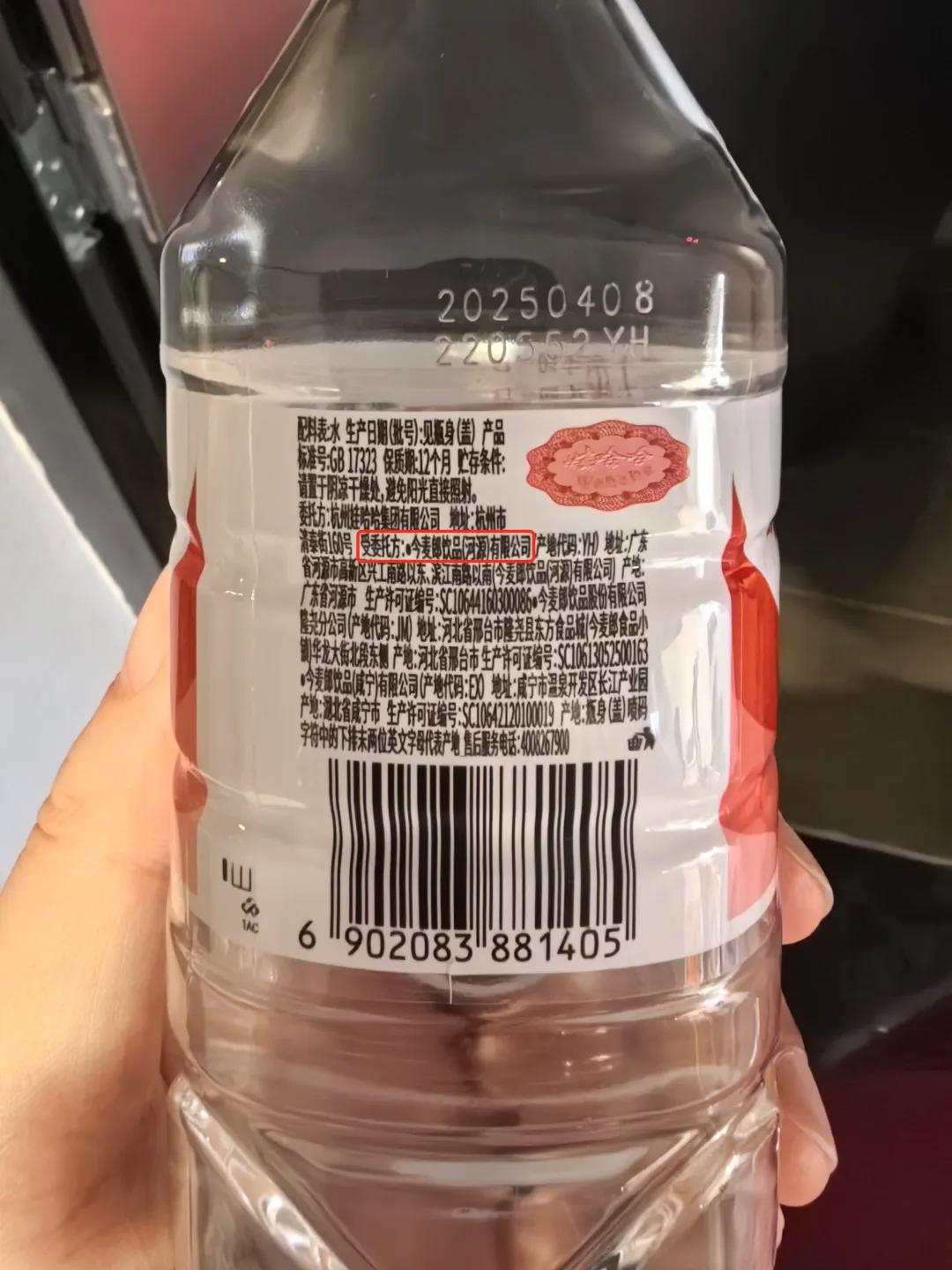
Core Viewpoint - The article discusses a public relations battle between Wahaha and Jinmailang, highlighting how Wahaha's reliance on Jinmailang for bottled water production has backfired, leading to a potential self-directed PR strategy by Jinmailang to gain market share [2][10][39]. Group 1: Background of the Situation - Wahaha engaged Jinmailang for contract manufacturing, producing 1.2 billion bottles of water due to its inability to meet demand [3][10]. - In April 2025, Wahaha unilaterally terminated the partnership, citing quality issues with Jinmailang's products [4][12]. Group 2: Public Reaction and Company Responses - Consumers expressed disappointment upon learning that Wahaha's bottled water was produced by Jinmailang, questioning their loyalty to Wahaha [6]. - Wahaha responded to the backlash by claiming that Jinmailang's products failed quality checks, attempting to protect its brand image [4][6]. Group 3: Jinmailang's Strategic Response - Jinmailang's chairman avoided discussing the quality issues and instead emphasized cost control and low pricing strategies [10][18]. - The company likely orchestrated a PR campaign to leverage the situation, positioning itself as a cost-effective alternative to Wahaha [10][39]. Group 4: Media and Public Relations Tactics - Jinmailang appeared to have planned the PR strategy, including encouraging consumer discussions online and engaging media to amplify the narrative [19][21]. - The initial media coverage by a specific outlet sparked significant public interest, leading to a trending topic on social media [27][38]. Group 5: Market Implications - Jinmailang's chairman stated that their blue label water has a net profit of only 0.02 yuan per bottle, highlighting their competitive pricing strategy [18][39]. - The article suggests that this PR battle could be worth at least 100 million yuan in advertising value for Jinmailang, indicating a successful market positioning strategy [39][40].
雷军,到底该不该立刻发声?
3 6 Ke· 2025-04-02 00:47
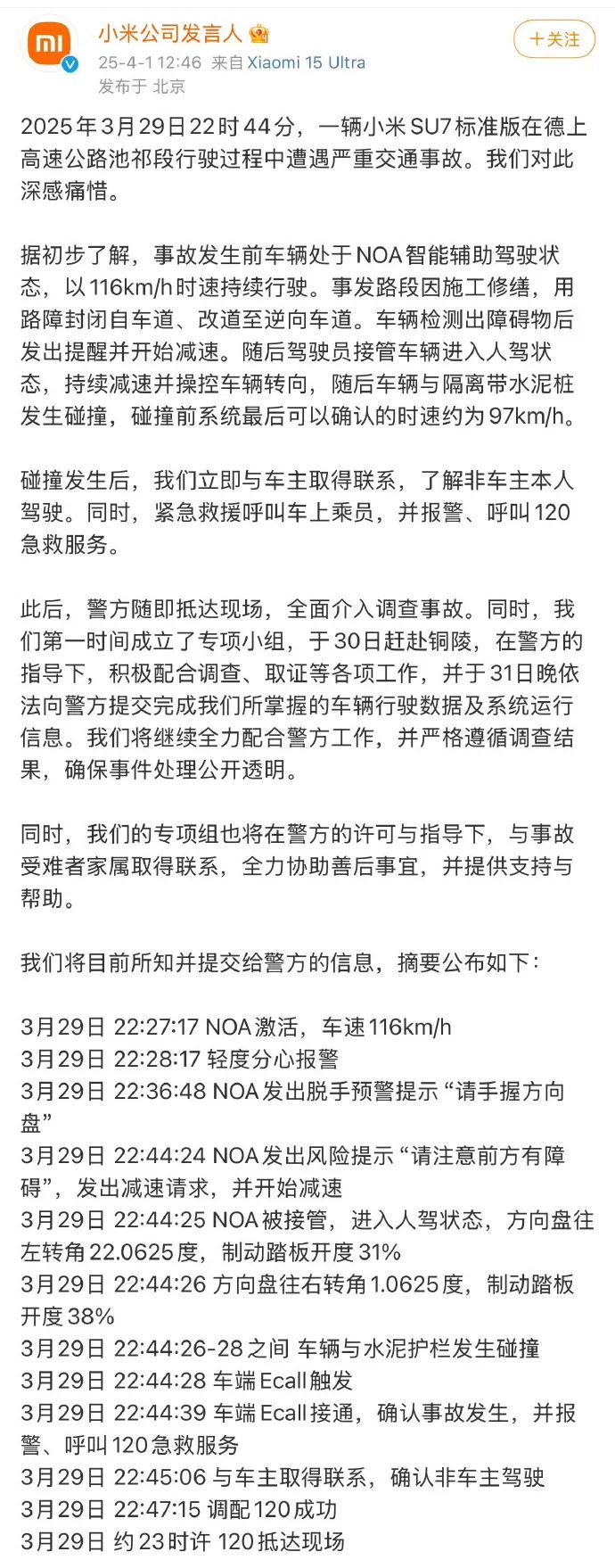
Group 1 - Xiaomi's crisis management has been questioned, particularly regarding the timing and content of their public statements following a tragic incident involving three fatalities [2][4] - The company's statement included phrases expressing sorrow and a commitment to assist the victims' families, but lacked the emotional depth seen in Huawei's response to a similar incident [5][6] - There is speculation about whether Xiaomi's communication strategy was intentionally vague or if it was constrained by the need to coordinate with law enforcement [2][6] Group 2 - There is a debate on whether Xiaomi's CEO, Lei Jun, should have made a public statement sooner, with supporters arguing that his silence could damage his personal brand of sincerity [9][11] - Critics suggest that any public comment from Lei Jun could lead to further backlash, indicating a complex dynamic in crisis communication [12][13] - The article highlights the importance of transparency in rebuilding trust for Xiaomi, especially in light of the incident [17]
这一次,不要学海底捞
Hu Xiu· 2025-04-01 06:19
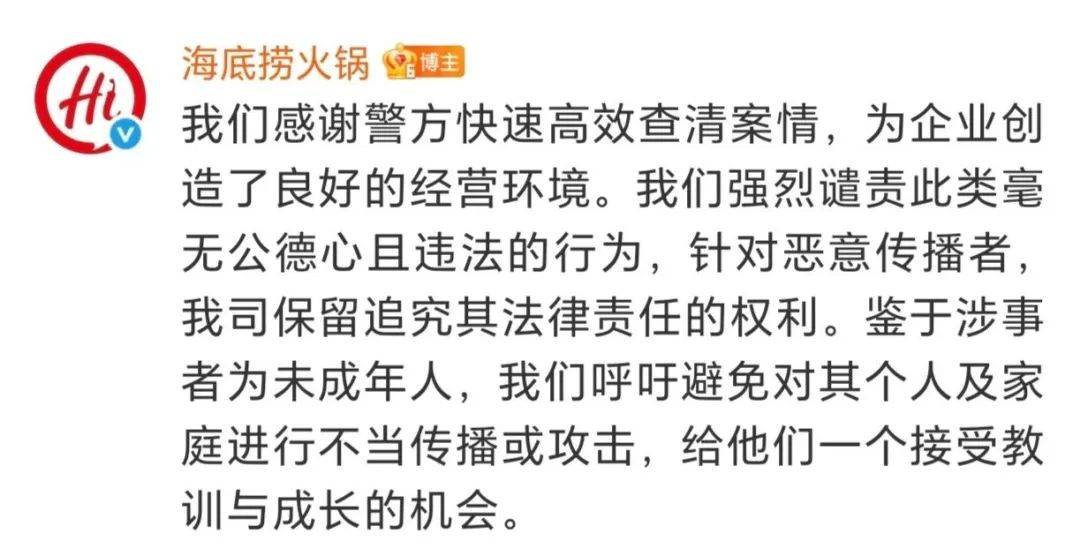
Core Viewpoint - The article discusses the crisis management strategies of Haidilao, emphasizing the importance of brand narrative and effective communication in handling public relations crises [4][10][36]. Group 1: Brand Narrative and Crisis Management - Haidilao's brand narrative includes principles such as "changing fate with both hands," "apprenticeship system," and "extreme pursuit of customer experience," which form a coherent structure for brand storytelling [3][4]. - The company faced a significant crisis in August 2017 when a serious hygiene issue at its Beijing store was exposed, leading to widespread media attention [5]. - Haidilao's response was swift, acknowledging the issue, issuing an apology, and committing to comprehensive reforms across all stores, including transparency in kitchen operations and enhanced internal management [6][7]. Group 2: Recent Controversies and Responses - A recent incident in February 2023 involved two minors misbehaving in a Haidilao restaurant, which sparked public outrage and raised questions about food safety and management practices [12][30]. - The company's initial response focused on giving minors a chance and threatened legal action against those who spread the video, which was perceived as a misjudgment of public expectations [13][29]. - Haidilao later offered full refunds and tenfold compensation to affected customers, indicating a sincere attempt to address the situation and restore trust [14][38]. Group 3: Public Perception and Communication Strategy - The article highlights the importance of understanding public sentiment and the potential pitfalls of labeling individuals as "malicious spreaders," which can alienate the audience [18][23]. - Effective crisis communication should focus on empathy, clear messaging, and maintaining trust, rather than merely reacting to social media trends [37][46]. - The article warns against the trend of treating crises as marketing opportunities, emphasizing that genuine crisis management should prioritize restoring organizational reputation and addressing structural flaws [39][59].