
多资产多策略

Search documents
重磅会议,信号巨大!低利率时代,如何破局
21世纪经济报道· 2025-08-17 02:31
Core Viewpoint - The asset management industry is facing a transformative era characterized by "breaking the old patterns" and "reconstructing core competitiveness," emphasizing a return to the essence of creating long-term stable returns for clients and enhancing capabilities through an open ecosystem and systematic thinking [1]. Group 1: Key Discussions at the Conference - The conference featured a main forum and two parallel thematic forums, attracting nearly a thousand industry professionals and notable speakers, including government officials and financial experts [1]. - Hu Zhiyong, Secretary of the Party Committee of Southern Finance and Economics Media Group, highlighted the need for the industry to break free from old dependencies and reconstruct its core competitiveness [1]. - Liu Shijun, former Deputy Director of the State Council Development Research Center, proposed structural reforms to boost consumption, focusing on housing for new citizens, pension system reforms, and facilitating the flow of production factors [4]. Group 2: Challenges and Strategies in the Low-Interest Rate Environment - Li Yang from the Chinese Academy of Social Sciences emphasized a dual approach to tackle challenges posed by the low-interest rate environment, advocating for the transformation of financial intermediaries and the development of capital markets [7]. - The roundtable discussion on "how asset management institutions can recreate competitiveness" underscored the importance of enhancing research and customer service capabilities, with a focus on comprehensive financial services [9]. - The conference released two significant reports: "2025 China Asset Management Development Trend Report" and "Internet Wealth Management Custody Business Development White Paper" [9]. Group 3: Trends in Asset Management - The forum on "new trends in asset management under the development of passive investment" noted that the low-interest rate environment and changing economic conditions present both opportunities and challenges for the wealth management industry [14]. - ETFs are emerging as a crucial tool for multi-asset and multi-strategy investment, with a diverse and healthy holder structure contributing to the revitalization of the ETF market ecosystem [14][15]. - The discussion highlighted that multi-asset and multi-strategy approaches are essential for addressing the challenges of low returns while meeting investor expectations [15].



短期理财产品现诱人收益率 是实力爆发还是营销策略
Zhong Guo Zheng Quan Bao· 2025-08-08 07:19
Core Viewpoint - Recent short-term low-risk (R2 level) wealth management products have seen rising yields, with some achieving annualized returns of around 10% in the past month, driven by favorable short-term bond market conditions and strategies like "fixed income plus" [1][2][6] Group 1: Product Performance - Several R2 level short-term wealth management products have reported annualized yields of approximately 10% recently, with specific examples like the "交银理财灵动慧利9号7天持有C" showing a yield of 9.63% over the past month [1] - The underlying assets of these low-risk products are primarily bonds, making their performance highly sensitive to bond market trends [2] - New products often exhibit high initial yields due to strategies aimed at quickly gaining market visibility, a practice known as "新品打榜" [4] Group 2: Investment Strategies - Wealth management companies are increasingly adopting a "multi-asset, multi-strategy" approach to asset allocation, which helps reduce volatility and enhance returns in a low-interest-rate environment [6][7] - The trend is shifting from focusing solely on assets to emphasizing strategies, with a mix of bonds, stocks, and other asset classes being utilized to create a robust portfolio [6] - Companies are encouraged to innovate differentiated products that align with investor needs while maintaining a focus on safety and stability [7] Group 3: Market Dynamics - The performance of open-ended short-term wealth management products is more volatile compared to closed-end products, which provide more stable management due to their longer investment cycles [3] - The demand for high-yield, stable wealth management products is increasing among investors, prompting companies to enhance their research and investment capabilities [6][7]
【深度】城投债收益率跌进“1”时代,券商资管转型迎大考
Xin Lang Cai Jing· 2025-08-06 09:37
Core Viewpoint - The current favorable conditions for broker asset management relying on city investment bonds are expected to last only for about a year, as credit spreads are rapidly compressing, leading to a decline in the performance of fixed-income investment managers [1][2]. Group 1: Market Conditions and Trends - The strategy of holding low-credit city investment bonds to maturity has been widely adopted by broker asset management firms, relying on bond yields and a bull market for bonds to achieve excess returns [3][4]. - Since 2022, the market for city investment bonds has been evolving along two main lines: a continuous decline in risk-free interest rates and increased constraints on local government debt issuance, leading to extreme compression of credit spreads [6][7]. - As of now, high-grade long-term city investment bond yields have entered the "2" era, with yields for AAA-rated bonds under three years dropping to the "1" range [7]. Group 2: Challenges Faced by the Industry - The fixed-income investment sector is facing three major challenges: a sharp decline in static returns, passive duration extension leading to significant net value fluctuations, and intertwined credit and liquidity risks due to tightening city investment policies [8][9]. - The reliance on city investment bonds is becoming increasingly difficult to meet the performance benchmarks set by banks, with expectations that many fixed-income products will fail to meet these benchmarks starting next year [10]. Group 3: Transformation and Strategic Shifts - Broker asset management firms are undergoing a transformation to diversify their investment strategies, moving from a reliance on city investment bonds to a multi-asset and multi-strategy approach, including domestic and international stocks, commodities, and bonds [2][11]. - The industry is seeing a significant increase in the issuance of Fund of Funds (FOF) products, with 52 firms having issued a total of 405 FOF products as of July 30, indicating a shift towards more diversified asset management strategies [17][18]. - Successful transformation in the broker asset management sector will likely depend on talent and differentiation, with firms needing to leverage their comprehensive capabilities and deep market knowledge to provide customized solutions [12][19].
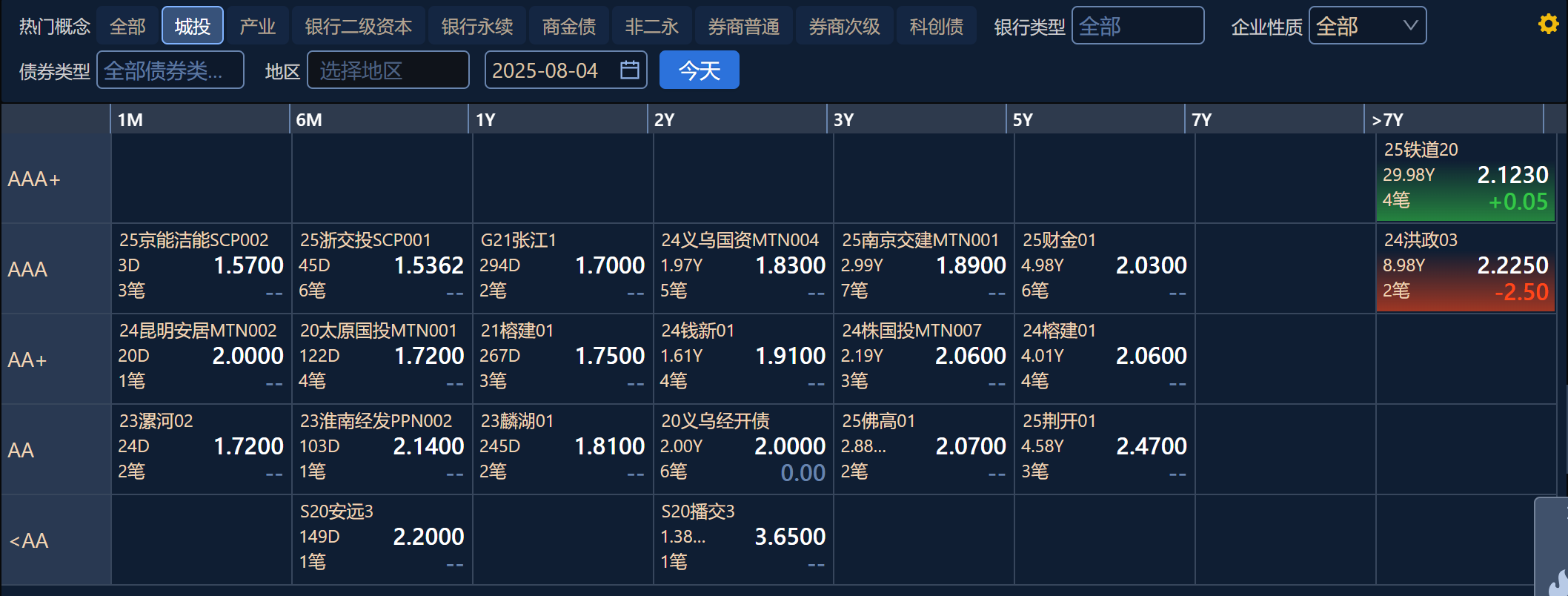
【深度】“摆脱”城投债,券商资管转型迎大考
Xin Lang Cai Jing· 2025-08-06 09:26
Core Viewpoint - The current favorable conditions for broker asset management relying on city investment bonds are expected to last only for about a year, as credit spreads are rapidly compressing, leading to a decline in the performance of fixed-income products and potential job losses for fixed-income investment managers [1][4][10]. Group 1: Current Market Conditions - The strategy of holding low-credit city investment bonds to earn management fees is becoming less viable due to extreme compression of credit spreads [1][4]. - The fixed-income investment managers are facing a significant decline in business opportunities, with expectations of widespread underperformance in fixed-income products starting next year [1][10]. - The yield on high-grade long-term city investment bonds has dropped significantly, with 3-year AAA-rated bonds now yielding in the "1" range [8][9]. Group 2: Historical Context and Strategy Shift - Historically, broker asset management relied heavily on city investment bonds due to their government backing and low default risk, especially after the 2016 supply-side reforms led to widespread defaults in corporate bonds [5][6]. - The past decade saw investment managers achieving over 6.4% annualized returns with minimal volatility by primarily investing in city investment bonds [4][7]. - The transition to a more diversified asset strategy has begun, with a shift from city investment bonds to a multi-asset approach that includes domestic and international stocks, commodities, and bonds [3][11]. Group 3: Challenges and Future Outlook - The fixed-income sector is facing three major challenges: a sharp decline in static returns, increased duration risk, and intertwined credit and liquidity risks [9][10]. - The asset management industry is expected to undergo significant transformation, with successful firms likely to be those that can differentiate themselves and leverage talent effectively [11][12]. - The growth of FOF (Fund of Funds) products is seen as a strategic move to adapt to changing market conditions, with a notable increase in issuance from 2021 to 2024 [16][18].

信银理财封春升:“长钱长投”推动银行理财资金多元配置
Shang Hai Zheng Quan Bao· 2025-07-24 18:58
Core Viewpoint - The banking wealth management sector is experiencing significant growth opportunities due to ongoing policy support for long-term capital entering the market, despite facing challenges related to investor risk appetite and liquidity matching [2][3]. Group 1: Characteristics of Banking Wealth Management - Banking wealth management funds inherently possess "long money" characteristics, with low net value volatility and stable liability scales conducive to long-term investment [3]. - The focus is on promoting the issuance of closed-end products with a maturity of one year or more to reduce redemption pressure [3]. - There is an increasing allocation of equity assets in technology and innovative pharmaceuticals, which requires long-term holding to capture growth dividends [3]. Group 2: Challenges in Banking Wealth Management - The sector faces a challenge of "short-termization" of funds, as overall investor risk appetite is low, limiting the proportion of funds that can be allocated to equity assets [3]. - Market volatility and redemption pressures lead to a tendency for funds to favor "short-term behavior" [3]. - The banking wealth management institutions need to enhance their investment research capabilities in timing, drawdown control, and risk diversification [4]. Group 3: Strategies for Improvement - The company is adopting a "dual-driven" model of "multi-asset multi-strategy + investment advisory support" to enhance asset allocation capabilities and client service quality [4]. - The investment advisory service includes a four-stage support system covering product creation, operation, volatility response, and review [4]. - Recommendations include optimizing internal assessment mechanisms to focus on long-term risk-adjusted returns and encouraging the establishment of professional multi-strategy and equity research teams [5]. Group 4: Institutional Support and Recommendations - There is a need for collaborative efforts to promote long-term investment in banking wealth management funds [5]. - Suggestions include introducing a similar OCI account mechanism for certain banking wealth management products to mitigate the impact of short-term net value fluctuations on client behavior [6]. - Advocating for tax deferral support and integrating more banking wealth management products into personal pension accounts to create a sustainable long-term funding ecosystem [6].

慢慢变富!优美利投资:做“寿星”,不做明星!曝光穿越周期密码
券商中国· 2025-07-17 11:22
Core Viewpoint - The quantitative investment industry is experiencing significant expansion and competition, with a focus on maintaining stable excess returns amidst increasing market interest [1][8]. Group 1: Company Insights - Youmeili Investment has entered the multi-asset quantitative field early and achieved notable success in the convertible bond sector [2]. - The chairman emphasizes that "slowly becoming rich" is the true wealth strategy, with a focus on stable long-term excess returns as the core logic for success [3][4]. - The company prioritizes low and medium volatility strategies, avoiding trends and focusing on customer experience and absolute returns [3][9]. Group 2: Investment Strategy - Multi-asset and multi-strategy approaches are seen as more scientific investment methods, allowing for better risk management and stable returns [5][21]. - Over the long term, various asset classes like stocks, bonds, and real estate have stable annualized returns, with convertible bonds showing an annualized return of approximately 6% over the past decade, outperforming other equity assets [7][24]. - The company manages nearly 5 billion yuan, with over 2 billion yuan allocated to convertible bonds, which account for more than 50% of its total management scale [26]. Group 3: Market Trends - The quantitative investment sector is still in a favorable cycle, with expectations of entering a "big asset management" era where leading institutions adopt multi-strategy and multi-asset approaches [8][33]. - The chairman notes that the current market environment favors convertible bonds due to their stability and potential for higher returns compared to stocks, especially small-cap stocks [25][27]. Group 4: Risk Management - The company employs strict risk control measures, ensuring that low and medium volatility products are matched with suitable assets or strategies, and utilizes quantitative models for optimal asset selection [23][31]. - The dynamic adjustment of asset proportions is based on the cyclical nature of different assets, aiming for stable long-term returns while managing volatility [20][21]. Group 5: Future Outlook - The company is exploring the integration of AI and quantitative strategies to enhance efficiency and model performance, with a focus on maintaining a strong market presence through stable products [34][35]. - The vision is to grow wealth steadily alongside investors, emphasizing the importance of patience and disciplined execution in investment strategies [41][40].

短期理财产品现诱人收益率是实力爆发还是营销策略
Zhong Guo Zheng Quan Bao· 2025-07-07 20:52
Core Viewpoint - Recent short-term low-risk (R2 level) wealth management products have seen rising yields, with some achieving annualized returns around 10% in the past month, driven by favorable short-term bond market conditions and strategies like "fixed income plus" [1][2][4] Group 1: Product Performance - Several R2 level short-term wealth management products have reported high yields, with examples like "交银理财灵动慧利9号7天持有C" showing an annualized yield of 9.63% over the past month [1] - The underlying assets of these low-risk products are primarily bonds, making their net value highly sensitive to bond market trends [2] - New products often exhibit high initial yields due to strategies aimed at quickly gaining market visibility, a practice known as "new product ranking" [3] Group 2: Investment Strategies - Wealth management companies are increasingly adopting a "multi-asset, multi-strategy" approach to asset allocation, which helps reduce volatility and enhance returns in a low-interest-rate environment [4][5] - The trend is shifting from focusing solely on asset types to emphasizing investment strategies, with a push towards diversified asset classes such as stocks, bonds, and alternative investments like REITs and gold [5][6] - Companies are encouraged to innovate differentiated products that align with investor needs while maintaining a focus on safety and stability [6]
21对话|山证资管李宏宇:在150万亿大生态里重新定义资管目标
2 1 Shi Ji Jing Ji Bao Dao· 2025-06-19 12:02
Core Insights - The asset management industry in China has grown from 130 trillion to 150 trillion in the past three years, with various segments including public funds, insurance asset management, and bank wealth management [4][6] - Securities asset management, particularly those with public fund licenses, has a broad business scope but faces both competitive advantages and pressures [4][5] - The company aims to establish a clear strategic direction within the vast asset management ecosystem, focusing on fixed income, absolute returns, and multi-asset strategies [6][8] Company Overview - Shan Zheng Asset Management was established as an independent entity in 2021 and has developed a product matrix consisting of 20 public funds and 178 asset management products [7] - As of the first quarter of 2025, the company managed a total of 57.3 billion yuan, with public and asset management products accounting for 43% and 57% respectively [7] - The company has achieved continuous annual revenue and net profit growth since its inception, laying a solid foundation for future high-quality development [7] Product Strategy - The company’s product lines include fixed income, absolute returns, active equity, multi-strategy, and investment banking asset management, with a strong emphasis on fixed income products due to their stable performance [8][9] - Future strategies will focus on transforming in response to low interest rates, enhancing the public fund business to meet diverse wealth management needs, and implementing a clear positioning for fixed income and equity products [8][9] Market Positioning - The company aims to be a trusted partner in wealth management and a multi-asset, multi-strategy management expert, emphasizing a balanced client structure with over 22 billion yuan from institutional clients [10] - The company’s vision includes deepening understanding of client needs and providing tailored investment strategies, leveraging its dual qualifications in asset management and public funds [10][11] Industry Challenges - The asset management industry faces challenges such as short-termism, with a focus on scale over investor returns, prompting regulatory bodies to emphasize a shift towards prioritizing client returns [13] - The company acknowledges the need for a cultural shift within the industry, advocating for a value system that prioritizes client interests and long-term relationships [13] Future Opportunities - Potential investment opportunities in 2025 are expected in traditional sectors like consumer goods and healthcare, as well as in policy-driven sectors such as AI, robotics, and semiconductor industries [14][15] - The company plans to enhance its investment strategies by balancing fixed income with diverse asset classes, including commodities, options, and cross-border strategies, to adapt to market volatility and evolving investor demands [15][16]
多资产多策略布局正当时 光大理财“光盈+”八大策略捕捉时代机遇
Huan Qiu Wang· 2025-06-04 05:41
Core Viewpoint - The article highlights the proactive response of wealth management companies, particularly banks, to the growing demand for diversified investment products amid policy encouragement for long-term capital market entry [1][3]. Group 1: Policy and Market Environment - The Central Political Bureau meeting in September last year emphasized the need to eliminate barriers for social security, insurance, and wealth management funds entering the market, paving the way for long-term capital investments [3]. - A joint implementation plan was issued in January this year, allowing various funds, including public funds and bank wealth management, to participate as strategic investors in listed companies' private placements, boosting market confidence [3]. Group 2: Product Innovation and Strategy - Banks are focusing on deepening "multi-asset, multi-strategy" product innovation to expand their investment boundaries, particularly in equity assets [4]. - For instance, Everbright Wealth Management launched the "Guangying+" product series, emphasizing diverse strategies such as index, quantitative, and global investments, aiming to enhance returns while managing risks [4]. Group 3: Investment Activities and Performance - Everbright Wealth Management is optimistic about the future of China's capital market and has increased its allocation to capital market investments, including ETFs and private placements [5]. - The company successfully participated in a private placement for Shanghai Waigaoqiao Group, marking a significant case of bank wealth management funds directly engaging in such activities, with an allocation of approximately 2 million yuan [5]. Group 4: Market Challenges and Responses - The current global financial market is characterized by uncertainty, with traditional fixed-income products facing pressure due to bond market volatility [6]. - To address these challenges, wealth management companies are accelerating the development of multi-asset strategies, particularly enhancing their capabilities in equity asset allocation [6]. Group 5: Performance Metrics - The "Guangying+" series has demonstrated effective asset allocation across various categories, achieving a 100% performance benchmark for closed-end products maturing by May 2025, with annualized returns exceeding benchmarks for all products established for over a month [7]. - The product series has seen a growth of over 16 billion yuan within the year, reflecting positive market feedback on the investment strategies and product designs [7].
理财资金如何入市?当下市场环境如何实现绝对收益目标?哪些资产值得投资?南财理财通第十期策略会成功举办!
2 1 Shi Ji Jing Ji Bao Dao· 2025-05-16 10:53
Core Insights - The banking wealth management industry is experiencing growth, with the market size expected to reach 29.95 trillion yuan by the end of 2024, reflecting an 11.75% increase from the beginning of the year [1] - Despite the growth, the industry faces challenges such as conservative investor risk preferences and declining yields on wealth management products due to falling bond rates [1][2] - A recent strategy meeting highlighted investment opportunities in a high-volatility environment, emphasizing the need for diversified asset allocation [1][2] Investment Strategies - Wealth management companies are encouraged to incorporate equity investments into their portfolios to capture corporate asset appreciation, as pure fixed-income products limit potential gains [2] - The introduction of a "solid income + options" strategy allows clients to participate in equity markets while managing risks associated with market volatility [2][4] - Passive investment strategies, particularly through ETFs, are seen as a crucial entry point for wealth management funds into the equity market, with the public ETF market exceeding 4 trillion yuan [2][5] Multi-Asset Framework - Companies are developing multi-asset and multi-strategy frameworks to manage volatility and enhance returns, focusing on target volatility as a core component of asset allocation [3][4] - The implementation of constant proportion strategies, such as maintaining a fixed percentage of equity assets, has proven effective in achieving absolute return objectives [4] - The importance of adapting international experiences to the domestic market context is emphasized, given the differences in macroeconomic conditions [3][4] Market Outlook - In light of increasing uncertainty in global financial markets, companies recommend aligning investment products with investor risk preferences and focusing on assets with stable cash flows [4][5] - A balanced allocation across equities, bonds, and gold is suggested as a strategy to mitigate uncertainty and capitalize on favorable market conditions [5] - The use of low-correlation multi-asset strategies is highlighted as an effective approach to navigate heightened volatility and uncertainty in the market [5]