
市场化改革

Search documents
海外消费周报:海外教育:营利性分类管理条件成熟,市场化改革推动高校扩张,承接增量高教需求-20250921
Shenwan Hongyuan Securities· 2025-09-21 14:43
Group 1: Industry Investment Rating - The report maintains a positive outlook on the overseas education sector, indicating a favorable investment rating due to the maturation of profit-oriented classification management and market reforms driving the expansion of higher education institutions [1][2]. Group 2: Core Insights - The conditions for profit-oriented classification management in private education are gradually maturing, with quality improvement in private schools being a crucial prerequisite for this transition. The report anticipates an acceleration in the implementation of profit-oriented policies for private schools, which will enhance the supply of higher education while ensuring quality [1][9]. - The establishment of profit distribution rights for private schools has led to increased certainty in asset returns. The average profit margin for the six listed private higher education companies is approximately 30.9%, with an average ROE of 12%. This indicates a robust commercial model that seeks to expand scale and revenue [2][10]. - The report highlights a significant mismatch between supply and demand in the higher education sector, with the number of college admissions only increasing from 10.36 million in 2021 to 10.69 million in 2024, while the number of high school graduates entering the college entrance examination has risen from 10.78 million in 2021 to 13.42 million in 2024. This has resulted in a declining college admission rate from 96.1% in 2021 to 79.6% in 2024 [2][10]. - The report suggests that the current quality standards achieved by listed private higher education companies will lay a solid foundation for the reintroduction of profit-oriented choices, which is expected to enhance the valuation of the higher education sector [2][11]. Group 3: Company Focus - The report recommends focusing on several key companies in the overseas education sector, including Yuhua Education, Zhongjiao Holdings, China Kepei, Neusoft Ruixin, Zhonghui Group, New Higher Education, Xijiao International Holdings, and Huaxia Holdings, as they are well-positioned to benefit from the anticipated policy changes [3][11][14].
中国经济体制改革研究会原会长彭森:以高水平市场化改革破局 为中国式现代化注入新动力
Zhong Guo Jin Rong Xin Xi Wang· 2025-09-14 05:56
Core Viewpoint - The 22nd China Reform Forum emphasizes the need for comprehensive deepening of reforms to promote high-quality development during the "14th Five-Year Plan" period, highlighting the importance of market-oriented reforms and a people-centered approach [1][2]. Summary by Sections Reform Experience - The necessity of liberating thoughts and being pragmatic is emphasized as a prerequisite for reform, with the 20th Central Committee's proposal for "three further liberations" guiding the reform path [2]. - Development is deemed the "hard truth," with the core of reform focused on eliminating institutional barriers to productivity, measuring success by its impact on development [2]. - A steadfast commitment to market-oriented reforms is crucial, with recent central government directives underscoring the urgency of deepening market reforms and expanding pilot programs for market-oriented resource allocation [2]. - A gradual reform approach is advocated, recognizing the complexity of China's national conditions, and encouraging localized differentiated explorations to gather valuable experiences for nationwide reforms [2]. People-Centered Approach - The importance of a people-centered approach is reiterated, stating that reforms must respond to the people's aspirations for a better life, as the public is both the creator and beneficiary of history [3]. - The current year is critical for concluding the "14th Five-Year Plan" and preparing for the "15th Five-Year Plan," amidst a complex external environment and significant domestic challenges [3]. - A call for reformers to remain true to their mission and push for substantial breakthroughs in areas such as market-oriented resource allocation, property rights reform, and fair competition systems is made, aiming to inject sustained institutional momentum into Chinese modernization [3].

半年报 国铁集团总负债回落至6.19万亿元 首次呈现同比下降
Zhong Guo Jing Ying Bao· 2025-08-30 12:17
Core Insights - China National Railway Group Co., Ltd. (referred to as "the Company") reported a total operating revenue of 586.02 billion yuan for the first half of 2025, reflecting a year-on-year growth of 1.13%, while net profit decreased by 10.77% to 1.553 billion yuan [1] - The Company's total liabilities decreased for the first time in history, reaching 6.19 trillion yuan, a decline of 0.32% compared to the same period last year, while total assets grew to 9.85 trillion yuan, an increase of 2.39% [1] - The debt-to-asset ratio fell below 63% for the first time, currently at 62.84%, marking the fourth consecutive decline in this ratio [1] Financial Performance - The Company achieved a total revenue of 586.02 billion yuan, with a net profit of 1.553 billion yuan, indicating a decrease in profitability [1] - Total liabilities reached 6.19 trillion yuan, down 0.32% year-on-year, while total assets increased to 9.85 trillion yuan, up 2.39% [1] - The debt-to-asset ratio has decreased from 65.56% in 2023 to 63.52% in 2024, returning to levels not seen in 12 years [1] Operational Efficiency - The Company has improved cash flow through dual growth in passenger and freight transport, providing stable support for debt repayment [2] - Investment structure optimization has led to record-breaking fixed asset investments, focusing on network connectivity and efficiency [2] - Market-oriented reforms, including freight price liberalization and dynamic pricing for passenger tickets, have effectively revitalized existing assets [2] Growth Metrics - In 2024, the Company achieved a freight volume of 3.99 billion tons, a year-on-year increase of 1.9%, marking eight consecutive years of growth [2] - Passenger transport reached 4.31 billion trips, a significant year-on-year increase of 11.9%, setting a historical record [2] - Fixed asset investment reached 850.6 billion yuan, the highest in history, with a growth rate of 11.3% [2] Future Outlook - The Company anticipates continued growth in both passenger and freight transport as market reforms deepen and railway network benefits are gradually realized [2] - The operating performance is expected to improve further, with the debt ratio likely to narrow [2]
为经济新旧动能转换护好航
Di Yi Cai Jing Zi Xun· 2025-08-29 00:55
Group 1 - The core viewpoint of the article highlights the resilience and growth potential of China's economy, particularly in the high-tech manufacturing sector, despite overall industrial profit declines [2][4] - In the first seven months, profits of large-scale industrial enterprises decreased by 1.7% year-on-year, with a notable improvement in July where profits fell by only 1.5%, indicating a narrowing decline [2] - High-tech manufacturing saw a significant turnaround in July, with profits increasing by 18.9% compared to a 0.9% decline in June, contributing to an overall acceleration in profit growth for large-scale industrial enterprises [2][3] Group 2 - The article emphasizes the importance of market consensus and support for innovation, as evidenced by the rise of domestic AI chip company Cambricon, which surpassed Kweichow Moutai in stock price, reflecting investor confidence in technology-driven enterprises [3] - The current market environment, characterized by asset scarcity, has led investors to place higher expectations and valuations on companies pursuing technological advancements [3][4] - The article calls for a supportive environment for high-tech enterprises, advocating for reduced regulatory costs and protection of property rights to foster their growth and contribution to economic transformation [4][5] Group 3 - The performance of high-tech manufacturing indicates a structural divergence in the economy, with traditional sectors like upstream raw materials and consumer services still facing challenges [4] - The article stresses the need for a robust risk management framework to assist struggling industries, including legal and institutional preparations for market exits and restructuring [4][5] - It highlights the necessity of market-oriented reforms, particularly for state-owned enterprises, to ensure their modernization and competitiveness in the evolving economic landscape [5]


为经济新旧动能转换护好航
第一财经· 2025-08-29 00:44
Core Viewpoint - The article emphasizes the resilience and growth potential of China's high-tech manufacturing sector, highlighting its role in driving overall industrial profits despite challenges faced by other industries [2][3]. Group 1: Industrial Profit Trends - In the first seven months, profits of large-scale industrial enterprises in China decreased by 1.7% year-on-year, with a slight improvement in the decline rate compared to the first half of the year [2]. - In July, profits fell by 1.5% year-on-year, but this marked a 2.8% improvement from June, indicating a narrowing of the contraction [2]. - High-tech manufacturing showed a significant turnaround, with profits growing by 18.9% in July, compared to a decline of 0.9% in June, contributing to an overall acceleration in profit growth for large-scale industrial enterprises [2]. Group 2: Emerging Industries - The biopharmaceutical industry has developed strong international competitiveness through years of resilience, while the artificial intelligence sector has maintained its leading position in international competition by seeking differentiated advantages [2]. - The article illustrates that Chinese enterprises possess the drive and innovation capabilities necessary for growth, provided they are given the appropriate space to operate freely [2]. Group 3: Market Support for Innovation - The rise of domestic AI chip company Cambricon, which surpassed Kweichow Moutai in stock price, reflects a market consensus supporting companies focused on technological advancement [3]. - Investors are willing to take risks on companies that demonstrate potential for upward technological breakthroughs, indicating a collaborative effort among market participants to drive growth [3]. Group 4: Structural Challenges - The performance of high-tech manufacturing highlights a growing structural divide in the economy, with upstream raw materials and consumer services still facing significant challenges [4]. - Industries that have not yet recovered from negative growth pose risks that need to be addressed through effective support mechanisms, including legal and institutional preparations for market exits and restructuring [4]. Group 5: State-Owned Enterprises and Market Reforms - Data shows that profits for state-owned enterprises have declined, while foreign and private enterprises have seen positive growth, underscoring the need for reform in state-owned enterprises [5]. - The article advocates for market-oriented reforms as essential for the modernization and profitability of state-owned enterprises, emphasizing the importance of maintaining a balance between power and rights in economic governance [5].

一财社论:为经济新旧动能转换护好航
Di Yi Cai Jing· 2025-08-28 13:51
Group 1 - The performance of the high-tech manufacturing industry indicates a growing structural differentiation in the economy [1][4] - In the first seven months, profits of large-scale industrial enterprises decreased by 1.7% year-on-year, with a narrowing decline compared to the first half of the year [2] - High-tech manufacturing profits turned from a decline of 0.9% in June to a growth of 18.9% in July, significantly boosting the overall profit growth of large-scale industrial enterprises [2][4] Group 2 - The biopharmaceutical industry has developed international competitiveness through long-term resilience, while the artificial intelligence sector has shown strong adaptability in international competition [2] - The market's strong consensus and support for innovation are reflected in the rising stock price of domestic AI chip company Cambricon, surpassing that of Kweichow Moutai [3] - Investors are willing to take risks on companies focused on technological advancements, indicating a collaborative effort among enterprises and institutional investors to drive upward breakthroughs [3] Group 3 - The challenges faced by upstream raw material industries and the consumer services sector highlight the complexity of structural transformation [4] - A robust risk protection network is necessary to help struggling industries transition, including legal and institutional preparations for market exits and mergers [4] - The need for market-oriented reforms is emphasized, particularly for state-owned enterprises, which are lagging behind in profit growth compared to foreign and private enterprises [5]
赚了85亿港元!牛市助推港交所业绩创新高,南向资金占港股日均成交额23%
Xin Lang Cai Jing· 2025-08-21 23:05
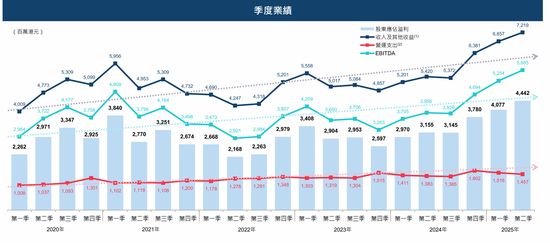
Core Viewpoint - Hong Kong Exchanges and Clearing Limited (HKEX) reported strong mid-year results for 2025, with a significant increase in revenue and profit driven by heightened market activity and investor interest in non-USD assets [1][5]. Financial Performance - For the first half of 2025, HKEX's revenue and other income reached HKD 14.076 billion, a year-on-year increase of 33% [1]. - Shareholder profit attributable to the company was HKD 8.519 billion, reflecting a 39% year-on-year growth [1]. - The board declared an interim dividend of HKD 6 per share, up 36% from the previous year, totaling HKD 7.608 billion, which is 90% of the distributable profit [1]. Market Activity - The average daily trading volume in the Hong Kong securities market was HKD 240.2 billion, a remarkable increase of 118% year-on-year [1][5]. - The average daily trading volume for futures and options exceeded 1.7 million contracts, marking an 11% increase [1]. - The Hong Kong ETF market saw an average daily trading volume of HKD 33.8 billion, up 184% compared to the same period last year [1]. New Listings and Fundraising - In the first half of 2025, HKEX welcomed 44 new listings, raising a total of HKD 109.4 billion, which is more than eight times the amount raised in the same period of 2024 [5][6]. - The average daily trading volume for the Shanghai-Hong Kong Stock Connect reached RMB 171.3 billion, a 32% increase year-on-year, while the Hong Kong Stock Connect averaged HKD 111 billion, nearly three times the volume from the previous year [5]. Strategic Initiatives - HKEX is focused on enhancing market liquidity and supporting technology companies in their listings [7]. - The exchange has implemented several market reforms, including the launch of a new trading platform for the London Metal Exchange and the introduction of a "Tech Company Fast Track" for listing applications [7][8]. - Plans are underway to shorten the settlement cycle for the cash market and optimize the pricing rules for initial public offerings [8]. Future Outlook - HKEX aims to continue attracting global long-term funds and enhance its market competitiveness through various initiatives [7][8]. - The exchange is exploring the possibility of implementing a T+1 settlement cycle, pending feedback from market participants [8][9].

理论周刊丨从“五统一、一破除”到“五统一、一开放”,全国统一大市场建设变在何处?
Da Zhong Ri Bao· 2025-08-13 02:34
Core Points - The article discusses the evolution of China's market reform framework from "Five Unifications and One Elimination" to "Five Unifications and One Opening," indicating a shift towards a more proactive market environment design [1][2][3] - The new framework emphasizes the need for a unified market system that encourages innovation, competition, and fairness, moving beyond merely addressing existing issues to constructing a superior market system [4][5] Group 1: Five Unifications and One Opening - "Five Unifications" refers to the unification of market foundational systems, resource markets, commodity and service markets, market infrastructure, and regulatory enforcement, aimed at ensuring free flow and efficient allocation of resources nationwide [2][3] - "One Opening" signifies the continuous expansion of both domestic and international market openness, highlighting the importance of creating a fair competitive environment for all market participants [4][5] Group 2: Challenges and Solutions - The article identifies local government behavior, driven by a "competition model," as a significant barrier to achieving a unified national market, where local officials prioritize short-term economic growth metrics over long-term collaborative industrial development [5][6] - It suggests that reforming the performance evaluation system for local governments is crucial, shifting the focus from quantity and speed to quality and efficiency, thereby promoting a healthier market environment [7][8] Group 3: Fiscal and Digital Governance - The restructuring of fiscal relationships between central and local governments is essential to provide stable revenue sources that are not tied to protectionist behaviors, with a focus on consumption tax reform as a key strategy [8][9] - The implementation of digital platforms for government transparency and supervision is proposed to combat local protectionism, ensuring that all relevant government actions are publicly accessible and subject to scrutiny [9][10]
中炬高新换帅:消费品虎将出任董事长 战略转型与治理优化并举
Xin Hua Wang· 2025-08-12 05:37
Group 1: Company Leadership and Governance - The board of directors of Zhongju Gaoxin has undergone a complete renewal, with Li Ruxiong appointed as the new chairman, indicating a shift towards a mixed governance model of state-owned shareholders and market-oriented executives [1][2] - The introduction of new professional managers and independent directors aims to enhance the company's governance structure and operational efficiency, aligning with national strategies for a high-level socialist market economy [4][5] Group 2: Strategic Transformation and Market Position - Zhongju Gaoxin is at a critical juncture for strategic transformation, with the new leadership expected to stabilize operations centered around its core product, Chubang soy sauce, and restore growth potential [3] - The company is responding to intense competition in the seasoning industry, which has seen a significant reduction in the number of related enterprises, indicating a shift towards a more competitive landscape [7] Group 3: Financial Performance and Growth Strategies - In 2024, Zhongju Gaoxin reported a revenue of 5.519 billion yuan, a year-on-year increase of 7.39%, with over 90% of revenue coming from its seasoning business [7] - The company plans to leverage consumer research and expert collaboration to improve existing products and explore new growth avenues through partnerships, joint ventures, and acquisitions [8]

消费驱动应当走出单纯刺激范式
Di Yi Cai Jing Zi Xun· 2025-08-12 01:00
Group 1 - The core viewpoint emphasizes that addressing consumption shortfalls is essential for economic growth, with recent data showing mixed signals in price levels and economic activity [2][3] - July's CPI showed a year-on-year growth of 0%, down from 0.1%, while the core CPI rose by 0.8%, indicating a sustained increase for three consecutive months [2] - The PPI remained unchanged at -3.6% year-on-year, reflecting a stabilization in price pressures and the effectiveness of recent anti-involution measures [2][3] Group 2 - Experts argue that consumption-driven economic growth is not feasible, as stimulating consumption does not directly align with consumer preferences and behaviors [3][4] - The article suggests that merely stimulating consumption does not increase overall demand but may only shift future consumption forward, potentially exacerbating future demand deficiencies [3][4] - To stabilize the economy, it is crucial to fundamentally alter the relative prices of consumption and savings, thereby changing demand elasticity through social security reforms [4][5] Group 3 - The need for market-oriented reforms and the establishment of a unified national market is highlighted, as these changes can enhance investment returns and stimulate economic growth [5] - The article advocates for a governance framework focused on public service, which would create a fair competitive environment for market participants, fostering collective intelligence and economic advancement [5]