期现结合

Search documents
黑色系企业的期市“成长记”
Qi Huo Ri Bao Wang· 2025-08-21 16:48
Core Viewpoint - The article discusses the challenges faced by companies in the steel and coal industries due to price volatility of raw materials and highlights the shift towards using futures and derivatives for risk management [2][4][9]. Group 1: Industry Challenges - Companies in the steel production sector, such as He Fang Industrial and Shandong Hui Lian Group, are struggling with significant price fluctuations in key raw materials like iron ore and coking coal, which directly impact production costs and profits [1][2]. - The volatility in prices has been exacerbated by changes in international trade environments, supply-demand adjustments, and the COVID-19 pandemic, leading to increased operational risks for trading companies [2][8]. Group 2: Adoption of Futures Trading - Shandong Hui Lian Group and Shandong Tai Feng Commercial Group have begun to explore futures trading as a means to manage risks associated with price fluctuations, transitioning from a passive to an active risk management approach [3][4][7]. - The companies initially faced challenges due to a lack of understanding and experience with futures trading, but training and support from futures exchanges have helped them recognize the benefits of hedging [3][4][8]. Group 3: Successful Implementation of Risk Management Strategies - In 2022, Shandong Tai Feng successfully implemented a hedging strategy using futures contracts, which resulted in a partial offset of losses from declining prices, demonstrating the effectiveness of risk management tools [4][6]. - Shandong Hui Lian Group also engaged in futures trading to lock in procurement prices and manage inventory value, achieving a risk management gain of approximately 150,000 yuan [5][6]. Group 4: Future Outlook - The "Enterprise Wind Plan" has facilitated the entry of over 700 companies into the futures market, enhancing their risk management capabilities and promoting the use of futures as a stabilizing tool in business operations [9][10]. - Companies are expected to continue deepening their participation in the futures market, exploring more complex hedging strategies and expanding their risk management frameworks to adapt to market changes [9][10].
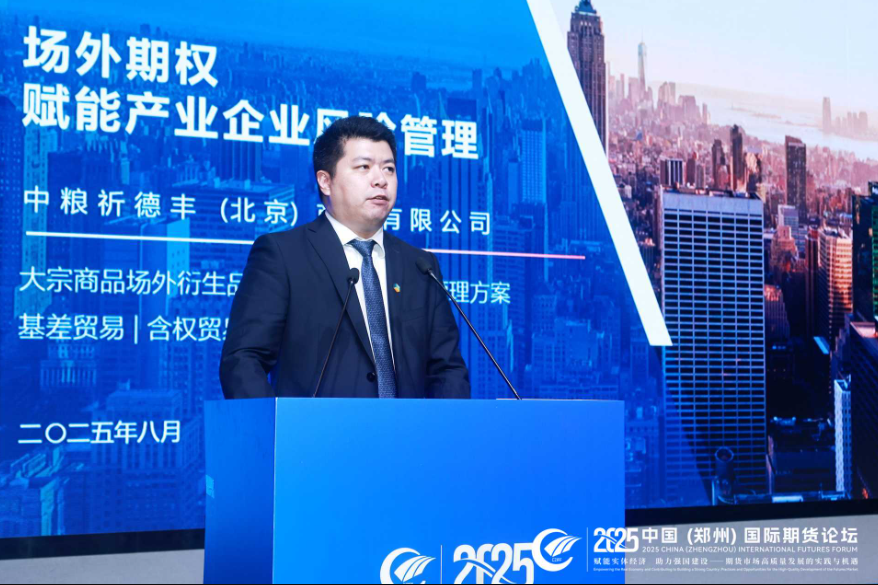
中粮祁德丰总经理冯昊:产业风险管理方式趋于多样化
Qi Huo Ri Bao Wang· 2025-08-19 08:27
Core Viewpoint - The development of risk management in the industry has evolved through multiple stages, with a focus on enhancing comprehensive operational capabilities, innovative business models, and refined management practices to secure the future of enterprises [1] Summary by Relevant Sections Risk Management Development Stages - Before 2010, the industry faced a futures hedging opportunity period with low hedging ratios and favorable basis safety margins - From 2010 to 2020, the industry entered a futures hedging challenge period, where the hedging ratio increased but basis safety margins deteriorated, making hedging more difficult - Post-2020 marks the development period of risk management tools, characterized by complex industry cycles and external environments, where poor basis safety margins became the norm and off-exchange options tools diversified [1] Changes in Commodity Trading - The transition in bulk commodity trading has shifted from spot trading to basis trading and rights-inclusive trading - The integration of futures and spot trading has been widely promoted, enhancing risk management concepts [1] New Profit Sources in the Industry - In the new era, industry profits are no longer solely derived from processing and price differences but also from profits generated through hedging/basis, optimizing business structures, risk management services, and premiums obtained through strategies and tools [1]

以期市为纽带 联通全球产业链
Qi Huo Ri Bao Wang· 2025-08-17 16:07
Group 1 - The first PTA bonded delivery by Yisheng Petrochemical's subsidiary Yisheng Dahua and ITG is set to take place in September 2025, facilitating smoother cross-border transactions and integrating the Zhengzhou futures market with the global industrial chain [1] - The introduction of the export-type bonded delivery system by Zhengzhou Commodity Exchange has significantly reduced participation costs for foreign enterprises, attracting more international players to engage in PTA futures trading [2][4] - As of the end of 2024, over 700 foreign traders from more than 30 countries and regions have opened accounts to participate in specific trading at Zhengzhou Commodity Exchange, indicating a growing international interest [3] Group 2 - The PTA futures market has enhanced the international trade experience for companies by providing benchmark pricing, improving negotiation power, and ensuring efficient and transparent international deliveries [2] - Companies like Wan Kai New Materials have established a mature cooperation loop with South American clients, utilizing the Zhengzhou futures prices to lock in raw material costs and streamline export processes [2] - The growth of foreign participation in the PTA market has not only increased trading volumes but also reshaped the market ecosystem, leading to a more stable polyester market [3] Group 3 - The futures market has enabled Chinese companies to expand internationally, with firms like Wan Kai New Materials and Xiamen Guomao Petrochemical significantly increasing their production capacities and export volumes since 2018 [4][6] - The introduction of futures tools has allowed companies to manage risks across the entire supply chain, as seen with New Fengming Group's expansion in polyester production and export [5] - Yisheng Petrochemical has grown from a PTA producer with a capacity of 12.2 million tons to the world's largest with a capacity of 21.9 million tons, highlighting the transformative impact of futures trading on business models [6] Group 4 - The future outlook for the Zhengzhou futures market includes the expectation of incorporating more varieties and delivery points into the international framework, promoting global industrial chain collaboration [7]

“金融活水”浇灌塞上沃土
Qi Huo Ri Bao Wang· 2025-08-11 23:01
Group 1 - The training session aims to enhance risk management capabilities of agricultural enterprises in Yinchuan through the use of futures and derivatives [1][2] - The agricultural industry in Yinchuan is a key pillar for local economic development, facing increased operational pressures due to international commodity price fluctuations and extreme weather [2][3] - Futures markets serve as a crucial tool for price discovery, risk management, and resource allocation, helping agricultural producers stabilize costs and revenues [2][3] Group 2 - The Dalian Commodity Exchange (DCE) has been actively collaborating with local governments and financial institutions, serving over 1.8 million farmers through various risk management programs [3][5] - The training focused on core agricultural products like soybean meal and corn, providing practical applications of risk management tools [3][4] - Experts emphasized the importance of avoiding misconceptions about hedging and encouraged businesses to develop strategies based on industry needs [4][5] Group 3 - The training included both theoretical knowledge and practical case studies, fostering interaction between participants and instructors [5] - Companies expressed intentions to explore new models combining futures pricing with contract farming to enhance collaboration across the supply chain [5][6] - Future initiatives will focus on deepening services for local enterprises to leverage futures tools for risk management and competitiveness [5]
借期货市场之力 破解油脂行业经营困局
Qi Huo Ri Bao Wang· 2025-08-04 16:24
广东作为国内重要的油脂油料市场,油脂品种丰富、市场规模大,同时,广东也是国内主要的饲料及水 产养殖产地,因此形成了具有集群效应的油脂油料产业链。不过,在供应压力下,油脂行业产能利用率 逐年下降,管理压榨利润风险对于油脂油料企业来说至关重要。面对全球供应链重塑与市场波动加剧的 双重挑战,一场关乎"油瓶子"安全的产业升级正在这里展开。 产能持续扩张行业产能利用率下行 据了解,广东地区形成粮油加工产业集群,主要依托三大地域优势。"首先,广东作为国内第二大饲料 原料消费市场,饲料年产量持续位居全国前列,其中水产饲料产量更居全国首位,这使得广东的菜粕等 原料的核心需求量成为全国之最;其次,区域内物流体系高度发达,港口码头的中转能力和运输效率显 著优于其他地区,为原料进口及成品流通提供了关键支撑;最后,产业链下游龙头企业如海大集团、温 氏股份等均在广东集中布局,形成了紧密协同的产业生态。"东莞市富之源饲料蛋白开发有限公司(下 称东莞富之源)总经理范振宇告诉期货日报记者,基于庞大的市场容量、高效的物流基础设施以及完善 的产业链配套,广东地区已成为粮油压榨行业规模化发展的战略要地。 当前,国产菜籽的崛起正悄然改变产业格局。近 ...
小鼎能源:以产融结合推动聚酯产业链价值提升
Qi Huo Ri Bao Wang· 2025-07-31 06:04
Group 1: Core Insights - The integration of futures markets with physical trade is becoming a key tool for companies to manage risks, particularly in the polyester industry [1][2] - Xiaoding Energy has developed a business model centered on basis trading, supported by risk management and guided by industry chain services, achieving continuous growth in trade volume for five consecutive years [1][2] - The company’s innovative use of futures tools and deep integration with upstream and downstream sectors has allowed it to create a development model characterized by "futures-spot linkage and controllable risks" [1][2] Group 2: Industry Dynamics - The polyester industry is undergoing structural changes in 2024, driven by fluctuations in crude oil supply and demand, leading to a shift in pricing logic [2][3] - Domestic PX production is expected to increase by approximately 12% year-on-year in 2024, while processing profits for PX are projected to drop below $300 per ton, indicating a shift in profit distribution from PX production to downstream sectors [2][3] - The competition among integrated manufacturers is intensifying, with PTA and polyester production capacities growing at an annual rate of 10%, leading to a concentration of profits among leading firms [2][3] Group 3: Business Model Innovation - Xiaoding Energy is transitioning from traditional arbitrage models to innovative service models, focusing on basis trading, supply chain finance, and risk management [3][4] - The company has adopted basis trading as its core business model, allowing for flexible pricing based on market conditions, which enhances operational autonomy for enterprises [3][4] - Xiaoding Energy has established a comprehensive futures-spot integration system covering raw material procurement, product sales, and inventory turnover, incorporating various business models such as basis trading and price hedging [4][6] Group 4: Value Creation and Market Position - The company’s innovative approach injects new vitality into the industry chain, addressing the dual challenges of profit contraction and credit risk faced by trading firms during industry adjustments [3][6] - Xiaoding Energy's strategies have improved supply chain resilience and operational efficiency for downstream clients, allowing them to maintain stable production loads and enhance product quality [6][7] - The integration of financial tools with the real economy is seen as essential for seizing opportunities in complex markets, with Xiaoding Energy positioning itself as a pivotal enterprise in this integration process [8]
大连着力打造东北亚大宗商品资源配置基地
Qi Huo Ri Bao Wang· 2025-07-29 16:27
Core Viewpoint - Dalian aims to establish itself as a Northeast Asia commodity resource allocation hub through a three-year action plan from 2025 to 2027, leveraging its industrial and geographical advantages to enhance commodity trade and market integration [1][2]. Group 1: Geographical and Industrial Advantages - Dalian's unique geographical position, with a natural deep-water port and extensive land transportation network, facilitates efficient distribution of commodities like soybeans and iron ore, making it a key logistics hub in Northeast Asia [2]. - The city has over 100 international shipping routes and significant deep-water berths, enhancing its capabilities in petrochemical and iron ore trade, particularly with Japan and South Korea [2]. Group 2: Strategic Development Plans - The action plan focuses on three key industrial clusters: agricultural products, metal minerals, and energy chemicals, with Dalian being a major base for oil refining and chemical industries in China [3]. - The plan proposes the establishment of a commodity trading park for energy chemicals, supported by major projects like the Hengli Petrochemical and the Hengli New Materials Technology Industrial Park, which involves a significant investment of 50 billion yuan [3]. Group 3: Innovative Development Framework - The framework "one core, two wings, and three zones" is designed to enhance Dalian's free trade zone and integrate various industrial parks to foster innovation and collaboration [4]. - The core area is the Dalian Free Trade Zone, with wings including the Shakoukou District for commodity trading and the Taiping Bay for processing and storage [4]. Group 4: Role of the Futures Market - The futures market is identified as a critical component for resource allocation, providing price signals that guide the flow of capital and resources [6]. - The plan emphasizes the importance of training enterprises in futures operations to enhance their understanding and utilization of these financial instruments [6]. Group 5: Collaboration and Talent Development - Dalian is fostering collaboration with leading enterprises and educational institutions to develop talent in commodity trading and risk management, with initiatives like the "Hundred Schools and Ten Thousand Talents" program [9]. - The partnership with universities aims to create specialized courses in commodity trading and financial management, ensuring a steady supply of skilled professionals [9]. Group 6: Market Integration and International Trade - The acceleration of the futures market's opening is expected to create new opportunities for Dalian to expand its international trade, particularly with Northeast Asian markets [10].
金桥化工:创新贸易模式 重塑甲醇产业生态
Qi Huo Ri Bao Wang· 2025-07-29 01:11
Core Viewpoint - The traditional trading model of buying low and selling high is evolving due to compressed profits and intensified competition in the methanol industry. Jiangyin Jinqiao Chemical Co., Ltd. is pioneering a sustainable development path through "financial empowerment of the real economy and transformation driven by futures and spot markets" [1] Group 1: Industry Challenges - The profit margins for upstream and downstream in the industry are low, squeezing the profit space for intermediaries, making it difficult for them to profit directly from trading [2] - The transparency of market information has diminished the advantages of information asymmetry that traders previously relied on, necessitating a shift in trading models and the search for better tools [2] Group 2: Company Strategy - Jinqiao Chemical began exploring the integration of futures and spot markets since the launch of methanol futures, implementing hedging strategies to stabilize sales and reduce costs [2][3] - The company has seen a significant increase in methanol trade volume, with imports reaching 1.762 million tons and domestic trade at 3.676 million tons in 2024, up from 504,000 tons and 2.116 million tons in 2022, respectively [2] Group 3: Risk Management and Financial Tools - The company utilizes various financial instruments, including futures, options, and swaps, to hedge against price fluctuations and stabilize operational costs [3] - Jinqiao Chemical has developed a comprehensive risk management system and a professional team to implement a "hedging + arbitrage + basis trading" framework, transitioning from a traditional trader to a risk management service provider [6] Group 4: Innovative Trading Models - The company promotes innovative trading models, such as point pricing, to minimize friction losses and ensure stable procurement and sales for upstream and downstream partners [5] - Jinqiao Chemical is actively pushing the methanol industry from passive risk avoidance to proactive risk management, aiming to establish dual advantages of "price resilience + technological barriers" in the context of energy transition and global competition [6]
让14亿人的饭碗端得更牢:尿素稳供保春耕 “商储无忧”来“撑腰”
Qi Huo Ri Bao Wang· 2025-07-29 01:11
Core Viewpoint - The 2024 Central Document emphasizes "ensuring national food security" as a priority, highlighting the importance of urea supply for the food safety of 1.4 billion people [1] Group 1: Fertilizer Supply and Price Stability - Urea, accounting for over 60% of nitrogen fertilizer usage in China, significantly contributes to food production, with its price stability directly affecting farmers' costs and national food security [2] - The traditional storage system faces challenges such as "off-season price increases and peak-season price drops," leading to financial pressure on storage enterprises and limited market regulation capabilities [2] - The introduction of urea futures and the "Worry-Free Storage" pilot project aims to enhance risk management and support the supply and price stability strategy [2][6] Group 2: Collaboration and Risk Management - The collaboration between the futures company and Yitong Data demonstrates a commitment to enhancing risk management capabilities and facilitating the transition from "participants" to "communicators" in the futures market [3][7] - The "Worry-Free Storage" project encourages storage enterprises to use urea futures to hedge against price fluctuations, providing essential support for the national supply and price stability strategy [6][8] - The futures company actively engages with enterprises to improve their understanding of futures tools, thereby enhancing their risk management capabilities and encouraging proactive participation in the futures market [7][8] Group 3: Supporting Spring Farming - The establishment of pre-storage centers in major agricultural production areas aims to ensure timely supply of fertilizers during the spring farming peak, addressing logistical challenges and reducing distribution costs [5] - The "Guarantee Supply and Price Stability" initiative includes activities such as efficient delivery of agricultural inputs and financial services to support farmers' needs during the spring farming season [4][5]
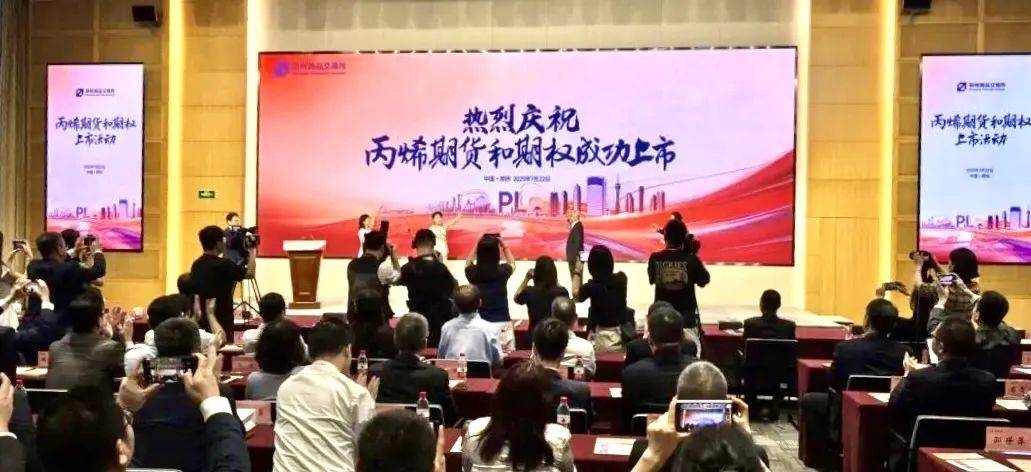
现场 | 炼化一体化项目如何优化效率?丙烯期货和期权上市赋能烯烃产业链
Sou Hu Cai Jing· 2025-07-22 09:28
Core Viewpoint - The listing of propylene futures and options on the Zhengzhou Commodity Exchange is expected to enhance risk management tools for the propylene industry, improve pricing mechanisms, and support the transformation of China's chemical products from scale advantages to pricing advantages [3][12][14]. Industry Overview - Propylene is a crucial chemical raw material used in various daily products, including food packaging, sports equipment, and clothing [1]. - In 2024, China's propylene production capacity is projected to reach 69.73 million tons, with an output of 53.41 million tons and a market size of approximately 384.5 billion yuan [10]. Market Dynamics - The demand for propylene is primarily driven by polypropylene (PP), which accounts for 67.7% of propylene usage, followed by acrylonitrile at 6.6% [5]. - From 2014 to 2024, China's polypropylene production is expected to grow from 15.53 million tons to 37.75 million tons, reflecting a cumulative increase of 143.1% and an average annual growth rate of 9.3% [7]. Product Applications - Propylene is used to produce synthetic fibers, resins, and rubber, with significant applications in textiles, home appliances, automotive, and packaging industries [7]. - The production of polypropylene fibers (polypropylene) is expanding, with a projected output of 442,000 tons in 2024, marking a 5.7% year-on-year increase [8][9]. Industry Players - Major companies in the propylene sector include Rongsheng Petrochemical, which has a designed annual production capacity of 1.8 million tons for polypropylene, and Jilin Chemical Fiber, which holds a 40% share of global acrylic fiber production capacity [7][9]. Risk Management and Efficiency - The introduction of propylene futures and options is anticipated to provide companies with more diverse risk management tools, enhancing operational flexibility and efficiency [12][14]. - Companies are expected to utilize these financial instruments to stabilize supply chains, lock in prices, and optimize production costs [12][14]. International Market Influence - The listing of propylene futures and options is expected to enhance the international pricing influence of Chinese propylene, facilitating better participation of domestic companies in global markets [15]. Regulatory Framework - The Zhengzhou Commodity Exchange is committed to maintaining market stability and supporting the real economy by optimizing contract rules and promoting market development [16].