资产多元化

Search documents
黄金,大涨!
Zheng Quan Shi Bao· 2025-12-22 10:37
Core Insights - Gold prices have surged, with spot and futures gold reaching historical highs, including London gold surpassing $4,400 per ounce, marking a year-to-date increase of over 67% [1] - Goldman Sachs predicts that if households or institutions increase their gold holdings as a risk diversification strategy, gold prices could significantly rise, forecasting a price of $4,900 per ounce by the end of 2026 [1] - The World Gold Council notes that 2025 saw gold achieving over 50 historical highs with a cumulative increase of over 60%, driven by geopolitical and economic uncertainties, a weakening dollar, and rising gold price momentum [1] Market Outlook - The World Gold Council anticipates that ongoing geopolitical and economic uncertainties will continue to influence the gold market outlook for 2026, with gold prices likely to reflect macroeconomic consensus expectations [2] - If the current environment persists, gold prices may remain within a range; however, based on this year's trends, unexpected performance in 2026 is possible [2] - Factors such as economic slowdown, further interest rate declines, and rising global risks could lead to a strong increase in gold prices, while effective policies from the Trump administration could exert downward pressure on gold prices [2] - The role of gold as a diversification tool and asset stabilizer remains crucial amid ongoing market volatility [2]
黄金,大涨!
证券时报· 2025-12-22 09:37
责编:叶舒筠 校对:高源 版权声明 证券时报各平台所有原创内容,未经书面授权,任何单位及个人不得转载。我社保留追 究相关 行 为主体 法律责任的权利。 转载与合作可联系证券时报小助理,微信ID:SecuritiesTimes 12 月 22 日,现货、期货黄金持续大涨,并不断刷新历史高点。其中,伦敦金现首次突破 4400 美元 / 盎司关口,再创历史新高,截至发稿,报 4401.274 美元 / 盎司,年内涨幅超 67% 。 伦敦金现 < 日 Q SPTAUUSDOZ.IDC 总量 昨结 4338.360 0 4401.274 4339.420 现手 0 +62.914 +1.45% 开盘 最高价 4403.710 持 仓 0 外 盘 0 4337.145 增 仓 盘 最低价 0 内 0 五日 स्त्र B4 日K 月K 周K 更多 < 0) 均价:0.000 叠加 -- 4403.790 - P Street R. 头一 4401.274 i 13:22 4400.889 0 13:22 4400.879 0 0.00% 4388.360 13:22 4400.910 0 0 13:22 4400.840 ...

现货黄金首次涨破4400美元,5000美元有可能吗?
Xin Lang Cai Jing· 2025-12-22 06:40
中新经纬 12月22日,现货黄金首次站上4400美元/盎司,现涨1.45%。 中国外汇投资研究院研究总监李钢分析,美联储货币政策预期发生实质性转向,通胀持续回落,就业市 场边际降温,全球利率中枢下移的预期不断强化,显著提升黄金的相对吸引力;其次,央行购金和机构 配置并未因高价而减弱,反而在去美元化和资产多元化逻辑下形成了稳定的结构性需求,为金价提供了 中长期支撑。 中新经纬 12月22日,现货黄金首次站上4400美元/盎司,现涨1.45%。 中国外汇投资研究院研究总监李钢分析,美联储货币政策预期发生实质性转向,通胀持续回落,就业市 场边际降温,全球利率中枢下移的预期不断强化,显著提升黄金的相对吸引力;其次,央行购金和机构 配置并未因高价而减弱,反而在去美元化和资产多元化逻辑下形成了稳定的结构性需求,为金价提供了 中长期支撑。 普通散户现在入场还来得及吗?李钢表示,金价创历史新高并不等同于"安全买点",价格对政策预期和 风险情绪高度敏感,波动性也明显放大,普通投资者不宜以追涨心态重仓介入。 近期,澳新银行预测,鉴于全球增长前景恶化,贸易紧张局势再起,美联储独立性受损以及股市抛售等 因素,2026年金价可能潜在突 ...
10月日本、英国增持美债超百亿美元,中国持仓下降,加拿大大降
Xin Lang Cai Jing· 2025-12-18 23:22
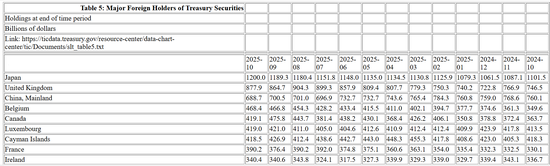
今年4月2日特朗普宣布对等关税措施后,一度引发引发金融市场动荡,29万亿美元的美国国债市场遭遇 了自2001年以来最严重的抛售。 美东时间12月18日周四,美国财政部公布国际资本流动报告(TIC)显示,日本、英国10月所持美国国 债增加,中国持仓减少,加拿大持仓大幅下降。 今年以来,美国国债持有量数据受到格外关注,市场担心美国总统特朗普的一些贸易和外交政策举措可 能削弱外国对美国资产的信心。 一些分析人士指出,金价飙升可能意味着全球正在寻求减少对美元的依赖、实现资产多元化。 美国财政部长斯科特·贝森特一贯否定这种"抛售美国"的担忧。他此前表示:"我们最近看到了非常、非 常强劲的外国需求。我们的国库券拍卖从未如此稳固,特别是来自海外买家的需求。" 最新的TIC数据反映了特朗普发起大规模加征关税以来,外国投资者对美债的需求情况。美债的海外需 求一直是债市的关注焦点,今年以来尤其如此。未来的TIC数据将被密切关注。目前,外国基金和各国 政府持有了美国在外流通美债的30%以上。 中国大陆是第三大美国国债持有者,其10月所持美债从7005亿美元降低至6887亿美元,单月降幅为118 亿美元。从2022年4月起,中国大陆 ...
金荣中国:白银午盘窄幅震荡盘整,等待回落支撑位多单布局
Sou Hu Cai Jing· 2025-12-18 09:49
Fundamental Analysis - Silver prices have surpassed historical records, reaching over $66.80 per ounce, marking one of the strongest rebounds in commodities for 2025, driven by ongoing market dynamics [1] - The current surge in silver prices is supported by a structural shortage in the global silver market for the fifth consecutive year, limited mining output, and increasing demand from renewable energy and electronics sectors [1] - Expectations of global monetary policy easing and declining real yields have reduced the opportunity cost of holding non-yielding assets, attracting institutional investors seeking asset diversification and inflation hedging, creating a rare resonance between industrial and investment demand [1] Price Trends - Silver has reached its long-term target's minimum threshold, with potential for further increases, ideally targeting $75 to $80, contingent on year-end market performance [3] - Silver prices have increased nearly 4% to $66.22 per ounce, with an intraday high of $66.87, reflecting a year-to-date increase of 129%, significantly outpacing gold's 65% rise [3] Market Dynamics - The internal dynamics of the Federal Reserve and the succession of its chairperson are significant variables affecting gold prices, with potential political interference raising concerns about the Fed's independence [4] - The dollar's performance is closely linked to global central bank policies, with a year-to-date decline of approximately 9.5%, the largest annual drop since 2017, providing support for gold prices [5] - Upcoming decisions from multiple central banks, including the Bank of England and the European Central Bank, are anticipated to further influence the dollar's exchange rate and, consequently, gold prices [5] Technical Analysis - Current silver market trends indicate an upward price trajectory, with support around $65.00 and a bullish outlook based on technical indicators [9] - Suggested trading strategies include positioning for long trades near the $65.00 support level, with stop-loss at $64.30 and profit targets between $68.60 and $69.00 [9]

Mhmarkets迈汇:白银领涨贵金属
Xin Lang Cai Jing· 2025-12-16 11:33
短期内,金银在触及阶段高位后出现技术性整理,属于上涨过程中的正常现象。随着关键经济数据陆续 公布,市场对未来利率路径的判断仍将反复修正,价格波动或有所加大。 对于后市,尽管白银相对黄金的估值已处于偏高区间,短线不排除出现轮动或回调,但在经济不确定性 尚未消散的环境下,贵金属作为对冲工具和资产多元化选择的核心地位依然稳固。综合来看, Mhmarkets迈汇认为,在货币政策预期、实物需求与资金流向多重因素支撑下,贵金属板块仍具备中长 期配置价值,本年度行情有望延续强势表现。 新浪合作大平台期货开户 安全快捷有保障 12月16日,2025年以来,贵金属市场延续强势格局,白银表现尤为突出。Mhmarkets迈汇表示,制造业 数据不及预期令市场重新押注货币环境趋于宽松,美元承压之下,资金加速流入贵金属板块,成为本轮 行情的重要背景。 从价格结构来看,白银大幅跑赢黄金,金银比快速回落至历史相对低位区间。Mhmarkets迈汇认为,这 一变化反映出市场风险偏好阶段性抬升,资金更倾向于选择弹性更大的品种,以捕捉降息预期下的超额 收益。 制造业活动走弱被视为本轮上涨的直接催化剂。相关数据大幅低于市场预期,强化了对未来利率下行的 ...

黄金上涨,白银调整!机构怎么看?
证券时报· 2025-12-14 03:23
Core Viewpoint - Precious metals have shown remarkable performance in the asset class this year, with gold prices rising by 60% and silver prices more than doubling [1]. Group 1: Precious Metal Performance - As of December 12, gold prices approached previous highs, with London gold rising by 0.47% to $4299.29 per ounce, marking a year-to-date increase of 63.83%. In contrast, silver prices fell by 2.5% to $61.92 per ounce, with a year-to-date increase of 114.35% [3][4]. - The London silver market experienced a significant drop, with intraday declines exceeding 3%, and COMEX silver futures closing down by 3.88% [4]. Group 2: Institutional Outlook on Gold and Silver - Institutions continue to favor gold, with Goldman Sachs predicting a price of $4900 per ounce by the end of 2026, driven by increased demand for gold as a risk diversification tool amid global economic uncertainties [7][8]. - Carsten Menke from Swiss Bank highlighted two factors that could trigger a renewed surge in silver prices: its inclusion in the U.S. critical minerals list and rising market expectations for a Federal Reserve rate cut. However, he expressed caution regarding the sustainability of silver's price increase [6][7]. Group 3: Market Dynamics and Future Projections - The investment demand for gold is expected to remain robust against the backdrop of slowing U.S. economic growth, declining interest rates, and a weakening dollar, although gold's recent performance has lagged behind silver [7]. - The World Gold Council anticipates that ongoing geopolitical and economic uncertainties will continue to influence the gold market, with potential for gold prices to fluctuate within a range unless significant economic changes occur [8].

黄金上涨,白银调整!机构怎么看?
券商中国· 2025-12-13 23:30
Core Viewpoint - Precious metals have shown remarkable performance in the asset class this year, with gold prices rising by 60% and silver prices more than doubling [1] Group 1: Precious Metals Performance - As of December 12, gold prices approached previous highs, with London gold rising by 0.47% to $4299.29 per ounce, and year-to-date gains reaching 63.83% [2][3] - In contrast, silver prices experienced a significant drop, closing down 2.5% at $61.92 per ounce, with a year-to-date increase of 114.35% [2][3] Group 2: Institutional Outlook on Gold and Silver - Institutions remain more optimistic about gold compared to silver, with Goldman Sachs predicting gold prices could reach $4900 per ounce by the end of 2026, driven by increased demand for risk diversification amid economic uncertainties [5] - The World Gold Council anticipates that ongoing geopolitical and economic uncertainties will continue to influence the gold market, with potential for gold prices to rise if economic growth slows and interest rates decline [6] Group 3: Factors Influencing Silver Prices - Carsten Menke from Swiss Bank highlighted two triggers for silver's price movements: its inclusion in the U.S. critical minerals list and rising market expectations for a Federal Reserve rate cut, which could boost bullish sentiment [4] - Despite the positive fundamentals for silver, the price reaction appears excessive, leading to a tactical downgrade of silver's outlook to neutral while maintaining a constructive view on gold [4]
中国增持235亿美债,特朗普松了一口气,美经济学家:中国另有目的
Sou Hu Cai Jing· 2025-12-11 13:24
美国财政部在2025年4月16日放出了一份报告,里面记录了2月份海外投资者对美债的动向。 三大债主日本、中国、英国都加了码,日本增加466亿美元,总持仓11259亿美元稳坐头把交椅,中国跟上235亿美元,持仓升到7843亿美元,英国也添了101 亿美元,总持仓8094亿美元。 这消息一出,特朗普估计是喘了口气,因为他挥舞关税大棒,对中国商品征收高关税,试图逼中国让步买更多美国货,顺带填补美国堆积如山的财政窟窿。 美债市场当时正晃荡,利率上蹿下跳,投资者信心摇摆,这增持数据像一针镇静剂,让10年期美债收益率从4.588%降到4.306%,30年期从5%以上掉到 4.762%,美国政府少掏了不少利息钱。 2025年1月特朗普就职后,对全球商品开征关税,尤其是中国产品,关税一度推到125%,这让美国当月赤字暴增2300多亿美元,美债期货跌了5%,是2001 年"9·11"事件后最狠的一次。 他本意是通过关税挤压中国出口,换取中国多买美国债来缓解美国债务压力,美国上半年赤字就超1.3万亿,6月要还6.5万亿债。 中国增持235亿,看起来像是给了特朗普一个台阶,让他觉得中国在"示弱求和"。但实际情况没那么简单,美国经济 ...
投资中的择时难题被我破解了!
雪球· 2025-12-11 13:00
Core Viewpoint - The article discusses the differences in investment experiences between the Chinese A-share market and the US stock market, highlighting the challenges of timing the market in A-shares compared to the more stable performance of US stocks [3][4][6]. Group 1: Market Performance Comparison - Over the past 20 years, the annualized returns of the CSI 300 and the S&P 500 have been similar, around 8%-9% [3]. - Despite similar returns, investors feel that making money in the US stock market is easier due to its relatively stable performance [4][6]. - The A-share market experiences significant volatility, with most returns concentrated in short bursts, making it difficult for investors to profit without precise timing [9][10]. Group 2: Challenges of Market Timing - Market timing is inherently difficult due to unpredictable short-term fluctuations influenced by sudden events, emotions, and policies [19]. - Successful market timing requires a strong psychological disposition, as it involves buying during significant downturns and selling during peaks, which is challenging for most investors [21][28]. - Ordinary investors lack the advantages that institutional investors have in terms of information, research capabilities, and tools, making it harder for them to time the market effectively [28]. Group 3: Strategies for Investment - To navigate the difficulties of market timing, the article suggests focusing on investment strategies that yield stable and consistent returns over time, reducing the need for precise timing [30][32]. - A diversified approach across different assets and strategies can help ensure that some components of the portfolio remain effective regardless of market conditions, leading to smoother returns [39][47]. - The "Snowball Three-Point Method" is highlighted as a strategy that emphasizes asset diversification and the use of various fund strategies to mitigate risks and enhance long-term returns [47].