跨界转型

Search documents
股价大涨!长荣股份公告:拟0元收购甘肃一新能源公司!标的公司手握当地10万千瓦光伏发电项目
Mei Ri Jing Ji Xin Wen· 2025-09-18 04:25
Core Viewpoint - Changrong Co., Ltd. plans to acquire 100% equity of Jinchang Enchi New Energy Technology Co., Ltd. from Jinchang Enhui New Energy Equipment Co., Ltd. for a consideration of 0 yuan, as Enchi has not yet fulfilled its capital contribution obligations or commenced actual operations [1][2]. Group 1: Acquisition Details - The acquisition will require Changrong to fulfill a capital contribution obligation and inject an additional 60 million yuan into Enchi after the transfer [1][2]. - Enchi holds a construction index for a 100,000-kilowatt photovoltaic power generation project in Jinchang City, which is a significant asset for the company [3][4]. Group 2: Strategic Implications - This acquisition marks a critical step for Changrong in diversifying into the new energy sector while maintaining its traditional equipment manufacturing business [1][4]. - The investment aligns with the company's strategic planning and is expected to have a positive long-term impact on its development [4][6]. Group 3: Market Context - The photovoltaic industry is supported by national policies, presenting valuable development opportunities for Changrong [6]. - The company acknowledges potential challenges and risks associated with the new energy sector, including uncertainties in policies and market conditions [6]. Group 4: Market Reaction - Following the announcement, Changrong's stock price surged by 5.56% as of September 18 [7].



长荣股份0元入主新能源公司:6000万元增资押注绿电,标的手握10万千瓦光伏发电项目
Mei Ri Jing Ji Xin Wen· 2025-09-17 13:48
Core Viewpoint - The company, Changrong Co., plans to acquire 100% equity of Jinchang Enchi New Energy Technology Co., Ltd. from Jinchang Enhui New Energy Equipment Co., Ltd. for a consideration of 0 yuan, as Enchi New Energy has not yet fulfilled its registered capital contribution and has not commenced actual production activities [1][2]. Group 1: Acquisition Details - The acquisition will require Changrong Co. to fulfill the capital contribution obligation and inject an additional 60 million yuan into Enchi New Energy, which has a registered capital of 10 million yuan [1][2]. - Following the acquisition, Enchi New Energy will become a wholly-owned subsidiary of Changrong Co. and will be included in its consolidated financial statements [2]. Group 2: Strategic Importance - Enchi New Energy holds significant value due to its possession of a construction index for a 100,000-kilowatt photovoltaic power generation project in Jinchang City, which has been filed with the Jinchang Development and Reform Commission [3]. - The investment aligns with Changrong Co.'s strategic planning and operational development needs, aiming to positively impact the company's long-term growth [4]. Group 3: Market Context and Challenges - The move into the renewable energy sector, particularly photovoltaic power, is seen as a response to the need for new growth points amid a slowing industry growth and increasing competition in the traditional printing equipment manufacturing sector [6]. - The company acknowledges the potential risks associated with the investment, including uncertainties related to policies, regulations, and market conditions that could affect project implementation [6].
卖老人鞋的跨界卖食品,足力健转型谋自救
Xi Niu Cai Jing· 2025-09-16 06:31
Core Viewpoint - The company, originally known for its elderly footwear, has shifted to the organic food market, opening over 30 stores and acquiring 80,000 members within three months, despite facing significant financial and legal challenges [2][3][4]. Group 1: Company Background - The company, founded in 2014 by Zhang Jingkang, initially focused on producing shoes for the elderly, achieving rapid sales growth and reaching 4 billion yuan in revenue by 2019 [3]. - The brand gained popularity through effective marketing strategies, including celebrity endorsements and targeted advertising [3]. Group 2: Financial and Legal Challenges - The company has been involved in over 90 legal cases, with a total amount in dispute reaching 808 million yuan, and has been listed multiple times as a dishonest executor [4]. - The founder has faced personal legal issues, including restrictions on high consumption, with total liabilities nearing 200 million yuan [4]. Group 3: Transition to Organic Food - In May 2025, the company announced its entry into the organic food market, offering a wide range of products and adopting a low-price strategy [4]. - The operational strategy mirrors its previous footwear business, utilizing both online and offline channels for promotion, including a membership system that has already generated at least 24 million yuan in fees [4]. - The company plans to expand its organic food stores to 150 by the end of 2025 and 600 by 2026, aiming to replicate its past success in a new industry [4].
东珠生态拟收购凯睿星通跨界卫星通信领域
Zheng Quan Ri Bao· 2025-09-10 16:41
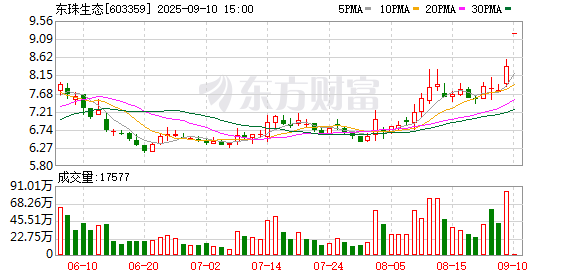
Core Viewpoint - Dongzhu Ecology is planning a strategic transformation by entering the satellite communication sector through the acquisition of 89.49% of Kairui Xingtong, aiming to create a second growth curve and enhance profitability [2][3]. Group 1: Company Performance - Dongzhu Ecology has faced declining performance, with revenues of 829 million yuan and 376 million yuan in 2023 and 2024 respectively, and net losses of 315 million yuan and 630 million yuan [2]. - In the first half of 2025, the company reported revenues of 208 million yuan, a year-on-year decrease of 23.04%, and a net loss of approximately 9.54 million yuan [2]. Group 2: Acquisition Details - The acquisition involves Dongzhu Ecology purchasing Kairui Xingtong, a high-tech company specializing in satellite communication technology, including products like satellite communication baseband products and terminal products [2][3]. - Kairui Xingtong has shown rapid growth, with revenues of 149 million yuan, 258 million yuan, and 110 million yuan for 2023, 2024, and the first half of 2025 respectively, alongside net profits of 8.95 million yuan, 41.50 million yuan, and 7.82 million yuan [3]. Group 3: Strategic Implications - The acquisition is expected to facilitate Dongzhu Ecology's transition into the satellite communication and space information technology sectors, potentially increasing its sustainable profitability [3]. - Experts suggest that for the transformation to be successful, Dongzhu Ecology must establish a reasonable organizational structure and collaborative mechanisms to ensure synergy between the two business areas [4].

华东重机离场光伏:80亿豪赌终成“梦碎”样本
Xin Lang Cai Jing· 2025-09-10 08:24
Core Viewpoint - The announcement of bankruptcy restructuring for Huadong Guangneng Technology (Xuzhou) Co., Ltd. marks the failure of Huadong Heavy Machinery's ambitious investment of 8 billion yuan in the photovoltaic industry, serving as a cautionary tale for capital markets regarding blind pursuit of trends [1] Group 1: Aggressive Expansion - In 2023, Huadong Heavy Machinery initiated aggressive expansion into the photovoltaic sector, investing a total of 8 billion yuan, including 2 billion yuan for a 10GW solar cell production base and an additional 6 billion yuan for a 10GW N-type cell project [2] - Despite a revenue increase from 0.77 million yuan in 2023 to 2.96 million yuan in 2024, the photovoltaic business suffered a gross margin of -15.75%, becoming a significant drag on overall performance [2] Group 2: Debt Crisis - The failure of the photovoltaic business triggered a debt crisis, leading to the court's acceptance of a bankruptcy restructuring application for Huadong Guangneng Technology (Xuzhou) Co., Ltd. in April 2025 [3] - The total debt amount for Huadong Guangneng and its parent company reached 11.3 billion yuan, with the reported debt claims amounting to 6.08 billion yuan for Huadong Guangneng alone [3] - In the first half of 2025, the company's operating cash flow turned negative at -1.89 million yuan, a decline of 169.92% year-on-year [3] Group 3: Transformation Challenges - Huadong Heavy Machinery's ongoing struggles reflect a long-standing issue of cross-industry dependency, having attempted four major transformations since 2016, including a failed acquisition of a film company and a significant write-off of its machine tool business [4] - Following the photovoltaic failure, the company shifted focus to the GPU chip sector, acquiring Ruixin Tuxin at a nearly 70-fold premium, yet this segment generated only 12,400 yuan in revenue in the first half of 2025, with ongoing net losses [4] Group 4: Future Prospects - After divesting from the photovoltaic business, Huadong Heavy Machinery returned to its core business of container handling equipment, achieving 3.62 million yuan in revenue in the first half of 2025, accounting for 99.4% of total revenue with a gross margin of 26.17% [5] - The company faces uncertainty in overcoming technological barriers in the chip sector and finding acquisition opportunities post-photovoltaic industry cycle [5] - The conclusion of this 8 billion yuan gamble may signify a rational return for capital markets as the photovoltaic industry enters a new phase of capacity clearing and policy constraints [5]

向日葵筹划收购兮璞材料控股权+贝得药业40%股权,拟跨界半导体谋破业绩困局
Mei Ri Jing Ji Xin Wen· 2025-09-07 14:40
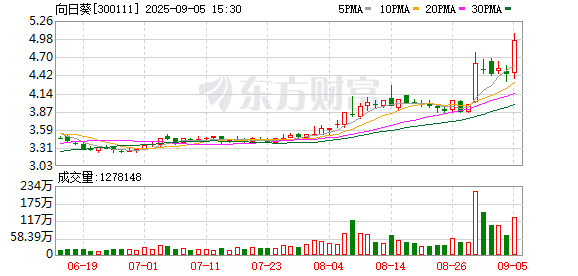
Core Viewpoint - The company, Sunflower (SZ300111), is planning to acquire controlling stakes in two companies, Zhangzhou Xipu Materials Technology Co., Ltd. and 40% of Zhejiang Beid Pharmaceutical Co., Ltd., through a combination of share issuance and cash payment, marking a significant strategic shift into the semiconductor sector from pharmaceuticals [2][3][5]. Group 1: Transaction Overview - The transaction is expected to constitute a major asset restructuring as defined by the regulations [2][3]. - Sunflower currently holds a 60% stake in Beid Pharmaceutical, and the acquisition of the remaining 40% will make it a wholly-owned subsidiary [3]. - The acquisition of Xipu Materials will allow Sunflower to enter the semiconductor materials market, diversifying its business operations [5][6]. Group 2: Financial Context - Sunflower's recent financial performance has shown a decline, with a revenue of 144 million yuan in the first half of 2025, down 8.33% year-on-year, and a net profit of 1.16 million yuan, down 35.68% [5]. - The decline is attributed to reduced sales profits, increased expenses, and higher inventory write-downs, particularly in the pharmaceutical sector [5][6]. Group 3: Strategic Intent - The company aims to pursue an external growth strategy to enhance operational efficiency while stabilizing its existing business [6]. - The acquisition of Xipu Materials is seen as a response to the pressures faced in the pharmaceutical sector, seeking new growth avenues in the semiconductor industry [5][6].

从“道路运输”到A股“风口收割机”,德新科技跨界押注锂电、机器人热门领域,股价狂揽4连板
Sou Hu Cai Jing· 2025-09-04 09:52
Group 1 - The core viewpoint is that Dexin Technology has successfully transitioned from a transportation company to a player in the lithium battery, new energy, and robotics sectors, experiencing significant stock price increases and revenue growth [1][2]. - Dexin Technology's stock price rose from over 18 yuan to 25.6 yuan between August 29 and September 3, marking a continuous four-day limit-up [1]. - The company reported a revenue of 251 million yuan in the first half of the year, representing a year-on-year growth of 90.5%, and a net profit of 22.35 million yuan, nearly doubling compared to the previous year [1]. Group 2 - The company has diversified its business by acquiring 100% of Dongguan Zhihong Precision Mould Co., Ltd. in 2021, marking its entry into the lithium battery sector [1]. - Dexin Technology's precision manufacturing business is expected to contribute 80% of its revenue in 2024, focusing on lithium battery molds, new energy equipment, and precision reducers for robots [1]. - Despite the positive market response, the company issued announcements to temper market enthusiasm, indicating uncertainty about the rapid stock price increase [2].

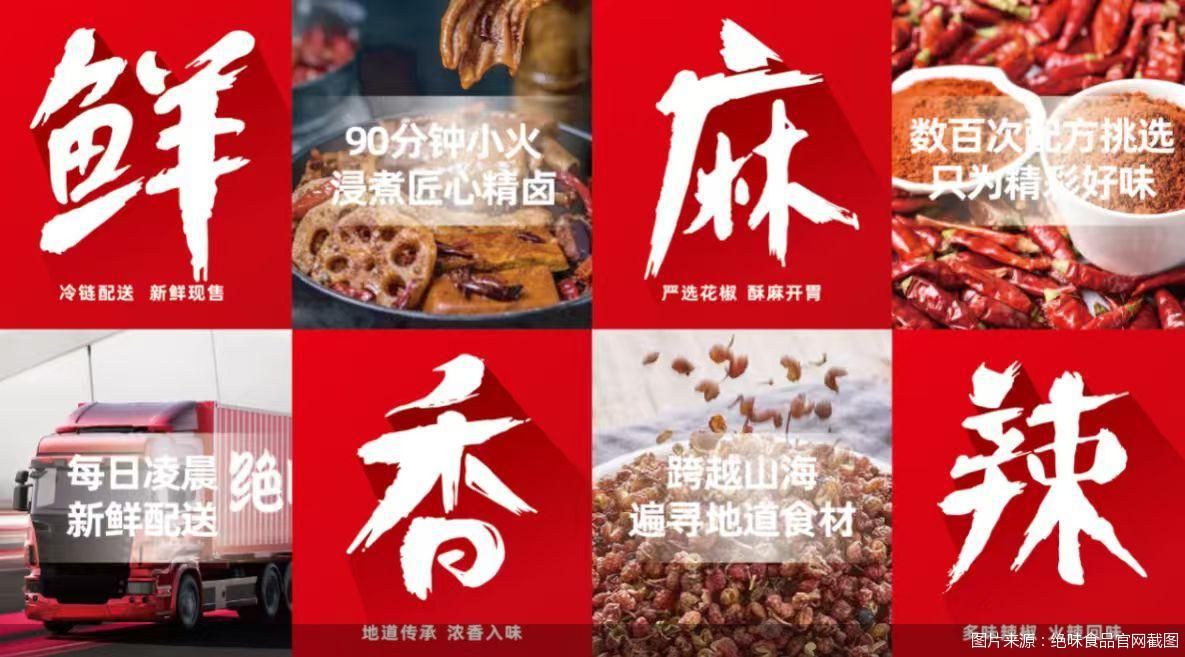
“卤味三巨头”上半年:门店缩减超千家,探索新业务寻增量
Bei Jing Shang Bao· 2025-09-01 14:32
Core Viewpoint - The "three giants" of the marinated food industry, namely Juewei Food, Huangshanghuang, and Zhouheiya, are facing declining revenues and profits due to a drop in sales and a reduction in store numbers, prompting them to seek new growth opportunities through diversification and operational efficiency improvements [2][3][4]. Group 1: Financial Performance - Juewei Food reported a revenue of 2.82 billion yuan for the first half of 2025, a year-on-year decrease of 15.57%, and a net profit of 175 million yuan, down 40.71%, making it the only brand with declines in both revenue and profit [2]. - Huangshanghuang achieved a revenue of 984 million yuan, down 7.19%, but its net profit increased by 26.9% to approximately 76.92 million yuan [2]. - Zhouheiya's revenue was 1.22 billion yuan, a decrease of 2.9%, while its net profit surged by 228% to 108 million yuan [2]. Group 2: Store Operations - The reduction in store numbers and declining sales of marinated products are significant factors affecting revenue for the "three giants" [3]. - Huangshanghuang's total store count decreased by 762 to 2,898, while Zhouheiya's stores fell by 167 to 2,864 [3]. - Juewei Food did not disclose its current store count but reported a reduction of 981 stores by mid-2024, totaling 14,969 stores [3]. Group 3: Market Trends and Challenges - The marinated food sector is experiencing a decline in sales, with Huangshanghuang's marinated meat product sales down 15.69% and Zhouheiya's total sales down 1.61% [4]. - Juewei Food's revenue from fresh products, which account for 76.59% of its total, fell by 19.15%, with poultry product revenue dropping by 20.79% [4]. - Analysts suggest that while cost-cutting measures can enhance short-term profitability, long-term success will require innovation and market expansion [4]. Group 4: Strategic Adjustments - The "three giants" are shifting focus from rapid store expansion to enhancing operational efficiency and exploring new sales channels [8]. - Zhouheiya has improved single-store sales by optimizing store structure and extending operating hours, achieving a revenue increase of 2.15% to approximately 712 million yuan [8]. - Huangshanghuang is also focusing on refined store operations and enhancing single-store revenue through various strategies [8]. Group 5: Diversification Efforts - Zhouheiya is diversifying by launching a coconut water brand and developing compound seasonings and convenience food products [9]. - Huangshanghuang plans to acquire a 51% stake in a freeze-dried food company to expand its product offerings [9]. - Juewei Food is venturing into casual dining with a new store concept and has invested in various sectors, although it has faced significant losses in recent years [10].


生猪毛利率暴跌 挂面龙头克明食品挂在猪肉上 二季度净利暴跌7成
Zhong Jin Zai Xian· 2025-08-29 12:26
Core Viewpoint - The cross-industry acquisition strategy of Kemin Foods has led to significant financial burdens rather than growth, particularly due to its new pig farming business which has underperformed and negatively impacted overall performance [2][3][9] Financial Performance - In the first half of 2025, Kemin Foods reported a revenue of 2.138 billion yuan, a year-on-year decline of 10.85%, with a net profit of 100 million yuan, down 2.34% [2] - The second quarter of 2025 was particularly poor, with revenue of 1.017 billion yuan, a decrease of 7.68%, and a net profit of 14.53 million yuan, a staggering drop of 73.04% [2] - The pig farming segment generated 245 million yuan in revenue, an increase of 18.73%, but costs surged by 41.68%, leading to a significant drop in gross margin [3] - The core business of noodle products saw a revenue decline of 12.44% to 1.148 billion yuan, accounting for 53.70% of total revenue [4] Inventory and Debt Situation - Kemin Foods faced a substantial increase in inventory, with noodle stock rising by 94.78% to 13,529.55 tons, indicating poor sales [4] - The company's debt situation worsened, with a debt-to-asset ratio of 56.42% as of June 2025, up from 33.33% in 2021, reflecting increasing financial pressure [4] Dividend and Financial Strategy - Despite financial strain, Kemin Foods proposed a cash dividend of 156 million yuan, exceeding its net profit, raising concerns among investors [5] - The total amount for dividends and share buybacks reached 292 million yuan, representing 199.90% of net profit [5] Management and Leadership Challenges - The transition in leadership to Chen Hong has coincided with declining performance, yet executive compensation has increased significantly, raising investor concerns [8] - Chen Hong's salary rose to 699,300 yuan in 2024, a substantial increase from previous years, alongside similar raises for other executives [8] Industry Context - Kemin Foods' pig farming business struggles despite a generally profitable environment for 90% of pig farming companies in 2024, with its subsidiary reporting a loss of 94.7 million yuan [6] - The company’s pig sales in July 2025 showed a decline in both volume and revenue, indicating ongoing challenges in this segment [7] Future Outlook - Kemin Foods remains hopeful for a turnaround in its pig farming business, projecting a break-even point in 2025, contingent on market conditions and production costs [9] - The company emphasizes the need for better synergy between new and existing businesses, as well as management expertise, to avoid pitfalls in future cross-industry ventures [9]

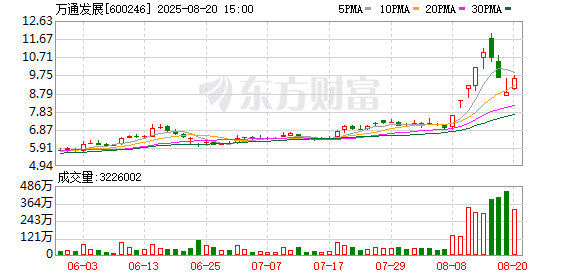
万通发展董事长突遭拘留 8.54亿元投资芯片公司再谋转型 股价又提前涨停被疑“老剧本”重演
Hua Xia Shi Bao· 2025-08-20 16:23
Core Viewpoint - The recent detention of Wang Yihui, the actual controller and chairman of Wantong Development, raises concerns about the company's ongoing transformation and investment strategy, particularly in light of its recent announcement to invest in a technology firm [2][3][4]. Group 1: Company Developments - On August 19, Wantong Development announced that its chairman Wang Yihui was detained by the Beijing Public Security Bureau, with the investigation unrelated to the company's daily operations [3]. - Following the detention, the company appointed Qian Jinzhu, a board member and CEO, to assume the responsibilities of the chairman until Wang Yihui resumes his duties or a new chairman is elected [3]. - The company maintains that its governance structure and internal control systems are robust, ensuring that daily operations will not be significantly affected by this incident [3]. Group 2: Investment Strategy - Wantong Development plans to invest 854 million yuan (approximately 8.54 billion yuan) to acquire approximately 63% of Beijing Shuduo Information Technology Co., Ltd., which specializes in PCIe high-speed switching chips [5][6]. - The investment in Shuduo Technology is seen as a strategic move to enter the high-tech sector, particularly in the AI and server markets, where PCIe chips are critical [5][6]. - Shuduo Technology is currently in a loss-making position, with a projected net profit of -138 million yuan for 2024, although its revenue is expected to double compared to 2023 [6]. Group 3: Market Reactions - Following the announcement of the chairman's detention, Wantong Development's stock price fluctuated significantly, rising from around 7 yuan to nearly 12 yuan before dropping back to approximately 9 yuan [4]. - The stock experienced a rebound on August 20, closing at 9.59 yuan, reflecting an increase of 8.36% [4]. - Investors have expressed concerns about the company's ability to execute its transformation strategy effectively, especially given the recent history of a failed acquisition attempt earlier in the year [7][8]. Group 4: Regulatory Scrutiny - The company received inquiries from the Shanghai Stock Exchange regarding the rationale behind the investment in Shuduo Technology, particularly concerning its ongoing losses and the potential impact on Wantong Development's operational capabilities [8][9]. - Similar scrutiny was faced during the earlier attempt to acquire Solstice Optoelectronics, which was ultimately terminated due to changes in the transaction environment and disagreements on commercial terms [7][8].