
金融监管

Search documents
银行业被罚超26亿元 上百人被“终身禁业”
Jin Rong Shi Bao· 2026-01-23 01:32
Core Insights - In 2025, financial regulatory authorities issued a total of 2,588 fines to banking institutions, amounting to 2.641 billion yuan, marking a significant increase from 2024 [1][2] - The regulatory approach has shifted from punishing institutions to holding individual employees accountable, with over 3,000 banking personnel penalized [1][9] - The trend of "strict regulation, strong accountability, and zero tolerance" has become normalized, focusing on quality and effectiveness rather than broad coverage [1][2] Regulatory Trends - The number of large fines (over 1 million yuan) issued to banking institutions increased significantly, with 455 such fines in 2025, including 31 fines exceeding 10 million yuan [2][3] - The majority of penalties were concentrated in the second half of 2025, with a notable spike in fines towards the end of the year [3][4] - The largest single fine in 2025 reached 97.9 million yuan, attributed to poor management practices across various banking operations [3] Types of Violations - Major areas of violations included credit business, anti-money laundering, and internal control systems, with nearly half of the large fines related to credit business infractions [6][8] - Internet loan business violations emerged as a significant concern, with several banks penalized for inadequate risk management during rapid business expansion [7][8] - Anti-money laundering fines surged to 1,381 in 2025, a 185.92% increase from 2024, reflecting heightened regulatory scrutiny [8] Individual Accountability - The "double penalty" system has led to a substantial increase in fines against individual banking personnel, with 3,933 personal fines issued in 2025 [9][10] - Over 100 banking employees received lifetime bans from the industry, a notable rise compared to previous years [10][11] - The regulatory focus on individual accountability aims to enhance compliance awareness and risk management within financial institutions [11] Future Outlook - The trend of stringent regulation and risk prevention is expected to continue into 2026, with a shift towards behavior-based assessments rather than merely financial metrics [12] - Compliance capabilities are anticipated to become essential for the survival of banks, with a focus on proactive governance and integration into business processes [12] - Regulatory attention will likely center on corporate governance, data security, consumer rights protection, and compliance with green and inclusive finance policies [12]
特朗普现身达沃斯,与众亿万富翁为伍,欲阐述其住房减负计划
Xin Lang Cai Jing· 2026-01-20 09:32
Core Insights - President Donald Trump aims to convince the American public of his ability to lower housing costs during his speech at the World Economic Forum in Davos, despite the high cost of living in the area [1][8] - Trump's focus has shifted from populist themes during his campaign to engaging with wealthy elites, spending more time with billionaires than addressing the concerns of working-class voters [1][8] - Recent polls indicate that approximately 60% of American adults believe Trump's policies have increased living costs, with only 16% crediting him for significant contributions to lowering these costs [2][9] Economic Policies and Wealth Distribution - Since Trump took office in 2017, the wealth of the top 0.1% of Americans has increased by $11.98 trillion, while the bottom 50% saw only a $2.94 trillion increase, highlighting a significant wealth gap [4][10] - Trump's proposals to address housing costs, such as purchasing $200 billion in mortgage debt to lower rates, have been criticized for not addressing the core issues of housing supply shortages and rising prices [4][10] - The policies introduced during Trump's first year, which favored wealthy individuals, included tax cuts and deregulation, but have not effectively addressed the needs of the working class [5][11] Political Strategy and Risks - Trump's strategy of courting billionaires and foreign investments is seen as politically risky, as voters are more concerned about their economic situations than his relationships with the wealthy [2][9] - The disparity in tax benefits is evident, with middle-class families saving only $800 to $1,200 annually from tax reforms, while the top 10% save an average of $13,600, and those earning over a million dollars save around $66,510 [12][11] - Trump's connections with billionaires are emphasized as a strength in his campaign, with administration officials claiming that these relationships will lead to job creation and economic growth for the middle class [13][14]
“一行一局一会”工作会议释放哪些信号?
Zheng Quan Ri Bao· 2026-01-19 16:11
Core Viewpoint - The annual work meetings of the People's Bank of China, the National Financial Regulatory Administration, and the China Securities Regulatory Commission indicate a stable policy direction for 2026, with a focus on enhancing existing frameworks and mechanisms to support economic growth and risk management [1][2]. Group 1: Policy Continuity and Focus - The policy themes of stabilizing growth, promoting high-quality development, and preventing risks remain consistent, providing a key support for market expectations [2]. - The central bank emphasizes a flexible and efficient use of monetary policy tools, including potential interest rate cuts, while ensuring that policies effectively reach the real economy [2]. - The financial "five major articles" will continue to be a focus, with an aim to optimize the financial supply structure and inject sustainable internal momentum into economic development [2]. Group 2: Risk Management - The commitment to risk prevention remains strong, with the central bank and regulatory bodies focusing on improving macro-prudential tools and managing existing risks while preventing new ones [3]. - The emphasis on preventing significant market fluctuations reflects a high level of concern regarding financial stability [3]. Group 3: Enhanced Coordination - Increased coordination among the three departments is crucial in the current economic environment, where the marginal effects of single-department actions are limited [4]. - The focus has shifted from merely expanding financial scale to optimizing structure and improving efficiency, with unified goals across different regulatory levels [4]. Group 4: Forward-Looking and Mechanized Approach - The meetings signal a stronger emphasis on the "15th Five-Year Plan," indicating a shift towards long-term institutional development [6]. - Mechanisms for providing liquidity to non-bank institutions and optimizing related arrangements are being institutionalized, reflecting a transition from effective measures to systematic approaches [6]. - The overall strategy for 2026 combines continuity with innovation, aiming for a more systematic, coordinated, and forward-looking financial regulation framework [6][7].
去年前11个月全国检察机关起诉财务造假、内幕交易、操纵市场等证券犯罪380人
Zheng Quan Ri Bao Wang· 2026-01-19 12:09
Group 1 - The core viewpoint of the news is that the judicial and financial regulatory authorities are actively combating illegal financial activities and enhancing the legal framework for financial development in China [1] Group 2 - From January to November 2025, 22,000 individuals were prosecuted for financial fraud and crimes that disrupt financial management order [1] - A total of 380 individuals were prosecuted for securities crimes, including financial fraud, insider trading, and market manipulation during the same period [1] - The authorities prosecuted 2,684 individuals for money laundering crimes and 12,000 individuals for tax-related crimes [1] - Joint actions were taken with the tax authorities to regulate tax issues in retail oil enterprises and with the Coast Guard to combat maritime smuggling, resulting in 8,972 prosecutions for smuggling crimes [1]
化解中小金融机构风险 官方要求守住不“爆雷”底线
Zhong Guo Jing Ying Bao· 2026-01-19 08:41
Core Viewpoint - The National Financial Supervision Administration emphasizes the need to effectively manage risks in small and medium-sized financial institutions, focusing on resolving existing risks and preventing new ones, while maintaining a "no explosion" bottom line [1][2]. Group 1: Existing Risks - Existing risks in small and medium-sized financial institutions are primarily concentrated in four areas: non-performing assets, capital strength, corporate governance, and regional concentration [1]. - The quality of assets is a significant concern, particularly due to rising non-performing loan rates in real estate and local government financing, as well as increased default pressures on retail loans to small and micro enterprises [3][4]. - Issues such as complex ownership structures and weak internal controls exacerbate the risks, especially in economically underdeveloped regions [4]. Group 2: Potential Incremental Risks - Incremental risks are identified in three main areas: rough operating models, changes in the external environment, and moral hazards [1][5]. - Some institutions may engage in high-risk business practices or expand into complex financial derivatives due to pressure from narrowing interest margins [5]. - The ongoing low-interest-rate environment and structural disparities in economic recovery could lead to new credit risks, while competition from larger banks may force smaller institutions to lower risk standards [5]. Group 3: Regulatory Progress and Future Directions - The Financial Supervision Administration has made significant progress in risk management for small and medium-sized financial institutions, with a notable reduction in the number and scale of high-risk institutions [2]. - Future work will focus on a structured approach to risk resolution, emphasizing the responsibilities of various stakeholders and the establishment of a normalized risk disposal mechanism [2]. - The administration aims to enhance regulatory measures to prevent the accumulation of new risks through early correction mechanisms and strict enforcement against illegal activities [5].
结构性货币政策加码——政策周观察第64期
一瑜中的· 2026-01-18 14:59
Core Viewpoint - The article emphasizes the importance of anti-corruption measures and structural monetary policies in China, highlighting the need for strict political discipline and the promotion of economic growth through targeted financial support [2][3][4]. Group 1: Anti-Corruption Focus - The Central Commission for Discipline Inspection (CCDI) meeting underscored the need for strict adherence to political and election discipline, aiming to eliminate individuals with dual loyalties and inconsistent actions [2][9]. - Key sectors targeted for corruption eradication include finance, state-owned enterprises, energy, education, and public bidding, with a focus on new forms of corruption and hidden issues [2][14]. Group 2: Monetary Policy Adjustments - The People's Bank of China announced a 0.25 percentage point reduction in various structural monetary policy tool rates, aiming to support small and private enterprises [3][15]. - New measures include increasing the quota for agricultural and small enterprise loans by 500 billion yuan and establishing a separate quota of 1 trillion yuan for private enterprise loans [15][16]. Group 3: Financial and Capital Market Developments - The National Financial Regulatory Administration emphasized the need to improve the quality of small financial institutions and regulate industry order, while the China Securities Regulatory Commission focused on enhancing market monitoring and preventing excessive speculation [4][17]. - The minimum margin requirement for financing on three exchanges was raised from 80% to 100%, indicating a tightening of market conditions [4][11]. Group 4: Industry Initiatives - The Ministry of Industry and Information Technology outlined plans for the development of the new energy vehicle sector, including the acceleration of solid-state battery technology and advanced autonomous driving [4][12]. - A plan for the high-quality development of industrial internet platforms was introduced, aiming for over 450 influential platforms and a connection of more than 120 million industrial devices by 2028 [4][12]. Group 5: National Reserve Law - The National Development and Reform Commission released a draft for the National Reserve Security Law, which includes provisions for the storage of essential agricultural products, energy, and emergency supplies [5][19].


非银金融周报:融资保证金比例上调,金监总局部署2026年监管工作-20260118
HUAXI Securities· 2026-01-18 14:52
Investment Rating - The industry rating is "Recommended" [5] Core Insights - The adjustment of the financing margin ratio from 80% to 100% aims to cool down excessive leverage and maintain market stability. This change will take effect on January 19, 2026, and applies only to new financing contracts [3][4][15][7] - As of January 14, 2026, the total market financing balance reached a historical high of 2.68 trillion yuan, with the margin balance accounting for 2.59% of the A-share market capitalization, indicating an increase from the average level of 2.40% in 2025 [4][15] - The non-bank financial sector index fell by 2.63%, underperforming the CSI 300 index by 2.06 percentage points, ranking 26th among all primary industries. The securities sector decreased by 2.21%, while the financial technology sector increased by 1.34% [2][13] Summary by Sections Market and Sector Performance - The average daily trading volume of A-shares for the week of January 11-17, 2026, was 34.651 billion yuan, a 21.5% increase week-on-week and a 189.4% increase year-on-year. The average trading volume for the first quarter of 2026 is 31.585 billion yuan, up 107.7% from the same period in 2025 [19] - In the same week, three new stocks were issued, raising 2.025 billion yuan, while two new stocks were listed, raising 1.484 billion yuan. Year-to-date, three A-share IPOs have raised 3.039 billion yuan [19] Financing Margin Ratio Adjustment - The financing margin ratio adjustment is a regulatory measure to prevent systemic risks and protect investors' rights. The increase in the minimum margin requirement is intended to curb market overheating and ensure a smooth market transition [4][7][15] Regulatory Developments - The National Financial Supervision Administration held a regulatory work meeting on January 15, 2026, outlining five key tasks for the year, including risk resolution for small and medium-sized financial institutions and enhancing regulatory quality. The focus for 2026 is on preventing systemic risks and ensuring high-quality industry development [8][16][17]






上海国际金融中心一周要闻回顾(1月12日—1月18日)
Guo Ji Jin Rong Bao· 2026-01-18 03:47
Group 1: Key Meetings and Policies - Shanghai Mayor Gong Zheng met with UBS CEO Ralph Hamers, expressing hope for UBS to better serve Chinese companies going global and promote Shanghai to global partners [1] - The Shanghai Financial Regulatory Bureau, in collaboration with law enforcement, has launched 15 nationwide campaigns to combat "black and gray" financial activities, resulting in the resolution of 117 cases and the arrest of over 370 suspects [2] - The Shanghai Stock Exchange has adopted a "zero tolerance" policy towards violations, issuing over 270 disciplinary actions and implementing regulatory measures over 330 times to maintain market order [3] Group 2: Financial Developments - As of January 11, 2026, the Shanghai branch of China Construction Bank has managed personal financial assets exceeding 1 trillion yuan, serving 21 million individual clients [4] - The first non-directional public REITs expansion was launched on January 12, 2026, marking a significant innovation in the REITs market and promoting quality rental housing assets [5] - The Shanghai Gold Exchange emphasized the construction of secure and efficient financial infrastructure to support national strategies and improve market services during its 2026 work meeting [6] Group 3: Regulatory Changes - The Shanghai and Shenzhen Stock Exchanges have increased the minimum margin requirement for financing from 80% to 100%, effective January 19, 2026, to strengthen counter-cyclical adjustments [7] - The People's Bank of China held a work meeting emphasizing the implementation of a moderately loose monetary policy to support high-quality economic development [8] - The Shanghai Insurance Association and the Shanghai Judicial Appraisal Association issued guidelines to standardize property insurance claims processes, aiming to improve industry governance [9] Group 4: Innovations in Financial Services - China Construction Bank's Shanghai branch launched a "coffee production internet service platform" to facilitate cross-border trade, enhancing efficiency and security for traders [9] - China Pacific Insurance has upgraded its strategy to address the challenges posed by an aging population, focusing on a comprehensive ecosystem covering elderly care, health, and rehabilitation [10] - Star Ring Fusion completed a 1 billion yuan Series A financing round, setting a record for private nuclear fusion companies in China [11] Group 5: Green Finance Initiatives - Shanghai Pudong Development Bank issued its first biodiversity loan of 7 million yuan to support agricultural technology development, reflecting its commitment to green finance [12] - Bank of China Shanghai branch efficiently processed a qualification application for a Hong Kong metal trader in just 15 days, showcasing its expertise in cross-border finance [13] - The Shanghai branch of the Bank of Communications collaborated with the Shanghai Data Exchange to establish an online data transaction settlement service system [14] Group 6: International Trade Support - The Export-Import Bank of China Shanghai branch provided customized financial support for a solid waste enterprise's offshore trade, demonstrating its role in stabilizing cross-border supply chains [16]
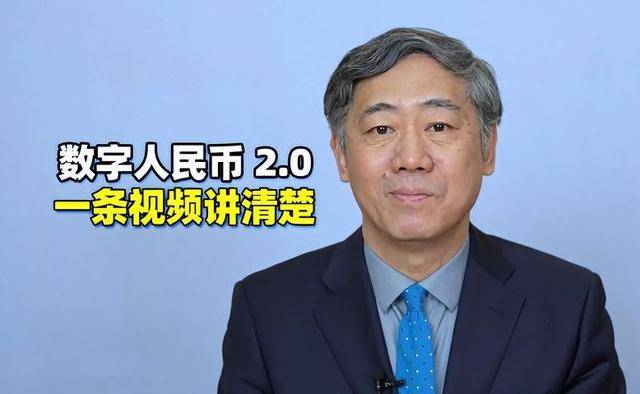
数字人民币升级2.0,国家有啥深远布局?对普通人有啥好处?
Sou Hu Cai Jing· 2026-01-17 06:07
Core Viewpoint - The digital renminbi has transitioned from "digital cash" to "interest-bearing deposit currency," allowing users to earn interest on their digital wallet balances, similar to traditional bank accounts [1][3]. Group 1: Financial Implications - The change from M0 (cash) to M1 (demand deposits) incentivizes banks to promote digital renminbi, as users can now earn interest, which may lead to increased deposits [5]. - The digital renminbi serves as a regulatory tool for the government, enabling traceability of transactions and preventing misuse of funds, such as money laundering and fraud [9][11]. - The ability to use digital renminbi offline during emergencies, such as natural disasters, ensures continuity of economic activities [14]. Group 2: Benefits for Businesses and Consumers - Businesses benefit from reduced transaction costs, as they do not have to pay third-party fees when accepting digital renminbi, leading to faster cash flow [15]. - Consumers enjoy enhanced security and privacy, with features like smart contracts for prepaid services, ensuring funds remain in their wallets until used [18]. - The digital renminbi is positioned as a new financial infrastructure for the country, with potential applications in social security and healthcare payments in the near future [23]. Group 3: Implementation Challenges and Global Position - There are challenges in user experience and interbank transfers that need to be addressed for broader adoption [20]. - China is leading in the digital currency space, with a well-structured national strategy and strong technological support from fintech companies, while other regions are still in the early stages of development [22].

重要会议召开,释放明确信号→
Jin Rong Shi Bao· 2026-01-16 12:47
Core Viewpoint - The 2026 financial regulatory work meeting emphasizes a comprehensive deployment of financial regulation, focusing on risk prevention, strong regulation, and promoting high-quality development to support the "14th Five-Year Plan" [1] Group 1: Risk Prevention and Resolution - The meeting prioritizes the effective resolution of risks in small and medium-sized financial institutions, aiming to manage existing risks and prevent new ones, particularly in the real estate sector [2][3] - A systematic approach will be adopted for risk prevention, focusing on high-risk institutions through coordinated efforts between central and local authorities [2][3] - The regulatory focus will shift from mere scale expansion to substantive risk control, enhancing classification and tiered regulation [3] Group 2: Promoting High-Quality Development - The meeting calls for improving the capacity for high-quality development in the financial sector, emphasizing the need for orderly competition and optimizing institutional layout [4] - The strategy of "reducing quantity and improving quality" will guide the restructuring of financial institutions, focusing on eliminating inefficient and high-risk entities [4][5] - Regulatory measures will target disordered competition, ensuring financial institutions concentrate on their core businesses and adhere to capital constraints [4][5] Group 3: Strengthening Financial Regulation - The meeting outlines the need to enhance and perfect financial regulation, focusing on substantive risks and improving the capacity for lawful regulation [6][7] - The "Golden Supervision Project" will be accelerated, marking a shift towards digital and intelligent regulation to improve risk identification and oversight capabilities [6][7] - The regulatory framework will evolve towards precision, differentiation, and collaboration, ensuring effective consumer protection and preventing cross-market risks [7] Group 4: Enhancing Financial Services for Economic and Social Quality - The meeting emphasizes the need to improve financial services for the economy, focusing on major strategies and sectors, including support for consumer demand and small enterprises [8][9] - Financial institutions will be encouraged to develop integrated financial solutions that link investments in physical assets with human capital [9][10] - Internal mechanisms will be optimized to enhance service delivery, particularly for technology-driven and small enterprises, through improved credit evaluation and risk management [10]