
金融高质量发展

Search documents
2025企业家博鳌论坛-数字金融安全发展大会将于12月4日在海南举办
Sou Hu Cai Jing· 2025-11-27 06:06
Core Insights - The 2025 Entrepreneur Boao Forum series will take place from December 2 to 5 in Boao, Hainan, with a focus on digital financial security development [2] - The Digital Financial Security Development Conference will be held on the afternoon of December 4, featuring collaboration among financial institutions, technology companies, and academia [2] - The conference aims to align with the "Financial Power" strategy and new productivity development requirements, focusing on breakthroughs in financial technology, digital security, and high-quality financial development [2] Industry Developments - The conference will officially release the "2025 Digital Banking Survey Report," which will provide comprehensive evaluation results based on the report's data [2] - Key activities include the signing of significant strategic cooperation agreements and the launch of next-generation security technologies [2] - The event will gather leaders from regulatory agencies, industry associations, academic experts, and senior professionals from the banking and fintech sectors [2]


聚焦 “五篇大文章” 金融界共话周期穿越与韧性提升
2 1 Shi Ji Jing Ji Bao Dao· 2025-11-27 01:48
Core Viewpoint - The article emphasizes the importance of finance as the lifeblood of the real economy and highlights China's commitment to a unique financial development path, focusing on optimizing financial resource allocation and advancing five key areas: technology finance, green finance, inclusive finance, pension finance, and digital finance [1]. Group 1: Financial Development Themes - The "21st Century Financial Annual Conference" was held in Beijing, focusing on the theme "Reshaping Financial Resilience and Navigating Interest Rate Cycles" [1]. - The conference gathered representatives from financial regulatory bodies, experts, and industry leaders to discuss key issues related to high-quality financial development, including policy interpretation, innovative pathways, and risk prevention [1]. Group 2: Economic Transition - The article notes a significant shift in China's economic growth logic, moving from the traditional "real estate - finance - local government infrastructure" cycle to a new cycle centered around "technology - finance - industry" [4].

议程公布!第二十届21世纪金融年会即将启幕
2 1 Shi Ji Jing Ji Bao Dao· 2025-11-21 03:57
Core Insights - The financial sector is described as the lifeblood of the national economy, crucial for national strength and rejuvenation [1] - The "14th Five-Year Plan" is highlighted as a key moment for outlining the blueprint for development [1] Group 1 - The "20th 21st Century Financial Annual Conference" is scheduled to be held on November 22, 2025, in Beijing [2] - The event aims to gather various guests to foster consensus through communication and explore solutions to challenges [2] - The conference is positioned as a platform to outline a new chapter for high-quality development [2]
金融机构竞逐AI赛道,专家建言提质效与防风险并重
Nan Fang Du Shi Bao· 2025-11-19 23:12
Group 1 - The core theme of the 2025 Bay Area Financial Annual Conference is "AI New Wave, Financial New Ecology," focusing on the integration of AI and finance to explore high-quality financial development solutions [2] - Experts at the conference emphasized the importance of AI as a driving force for economic transformation, highlighting its role in the Guangdong-Hong Kong-Macao Greater Bay Area as a leader in this change [2] - The conference featured notable speakers, including Wu Xiaoqiu, who discussed the historical transformation of China's economy and finance, emphasizing the shift from a "shortage economy" to an "overabundance economy" [4][5] Group 2 - Wu Xiaoqiu proposed that the focus of policies should shift from expanding supply to effectively managing excess and expanding domestic demand, with an emphasis on structural adjustment and industrial upgrading [4] - He highlighted the necessity of a modern financial system based on capital markets to support high-tech enterprises and meet the diverse financial needs of residents [5][6] - The importance of financial innovation alongside effective regulation was stressed to retain high-net-worth clients and prevent capital outflow [5] Group 3 - AI is seen as a core force in reshaping financial operations and service models, driving a dual enhancement of efficiency and intelligence in the financial sector [8][9] - Financial institutions are encouraged to leverage AI for competitive advantage by enriching data, expanding application scenarios, and addressing AI safety risks [9][10] - The "Ping An Brain" intelligent engine exemplifies the application of AI across various sectors, significantly reducing labor costs and enhancing operational efficiency [9][10] Group 4 - The concept of "public welfare finance" was introduced as a new financial paradigm emphasizing social responsibility and value creation, with the Greater Bay Area identified as a natural testing ground for such initiatives [12][13] - The potential for public welfare finance to enhance the effectiveness of charitable donations and create sustainable financial products was discussed, with a focus on addressing social issues [13][14] - Future trends in public welfare finance include the need for diverse financial institutions to collaborate and innovate in service of social value [13][14] Group 5 - A report on "Technology Finance Empowerment" was released, highlighting the Bay Area's role in forming a multi-layered financial support system for technology enterprises [15][16] - The report identified structural challenges such as insufficient early-stage capital supply and the need for improved cross-border financial collaboration [15][16] - Recommendations for future development include enhancing top-level design, optimizing capital supply systems, and fostering collaboration among financial institutions [16] Group 6 - The roundtable forum discussed the deep integration of AI and finance, with experts agreeing that AI is a key driver of high-quality development in the financial sector [17][18] - Challenges such as data governance, risk management, and organizational adaptation were identified as critical areas for improvement [17][18] - The discussion underscored the need for compliance in data usage and the importance of human oversight in AI-driven financial decision-making [18][19]

增速连续25个季度高于全国
Qi Lu Wan Bao· 2025-11-14 09:50
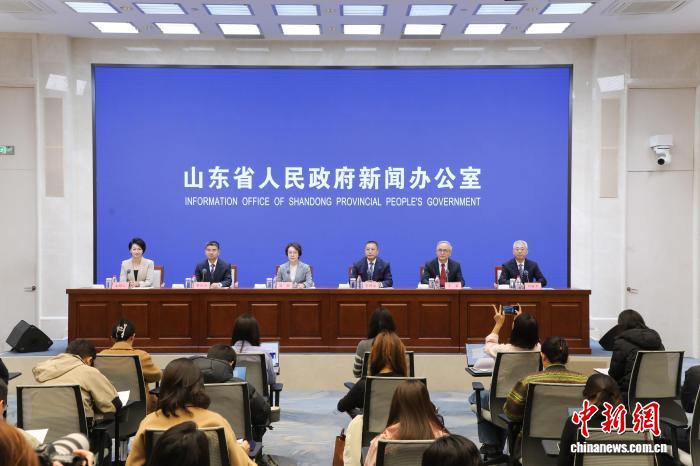
Core Insights - The financial sector in Shandong has experienced significant growth, with the total social financing scale exceeding 25 trillion yuan and the balance of domestic and foreign currency loans surpassing 15 trillion yuan, achieving key targets ahead of the "14th Five-Year Plan" [1] - The province has implemented a "Ten-Hundred-Thousand" plan for nurturing listed companies, resulting in a total of 430 listed companies with a total market value of 4.8 trillion yuan, including 8 companies valued over 100 billion yuan [1] - Financial support for enterprises has been enhanced, with the average interest rate on new corporate loans decreasing by 1.06 percentage points, and a notable reduction of 1.82 percentage points for small and micro enterprises [1] Financial Cooperation and Support - Shandong has strengthened communication with central financial institutions, securing funding of 864.45 billion yuan for key projects in technology innovation and rural revitalization [2] - The province has expanded financial support for foreign trade enterprises, providing over 1.95 trillion yuan through policies like "Lu Trade Loan" and "Qilu Import Loan" [2] - A total of 58.7 billion yuan in loans has been issued to 15,100 individual businesses as part of the "seedling" action for individual businesses [2] Financial Innovation and Services - The province has optimized financial service models, implementing "financial direct access to grassroots" initiatives, resulting in the allocation of 588.69 billion yuan to 8,765 projects across 16 cities [2] - The Jinan Science and Technology Innovation Financial Reform Pilot Zone has seen a 176.7% increase in loans to innovative enterprises, reaching a balance of 303.98 billion yuan [2] - Shandong's financial culture emphasizes innovation in products and services, enhancing the influence of "Good Financial Products" [3]
洞见 | 申万宏源杨成长:提升金融效能 护航“十五五”战略
申万宏源证券上海北京西路营业部· 2025-11-14 02:07
Core Viewpoint - The "15th Five-Year Plan" period is crucial for achieving socialist modernization and promoting high-quality financial development, necessitating a transformation in financial services to meet new demands from emerging factors, industries, and business models [2][3]. Group 1: Financial Service Effectiveness - The financial system must deepen reforms to enhance its effectiveness in serving the real economy, addressing structural contradictions such as excess funds but difficulty in investment and financing [3][4]. - Five breakthroughs are essential for improving financial service effectiveness: building a national credit market, enhancing service capabilities for new factors, adapting to new industry types and business models, improving overall service integration, and forming a correct understanding of financial services for the real economy [3][11]. Group 2: Achievements During the 14th Five-Year Plan - Significant progress was made in the financial system during the 14th Five-Year Plan, with improvements in the financial institutional framework, market scale, and competitiveness of financial institutions [6][7]. - By September 2025, China became the world's largest credit market with a credit balance exceeding 270 trillion yuan, and the bond market's scale surpassed 190 trillion yuan [7]. Group 3: Enhancing Financial Services for New Factors - The rise of movable assets, represented by data and technology, necessitates a shift in financial services from immovable assets to movable assets, with a focus on enhancing service capabilities for these new factors [14][15]. - By the end of 2024, the contribution of the digital economy to economic growth exceeded 40%, indicating a significant shift in asset structures within enterprises [14]. Group 4: Adapting to New Industry Types and Business Models - New consumption patterns and technological advancements are reshaping the industry landscape, with service consumption and experience-driven consumption becoming mainstream [17][18]. - Financial institutions need to innovate their service models to better support new consumption scenarios and the unique characteristics of new technology enterprises [19][20]. Group 5: Overall Service Integration and Adaptability - Despite a rich array of financial products, the overall integration and adaptability of financial services remain insufficient, with challenges in responding to the comprehensive needs of enterprises [21][22]. - Financial institutions should enhance collaboration and develop innovative products that cater to the diverse needs of different industries, particularly in technology, digital, and green sectors [22]. Group 6: Correct Understanding of Financial Services - There are discrepancies in the understanding and practice of financial services among financial institutions, local governments, and enterprises, which can hinder the precise allocation of financial resources [23]. - It is crucial to establish a correct understanding of the relationship between finance and the real economy, ensuring that financial services prioritize supporting value creation in enterprises [23].

山东社会融资规模增速连续25个季度高于全国
Da Zhong Ri Bao· 2025-11-14 01:09
Core Insights - Shandong's financial sector has achieved significant growth, with social financing scale increasing for 25 consecutive quarters, surpassing the national average, and reaching 25 trillion yuan in May this year [2][3] - The province has completed its main tasks outlined in the "14th Five-Year Plan" ahead of schedule, indicating a strong commitment to high-quality financial development [2][4] Financial Growth - The total financial volume in Shandong has seen a leap in growth, with the balance of domestic and foreign currency loans increasing for 20 consecutive quarters, exceeding 15 trillion yuan last November [2][3] - The average interest rates for new corporate loans and personal housing loans are projected to be 3.61% and 3.05% respectively by September 2025, reflecting a decrease of 1.06 and 2.2 percentage points since the end of 2020 [3] Financing Costs and Support - The People's Bank of China has guided financial institutions to lower personal housing loan rates by a total of 1.45 percentage points, saving each borrower approximately 6,000 yuan annually [3] - Shandong has secured 864.45 billion yuan in funding for key projects in technology innovation and rural revitalization, and has provided 58.7 billion yuan in loans to 15,100 individual businesses [3][4] Financial Innovation and Reform - Major state-owned financial institutions are actively seeking support to enhance their services, while local institutions are focusing on specialized operations [4] - The province has established financial innovation zones, with the loan balance for innovative enterprises in Jinan reaching 303.98 billion yuan, a 176.7% increase since the approval of the pilot program [4] Capital Market Development - Shandong has implemented a "Ten-Hundred-Thousand" plan for nurturing listed companies, resulting in a total of 430 listed companies with a combined market value of 4.8 trillion yuan [5] - The bond market has expanded, with enterprises raising 1.59 trillion yuan through stock and bond financing, a 63% increase compared to the "13th Five-Year Plan" period [5] Cross-Border Financing and Foreign Exchange Services - The province has improved its foreign exchange service environment, with the number of enterprises able to handle trade payment business increasing from 38 to 4,034 [6] - Over 2,800 billion USD in trade facilitation business has been processed, enhancing the efficiency of foreign exchange operations for quality enterprises [6] Risk Management - Shandong has maintained a strong focus on preventing systemic financial risks, successfully addressing 686.69 billion yuan in non-performing loans [7] - The total capital and provisions for risk resistance in the industry exceed 872.60 billion yuan, indicating robust risk management practices [7]
社会融资连续25个季度高于全国,山东金融总量实现跨越式增长
Feng Huang Wang Cai Jing· 2025-11-13 16:51
Core Insights - The Shandong provincial government is promoting high-quality financial development during the "14th Five-Year Plan" period, highlighting significant achievements in the financial sector over the past five years [1][2]. Financial Growth and Support - Shandong's financial sector has experienced rapid growth, with the total social financing scale exceeding 25 trillion yuan, marking a continuous increase above the national level for 25 consecutive quarters [3]. - The balance of loans in both domestic and foreign currencies reached 15 trillion yuan, achieving the main goals of the "14th Five-Year Plan" ahead of schedule [3]. - The average interest rate for newly issued corporate loans decreased by 1.06 percentage points, while the interest rate for small and micro enterprises dropped by 1.82 percentage points, alleviating the financial burden on the real economy [3]. - The province has 430 listed companies with a total market value of 4.8 trillion yuan, including eight companies valued over 100 billion yuan [3]. - The regional equity market has facilitated financing of 246.42 billion yuan for 8,662 listed companies, and the bond market has expanded significantly, with exchange-traded bond balances surpassing 1 trillion yuan [3]. Service Mechanism and Resource Allocation - Shandong emphasizes the alignment of financial supply and demand, enhancing collaboration between central and local financial institutions to drive financial innovation based on the needs of the real economy [4]. - The province secured 864.45 billion yuan in funding for key areas such as technological innovation and rural revitalization through partnerships with central financial institutions [4]. - Initiatives like "Lü Trade Loan" have supported foreign trade enterprises with over 1.95 trillion yuan, while 343 cultural and tourism projects received 37.8 billion yuan in financing [4]. Reform and Innovation - The Shandong financial system is focusing on enhancing political leadership and the people's nature of financial work, with state-owned financial institutions playing a crucial role in supporting the real economy [5]. - Local financial institutions are developing specialized operations, with significant reforms seen in institutions like Hengfeng Bank and the establishment of new entities like Debon Securities [5]. - The Jinan Science and Technology Innovation Financial Reform Pilot Zone reported a 176.7% increase in loans to innovative enterprises, reaching 303.98 billion yuan [5]. Financial Regulation and Risk Management - Shandong is implementing an integrated local financial regulatory framework to enhance oversight and improve the quality and efficiency of local financial organizations [6]. - A robust risk prevention and resolution system is in place, focusing on combating illegal financial activities and managing risks in local small and medium-sized financial institutions [6]. Future Directions - The Shandong financial system aims to deepen reforms and better coordinate high-quality development with high-level safety, contributing to national modernization and the revitalization of the nation [7].
山东“十四五”金融答卷亮点纷呈 为强省建设注入金融活水
Zhong Guo Xin Wen Wang· 2025-11-13 14:00
Core Insights - The "14th Five-Year Plan" period is crucial for the high-quality development of finance in Shandong, with significant growth in financing and financial supply supporting the province's economic development [1][3]. Financial Supply and Economic Support - Shandong's total financing has seen substantial growth, with social financing scale growth exceeding the national average for 25 consecutive quarters, reaching 25 trillion yuan this year [3]. - The balance of domestic and foreign currency loans has also outpaced national growth for 20 consecutive quarters, surpassing 15 trillion yuan last November [3]. - The average interest rate for newly issued corporate loans has decreased by 1.06 percentage points, with a 1.82 percentage point reduction for small and micro enterprises, benefiting the real economy [3]. Capital Market Development - The "Qilu Plate" in the capital market has shown vitality, with 3,556 companies in the listing reserve resource pool and a total of 430 listed companies in Shandong, with a total market value of 4.8 trillion yuan [4][5]. Financial Innovation and Reform - Three national-level financial reform pilot zones have significantly contributed to financial innovation in Shandong, with the Jinan Sci-Tech Financial Reform Pilot Zone seeing a 176.7% increase in loans to sci-tech enterprises [6]. - Shandong has engaged in comprehensive cooperation with central financial institutions, securing 864.45 billion yuan for key projects in technology innovation and rural revitalization [6]. Support for Agriculture and Rural Development - The focus on rural revitalization has led to a doubling of inclusive agricultural loans to 962.09 billion yuan by September 2025, supporting well-known agricultural products in the province [7]. Risk Management and Financial Security - A risk prevention and resolution system has been established, with 6.87 trillion yuan in non-performing loans addressed, enhancing the financial sector's resilience [8]. - The province has streamlined foreign exchange services and launched ten cross-border financial service platforms, benefiting over 9,000 enterprises [8]. Future Outlook - Looking ahead to the "15th Five-Year Plan," Shandong aims to deepen financial reforms while balancing high-quality development and safety, contributing to China's modernization efforts [8].
【财经早报】2025-11-13 星期四
Sou Hu Cai Jing· 2025-11-13 00:54
Industry News - The National Energy Administration has issued guidelines to promote the integrated development of renewable energy, aiming for significant improvements in reliability and market competitiveness by 2030 [2] - The Ministry of Industry and Information Technology reported that over 600,000 technology and innovation-oriented SMEs have been cultivated in China, with more than 140,000 specialized and innovative SMEs [5] - The Ministry of Industry and Information Technology is seeking public opinions on the management measures for the printed circuit board industry, emphasizing the need for technological advancement and quality improvement [10] - The Ministry of Education has outlined plans to establish a comprehensive technology education system in primary and secondary schools by 2030, enhancing practical skills and interdisciplinary teaching methods [11] - The State Post Bureau reported that from October 21 to November 11, the national express delivery companies collected 13.938 billion packages, with a daily average of 634 million, indicating a significant expansion in the express delivery market [12] Company News - Haibo Sichuang has signed a strategic cooperation agreement with CATL to procure a total of no less than 200 GWh of electricity from 2026 to 2028 [16] - Century Huatong plans to repurchase between 500 million to 1 billion yuan of its shares for cancellation [16] - Changrong Co. intends to establish a controlling subsidiary to cooperate in the construction of a 100 MW photovoltaic power station [16] - CATL has begun mass production of its fifth-generation lithium iron phosphate battery products [16] - Shengton Mining is advancing its internationalization process with a planned investment of 1.423 billion yuan in its subsidiary [16] - Jingyuan Environmental Protection has won a water treatment project in the power industry worth approximately 143 million yuan [16] - Sturdy Medical's wholly-owned subsidiary plans to invest 2 billion yuan to build a production base for all-cotton spunlace non-woven fabric [16] - Giant Star Legend is deepening its cooperation with Yushu Technology to accelerate the commercialization of the robotics industry [16]


