
K型经济

Search documents
债市早报:12月进出口增速大幅超预期;债市偏强震荡,但短债因资金面收敛而继续走弱
Jin Rong Jie· 2026-01-15 03:13
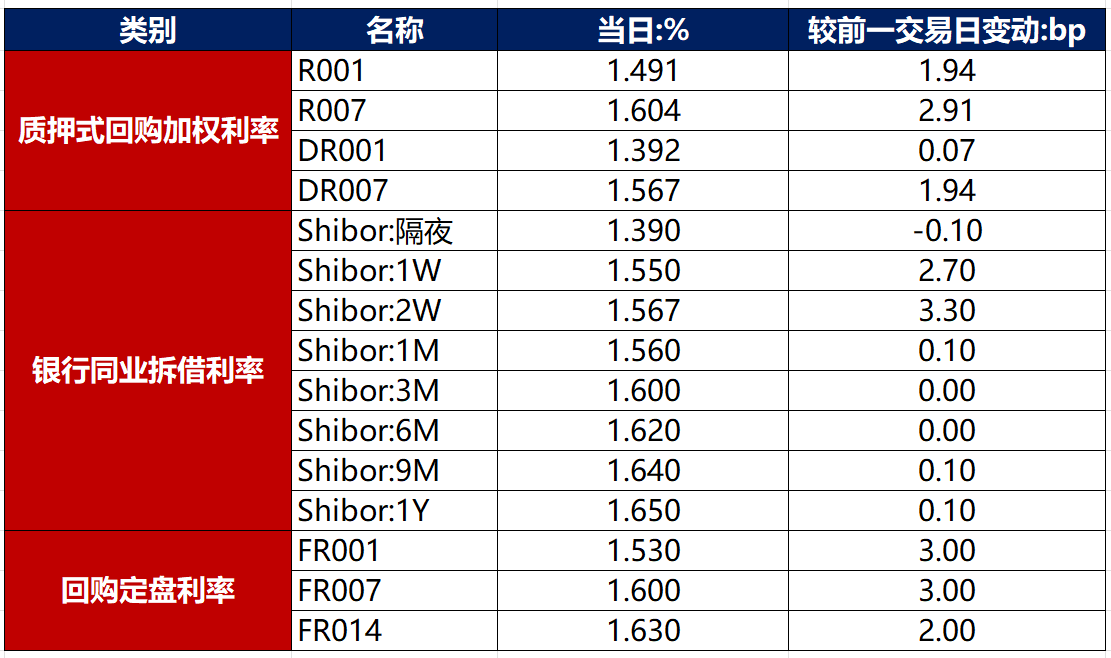
Core Viewpoint - The financial market shows a tightening trend, with the bond market experiencing fluctuations and short-term bonds weakening due to the tightening of liquidity. The convertible bond market is following the equity market's mixed performance, with most convertible bonds declining [1][2]. Group 1: Domestic News - December export growth significantly exceeded expectations, with a year-on-year increase of 6.6%, accelerating by 0.7 percentage points from November. Cumulative export growth for 2025 stands at 5.5%, which is 0.3 percentage points lower than the previous year [2]. - The Shanghai and Shenzhen Stock Exchanges have raised the financing margin ratio to 100%, effective from January 19. This adjustment aims to reduce leverage levels and protect investors' rights, following a previous reduction from 100% to 80% in August 2023 [2][3]. Group 2: International News - U.S. retail sales unexpectedly strengthened in November, with a month-on-month increase of 0.6%, surpassing the expected 0.5%. Year-on-year, retail sales grew by 5.1%, indicating robust overall consumer data despite structural economic disparities [4]. - The Federal Reserve officials have reiterated a cautious stance on potential interest rate cuts, emphasizing the importance of data-driven policy decisions over political influences. This suggests a likelihood of moderate rate cuts later in the year if inflation cools and the labor market stabilizes [5]. Group 3: Commodity Market - International crude oil futures prices continued to rise, with WTI crude oil for February closing at $62.02 per barrel, up 1.42%. In contrast, natural gas prices fell by 7.89% to $3.113 per million British thermal units [6]. Group 4: Financial Market Dynamics - On January 14, the central bank conducted a 7-day reverse repurchase operation of 240.8 billion yuan at a fixed rate of 1.40%, resulting in a net liquidity injection of 212.2 billion yuan after accounting for maturing reverse repos [7][8]. - Despite the central bank's liquidity injection, the funding environment remains tight, with the DR001 rate rising by 0.07 basis points to 1.392% and the DR007 rate increasing by 1.94 basis points to 1.567% [8][9]. Group 5: Bond Market Trends - The bond market showed mixed performance, with the 10-year government bond yield declining by 0.30 basis points to 1.8570%, while the 10-year policy bank bond yield increased by 0.40 basis points to 1.9670% [11][12]. - The secondary market for credit bonds experienced significant price deviations, with "23 Vanke 01" dropping over 56% and "H1 Bidi 03" rising over 1548% [14]. Group 6: Convertible Bonds - The convertible bond market exhibited mixed performance, with the China Securities convertible bond index rising by 0.15% and the Shanghai Securities convertible bond index declining by 0.10%. The total trading volume in the convertible bond market reached 111.43 billion yuan, an increase of 7.585 billion yuan from the previous trading day [15][16]. - Upcoming listings include the Aohong convertible bond and Shuangle convertible bond on January 16, with the Wanfu convertible bond announcing a reduction in its conversion price from 27.00 yuan to 21.10 yuan [17][18].

【环球财经】金融股下跌拖累 纽约股市三大股指13日均下跌
Xin Lang Cai Jing· 2026-01-14 01:54
Market Overview - The New York stock market experienced a decline on January 13, with all three major indices closing lower after an initial high opening, influenced by policy-related downturns in financial stocks and profit-taking by investors [1] - The Dow Jones Industrial Average fell by 398.21 points to close at 49,191.99, a decrease of 0.80%; the S&P 500 index dropped by 13.53 points to 6,963.74, down 0.19%; and the Nasdaq Composite Index decreased by 24.03 points to 23,709.87, a decline of 0.10% [1] Sector Performance - In the S&P 500, seven out of eleven sectors saw gains, with the Energy sector leading at a 1.53% increase and the Consumer Staples sector following with a 1.08% rise [1] - Conversely, the Financial sector and Consumer Discretionary sector led the declines, with decreases of 1.84% and 0.51%, respectively [1] Economic Indicators - The U.S. Consumer Price Index (CPI) for December 2025 rose by 2.7% year-on-year, matching the previous month's increase and exceeding market expectations of 2.6% [2] - The core CPI, excluding volatile food and energy prices, increased by 2.6% year-on-year, consistent with the prior month but below the anticipated 2.7% [2] - New single-family home sales in the U.S. for September and October 2025 were reported at annual rates of 738,000 and 737,000, respectively, surpassing market expectations [2] Company Insights - BlackRock's Chief Investment Officer Rick Rieder expressed a desire for the Federal Reserve to lower the federal funds rate to 3%, aiming for a more neutral interest rate level [2] - Barry Bannister from Stifel expressed a pessimistic view on the U.S. economy, predicting a decline in total labor income by 2026 and a slowdown in personal consumption [3] - JPMorgan Chase reported a net income of $13.025 billion for Q4 2025, reflecting a 10% quarter-on-quarter and 7% year-on-year decline, influenced by a $2.2 billion provision for credit losses related to a partnership with Apple [3][4]

达美航空四季度业绩超预期 高端客群成增长核心驱动力
Xin Lang Cai Jing· 2026-01-13 14:09
Group 1: Financial Performance - Delta Air Lines reported a record adjusted revenue of $14.61 billion for Q4, slightly below market expectations of $14.67 billion, with a year-over-year growth of 1.2% [1][6] - The adjusted earnings per share for Q4 were $1.55, exceeding market expectations of $1.53, although impacted by a government shutdown which lowered earnings by $0.25 [1][6] - For Q1 2026, the company expects revenue growth of 5%-7%, with an operating margin of 4.5%-6% and adjusted earnings per share between $0.50 and $0.90 [1][6] Group 2: Business Drivers - The core driver of revenue growth is the increase in high-end business income from high-net-worth clients, who prioritize travel spending and seek premium travel experiences [2][7] - Delta's CEO stated that all new seats will be allocated to premium cabins, with no increase in economy class capacity, reflecting the demand from affluent customers [2][7] Group 3: Future Outlook - Delta anticipates a strong start to 2026, with robust demand from both consumer and corporate travel sectors, which is expected to accelerate revenue growth [3][8] - The company does not foresee facing the adverse factors experienced in 2025, such as the "Liberation Day tariffs" and the government shutdown's negative impact on the airline industry [3][8] Group 4: International Business and Partnerships - Delta's international business showed strong performance, with Q4 revenue growing by 5%, driven by transatlantic and transpacific routes [3][8] - The company reported that 90% of its corporate clients expect stable or increased travel frequency in 2026 [3][8] - Revenue from American Express co-branded card commissions grew by 11% in 2025, reaching $8.2 billion, with expectations for "high single-digit" growth in 2026 [3][8] Group 5: Co-branded Credit Card Growth Potential - The growth potential for the co-branded credit card business is considered "extremely high," with increasing consumer spending and an expanding traveler base [4][9] - Delta's CEO expressed confidence that the revenue from co-branded card commissions could exceed $10 billion in the coming years [4][9]


达美航空CEO:高端出行需求旺盛,公司有望再创盈利纪录
Xin Lang Cai Jing· 2026-01-13 13:11
Core Viewpoint - Delta Air Lines expects a more than 20% increase in profits for 2026 compared to 2025, potentially reaching a historical high, driven by strong travel demand, particularly in the premium market [3][13]. Financial Outlook - Delta projects adjusted earnings per share (EPS) for 2026 to be between $6.50 and $7.50, slightly below analysts' expectations of $7.25 [3][5]. - For Q1 2026, Delta anticipates a revenue growth of 5% to 7% year-over-year, with adjusted EPS expected to be between $0.50 and $0.90, aligning with analyst forecasts [5][11]. - In Q4 2025, Delta reported a profit of $1.22 billion, or an EPS of $1.86, marking a nearly 45% year-over-year increase, with total revenue of $16 billion, up 3% [15]. Market Dynamics - Delta's revenue growth is increasingly driven by high-spending customers, as indicated by the shift in revenue from economy class to premium cabins, where revenue from first and business class tickets grew by 9% to nearly $5.7 billion, surpassing economy class revenue [3][13]. - The company plans to increase capacity exclusively in premium seating, with no additional economy class seats [3][13]. Strategic Moves - Delta announced an order for 30 Boeing 787-10 Dreamliners, marking its first purchase of this long-haul wide-body aircraft from Boeing, reflecting a recovery in demand for large aircraft [15][16]. - Delta retains an option to purchase an additional 30 Boeing 787-10 aircraft [16]. Cautionary Notes - CEO Ed Bastian expressed caution regarding the 2026 outlook, acknowledging various uncertainties, including geopolitical factors and domestic policy changes that could impact performance [6][14].

分析师:美国“K型”经济持续存在,影响消费者信心与支出模式
Xin Lang Cai Jing· 2026-01-12 15:59
Group 1 - The core viewpoint is that despite strong performance in asset markets like the S&P 500 ETF (SPY), the divide between asset holders and wage earners is widening, which is affecting consumer confidence and spending patterns [1][2]
2026海外宏观年度展望:修复“K型经济”
Sou Hu Cai Jing· 2026-01-11 13:10
今天分享的是:2026海外宏观年度展望:修复"K型经济" 报告共计:33页 2026海外宏观年度展望核心总结 2025年末,科技发展带来的宏观影响愈发突出,全球经济呈现显著的"K型经济"特征,即科技相关的AI经济与传统非AI经济分化明显, 这一格局将在2026年持续演化。 AI经济方面,其核心特征是重资本投入,短期依靠投资驱动增长。2025年AI相关投资增速超70%,拉动GDP增速0.6%,相关产业投资占 美国私人总投资比重约34%。展望2026年,AI投资仍将增长,但增速大概率高位放缓至35%左右。长期来看,AI经济需从投资驱动转向 生产率驱动,这是其实现长期高增长的关键。历史经验表明,科技驱动的生产率提升能长期提振总需求、降低通胀,但当前劳动生产率 增速和AI技术应用率尚未充分证明生产率已大幅提升,且由于统计口径和应用滞后,生产率数据趋势往往滞后于技术进步,2026年关于 AI经济对生产率的影响仍将存在分歧。 非AI经济则面临多重压力。近三年出现罕见的"无就业增长"状态,2025下半年以来新增就业超预期下行,接近衰退周期特征,这种就业 停滞是传统经济周期走弱与AI结构扰动双期叠加的结果。未来失业率存在加速 ...

2026最大的交易主题:输不起的特朗普 国际秩序的终结
智通财经网· 2026-01-11 11:21
进入2026年,全球宏观市场正在经历一场深刻的范式转变。资深分析师David Woo认为,面对中期选举 的巨大压力,特朗普政府正展现出不惜一切代价扭转局面的决心,这将重塑从能源到黄金的全球资产定 价逻辑。 David Woo表示,为弥补严重的民调劣势并避免在国会失去多数席位,特朗普政府的政策重心已全面转 向赢得"可负担性"辩论。这意味着2026年的终极交易主题将从单纯的再通胀转向激进的通缩手段——尤 其是通过强力掌控能源资源来大幅压低油价,目标是在大选前将汽油价格降至关键心理防线。这一战略 不仅意在平抑通胀,更意在通过改善中产阶级生活成本来稳固选票。 而特朗普此前对委内瑞拉的动作标志着战后建立的基于规则的国际秩序实质性终结。这一举措并非出于 意识形态考量,而是为了直接掌控能源资源,以期通过大幅增加供应来赢得国内的"可负担性论证"。特 朗普的目标是在秋季前将汽油价格压低至每加仑2.25美元,这将对原油市场造成剧烈冲击,预计油价将 下探至40至50美元区间。 Woo警告,随着美国放弃作为国际体系的传统担保人角色,全球地缘不安全感将急剧上升,这为黄金提 供了强劲支撑,并利好国防工业。相反,新兴市场股票将面临估值重估 ...
2026最大的交易主题:输不起的特朗普,国际秩序的终结
Hua Er Jie Jian Wen· 2026-01-11 08:49
进入2026年,全球宏观市场正在经历一场深刻的范式转变。资深分析师David Woo认为,面对中期选举 的巨大压力,特朗普政府正展现出不惜一切代价扭转局面的决心,这将重塑从能源到黄金的全球资产定 价逻辑。 David Woo表示,为弥补严重的民调劣势并避免在国会失去多数席位,特朗普政府的政策重心已全面转 向赢得"可负担性"辩论。这意味着2026年的终极交易主题将从单纯的再通胀转向激进的通缩手段——尤 其是通过强力掌控能源资源来大幅压低油价,目标是在大选前将汽油价格降至关键心理防线。这一战略 不仅意在平抑通胀,更意在通过改善中产阶级生活成本来稳固选票。 而特朗普此前对委内瑞拉的动作标志着战后建立的基于规则的国际秩序实质性终结。这一举措并非出于 意识形态考量,而是为了直接掌控能源资源,以期通过大幅增加供应来赢得国内的"可负担性论证"。特 朗普的目标是在秋季前将汽油价格压低至每加仑2.25美元,这将对原油市场造成剧烈冲击,预计油价将 下探至40至50美元区间。 Woo警告,随着美国放弃作为国际体系的传统担保人角色,全球地缘不安全感将急剧上升,这为黄金提 供了强劲支撑,并利好国防工业。相反,新兴市场股票将面临估值重估 ...
美联储博斯蒂克:在许多方面 美国长期以来一直存在K型经济
Sou Hu Cai Jing· 2026-01-09 17:17
Core Viewpoint - The U.S. economy has shown resilience, with high-end consumers continuing to spend, indicating a long-standing K-shaped economic recovery in the country [1] Group 1 - The Federal Reserve's Bostic highlighted the ongoing strength of high-end consumer spending [1] - The concept of a K-shaped economy suggests that different segments of the economy are recovering at different rates, with some benefiting significantly while others lag behind [1]
生产率高涨,或是就业市场遇冷的另一重注解
Xin Lang Cai Jing· 2026-01-09 14:42
Core Insights - The significant rise in productivity is a key factor in understanding the current trends in the U.S. economy [1][4] - Companies are heavily investing in artificial intelligence while slowing down hiring, leading to the fastest productivity growth in two years [1][4] - The GDP growth is no longer reliant on a large labor input, allowing economic growth without increased labor effort [1][4] Productivity and Economic Growth - The annualized growth rate of output per hour for U.S. workers reached 4.9% in the third quarter, matching the peak level of 2023 [1][4] - Over the past six months, the average productivity increase has been 4.5%, which is considered "unquestionably good news" [1][4] Employment and Labor Market Dynamics - Despite a GDP growth rate of 4.3%, job growth remains weak [5][6] - Companies are signaling a halt in hiring while still achieving business growth, indicating a potential economic and social dilemma [7] - The productivity gains may exacerbate the weakness in the job market, widening the K-shaped economic divide [7] - The trend of companies achieving growth while reducing staff may become a new norm if AI efficiency leads to lower labor costs and higher profits [7] Economic Outlook - The continuous support of productivity for economic growth suggests that previous recession predictions may not materialize [7] - However, there is concern that American workers are being marginalized as companies limit new hiring to control costs [7]