关税

Search documents
美国9月Markit制造业、服务业PMI回落,但均扩张,价格缓和
Hua Er Jie Jian Wen· 2025-09-24 02:18
Group 1: Manufacturing and Services PMI Data - The initial reading of the Markit Manufacturing PMI for September is 52, indicating expansion for the second consecutive month, with a previous value of 53 in August and a year-on-year figure of 47.3 [2] - The initial reading of the Markit Services PMI for September is 53.9, the lowest since June 2025, down from 54.5 in August and 55.2 a year ago [2] - The initial reading of the Composite PMI for September is 53.6, also the lowest since June 2025, with a decline from 54.6 in August [2] Group 2: Employment and Pricing Indices - The employment index in the manufacturing sector decreased from 53.1 in August to 52.6 in September [2] - The employment index in the services sector fell to 51.6, the lowest since April 2025, down from 52 in August [2] - The price index in the services sector decreased, marking the lowest level since April 2025 [2] Group 3: Future Outlook and Economic Growth - Businesses' expectations for output over the next year rose to a four-month high, although still below the long-term average for both manufacturing and services [2] - The third quarter of 2023 is projected to show a year-on-year economic growth rate of 2.2% for the U.S. economy [2] - Business confidence improved in September, partly due to expectations of lower interest rates having a positive impact [5] Group 4: Inventory and Inflation Concerns - There are signs of disappointing sales growth in manufacturing leading to unprecedented inventory accumulation, which may help ease inflation in the coming months [5] - Despite the inventory buildup, there are concerns about potential downward risks to future production [5] - Consumer inflation is expected to remain above the central bank's 2% target in the coming months [5]


光大期货有色金属类日报9.24
Xin Lang Cai Jing· 2025-09-24 01:19
Copper - Copper prices experienced narrow fluctuations overnight, with macroeconomic factors influencing the market. Fed Chairman Powell indicated risks of inflation and employment, reiterating that tariffs are expected to have a one-time impact on prices, without suggesting support for rate cuts next month. He also warned about high valuations in the US stock market, signaling potential risks [1] - Domestic monetary policy remains supportive, with the central bank's governor stating no adjustments to short-term policies are planned. The current stance is to implement moderately loose monetary policy [1] - Inventory levels showed a decrease in LME copper by 400 tons to 144,975 tons, while Comex inventory increased by 91 tons to 288,837 tons. SHFE copper warehouse receipts fell by 2,166 tons to 27,727 tons, and BC copper decreased by 25 tons to 6,445 tons [1] - Demand from downstream sectors is weak due to high copper prices and macroeconomic uncertainties, with concerns over pre-holiday inventory replenishment [1] Nickel & Stainless Steel - LME nickel rose by 0.92% to $15,340 per ton, while SHFE nickel increased by 0.47% to 121,740 yuan per ton. LME inventory rose by 1,554 tons to 230,454 tons, while domestic SHFE warehouse receipts decreased by 72 tons to 25,464 tons [2] - Nickel ore prices remained stable, and stainless steel weekly inventory showed a significant decrease. Nickel iron prices strengthened, providing cost support, although supply increased [2] - In the new energy sector, demand for ternary materials slightly weakened in September, but cobalt policies may lead to tight MHP supply. The overall nickel price may see slight upward movement due to macroeconomic factors and rising nickel iron and MHP prices, although inventory remains a significant resistance [2] Alumina, Electrolytic Aluminum & Aluminum Alloy - Alumina prices showed a weak trend, with AO2601 settling at 2,881 yuan per ton, down 0.62%. SHFE aluminum also experienced a slight decline, with AL2510 at 20,670 yuan per ton, down 0.07% [3] - Aluminum alloy prices remained strong, with AD2511 at 20,305 yuan per ton, up 0.22%. SMM alumina prices fell to 3,032 yuan per ton, while aluminum ingot prices showed a slight decrease [3] - The recovery of alumina plants has increased social inventory pressure, while domestic mines have not resumed production, leading to a decline in ore inventory. Overall, alumina remains bearish but may have reached a bottom [3] Industrial Silicon & Polysilicon - Industrial silicon prices showed a weak trend, with the main contract at 8,925 yuan per ton, down 2.3%. The reference price for industrial silicon was 9,604 yuan per ton, up 121 yuan from the previous trading day [4] - Polysilicon prices also declined, with the main contract at 50,260 yuan per ton, down 2.74%. The N-type polysilicon price rose to 52,500 yuan per ton, with a significant increase in the minimum delivery price [4] - The energy consumption policy draft for polysilicon has slightly raised standards, but the overall impact remains moderate. There is a strong sentiment for production and export in the polysilicon market, leading to a divergence between policy and actual supply-demand dynamics [4] Lithium Carbonate - Lithium carbonate futures for the 2511 contract fell by 0.16% to 73,660 yuan per ton. The average price for battery-grade lithium carbonate remained at 73,850 yuan per ton, while industrial-grade was at 71,600 yuan per ton [5] - Import data showed that in August 2025, China imported 61.92 million tons of lithium spodumene, a decrease of 17.5% month-on-month. Carbonate imports increased by 57.8% month-on-month and 23.5% year-on-year [5] - Weekly production increased by 400 tons to 20,363 tons, with significant contributions from various lithium extraction methods. Inventory levels decreased by 981 tons to 137,531 tons, primarily driven by downstream replenishment [5]

事关降息,鲍威尔最新表态
财联社· 2025-09-24 00:09
Core Viewpoint - The Federal Reserve Chairman Jerome Powell indicated that despite the recent interest rate cut, the current monetary policy stance remains "moderately restrictive," suggesting potential for further rate cuts if labor market weakness continues to outweigh inflation concerns [1][3]. Group 1: Interest Rate Decisions - The Federal Reserve lowered the benchmark interest rate to a range of 4%–4.25%, marking the first rate cut of 2025, aimed at addressing evident warning signs in the labor market [3]. - Powell mentioned that more than half of the Fed officials expect at least two more rate cuts this year, indicating possible actions in October and December [5]. Group 2: Labor Market and Inflation Risks - Powell highlighted a challenging situation where inflation risks are skewed upward while employment risks are skewed downward, emphasizing the dual risks involved [4]. - Recent data show a significant slowdown in U.S. job growth, complicating the assessment of economic conditions, particularly with the impact of stricter immigration policies reducing labor supply [4][6]. Group 3: Market Conditions - Powell acknowledged that stock market prices appear relatively high based on various indicators, although he stated that it is not currently a time of rising financial stability risks [7][10]. - Following the Fed's announcement of a 25 basis point rate cut, U.S. stock markets continued to rise, with major indices reaching new historical highs [8].
鲍威尔警告股市估值“相当高”,美股三连涨终结(附演讲全文)
Sou Hu Cai Jing· 2025-09-24 00:04
Core Viewpoint - Federal Reserve Chairman Jerome Powell indicates that there is still room for further interest rate cuts while warning about high stock market valuations, which negatively impacted market sentiment and led to a decline in major U.S. stock indices [2][3][9]. Economic Outlook - Powell emphasizes that the dual mandate of the Federal Reserve—full employment and price stability—faces threats, with risks on both sides indicating no risk-free policy path [3][17]. - The current economic environment shows upward risks for inflation and downward risks for employment, leading to a challenging situation [3][17]. - The U.S. economy has shown resilience compared to other developed economies despite facing significant shocks from the 2008 financial crisis and the COVID-19 pandemic [7][12]. Labor Market - Powell notes that the labor market is not robust, with signs of substantial weakness, and the risk of employment decline has increased [7][14]. - The unemployment rate has slightly risen to 4.3%, but remains low overall, with job growth slowing significantly [14][15]. - The average monthly job additions have dropped to only 29,000 over the past three months, indicating a slowdown in employment growth [14]. Inflation and Tariffs - Powell reiterates that tariffs are expected to have a temporary impact on inflation, leading to one-time price fluctuations that may last several quarters [3][16]. - Current inflation rates are above the Federal Reserve's long-term target of 2%, with the latest data showing a 2.7% increase in personal consumption expenditures (PCE) prices over the past year [15][16]. - The increase in prices is primarily attributed to tariffs rather than broader price pressures, with service sector inflation still trending downward [15][16]. Monetary Policy - The Federal Reserve has adjusted its monetary policy stance to a more neutral position, lowering the federal funds rate target range by 25 basis points to 4% to 4.25% [17][18]. - Powell maintains that the current policy stance is still moderately restrictive, allowing for better adaptation to changing economic conditions [18]. - The Federal Reserve will continue to evaluate and manage the risks of high inflation and persistent inflation to ensure that price increases do not evolve into a long-term inflation problem [16][17].
美联储主席,重磅发声!美股突变!
Sou Hu Cai Jing· 2025-09-24 00:04
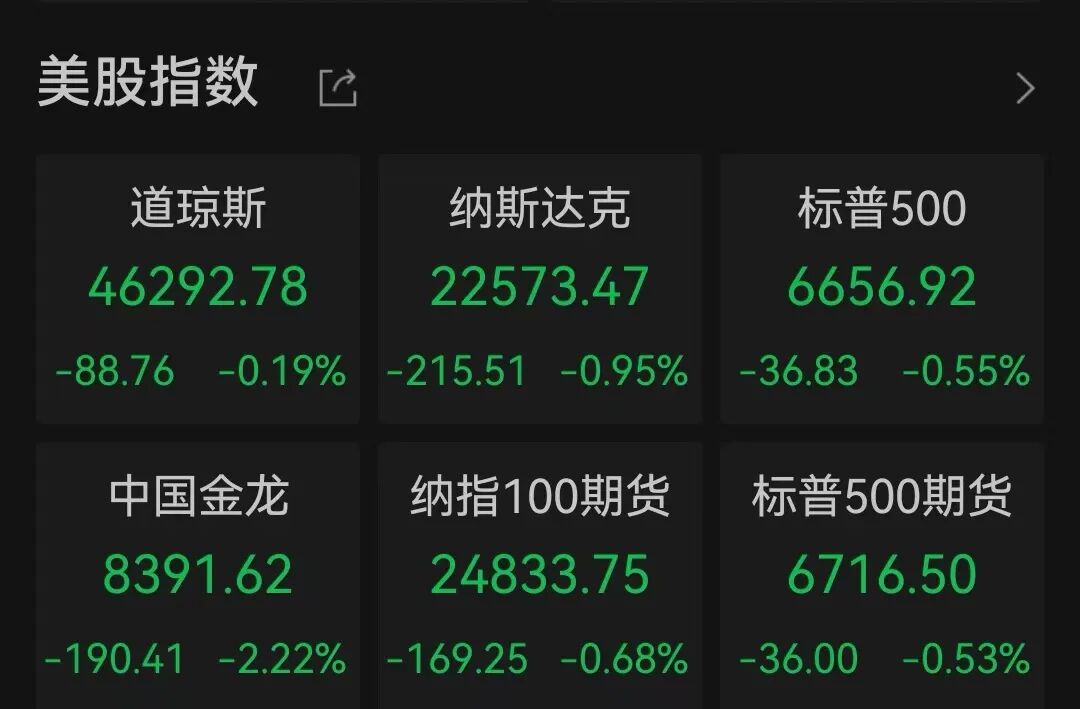
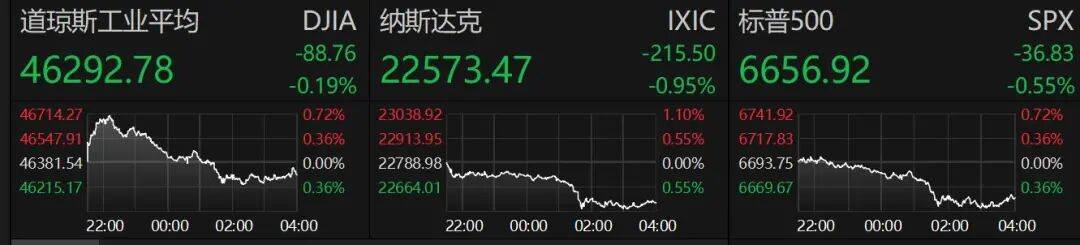
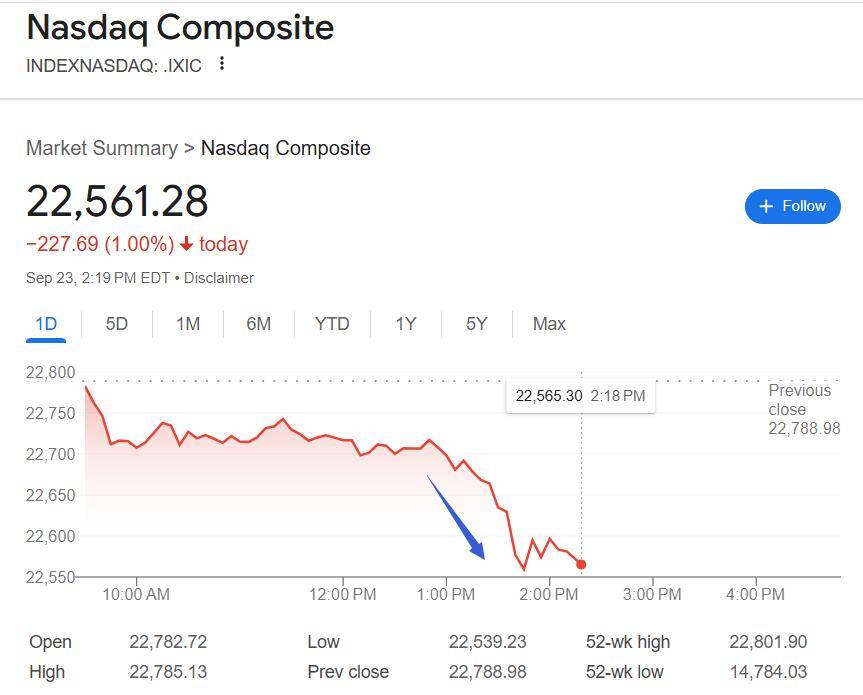
Group 1 - U.S. stock market experienced a significant drop on September 23, with major indices closing lower: Dow Jones down 0.19%, Nasdaq down 0.95%, and S&P 500 down 0.55% [1] - Major tech stocks saw declines, with Oracle down over 4%, Amazon down over 3%, Nvidia down over 2%, and Microsoft down over 1% [1] - The Nasdaq Golden Dragon China Index fell by 2.22%, with notable declines in Chinese concept stocks: Baidu down over 8%, Zhihu down over 5%, Bilibili down over 4%, and New Oriental and JD down nearly 3% [1] Group 2 - Federal Reserve Chairman Jerome Powell indicated increased risks in the job market, which influenced the Fed's recent decision to lower interest rates [1] - Powell described the Fed's policy shift as moving towards a "neutral" stance, emphasizing that there is no preset direction for future policies [1] - Current inflation levels remain slightly above target, with the August core PCE inflation rate expected to be 2.3%, primarily driven by tariff impacts rather than widespread inflationary pressures [1] Group 3 - Powell noted that some asset prices are relatively high compared to historical levels, with stock price valuations appearing quite elevated based on various indicators [1] - Signs of slowing consumer spending and weakened business confidence were highlighted, alongside a decrease in labor market vitality [1] - Powell anticipates that tariffs may lead to a temporary rise in inflation over the next few quarters, but the Fed aims to prevent transient price increases from becoming a persistent issue [1] Group 4 - International gold prices increased, with COMEX gold futures rising by 0.58% to $3796.9 per ounce, and COMEX silver futures up by 0.12% to $44.265 per ounce [2]




鲍威尔警告股市估值“相当高”,美股三连涨终结(附演讲全文)
华尔街见闻· 2025-09-23 23:57
Core Viewpoint - Federal Reserve Chairman Jerome Powell indicates a cautious approach to further interest rate cuts, emphasizing the challenges posed by the current risk environment [2][4][5] Economic Outlook - Recent data shows a slowdown in economic growth, with GDP growth rate around 1.5% in the first half of the year, down from 2.5% last year [19] - Unemployment rate has slightly increased to 4.3%, with job growth slowing significantly, averaging only 29,000 new jobs per month over the past three months [18][19] - Inflation remains above the Fed's 2% target, with the Personal Consumption Expenditures (PCE) price index rising by 2.7% over the past year [20][21] Monetary Policy - Powell warns of the dual risks of rising inflation and declining employment, stating that there is no risk-free policy path [4][22] - The Federal Reserve lowered the federal funds rate target range by 25 basis points to 4% to 4.25% in response to the changing risk balance [23][24] - Powell believes the current policy stance is still moderately restrictive but allows for better adaptation to economic changes [24] Market Reactions - Powell's comments about high stock valuations led to a decline in major stock indices, with the Nasdaq dropping nearly 1% [3][14] - The Fed's focus on the potential impact of tariffs on inflation is seen as a way to navigate political pressures while maintaining a cautious stance [5][9] Labor Market Insights - The labor market is described as showing signs of substantial weakness, with Powell noting that it can no longer be considered robust [10][12] - Job vacancies remain stable, but the overall employment growth is insufficient to maintain the current unemployment rate [18][19]

鲍威尔:货币政策面临“双向挑战”,没有毫无风险路径,股市估值“相当高”(附讲稿全文)
Sou Hu Cai Jing· 2025-09-23 23:31
在上周美联储宣布降息后的首次公开演讲中,美联储主席鲍威尔和上周发布会上一样继续为进一步降息留下空间,并暗示 在有挑战的风险环境下会谨慎降息。在问答环节,鲍威尔警告股市估值太高,引发美股大盘下挫。 美东时间23日周二的演讲稿中,鲍威尔再次警告,联储的双重使命——充分就业和价格稳定均面临威胁,两面的风险意味 着没有毫无风险的政策路径。假如降息幅度过大或速度过快,可能无法有限控制高通胀、让通胀持续高于美联储2%的目 标,而假如货币紧缩维持太久,则可能无谓地拖累劳动力市场。 鲍威尔指出,"短期内通胀存在上行风险,就业则存在下行风险——这是一个有挑战的局面"。在"活力不足、略显疲软的劳 动力市场"形势下,就业下行的风险已增加。正是因为就业风险增加导致风险平衡变化,上周美联储才决定降息。 对于关税,鲍威尔重申,合理的预期是,关税对通胀将有短暂影响,只会导致一次性的价格波动。不过,"一次性"的波动 并不意味着"立即发生",可能会持续几个季度。鲍威尔仍认为,美联储必须密切关注关税可能带来的持续性影响,称要确 保关税不会演变为持续性的通胀问题。 鲍威尔本次讲话没有透露任何信息,暗示他会不会在10月的下次美联储货币政策会议上支持 ...
美联储主席鲍威尔:关税推高商品价格 为保就业而降息
Di Yi Cai Jing· 2025-09-23 23:21
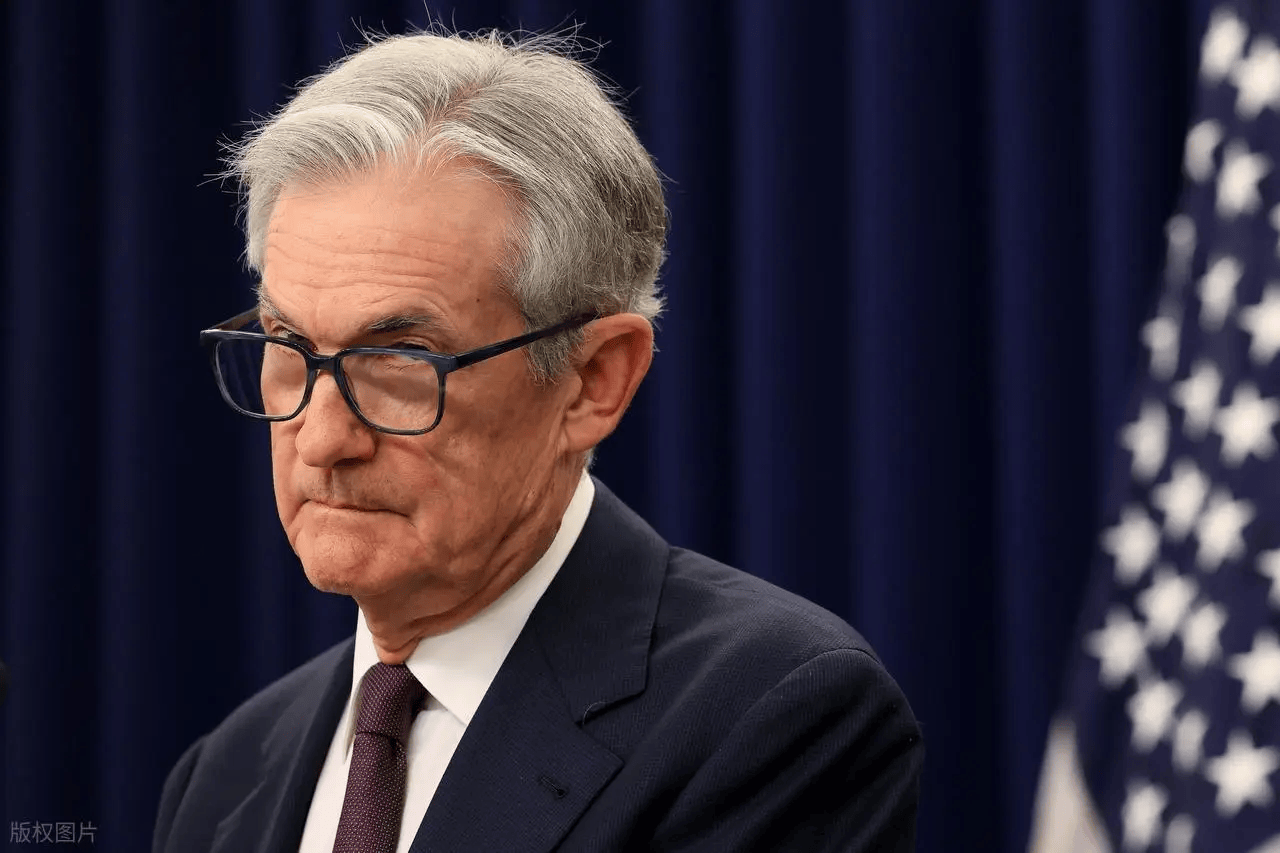
Core Viewpoint - The increasing downside risks in the labor market were a key reason for the Federal Reserve's recent decision to cut interest rates [1] Group 1: Federal Reserve Actions - The Federal Reserve's recent rate cut is seen as a shift towards a "neutral" policy stance [1] - Future policy directions are not predetermined, indicating a flexible approach to economic conditions [1] Group 2: Economic Indicators - Current inflation levels remain slightly above the target, with the August core PCE inflation rate expected to be 2.3% [1] - The rise in goods prices is primarily attributed to tariff impacts rather than widespread inflationary pressures [1] Group 3: Consumer and Business Sentiment - Signs of slowing consumer spending have been observed, alongside weakened business confidence due to uncertainty [1] - The vitality of the labor market is showing signs of decline, which may further impact economic growth [1] Group 4: Future Inflation Outlook - Tariffs are expected to potentially lead to a rise in inflation over the next few quarters, although this inflation may be "relatively transient" [1] - The Federal Reserve aims to prevent one-time price increases from evolving into a persistent inflation issue [1]
鲍威尔:关税推高商品价格 为保就业而降息
Sou Hu Cai Jing· 2025-09-23 23:18
鲍威尔同时指出,消费者支出已出现放缓迹象,企业信心受不确定性影响,劳动力市场活力有所减弱。他判断,关税可能会在未来几个季度导致通胀有所上 升,但关税带来的通胀可能"相对短暂",美联储将防范一次性物价上涨演变为持续性问题。(央视记者 赵淼) 责编:李文玉 | 审核:李震 | 监审:古筝 当地时间9月23日,美联储主席鲍威尔就政策动向及经济形势表态,指出就业市场下行风险增大,是促使美联储上周采取降息行动的关键原因。 鲍威尔表示,此举是政策立场转向"中性"的一步,并强调未来政策没有预设方向。他承认当前通胀水平仍略高于目标,8月核心PCE通胀率预计为2.3%,其 中商品价格上涨主要反映了关税影响,而非广泛的通胀压力。 (来源:央视新闻) ...
美联储降息原因披露 鲍威尔发声!美股三大股指全线收跌
Zhong Guo Zheng Quan Bao· 2025-09-23 23:14
当地时间9月23日,美股三大股指全线收跌。Wind数据显示,截至收盘,道琼斯工业指数跌0.19%报46292.78点,标普500指数跌0.55%报6656.92点,纳斯 达克指数跌0.95%报22573.47点。 Wind数据显示,当地时间9月23日,美股三大股指全线收跌,道琼斯工业指数跌0.19%,标普500指数跌0.55%,纳斯达克指数跌0.95%。其中,亚马逊跌超 3%,英伟达跌近3%。中概股普遍下跌,百度跌超8%,世纪互联跌近7%。 消息面上,根据央视新闻报道,当地时间9月23日,美联储主席鲍威尔就政策动向及经济形势表态称,就业市场下行风险增大,是促使美联储上周采取降 息行动的关键原因。 大型科技股集体下跌 据新华社报道,截至当地时间9月23日收盘,国际油价上涨。纽约商品交易所11月交货的轻质原油期货价格上涨1.13美元,收于每桶63.41美元,涨幅为 1.81%;11月交货的伦敦布伦特原油期货价格上涨1.06美元,收于每桶67.63美元,涨幅为1.59%。 宝城期货表示,美联储9月降息落地,多头了结告一段落,美元指数回落,金价突破前高,短期有加速上行之势。中长线上行趋势未改,短线可关注5日和 10日 ...