新消费

Search documents
沪指第三次逼近4000点,这次有何不同?
Shang Hai Zheng Quan Bao· 2025-10-09 21:27
Core Viewpoint - The Shanghai Composite Index has reached a nearly ten-year high, approaching the 4000-point mark, which historically indicates a critical juncture in market trends [1][2]. Market Trends - The index's rise to 3900 points is reminiscent of previous surges in 2007 and 2015, where the index quickly surpassed 4000 points, reaching peaks of 6124 and 5178 respectively within six months [1]. - Current market conditions differ from past trends, with a notable structural change characterized by a significant rise in leading technology companies, contrasting with the previous "same rise and fall" pattern seen before 2017 [3]. Economic Context - The current market rally is underpinned by a combination of global monetary easing and domestic economic transformation, which is enhancing China's competitive edge across various industries [2]. - The emergence of innovative technologies, such as the DeepSeek-R1 AI model, signifies a shift in China's technological landscape, breaking the dominance of foreign competitors [2]. Participant Structure - The shift from a retail-driven market to one dominated by institutional investors marks a significant change in market dynamics, leading to a more research-driven investment approach [3][4]. - The introduction of long-term capital and the deepening of the investment research system have contributed to the current structural characteristics of the market [3]. Policy Environment - Recent policy initiatives, including a comprehensive support package for capital markets, highlight the government's commitment to stabilizing and invigorating the stock market as a key economic driver [4][5]. - The elevation of the capital market's role in national strategy reflects a significant policy shift aimed at enhancing market attractiveness and competitiveness [5].
国泰海通证券研究与机构业务委员会副总裁路颖:经济转型与政策发力双轮驱动投资者信心企稳回升
Zheng Quan Shi Bao· 2025-10-09 18:20
Group 1 - The core viewpoint is that China's economic transformation and emerging business models are key drivers for the continuous rise of the stock market, with traditional economic cycles clearing and stabilizing [1] - The focus of Chinese policy is shifting towards development, with fiscal expansion supporting livelihoods, boosting consumption, and improving corporate cash flow [1] - The decline in traditional economic sectors is reducing their drag on the economy, particularly in the real estate sector, where residential investment as a percentage of GDP is expected to fall to 5.4% by Q2 2025, aligning with experiences from the US, Japan, and South Korea [1] Group 2 - According to Wind statistics, the total repayment amounts for domestic debts of real estate companies in 2025, 2026, and 2027 are projected to be 469.4 billion, 319.4 billion, and 313.9 billion respectively, indicating a gradual decrease in credit risk [2] - The "new three arrows" policy post-September 24, 2024, aims to address debt issues, stimulate demand, and stabilize asset prices through monetary easing and debt restructuring [2] - Emerging sectors such as AI and robotics are seeing accelerated capital expenditure, indicating the initial emergence of new economic opportunities [2]

中产父母的育儿焦虑,藏在不同集团的财报数据里
3 6 Ke· 2025-10-09 12:24
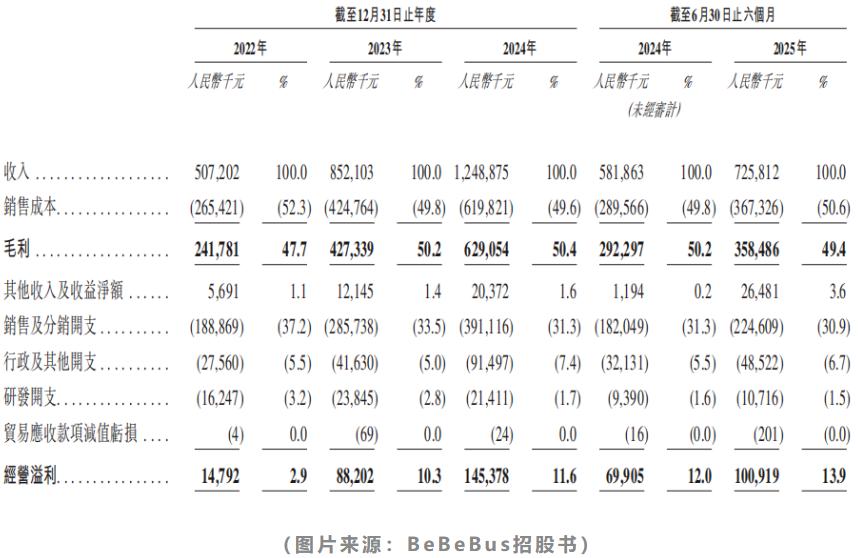
Core Insights - BeBeBus, a high-end maternal and infant brand, successfully listed on the Hong Kong Stock Exchange, with its stock price surging over 40% on opening day, achieving a market capitalization exceeding HKD 9 billion [1] - The brand has rapidly established a product matrix covering four key parenting scenarios: travel, sleep, feeding, and care, ranking second in China's mid-to-high-end parenting product market with a 4.2% market share by GMV [1][11] - The company's growth heavily relies on social media marketing, with a cumulative investment of nearly RMB 640 million from 2022 to 2024, resulting in a revenue increase from RMB 507 million to RMB 1.249 billion, reflecting a compound annual growth rate of 56.9% [1][2] Company Overview - Founded in 2018 by Wang Wei, BeBeBus was officially launched in 2019, targeting new-generation parents who appreciate smart design and practical functionality [2] - The company has seen significant revenue growth, with projections indicating continued momentum into 2025, where revenue is expected to reach RMB 726 million [2][3] - The financial data shows a stable gross margin around 50%, with sales expenses constituting a high percentage of revenue, indicating a "heavy marketing, light R&D" approach typical of new consumer brands [3][4] Market Dynamics - The Chinese maternal and infant market is undergoing a transformation due to demographic changes, with newborns expected to stabilize at around 8 million annually from 2025 to 2029 [6] - Despite declining birth rates, the market for mid-to-high-end parenting products is growing, with a projected market share of 23.6% by 2024, and a compound annual growth rate of 7.4% from 2020 to 2024 [10] - The shift in consumer behavior towards "quality over quantity" is evident, with younger parents willing to spend more on premium products that reflect their values and aesthetics [11][19] Marketing Strategy - BeBeBus's marketing strategy is centered around social media platforms like Xiaohongshu and Douyin, leveraging collaborations with thousands of KOLs to reach target consumers effectively [3][4] - The brand has cultivated a community of over 3 million members, achieving a repurchase rate of 52.3% through its membership program [3] - The company's narrative focuses on "refined parenting," appealing to the emotional values of modern parents, although this approach carries risks if product quality does not meet consumer expectations [12][15] Challenges and Risks - BeBeBus faces potential risks from reliance on outsourced production, which may affect brand perception and pricing strategies, especially in a market where consumers are increasingly price-sensitive [4][19] - The brand's marketing-driven approach may become vulnerable as market dynamics shift, necessitating a transition to product-driven strategies to maintain consumer trust and loyalty [19] - The emergence of a robust second-hand market could dilute the brand's value proposition, as consumers may opt for more cost-effective alternatives during economic downturns [12][19]

建信基金:Labubu风靡全球,新消费为何持续火爆?
Xin Lang Ji Jin· 2025-10-09 09:35
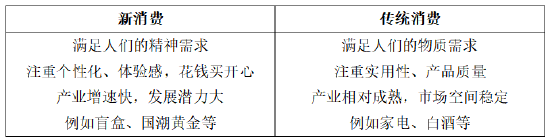
Core Viewpoint - The new consumption sector has emerged strongly in the market, driven by changing consumer preferences and the rise of younger generations as the main consumer force [1][8]. Group 1: Definition of New Consumption - New consumption is a relative concept that focuses on fulfilling people's spiritual needs, contrasting with traditional consumption that meets material needs [2][3]. - New consumption emphasizes personalization and experience, while traditional consumption prioritizes practicality and product quality [3]. Group 2: Segments of New Consumption - The "Guzi Economy," which includes merchandise derived from copyright works like comics and games, is projected to reach a market size of 168.9 billion yuan in 2024, with a year-on-year growth of 40.6% [5][6]. - The ready-to-drink tea market is expected to reach 312.7 billion yuan in 2024, growing by 20.97% compared to the previous year [7]. - The pet economy is projected to reach 300.2 billion yuan in 2024, with a compound annual growth rate of 9.9% from 2018 to 2024, and is expected to exceed 400 billion yuan by 2027 [7][8]. Group 3: Reasons for Popularity of New Consumption - The rise of the Z generation as the main consumer group, coupled with their optimistic outlook on consumption, has contributed to the popularity of new consumption [8]. - Changing consumer psychology emphasizes emotional value and personalization, leading to a preference for unique and resonant products [8]. Group 4: Performance of New Consumption Sector - Companies in the new consumption sector, such as certain brands in the Hong Kong market, have seen significant stock price increases, outperforming the Hang Seng Index [10]. - Investment institutions are increasingly conducting research on companies in the new consumption field, indicating growing interest [10]. Group 5: Future Investment Outlook - China's consumer market is vast, with a projected retail sales total of 48.8 trillion yuan in 2024, contributing 44.5% to economic growth [14]. - Recent policies aimed at fostering new consumption growth and enhancing service consumption quality are expected to support the sector's development [14][15]. - The export potential of new consumption sectors, such as the pet industry, is significant, with exports to the EU expected to reach 1.12 billion USD in 2024 [15].
银河证券:国庆出行数据延续稳定增长趋势,但年轻人的消费观念在变化
Zheng Quan Shi Bao Wang· 2025-10-09 01:01
Core Insights - The report from Galaxy Securities indicates a stable growth trend in travel data during the National Day holiday, while highlighting a shift in consumption patterns among young consumers [1] Group 1: Travel and Consumption Trends - Total cross-regional mobility reached 1.83 billion person-times during the first six days of the holiday (October 1-6), representing a year-on-year increase of 5.0% [1] - Traditional dining and tourism spending has decreased, with a rise in lower-cost "county tourism" options [1] - Young consumers are increasingly spending on concerts, self-driving tours, outdoor sports, and Vlog-related expenses [1] Group 2: Entertainment and Rental Economy - The performance of the domestic performance market was robust, with ticket sales during the holiday's first six days increasing by 130% year-on-year, and music-related ticket sales up by 125% [1] - The rental economy is thriving, with Gen Z travelers frequently renting sports cameras, drones, and telephoto lenses during their trips [1] Group 3: Pet Services - There is significant growth in pet-related services, with pet boarding and home feeding services experiencing high demand during the holiday [1] - Many young travelers are choosing to take their pets on trips, leading to an increase in pet-friendly consumption options at tourist attractions, including pet-friendly restaurants and hotels [1]
黄金周看点 |长假期间港股表现平稳 A股节后有望“开门红”
Sou Hu Cai Jing· 2025-10-08 10:09
Group 1 - The Hong Kong stock market experienced a fluctuation during the long holiday, with the Hang Seng Index rising by 1.61% on October 2, followed by three consecutive days of decline, resulting in a cumulative drop of 0.1% for October so far [2] - The Hang Seng Technology Index performed slightly better, with a cumulative increase of 0.75% for October [2] - The AH share premium reached 117.14, marking the lowest level since January 2019 [2] Group 2 - Certain sectors in the Hong Kong market, such as e-commerce, semiconductors, and non-ferrous metals, showed strong performance during the holiday, with notable gains from companies like Youzan (over 38% increase) and SMIC (over 10% increase) [2] - The gold sector benefited from rising international gold prices, with companies like Chifeng Jilong Gold seeing a significant increase of over 23%, reaching a historical high [2] - Conversely, sectors like consumer goods and digital economy faced declines, with companies such as Xiaobu Xiaobu and GDS Holdings dropping over 9% and 8% respectively [2] Group 3 - Analysts from Guotai Junan Securities predict that the Hong Kong stock market may outperform the first quarter of this year, driven by structural advantages and inflows of new capital [3] - The expectation of a 25 basis point rate cut by the Federal Reserve in October could lead to a favorable liquidity environment, potentially attracting foreign capital back to the Hong Kong market [3] - Southbound capital is expected to continue flowing into Hong Kong stocks, particularly in technology and consumer sectors, which are seen as scarce compared to A-shares [3] Group 4 - Historical data indicates a high probability of a positive opening for A-shares after the holiday, with an average increase of 0.48% on the first trading day of October from 2000 to 2024 [4] - Analysts suggest that A-shares typically exhibit a "post-holiday opening red" characteristic, especially during bull markets [4] - The fourth quarter is expected to show strong earning potential for A-shares, influenced by policy dynamics and year-end valuation adjustments [4] Group 5 - A survey indicated that 70.19% of private equity firms are optimistic about the post-holiday market, anticipating a gradual recovery [5] - The favored investment directions include AI, semiconductors, humanoid robots, and smart driving technologies, with 59.62% of private equity firms expressing interest in these sectors [5] Group 6 - The overall sentiment in the A-share market is expected to improve due to a stable domestic macroeconomic environment and high consumer activity during the holiday [6] - Developments in AI and significant collaborations, such as those between OpenAI and AMD, may catalyze related sectors in the A-share market [6]
110年冠生园:不止“回忆杀”,更有生生不息“新未来”
Di Yi Cai Jing Zi Xun· 2025-10-07 09:36
Core Viewpoint - The article highlights the 110th anniversary of Guanshengyuan, emphasizing its strategic shift towards youthfulness and premium branding, particularly through the revitalization of its iconic brand, White Rabbit candy [1][7][18]. Company History and Development - Guanshengyuan was founded in 1915 in Shanghai, initially selling snacks and has since evolved into a prominent name in China's food industry, creating lasting memories for generations [3][4]. - The company has developed a diverse portfolio of five major brands, including White Rabbit, which has become a national symbol since its introduction in 1959 [6][4]. Brand Revitalization and Marketing Strategy - The recent appointment of actress Li Qin as the new brand ambassador for White Rabbit signifies a move to connect with younger consumers and modernize the brand's image [1][14]. - Guanshengyuan is actively engaging in innovative marketing strategies, including collaborations with popular IPs and launching new products to attract younger demographics [24][25]. Cultural and Community Engagement - The company is hosting a series of events and cultural activities to celebrate its anniversary, including a light show and the unveiling of a giant mooncake, which symbolizes its deep-rooted cultural heritage [10][16]. - The flagship store in Shanghai has undergone a significant upgrade, reflecting a blend of traditional brand values and contemporary consumer experiences [8][10]. Future Outlook - Guanshengyuan aims to continue its legacy by embracing new consumption trends and enhancing its brand presence in the market, ensuring its relevance for future generations [7][25].

一周新消费NO.329|轩尼诗×王嘉尔推中秋限量版;LACOSTE和王一博推出首个联名系列
新消费智库· 2025-10-05 13:03
New Products - JD.com launched its self-branded sparkling yellow wine, featuring a 5% alcohol content in a 480ml bottle, made from high-quality glutinous rice and local herbs [4][5] - Dongpeng Beverage introduced a new Hong Kong-style milk tea, using Indian black tea and Yunnan Dianhong, priced at 71.9 yuan for a 500ml x 24 bottle pack [4][5] - Amazon announced the launch of its private label Amazon Fresh, offering over 1,000 grocery items, with most priced under $5 and rated at least 4 stars [4][5] - Hennessy collaborated with Jackson Wang to launch a limited edition Mid-Autumn Festival series featuring Hennessy V.S.O.P and X.O [6][8] - Lay's released a new Heinz ketchup-flavored potato chip, available in 70g and 135g packs [6][9] - Lacoste and Wang Yibo launched their first collaborative series, including windbreakers and hoodies [6][10] - Fenjiu introduced a wedding edition chocolate gift box featuring liquor-filled chocolates [6][11] - Tianrun Dairy launched a new pomegranate-flavored yogurt, emphasizing clean label principles and using real pomegranate jam [6][11] - Mengniu partnered with China Tea to launch a red tea ice cream [6][13] Industry Events - Wudao Milk announced a 1 billion yuan investment to build its second factory in Shanghai, aiming for a sales target of 5 billion yuan by 2024 [14] - Meituan's international delivery brand Keeta launched operations in the UAE, marking its third Middle Eastern market entry within 40 days [14][15] - Dongpeng Beverage established a new marketing company in Jiangsu with a registered capital of 10 million yuan [14][16] - Wufangzhai plans to issue H shares and list on the Hong Kong Stock Exchange to enhance its international brand image [14][17] - Kegome appointed a new president, marking the first leadership change in six years [14][18] - Bright Dairy's subsidiary, New Light, plans to sell its New Zealand North Island assets for $170 million [14][19] - Coach opened its third coffee shop in the U.S., targeting Gen Z consumers [14][20] - Huang Bo's IP brand, Huang Dou Jun, opened its first store in Qingdao [14][21] - COFCO Jiajiakang launched its flaxseed pork products in Hong Kong, covering 60 major supermarkets [14][22] - Malbon Golf established its China headquarters in Shenzhen [14][23] Investment Trends - Xinghe Power completed a 2.4 billion yuan Series D financing round [21][22] - PAI Partners raised nearly 30 billion yuan for its ice cream joint venture with Nestlé [21][23] - Xingmai Innovation secured 1 billion yuan in A+ round financing [21][24] - Fengyi International plans to acquire a 49% stake in Juai Food [21][25] - Ailios completed a 100 million yuan A+ round financing [21][26] - Ferrero completed the acquisition of Kellogg's North American business [21][27] - Tianqing Kongtian raised several hundred million yuan in Series A financing [21][28] - Suzhou Lexiang Intelligent Technology announced a 200 million yuan angel round financing [21][29] - Nscale completed an $1.1 billion Series B financing round [21][30] - Luobo Intelligent announced several tens of millions in angel + round financing [21][31] Food Industry Developments - Wangzai Milk upgraded its product to feature high calcium and protein, using New Zealand milk sources [28] - Guoquan repurchased 1.55 million shares for 5 million HKD [28] - Mengniu and Everbright Pension signed a strategic cooperation agreement to enhance health management for the elderly [28] - Yakult revamped its low-sugar Y1000 yogurt packaging in Japan [28] - Happy Monkey opened its third store in Hangzhou [28] - Mocha announced its brand ambassador Ding Yuxi [28] - Yanjin Pupu launched a new garlic sesame sauce product [28] - Sam's Club in Changping, Beijing, is set to open in October [28] - Jindouya introduced a new calcium, iron, and zinc water product [28] - Mixue plans to harvest about 60,000 tons of lemons nationwide this year [28]



四季度,公募看好四大赛道
证券时报· 2025-10-03 13:54
Core Viewpoint - The article emphasizes a positive outlook for the A-share and Hong Kong stock markets in the fourth quarter of 2025, driven by the continuous influx of overseas capital and the relocation of resident deposits, with a focus on sectors such as technology, new consumption, the internet, and innovative pharmaceuticals [1][4]. Group 1: Market Dynamics - Fund managers are optimistic about the market's performance, expecting a sustained upward trend supported by policy measures [1][3]. - The overall pricing of A-shares has returned to a reasonable state, with a significant increase in active capital allocation and a shift from bonds to stocks by institutions [3][5]. - The market is experiencing a recovery in risk appetite, with increased trading activity and a notable shift in sentiment among retail investors [4][5]. Group 2: Policy and Economic Factors - The article highlights three main factors contributing to the A-share market's performance: supportive policies, technological breakthroughs, and capital inflows [4]. - Coordinated efforts between proactive fiscal policies and moderately loose monetary policies are stabilizing the economy and market sentiment [4]. - The ongoing recovery of the economy, coupled with improvements in the industrial sector, is expected to enhance the pricing power of equity assets [5]. Group 3: Sector Focus - Fund companies are particularly bullish on four key sectors: technology stocks, new consumption, the internet, and innovative pharmaceuticals [6][7]. - The technology sector is seen as having strong growth potential, with a focus on industries experiencing positive changes in fundamentals [7][9]. - In the Hong Kong market, new consumption and technology stocks are viewed as having significant investment value, supported by improving liquidity and a recovering earnings cycle [8]. Group 4: Investment Strategies - Investment strategies emphasize prioritizing sectors with strong certainty and ongoing verification of industry prosperity, particularly in technology and innovative pharmaceuticals [7][9]. - The article suggests that the current investment environment favors sectors that are experiencing technological advancements and increased demand, such as AI and robotics [9].

全球媒体聚焦 | 外媒:智能经济和新兴消费趋势点亮中国经济
Sou Hu Cai Jing· 2025-10-02 06:32
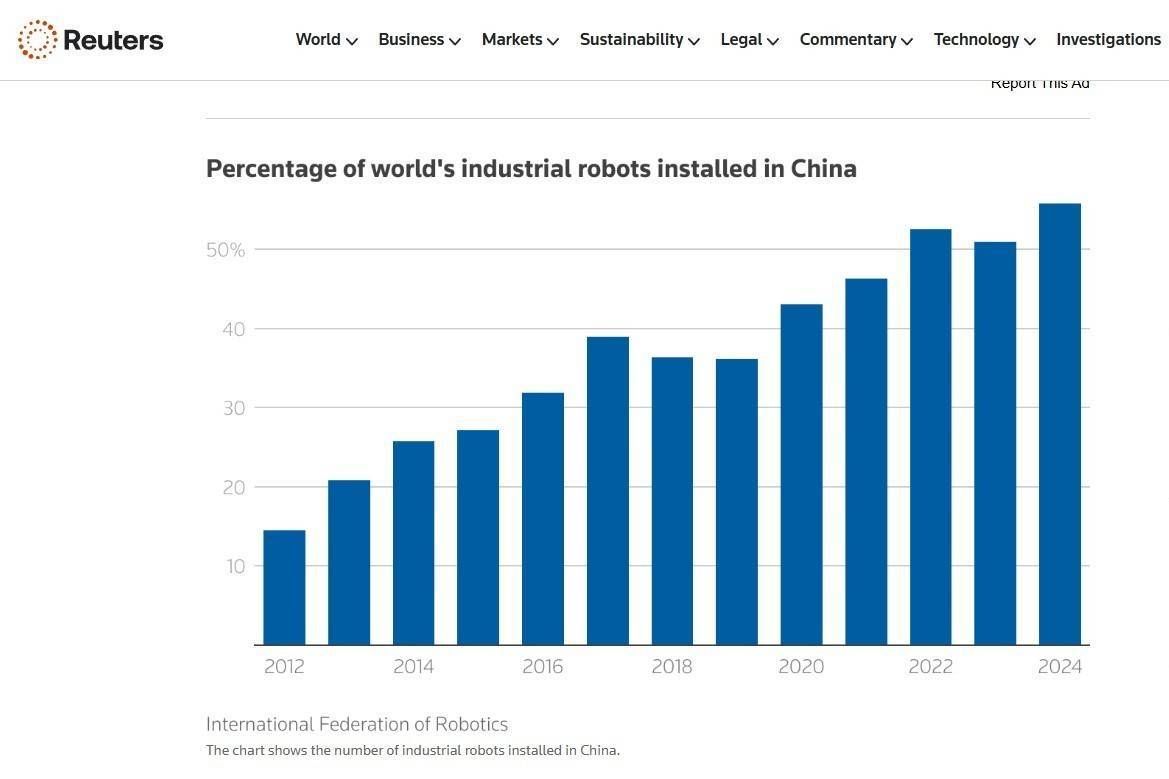
Core Insights - The article emphasizes the importance of a technology-driven "smart economy" in supporting China's economic development and facilitating its economic transformation [1][4]. Group 1: Economic Growth Drivers - Government policies aimed at supporting the "smart economy," including investments in artificial intelligence, semiconductors, and advanced manufacturing, have led to significant growth in the information technology and business services sectors since early 2024 [1]. - The proportion of industrial robots installed in China has been increasing, with over half of the world's industrial robots installed in the country over the past three years [4]. - The retail sector has benefited from targeted government policies, such as the trade-in policy implemented at the end of 2024, which has spurred growth in household appliances, furniture, and communication equipment [4]. Group 2: Consumer Trends - A shift in consumer preferences, particularly among millennials and Generation Z, is driving demand for new domestic products and services that combine tradition with modernity and leverage artificial intelligence and digital technologies [4][6]. - Emerging products and services, such as the sales of Pop Mart's Labubu dolls and the popularity of themed tea shops like "Bawang Chaji," highlight the potential for new consumption trends to break existing categories [4]. Group 3: Aging Population and New Business Opportunities - The aging population in China is creating new business opportunities in areas such as smart home technology, elderly care services, financial pension plans, and specialized healthcare products [6]. Group 4: Long-term Economic Transition - The transition to a sustainable consumption-driven economy in China is expected to be a long and complex process, but investments in advanced industries, innovation in products and services, and flexible policy-making can lay a solid foundation for this shift [6].