绿色消费

Search documents
从数字解构消费新生
Bei Jing Shang Bao· 2025-08-07 12:27
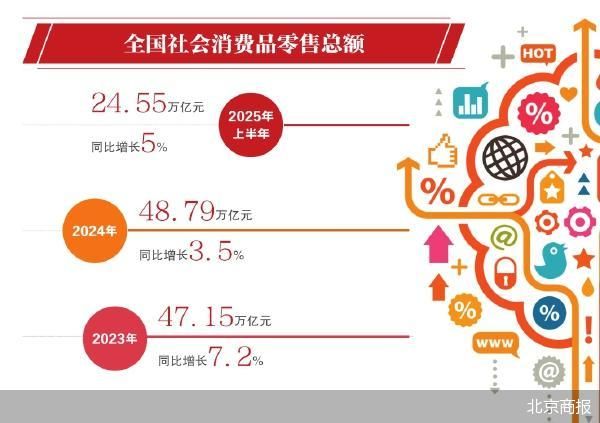
Core Insights - The article highlights the rapid restructuring of China's consumption landscape driven by digital technology, emphasizing the rise of service consumption, health-oriented spending, green consumption, the resurgence of lower-tier markets, and the proliferation of intelligent consumption. Consumption Trends - In the first half of 2025, growth in consumption upgrade products such as sports and entertainment goods, jewelry, home appliances, and cultural office supplies is projected to be 0% [2] - Online retail sales of physical goods are expected to grow by 0% due to policy incentives, with the "old-for-new" policy driving double-digit growth in retail sales of home appliances and communication equipment, accounting for 24.9% of total retail sales [2] - The retail sales of social consumer goods are projected to grow by 3.8% in 2024, with significant contributions from green and service consumption [2] Service Consumption - Service retail sales are expected to see a year-on-year growth of 20%, contributing significantly to the overall retail sales [2] - The demand for health and fitness services is increasing, with sports health service revenue expected to grow by 23.9% [2][3] - The recovery of service consumption is evident in the tourism sector, with domestic tourism revenue showing significant growth in 2024 [2] Green Consumption - Green consumption is becoming mainstream, with high-efficiency and smart home appliances experiencing rapid sales growth [2][3] - The retail volume of new energy vehicles is projected to grow by 1.7% in 2024, reflecting a shift towards sustainable consumption [2] Online Consumption - Online retail sales of physical goods reached 13.02 trillion yuan in 2023, with an 8.4% year-on-year growth [3] - The penetration rate of live e-commerce reached 37.8% in 2023, with a year-on-year increase of 24.3% [3] - The market size for live e-commerce is expected to reach approximately 5.8 trillion yuan in 2024, with a compound annual growth rate of 18% [3] Market Dynamics - The potential of lower-tier markets is being unlocked, with third-tier cities surpassing first and second-tier cities in sectors like tourism and automotive [2] - The "Xinjiang free shipping" initiative is expanding e-commerce opportunities in rural areas, reflecting a growing willingness to spend on health and wellness [2]

从商品到服务 消费市场进入深度调整期
Bei Jing Shang Bao· 2025-08-07 12:27
Core Insights - The Chinese consumption market is undergoing a significant structural transformation, shifting from a goods-driven model to a service-oriented one, presenting both new growth opportunities and challenges [1][3][6] - The importance of consumption in the national economy has been increasingly recognized, with policies aimed at boosting consumption being prioritized at both national and local levels [3][10] Consumption Market Trends - The growth rate of social retail sales (社零额) has been declining, reflecting a broader economic transition as GDP growth slows [1][6] - Service consumption is projected to account for 47% of household consumption by 2024, indicating a shift in consumer spending patterns towards services such as education, healthcare, and tourism [1][5] - Digital consumption is rapidly expanding, with online retail sales of physical goods reaching 27.6% of total retail sales in 2024, and in Beijing, this figure is as high as 40% [4][8] Factors Influencing Retail Sales Growth - The decline in retail sales growth is attributed to the transition from high-speed to medium-speed economic growth, alongside a shift in consumption structure from goods to services [6][7] - The contribution of final consumption to GDP growth has surpassed that of investment, highlighting the foundational role of consumption in stabilizing economic growth [7][8] Emerging Consumption Dynamics - New consumption drivers such as green consumption and digital consumption are emerging, with significant growth in sectors like electric vehicles and energy-efficient appliances [8] - The rise of domestic brands in various sectors, including fashion and beauty, reflects a growing trend towards "Guochao" (national tide) consumption [8] Policy Support and Market Mechanisms - Recent government policies aimed at stimulating consumption have been innovative, promoting collaboration across departments and encouraging green and smart consumption [10][11] - Market mechanisms are crucial for achieving supply-demand matching, yet challenges remain due to a lack of diversified supply and institutional barriers in service sectors [11][12] Challenges Facing the Consumption Market - Employment and income issues significantly impact consumer confidence and spending capacity [12][13] - The traditional supply model struggles to meet diverse consumer demands, and systemic barriers in sectors like education and healthcare hinder service development [13] - The transition from quantity to quality in consumption is essential, requiring comprehensive reforms in statistical systems, governance, and corporate structures to enhance consumer experience and confidence [13]

创新消费力|专访国务院发展研究中心市场经济研究所研究员王微:从商品到服务 消费市场进入深度调整期
Bei Jing Shang Bao· 2025-08-05 08:33
Core Insights - The Chinese consumption market is undergoing a significant structural transformation, shifting from goods consumption to service consumption, which presents both new growth opportunities and challenges [1] - The growth rate of social retail sales (社零额) has been declining, reflecting changes in economic development stages and consumption structure [1][5] - Service consumption is becoming a major growth driver, with its share in total household consumption expected to reach 47% by 2024 [1][4] Consumption Market Trends - The importance of consumption in the economy has been increasingly recognized, with policies aimed at boosting consumption being prioritized at both national and local levels [4] - New trends include a stable growth rate, emergence of new consumption drivers, and a shift from goods to service consumption, with digital and green consumption growing rapidly [4][7] - In Beijing, service consumption accounts for over 50% of household spending, with a projected growth of 6.1% in service consumption in 2024 [4] Changes in Social Retail Sales Growth - The decline in social retail sales growth is attributed to the transition of the economy from high-speed to medium-speed growth, alongside a shift in consumption structure [5] - The long-term trend indicates that service consumption will exceed 50% of household spending, becoming a primary source of consumption growth [5] Contribution of Consumption to Economic Growth - Consumption has become a more significant driver of economic growth compared to investment, especially in the context of uncertainties in international trade [6] - Prior to 2019, final consumption contributed over 50% to GDP growth, but recent fluctuations due to the pandemic have posed new challenges [6] Emerging Consumption Dynamics - Despite a slowdown in traditional consumption growth, new dynamics such as green and digital consumption are rapidly expanding [7][8] - The retail sales of new energy vehicles are projected to exceed 10 million units in 2024, marking a 40.7% year-on-year increase [8] Policy Support and Market Mechanisms - Recent years have seen a surge in consumption-boosting policies, with coordinated efforts across various government departments [9] - Market mechanisms play a crucial role in matching supply and demand, but challenges remain in addressing the mismatch between homogeneous supply and diverse consumer needs [10] Challenges Facing the Consumption Market - Key challenges include employment and income issues, which significantly impact consumer confidence and spending capacity [12] - The traditional supply model struggles to meet the diverse demands of consumers, and institutional barriers in service sectors like education and healthcare hinder growth [12] Future Outlook - The consumption market is at a critical juncture, requiring comprehensive reforms in statistical systems, governance, and corporate structures to fully realize its potential [13]

建设银行泰州分行:立足地方特色,主动担当作为 引金融活水“贷”动泰州消费
Jiang Nan Shi Bao· 2025-08-05 05:57
Core Viewpoint - The company is actively enhancing financial support for consumer spending in Taizhou, aligning with national policies to stimulate domestic demand and consumption, thereby injecting strong momentum into local economic growth [1][4]. Group 1: Financial Performance - As of the end of June, the company's personal consumption loans increased by 219 million yuan since the beginning of the year, leading the market share among peers [1]. - In the automotive sector, the company facilitated 230 million yuan in car installment transactions in the first half of the year, becoming a key financial force driving local consumption growth [1]. Group 2: Consumer Activation Strategies - The company focuses on core consumer areas such as home appliances, automobiles, and home decoration, creating a "Bank + Scenario" ecosystem [2]. - An exclusive five-year interest-free installment plan for new energy vehicles was launched, significantly increasing the sales proportion of new energy vehicles to 43.6% [2]. - The company partnered with major retailers to offer a "0 down payment, 3 months interest-free" home appliance installment plan, combined with a 10% government subsidy, resulting in a 25% year-on-year increase in average transaction value [2]. - A one-stop "old-for-new" service was introduced, optimizing the entire process of old appliance valuation, installment payment, and subsidy redemption, serving over 1,300 customers [2]. Group 3: Digital Empowerment - The company leverages financial technology to bridge online and offline consumption barriers, enhancing service convenience and stimulating new consumer enthusiasm [3]. - Online, the company integrated an installment payment option with Alipay, allowing for "one-click installment" for Taobao shopping [3]. - Offline, the company innovatively operated its "CCB Life App," integrating local government consumption vouchers with installment functions, enabling seamless transactions for consumers [3]. - In the first half of the year, online installment transaction volume surged by 40% year-on-year, with digital services effectively penetrating high-frequency consumption scenarios such as dining and retail [3]. - A flexible consumer loan product was introduced, allowing for monthly interest payments and on-demand borrowing, with credit limits raised to 500,000 yuan for high-quality customers [3]. Group 4: Collaborative Efforts - The company actively integrates into local economic development, aligning with provincial and municipal "New Consumption" policies and deepening cooperation with government and enterprises [4]. - Joint promotional activities with the municipal commerce bureau and key merchants resulted in over 2.6 billion yuan in stimulated consumption transactions [4]. - The company launched special credit card offers for overseas consumption and exclusive discounts for movies, enhancing the quality of consumer experiences [4]. - Future plans include focusing on emerging consumption trends such as county-level consumption, the silver economy, and green consumption, while exploring innovative financial products tailored to local needs [4].

以旧换新政策带来多重效应
Sou Hu Cai Jing· 2025-08-04 23:33
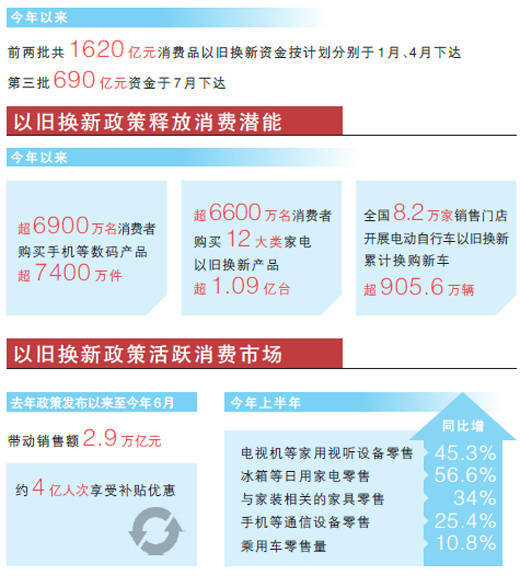
Group 1 - The core viewpoint of the articles highlights the significant impact of the "old-for-new" consumption policy, which has expanded its coverage to include various consumer electronics and appliances, resulting in substantial consumer benefits and increased sales [3][4]. - Over 66 million consumers have participated in the "old-for-new" program, purchasing more than 109 million units of 12 categories of home appliances, and over 69 million consumers have bought more than 74 million digital products [3]. - The sales revenue driven by the "old-for-new" policy reached 2.9 trillion yuan, benefiting approximately 400 million people with subsidy discounts [3]. Group 2 - The policy has optimized consumption structure by promoting the adoption of smart products, enhancing convenience and efficiency in consumers' lives [4]. - The penetration rate of new energy vehicles reached 50.2% in the first half of the year, reflecting a significant increase in the adoption of environmentally friendly consumption methods [4]. - The recycling of resources has improved, with 195.5 million scrapped vehicles recovered in the first quarter, marking a 58.6% increase [4]. Group 3 - The Ministry of Commerce plans to organize more "old-for-new" promotional activities to further enhance the effectiveness of the consumption policy [5].
政策引导向“绿”而行 绿色消费潜力加速释放
Zheng Quan Ri Bao· 2025-08-04 16:06
8月4日,中国机械工业联合会发布数据显示,今年上半年,新能源汽车市场渗透率达44.3%,创同期历 史新高。 洪勇认为,持续激发绿色消费潜力,要多措并举构建绿色消费长效机制:第一,要加强绿色产品的研发 和供给,提高绿色产品的质量和性价比,满足消费者的多样化需求;第二,要加大绿色消费的宣传力 度,提高消费者的环保意识和绿色消费理念,培育绿色消费文化;第三,要完善绿色消费的相关政策和 标准体系,加强市场监管,规范市场秩序,为绿色消费创造良好的发展环境;第四,要推动绿色消费与 绿色生产、绿色流通等环节的衔接,形成绿色发展的良性循环。 近年来,我国绿色消费发展迅速,新能源汽车、节能家电、智能家电、绿色家装等绿色消费产品逐渐成 为更多人的消费选择。 付一夫建议,应优化政策支持,通过实施财政补贴与税收减免等方式鼓励企业进行绿色转型,并建立跨 区域政策协调机制。 今年2月份,国家市场监管总局等五部门印发的《优化消费环境三年行动方案(2025—2027年)》提出"聚 焦数字消费、绿色消费、健康消费等打造新型消费场景";3月份,中共中央办公厅、国务院办公厅印发 的《提振消费专项行动方案》提出,"加大消费品以旧换新支持力度""推动 ...
反对过度包装要“破”更要“立”
Ren Min Ri Bao· 2025-08-04 01:48
Group 1 - The excessive packaging of products is a growing concern in China, with consumer associations advocating for reduced packaging to promote green consumption and ensure compliance [1][2] - Packaging waste accounts for approximately 30%-40% of urban household waste in China, with significant resource consumption involved in producing packaging materials [1] - The Chinese government has implemented stricter regulations and standards to combat excessive packaging, resulting in a notable reduction in high-priced gift boxes and improved packaging efficiency in e-commerce [1][2] Group 2 - Luxurious packaging is often associated with issues like gift-giving violations and distorts the meaning of consumption, highlighting the need for a cultural shift towards more responsible consumption practices [2] - The packaging industry is crucial for connecting manufacturing and consumption, and there are opportunities for growth in sustainable packaging solutions, such as biodegradable materials [2][3] - The overall consumer goods industry must foster a green consumption trend by breaking old consumption habits and enhancing the supply of innovative, quality products that balance environmental considerations with consumer experience [3]
健全绿色消费激励机制 四川可试点“绿色行为银行”
Si Chuan Ri Bao· 2025-08-03 22:17
Core Viewpoint - Green consumption is fundamentally about supporting environmentally friendly products, enterprises, and industries, directly driving the development of the green economy while maximizing resource efficiency and minimizing environmental impact [1][2] Group 1: Definition and Importance of Green Consumption - Green consumption is defined as consumption behavior characterized by resource conservation and environmental protection, emphasizing thrift, waste reduction, and the selection of efficient, eco-friendly products and services [1] - The economic significance of green consumption lies in its ability to guide enterprises to enhance research and application of green technologies, thus promoting the overall transition of the economic system towards sustainability [1][2] Group 2: Current Incentive Mechanisms for Green Consumption - Existing green consumption incentive mechanisms in China include fiscal subsidies and tax incentives, financial support and innovation, price mechanism effects, and market-driven incentives [1] - In Sichuan, various measures have been implemented to promote green consumption, such as upgrading the old-for-new subsidy policy and providing low-interest loans and insurance for purchasing new energy vehicles and energy-efficient appliances [1][2] Group 3: Quantification and Evaluation of Green Consumption Behavior - The "Green Behavior Bank" concept is proposed as a financial-oriented incentive mechanism that quantifies low-carbon behaviors into points for rewards, facilitating cross-regional and cross-scenario point redemption [2] - The successful implementation of such a system requires continuous policy support and a user-friendly reward structure to maintain user engagement [2] Group 4: Steps for Improving Green Consumption Incentive Mechanisms - The improvement of green consumption incentive mechanisms should consider temporal differences, with initial focus on education, followed by increased economic incentives, and ultimately achieving market-driven long-term mechanisms [2] - Regional differences must also be taken into account, with suggestions for Sichuan to develop eco-tourism and support local green product production through targeted incentives [2] Group 5: Establishing a Unified Green Product Certification System - The establishment of a unified green product certification system is crucial to reduce consumer confusion and enhance market trust, addressing the current issue of multiple certification standards [2] - A national-level information platform is recommended to publicize certification standards and results, combating "greenwashing" and improving consumer awareness of unified certifications [2]
“购在中国”激活消费新引擎
Jing Ji Ri Bao· 2025-08-03 21:56
Core Viewpoint - The article emphasizes the need for further refinement in consumer promotion efforts, focusing on institutional innovation and environmental optimization [1][3]. Group 1: Policy and Economic Impact - The "Buy in China" initiative launched during the Hainan Consumer Expo has effectively stimulated economic recovery through a combination of policy measures and innovative scenarios [1][2]. - Data from the Ministry of Commerce indicates that during the 2025 May Day holiday, foot traffic in 50 monitored pedestrian streets and business districts increased by 6.4% year-on-year, while online retail sales of physical goods grew by 8.2%, showcasing the positive impact of policies on consumer confidence [1][2]. Group 2: Consumer Behavior and Market Trends - The initiative has shifted from traditional promotional models to a deep integration of commerce, tourism, culture, and sports, reconstructing the value chain of consumption from mere product functionality to emotional resonance and lifestyle innovation [2]. - The "Buy in China" program has led to a significant increase in domestic demand, with the "old-for-new" policy driving substantial growth in large-scale consumption [2]. Group 3: Challenges and Future Directions - There are still areas for improvement in boosting domestic demand, such as the homogenization of business formats and insufficient integration of green consumption [3]. - Future consumer promotion efforts should focus on upgrading smart services, enhancing green innovation, strengthening regional collaboration, and accelerating alignment with international rules [3].
国补政策持续加码:690亿元资金十月下达,全年3000亿目标即将完成
Sou Hu Cai Jing· 2025-08-02 00:50
Core Insights - The National Development and Reform Commission (NDRC) has announced the full allocation of 690 billion yuan for the third batch of special bonds supporting the replacement of consumer goods, with a fourth batch of the same amount set to be released in October, marking a significant push towards the annual target of 3000 billion yuan in subsidies [1][3] Policy Implementation - The 2025 special bonds include 500 billion yuan earmarked for "two new" policies, with 300 billion yuan directly supporting the replacement of consumer goods [3] - As of August 1, all three batches of funds have been allocated, with the fourth batch scheduled for October to ensure orderly use of the total 3000 billion yuan by the end of December [3] - Local governments are required to detail their funding usage plans to prevent inefficiencies and ensure effective allocation [3] Market Impact - By July 16, 2.8 billion people had claimed subsidies for replacing consumer goods, leading to sales exceeding 1.6 trillion yuan [3] - In the home appliance sector, retail sales of major appliances increased by 30.7% year-on-year, with over 65% of sales being energy-efficient products [3] - In the automotive sector, retail sales of passenger vehicles grew by 10.8%, with the share of new energy vehicle replacements rising by 18 percentage points to 42% compared to 2024 [3] Regulatory Measures - A comprehensive regulatory framework has been established involving multiple government departments to ensure the proper implementation of the subsidy program [4] - Measures include dynamic pricing monitoring, traceable fund management, consumer rights protection, and the use of big data to prevent fraudulent claims [5] Strategic Direction - The 3000 billion yuan subsidy program is not only a short-term response to insufficient domestic demand but also a long-term strategy for promoting green industrial transformation [4] - Future plans include integrating the subsidy program with carbon markets and green credit policies to create a dual-driven green consumption ecosystem [4]