美联储货币政策

Search documents
美国货币市场年末资金压力升高 华尔街预期美联储将开展行动
Sou Hu Cai Jing· 2025-12-09 18:39
Core Insights - Wall Street banks are preparing for increased year-end pressure in the money market, with analysts expecting that funding pressures may prompt the Federal Reserve to consider measures to rebuild liquidity buffers in the $12.6 trillion market [1] - The upcoming Federal Reserve interest rate meeting is the first since the central bank halted balance sheet reduction in December, and there is uncertainty regarding the policy direction following this pause [1] - Market participants are increasingly advocating for specific measures to alleviate liquidity pressures, such as restarting direct purchases of securities to bolster reserves in the financial system [1] - Analysts anticipate that Federal Reserve Chairman Jerome Powell will provide clues about the next steps during the monetary policy meeting concluding on Wednesday [1] - Gennadiy Goldberg, head of U.S. interest rate strategy at TD Securities, suggests that Powell may indicate that the Fed is closely monitoring the front end of the yield curve and may be nearing a point where it must begin increasing reserves [1]
国际清算行:散户投机买入推动黄金迈进“泡沫区域”
Zhi Tong Cai Jing· 2025-12-09 07:13
Group 1 - The core viewpoint of the articles indicates that retail investors have driven the recent rise in gold prices, shifting gold from a traditional safe-haven asset to a more speculative one [1] - The Bank for International Settlements (BIS) noted that there is evidence of retail investors attempting to profit from the gold price surge, which has amplified this upward trend and deviated from the typical safe-haven behavior [1] - BIS highlighted that it is the first time in at least 50 years that gold and stocks have both entered a "bubble territory" simultaneously, suggesting that after such explosive growth, a sharp adjustment is likely to occur [1] Group 2 - Due to rising bond yields, gold and silver futures prices declined, with December gold futures falling by 0.6% to $4187.20 per ounce, ending a three-day winning streak [2] - December silver futures dropped by 1.1% to $57.779 per ounce, marking the fourth decline in five trading days [2] - The market is pricing in a potential interest rate cut by the Federal Reserve, while investors are awaiting further guidance on monetary policy from Powell [2]
美联储议息会议临近 美元指数陷关键博弈
Jin Tou Wang· 2025-12-09 02:32
Core Viewpoint - The USD index has shown significant downward volatility since December 2025, currently fluctuating around 99.10, down 1.2% from its late November peak, with the upcoming Federal Reserve meeting on December 9-10 being a key catalyst for its future movement [1] Group 1: Federal Reserve Influence - The Federal Reserve's monetary policy direction is a critical internal variable determining the USD index's movement, with an 89.2% probability of a 25 basis point rate cut in December, up from 71% a week prior [1] - The expectation of a more accommodative monetary policy is fueled by moderate U.S. economic data, including cooling employment momentum and weak manufacturing activity, alongside inflation levels returning to a more acceptable range for the Fed [1] - The potential appointment of Kevin Hassett as the next Fed Chair, who aligns with dovish policies, has intensified downward pressure on the USD, reflecting political influences on monetary policy [1] Group 2: Support Factors for USD - Despite the downward trend, the USD index is somewhat supported by the relative weakness of non-USD currencies, particularly the Euro, which has been affected by stagnant economic growth in Germany and political crises in France [2] - The Japanese Yen has weakened due to concerns over debt from economic stimulus plans, while the British Pound faces pressure from rising unemployment and budgetary concerns, which collectively bolster the USD's upward momentum [2] - Positive signals from recent U.S. economic data, such as an increase in the Michigan Consumer Sentiment Index from 51.0 to 53.3, may partially offset the downward pressure on the USD [2] Group 3: Future Outlook - There is significant divergence in forecasts regarding the USD index's future trajectory, with some analysts predicting a "down then up" pattern in December due to upcoming GDP data releases [3] - Structural factors such as rising U.S. debt, potential interventions in Fed independence, and global de-dollarization trends could undermine confidence in the USD in the long term [3] - Key variables influencing the USD index will include the Fed's rate decision, Chairman Powell's statements during the press conference, and the final nomination of the Fed Chair by the Trump administration, with expected increased volatility in the forex market around the meeting [3]
【环球财经】市场关注美联储货币政策走向 纽约股市三大股指8日均下跌
Sou Hu Cai Jing· 2025-12-08 23:09
Group 1 - The New York stock market indices showed mixed performance on December 8, with all three major indices closing lower. The Dow Jones Industrial Average fell by 215.67 points to 47,739.32, a decrease of 0.45%. The S&P 500 index dropped by 23.89 points to 6,846.51, down 0.35%. The Nasdaq Composite Index decreased by 32.22 points to 23,545.90, a decline of 0.14% [1] - Among the sectors in the S&P 500, ten out of eleven sectors declined, with the communication services and materials sectors leading the losses at 1.77% and 1.66%, respectively. The technology sector was the only one to gain, increasing by 0.93% [1] Group 2 - The yield on the 10-year U.S. Treasury bond rose sharply to 4.19% before retreating, impacting market sentiment negatively. A report from Bank of America Global Research predicts that the Federal Reserve will likely cut rates by 25 basis points at the upcoming meeting, with a hawkish outlook on future monetary policy [2] - The chief investment officer of Integrated Partners, Stephen Kolano, indicated that the market has been reflecting a high probability of a 25 basis point rate cut by the Federal Reserve. If the Fed does not cut rates, the stock market could see a decline of 2% to 3% [2] - Kolano also mentioned that if expectations for a rate cut are pushed further back, the market may face negative pressure in the first half of next year [3] Group 3 - Netflix's stock fell by 3.44% following its announcement of an agreement with Warner Bros. Discovery, while Paramount Skydance Corporation launched a hostile takeover bid valued at $108 billion for Warner Bros. Discovery's assets, resulting in a 4.41% increase in Warner Bros. Discovery's stock and a 9.02% rise in Paramount Skydance's stock [3] - Berkshire Hathaway experienced a 1.41% decline in its stock price amid changes in its executive team, indicating that Warren Buffett is preparing for retirement [3]
宏观与大宗商品周报:冠通期货研究报告-20251208
Guan Tong Qi Huo· 2025-12-08 11:00
1. Report Industry Investment Rating - No information provided in the report 2. Core Viewpoints of the Report - The key point of the current market macro - logic is the candidate for the next Fed Chair. The market is trading on the expectation of looser policies, leading to pressure on US Treasury yields and the US dollar, and a rebound in risk assets [5][10]. - The change of the Fed Chair in early 2026 will be an important event affecting US monetary policy. The choice of the new chair is essentially a decision between "the most obedient" and "the most suitable", which may bring significant policy changes [7][73]. - The Fed's December interest - rate cut probability has little change, with an 82.8% probability of a 25bp cut to 3.5 - 3.75% [6][64]. 3. Summary by Relevant Catalogs Market Overview - The market is focusing on the next Fed Chair. With Powell about to step down and Trump involved, Kevin Hassett is the hot candidate. The market expects looser policies, causing US Treasury yields and the US dollar to decline, and risk assets to rebound. Global stocks and most commodities rose, A - share major indices rebounded, the BDI index rose, the US dollar index fell, and most non - US currencies strengthened. Commodities showed mixed performance, with precious metals and non - ferrous metals rising, and oil prices rebounding [5][10]. - In the domestic market, the bond market showed mixed performance with near - term strength and long - term weakness, stock indices rebounded across the board, and most commodity sectors declined. The Wind Commodity Index had a weekly change of 1.95%, with 3 out of 10 commodity sector indices rising and 7 falling. Non - ferrous metals soared, precious metals were strong, and grains were firm, while other sectors declined, with the non - metallic building materials sector leading the decline by more than - 4% [5][16]. Capital Flows - The commodity futures market saw a significant overall inflow of funds last week. The non - ferrous metals, grains, coking coal and steel ore, soft commodities, and chemical sectors had obvious inflows, while the oilseeds, agricultural products, and non - metallic building materials sectors had significant outflows [6][18]. Variety Performance - Last week, domestic major commodity futures showed mixed performance. The top - rising commodities were silver futures, copper futures, and the container shipping index, while the top - falling ones were glass, lithium carbonate, and ethylene glycol [23]. - From the perspective of volume - price matching, there were many commodity futures with obvious increasing positions and rising prices, especially copper futures; there were also many with obvious increasing positions and falling prices, such as soda ash, PVC, and sugar futures [25]. Volatility Characteristics - The volatility of the international CRB Commodity Index changed little last week. The volatilities of the domestic Wind Commodity Index and the Nanhua Commodity Index diverged. Among sectors, the volatilities of commodity futures sectors showed mixed performance, with the soft commodities and agricultural products sectors having obvious volatility declines, and the non - ferrous metals sector having a remarkable volatility increase [27]. Data Tracking - Internationally, major commodities generally rose. The BDI index rose, the CRB index had a small increase, soybeans fell while corn rose, and copper, oil, gold, and silver all rose, with the gold - silver ratio dropping significantly [29]. - Domestically, the asphalt production rate rebounded slightly, real - estate sales were at a low level, freight rates continued to diverge, and short - term capital interest rates were at a low level [43]. Macro Logic - Stock indices oscillated and rebounded, valuations recovered, and the equity risk premium (ERP) changed little. In terms of style, value stocks performed better than growth stocks [32][33]. - Commodity price indices rose significantly, while the inflation expectation rebounded weakly [36]. - The "fund seesaw" effect between stocks and commodities and the price difference between domestic and international commodities: last week, stocks oscillated and rebounded, commodities recovered, and the commodity - stock return difference changed little. The domestic and international commodity performance differences were not significant, and the return difference between domestic and international commodity futures hovered around 0 [39][42]. - US Treasury yields were weak in the short - term and strong in the long - term, the term structure steepened, the term spread changed little, and the real interest rate and the gold price rose together [51]. - US Treasury yields rose slightly, the China - US interest rate spread narrowed, the inflation expectation rose slightly, financial conditions were loose, the US dollar fell slightly, and the RMB continued to appreciate [54]. - The US high - frequency "recession indicator" improved, the Citi Economic Surprise Index showed divergence, and the 10Y - 3M US Treasury yield spread widened significantly [56]. Fed Chair Succession - Trump has determined the candidate for the next Fed Chair and will announce it soon. Kevin Hassett is the most popular candidate, and the market has reacted to the expectation of a "more dovish" chair. The candidate list has been narrowed to five, including Hassett, Christopher Waller, Michelle Bowman, Kevin Warsh, and Rick Rieder [67][69]. - The choice of the next Fed Chair is essentially between "the most obedient" and "the most suitable". Hassett's appointment may lead to a looser monetary policy cycle for political growth goals but damage the Fed's independence and the US dollar's credit in the long run. Waller's appointment may lead to a more gradual policy shift and more reliance on traditional economic data [72][74]. - Kevin Hassett has publicly responded and is likely to accept the nomination if selected. Trump may announce the nominee before December 25. If Hassett is elected, it may raise concerns about the Fed's independence, cause market fluctuations during the power transition, and Powell's decision to stay as a governor is also a focus [77]. This Week's Focus - Monday (December 8): Eurozone December Sentix Investor Confidence Index, Ukrainian President Zelensky's visit to London (tentative) - Tuesday (December 9): US October JOLTs Job Openings, US November NFIB Small Business Confidence Index, Reserve Bank of Australia Interest Rate Decision - Wednesday (December 10): China November CPI, US 10 - year Treasury Bond Auction, Bank of Canada Interest Rate Decision - Thursday (December 11): Fed FOMC Interest Rate Decision and Economic Projection Summary & Powell Press Conference, OPEC Monthly Oil Market Report - Friday (December 12): Nasdaq 100 Index Annual Component Adjustment [79]
美联储货币政策取向 决定美元指数走势
Jin Tou Wang· 2025-12-08 02:46
Core Viewpoint - The US dollar index has shown significant downward volatility since December 2025, driven by expectations of a Federal Reserve rate cut, changes in the Fed chairperson, and the performance of non-US currencies [1][2]. Group 1: Federal Reserve Policy and Market Expectations - The core internal variable determining the dollar index's movement is the Federal Reserve's monetary policy, with the debate over a potential rate cut in December becoming a focal point for short-term market speculation [2]. - As of December 3, the market pricing probability for a 25 basis point rate cut by the Fed in December has risen to 89.2%, while the probability of maintaining the current rate is only 10.8% [2]. - Major institutions, including Bank of America, have shifted their forecasts from "pausing rate cuts" to supporting a 25 basis point cut in December, with expectations of an additional 50 basis points cut by June and July 2026, potentially lowering the terminal rate to the 3.00%-3.25% range [2]. Group 2: Leadership Changes and Market Sentiment - The anticipated change in the Fed chairperson, with Kevin Hassett as the leading candidate, has intensified downward pressure on the dollar index due to his dovish stance advocating for immediate rate cuts to mitigate recession risks [3]. - The political implications of Hassett's potential appointment have been factored into market pricing, suggesting that as long as this expectation remains, the risk of dollar depreciation will persist [3]. - Internal policy disagreements within the Fed, compounded by the US government shutdown leading to a lack of key economic data, create uncertainty for the upcoming monetary policy meeting [3]. Group 3: External Factors Influencing the Dollar Index - The recent decline in the dollar index is partly attributed to the relative strength of non-US currencies, particularly the Chinese yuan, which appreciated against the dollar, reaching a high of 7.06 on December 3 [4]. - Despite facing growth challenges, expectations regarding policy adjustments from major economies like Europe and Japan have been gradually absorbed by the market, slowing the depreciation of the euro and yen, which weakens the dollar's relative strength [4]. - Global financial market risk sentiment influences the dollar's safe-haven asset status, while uncertainties surrounding the Trump administration's tariff policies leave additional room for dollar index fluctuations [4]. Group 4: Divergent Views on Future Dollar Index Trends - There is significant divergence among scholars and institutions regarding the future trajectory of the dollar index, with the core debate centered on the extent and sustainability of policy easing [5]. - The chief economist at Minsheng Bank, Wen Bin, suggests that the dollar index may experience a "down then up" trend in December, with limited overall disturbance to non-US currencies [5]. - Structural factors undermining confidence in the dollar, such as the rising scale of US debt, potential interventions by the Trump administration in Fed independence, and the gradual trend of de-dollarization globally, continue to persist [5].
吴说本周宏观指标与分析:美联储利率决议、“美联储影子主席”哈塞特以及日本央行行长讲话
Sou Hu Cai Jing· 2025-12-07 17:24
Group 1 - The U.S. November ADP employment figure decreased by 32,000, marking the lowest level since March 2023, with expectations set at an increase of 10,000 and a previous value of 42,000 [1] - The initial jobless claims for the week ending November 29 were reported at 191,000, below the expected 220,000, with the previous value revised from 216,000 to 218,000 [1] - The U.S. September core PCE increased by 2.8% year-on-year, down from the previous value of 2.9%, reaching a three-month low, while market expectations were for a consistent 2.9% [1] Group 2 - Key upcoming events include the Federal Reserve's interest rate decision on December 11 and a press conference by Chairman Powell shortly after [1] - The release of China's November CPI year-on-year and M2 money supply year-on-year is scheduled for December 10 [1] - The "shadow chairman" of the Federal Reserve, Hassett, is set to attend the CEO Council Summit [2]
中信证券:大类资产将从相对模糊混沌的状态转向更明确的趋势,迎来破局时点
Sou Hu Cai Jing· 2025-12-07 05:35
Core Viewpoint - The overall market is experiencing volatility due to a policy vacuum, with expectations for a positive policy direction emerging from upcoming meetings in December [1][2]. Macro and Policy - Economic fundamentals have shown relative weakness in the second half of the year, yet risk assets have outperformed safe-haven assets, indicating that asset pricing is driven more by long-term expectations than short-term economic performance [2]. - Optimism regarding the Producer Price Index (PPI) and the anticipated policy strength for 2026 is fueling this positive outlook [2]. - The December Politburo meeting and the Central Economic Work Conference are critical for setting the policy tone for 2026 and could serve as a turning point for major asset classes [2]. Overseas Factors - The U.S. labor market remains under pressure, necessitating potential interest rate cuts by the Federal Reserve in December, although the long-term impact of the labor market on monetary policy is diminishing [3]. - China's international competitiveness in exports has improved, and the country has mitigated some negative impacts from tariffs through re-export trade, suggesting a better-than-expected foreign trade outlook [3]. Asset Allocation Strategy - Following the December meetings, major assets are expected to transition from a state of ambiguity to clearer trends, marking a pivotal moment for asset allocation [4]. - Bond yields are reasonable but lack attractiveness, while stock market valuations have slightly declined, maintaining a high-risk appetite in the market [4]. - There is optimism regarding fiscal policy strength, which may enhance the attractiveness of equity assets [4]. - In terms of bond investments, a focus on medium- to short-term bonds is recommended due to a generally accommodative monetary policy, despite market sentiment being fragile [4]. - For commodities, attention should be given to non-ferrous metals, which are expected to show a clear contraction trend in supply [4].

布米普特拉北京投资基金管理有限公司:多项数据预示美国劳动力市场动能减弱
Sou Hu Cai Jing· 2025-12-06 12:32
然而,与稳定的失业率形成对比的是,民间数据反映出就业创造动能的减弱。据Revelio Labs报告,美国经济在十一月份减少了约九千个工作岗位,这是继 十月份估算减少九千一百个岗位之后,连续第二个月出现下滑。岗位流失主要集中在休闲和酒店业、零售业以及制造业。 在美国官方就业报告因故推迟发布的情况下,多项民间机构数据与联储估算为市场提供了观测劳动力市场的替代窗口。最新信息显示,美国失业率保持稳 定,但新增就业岗位出现收缩,为经济前景增添了不确定性,并可能影响美联储近期的政策决策。 另一份受市场密切关注的ADP就业报告也传递了类似信号。报告显示,十一月美国民间部门就业岗位减少三点二万个,为二零二三年三月以来的最大月度降 幅,与市场此前预期的增加形成鲜明反差。 芝加哥联邦储备银行本周四公布的估算数据显示,十一月份美国失业率维持在百分之四点四左右,与十月份水平基本持平。这一估算旨在为政策制定者提供 更及时的经济指标参考。具体而言,未经四舍五入的失业率从十月的百分之四点四六微幅变动至十一月的百分之四点四四,显示劳动力市场整体状态变化不 大。美国劳工统计局上一次公布的官方数据为九月份百分之四点四四的失业率。 当前,美国劳动 ...


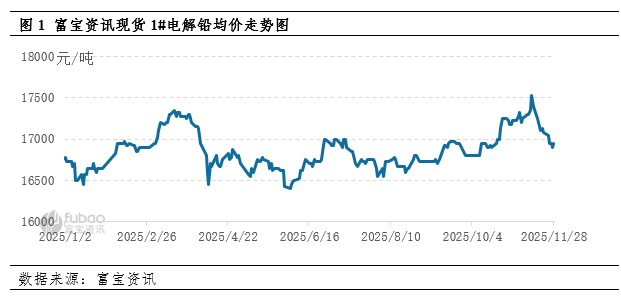
铅:多空因素交织,12月铅价或先涨后跌
Sou Hu Cai Jing· 2025-12-05 09:27
基本面来看,供应相对稳定,济源、湖南等地区散单货源有限,支撑了现货价格的相对坚挺。需求端来 看,下游铅酸蓄电池企业开工率仍维持在70-75%的水平,市场低价接货积极性尚可。此外,导致上海 期货交易所的铅锭仓单库存持续下滑。当前仓单库存已不足2万吨,处于近一年来的最低水平,去库对 铅价有一定提振。市场铅锭社会库存预计整体仍处相对低位,结构性支撑依然存在。此外,以往临近中 旬交割周期,资金层面存在惯性拉涨意愿,或进一步助推盘面走强。 本月上旬,伦铅价格表现强势,持续走高,于月中最高运行至2097美元/吨,创下自2025年4月以来的最 高水平。在此强劲带动下,国内铅价同步走强。与此同时,国内市场需求尚可,叠加散单货源供应紧张 的市场结构,共同推升了国内铅价。 进入下旬,市场关注焦点转向美联储货币政策动向。由于降息预期存在较大不确定性,投资者风险偏好 趋于谨慎,市场整体情绪逐渐转向偏空。部分前期参与资金为规避风险选择陆续离场,导致市场支撑力 度减弱。受此影响,国内铅价承压回调,呈现震荡下行态势,下旬整体走势较上旬明显转弱。 12月来看,多空因素交织,预计铅价或先涨后跌。 有利因素: 宏观面:美联储内部对12月FOMC ...