电动化转型

Search documents
车展对话 | 东风本田总经理渡边丈洋:部分电车销量不乐观 深化与中国产业链合作、降本提速
2 1 Shi Ji Jing Ji Bao Dao· 2025-04-30 01:58
东风本田汽车有限公司总经理渡边丈洋 东风本田汽车有限公司执行副总经理潘建新 整车智能电动化转型下,去年新能源乘用车整体渗透率一举冲破五成。一方面,自主品牌市占率不断走 高,另一面,合资车厂变革迟缓,销量低迷。 数据显示,今年一季度,东风本田累计销量75724台,同比下降44.44%。而从单月销量来看,2025年以 来,其已连续3个月同比下滑。 "目前整个汽车行业竞争非常激烈,面临的环境也非常严峻,单纯以牺牲利润换取短期份额不可持续, 我们坚持长期主义,通过多方位的举措维持公司正常运营,并实现高质量增长。"4月23日,东风本田总 经理渡边丈洋在接受包括21世纪经济报道在内的记者采访时表示。 渡边丈洋进一步表示:"目前,东风本田部分电动车销量不太乐观,这促使我们不断探索能打动中国客 户的车型。在这个过程中,中国完善且全球领先的电动汽车产业链为我们提供了强大助力。我们将深化 与国内产业链的合作,实现降本提速,与中国市场同频共振。" 受访人: (以下为采访实录,有删节) 《21世纪经济报道》(以下简称《21世纪》):东风本田如何应对电动车销量下滑态势? 渡边丈洋:目前,东风本田部分电动车销量不太乐观,这促使我们不断探 ...
申华控股(600653) - 申华控股2025年一季度主要经营数据公告
2025-04-29 09:21
本公司监事会及全体监事保证公告内容不存在任何虚假记载、误导性陈述或者 重大遗漏,并对其内容的真实性、准确性和完整性承担个别及连带责任。 根据《上市公司行业信息披露指引第二号——房地产、第四号——电力、第五号—— 零售》的要求,辽宁申华控股股份有限公司(简称"公司")现将 2025 年一季度主要经 营数据披露如下: 证券代码:600653 证券简称:申华控股 编号:临 2025—19 号 辽宁申华控股股份有限公司 2025 年一季度主要经营数据公告 - 1 - 1、汽车销售:2025 年 1-3 月,公司实现合并口径宝马品牌销售 2,394 辆,同比下降 11%。 近日,宝马集团公布了 2025 年第一季度的销量,数据显示中国市场 2025 年第一季度累计交 付 155,195 辆,同比下滑 17.2%。公司凭借高效的管理和优质的服务已尽力减少市场下滑带来 的不利影响,面对竞争加剧和电动化转型的局面,公司和宝马厂商均已开始做出调整。 2025 年,宝马将正式发布全新的 Neue Klasse 平台架构,同时计划推出 10 款重磅新车型。 除已在售的全新 BMW X3 长轴距版,全新 BMW M235L 四门轿跑 ...

弗兰克·斯特芬·瓦利泽:宾利首款纯电车型2027年引入中国市场
Zhong Guo Qi Che Bao Wang· 2025-04-29 02:01
去年,宾利宣布根据市场实际情况,调整电动化转型战略。对此,弗兰克·斯特芬·瓦利泽向记者表示,宾利汽车基于全球客户对插电混动车型的积极反 馈调整了商业战略,最新发布的"Beyond100+"商业战略将宾利插电混动车型的生命周期从2030年延长至2035年。自2035年起,宾利将全面转型为纯电动车 型的生产。"按照最新计划,首款纯电动宾利车型预计于2027年引入中国市场。该车将会是一款更加紧凑的全新SUV车型,开创全新的细分市场。目前该项 目进展顺利,几周之前我已经在雪地路况下试驾了这款新车,体验非常好。" 弗兰克·斯特芬·瓦利泽透露。 作为2025上海车展惟一参展的超豪华品牌,宾利携全雅度版最新车型阵容:新宾利飞驰雅度版、欧陆雅度版及欧陆敞篷雅度版三款车型在上海车展完成 全球公众首秀。宾利官方提供的数据显示,该系统由先进的4.0升V8发动机与动力强劲的电机组成,最大功率可达680马力,峰值扭矩为930牛·米。 "新雅度版车型的推出标志着宾利汽车新款高性能混动系统的面世。中国是宾利汽车最重要的市场之一,上海车展也是全球最重要的车展之一。在这 里,我充分地感受到了中国市场的热情。所以,我们将最新的技术和产品第一时间 ...


中汽股份(301215) - 301215中汽股份投资者关系管理信息20250428
2025-04-28 13:04
Group 1: Company Performance - The company's Q1 revenue reached 88.0173 million yuan, an increase of 20.2697 million yuan, representing a growth of 29.92% year-on-year [4] - The net profit attributable to shareholders was 28.9763 million yuan, up by 5.5927 million yuan, with a growth rate of 23.92% [4] - The increase in performance is attributed to rising industry demand and successful client acquisition, particularly in the smart connected vehicle sector [4] Group 2: Industry Standards and Opportunities - The Ministry of Industry and Information Technology (MIIT) has raised the standards for intelligent driving testing, which will enhance the safety and quality responsibilities of automotive manufacturers [3] - This regulatory change is expected to create significant development opportunities for third-party testing service providers, benefiting the company's smart connected vehicle testing business in the long term [3] Group 3: Testing Services and Pricing - The company employs two pricing models: one based on time or mileage as per contract, and another project-based model tailored to client needs [6] - Testing costs for vehicles can range from millions to tens of millions of yuan, depending on the specific requirements of each automotive manufacturer [6] Group 4: Facility Development - The company has two testing facilities: the first focuses on traditional vehicle performance validation, while the second, located in Yangtze River Delta (Yancheng), is a leading facility for smart connected vehicle testing [7] - The second facility supports a wide range of testing scenarios, including heavy commercial vehicles and emerging technologies like flying cars [7] Group 5: Financial Outlook - The company anticipates an annual depreciation cost of approximately 80 million yuan for its facilities [6] - Fixed costs, primarily from labor and asset depreciation, significantly impact the company's gross margin, which may experience fluctuations in the short term due to the new facility's operational ramp-up [8]
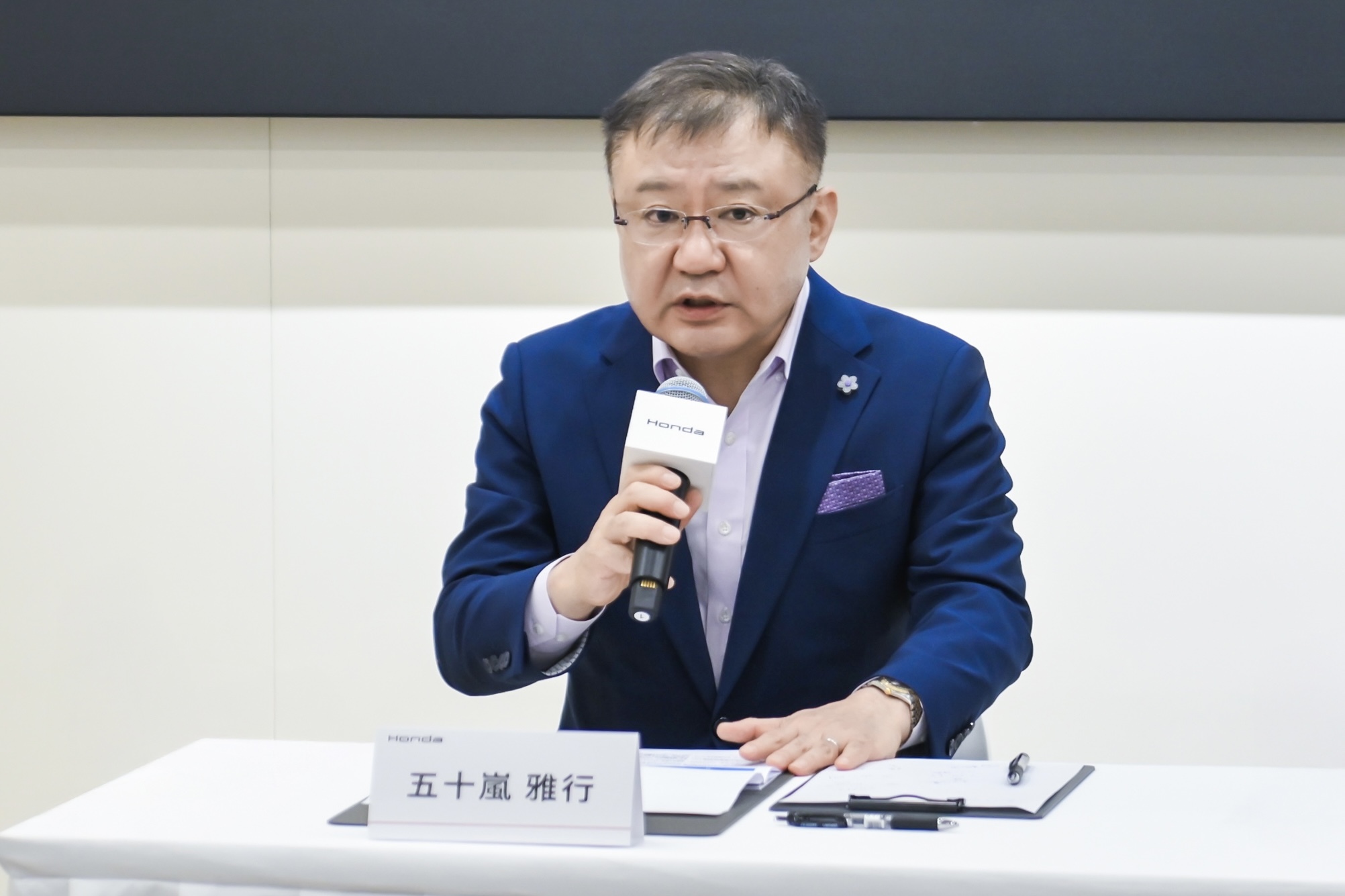
车展季·大咖说丨以“中国速度”加速破局 本田中国五十岚雅行:与中国供应商合作不是简单的“拿来主义”
Mei Ri Jing Ji Xin Wen· 2025-04-28 07:39
Core Viewpoint - Honda is in a "transition period" as it accelerates its shift towards new energy vehicles in 2024, facing challenges due to high reliance on fuel vehicle sales while beginning to establish its electric vehicle presence [1][4][6] Group 1: Market Performance - Honda's fuel vehicle sales still dominate its market presence in China, leading to significant pressure as the market for fuel vehicles contracts [4][6] - In 2024, Honda's total vehicle sales in China reached 852,000 units, a year-on-year decline of 30.9% [6] Group 2: Strategic Partnerships - At the 2025 Shanghai Auto Show, Honda announced strategic collaborations with local companies Momenta, DeepSeek, and CATL, focusing on intelligent driving, AI interaction, and battery technology [5][8] - The partnership with Momenta aims to develop advanced driver-assistance systems, with plans for large-scale deployment of features like highway navigation and automated parking by 2026 [7][8] Group 3: Product Development - Honda's electric vehicle brand "E" launched its first models, S7 and P7, marking a significant step in its electrification strategy [4][6] - The company is also working on its first lithium iron phosphate battery and integrated CTB battery technology in collaboration with CATL, which will be featured in future models [8] Group 4: Future Outlook - Honda emphasizes the importance of local partnerships and rapid response to market changes, stating that aligning with the Chinese market is crucial for creating new value [9]

李晖揭秘中国首席工程师主导力,丰田在华事业全维度进化
Zhong Guo Jing Ji Wang· 2025-04-28 06:54
Core Insights - Toyota showcased its commitment to electrification and intelligence at the 2025 Shanghai Auto Show, emphasizing a strategy of "Global Leadership, Greater China" [1] - The company aims to deepen its integration into the Chinese market through localized research and development, product offerings, and a long-term commitment to the region [3][4] Group 1: Localization Strategy - Toyota's mission remains to "make better cars," focusing on understanding and meeting the needs of Chinese consumers through localized products and services [3] - The introduction of the "Chief Engineer in China" (RCE) system is a significant step in localizing product development, allowing for quicker decision-making and resource allocation [4] - The RCE system enables local engineers to lead vehicle development without needing to consult Japan, thus shortening the development cycle for new models [4] Group 2: Electrification Progress - Toyota's electrification journey is divided into three phases, with the current focus on the 2.0 era, marked by the introduction of new BEV models like the bZ4X and bZ5 [5] - The company aims to leverage local R&D to enhance its electric vehicle technology, which will subsequently benefit global operations [5] - The vision for the 3.0 era emphasizes the need to establish a strong foundation in the advanced Chinese market to address diverse customer needs and technological advancements [5] Group 3: Product Development and Innovation - The Shanghai Auto Show featured several BEV models developed by Chinese engineers, highlighting the innovative outcomes of the ONE R&D and RCE systems [5] - The flagship BEV model, the bZ7, was globally launched in collaboration with GAC Group and GAC Toyota, showcasing the commitment to local partnerships [5] - Toyota's approach is to learn from the market and adapt its offerings to provide vehicles that resonate with Chinese consumers [6]


英伦莲花销量激增,中国车企出海的又一范式
美股研究社· 2025-04-27 10:03
来源 | 美股研究社 作者丨 南鹞 高端汽车出海的隐形冠军出现了。 4 月 22 日晚,路特斯科技( LOTWW.US ) 交出了上市后首份年度财报, 2024 年全年 公司 总收入同比增长 36% , 达 9.24 亿美元。 全年 莲花汽车交付量超过 1.2 万辆,同比增超 70% 。欧洲市场同比激增 179% ,贡献近 40% 的全球交付量,跃升为莲花 2024 年全球最大市 场。 作为吉利汽车旗下的一员大将,自 2017 年 被收编至今, 路特斯似乎真正开始释放自己的量能 , 两年时间营收规模由 2022 年的 955.7 万 美 元扩张到了 2024 年的 9.2 亿美元,翻了近十倍。 根据最新业绩数据,基于全球超过 200 家门店的支持,路特斯 2024 年总计交付 12134 辆,较上年同期增长 74% ,增速跑赢了广泛的奢侈品 市场,并覆盖欧洲、北美、中国以及马来西亚、泰国、新加坡、阿联酋和菲律宾等国家及地区。 但这份成绩如果按照最初设定的 2.6 万辆年销量目标,无疑是不达标的。公司管理层也坦言,主要干扰因素是北美与欧盟市场的加税政策导致 美国市场的销量目标无法实现;同时,在中国市场面对愈发激 ...
车展季·大咖说丨奔驰拉开最强产品攻势序幕!佟欧福:要以“中国速度”深耕本土化
Mei Ri Jing Ji Xin Wen· 2025-04-27 08:48
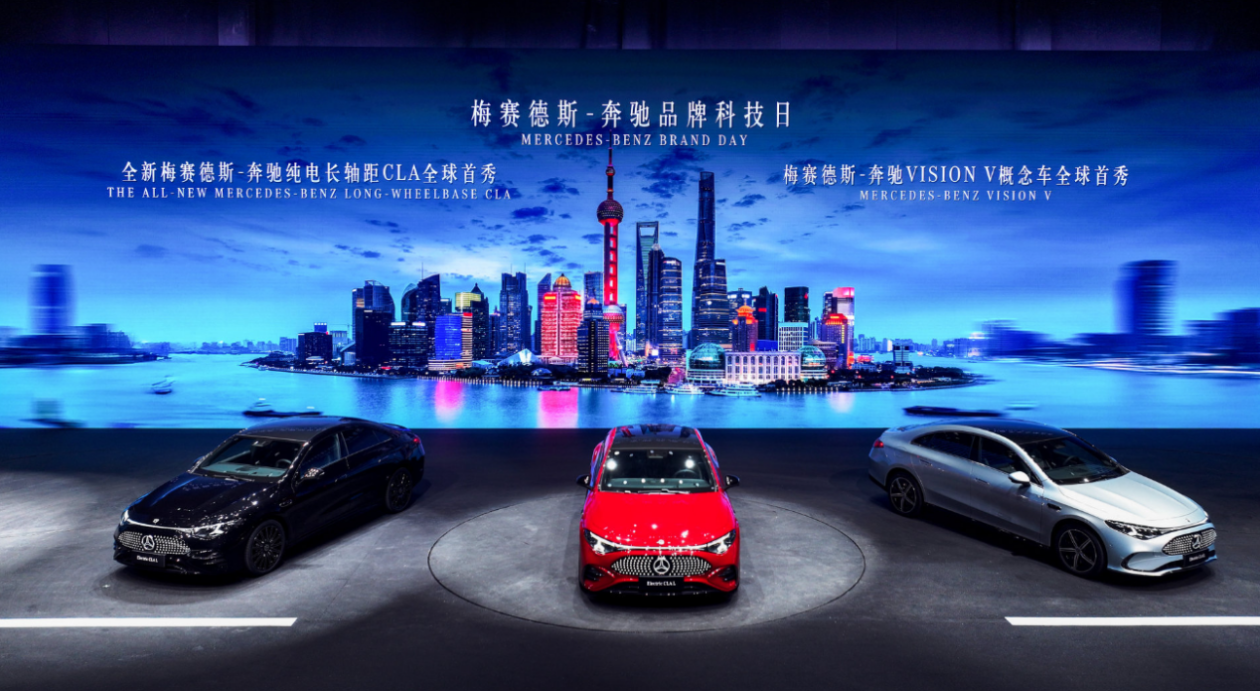
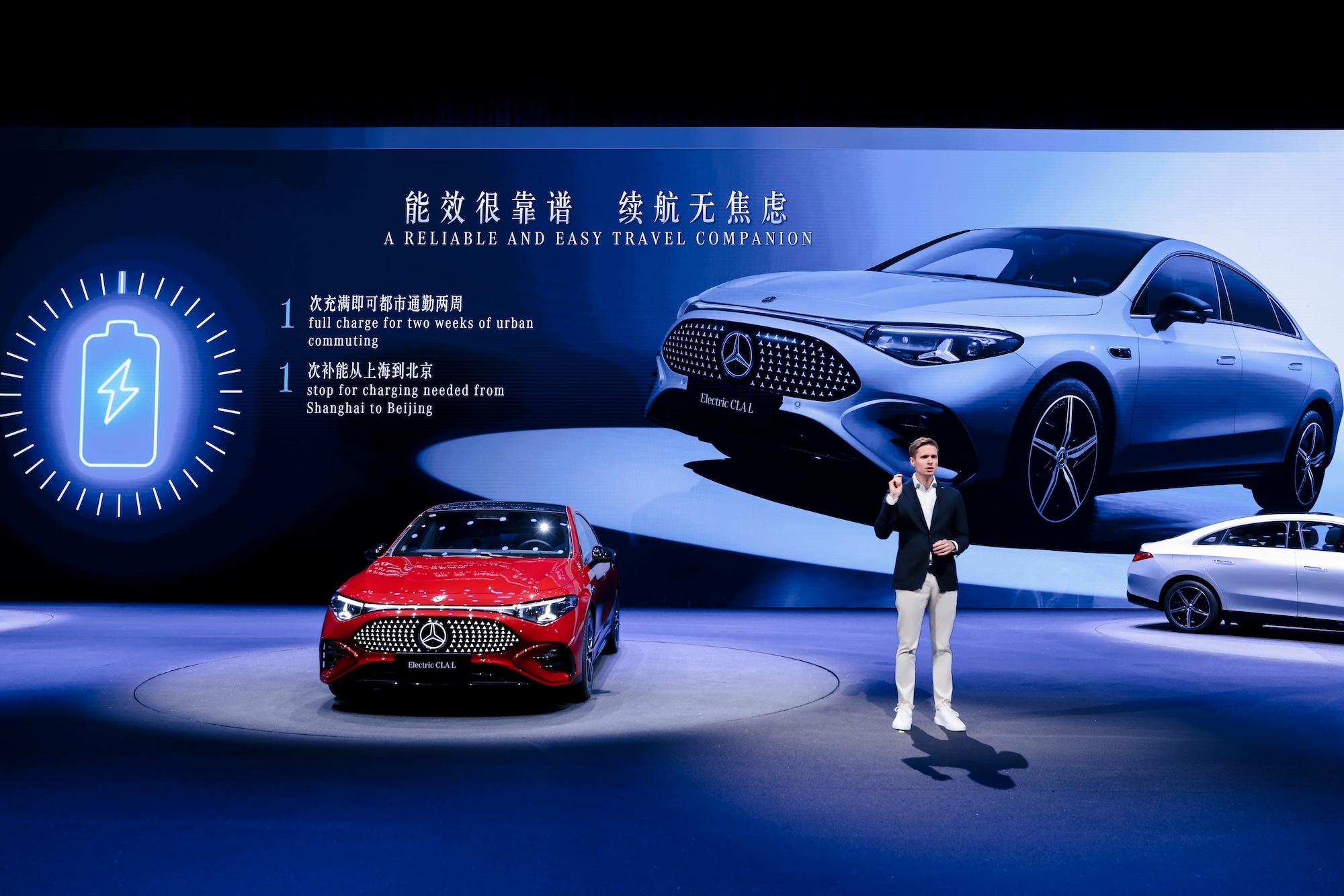
Core Insights - China is the largest automotive market globally and leads in the adoption of new energy vehicles, driving the electric transformation of the automotive industry [1] - Mercedes-Benz is launching a strong product and technology offensive in China, showcasing 28 models at the Shanghai Auto Show [3][4] - The all-new pure electric long-wheelbase CLA is a key step for Mercedes-Benz in the high-end electric vehicle market in China, featuring advanced technology and local adaptations [4][6] Product and Technology Highlights - The all-new pure electric long-wheelbase CLA features an 800V architecture, allowing for a 370 km range with just 10 minutes of charging, and has a range of 866 km (CLTC) [4][6] - The vehicle includes a high-energy density lithium-ion battery with a 20% increase in weight energy density and an energy consumption of only 10.9 kWh per 100 km [4] - Advanced safety features include 11 airbags and a five-star certification for fire safety, meeting new national standards [6] Localization and Market Strategy - Mercedes-Benz plans to launch seven China-exclusive models by 2027, focusing on local supply chains and partnerships to meet domestic demand [4][8] - The company has over 2,000 R&D engineers in China, with centers in Beijing and Shanghai focusing on local needs such as smart cockpits and autonomous driving [8][11] - The Vision V concept car indicates the future of Mercedes-Benz's MPV family, with production models expected in 2026 [8] Collaboration and Future Outlook - Mercedes-Benz is deepening collaborations with local partners like BAIC Group and expanding alliances with tech companies to leverage China's innovative supply chain [11] - The average age of Chinese customers is 41, with a significant demand for luxury and innovation, driving Mercedes-Benz's evolution in the market [11]
德国汽车工业协会主席穆希雅:欢迎中国车企去欧洲
Zhong Guo Qi Che Bao Wang· 2025-04-27 07:22
Core Insights - The interview with VDA President Muche highlights the importance of Sino-German cooperation in the automotive industry, particularly in the context of electric vehicle (EV) development and trade policies [1][3]. Group 1: Market Expansion and Investment - China is recognized as the largest automotive market globally, especially influential in the EV sector, providing significant employment opportunities for Germany [3]. - Over two-thirds of German automotive industry respondents plan to increase investments in China, particularly in R&D, production, and sales [3]. - One-third of surveyed companies intend to expand production capacity in China, with 80% planning to maintain or increase production scale in the long term [3]. Group 2: Adaptation to Market Demands - German automotive companies are adopting a "local for local" strategy, focusing on producing products tailored to the Chinese market based on accumulated market experience [3]. - There are notable differences in consumer preferences between Chinese and European markets, with Chinese consumers prioritizing vehicle space and digital features, while European consumers focus on safety and performance [4]. - Companies must adapt to these unique market demands across various aspects, including sales, after-sales, and marketing [4]. Group 3: Trade Policy and Barriers - Muche expressed concerns regarding tariffs, particularly the impact of U.S. tariffs on German automotive exports and the global supply chain [5]. - The VDA opposes the EU's tariffs on Chinese electric vehicles and advocates for the elimination of trade barriers to promote market openness [6]. - The association calls for a timely agreement between the EU and China to end anti-subsidy measures and emphasizes the need for consistent policies regarding China's rare earth exports [6].

以能效革新定义电动时代标杆 全新纯电长轴距CLA全球首发
Huan Qiu Wang· 2025-04-25 09:38
Core Insights - The launch of the new long-wheelbase electric CLA marks a significant breakthrough for the Mercedes-Benz brand, showcasing its accelerated electrification strategy and innovative capabilities in the luxury electric vehicle market [2][18] - The vehicle features a remarkable energy conversion efficiency of 93% and a CLTC range of 866 kilometers, setting a new benchmark for energy efficiency in the electric era [2][16] Design and Aesthetics - The new long-wheelbase CLA adopts a fresh design language for the electric digital age while incorporating classic brand elements, achieving a perfect balance between heritage and innovation [5] - The vehicle's lighting system, featuring a distinctive three-pointed star design, enhances its visual impact, especially at night [5] Market Adaptation - The new model has been specifically optimized for the Chinese market, with an extended wheelbase that significantly improves rear passenger space, catering to local consumer preferences for comfort [7] - The inclusion of a front trunk enhances the vehicle's practicality [7] Intelligent Features - The interior of the new CLA features a digital interaction space with three large LCD screens, including a 10.25-inch instrument cluster and a 14.6-inch central touchscreen, providing a high-tech user experience [9] - The vehicle is equipped with the latest MB.OS architecture, supporting AI voice assistants and seamless cloud connectivity, which simplifies user operations [9][11] - The intelligent driving and infotainment functions have been developed by a local team in China, reflecting a commitment to meeting local user needs [11] Powertrain and Efficiency - Built on the dedicated MMA platform, the new CLA features an 800V high-voltage electrical architecture and a silicon carbide inverter, significantly enhancing energy conversion efficiency [14] - The vehicle is equipped with an 85kWh silicon oxide negative electrode lithium-ion battery, which, combined with a multi-source heat pump system, ensures stable performance even in extreme weather [16] - The CLA achieves a CLTC range of 866 kilometers and a power consumption of only 10.9 kWh per 100 kilometers, equivalent to the efficiency of a fuel vehicle [16] Conclusion - The introduction of the new long-wheelbase CLA is a proactive response to industry transformation, emphasizing that "efficiency is currency" in the electric era [18] - The vehicle's outstanding range and charging efficiency redefine the standards for luxury electric vehicles, highlighting the core logic of luxury brand electrification: innovation in efficiency, supported by intelligence and safety, while deeply engaging with local markets [18]