脑机接口

Search documents
未知机构:每日复盘22沃什冲击显现美股齐跌金属遭遇黑色星期五原油逆市收涨-20260202
未知机构· 2026-02-02 02:00
Summary of Key Points from Conference Call Records Industry Overview - The records indicate significant market movements influenced by geopolitical events and economic indicators, particularly in the U.S. stock market and commodities sector. The nomination of Waller by Trump as the Federal Reserve Chair has sparked hawkish expectations in the market [1][2][3]. Core Insights and Arguments - **U.S. Stock Market Performance**: The three major U.S. stock indices experienced declines, attributed to unexpected increases in the Producer Price Index (PPI) [2][3]. - **Apple's Stock Movement**: Following earnings reports, Apple's stock rose by 0.46%, while SanDisk saw a significant increase, opening up 21% and closing nearly 7% higher [2][3]. - **Bond Market**: The 10-year U.S. Treasury yield fluctuated but ultimately closed flat, indicating market volatility [2][3]. - **Currency Fluctuations**: The U.S. dollar increased by 0.84%, marking the largest daily gain since May 2025 [3]. - **Commodity Market**: Oil prices initially followed the downward trend of other commodities but rebounded due to concerns over U.S.-Iran relations. Precious metals faced a sharp decline, with platinum and palladium dropping over 10%, and silver plummeting by 37% [4][5]. Additional Important Content - **A-Share Market**: The A-share market saw a decrease in trading volume, with a drop of 0.93% in the Wande All A index, and total trading volume fell from 3.26 trillion to 2.86 trillion [4]. - **Sector Performance**: Agricultural, coal, and computing hardware sectors showed resilience, with CPO concept stocks experiencing significant gains [6]. - **Technology Sector**: Major tech stocks faced declines, while optical communication stocks rose against the trend [7]. - **Regulatory Developments**: The National Health Commission approved a pilot for internet diagnosis and treatment in Beijing, and the National Energy Administration plans to promote hydrogen energy during the 14th Five-Year Plan [8]. - **Tax Changes**: Starting January 1, 2026, the value-added tax rate for the three major telecom operators will increase from 6% to 9% [9]. - **Emerging Themes**: - **AI Applications**: Tencent's AI assistant, Yuanbao, gained significant traction, indicating a competitive landscape in AI-driven applications [9]. - **Energy Storage**: The National Development and Reform Commission and the Energy Administration announced a new pricing mechanism for independent energy storage, highlighting potential investment opportunities in this sector [10]. - **Commercial Space**: SpaceX's plans to launch up to 1 million satellites for a "data center in orbit" signal growth in the commercial space industry [10]. - **Brain-Computer Interfaces**: A conference on brain-computer interfaces is scheduled for February 3, 2026, suggesting potential investment interest in this innovative field [11].
最新数据:今年截至1月25日 上海新设企业23346户 迎“开门红” 上海新设企业同比增长20.2%
Jie Fang Ri Bao· 2026-02-02 01:35
1月6日,上海纵横无界汽车有限公司落户徐汇区,注册资本5亿元。这家公司是奇瑞汽车新成立的 全资子公司,运营奇瑞旗下高端越野品牌"纵横"。 业内认为,奇瑞在上海加大投资,有利于招募顶尖的汽车营销与数字化人才,也有利于与全球一线 供应链及金融机构对接,进一步拓展高端消费市场和推动全球化布局。 据统计,2026年截至1月25日,有78家注册资本不低于1亿元的企业诞生,业务主要涉及金融、资本 市场服务、科技推广和应用服务、软件和信息技术服务、新能源等领域。同时,上海新设企业注册资本 合计589.08亿元,新设企业平均"身价"为265.17万元。 记者 陈玺撼 2026年首个工作日,上海各区的行政服务大厅里,前来咨询办理企业登记注册的人络绎不绝。上海 市场监管部门最新公布的数据显示,2026年截至1月25日,上海新设企业23346户,同比增长20.2%,迎 来"开门红"。 查看存量企业数,也能感受到上海对创业者、投资者的持久魅力。截至2026年1月25日,上海存量 企业300.07万户,平均每千人拥有企业120.98户,较2025年1月底增长3.5%,相当于每8.3个人中就有1 位"创始人"。 外部环境越复杂多变,不确 ...
纤维芯片来了 衣服能变成随身电脑?
Ke Ji Ri Bao· 2026-02-02 01:18
Core Insights - The development of flexible fiber chips represents a significant breakthrough in the field of electronics, enabling the integration of information processing capabilities directly into fibers, thus addressing the limitations of traditional rigid silicon-based chips [1][2][6] Group 1: Technology and Innovation - The research team from Fudan University has successfully created a new type of information processor called fiber chips, which are highly flexible and can adapt to complex deformations, making them suitable for applications in brain-machine interfaces, electronic textiles, and virtual reality [1][2] - The innovative design approach involves a "multi-layer stacking architecture" that allows for the integration of a large number of transistors within the fiber, potentially exceeding the transistor count of traditional computer processors [2][3] - The team has achieved a high-density integration of 100,000 transistors per centimeter within the fibers, enabling both digital and analog circuit functionalities [3] Group 2: Manufacturing Process - The research team developed a novel fabrication method that allows for direct photolithography on elastic polymer fibers, overcoming challenges related to the rough surface and deformation of the fibers [3][4] - This new method is compatible with existing chip manufacturing processes, allowing for scalable production of fiber chips [4] Group 3: Applications and Future Prospects - The fiber chips are expected to facilitate the transition from embedded to woven smart systems, with potential applications in electronic textiles that integrate power generation, storage, sensing, display, and information processing [5][6] - In the field of brain-machine interfaces, the fiber chips can integrate high-density sensing and stimulation electrode arrays along with signal preprocessing circuits, enhancing the safety and efficacy of implanted devices [6] - The research team aims to collaborate with scholars from various disciplines to further enhance device integration density and information processing performance, while establishing a proprietary intellectual property system for broader industrial applications [7]
【申万宏源策略】周度研究成果(20260126 - 20260201)
申万宏源研究· 2026-02-02 01:08
Group 1: Market Overview - The market is currently in a phase of oscillation, with a strong momentum in technology and cyclical sectors, but the short-term market strength is gradually declining [4][5] - Structural characteristics of the market at high valuation levels include increased difficulty in raising sector valuations, stricter conditions for upward breakthroughs, and heightened sensitivity to liquidity shocks [4] - A correction phase is expected before a new upward stage begins in the second half of 2026, driven by improvements in the fundamental cycle and shifts in asset allocation [5] Group 2: Valuation Comparisons - As of January 30, 2026, the valuation metrics for major indices are as follows: - CSI All Share (excluding ST) PE at 22.5x, PB at 1.9x, at historical 83% and 50% percentiles - SSE 50 PE at 11.7x, PB at 1.3x, at historical 61% and 41% percentiles - CSI 300 PE at 14.2x, PB at 1.5x, at historical 65% and 39% percentiles - CSI 500 PE at 37.9x, PB at 2.6x, at historical 70% and 61% percentiles - ChiNext Index PE at 42.6x, PB at 5.7x, at historical 41% and 67% percentiles [7][8] Group 3: Sector Performance - Industries with PE valuations above the 85th percentile historically include real estate, automation equipment, retail, and electronics (semiconductors) [8] - The white goods sector is currently in the bottom 15th percentile for both PE and PB valuations, indicating potential undervaluation [8] Group 4: Global Asset Allocation - The recent hawkish nomination of Kevin Warsh to the Federal Reserve has led to tightening liquidity expectations, causing significant fluctuations in precious metals [10] - The 10-year U.S. Treasury yield rose to 4.26%, and the dollar index is currently at 97.1, reflecting a tightening monetary environment [10] Group 5: Future Industry Trends - Quantum technology is expected to see significant milestones, with predictions of achieving "quantum supremacy" by the end of 2026 [11][12] - The hydrogen energy sector is witnessing rapid development, with major projects being launched and industry chains forming [12]


对白银有色等严重异常波动股票进行重点监控!三分钟看完周末发生了什么
Sou Hu Cai Jing· 2026-02-02 00:47
Market Overview - Global major asset performance showed mixed results, with the Korean KOSPI leading with a 4.70% increase, while the Chinese A-shares faced declines, particularly in small and growth indices [2][3] - The A-share market experienced a downturn, with the ChiNext Index falling by 2.85% and the CSI 500 down by 2.56%, indicating a shift of funds towards large-cap blue-chip stocks for safety [3][4] Industry Performance - The oil and petrochemical sector led the weekly gains with an 8.0% increase, followed by communication and coal sectors with 5.8% and 3.7% respectively [6] - Conversely, the defense and military industry saw a significant decline of 7.7%, while electric equipment and automotive sectors also faced losses of 5.1% [6][7] Commodity Market - Precious metals experienced a historic pullback, with gold prices initially rising due to safe-haven demand but later falling sharply due to profit-taking and a stronger dollar [4][22] - Oil prices remained strong due to geopolitical tensions and supply disruptions, particularly from the U.S. cold wave affecting exports [4] Strategic Insights - The nomination of Kevin Warsh as the new Federal Reserve Chair is expected to influence monetary policy, with a potential focus on interest rate cuts while being cautious about balance sheet expansion [10][11] - Market reactions to Warsh's nomination indicated a preference for his hawkish stance against balance sheet expansion, leading to a rise in U.S. Treasury yields and a decline in gold and U.S. equities [11] Economic Indicators - The official manufacturing PMI for January was reported at 49.3%, a decrease of 0.8 percentage points from the previous month, indicating a contraction in manufacturing activity [12] - The WTO ruled against the U.S. in a dispute over the Inflation Reduction Act, stating that certain clean energy subsidies violated trade rules, which may impact U.S.-China trade relations [13]


纤维芯片来了,衣服能变成随身电脑?
Ke Ji Ri Bao· 2026-02-01 23:36
Core Viewpoint - The development of flexible fiber chips by Fudan University represents a significant breakthrough in the field of electronics, enabling the integration of information processing capabilities directly into fibers, which can meet the demands of emerging industries such as brain-machine interfaces and electronic textiles [1][2][7]. Group 1: Technology and Innovation - The research team has successfully created a new type of information processor called fiber chips, which are highly flexible and can adapt to complex deformations, offering advantages over traditional silicon-based chips [1][2]. - The proposed "multi-layer stacking architecture" allows for the construction of integrated circuits within the fiber, maximizing the use of internal space and potentially achieving a transistor integration level of millions within a one-meter-long fiber chip [3][4]. - The team developed a method to directly photolithograph high-density integrated circuits on elastic polymer fibers, overcoming challenges related to the rough surface and deformation of the fibers [4][5]. Group 2: Applications and Future Prospects - Fiber chips are expected to enable a transition from embedded to woven smart systems, with potential applications in electronic textiles that integrate power generation, storage, sensing, display, and information processing [7]. - In the field of brain-machine interfaces, fiber chips can integrate high-density sensing/stimulation electrode arrays and signal preprocessing circuits within a fiber as small as 50 micrometers in diameter, enhancing the safety and efficacy of implants [7]. - The team aims to collaborate with scholars from various disciplines to further enhance device integration density and information processing performance, while establishing a proprietary intellectual property system for scalable production and application [8].
新型“纤维芯片”问世
Xin Lang Cai Jing· 2026-02-01 20:19
Core Viewpoint - Fudan University's team has developed a groundbreaking "fiber chip" that integrates large-scale circuits within elastic polymer fibers, offering comparable information processing capabilities to traditional commercial chips while providing unique advantages such as flexibility and adaptability to complex deformations [1][2]. Group 1: Technological Breakthrough - The team has introduced the concept of "fiber devices" and has created over 30 new types of fiber devices with functionalities including power generation, energy storage, lighting, display, and biosensing, with some achieving preliminary industrial applications [1]. - The design of the "fiber chip" utilizes a multi-layer stacking architecture, moving beyond the traditional approach of only utilizing the fiber surface, and has developed a method compatible with existing chip manufacturing processes [2]. Group 2: Performance and Capabilities - The "fiber chip" achieves an integration density of 100,000 electronic components per centimeter, enabling efficient interconnection of transistors for digital and analog circuit operations [2]. - The architecture and manufacturing method of the "fiber chip" are versatile, allowing for the integration of organic electrochemical transistors capable of performing neural computation tasks [2]. Group 3: Application Potential - In the field of brain-machine interfaces, the fiber system is expected to provide new tools for brain science and the diagnosis and treatment of neurological diseases [3]. - The "fiber chip" enables the creation of soft, breathable electronic fabric systems that do not require external processors, enhancing the development of flexible electronic textiles [3]. - In virtual reality, smart tactile gloves based on the "fiber chip" can significantly improve user interaction experiences in scenarios such as remote surgery and virtual object interaction [3].
支持新兴产业与未来产业发展
Xin Lang Cai Jing· 2026-02-01 19:22
Group 1 - The core viewpoint of the article emphasizes the new guidelines issued by the National Development and Reform Commission and other ministries to strengthen the planning and direction of government investment funds [1] - The guidelines highlight that the focus of government investment funds will be on supporting the development of new productive forces, with key areas including emerging industries such as next-generation information technology, new energy, new materials, high-end equipment, new energy vehicles, green environmental protection, civil aviation, and marine engineering equipment [1] - Future industries identified in the guidelines include cutting-edge fields such as the metaverse, brain-computer interfaces, quantum information, humanoid robots, generative artificial intelligence, biomanufacturing, biological breeding, future displays, future networks, and new energy storage [1] Group 2 - The management measures propose that funds with top evaluation results will receive incentives such as public commendation, demonstration promotion, project recommendations, and resource guarantees [1] - National-level funds are encouraged to increase cooperation with local funds that rank high in evaluation results in terms of capital contribution and project investment [1] - Development and reform departments at all levels will provide lists of key government investment projects and quality private investment projects to funds with top evaluation results, guiding financial institutions to increase matching financing and reduce financing costs [1]
江苏省政协委员王明强:打造长三角“银发”科技产业高地,提升养老服务效能
Yang Zi Wan Bao Wang· 2026-02-01 14:47
Core Viewpoint - The article emphasizes the importance of enhancing elderly care services in Jiangsu Province, highlighting the need for innovation and the establishment of industry clusters to improve the quality of elderly care [1][3]. Group 1: Current Challenges and Opportunities - Jiangsu Province faces significant pressure and challenges due to its early and deep population aging process [3]. - The province is working to develop a unique "Su-style elderly care" brand to promote high-quality development in elderly services [3]. - The integration of traditional Chinese medicine (TCM) into elderly care is being prioritized, with a focus on three main areas: TCM theory and culture, anti-aging methods, and the establishment of TCM-based elderly care service systems [3]. Group 2: Technological Integration and Development - Despite advancements in the development of civil affairs, the application of cutting-edge technologies in elderly care remains insufficient, with a lack of deep integration into service scenarios [3]. - Current pilot projects in smart elderly care have not fully utilized technologies such as artificial intelligence and robotics for deeper needs in care and rehabilitation [3]. - There is a need for a more systematic and comprehensive solution that combines technology with specific service scenarios in home, community, and institutional settings [3]. Group 3: Recommendations for Industry Growth - It is recommended to establish specialized parks for the silver economy and rehabilitation equipment in regions like Nanjing, Suzhou, and Wuxi to attract businesses and support the industry [4]. - A "leading enterprise" cultivation plan for civil affairs technology should be implemented to support local companies in smart elderly care and rehabilitation equipment [4]. - Collaboration with neighboring regions in the Yangtze River Delta is encouraged to create a technology achievement trading platform to accelerate the transformation and industrialization of technological innovations [4].
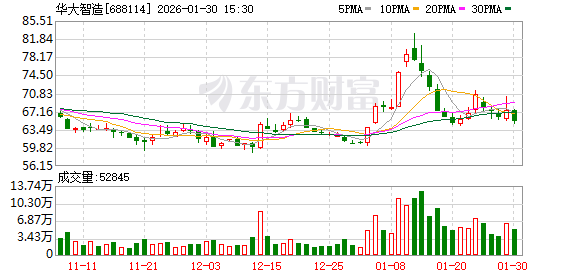
交易对价约3.66亿元 华大智造拟收购两大前沿业务
Nan Fang Du Shi Bao· 2026-02-01 14:23
Core Viewpoint - The acquisition of 100% equity in Shenzhen Huada Sanjian Qifa Technology Co., Ltd. and Hangzhou Huada Xufeng Technology Co., Ltd. by BGI Genomics is aimed at enhancing its technological capabilities in spatial omics and nanopore sequencing, positioning the company as a leader in the global life sciences sector with a comprehensive product matrix covering "long-read sequencing + spatial omics" [2][3]. Group 1: Acquisition Details - The total transaction price for the acquisition is approximately 366 million yuan [2]. - The acquisition allows BGI Genomics to integrate cutting-edge technologies, creating a unique competitive advantage by combining short-read (DNBSEQ), long-read (CycloneSEQ), and spatial omics technologies [2][3]. - The integration will enable BGI Genomics to offer a one-stop service from library construction, sequencing to data analysis, enhancing customer service capabilities and stickiness [2]. Group 2: Strategic Implications - The acquisition is strategically beneficial for BGI Genomics in emerging fields such as brain-computer interfaces, where spatial omics technology can provide precise navigation for implantable devices [3]. - The pricing strategy of acquiring companies at the incubation stage allows BGI Genomics to avoid potential valuation premiums associated with mature business commercialization [3]. - The assessed value of the acquired companies is 158 million yuan for Sanjian Qifa and 207.7 million yuan for Xufeng, with a favorable dynamic price-to-sales ratio around 3, compared to industry peers [3]. Group 3: Performance Commitments - The acquired companies have performance commitments, with Sanjian Qifa promising a cumulative net profit of no less than 50.1 million yuan from 2026 to 2028, and Xufeng committing to 82.8 million yuan from 2028 to 2030 [4]. - If performance targets are not met, BGI Genomics will receive cash compensation, with maximum amounts covering 223 million yuan and 264 million yuan respectively [4]. Group 4: Revenue and Cost Synergies - The acquisition is expected to add new revenue streams from spatial omics and nanopore sequencing, enhancing the overall revenue scale of BGI Genomics [4][5]. - The integration of supply chain procurement and shared R&D resources is anticipated to reduce operational costs and improve overall profitability [5]. - Market analysts believe this strategic move will significantly enhance BGI Genomics' long-term profitability and industry influence, opening up further growth opportunities in the global sequencing and life sciences market [5].