资产配置

Search documents
6万亿时代来临!ETF迎来黄金岁月,年内实现三个历史性跨越
Sou Hu Cai Jing· 2025-12-29 09:41
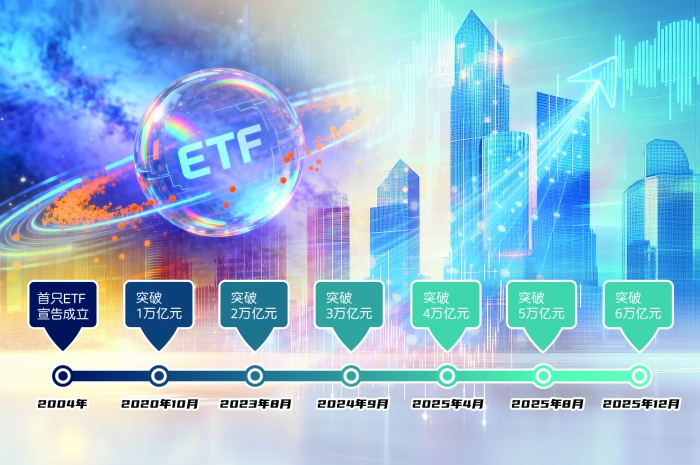
Core Insights - The total scale of ETFs in the market reached 60,304.77 billion yuan as of December 26, marking the third time this year it has surpassed the trillion yuan threshold, following previous milestones in April and August [2][4][6] - The rapid growth of ETF scale this year is primarily driven by a favorable market environment and significant profit effects, with the average increase of stock ETFs reaching 23.57%, compared to 11.17% in the same period last year [2][4] - The number of newly issued ETFs has doubled this year, with 352 new products launched compared to 169 last year, indicating a strong expansion in product types and coverage [2][4] ETF Market Growth - The ETF market has transitioned from gradual accumulation to exponential growth, with expectations that the total scale may soon exceed 10 trillion yuan [3] - The ETF market has achieved unprecedented growth, with total scales crossing 4 trillion, 5 trillion, and 6 trillion yuan in April, August, and December respectively [4] Market Structure - As of December 26, stock ETFs accounted for 38,463.45 billion yuan, representing 63.78% of the total market, while bond ETFs reached 8,045.64 billion yuan (13.34%), commodity ETFs at 2,568.50 billion yuan (4.26%), and cross-border ETFs at 9,389.06 billion yuan (15.57%) [6] - Stock ETFs saw a growth of 33.20% compared to last year, while bond and commodity ETFs experienced significant increases of 362.46% and 239.42% respectively [6] Notable Products - The Huaan Gold ETF led the growth in scale with an increase of 685.14 billion yuan, followed by the Huatai-PB CSI 300 ETF with 674.38 billion yuan [7] - A total of 25 ETFs saw their scale increase by over ten times this year, with the E Fund National Robot Industry ETF experiencing a staggering growth of 7,729.99% [7] Bond ETF Expansion - The bond ETF market has seen explosive growth, particularly driven by the Sci-Tech Bond ETFs, which have collectively surpassed 340 billion yuan in scale [9][12] - The total scale of bond ETFs reached 8,045.64 billion yuan, a 362% increase from the previous year, significantly outpacing stock and cross-border ETFs [13][14] Fund Management Landscape - The top ten ETF managers control 75.03% of the market, with the top three firms holding over 41% of the total market share [15] - The market is witnessing a trend towards structural optimization, with leading firms focusing on strategy-based ETFs to create competitive advantages [16] Future Outlook - The Chinese ETF market is expected to enter a phase of high-quality development characterized by continuous scale expansion, structural optimization, and accelerated product innovation [17] - Key trends include a focus on broad-based ETFs, technology, strategic differentiation, cross-border expansion, and the rise of bond ETFs [17]


从“卖产品”到“做配置”:第八届新财富最佳投顾评委眼中的投顾转型关键三步
新财富· 2025-12-29 08:04
Core Viewpoint - The eighth New Wealth Best Investment Advisor selection has concluded, highlighting the evolution of the investment advisory industry from product sales to asset management and long-term client relationships [1][75]. Group 1: Professional Development and Industry Trends - The investment advisory team is rapidly maturing, showcasing high research standards and a strong client service awareness, which is essential for the high-quality development of the wealth management industry [2]. - The transition from "product sellers" to "asset allocators and companions" is becoming increasingly evident, emphasizing the importance of professional skills, communication, and trust [10][44]. - The industry is moving from "scale expansion" to "deep service," with a focus on understanding clients and navigating market fluctuations [14][67]. Group 2: Client-Centric Approach - Advisors are encouraged to embrace a "buy-side perspective," focusing on long-term client interests and developing cross-cycle asset allocation capabilities [10][62]. - The importance of enhancing client experience and service quality is recognized as a core direction for the asset management industry [24][38]. - Trust and responsibility are highlighted as critical elements for advisors to effectively support clients in wealth growth and risk management [41][46]. Group 3: Future Outlook - The future of the investment advisory industry lies in those who can adapt to market changes and maintain a commitment to client trust and professional integrity [14][75]. - The integration of technology and quantitative tools is expected to enhance the professionalism and replicability of advisory services [46]. - The industry is poised for significant growth, driven by the evolving wealth structure of residents and the deepening reforms in the capital market [75].
Riders on the Charts:每周大类资产配置图表精粹:资产配置快评-20251229
Huachuang Securities· 2025-12-29 07:06
Group 1: CDS Prices and Market Trends - Oracle's 5-year CDS price reached 145.5 basis points, significantly higher than Apple's 25.7, Amazon's 35.9, Google's 39.9, and Microsoft's 35.9 basis points, but lower than the high-yield bond basket's 315.1 basis points[4] - Despite Oracle's CDS price increase, the North American high-yield bond basket's CDS price fell to 315.1 basis points, the lowest since September 26[6] - Investors expect the Federal Reserve's future rate cuts to be lower and delayed, with the SOFR futures curve's low point at 3.1%, unchanged from October but lower than December's 3.2%[10] Group 2: Economic Indicators - The U.S. GDP annualized growth rate for Q3 rose to 4.3%, up from 3.8% in the previous quarter, marking the highest level since Q3 2023, with a year-on-year growth of 2.3%[15] - The Shanghai-Shenzhen 300 Index's equity risk premium (ERP) stands at 4.2%, below the 16-year average by one standard deviation, indicating potential for valuation uplift[17] - China's 10-year government bond forward arbitrage return is at 35 basis points, 65 basis points higher than December 2016 levels[21] Group 3: Central Bank Policies - Investors maintain expectations that the European Central Bank will not cut rates further, with the Euribor futures curve's low point at 2.1%, higher than previous months[12] - The divergence in the copper-gold price ratio and offshore RMB exchange rate signals inconsistent trends, with the copper-gold ratio dropping to 2.7 and the offshore RMB rising to 7.0[27] - The total return ratio of domestic stocks to bonds is at 28.8, above the past 16-year average, suggesting increased attractiveness of equities relative to fixed income[29]

陈兴:山水又一程
陈兴宏观研究· 2025-12-29 07:02
Core Viewpoint - The article reflects on the author's journey in macroeconomic research over the past decade, emphasizing the importance of adapting research methodologies to current market conditions and the evolving economic landscape [5][10]. Group 1: Market Analysis - The author predicts a weakening of the US dollar, driven by a shift in the Federal Reserve's policy towards a more accommodative stance, which is expected to exceed market expectations [7]. - The article discusses the rise of gold as a significant asset, highlighting the author's research on the changing dynamics of gold pricing and central bank purchases, which filled a gap in market research [7][8]. - The author notes that the traditional macroeconomic frameworks need to be revised to better reflect the realities of the new economic phase, particularly in light of the limitations of GDP as a growth measure [14]. Group 2: Economic Outlook - The article anticipates a stable macroeconomic environment in the coming year, suggesting that while the economy may remain steady, the stock market may not necessarily mirror economic trends due to structural changes brought about by new economic factors [14][15]. - The author highlights the role of liquidity in driving stock prices, indicating that a favorable global liquidity environment, influenced by the Federal Reserve's policies, could support a bullish market trend [15]. - The article suggests that various asset classes, including stocks and bonds, may experience a phase of resonance in the upcoming year, driven by the recovery and expansion of balance sheets across economic sectors [15].


普通人如何掘得第一桶金:从知识到资产的进阶之路
Sou Hu Cai Jing· 2025-12-29 04:42
Group 1 - The journey to wealth begins with acquiring the first pot of gold, which is crucial for ordinary individuals to unlock the door to success [1] - Knowledge and skills are essential for transforming ideas into practical applications, particularly in entrepreneurship, where a solid foundation can lead to identifying market opportunities [3] - Individuals from less privileged backgrounds can still embark on their wealth journey by learning practical skills, which can lead to job opportunities and income generation [5] Group 2 - Building a strong network of relationships is vital for project success, as it provides resources, support, and opportunities for personal development [7] - Asset accumulation is a key step in upgrading wealth, with various forms of assets such as real estate, stocks, and intellectual property playing significant roles in financial growth [9] - Achieving the first pot of gold requires continuous effort in learning, entrepreneurship, relationship building, and asset management, leading to potential wealth creation [9]

数字人浙小景播报:虹软科技受机构券商关注最高
Quan Jing Wang· 2025-12-29 01:03
Group 1 - The article emphasizes the importance of asset allocation for investors, which involves distributing funds across various asset types based on risk tolerance, investment goals, and time horizon to achieve risk diversification and optimize returns [1] - The Zhejiang Investor Education Base promotes a "communication creates value" philosophy, focusing on interactive investor relations and financial information services [1] - The organization explores an "Internet + Investor Education" model, combining online and offline methods to make investor education services easily accessible [1]


招商宏观 | 静极思动
Sou Hu Cai Jing· 2025-12-29 00:35
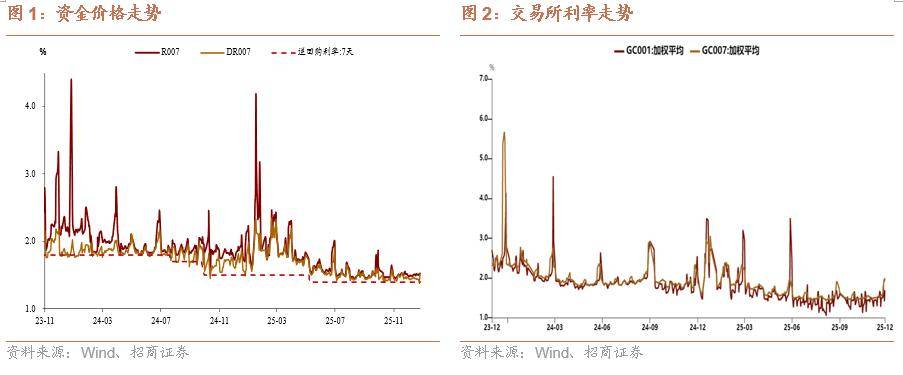
Domestic Insights - High-frequency data indicates that effective demand has been insufficient since Q4 2025, continuously squeezing corporate profit margins, leading to a significant reduction in the marginal effect of "price for volume" [2][12] - In November, the profit growth rate of industrial enterprises remained in negative territory, with a decline of 7.6 percentage points compared to the previous month [2][14] - The appreciation of the RMB may be nearing its peak, driven by concentrated settlement demand near year-end, but the central bank may begin to intentionally control the extent of appreciation [2][12] - A break of the 7 mark in the central parity requires an increase in corporate hedging rates and the proportion of cross-border RMB settlements, with expectations for a favorable timing in mid to late 2026 [2][12] Overseas Insights - Following the Bank of Japan's monetary policy meeting, Governor Ueda stated that they are steadily approaching the 2% inflation target and will continue to raise interest rates, maintaining a gradual tightening pace [2][13] - The U.S. Q3 GDP growth rate exceeded expectations at 4.3%, with over half of this growth attributed to personal consumption expenditures, while government investment has rebounded [2][13] - The high mortgage rates have a delayed transmission effect on the real estate market but are expected to significantly impact current consumption [2][13] Asset Market Insights - The A-share equity market continues its allocation trend, but short-term volatility may increase, especially with external disturbances expected after the New Year [3][12] - The USD/JPY exchange rate remains above 155, and any intervention by the Bank of Japan or a cooling of Fed rate cut expectations could cause temporary disturbances to domestic equity assets [3][12] Monetary Liquidity Tracking - The central bank's flexible operations have resulted in a tight balance in the funding environment, with a net injection of 652 billion yuan from various operations [4][12] - The average weekly rate for DR001 decreased by 0.950 basis points to 1.2633%, while DR007 increased by 0.330 basis points to 1.4464% [5][16] Government Bonds - The supply pressure of government bonds has significantly decreased, with a maturity repayment scale of 2,948.57 billion yuan, and the planned issuance for the upcoming week is 26 billion yuan, a substantial drop from the previous week [6][17] Interbank Certificates of Deposit - The weighted issuance rate for interbank certificates of deposit was 1.6394%, down 1.46 basis points from the previous week, while the secondary market saw slight increases in rates for various maturities [7][18] Major Asset Performance - Domestic long-term and short-term government bond yields showed a divergence, with short-term yields declining significantly [8][34] - Gold prices surged, while oil prices experienced fluctuations [11][34]
在“固收+”快车道跑出差异化
Zhong Guo Zheng Quan Bao· 2025-12-28 21:08
Core Viewpoint - The establishment of the mixed asset department at CICC Fund Management aims to create a differentiated and competitive "fixed income +" product matrix in a low interest rate environment, focusing on balancing risk and return for investors [1][2]. Group 1: Team Development and Strategy - The mixed asset department started with two members and has grown to four, managing nine products with an asset scale of approximately 3.8 billion yuan [1]. - The team has adopted a matrix development approach with different products targeting various goals and strategies, including secondary debt funds and flexible allocation products [2]. - The core value of mixed assets is to achieve a dynamic balance between diversified returns and controlled drawdowns, addressing the current market demand for stable yet higher returns [2]. Group 2: Investment Philosophy and Risk Management - The principle of "discipline over strategy, strategy over individual stocks" guides the investment approach, emphasizing strict risk budgeting and timely adjustments based on market conditions [3]. - A comprehensive research framework is established, integrating systematic thinking with an understanding of market cycles, competitive positioning, and pricing dynamics [4]. Group 3: Market Outlook and Future Opportunities - The outlook for the equity market in 2026 is optimistic, driven by ample liquidity, ongoing policy support, and recovering corporate earnings, which are expected to lead to a sustained upward trend [6]. - Specific investment opportunities for 2026 include undervalued high-dividend sectors, technology growth areas like AI and semiconductors, and the pharmaceutical sector, which is anticipated to stabilize and recover in valuation [6]. - For "fixed income +" products, equity assets will continue to be a significant source of enhanced returns, with bonds providing a safety net and equities offering flexibility [6].
FOF逆袭记:由配置觉醒驱动的“翻身仗”
Zhong Guo Zheng Quan Bao· 2025-12-28 21:08
Wind数据显示,截至12月28日,FOF今年以来的发行份额飙升至838.28亿份,创下历史第二高峰,FOF 产品总数量和规模也双双创下新高,与三年前的寒冬形成鲜明对比。各种暖风频吹:保险机构加大配 置,银行渠道主动推优,求稳资金正从理财涌入FOF。 这是市场情绪的短暂轮回,还是资产配置需求觉醒下的必然回归?当"大而全"的粗放模式被摒弃,精准 细分与工具化成为新竞赛规则,这场由市场、产品、需求三重逻辑驱动的热度,究竟能走多远? 近日,中国证券报记者调研多家公募机构与一线业务负责人,解码FOF逆袭背后的推手,并探讨在"冰 火两重天"的当下,FOF未来将走向何方。 □本报记者 张凌之 FOF市场热度重燃 FOF又火了。 从"避之不及"到"真香定律",人气一度跌入冰点的FOF,正悄然上演王者归来的戏码。 段。 Wind数据显示,截至12月28日,全市场今年以来共新成立87只FOF,发行份额为838.28亿份,这一发行 份额是自2017年9月首批FOF发行以来的第二高峰,仅次于2021年的1083.62亿份。与此同时,FOF产品 总数量和规模双双创下新高。截至12月28日,FOF总数量达到549只,总规模达2377. ...
ETF总规模突破6万亿元
Shang Hai Zheng Quan Bao· 2025-12-28 19:10
Group 1 - The total scale of ETFs in China has surpassed 6 trillion yuan, marking a historic milestone with a growth of over 2.2 trillion yuan compared to the end of 2024 [2] - The ETF market has expanded significantly since its inception in 2004, with the total scale reaching 1 trillion yuan in 2020, 2 trillion yuan in August 2023, and now exceeding 6 trillion yuan [3] - The number of ETFs with a scale exceeding 100 billion yuan has increased dramatically, from 66 at the end of 2024 to over 120 by December 26, 2024 [3] Group 2 - The rapid growth of the ETF market is attributed to multiple factors, including regulatory reforms, low interest rates, and the increasing preference of investors for transparent, low-fee investment tools [4] - The domestic ETF market is diversifying with continuous innovation, particularly in stock ETFs, which have surpassed 3.8 trillion yuan in scale [5] - The characteristics of stock ETFs include a more comprehensive range of broad-based products and a focus on niche sectors, with new thematic ETFs emerging to capture trends in industries such as satellite technology and artificial intelligence [6] Group 3 - The bond ETF segment has seen unprecedented growth, with 53 bond ETFs established and a scale approaching 800 billion yuan, up from only 21 ETFs and 180 billion yuan at the end of last year [6] - Cross-border ETFs are nearing the 1 trillion yuan mark, with significant growth in Hong Kong-themed ETFs and the introduction of Brazilian-themed ETFs, enhancing global asset allocation options [6] - The future of the ETF industry appears promising, with ongoing new fund issuances and a focus on diverse product offerings, including ETFs targeting sectors like semiconductor and shipping [7]