
货币政策

Search documents
前瞻性应对春节资金需求高峰,央行连续两天开展14天期逆回购操作,规模总计6000亿元
Xin Lang Cai Jing· 2026-02-06 13:16
Group 1 - The People's Bank of China (PBOC) conducted consecutive 14-day reverse repo operations on February 5 and 6 to proactively address the peak cash demand during the Spring Festival [1][7] - On February 6, the PBOC executed a 315 billion yuan 7-day reverse repo operation and a 3000 billion yuan 14-day reverse repo operation using a fixed quantity and multi-price bidding method [1][7] - Analysts from Guangfa Securities noted that the PBOC's actions are in response to increased cash withdrawal demands as the Spring Festival approaches, indicating a potential tightening of liquidity [1][8] Group 2 - The PBOC's adjustments to the 14-day reverse repo mechanism in the third quarter of 2025 aimed to enhance liquidity management by allowing for differentiated funding needs among participating institutions [9] - The 2026 PBOC work meeting emphasized maintaining ample liquidity and using various monetary policy tools flexibly to support high-quality economic development and reasonable price recovery [4][10] - The PBOC's Vice Governor indicated that there is still room for further reserve requirement ratio (RRR) cuts and interest rate reductions in 2026, while also suggesting a shift towards more structural and fiscal tools for achieving growth [11][12]
金丰来:金银低位反弹 宏观承压下关键支撑位
Xin Lang Cai Jing· 2026-02-06 12:53
2月6日,在经历了本周惊心动魄的宽幅震荡后,贵金属市场在周五亚洲时段终于迎来了一线生机。金丰 来认为,虽然黄金和白银在低位买盘的支撑下企稳回升,但本周整体的走势已显著转弱,尤其是白银在 抹去前期涨幅后,周跌幅依然维持在14%附近。这种由避险情绪消退与美元走强共同驱动的回调,正迫 使市场重新评估贵金属的中期定价逻辑。 随着地缘局势的降温,黄金作为避险资产的吸引力在短期内有所削弱。相关事实数据表示,现货黄金本 周虽一度失守5000美元心理关口,跌至4825.31美元附近,但其表现仍优于其他金属品种。金丰来表 示,黄金市场之所以能展现出较强的韧性,得益于其优越的流动性和相对理性的仓位分布。相比之下, 铂金等其他贵金属在本周也遭遇了近10%的重挫,显示出整个板块在强势美元面前的集体承压。 市场目前正高度关注美联储领导层的潜在变动对货币政策的影响。有分析指出,由于下届美联储主席提 名人选立场偏向鹰派,美元指数正录得自去年10月以来的最大周涨幅,这对以美元计价的金属价格构成 了持续的边际压力。金丰来认为,白银在70至90美元区间已进入关键的筑底阶段。如果价格能在此区域 随着地缘局势的降温,黄金作为避险资产的吸引力在短期内 ...


Sterling Declines as the BoE Appears More Dovish
Yahoo Finance· 2026-02-06 10:17
The meeting of the Bank of England (‘the BoE’) on 5 February brought traders a significant surprise in the form of greater dovishness than predicted among the Monetary Policy Committee (‘the MPC’). The aftermath saw the pound decline, in some cases sharply, against most other currencies. This article summarises the reaction to the BoE’s statement and press conference, then looks briefly at the charts of GBPUSD and GBPJPY. As widely expected, the BoE held its bank rate at 3.75% on Thursday, 5 February. Ho ...
铁矿日报:商品情绪走弱,期现价格承压-20260206
Guan Tong Qi Huo· 2026-02-06 09:50
Report Summary of Iron Ore Daily by Guantong Futures 1. Report's Industry Investment Rating No information provided regarding the report's industry investment rating. 2. Core Viewpoints - The iron ore fundamentals show a decrease in arrivals, alleviating supply pressure. The demand side has stable rigid demand, and although ports are still accumulating inventory, it is gradually shifting to downstream steel mills. The fundamental contradictions are not prominent, but the futures contracts present a back structure and a futures discount under a positive basis. After a short - term breakdown, it shows a certain weakness [4]. 3. Summary by Relevant Catalogs Market行情态势回顾 - **Futures Prices**: The main contract of iron ore futures maintained a weak downward trend, closing at 760.5 yuan/ton, down 8 yuan/ton or 1.04% from the previous day's closing price. The trading volume was 216,000 lots, the open interest was 515,000 lots, and the settled funds were 8.612 billion yuan. After the breakdown, it remained weak, with attention on further tests around 750 [1]. - **Spot Prices**: The mainstream spot varieties at Qingdao Port, PB powder, dropped 2 to 770 yuan/ton, and Super Special powder dropped 2 to 665 yuan/ton. The main swap was at 99.3 (-1.3) US dollars/ton. Spot and swap prices declined slightly [1]. - **Basis and Spread**: The price of Qingdao Port PB powder converted to the futures price was 807.2 yuan/ton, with a basis of 46.7 yuan/ton, showing little change. The iron ore 5 - 9 spread was 18 yuan, and the 9 - 1 spread was 10 yuan. Iron ore was slightly weak in the short - term [1]. Fundamental Analysis - Overseas mine shipments increased month - on - month, mainly due to the obvious recovery in Brazilian shipments. The arrivals continued to decline, as the previous drop in shipments was reflected in arrivals. There were expectations of supply disruptions due to weather. On the demand side, the molten iron output decreased slightly month - on - month, the steel mill profitability weakened, and the rigid demand was stable. As the Spring Festival approached, steel mills accelerated restocking, and as restocking progressed, the support for prices might gradually weaken. In terms of inventory, ports continued to accumulate inventory, the inventory at berth decreased, and steel mill inventories increased significantly. The total inventory pressure was still building up. Market sentiment weakened, and both futures and spot prices were under pressure [2]. Macro - level Analysis - **Domestic**: The positive policy expectation continues as the macro - mainline, and the expectation of policy intensification in the first quarter to achieve an economic "good start" in the first year of the "15th Five - Year Plan" is strengthening. The overall policy environment is favorable, which is one of the core logics for being bullish on risk assets in the first quarter [3]. - **Overseas**: One of the core variables in overseas macro this week is that Kevin Warsh was nominated as a candidate for the new Federal Reserve Chairman, but the impact on the market is expected to be limited. His monetary policy stance is "supporting interest rate cuts but advocating balance - sheet reduction", so he is considered a hawkish figure. In addition to monetary policy, investors are also advised to pay attention to the two high - uncertainty risk events of the US - Iran situation and the US government shutdown [3].
双利差走阔:曲线陡峭化延续,定价逻辑分化
LIANCHU SECURITIES· 2026-02-06 09:08
1. Report Industry Investment Rating No information provided in the content. 2. Core Viewpoints of the Report - The current 10Y - 1Y and 30Y - 10Y spreads are continuously widening, reaching a ten - year high. The report analyzes the driving mechanisms and characteristics of these two key spreads, revealing the differences in dominant forces and structural change trends of different term spreads [1]. - In 2026, the steepening of the yield curve will continue, and the 10Y - 1Y and 30Y - 10Y spreads will generally widen marginally. The 10Y - 1Y spread will be steepened by monetary easing and may widen, while the 30Y - 10Y spread will be repaired by supply and rise in an oscillatory manner [3][4]. 3. Summary According to the Directory 3.1 10Y - 1Y Spread: Short - end Dominant, Long - end Amplifying - **Driving Factors: Policy Anchor, Growth Expectation, and Supply - demand Structure** - The 10Y - 1Y spread reflects the relative changes among short - term policy interest rates, medium - and long - term growth and inflation, and bond supply - demand structure. Short - term interest rates are more sensitive to monetary policy and the money market, while long - term interest rates reflect future growth trends, inflation expectations, and economic cycle changes. Bond supply - demand structure differences and investor behavior also affect the spread [9]. - **Pricing Logic: A Stable Negative Dynamic Equilibrium Relationship between 1Y and 10Y - 1Y** - Short - term interest rates determine the core direction of the 10Y - 1Y spread. After removing the influence of interest rate central migration, the 1 - year Treasury yield and the spread show a clear negative correlation. Long - term interest rates have a limited and unstable impact on the 10Y - 1Y spread [10][13]. - **Periodic Deviation: Structural Disturbance under Short - end Dominance** - The short - term interest rate and the 10Y - 1Y spread generally show a strong negative correlation, but there are also periodic changes in their correlation during the interest rate central switching stage. The 1 - year yield dominates the spread direction, and the negative correlation between the spread and the 1 - year yield may deviate or weaken in the short term. The correlation between the spread and the 10 - year Treasury yield is weak [17]. 3.2 30Y - 10Y Spread: The Dominance Shifting to the Ultra - long End, Spread Repricing - **Driving Factors of the 30Y - 10Y Spread: Differentiation in Supply - demand, Expectation, and Term Sensitivity** - The 30Y - 10Y spread reflects the differences in supply - demand structure, long - term expectations, and policy sensitivity between long - term and medium - long - term Treasuries. Its core drivers include supply - demand structure differences, differences in long - term economic growth and inflation expectations, and the impact of policy uncertainty and term sensitivity differences [25]. - **Core Pricing Logic: The Ultra - long End is Becoming the Dominant Force of the Spread** - The correlation between the 10 - year Treasury yield and the 30Y - 10Y spread is generally weak. The 30 - year Treasury yield has a more stable positive linkage with the spread, indicating that the ultra - long - end interest rate is playing an increasingly prominent role in driving the 30Y - 10Y spread [26][27]. - **Stage Switching: Multiple Combination Forms of Interest Rate Central Changes** - The pricing center of the 30Y - 10Y spread is gradually shifting to the ultra - long end. In different macro - economic and policy environments, the spread may show multiple combination forms, and the mid - term trend shows that the ultra - long end is gradually becoming the core anchor of spread pricing [34][43]. 3.3 Outlook: The Steepening of the Curve Continues, and the Double Spreads Widen - **10Y - 1Y Spread: Steepened by Easing, May Widen** - In the first half of 2026, the 10Y - 1Y spread may widen. The strengthening of the interest rate cut expectation will lower the short - term interest rate, and the front - loaded fiscal policy will increase the supply pressure, with the long - term pressure being higher [44][45]. - **30Y - 10Y Spread: Repaired by Supply, Rise in an Oscillatory Manner** - In 2026, the supply premium will replace the liquidity premium as the dominant factor of the 30Y - 10Y spread. In the first half of 2026, the 30Y - 10Y spread will remain high and oscillate, and the center may widen further [46].
加息也难救多头?澳元八年最高看涨头寸遭金价暴跌“定点爆破”
智通财经网· 2026-02-06 07:59
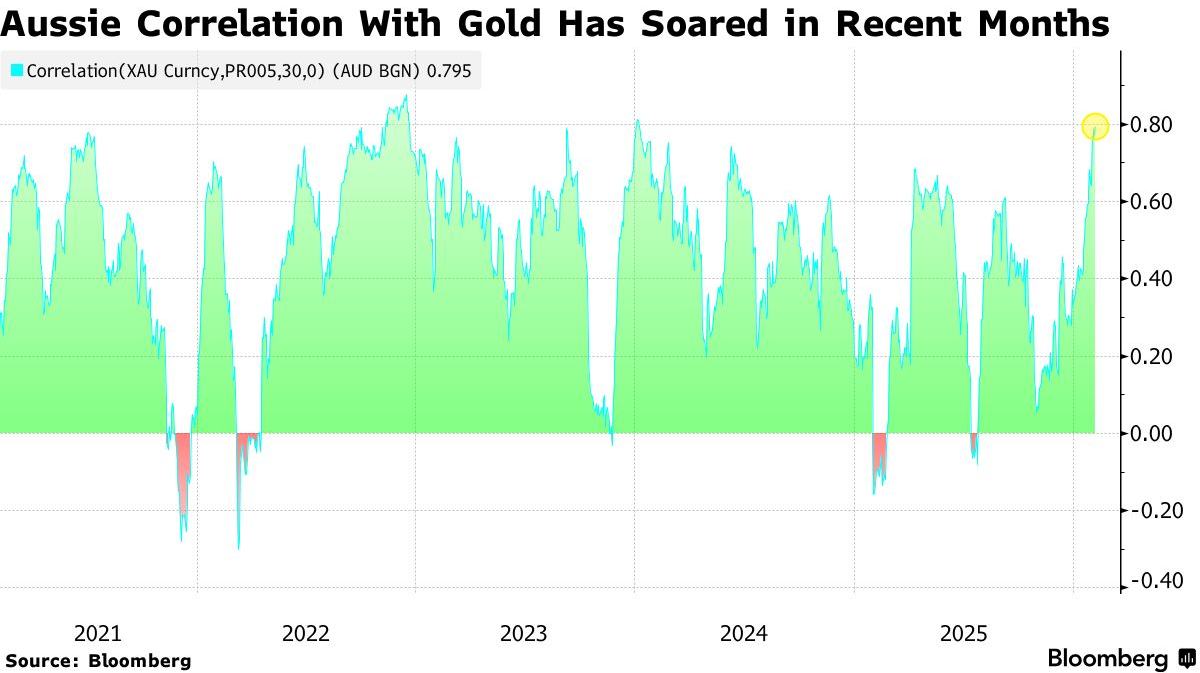
Group 1 - The Reserve Bank of Australia (RBA) unexpectedly resumed its interest rate hike cycle, raising the official cash rate by 25 basis points to 3.85%, breaking a two-year period of policy inaction to address persistent inflation pressures [1] - The Australian dollar (AUD), which should benefit from narrowing interest rate differentials, faced resistance after reaching a near three-year high, primarily due to significant fluctuations in the global precious metals market [1][2] - The decline in precious metal prices has not only offset the optimistic sentiment from interest rate hike expectations but has also pushed the AUD into a more severe downward trend, raising questions about whether hedge funds misjudged the situation as their bullish positions reached the highest level since December 2017 [1] Group 2 - The AUD experienced a 4.4% surge last month due to rising expectations of RBA tightening and a significant increase in gold and silver prices, which provided a reasonable basis for hedge funds' optimistic stance at that time [1] - However, the current environment presents a dual challenge of policy shifts and a commodity bear market, putting the effectiveness of their strategies to an unprecedented test [1] - The AUD's sensitivity to precious metal price movements was further highlighted by a 1% drop to 69.27 cents, triggered by signs of cooling in the U.S. labor market, leading to accelerated withdrawals from commodities and risk assets [5] Group 3 - Despite the challenges, the AUD still has strong support from various asset management firms and institutions, with options traders increasing bullish positions ahead of the RBA's rate hike [8] - The macro perspective indicates that the future trajectory of the AUD will depend on the balance between domestic economic growth resilience and external financial conditions, with the RBA lowering its economic growth forecast for the next year [8] - International investors are closely monitoring potential changes in U.S. monetary policy, as any unexpected hawkish signals could negate the benefits of the RBA's rate hikes, presenting a critical test for hedge funds between currency policy benefits and systemic risks in the commodity market [8]
美印关税协议后,印度央行维持关键利率不变
Hua Er Jie Jian Wen· 2026-02-06 06:25
印度央行六名货币政策委员会成员一致投票决定将回购利率维持在5.25%,符合彭博调查中多数经济学 家的预期。政策立场保持中性,表明央行可能在一段时间内继续按兵不动。 央行决定公布后,卢比保持小幅涨势。印度政府债券扩大跌势,因央行未宣布任何新的流动性措施,10 年期债券收益率上涨多达6个基点至6.70%。 印度储备银行周五决定维持基准利率不变,在美印贸易协议缓解增长担忧后选择观望。这一决定反映出 央行对当前政策设定的满意,认为经济增长正在增强且通胀保持温和。 央行行长Sanjay Malhotra在讲话中表示,"贸易协议的成功达成对经济前景是个好兆头"。印度政府高级 官员本周表示,经济增长可能超过其对下一财年最高7.2%的预测。 据新华社,特朗普说,他和莫迪达成一项双边贸易协议。美国将把对印度商品加征的所谓"对等关税"税 率从25%降至18%,立即生效,印度同时降低对美关税和非关税壁垒。这一意外的贸易协议提振了这个 亚洲第三大经济体的增长前景。 贸易协议与财政刺激提振信心 特朗普此前宣布将对印度商品的关税从50%降至18%,这一大幅下调显著改善了市场预期。作为协议的 一部分,印度总理莫迪同意停止购买俄罗斯石油,并 ...
首席点评:贵金属再度下挫
Shen Yin Wan Guo Qi Huo· 2026-02-06 05:10
1. Report Industry Investment Rating - The report provides a table indicating the investment rating possibilities for various varieties, including "cautiously bearish" and "cautiously bullish" assessments [6]. 2. Core View of the Report - The report analyzes multiple key financial and commodity markets, including precious metals, crude oil, and stock indices. It suggests that the long - term upward trend of gold remains intact despite recent volatility. The stock market is expected to continue its short - term positive trend in February, but potential risks from overseas markets during the Spring Festival need to be watched. For other markets, it provides detailed analyses of supply - demand relationships, price trends, and influencing factors [2][4][20]. 3. Summary by Relevant Catalogs 3.1 Daily Main News Focus - **International News**: The European Central Bank maintained its benchmark interest rate, pausing rate cuts for the fifth consecutive time since June last year. It did not signal the next policy direction, strengthening the market's expectation of a stable monetary policy. Officials are monitoring the impact of the euro's appreciation on export competitiveness and inflation [7]. - **Domestic News**: Eight departments jointly issued an implementation plan for the high - quality development of the traditional Chinese medicine industry, aiming to achieve certain goals by 2030, such as cultivating high - standard raw material bases and new large - scale Chinese patent medicines [8]. - **Industry News**: In January, China's logistics industry prosperity index was 51.2%, indicating an expansion of logistics business, with key sub - indices in the expansion range [9]. 3.2 Daily Earnings of Overseas Markets - The report presents the daily earnings of various overseas market indices and commodities on February 4th and 5th, including the S&P 500, European STOXX50, and others. Most showed declines, except for the US dollar index and some commodities like CBOT soybeans [10]. 3.3 Morning Comments on Major Varieties - **Financial**: - **Stock Indices**: US stock indices declined. The A - share market also fell, with the beauty and care sector leading the gain and the non - ferrous metal sector leading the loss. The stock market's positive trend since 2026 is due to multiple factors. It is expected to continue its short - term positive trend in February, but potential risks from overseas markets during the Spring Festival need attention [4][11]. - **Treasury Bonds**: Treasury bonds rose slightly, with the yield of the 10 - year Treasury bond active bond falling. The central bank's open - market operations and the expected "rate - cut and balance - sheet reduction" policy in the US, along with domestic economic data, have influenced the Treasury bond market [12]. - **Energy and Chemicals**: - **Crude Oil**: SC crude oil fell 0.73% at night. The US and Iran plan to hold nuclear - issue talks, but reaching an agreement is considered difficult. The strengthening US dollar and volatile precious metal prices have negatively affected the commodity market [3][14]. - **Methanol**: Methanol fell 1.46%. The operating rate of coal - to - olefin plants increased, as did the overall methanol plant operating rate. Coastal methanol inventories decreased slightly but were still at a relatively high level [15]. - **Natural Rubber**: Natural rubber futures declined. With domestic and some overseas production areas in different production states, and the inventory in Qingdao increasing, the price is expected to fluctuate and adjust [16]. - **Polyolefins**: Polyolefin futures mainly declined, with the market focusing on supply improvement expectations and macro - factors. The falling oil price also contributed to the cooling of the polyolefin market [17]. - **Glass and Soda Ash**: Glass and soda ash futures mainly declined. Glass production enterprise inventories increased slightly, and soda ash inventories also rose. The supply - demand situation is gradually adjusting, and the future market depends on the real - estate and photovoltaic industries [18][19]. - **Metals**: - **Precious Metals**: Precious metals fluctuated at night. Recent volatility was mainly due to the nomination of the Fed chair and capital stampede. In the long run, gold is expected to resume its upward trend, while investors are advised to wait and see for silver [2][20]. - **Copper**: Copper prices rose 0.15% at night. The concentrate supply is tight, and downstream demand is mixed. Copper prices may enter an adjustment phase [21]. - **Zinc**: Zinc prices rose 0.84% at night. The zinc concentrate processing fee decreased, and downstream demand is also mixed. Zinc prices may follow the overall trend of non - ferrous metals [22]. - **Aluminum**: Shanghai aluminum fell 0.23% at night. Short - term spot - level upward drivers are limited, but long - term factors such as low inventory and stable demand provide support [23]. - **Lithium Carbonate**: The lithium carbonate main contract touched the daily limit down and then slightly recovered. The market has high attention, and downstream buyers are cautious. Supply and demand factors are complex, and a cautious short - selling view is maintained [24][25]. - **Black Metals**: - **Coking Coal and Coke**: Coking coal and coke main contracts fluctuated at night. Steel production and demand are in a seasonal off - peak, but import disruptions and pre - holiday restocking provide support [26]. - **Steel**: Steel prices are expected to fluctuate before the Spring Festival. The macro - environment is improving, and raw - material costs provide support. The steel market is in a situation of weak supply and demand [27]. - **Iron Ore**: Iron ore prices are expected to fluctuate. Shipping volumes and port inventories have changed, and steel mills will continue to purchase on - demand [28]. - **Agricultural Products**: - **Protein Meals**: Bean and rapeseed meal prices fluctuated and rose at night. Brazilian soybean harvest is progressing, and the US - China soybean purchase plan affects the market. Domestic high inventories and sufficient supply expectations pressure prices [29]. - **Oils and Fats**: Bean and palm oils were weak, while rapeseed oil rose slightly. Malaysian palm oil exports are strong and production is falling, but market supply expectations affect prices [30][31]. - **Sugar**: Zhengzhou sugar futures fluctuated and were slightly stronger. With a seasonal supply increase and import pressure, prices are expected to remain low in the short term [32]. - **Cotton**: Zhengzhou cotton futures maintained a volatile trend. With approaching Spring Festival, the market has a certain demand support, but import factors may limit price increases [33]. - **Hogs**: The hog market continued to be weak and volatile, with regional differences. The market is in a "price - decline and reluctance - to - sell" game, and pre - holiday prices are expected to adjust [34]. - **Shipping Index**: - **Container Shipping to Europe**: The EC index rose 3.86%. Pre - holiday spot freight rates are expected to decline. The market has a large discount, and future price trends depend on factors such as the pre - April 1st export rush and shipping company price increases [35].
国际银价距历史高点累计跌幅一度近50%
Sou Hu Cai Jing· 2026-02-06 04:51
Group 1 - International gold and silver prices experienced significant declines on February 5, with silver futures dropping over 9% and gold futures falling more than 1% [1][2] - Silver prices reached historical highs on January 29, with spot and futures prices hitting 121.647 and 121.785 respectively, but have since seen volatility [2] - The European Central Bank and the Bank of England both decided to maintain their key interest rates, contributing to the lack of support for the gold market [2] Group 2 - The current silver price trends are primarily driven by capital flows rather than physical fundamentals, leading to increased volatility compared to gold [3] - Speculative capital inflows and thin over-the-counter trading have amplified price fluctuations in the silver market [3] - Canadian Imperial Bank of Commerce predicts average gold prices to reach $6,000 per ounce and silver prices around $105 per ounce this year, citing geopolitical uncertainty and a weakening dollar as supporting factors for gold prices [3]
德商银行:泰国央行料维持利率不变,观望大选影响并待降息窗口
Sou Hu Cai Jing· 2026-02-06 04:16
德国商业 银行研究部分析师在报告中指出,预计泰国央行将在本月晚些时候维持政策利率不变。该央 行需要时间来评估本周日全国大选对经济和市场的潜在影响。此外,1月份消费者价格已连续第10个月 下降,预计2026年也将维持在泰国央行1%—3%的目标区间下方。分析师认为,这将为该央行在今年晚 些时候放宽货币政策提供契机。 ...