红利资产

Search documents
三大因素中长期催化,红利资产配置需求或仍待提升!本周建发股份、同力股份等4股年报派息进行中
Jin Rong Jie· 2025-05-20 01:26
本周分红派息仍在进行中,中证红利指数中恒源煤电、山东出版、建发股份、同力股份将陆续进行股权登记,合计分红21.72亿。 资料显示,中证红利ETF(515080)跟踪中证红利指数,主要选取两市现金股息率高、分红连续性在三年及以上、同时具有一定规模及流动性 的100只股票为成份股,采用股息率加权,反映A股市场高红利股票的整体表现。根据公告,中证红利ETF上市以来已经连续12次分红。过去五 年,中证红利ETF年度分红比例分别为4.53%、4.14%、4.19%、4.78%、4.66%。 | 近3年 | 近1年 | | 近10年 | | --- | --- | --- | --- | | 上证指数 | 7.93% | 9.18% | -24.78% | | 中证红利 | -2.93% -- | 8.51% | 10.26% | | 中证红利全收益 3.12% 27.81% 68.61% | | | | 中证红利全收益指数近十年走势 100.00% - 80.00% 60.00% 40.00% 20.00% 0.00% -20.00% -40.00% -60.00% 19-05 20-05 21-05 22-05 24 ...



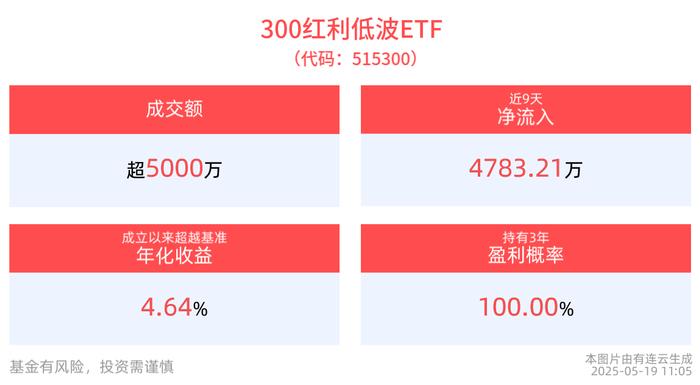
重视红利资产防御属性,300红利低波ETF(515300)近9日“吸金”超4700万元
Xin Lang Cai Jing· 2025-05-19 03:59
Core Viewpoint - The performance of the CSI 300 Dividend Low Volatility Index shows positive trends, with significant gains in constituent stocks, indicating a favorable investment environment for dividend assets [1][3]. Group 1: Index Performance - As of May 19, 2025, the CSI 300 Dividend Low Volatility Index increased by 0.22%, with notable gains from constituent stocks such as Ninghu Expressway (+3.28%) and Huaneng Hydropower (+2.06%) [1]. - The CSI 300 Dividend Low Volatility ETF (515300) showed resilience in the market, closing in the green despite broader market conditions [1]. Group 2: Liquidity and Fund Flow - The CSI 300 Dividend Low Volatility ETF recorded a turnover of 1.02% during the trading session, with a total transaction value of 57.13 million yuan [3]. - Over the past week, the ETF averaged daily transactions of 105 million yuan, indicating strong liquidity [3]. - The latest fund size of the ETF reached 5.566 billion yuan, with a net inflow of 2.0793 million yuan recently, and a total of 47.8321 million yuan net inflow over the past nine trading days [3]. Group 3: Top Holdings and Market Characteristics - As of April 30, 2025, the top ten weighted stocks in the CSI 300 Dividend Low Volatility Index accounted for 37.43% of the index, including major companies like China Shenhua and Gree Electric [3]. - Dividend assets are characterized by stable cash flow returns, lower volatility, and long-term compounding effects, making them attractive for long-term investment strategies [3]. Group 4: Market Outlook and Investment Strategy - Current market focus is on sectors such as new consumption, dividend defensive stocks, and traditional versus emerging consumption [4]. - The political signals from the recent Politburo meeting are unclear, but there is a preference for high-dividend defensive stocks, particularly in the white goods sector [4]. - Investors without stock accounts can access investment opportunities through corresponding CSI 300 Dividend Low Volatility ETF linked funds [4].
超百亿元!厦门上市公司抛出“超级红包”
Sou Hu Cai Jing· 2025-05-17 11:13
Core Viewpoint - The article highlights the significant increase in cash dividends among listed companies in Xiamen, with a notable focus on shareholder returns amidst changing market conditions and regulatory frameworks [1][3][5]. Group 1: Dividend Trends - Over 67.48% of A-share listed companies plan to distribute cash dividends, with a total expected payout of approximately 1.65 trillion yuan, while Xiamen's listed companies show a higher participation rate of 74.6% [5][7]. - The total dividend amount for Xiamen companies is projected to be 10.881 billion yuan, with eight companies contributing over 300 million yuan each, accounting for about 50% of the total dividends [7][12]. - Yilian Network leads with a proposed dividend of 1.643 billion yuan, representing 15% of Xiamen's total dividends, and has a remarkable dividend payout ratio of 90.59% for 2024 [7][11]. Group 2: Shareholder Returns - 34 listed companies in Xiamen have a dividend yield exceeding the one-year deposit rate of 1.5%, with Jianfa Co. having the highest yield at 6.65% [10]. - Despite some companies facing profit declines, they still prioritize shareholder returns, with commitments to distribute at least 30% of distributable profits [8][10]. - The trend of increasing dividends reflects a strong commitment to shareholder value, with many companies maintaining high dividend payout ratios over the past five years [11][12]. Group 3: Historical Performance - Jianfa Co. has demonstrated impressive dividend performance, with cumulative cash dividends reaching 9.806 billion yuan over the past five years, averaging nearly 2 billion yuan annually [11]. - Other notable companies include Xiamen Guomao and Xiamen Xiangyu, with cumulative dividends of 5.26 billion yuan and over 5.1 billion yuan, respectively, showcasing a consistent commitment to returning profits to shareholders [11][12]. - The overall positive dividend performance among Xiamen listed companies indicates strong profitability and financial health, enhancing their appeal to investors [12].





A股三大指数回调 大消费主线局部异动
Shang Hai Zheng Quan Bao· 2025-05-15 18:25
Market Performance - The A-share market experienced fluctuations and adjustments, with significant pullbacks in key sectors such as brokerage, liquor, and semiconductors, leading to declines in the three major stock indices [1] - As of the market close, the Shanghai Composite Index was at 3380.82 points, down 0.68%; the Shenzhen Component Index was at 10186.45 points, down 1.62%; and the ChiNext Index was at 2043.25 points, down 1.91% [1] - The total trading volume in the Shanghai and Shenzhen markets was 11,524 billion yuan, a decrease of over 1,600 billion yuan compared to the previous trading day [1] Consumer Sector - The consumer sector showed localized movements, with beauty care and leisure food sectors leading the gains [2] - The beauty care index surged by 3.68%, the highest among all primary industries, with companies like Qingsong Co., Huaye Fragrance, and Jieya Co. hitting the daily limit of 20% [2] - Analysts suggest that the demand for safe and effective skincare products is increasing, indicating a trend towards more technological and professional development in the beauty care field [2] - The leisure food index rose by 0.56%, with companies like Ximai Food increasing over 6% and Youyi Food and Haoxiangni rising over 4% [2] - The first quarter reports indicate strong resilience in consumer goods, with many beverage companies performing well and a positive outlook for food and beverage sectors through 2025 [2] Rare Earth Sector - The rare earth permanent magnet sector showed significant strength, with companies like Jingyuntong hitting the daily limit and Jiuling Technology rising over 7% [2] - Shenghe Resources announced plans to acquire 100% of Australian Peak Rare Earths Limited for 158 million Australian dollars, focusing on rare earth exploration and production [3] - China Rare Earth recently indicated its active cooperation with the China Rare Earth Group to address industry competition issues and potential mergers and acquisitions [3] - Analysts note that recent increases in rare earth prices and crackdowns on smuggling may enhance the supply-demand dynamics in the sector [3] Fund Management and Investment Strategy - The implementation of the "Action Plan for Promoting High-Quality Development of Public Funds" is expected to strengthen the performance benchmark constraints, benefiting underweighted sectors [4] - Stable dividend assets, represented by banks, public utilities, and transportation, are expected to continue outperforming, while sectors with growth potential should be selectively chosen based on risk-reward ratios [4] - The domestic computing chip industry is anticipated to show promising performance based on inventory and contract liabilities indicators [4]


煤炭红利:不确定性中确定性
2025-05-15 15:05
Summary of Coal Industry Conference Call Industry Overview - The coal industry is currently facing inventory pressure, but there are signs of marginal improvement. Power plant inventories are not at yearly highs, and demand for replenishment, reduced imports, and improved daily consumption are expected to stabilize and rebound coal prices from late May to the end of June, although the extent of the rebound is influenced by inventory levels [1][4][27]. Key Points and Arguments - **Investment Logic Shift**: The investment logic in the coal industry has shifted from cyclical to valuation-driven. The new public offering regulations have increased the focus on dividend assets, leading to stronger capital inflows. The coal sector's allocation ratio is lower than that of the CSI 300, indicating potential for long-term valuation increases in a declining government bond yield environment [1][4][10][28]. - **Supply-Side Reform Impact**: Supply-side reforms have significantly affected the coal industry, stabilizing prices through production limits. However, production and capacity increases are constrained, enhancing price stability. Long-term inflation and rising costs are expected to drive resource prices higher, shifting investment strategies from performance growth to valuation growth [1][8][9]. - **Capital Expenditure Trends**: The proportion of capital expenditure for new capacity has decreased, with stricter safety and environmental requirements limiting new supply elasticity. The long-term contract pricing mechanism (base price of 675 RMB/ton) ensures stable profitability [1][9][20]. - **Coal Price Trends**: Coal prices have been on a downward trend this year, with the Qinhuangdao 5,500 kcal coal price dropping to around 617 RMB. Factors influencing this trend include a slowdown in electricity demand growth, the impact of wind and solar energy alternatives, and changes in tariff policies. However, as summer temperatures normalize, total electricity demand is expected to improve, potentially boosting thermal power demand [2][3][13][14]. - **Future Demand and Supply Dynamics**: The demand for thermal coal is expected to remain resilient due to increased coal consumption in the chemical industry and improved coal consumption per unit of electricity. The supply is relatively stable, suggesting that prices may fluctuate around a central point in the medium to long term [3][19]. Additional Important Insights - **High Dividend Assets**: In the context of declining government bond yields, high dividend assets are likely to receive valuation premiums. For instance, China Shenhua's dividend payout ratio is expected to increase significantly, enhancing its attractiveness as a defensive investment [10][12]. - **Market Preferences**: The market's preference has shifted towards technology growth sectors, which has affected the performance of the coal sector within the dividend investment logic. The coal sector's performance has been relatively weak compared to other sectors [13][18]. - **Stock Recommendations**: Recommended stocks include Yanzhou Coal for elastic growth, China Shenhua for high dividends, and State Power Investment Corporation for transformation growth. These companies are expected to maintain strong dividend yields and growth potential [23][30][31]. - **Future Price Predictions**: Coal prices are expected to stabilize or rebound from late May to the end of June, with potential fluctuations in July depending on demand conditions. The upcoming peak purchasing season in September and October may also positively impact prices [7][18][27]. - **Focus on Defensive Investments**: Given the current economic uncertainties, high dividend stocks, particularly leading companies in the coal sector, are expected to continue attracting investor interest and maintain high valuation levels [10][12].
多家机构发声!上证指数重返3400点,后市怎么走?
Guang Zhou Ri Bao· 2025-05-14 15:47
Group 1 - The A-share market experienced an upward trend driven by large financial stocks, with the ChiNext index leading the gains and the Shanghai Composite Index closing above 3400 points [1] - The total market turnover for the day was 1.35 trillion yuan, an increase of 23.9 billion yuan compared to the previous trading day [1] - The financial sector's rise is believed to be linked to new regulations for public funds, which may guide asset allocation towards the CSI 300 index [1] Group 2 - The valuation recovery logic for the financial sector continues to unfold, supported by stable fundamentals and ongoing policy backing [2] - A-shares and Hong Kong stocks are expected to maintain a trend of oscillating upward, with structural opportunities and sector rotation being the main investment themes [2] - Analysts recommend focusing on growth technology sectors (robotics, semiconductor equipment, gaming media), industries at the bottom of the cycle (military, offshore wind, pharmaceuticals), and stable dividend assets (insurance, construction machinery, cement) [2]
七连升触及历史高点!港股红利低波ETF(520550)今日分红登记
Jin Rong Jie· 2025-05-14 05:29
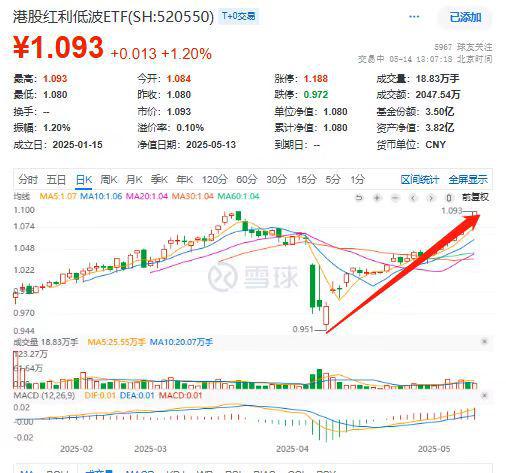
国泰海通发布研报表示,随着"新国九条"等政策的逐渐落实,A股乃至港股上市公司的分红积极性、持 续性有望提高。同时,低利率环境下,资金对红利资产有较高的配置需求。当前红利资产的股息率相较 于国债利率的配置性价比持续凸显,春节以来南下资金主要增配了银行、电信服务等行业的高股息资 产。另外,近年来险资保费收入持续增长,更追求绝对收益的险资对于高股息类资产的配置需求也有望 提升。 | 港股红利低波ETF(SH:520550) T+0交易 | | | | | --- | --- | --- | --- | | ¥1.093 +0.013 +1.20% | | | 5967 球员元 交易中 05-14 18:07:18 北京时间 | | 最高:1.093 | 今年:1.084 | 张停:1.188 | 成交量:18.83万手 | | 景低:1.080 | 昨收:1.080 | 跌停:0.972 | 成交额:2047.54万 | | 换手:一 | 市价:1.093 | 单位争值:1.080 | 草全份额: 3.50亿 | | 振幅: 1.20% 溢价率:0.10% | | 景计净值: 1.080 | 石产净值: 3.82亿 ...
股息率超8%!这只港股红利基正在冲击历史新高
Jin Rong Jie· 2025-05-14 03:08
重大利好落地,科技主线确立无疑,但从最近的表现来看:科技跌时银行涨,科技涨的时候银行还是 涨,这跷跷板明显偏向红利资产。 今日开盘,红利资产持续走强。$港股红利低波ETF(SH520550)$盘中一度涨超0.6%,正在冲击7连涨, 距离历史高点仅1.2%的涨幅。数据显示,该ETF年内累计净申购已经超过1亿元,年内份额扩容近 45%,创上市以来新高。 值得注意的是,港股红利低波ETF(520550)日前刚发布过2025年首次分红公告:每10份基金份额派发 现金红利0.02元,权益登记日为5月14日,除息日为5月15日,现金红利将于5月20日发放。 ——这意味着,今日收市前买入或持有ETF均可获得分红款。尽管由于成分股的分红节奏导致ETF初期 分红比例不高,但随着5-7月成分股进入派息高峰,未来港股红利低波ETF(520550)分红势必会有一 波提升,可以一起见证一下。 | 收益分配基准日 | | 2025年4月25日 | | --- | --- | --- | | 截止收益分配基准日的相关 | 基准日基金份额净值(单位: 人民币元) 基准日基金可供分配利润(单 | 1.0244 5.560.849.53 | | ...
低利率时代红利配置价值凸显,招商红利量化选股混合发行中
Xin Lang Cai Jing· 2025-05-14 01:14
Core Insights - The article emphasizes the attractiveness of dividend assets in a low-interest-rate environment, highlighting that the China Securities Dividend Total Return Index has a dividend yield of 6.26% as of March 31, 2025, placing it in the 91.38th percentile over the past decade [1] - The article introduces the upcoming launch of the招商红利量化选股混合 fund, which combines dividend theme investment with an active quantitative stock selection strategy, aimed at helping investors allocate to high-yield, undervalued assets [1][2] Investment Strategy - The招商红利量化选股混合 fund employs a multi-factor quantitative investment model to select stocks with investment value, evaluating aspects such as valuation, growth, profitability, operational quality, and volatility [2] - The fund's portfolio construction relies on quantitative model outputs and optimization algorithms to determine stock composition and weightings, seeking to achieve an effective investment boundary [2] Fund Management - The fund manager, Cai Zhen, has nearly 11 years of investment research experience and has managed the招商中证1000指数增强A fund since November 5, 2021, achieving a three-year return of 14.09%, significantly outperforming its benchmark by 21.30% [2][4] - The quantitative investment team at招商基金 has an international perspective and consists of 9 members with an average experience of 9.2 years, specializing in financial engineering, risk management, and information technology [3]
军工、“果链”行情分化,红利资产受青睐,多只银行股创新高!
Sou Hu Cai Jing· 2025-05-13 09:30
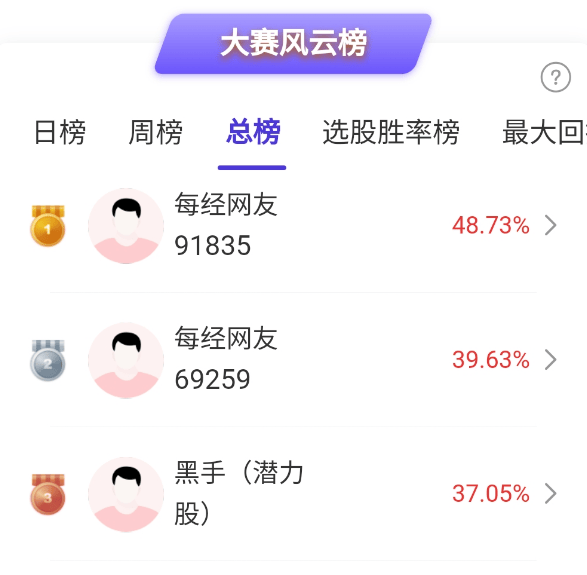
在利好消息刺激下,周二A股高开低走。收盘1900多只上涨,3200多只翻绿。 盘面上,成飞集成大量封单顶一字板,也没能带动军工大市值股中航成飞。市场看涨情绪高的苹果产业链高 开低走。 今天上午领涨的是光伏,尾盘拉起了航运港口概念。此外,今天多只银行股创新高。 在每日经济新闻APP举办的掘金大赛第59期比赛中,目前多位选手踊跃报名入场。在今日,一些重仓军工股 的选手出现盈利回吐。 大赛为模拟炒股,模拟资金50万元。报名时间为5月1日到5月16日,比赛时间为5月6日到5月16日。正收益就 获奖,报名就拿福利!周周发奖金,月月有大奖! 每期比赛的税前现金奖励为:第1名奖励688元,第2~4名奖励188元/人,第5~10名奖励88元/人,其余正收益 选手均分500元正收益奖。月度积分王的税前现金奖励为:第1名奖励888元,第2~4名奖励288元/人,第5~10 名奖励188元/人,第11~30名奖励68元/人,第31~100名奖励18元/人。 对于大盘方面,有参赛高手认为,上证指数目前是下有支撑,上有阻力。在突破4月7日的跳空缺口后,下一 个阻力位在3420点。 对于板块方面,一些参赛选手看好银行、高速公路等红利资产 ...