
绿色消费

Search documents
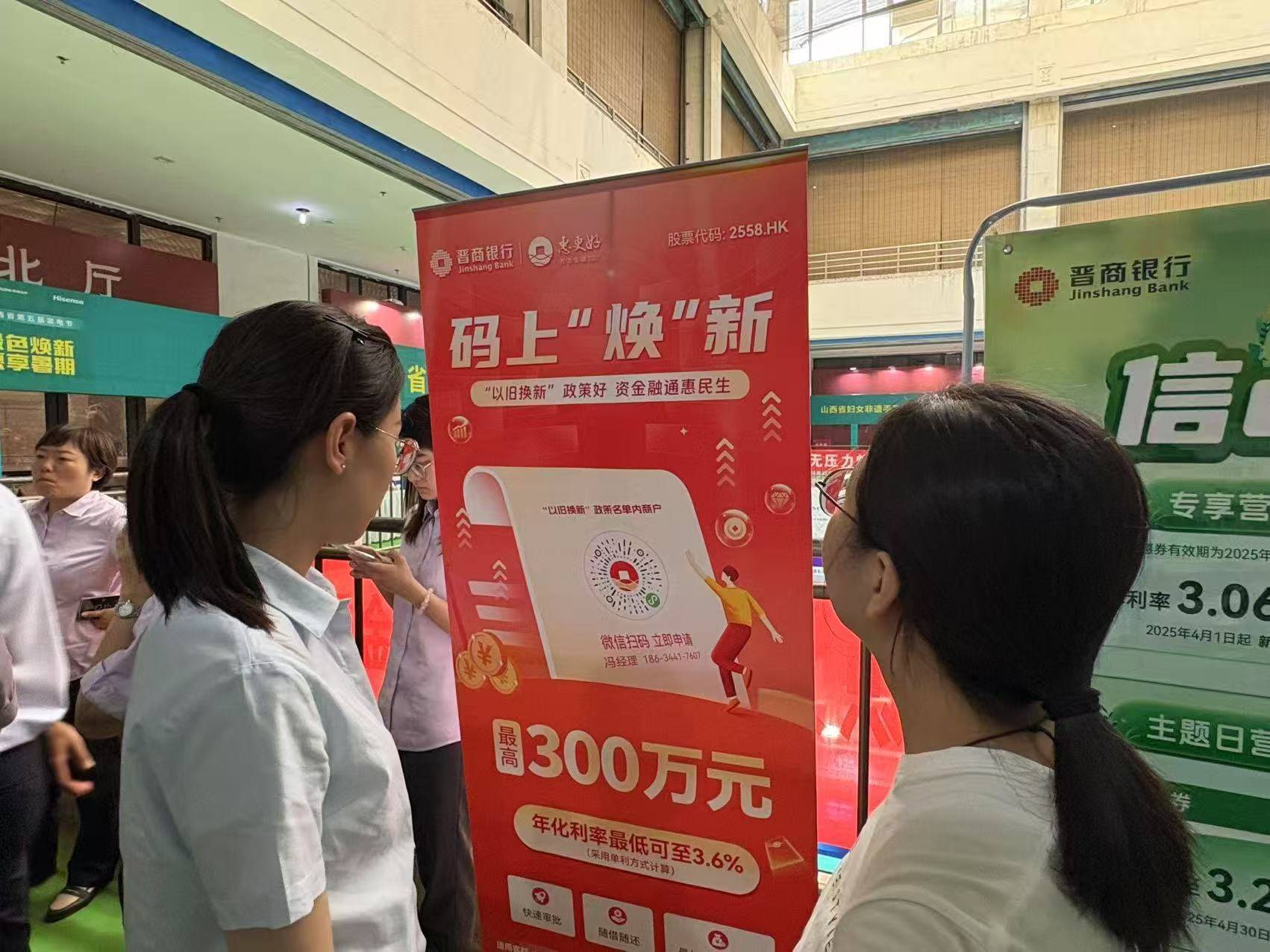
晋商银行综改示范区直属行赋能山西省第五届家电节 政银企联动激活消费新动能
Sou Hu Cai Jing· 2025-06-27 10:18
Group 1 - The core viewpoint of the news is that Jinshang Bank actively participates in the promotion of the home appliance replacement policy in Shanxi Province through innovative financial services, aiming to boost consumer spending and support the green economy transition [1][3]. - Jinshang Bank has launched a specialized financial service called "Code to Renew," offering merchants up to 3 million yuan in credit with an annual interest rate starting at 3.6%, allowing for flexible borrowing and repayment [1]. - The bank's initiative includes a consumer discount program where customers can receive cash discounts based on their spending at participating merchants, enhancing the attractiveness of the home appliance replacement program [2]. Group 2 - Jinshang Bank is committed to building a green consumption ecosystem by collaborating with government and enterprises, providing one-stop financial services during the home appliance festival, including financial consulting and loan applications [3]. - The bank's efforts are aimed at injecting new vitality into the consumer market in Shanxi Province and enhancing the quality of life for residents through financial innovation [3].

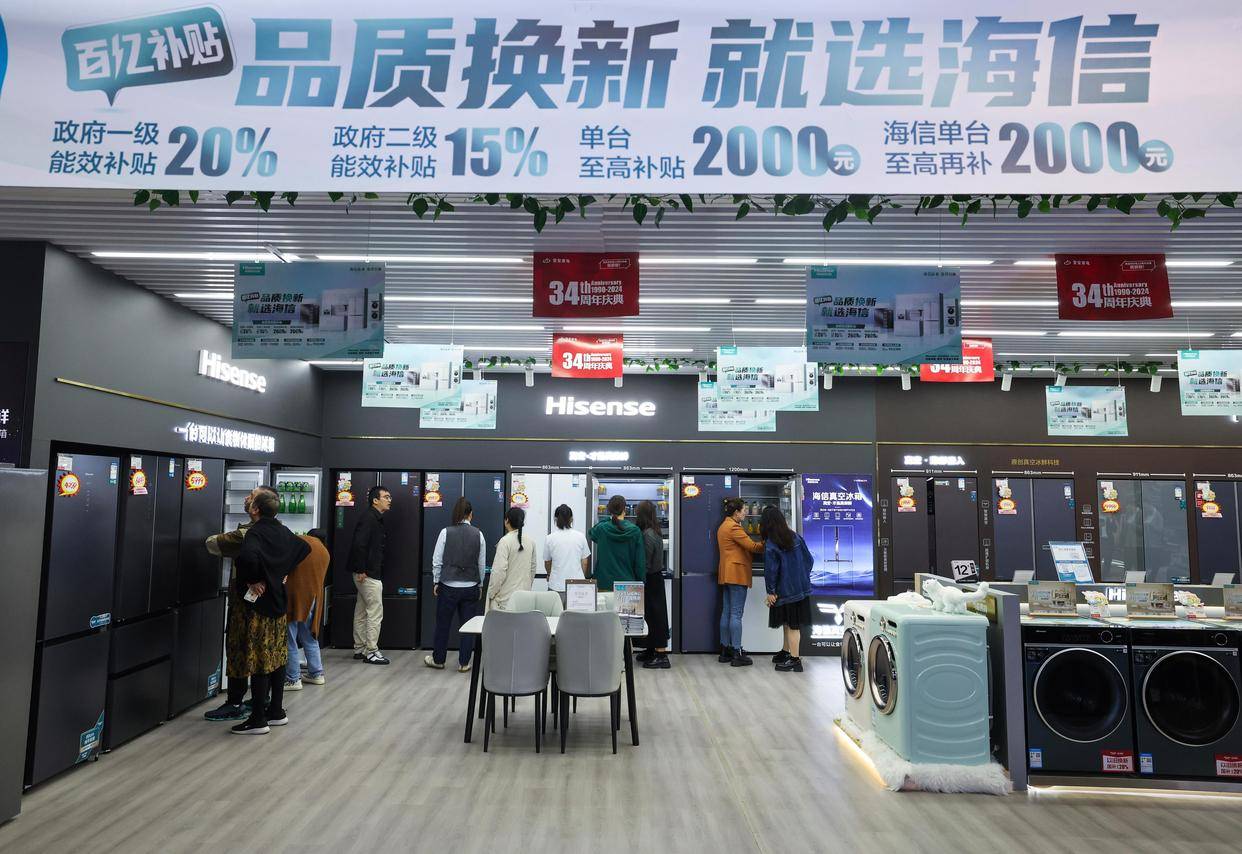
七月惠民新政:国家发改委启动第三批家电以旧换新,补贴激活消费
Sou Hu Cai Jing· 2025-06-27 02:56
Group 1: Policy Overview - The National Development and Reform Commission (NDRC) will officially launch the third batch of appliance replacement subsidies in July, aimed at boosting domestic demand and promoting green consumption [1][3] - The subsidy policy is a continuation of the government's welfare initiatives, designed to stimulate consumer spending and support the transformation of the appliance industry [1][3] Group 2: Economic Impact - The appliance replacement policy serves as an effective tool for stabilizing growth and promoting consumption, especially in the current complex economic environment [3] - By providing subsidies, the government aims to lower consumer purchasing costs, stimulate demand, and drive the collaborative development of related industries such as production, sales, and logistics [3] Group 3: Industry Opportunities - The policy presents not only short-term sales growth for appliance companies but also long-term opportunities for industry upgrades [3] - Companies are encouraged to increase R&D investments and develop more energy-efficient, environmentally friendly, and smart products to meet rising consumer demands [3] Group 4: Environmental Significance - The replacement policy is crucial for promoting green development by addressing the high energy consumption and pollution issues associated with old appliances [5] - The initiative will help establish a more regulated recycling system for old appliances, reducing environmental pollution and supporting resource recycling [5] Group 5: Consumer Benefits - The upcoming subsidy policy represents a valuable shopping opportunity for consumers looking to replace old appliances or purchase new smart devices [7] - The initiative is expected to enhance consumer living standards while contributing to environmental protection, making it a win-win situation for both consumers and the economy [7]
重磅利好!最新解读
中国基金报· 2025-06-27 01:31
Core Viewpoint - The article discusses the recent policy issued by six Chinese government departments aimed at boosting consumption, highlighting its potential to activate domestic demand and improve market confidence, particularly in the service consumption sector [2][3][8]. Group 1: Policy Overview - The "Guiding Opinions" released on June 24 outlines 19 specific measures to enhance consumption capacity and financial support for key consumption areas [2]. - The policy aims to address structural contradictions in consumption, particularly the imbalance between goods and service consumption, and to alleviate financing bottlenecks for service-oriented businesses [5][9]. Group 2: Market Impact - Fund managers believe the new policy will significantly boost market confidence, with service consumption expected to outperform physical goods consumption [3][8]. - The policy is seen as a long-term strategy that will provide financial support to the supply side of consumption, which may not yield immediate results but is beneficial for market sentiment [8]. Group 3: Investment Opportunities - The consumption sector is currently at a historical low valuation, presenting long-term investment opportunities, although some "new consumption" stocks may face short-term adjustment pressures due to previous gains [11]. - Specific sectors such as green consumption, cultural tourism, and health care are highlighted as areas encouraged by the policy, which could drive economic transformation [6][9]. Group 4: Financial Support Mechanisms - The policy includes measures like 500 billion yuan in relending and expanded bond financing to support service consumption and new consumption sectors [5][9]. - Financial institutions are encouraged to leverage their expertise and resources to assist relevant enterprises, including providing loan subsidies for new energy vehicles and issuing special bonds for tourism projects [9].

聚焦关键 巩固消费增长势头
Jing Ji Ri Bao· 2025-06-26 22:06
Core Insights - The data from the National Bureau of Statistics indicates a positive trend in China's consumption market, with a retail sales total of 20.32 trillion yuan in the first five months of the year, reflecting a year-on-year growth of 5% [1] - In May alone, retail sales reached 4.13 trillion yuan, marking a 6.4% increase compared to the previous year, with the growth rate accelerating by 1.3 percentage points from the previous month [1] - The government prioritizes boosting consumption as a key task to expand domestic demand and strengthen the domestic circulation [1] Consumption Trends - China's consumption is showing a robust development trend, with rapid growth in service consumption sectors such as dining, culture, tourism, sports, and health [2] - As of May 31, 2023, the five major categories of the consumption upgrade program have generated sales of 1.1 trillion yuan, with approximately 175 million subsidies issued directly to consumers [2] - New consumption highlights include inbound consumption, domestic "trendy" products, and digital consumption, with a notable increase in the popularity of high-quality, green, and smart products [2] Challenges and Opportunities - Despite the positive trends, there is still a need to expand consumption demand and further release consumption potential [3] - Key areas for focus include enhancing consumer capacity, improving consumption conditions, innovating consumption scenarios, and optimizing the consumption environment [3][4] Enhancing Consumer Capacity - Strategies to enhance consumer capacity include increasing the proportion of labor remuneration in primary distribution, improving wage growth mechanisms, and expanding the middle-income group [3] - Measures to increase income for low-income groups through tax, social security, and transfer payments are emphasized [3] Improving Consumption Conditions - The expansion of the middle-income group is leading to a growing demand for personalized, diverse, and high-quality consumption [4] - Policies to promote green, smart, and fashionable consumption, as well as the development of new consumption growth points, are essential [4] Innovating Consumption Scenarios - The creation of innovative consumption scenarios can better match the needs of different consumer groups and promote the integration of various consumption formats [4] - The use of technologies such as AI, virtual reality, and augmented reality is encouraged to create diverse and immersive consumption experiences [4] Optimizing Consumption Environment - A favorable consumption environment is crucial for sustained consumption growth, necessitating strengthened market regulation and consumer rights protection [5] - Efforts to create a friendly consumption environment for foreign tourists and improve service quality are also highlighted [5]
新疆乌苏市市场监管局共赴节能增效 焕“新”引领开展低碳节能宣传
Zhong Guo Shi Pin Wang· 2025-06-26 02:30
Group 1 - The national energy-saving publicity week took place from June 23 to 29, with June 25 designated as "National Low Carbon Day," themed "Carbon Road Pioneers, Green Future" [1] - The Urumqi Market Supervision Bureau organized various promotional activities to enhance low-carbon energy-saving awareness among the public, advocating for green consumption and ecological protection [1][2] - A joint promotional event was held by 12 local government units, where staff used banners and distributed materials to educate the public on energy-saving and carbon reduction knowledge [1] Group 2 - The Urumqi Market Supervision Bureau plans to conduct regular inspections of energy and water efficiency labels on products sold in the area, ensuring compliance with national energy-saving and emission reduction policies [2] - Volunteers distributed energy-saving handbooks and relevant materials in local shops and markets, encouraging consumers to adopt green consumption practices [2] - The bureau's leadership emphasized the importance of collective action in promoting green and low-carbon initiatives, aiming to foster a sustainable development environment in the community [2]
都市车界|央行等六部门出台金融促消费新政 助力汽车消费扩容升级
Qi Lu Wan Bao· 2025-06-25 06:40
Core Viewpoint - The People's Bank of China and five other government departments issued guidelines to boost automotive consumption, focusing on credit support, trade-in incentives, and financial service optimization to stimulate the automotive market [1][2]. Group 1: Policy Measures - The guidelines encourage financial institutions to lower credit thresholds by assessing borrowers' creditworthiness and repayment ability, allowing flexible adjustments to loan ratios, terms, and interest rates [2]. - There is a strong emphasis on trade-in incentives, with increased credit support for scrapping old vehicles and facilitating the circulation of second-hand cars to resolve the cycle of "old cars hard to sell, new cars hard to buy" [2]. - The guidelines promote green consumption by enhancing financial support for new energy vehicles and smart connected technologies, aligning with low-carbon transformation goals [2]. Group 2: Industry Impact - The issuance of the guidelines provides clear policy direction and financial backing for automotive companies, encouraging increased R&D investment and faster deployment of new energy models [3]. - Companies plan to launch new energy models and collaborate with financial institutions on promotional policies, particularly targeting lower-tier cities to capitalize on policy benefits [3]. - The anticipated reduction in consumer purchase costs, such as savings from waived early repayment penalties, is expected to increase auto loan penetration from 45% to over 50% and boost second-hand vehicle transactions by 15%-20% [3]. Group 3: Broader Economic Implications - Financial support will extend beyond consumer purchases to the upstream supply chain, providing more credit resources for key areas like battery technology and charging infrastructure [4]. - The combination of the guidelines and existing financial incentives is expected to enhance the resilience of the automotive industry and stimulate economic growth [4]. - The transition from "policy stimulus" to "mechanism optimization" signifies a new phase for automotive consumption, aiming for high-quality development and a positive cycle of innovation and consumer satisfaction [4].
“数”说绿色低碳风劲吹 多领域逐“绿”向“新”释放经济发展新潜力
Yang Shi Wang· 2025-06-25 04:06
Group 1: Green Consumption Trends - The low-carbon concept is increasingly embraced by consumers, leading to a rise in the purchase of energy-efficient products and the trading of idle items, particularly in the home appliance sector [1][4] - The "old-for-new" policy and green concepts have made energy-efficient appliances more appealing, with first-level energy efficiency products becoming the preferred choice for many consumers [2][4] - The sales generated from the "old-for-new" program have reached 1.1 trillion yuan since 2025, significantly boosting green consumption and industrial upgrades [4] Group 2: Production Innovations - Leading manufacturers are focusing on reducing emissions from the source, with designs emphasizing "lightweight and low energy consumption" [2] - A significant portion of materials used in appliances, such as refrigerators, is now recyclable, with 70%-80% of components made from recyclable materials [2] - The production process has been enhanced with environmentally friendly practices, such as the use of non-spray coating techniques in assembly [2] Group 3: Recycling and Circular Economy - The recycling process for old appliances is becoming more efficient, with facilities capable of quickly breaking down and sorting materials for reuse [2] - The demand for recycling is increasing, prompting companies to upgrade their smart production lines to handle the growing volume of waste [2] - The second-hand market is thriving, with a 40% year-on-year increase in second-hand recovery orders and a 43% increase in second-hand transaction orders as of May 2025 [14] Group 4: Clean Energy Development - The clean energy sector is rapidly expanding, with a significant increase in installed photovoltaic capacity, surpassing 1 billion kilowatts [21][23] - The share of clean energy in Xinjiang's total installed capacity has reached 60%, with ongoing projects expected to add 13.6 million kilowatts of new energy generation [20][30] - The government is streamlining the approval process for clean energy projects, enhancing support for the development of renewable energy [18][19] Group 5: Energy Efficiency and Carbon Reduction - The focus on energy efficiency is crucial for reducing fossil fuel consumption and enhancing clean energy production capabilities [29] - The construction of high-voltage transmission lines is being accelerated to improve the delivery capacity of renewable energy [30] - By 2027, the goal is to achieve a renewable energy utilization rate of no less than 90% across the country [31]
六部门:引导金融机构依法合规与社交电商、直播电商等开展合作
news flash· 2025-06-24 09:25
Core Viewpoint - The People's Bank of China and six other departments have jointly issued guidelines to enhance and expand consumption through financial support, focusing on fostering new consumption patterns [1] Group 1: Financial Support for New Consumption - The guidelines emphasize the importance of cultivating new types of consumption, including digital, green, and health-related consumption [1] - Financial innovation is encouraged to support the development of experiential, smart, and customized consumption models [1] - Financial institutions are urged to collaborate with merchants to create financial products and services tailored to the characteristics of new consumption [1] Group 2: Collaboration and Risk Management - Financial institutions are encouraged to participate in promotional activities with merchants, providing consumers with cost reductions and benefits [1] - There is a call for financial institutions to legally and compliantly collaborate with social e-commerce and live e-commerce platforms [1] - The guidelines advocate for establishing internal management mechanisms that align with the characteristics of internet loan businesses, ensuring risk control and clear responsibilities [1]
全球首个千吨级离子液体纺丝项目投产
Zhong Guo Hua Gong Bao· 2025-06-24 04:17
Core Viewpoint - The successful launch of the world's first thousand-ton ion liquid method regenerated cellulose fiber project marks a significant breakthrough in green fiber technology, achieving zero emissions of waste and a solvent recovery rate exceeding 99% [1][2]. Group 1: Project Overview - The project, located in the Baijun Biobased New Materials Industrial Park of Xinxiang Chemical Fiber Co., Ltd., has an annual production capacity of 1,000 tons of regenerated cellulose fiber using the ion liquid method [1]. - The project utilizes a full-process technology developed by Academician Zhang Suojiang's team, which addresses various technological challenges over a decade, including ion liquid design, cellulose dissolution mechanisms, and spinning processes [1][2]. Group 2: Environmental Impact - The ion liquid method completely eliminates reliance on strong acids and bases, as well as the environmental issues associated with waste gas and wastewater emissions, setting a new benchmark for sustainable development in the regenerated cellulose fiber industry [2]. - The project is seen as a significant contribution to achieving the "dual carbon" goals of the country, enhancing the global green competitiveness of China's textile industry [2]. Group 3: Future Prospects - Plans are underway for a ten-thousand-ton production line, indicating the project's potential for further scaling and market application [2]. - The project is expected to lead to increased market preference for the new fiber due to its superior performance and environmental benefits, driving a trend towards green consumption [2].

全国首单乘用车再制造发动机进口业务落地天津
Zhong Guo Chan Ye Jing Ji Xin Xi Wang· 2025-06-23 22:14
Group 1 - The first import of remanufactured passenger car engines in China has been completed, marking a significant milestone for the remanufactured products market [1] - Remanufactured products are defined as original products that have lost their original design performance but possess recycling value, which are disassembled, repaired, and reassembled to restore or exceed original performance [1] - The remanufactured products are competitively priced compared to new products and comply with domestic quality, safety, and environmental standards [1] Group 2 - In June 2024, the Ministry of Commerce approved Tianjin's pilot implementation plan for the import of remanufactured products, making it the first local pilot scheme in the country [2] - The pilot scheme aims to support the import of remanufactured products in key industries, with Tianjin Customs developing a specific inspection and supervision plan for these imports [2] - Tianjin Customs has actively engaged with enterprises to explain policy requirements and ensure compliance, while also focusing on enhancing the integration of port, customs, and industry [2]