去美元化

Search documents
近期市场波动的投资思考:黄金与多资产配置
Sou Hu Cai Jing· 2026-02-04 11:03
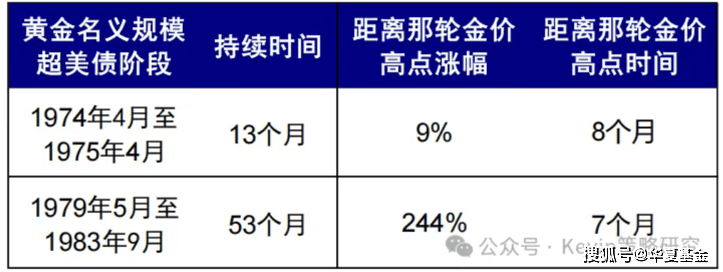
黄金、白银在进入2026年后,伴随着特朗普的一系列激进动作,快速将美元贬值交易的叙事演绎到极致,相关资产的波动率飙升,并最终引发了近 期的暴跌。 需要看清楚的是,这一波疯狂周期的加速度: ①1000→2000美元: 黄金走了12年(2008-2020年初) 过去一周见证了多项历史,黄金以迅雷不及掩耳之势急冲到5500后,一"什"激起千层浪,坐直升机跌到4680点,单日跌幅超过500点,创下40年来的 历史记录。(数据来源:Wind) 黄金白银历史级别的大跌带来系列连锁反应,冲击全球风险偏好,避险情绪迅速蔓延,波及海内外、股债汇等全球资产,前几个交易日内,不少账 户都经历了激烈的波动。 写作本文的此时此刻,市场已经修复、平静了很多。但经历了疯狂的几日之后,或许大家会对黄金的定价和地位,有了更加清晰的心理锚定,对于 波动加大、资产联动加强时期的多资产配置应对,也会有一些新的理解,一起来聊聊。 #重新定义"避险" 当黄金单日暴跌500点 ②2000→3000美元: 用了5年(2020-2025年年初) ③3000→4000美元: 缩短到7个月(2025.1-2025.8) ④4000→5500美元: 仅用了不到5个 ...

中国发出禁令,委石油不能靠岸!特朗普的强卖计划,没开始就夭折
Sou Hu Cai Jing· 2026-02-04 10:51
Core Viewpoint - The article discusses the implications of the U.S. government's actions in Venezuela, particularly the attempt to control its oil resources and the subsequent response from China, highlighting the shifting dynamics in global energy markets and the limitations of U.S. power in this context [3][9][70]. Group 1: U.S. Actions in Venezuela - In January 2026, the Trump administration executed a plan to take control of Venezuela's oil exports following the ousting of President Maduro, setting new pricing and payment conditions for oil sales [3][10]. - The U.S. aimed to leverage its control over Venezuelan oil to pressure China and India into compliance with its pricing strategy, intending to weaken China's influence in Latin America [12][19]. - The U.S. actions are characterized as a blatant resource takeover, treating Venezuela's national assets as spoils of war, with strict regulations on who could purchase the oil [9][10]. Group 2: China's Response - China swiftly responded by halting all imports of Venezuelan oil, effectively cutting off the supply and undermining the U.S. strategy [5][25]. - The Chinese government emphasized that it would not accept the new pricing dictated by the U.S., as it would undermine the principle of sovereign resource ownership [31][70]. - China's diversified energy sourcing strategy and investments in renewable energy have positioned it to absorb the impact of halting Venezuelan oil imports, with alternatives readily available [18][27]. Group 3: Global Energy Market Dynamics - The article highlights a shift in the global energy landscape, where the ability to flexibly manage energy sources and maintain pricing power has become more critical than merely controlling supply [16][58]. - The U.S. approach is seen as outdated, reflecting a Cold War mentality that fails to recognize the complexities of modern energy security [14][68]. - The potential for a ripple effect in other resource-rich countries is noted, as the Venezuelan model could set a precedent for external intervention in domestic affairs [60][62]. Group 4: Economic Implications - The U.S. strategy has backfired, as the high-quality Venezuelan oil remains unsold due to a lack of buyers capable of processing it, leading to logistical challenges for the U.S. [43][49]. - The financial community expresses concern that aggressive U.S. tactics could damage its reputation as a safe haven for global capital, deterring long-term investments [66][68]. - The article suggests that the U.S. may need to reconsider its approach, as the reliance on coercive tactics is increasingly ineffective in a multipolar world [72][74].

高波动遇上真空期:大类资产配置月度展望-20260204
GF SECURITIES· 2026-02-04 09:28
Xml [Table_Page] 宏观经济研究报告 2026 年 2 月 4 日 证券研究报告 高波动遇上真空期:大类资产配置月度展望 | [Table_Title] [Tabl e_Author 分析师:] | 郭磊 | 分析师: | 陈礼清 | | --- | --- | --- | --- | | | SAC 执证号:S0260516070002 | | SAC 执证号:S0260523080003 | | | SFC CE.no: BNY419 | | | | | 021-38003572 | | 021-38003809 | | | guolei@gf.com.cn | | chenliqing@gf.com.cn | | | 请注意,陈礼清并非香港证券及期货事务监察委员会的注册持牌人,不可在香港从事受监管活动。 | | | 报告摘要: ⚫ 12026 年 1 月大类资产表现为韩国综指>原油>黄金>科创 50>南华综合>恒指>日经 225>做多 VIX>上证 综指 ≈ 恒科>标普 500>纳指>中债>美元。1 月底 2 月初,贵金属巨震联动大类资产普调。(1)股商优于债 券,新兴市场优于发达国家,春 ...
“去美元化”阵营又添一员!欧洲最大资管:正减持美元资产
Jin Shi Shu Ju· 2026-02-04 09:14
Core Viewpoint - Amundi, Europe's largest asset management company, is reducing its exposure to dollar assets and shifting focus towards European and emerging markets due to concerns over the weakening dollar and unpredictable U.S. economic policies [1][4]. Group 1: Company Strategy - Amundi's CEO, Valerie Baudson, suggests clients reduce dollar asset holdings over the next year, warning of a continued decline in the dollar if U.S. economic policies remain unchanged [1]. - The company has been diversifying its asset allocation for the past 12 to 15 months, advising clients to maintain a highly diversified investment approach [1]. - Amundi's assets under management reached a record high of €2.4 trillion, driven by a record net inflow of €88 billion for the year [4]. Group 2: Market Trends - The dollar has depreciated significantly, falling over 10% against a basket of major currencies in the past 12 months, with a notable drop to a four-year low at the end of January [3]. - The decline in the dollar has led to a surge in gold prices, which nearly doubled, reaching close to $5,600 per ounce in late January [3]. - Emerging markets experienced their best performance since 2017, largely driven by the weakening dollar, with expectations for continued growth into early 2026 [2]. Group 3: Industry Response - Other major asset management firms, including PIMCO and Wellington Management, echo Amundi's sentiment, indicating a shift towards diversification away from U.S. assets due to unpredictable policies [4]. - Wellington Management's Natasha Brook-Walters has increased long positions in emerging markets and is buying euros and Australian dollars to express concerns over the dollar [4]. - Fidelity International's Becky Qin has significantly reduced dollar exposure in her $7 billion asset portfolio, anticipating further dollar weakness [4].
【广发宏观陈礼清】高波动遇上真空期:大类资产配置月度展望
郭磊宏观茶座· 2026-02-04 09:00
Core Viewpoint - The performance of major asset classes in January 2026 shows a trend where the Korean Composite Index outperformed other assets, with significant volatility in precious metals leading to a broad adjustment across asset classes [1][14]. Group 1: Asset Performance - In January 2026, the ranking of major asset classes was as follows: Korean Composite Index > Crude Oil > Gold > Sci-Tech 50 > Nanhua Composite > Hang Seng Index > Nikkei 225 > Long VIX > Shanghai Composite Index ≈ Hengke > S&P 500 > Nasdaq > China Bond > US Dollar [1][14]. - The commodity market experienced structural upward trends driven by both long-term narratives and short-term realities, with gold and silver showing volatility but not losing their gains [2][21]. - The global stock markets are entering a critical earnings disclosure period, with all major markets showing gains, and a shift in leading stocks within the US market [2][24]. Group 2: Macroeconomic Insights - The macroeconomic landscape is characterized by a synchronous rise in hard and soft data indices in the US and Japan, while Europe shows a V-shaped reversal in its data [4]. - China's soft data indicators are inconsistent, with hard data in a vacuum period, but nominal GDP growth is estimated at 4.94% for January, indicating a solidifying trend of improvement [4][21]. - The domestic stock and bond markets have shifted from a "seesaw" dynamic to "synchronous volatility," with the stock market experiencing a spring rally and the bond market undergoing a correction [2][4]. Group 3: Investment Strategies - The next driving factors for equity assets may stem from price increases and solidified inflation expectations, with a focus on domestic demand recovery post-holiday [5]. - The "M1-BCI-PPI timing system" indicates a slight expansion in scores, suggesting a supportive environment for risk assets despite a convergence in narratives [6]. - The bond market is showing signs of improvement in relative value, with the yield spread between 10-year government bonds and dividend yields indicating a return to a more favorable position for bonds [7]. Group 4: Sector Performance - The technology sector is currently underweighted compared to the overall market, with a significant drop in the score of high-growth assets due to internal and external liquidity conditions [9]. - The dividend asset timing model suggests that macro conditions do not favor dividends significantly, maintaining a low allocation relative to the overall market [10]. - The energy sector has shown strong performance, driven by geopolitical safety premiums and narratives around AI industrial energy consumption [24].

宏观点评20260204:商品流动性冲击之后,哪些品种被“错杀”?-20260204
Soochow Securities· 2026-02-04 07:44
Group 1: Market Overview - On February 3, 2026, SHFE silver futures closed at 21,446 CNY/kg, down 16.71% from the previous day[1] - The premium of SHFE silver futures over LME silver decreased from 29.8% at the end of January to 7.46% by February 3[1] - SHFE silver futures rose by 5.93% in the night session on February 4, closing at 22,393 CNY/kg[1] Group 2: Precious Metals Insights - The long-term narrative for precious metals remains unchanged, with expectations of continued support for gold prices due to "de-dollarization" and loose fiscal and monetary policies[3] - The volatility of silver futures remains high, with implied volatility reaching 148% on February 2 and remaining above 100% on February 3, compared to an average of 27% in 2025[5] - Gold futures implied volatility was close to 40% as of February 3, significantly higher than the 19% average for 2025[5] Group 3: Commodity Market Dynamics - The liquidity shock has ended, as indicated by the opening of the silver futures limit down on February 3, suggesting a stabilization in market risks[5] - The commodity market is expected to return to fundamental pricing logic for certain products that were "wronged" during the liquidity crisis[5] - The core logic of the commodity market remains intact despite the liquidity shock, with solid fundamentals for certain commodities still offering investment value[5] Group 4: Sector-Specific Analysis - Non-ferrous metals like copper and aluminum are expected to benefit from new economic demands driven by AI and green energy, despite recent price adjustments[6] - The chemical sector is experiencing a structural demand shift, with emerging industries driving growth, indicating potential for continued market improvement in 2026[6] - New energy metals, particularly lithium carbonate, are projected to achieve supply-demand balance, presenting bullish investment opportunities[6]
“短短几天坐了一趟过山车”!金价狂震,各大银行密集公告
Sou Hu Cai Jing· 2026-02-04 07:40
Core Viewpoint - International gold prices have experienced significant volatility, rebounding from a previous drop and surpassing the $5000 per ounce mark as of February 4, 2026, prompting banks to enhance risk management for gold investment businesses [1][2]. Group 1: Gold Price Fluctuations - Gold prices saw a dramatic rise and fall, peaking near $5600 per ounce on January 29, 2026, followed by a nearly 10% drop on January 30, and falling below $4500 per ounce by February 2, before rebounding with over a 6% increase on February 3 [2]. - Analysts from Guangzhou Futures Co. noted that concerns over future monetary policy, coupled with technical selling pressure, contributed to the significant price drop, while long-term factors such as central bank gold purchases and geopolitical risks are expected to support gold prices [3]. Group 2: Bank Responses to Volatility - Major state-owned banks, including Bank of China and Agricultural Bank of China, have announced adjustments to margin requirements and trading limits for gold and silver contracts in response to the volatility [4][5]. - The Bank of China adjusted the margin ratio for gold contracts from 16% to 17% and for silver contracts from 26% to 23%, effective February 3, 2026 [4]. - Agricultural Bank of China also modified the trading limits for gold and silver contracts, reducing the daily price fluctuation limit from 25% to 22% for silver and from 15% to 16% for gold [5]. Group 3: Changes in Investment Products - Some banks have raised the minimum purchase threshold for gold accumulation products to 1500 yuan, reflecting a tightening of investment conditions [10]. - Industrial and Commercial Bank of China announced limits on gold accumulation business during weekends and holidays, indicating a more cautious approach to managing gold investments [8]. - Analysts emphasize the importance of viewing gold as a stabilizing asset in investment portfolios, advising against speculative trading practices [10][11].
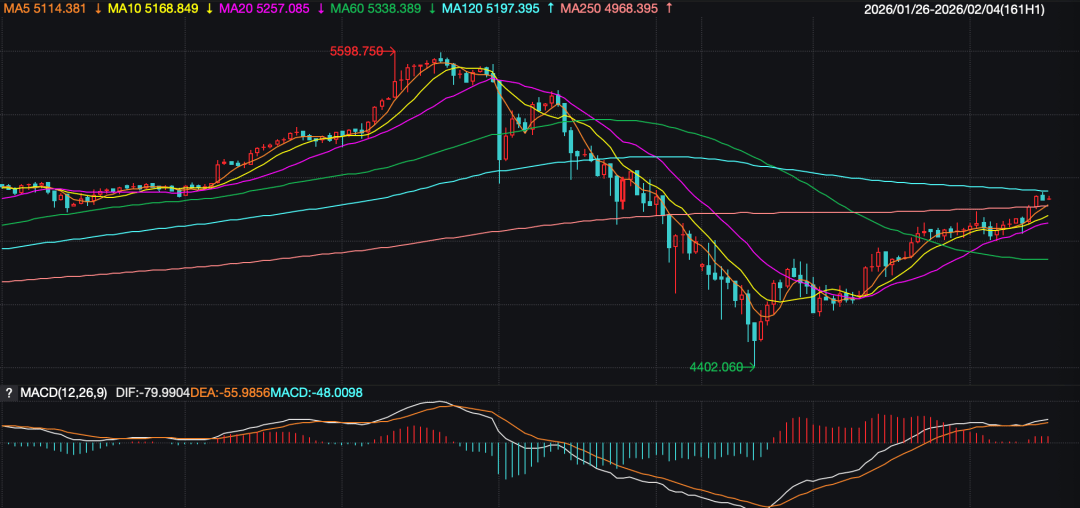
纽约期金突破5100美元,上海金ETF、黄金ETF易方达、金ETF南方、黄金ETF、黄金ETF华夏、金ETF等涨超4%
Ge Long Hui· 2026-02-04 07:26
Group 1 - The core viewpoint of the articles indicates a significant rise in gold prices, with spot gold surpassing $5080 per ounce and New York futures exceeding $5100 per ounce, driven by a decline in the dollar index and market sentiment [1][2] - Gold ETFs, including those from various fund companies, have seen increases of over 4%, reflecting the strong performance of gold as an asset class [1] - The traditional research framework for gold pricing, which relies on the dollar and real interest rates, has lost its explanatory power, with non-framework factors gaining prominence [2] Group 2 - Central banks, particularly in non-Western countries, are accelerating gold purchases to replace foreign exchange reserves, indicating a growing consensus of distrust in the dollar [2] - The supply rigidity of gold mining, combined with large-scale central bank purchases, is expected to create a physical shortage and support long-term price increases, with projections suggesting prices could reach $8000 [2] - Short-term trading risks are highlighted, with a current "naked long" market state and high volatility, suggesting potential for a market correction [2][3] Group 3 - Recent volatility in precious metals is attributed to the nomination of Kevin Warsh as the next Federal Reserve Chair, which has led to a rebound in the dollar index and profit-taking in the market [3] - Despite short-term fluctuations, the long-term support factors for gold remain intact, and it is expected to return to a steady upward trend after market adjustments [3] - Silver, due to its dual industrial and financial attributes, has experienced significant price increases but is now under pressure, suggesting a cautious approach for investors [3]
金价长期上涨的逻辑还在吗
Zheng Quan Ri Bao· 2026-02-04 07:16
Core Viewpoint - The recent volatility in gold prices, which dropped from over $5,500 per ounce to nearly $4,400 per ounce in just three trading days, is attributed to profit-taking and changes in Federal Reserve monetary policy signals, although long-term macro factors supporting gold prices remain unchanged [1] Group 1: Drivers of Gold Price Movement - The weakening of dollar credit and the ongoing "de-dollarization" trend are identified as core drivers behind the recent rise in gold prices, with central banks expected to purchase 863 tons of gold in 2025, maintaining high demand [2] - Global risk events are increasing, leading to a higher risk premium for gold as a traditional safe-haven asset, with geopolitical conflicts and financial risks altering market perceptions of global risks [3] Group 2: Supply and Demand Dynamics - Total global gold demand is projected to reach a historical high of 5,002 tons in 2025, driven primarily by a significant increase in investment demand, with a year-on-year growth of 84% expected [4] - Central banks are continuing to increase their gold holdings, while private investors are also diversifying into gold assets, contributing to the overall demand [4]
金价上演“过山车”行情 短期震荡加剧,中长期支撑未改
Sou Hu Cai Jing· 2026-02-04 07:11
Core Viewpoint - The global gold market has experienced significant volatility, with international spot gold prices undergoing a dramatic drop followed by a strong rebound, attracting widespread attention from investors. Short-term policy expectations and profit-taking have amplified price fluctuations, while the core logic supporting gold prices in the medium to long term remains fundamentally unchanged [1]. Price Movements - The recent fluctuations in gold prices began with a strong surge in late January, reaching a peak of nearly $5,600 per ounce on January 29, which marked a new high. Domestic gold prices also rose, with retail prices surpassing 1,500 yuan per gram. However, a significant correction followed, with London gold prices dropping nearly 10% on January 30 and falling below $4,500 per ounce by February 2, leading to short-term losses for some investors [3][4]. Market Rebound - Starting February 3, gold prices entered a strong rebound phase. As of February 4, London gold was reported at $5,058.33 per ounce, up $112.09 (2.27%) from the previous trading day, and domestic gold prices also saw significant increases, with T+D prices rising by 5.39% [4]. Causes of Volatility - The core reasons for the recent volatility in gold prices are attributed to a reversal in short-term policy expectations and the ongoing battle between these expectations and medium to long-term support factors. The nomination of a hawkish Federal Reserve chair by Trump has led to a rise in the dollar index and real interest rates, increasing the holding costs of gold and prompting a shift of funds from gold to dollar assets [5]. Institutional Responses - Financial institutions have taken action to strengthen risk management in response to the volatility. Starting February 2, several banks issued risk warnings and adjusted margin requirements for gold and silver trading contracts to mitigate market risks [6]. Future Outlook - Many institutions maintain a cautiously optimistic outlook for gold prices. Analysts point to persistent global trade and geopolitical uncertainties, as well as unfavorable debt situations in major economies, as ongoing support for gold prices. Predictions suggest that gold could reach $6,000 per ounce by the end of the year, although market risks are increasing [7]. Investment Strategy - Experts recommend that gold should serve as a "ballast" and "insurance" in family asset allocation, primarily for hedging extreme risks rather than as a speculative tool. Investors are advised to adopt a systematic investment approach to mitigate the impact of market volatility [7].