
全球经济不确定性

Search documents
德国机械制造业呼吁美欧尽快化解贸易争端
news flash· 2025-07-02 15:30
Core Insights - The German mechanical and equipment manufacturing industry is experiencing a 9% year-on-year increase in actual new orders for May, indicating a positive signal despite a low base last year and ongoing global uncertainties, particularly the US-EU trade disputes [1][1][1] Industry Summary - The German Mechanical Engineering Industry Association reported a 9% increase in new orders in May compared to the same month last year [1] - The chief economist of the association, Johannes Gerner, expressed a "cautiously optimistic" outlook for the industry in the second half of the year, reflecting the order data [1][1] - There is a strong call for the EU and the US to quickly resolve trade disputes to prevent further escalation of the situation, as global economic uncertainty remains high [1][1][1]
冠通研究:易涨难跌
Guan Tong Qi Huo· 2025-07-01 11:18
【冠通研究】 易涨难跌 制作日期:2025 年 7 月 1 日 【策略分析】 今日沪铜低开高走尾盘拉涨。中国 6 月官方制造业 PMI 连升两月至 49.7,新订单指 数回升至扩张区 16040 间,非制造业延续扩张。特朗普的高级贸易官员正在缩减与外国 达成全面对等协议的雄心,寻求达成范围更小的协议,以避免美国重新征收关税。伊朗 驻联合国大使强势表态:铀浓缩是伊朗不可剥夺的权利,永远不会停止!基本面来看, 供给端,截至 2025 年 6 月 30 日,现货粗炼费为-43.56 美元/干吨,现货精炼费为-4.35 美分/磅。目前铜冶炼端偏紧预期暂时只反映在数据上,铜供应量依然在走强;库存端全 球铜库存去化,其中套利驱使下,伦铜大幅去化,美铜依然在快速累库,国内目前铜去 化幅度较缓,主要系逢低拿货为主。需求端,截至截至 2025 年 5 月,电解铜表观消费 136.35 万吨,相比上月涨跌+8.08 万吨,涨跌幅+6.30%。受铜关税事件影响,铜出口需 求增加,带动表观消费量的提振。全球经济不确定性的影响下,终端市场相对疲软,下 游也多以逢低拿货及刚需补货为主,6 月系消费淡季阶段,终端家电排产减少,高温下 房地 ...
拉加德:欧元区面临通胀波动加剧的问题
news flash· 2025-06-30 19:11
Core Viewpoint - The European Central Bank (ECB) is facing increasing volatility in inflation, which is influenced by global economic uncertainties and supply shocks [1] Group 1: Inflation Concerns - ECB President Lagarde highlighted that uncertainty will continue to be a major characteristic of the global economy, potentially leading to more unstable inflation [1] - The ECB concluded that "appropriate and forceful or persistent" policy actions are necessary to ensure that price growth returns to the target level of 2% [1] - Lagarde acknowledged that while the ECB expects inflation rates to remain around this target in the coming years, there are risks due to changes in corporate pricing behavior [1] Group 2: Global Economic Environment - The global environment has fundamentally changed in the years following the pandemic, leading to a new era characterized by uncertainty and supply shocks [1] - Companies are adapting their pricing strategies more rapidly in response to these changes, contributing to inflation instability [1] - Lagarde emphasized that the future world is likely to be more uncertain, which may exacerbate inflation volatility [1]
“美国优先”带给世界更多不确定性
Jing Ji Ri Bao· 2025-06-27 22:10
Core Viewpoint - The G7 summit highlighted the internal divisions among member countries, exacerbated by the U.S. government's tariff policies, leading to increased global economic uncertainty [1][2][3] Group 1: G7 Summit Dynamics - The 51st G7 summit in Canada failed to produce a joint communiqué, reflecting deep-seated divisions and a lack of consensus among member states [1] - The summit was marked by a tense atmosphere due to the looming deadline for U.S. tariff policies, which overshadowed discussions on other global issues [2] - The U.S. maintained a hardline stance on its tariff policies, undermining collective efforts to address climate change and economic recovery [2] Group 2: Economic Implications - The G7's economic representation has diminished, with increasing reliance on the U.S. and a lack of unified response to its unilateral trade actions [3] - The ongoing tariff risks could lead to a projected global economic contraction of $1 trillion by 2030 if current U.S. policies persist [3] - The internal conflicts within the G7 have intensified global economic uncertainty, countering expectations for a cohesive trade agreement [3]
美国第一季度经济萎缩0.5%,关税进口激增拖累经济
Sou Hu Cai Jing· 2025-06-27 05:06
Economic Performance - In the first quarter of 2025, the US economy contracted by 0.5% on a year-over-year basis, which was below expectations and undermined confidence in sustained economic growth [1][3] - The contraction is attributed to complex structural issues within the economy, with tariff policies significantly impacting both imports and exports [1][5] Trade Dynamics - The US saw an import growth adjustment to 37.9% and export growth adjusted to 0.4%, with net imports dragging down GDP by nearly 4.7 percentage points [3] - The reliance on imports has increased, exacerbating the trade deficit and highlighting the imbalance in the economic structure [3][6] Consumer Spending - Personal consumption expenditure, which accounts for about 70% of GDP, contributed only approximately 0.3 percentage points to GDP growth in the first quarter, indicating a decline in consumer purchasing power [3][5] - Consumer confidence has weakened, particularly in an uncertain economic environment, which has become a significant factor in hindering economic growth [3][8] Tariff Policy Impact - The "America First" trade policy implemented by the Trump administration aimed to protect domestic manufacturing but resulted in increased prices for imported goods, raising production costs for US businesses [5][6] - This policy has inadvertently shifted the burden onto consumers, leading to a slowdown in overall economic growth [5][8] Global Economic Uncertainty - The interconnectedness of the US economy with global markets means that uncertainties in other major economies, such as China and the EU, directly affect US export growth [6][8] - The slowdown in global economic growth has led many US companies to reduce investment and production plans, further contributing to domestic economic contraction [6][8] Structural Issues - The current economic challenges reflect long-term structural problems, with the US economy's dependence on external markets making it vulnerable to global uncertainties [8] - Addressing these structural issues, including reducing reliance on imports and adjusting trade strategies, is crucial for sustainable economic growth in the future [8]


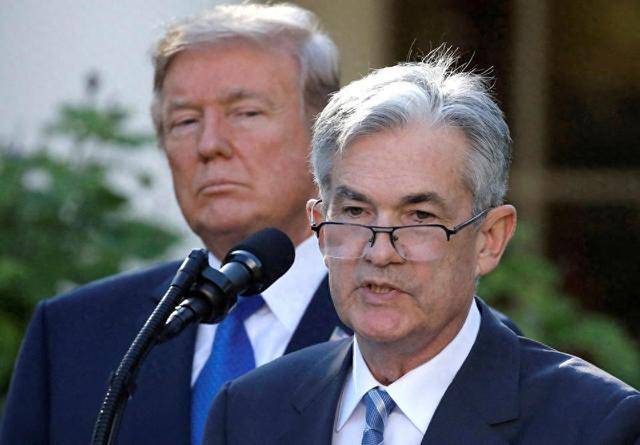
鲍威尔国会表态,美联储观望关税冲击,特朗普心急如焚
Sou Hu Cai Jing· 2025-06-27 03:10
Core Viewpoint - The Federal Reserve, led by Chairman Jerome Powell, emphasizes its independence from political pressures, particularly in response to President Trump's calls for rapid interest rate cuts, opting instead for a patient approach to assess the economic impact of tariff policies [1][3][4]. Group 1: Economic Environment - Trump's high tariff policies aim to reshape U.S. manufacturing and reduce trade deficits but have led to increased costs for consumers and businesses, contributing to inflationary pressures [3][6]. - The current U.S. economy appears stable, with inflation rising but not yet spiraling out of control, as the Federal Reserve maintains a high benchmark interest rate of 4.25% to 4.50% since December [3][6]. - Powell's focus on preventing temporary price spikes from becoming sustained inflation reflects the Fed's role as a guardian of monetary policy [3][4]. Group 2: Political Dynamics - Trump's public pressure on Powell for interest rate cuts is seen as a political maneuver to boost his support among voters, risking economic overheating and potential crises [4][9]. - The Fed's independence is crucial for avoiding short-term political pressures that could destabilize the economy, with Powell's stance serving as a model for global economic management [7][9]. Group 3: Global Implications - The interconnectedness of the global economy means that U.S. policy decisions, such as interest rate changes, can have far-reaching effects, potentially destabilizing financial markets if not handled cautiously [6][10]. - Powell's cautious approach is viewed as stabilizing for global markets amid rising geopolitical risks and trade tensions, helping to maintain the dollar's status as a global reserve currency [6][10]. Group 4: Future Outlook - Upcoming economic data, including employment, manufacturing, consumer confidence, and inflation indicators, will significantly influence the Fed's decision-making process [9][10]. - The ability of Powell and the Fed to maintain policy independence and rationality will be critical for both U.S. and global economic stability moving forward [9][10].
夏季达沃斯论坛聚焦全球经济:世界面临不确定性考验
Zhong Guo Xin Wen Wang· 2025-06-24 13:48
Group 1 - The World Economic Forum's 2025 Global Economic Outlook predicts a decline in global economic growth to 2.3% from a previous forecast of 2.7%, with trade uncertainty being a key factor affecting economic prospects [1] - Experts at the Summer Davos Forum highlighted that uncertainty is the main theme of the year, leading to reduced corporate investment and cautious consumer spending, although a predicted global recession has not yet materialized [1] - Some countries, such as the US and China, have seen varying economic outcomes, with the US experiencing a slowdown but without catastrophic consequences, while China and Ireland have increased export trade to boost their economies [1] Group 2 - The Minister of Sustainable Development from Bahrain indicated that alliances among certain countries are not aimed at market openness but rather at establishing higher trade barriers, which could exacerbate global economic fragmentation [2] - A report from the World Economic Forum earlier this year warned that increasing economic fragmentation could pose significant risks to the global economy [3]
霍尔木兹海峡如果关闭,会如何扰动全球经济?
第一财经· 2025-06-23 15:32
Core Viewpoint - The recent U.S. military action against Iran's nuclear facilities has heightened geopolitical tensions in the Middle East, potentially impacting global economic stability and inflation dynamics, particularly through the risk of oil price surges if the Strait of Hormuz is blocked [1][8]. Geopolitical Impact - The Strait of Hormuz is a critical passage for global oil trade, with approximately 20% of the world's oil passing through it, equating to an average of 20 million barrels per day in 2024 [3][4]. - Historical context shows that while Iran has threatened to block the Strait, it has never followed through, but the current situation raises concerns about potential disruptions that could significantly affect oil prices [3][4]. Energy Price Dynamics - Analysts predict that if the Strait were to be blocked, Brent crude oil prices could soar to between $100 and $120 per barrel, exacerbating inflationary pressures globally [2][3]. - The rise in oil prices has already led to increased transportation costs, with insurance rates for Middle East to Asia routes surging by 300% and VLCC tanker rates exceeding $53,000 per day [5]. Economic Consequences - The escalation in energy prices is expected to strain household budgets and increase operational costs for businesses, potentially dampening consumer spending and investment [9][10]. - Global central banks face a dilemma between supporting economic growth and controlling inflation, particularly as energy prices rise amid already slowing economic growth [9][10]. China's Energy Market - China's oil imports are projected to be 553 million tons in 2024, accounting for 75% of its apparent consumption, with current domestic inventories at a historical high of 1.13 billion barrels [14]. - Despite the geopolitical tensions, the short-term impact on China's oil imports is expected to be limited due to sufficient domestic inventory levels and alternative supply sources [14]. Trade and Export Implications - The ongoing conflict has led to disruptions in trade, particularly affecting exports to Israel and Iran, with reports of significant delays and cancellations in shipments [15]. - China's trade with Iran represents a small fraction of its overall trade, with total trade value in the first five months of 2025 amounting to approximately $4.678 billion, a decline of 20.8% year-on-year [15].
八成营收下滑,近3年跨国仪器巨头在华业绩大起底
仪器信息网· 2025-06-23 08:18
Core Viewpoint - The revenue of multinational instrument companies in China has generally declined in 2024, with only Merck achieving growth, while many companies have experienced consecutive declines over the past two years due to multiple factors including US-China trade tensions, economic environment, and market competition [1][2]. Revenue Performance Summary - In 2024, Merck led the revenue rankings in China with $32.98 billion, marking a 5.8% increase after a 14.2% decline in 2023 [5][6]. - Danaher followed with $28.05 billion, down 10.8%, continuing a downward trend from $31.43 billion in 2023, which was a 13.0% decrease [6][8]. - Agilent ranked third with $12.20 billion, a decline of 11.6%, following a 7.9% drop in 2023 [7][8]. - Shimadzu and Mettler-Toledo ranked fourth and fifth with revenues of $6.30 billion and $6.22 billion, respectively, both experiencing declines [8]. - Overall, over 80% of the listed companies saw a year-on-year revenue decrease in 2024, with some companies facing declines for two consecutive years [8][14]. Market Share Analysis - The market share of many companies in China has also shown a downward trend, reflecting poor performance and indicating a relative decline in market vitality compared to global markets [9]. - In 2024, Agilent's market share in China was 18.74%, down from over 20% in previous years, indicating a significant drop [9]. Company-Specific Insights - Danaher reported that approximately 12% of its sales come from China, highlighting the potential adverse effects of the political, economic, and regulatory environment on its business [11]. - Waters experienced a notable 30% decline in sales in China, attributed to decreased demand across various customer categories due to economic conditions and trade tensions [12]. - Agilent's revenue decline was primarily driven by pressures in capital spending from clients, particularly in the pharmaceutical market [12]. - Mettler-Toledo emphasized the importance of the Chinese market, which accounted for 16% of its external sales, and noted the impact of geopolitical tensions and economic pressures on its performance [13]. Strategic Adjustments - In response to market changes, multinational companies are accelerating strategic adjustments, increasing investment in local R&D, and launching products tailored to local needs [15]. - Despite the challenges faced from 2022 to 2024, the long-term potential of the Chinese market remains significant, and companies are expected to adapt more flexibly and innovatively to maintain competitiveness [15].


全球经济不确定性加剧 加强国际合作呼声升温
Zhong Guo Jing Ying Bao· 2025-06-20 11:49
Group 1 - The current monetary policy divergence and financial market volatility pose challenges to global financial stability [1] - The global economy is facing high uncertainty, necessitating enhanced economic supervision and policy coordination among major international financial organizations [1] - The "three no" state of global macroeconomic regulation indicates a lack of institutions, tools, and consensus, complicating coordinated responses to potential crises [1][2] Group 2 - The Global Financial Stability Report highlights a significant increase in global financial stability risks due to tightening financial conditions and uncertainty in economic trade policies [1] - High valuations in key market sectors may lead to further adjustments if economic prospects worsen, impacting emerging markets significantly [1] - The growth of high-leverage financial institutions raises concerns about their ability to manage risks during market turmoil, potentially leading to forced deleveraging [2] Group 3 - International cooperation and policy coordination are increasingly urgent in the context of global financial uncertainty [3] - The UN report projects a slowdown in global economic growth to 2.4% in 2025, down from 2.9% in 2024, highlighting challenges for trade-dependent developing countries [3] - The current global economic landscape emphasizes the need for coordinated policies and international collaboration to stabilize the economy and promote sustainable development [3]