
利差损

Search documents
保险行业深度研究报告:负债成本盘点:利差风险收敛或持续驱动估值回升
Huachuang Securities· 2025-07-23 08:02
Investment Rating - The investment rating for the insurance sector is as follows: China Ping An - Strong Buy, China Pacific Insurance - Buy, China Life Insurance - Buy, New China Life Insurance - Buy, China People’s Insurance - Buy [4][3] Core Viewpoints - The report emphasizes that the long-term valuation anchor for the insurance sector should focus on changes in liability management quality, with a specific analysis of break-even yields and rigid costs to assess the cost of liabilities in the industry and listed companies [9][32] - The current PEV (Price to Embedded Value) of domestic insurance companies is generally below 1x, primarily due to potential "spread loss" pressures, reflecting cautious pricing assumptions regarding investment returns [9][40] - The report predicts that the break-even yield for listed insurance companies will be significantly lower than the net investment yield, indicating that the current PEV valuation may be overly pessimistic [9][51] Summary by Sections Section 1: Introduction - The report anticipates a further reduction in the predetermined interest rate in Q3, which may be implemented within the quarter, driven by market rate adjustments [13][14] Section 2: "Spread Loss" Crisis Assessment - The report discusses the formation of "spread loss" risks, highlighting the lagging nature of the insurance cycle in relation to economic and interest rate cycles [33][34] - It notes that the average liability duration in the life insurance sector is approximately 12-13 years, while asset duration is only 6-7 years, leading to reallocation pressures during a declining interest rate environment [35][40] Section 3: Dynamic Measurement of Rigid Costs - The report provides a dynamic measurement of the rigid costs associated with existing policies, predicting a rapid decline in these costs over the next two years (2025-2026) due to adjustments in predetermined interest rates [9][27] Section 4: Investment Recommendations - The report suggests that the quality of liability management is expected to improve gradually, with a focus on the shift towards dividend insurance products, which are anticipated to alleviate overall cost pressures [25][26] - It highlights that the insurance sector is increasingly prioritizing high-dividend strategies to compensate for declining interest income, thereby stabilizing net investment yields [25][30]
2220亿险资入市,大象起舞,蚂蚁寻缝
Hu Xiu· 2025-07-09 00:43
Core Viewpoint - The influx of 222 billion insurance funds into the capital market through long-term stock investment trials is a self-rescue action by the insurance industry in the context of declining interest rates and increasing risks of interest spread losses [1][29]. Group 1: Long-term Investment Trials - The long-term investment reform trial for insurance funds involves setting up private equity investment funds primarily targeting the secondary stock market, with a total approved scale of 222 billion yuan across three batches [1][9]. - The first batch includes China Life and New China Life with a combined scale of 50 billion yuan, while the second batch consists of eight companies totaling 112 billion yuan, and the third batch is expected to reach 60 billion yuan [1][9]. - The increase in long-term funds is expected to enhance the proportion of equity assets in insurance companies' investment portfolios, potentially improving investment returns [1]. Group 2: Impact on Insurance Products - The rise in equity investment returns may encourage insurance companies to promote floating yield products, which could drive innovation and sales growth in liability-side insurance products [2]. - Insurance companies are expected to actively adjust their product structures to reduce reliance on interest spreads, with a focus on increasing the proportion of dividend-type products [24][27]. - Companies like China Life and New China Life are shifting their investment strategies towards high-dividend stocks to counteract the profit decline caused by traditional insurance spread losses [8][19]. Group 3: Policy Support - The central government has issued guidelines to promote long-term capital market investments by insurance institutions, aiming to establish them as stable long-term investors [9]. - By 2025, it is targeted that 30% of new premiums from large state-owned insurance companies will be allocated to A-share investments [9]. - Regulatory adjustments have increased the allowable proportion of equity assets for insurance funds, providing additional capital market space [9][10]. Group 4: Investment Preferences - The first batch of trial funds, such as Honghu Zhiyuan, has shown a preference for high-dividend assets, achieving returns above benchmarks [13][15]. - The second and third batches are also focusing on high-dividend assets while incorporating investments in emerging industries aligned with national development strategies, such as high-end manufacturing and artificial intelligence [17][18]. - The investment strategies of various insurance companies indicate a shift towards stable, high-dividend stocks to mitigate risks associated with low interest rates [15][19]. Group 5: Competitive Landscape - The influx of long-term funds is likely to exacerbate the "Matthew Effect" in the insurance industry, favoring larger companies with stronger financial and research capabilities [28][29]. - Smaller insurance companies may struggle to compete effectively, facing challenges in product sales and investment outcomes due to limited resources and expertise [29]. - The overall competitive advantage and risk resilience of companies participating in the long-term investment trials are expected to strengthen, leading to a more pronounced market share expansion for leading firms [27][29].



保险预定利率逼近1.5%,市场却不再“炒停售”
2 1 Shi Ji Jing Ji Bao Dao· 2025-07-07 10:31
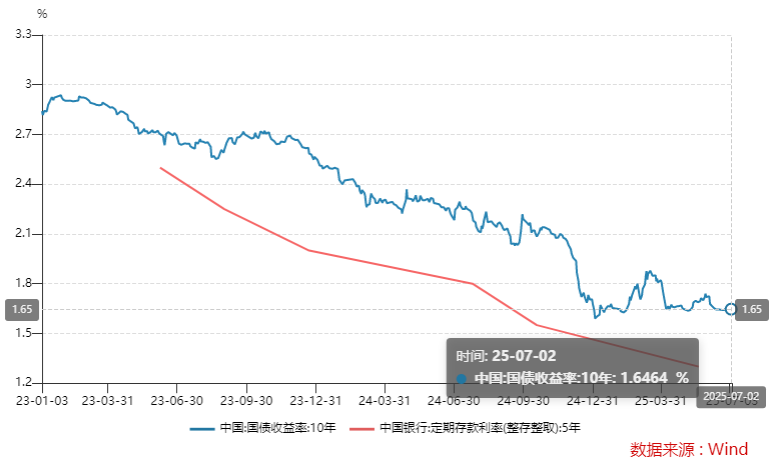
Core Viewpoint - The insurance industry in China is entering a low interest rate environment, with the standard rate for life insurance products expected to drop to 1.5%, significantly impacting product offerings and sales strategies [1][2][5]. Interest Rate Adjustments - The predetermined interest rate for ordinary life insurance is projected to decrease from 2.5% to 2.0%, while dividend insurance will drop from 2.0% to 1.5%, and universal insurance from 1.5% to 1.0% by the end of August 2025 [1][2]. - The China Insurance Industry Association's research value for the first quarter of 2025 was reported at 2.13%, a decline of 21 basis points from the beginning of the year [1][2]. Market Response - The market reaction to the impending rate cuts has been notably subdued, with agents reporting difficulties in selling existing products, indicating a shift in consumer focus away from guaranteed returns [1][6]. - Some insurance companies have already launched new products with a 1.5% predetermined interest rate, signaling a proactive approach to the changing market conditions [3]. Risk Management - The low interest rate environment has heightened the risk of interest spread losses, where investment returns fail to cover the guaranteed rates promised to policyholders [5]. - The current yield on 10-year government bonds is around 1.67%, creating a significant gap with the historical rates of 3%-4.025% for products sold during peak periods [5]. Shift in Sales Strategy - As guaranteed returns become less attractive, insurance companies are increasingly focusing on value-added services and customer engagement, moving towards a "insurance + service" model [8][10]. - The industry is witnessing a transformation where agents are expected to adopt a consultative role rather than a purely sales-driven approach, emphasizing the importance of holistic service offerings [10]. Product Innovation - The introduction of additional services, such as health management and elder care, is becoming a key selling point for insurance products, reflecting changing consumer preferences [9][10]. - Companies are integrating various service offerings into their insurance products to enhance customer experience and retention [9][10].
一周保险速览(6.27—7.4)
Cai Jing Wang· 2025-07-04 08:14
Regulatory Developments - The National Healthcare Security Administration and the National Health Commission issued measures to support the high-quality development of innovative drugs, encouraging commercial health insurance to expand investment in innovative drugs and establish a directory for innovative drugs covered by commercial health insurance [1] - The Financial Regulatory Bureau reported that the insurance industry achieved a premium income of 3.06 trillion yuan in the first five months of 2025, a year-on-year increase of 3.77% [2] Industry Trends - The Financial Regulatory Bureau is implementing "reporting and execution" in the non-auto insurance sector to eliminate price wars and regulate fees, which is expected to reshape the non-auto insurance market [3] - The insurance industry is facing a pricing challenge, with expected reductions in predetermined interest rates for traditional and participating insurance products, leading companies to adjust product structures and focus on participating insurance [4] - Insurance companies are responding to recent flooding disasters in Guizhou, with over 1,000 claims reported and significant compensation already disbursed [5] Investment Activities - Insurance capital is increasingly entering the A-share market through private equity funds, with major insurers establishing or increasing their private equity fund investments, totaling an estimated 222 billion yuan [6] Corporate Actions - Xintai Life Insurance increased its stake in Hualing Steel, reaching 5% ownership, while Lianan Life Insurance also triggered a stake increase in Jiangnan Water, now holding 5.03% [7] - Sichuan Guobao Life Insurance is undergoing significant changes in ownership and management, with local state-owned assets increasing their stake and a new female leader expected to take charge [8] - Ximei Mutual Life announced the resignation of its chairman, Yang Fan, with Hu Han elected as the new chairman and CEO [9]

“保险行业101”基础研究系列报告之二:如何评估人身险公司的“利差损”风险?
Shenwan Hongyuan Securities· 2025-06-26 13:45
Investment Rating - The report rates the insurance industry as "Overweight," indicating an expectation for the industry to outperform the overall market [27]. Core Insights - Concerns regarding "interest spread loss" are central to the valuation of life insurance companies, which can be assessed from three perspectives: investment experience deviation under embedded value (EV) changes, the difference between actual investment returns and the VIF breakeven yield, and investment performance under new accounting standards [4][5][6]. - The embedded value assessment indicates that the current investment return assumption for insurance companies is 4.0%, reflecting a reduction of 50 basis points over the past two years. The investment experience deviation from 2014 to 2024 shows significant variances among major insurers, with China Life experiencing a loss of 734.5 billion yuan [5]. - The net investment yield and total investment yield metrics from 2017 to 2024 show that most A-share listed insurers have maintained positive interest spreads, although these spreads have been narrowing over time [6]. - Following the implementation of IFRS 9 and IFRS 17 in 2023, the investment performance of listed insurers is expected to contribute positively, with projected contributions from major players like China Life and China Ping An [7]. Summary by Sections Investment Experience Deviation - The investment experience deviation reflects the difference between actual investment performance and the assumed investment return, impacting the embedded value of insurers [5]. Interest Spread Analysis - The report analyzes interest spreads using both net investment yield and total investment yield metrics, indicating a trend of narrowing spreads among major insurers from 2017 to 2024 [6]. New Accounting Standards Impact - The adoption of new accounting standards is expected to enhance the clarity of investment performance reporting, with positive contributions anticipated from major insurers in the coming years [7]. Investment Recommendations - The report recommends continued investment in companies such as New China Life, China Life (H), China Pacific Insurance (H), China Ping An, AIA, and ZhongAn Online, citing favorable fundamentals and potential for improved liability costs [7].
分红险点燃行情?保险股集体起飞
Guo Ji Jin Rong Bao· 2025-06-25 14:38
Core Viewpoint - The insurance sector in A-shares and Hong Kong stocks has shown significant growth, with major companies experiencing substantial stock price increases, driven by a shift towards participating insurance products and regulatory guidance aimed at stabilizing the market [1][2][3]. Group 1: Market Performance - On June 25, A-shares saw all three major indices rise, with the Shanghai Composite Index increasing by 1.04%, reaching a new high for the year [1]. - The insurance sector led the gains, with companies like New China Life and China Pacific Insurance rising over 3%, and China Life increasing by more than 2% [1]. - In Hong Kong, insurance stocks also performed well, with China Pacific Insurance rising over 5% and New China Life and China Taiping both increasing by over 4% [1]. Group 2: Regulatory Environment - The China Banking and Insurance Regulatory Commission issued guidelines to life insurance companies, emphasizing prudent management and discouraging excessive competition in dividend levels [1][2]. - The guidelines aim to stabilize the market by ensuring that companies do not artificially inflate dividend levels, which could disrupt the insurance market [1][2]. Group 3: Industry Trends - The transition towards participating insurance products is expected to begin in 2025, with a focus on floating yield products [2]. - Analysts predict that the adjustment of preset interest rates and the integration of individual insurance reporting will impact premium growth rates, with a potential increase in the attractiveness of participating insurance [2]. - The regulatory measures are seen as beneficial for controlling the floating cost levels of participating insurance, thereby reducing long-term risks associated with interest rate differentials [2]. Group 4: Future Outlook - Analysts expect that the new business value (NBV) growth rate will decline compared to 2024, but the quality of operations is anticipated to improve [3]. - The insurance sector is viewed as having long-term investment potential, with the ability to withstand market fluctuations and support capital market development [3]. - The target demographic for insurance products is shifting towards wealthier individuals from the 60s and 70s, with participating insurance products likely to become central in wealth management [3].

“保险行业101”基础研究系列报告之一:如何理解人身险公司的负债成本?
Shenwan Hongyuan Securities· 2025-06-23 14:11
Investment Rating - The report rates the insurance industry as "Overweight" indicating that it is expected to outperform the overall market [2][5][16]. Core Insights - The report emphasizes that the cost of liabilities is a critical factor affecting the valuation of life insurance companies, particularly in the context of "spread loss" concerns [3][4]. - It highlights that the focus has shifted from traditional growth indicators like NBV (New Business Value) to the management of liability costs and long-term investment returns as the primary valuation drivers [3]. - The report introduces the concept of "break-even yield" for assessing the cost of liabilities, suggesting that NBV and VIF (Value of In-Force) break-even yields are useful metrics [4]. Summary by Sections Industry Overview - The insurance sector has seen increased attention due to the new public fund regulations, with a noted underweighting of the non-bank sector compared to the CSI 300 index [2]. Liability Cost Analysis - The report identifies three main sources of profit for life insurance companies: mortality difference, expense difference, and investment yield difference [3]. - It discusses the downward trend in interest rates and its impact on the persistent low PEV (Price to Embedded Value) ratios, attributing this to concerns over spread loss risks [3]. Performance Metrics - The report provides specific break-even yield figures for major listed insurance companies for 2024, indicating a significant reduction in new liability costs [4]. - For instance, China Life's NBV break-even yield is reported at 2.43%, while Ping An's is at 2.42%, showing year-on-year changes [4]. Investment Recommendations - The report recommends several companies for investment, including New China Life, China Life (H), China Pacific Insurance (H), Ping An, ZhongAn Online, and AIA [5].
新一轮保险预定利率下调“箭在弦上”
Zhong Guo Zheng Quan Bao· 2025-06-17 21:14
Core Viewpoint - The insurance industry is preparing for a significant adjustment in the predetermined interest rates of various insurance products, particularly focusing on the shift towards dividend insurance products as traditional fixed-income products see a decline in their guaranteed rates [1][2][3]. Group 1: Predetermined Interest Rate Adjustments - Multiple insurance companies are developing new products and preparing for a transition in predetermined interest rates, with a planned adjustment set for September [1]. - The main traditional fixed-income insurance products' predetermined interest rate will decrease from 2.5% to 2%, while the guaranteed rate for dividend insurance will drop from 2.0% to 1.5% [1][2]. - The adjustment will also affect universal account rates and may lead to an increase in prices for critical illness insurance and other protection-type products [1][2]. Group 2: Market Trends and Product Development - The trend of lowering the guaranteed rate for dividend insurance to 1.5% is expected to become widespread among insurance companies in the coming months [2]. - The insurance industry is anticipating a wave of product withdrawals as companies prepare for the upcoming rate adjustments, with some products already marked for delisting [2][3]. - The insurance product pricing is influenced by the predetermined interest rate, which is tied to bank deposit rates and expected investment returns, making it a critical factor in the industry [2]. Group 3: Financial Stability and Strategic Shifts - The recent decline in the predetermined interest rate research value indicates a need for insurance companies to lower policy liability costs to maintain asset-liability matching [3]. - Lowering the predetermined interest rates is seen as a strategy to mitigate interest margin loss risks and enhance financial stability for insurance companies [3]. - The focus on developing floating yield products, such as dividend insurance, is expected to help insurance companies navigate low-interest environments and achieve long-term operational stability [3][4]. Group 4: Challenges and Considerations - The success of dividend insurance products, despite lower guaranteed rates, relies heavily on the company's ability to deliver on dividend realization rates and maintain market confidence [4]. - Insurance companies must balance dividend policies, reserve accounts, and competitive positioning while addressing sales capabilities and consumer acceptance [4].
险资持续增持银行股!新华保险43亿元接盘杭州银行外资股权
Nan Fang Du Shi Bao· 2025-06-13 10:08
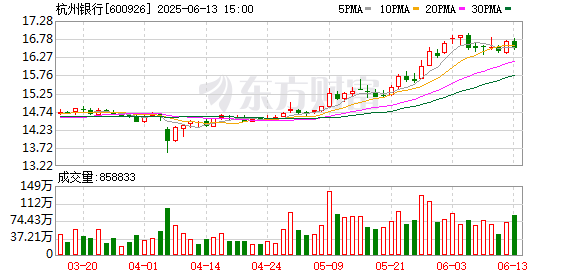
Core Viewpoint - Xinhua Insurance has acquired 329.6 million shares of Hangzhou Bank from the Commonwealth Bank of Australia for a total price of 4.32 billion yuan, making it the fourth largest shareholder with a 5.09% stake [2][3]. Group 1: Transaction Details - The share acquisition was completed at a price of 13.095 yuan per share, totaling 4.32 billion yuan [3]. - Following the transaction, the Commonwealth Bank no longer holds shares in Hangzhou Bank, which maintains no controlling shareholder or actual controller [3]. - The top three shareholders of Hangzhou Bank as of Q1 2025 are Hangzhou Financial Investment Group (18.2%), Red Lion Holdings Group (11.1%), and Hangzhou Urban Construction Investment Group (6.9%) [3]. Group 2: Investment Rationale - Analysts believe Xinhua Insurance's investment reflects confidence in Hangzhou Bank's long-term development prospects, given its strong performance and strategic location in the economically vibrant Yangtze River Delta [3]. - Hangzhou Bank reported a revenue of 38.38 billion yuan in 2024, a year-on-year increase of 9.6%, and a net profit of 16.98 billion yuan, up 18.1%, maintaining a leading growth rate in the industry [3]. Group 3: Broader Industry Trends - Since 2025, several insurance companies, including China Life and Ping An, have increased their holdings in bank stocks, indicating a positive outlook for the banking sector [5]. - The banking sector index has risen over 12% year-to-date, with several bank stocks reaching historical highs [5]. - The trend of insurance capital investing in bank stocks is driven by the need for asset allocation optimization and recognition of the long-term value of bank stocks [6]. Group 4: Future Outlook - High-quality banks are expected to become a priority for insurance capital in equity investments, providing a continuous source of incremental capital for the sector [7].

保险行业周报(20250603-20250606):平安拟发行117.65亿港元H股可转债-20250607
Huachuang Securities· 2025-06-07 07:59
Investment Rating - The industry investment rating is "Recommended," indicating an expected increase in the industry index by more than 5% over the next 3-6 months compared to the benchmark index [21]. Core Insights - The insurance index rose by 1.03%, outperforming the market by 0.15 percentage points, with notable individual stock performances such as Xinhua (+5.94%) and Taiping (+5.64%) [2]. - China Ping An plans to issue HKD 11.765 billion in convertible bonds, with an initial conversion price of HKD 55.02 per share, aimed at supporting business development and capital needs [3][4]. - As of Q1 2025, Ping An's solvency ratios were 225% for comprehensive solvency and 189% for core solvency, indicating a strong capital position [5]. Summary by Sections Market Performance - The insurance sector showed a mixed performance with individual stocks varying significantly, where Xinhua and Taiping led the gains while Sunshine and Zhong An faced declines [2]. - The 10-year government bond yield was 1.65%, down by 2 basis points from the previous week [2]. Company Developments - China Taiping announced a new private equity fund with a target size of RMB 50 billion, focusing on state-owned enterprise reforms [3]. - Ping An Asset Management received regulatory approval to establish a private fund management company, targeting a first-phase fund size of RMB 30 billion [3]. Financial Metrics - As of June 3, 2025, the closing price of Ping An's H shares was HKD 46.45, with the proposed convertible bond's conversion price exceeding this by HKD 18.45, reflecting confidence in future stock price growth [5]. - The new business value (NBV) for Ping An increased by 35% year-on-year, with significant growth expected from the bancassurance channel [5]. Investment Recommendations - The report suggests a cautious outlook for the short term due to performance pressures but anticipates a recovery in the medium to long term as the industry adapts to interest rate changes and improves operational quality [5]. - Current price-to-earnings (PE) and price-to-book (PB) ratios for key companies are provided, with Ping An rated at 1.04 PB and a strong buy recommendation [10].