国产化替代

Search documents
计算机行业月报:中国AI超级周开启,算力呈现提价趋势
Zhongyuan Securities· 2026-02-13 08:24
Investment Rating - The report maintains an "Outperform" rating for the industry, indicating a positive outlook compared to the broader market [3][6]. Core Insights - The AI application landscape is rapidly evolving, with significant advancements expected in 2026, which will impact traditional sectors such as software, film, and media [6]. - Domestic AI models are increasingly competitive with international counterparts, particularly in terms of performance and cost, suggesting a potential shift in the global AI model competition landscape [6][39]. - The demand for AI inference is rising sharply, leading to increased pricing actions from model and cloud service providers, which benefits companies within the industry [6]. Industry Data Summary 1. Industry Data - The software industry in China is projected to generate revenues of 15.48 trillion yuan in 2025, reflecting a year-on-year growth of 13.2% [12]. - The IC design sector is expected to grow by 18.9% in 2025, while cloud computing and big data services are anticipated to grow by 13.6% [12][19]. - The information technology service revenue is expected to increase by 14.7%, further solidifying its share of the overall software business revenue [27]. 2. AI Developments - Major AI models are being released, with significant competition expected in the market, particularly with the upcoming launches of models like DeepSeek-V4 and others in February 2026 [33][38]. - The pricing of domestic models is significantly lower than that of international models, enhancing their attractiveness for various applications [39][41]. - The user engagement for AI applications is increasing, with notable growth in active users for platforms like Gemini and ChatGPT [44][49]. 3. Domestic Market Dynamics - Domestic chip manufacturers are expected to benefit from restrictions on foreign competitors, with companies like Huawei and Dawning making significant advancements in AI computing capabilities [6][19]. - The report highlights the increasing importance of AI model services (MaaS), with a projected market size of 17.7 billion yuan by 2030, growing at a compound annual growth rate of 72% from 2025 to 2030 [56].
计算机行业月报:中国AI超级周开启,算力呈现提价趋势-20260213
Zhongyuan Securities· 2026-02-13 08:11
Investment Rating - The report maintains an "Outperform" rating for the industry, indicating a positive outlook compared to the broader market [3]. Core Insights - The AI application landscape is rapidly evolving, with significant advancements expected in 2026, which will impact traditional sectors such as software, film, and media [6]. - Domestic AI models are increasingly competitive with international counterparts, particularly in terms of performance and cost, suggesting a potential shift in the global AI model competition [6]. - The demand for AI inference is rising sharply, leading to increased pricing actions from model and cloud service providers, which benefits companies within the industry [6]. Industry Data Summary 1. Industry Data - The software industry in 2025 is projected to generate revenues of 15.48 trillion yuan, reflecting a year-on-year growth of 13.2% [12]. - The IC design sector is expected to grow by 18.9% in 2025, while cloud computing and big data services are anticipated to grow by 13.6% [19]. - The information technology service revenue is expected to increase by 14.7%, further solidifying its share of the overall software business revenue to 68.7% [27]. 2. AI Developments - Major AI models are being released, with significant competition expected in the market, particularly with the upcoming launches of models like DeepSeek-V4 and others in February 2026 [33]. - The pricing of domestic models is significantly lower than that of international models, enhancing their attractiveness for various applications [39]. - The user engagement for AI applications is increasing, with notable growth in active users for platforms like Gemini and ChatGPT [44]. 3. Domestic Market Dynamics - Domestic chip manufacturers are expected to benefit from restrictions on foreign competitors, with companies like Huawei and Dawning making significant advancements in AI computing capabilities [6]. - The report highlights the increasing capital expenditures from overseas tech firms, raising concerns about market dynamics [6]. - The MaaS (Model as a Service) market is projected to grow rapidly, with significant contributions from companies like ByteDance and Alibaba [56].



超300亿!200万吨生物基大项目签约,剑指全球第一
DT新材料· 2026-02-12 16:04
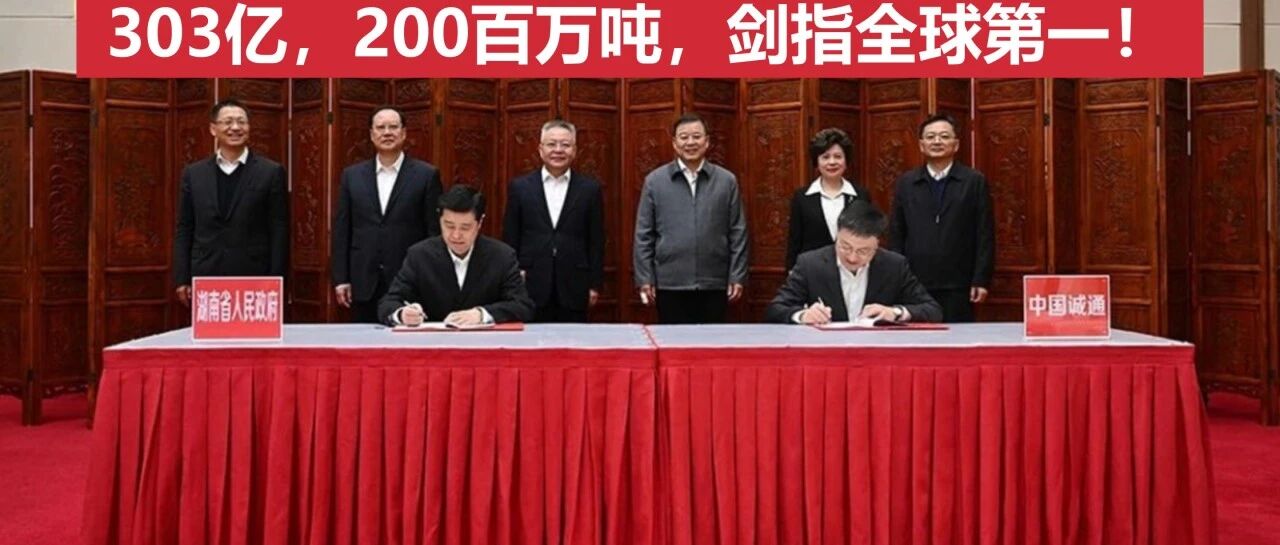
Core Viewpoint - The article discusses a significant investment project in the bio-based materials sector, highlighting a partnership between the Yueyang government and China Chengtong Holdings Group to establish a 200,000-ton bio-based materials project, which is expected to become the world's largest production capacity for specialty cellulose [4][5][9]. Group 1: Project Overview - The total investment for the project is 30.3 billion yuan, making it the second-largest single industrial project in Hunan Province, following ethylene refining [8]. - The project will be constructed in two phases: the first phase involves an investment of 17 billion yuan to build 1.1 million tons of specialty cellulose and 450,000 tons of household paper, with production expected to start by the end of 2027 [12]. - Once fully operational, the project is projected to generate an annual output value of 25.05 billion yuan [12]. Group 2: Specialty Cellulose Insights - Specialty cellulose refers to high-value cellulose derivatives that have been chemically or physically modified, including acetate cellulose and nitrate cellulose [7][13]. - The primary product from this project is likely to be dissolving pulp, which is used to produce viscose fibers, a key material in the textile industry [14][16]. - The global demand for dissolving pulp is significant, with projections indicating that by 2024, the global consumption will reach approximately 6.2 million tons, with China being the largest consumer [19][20]. Group 3: Market Context and Implications - China currently imports over 4 million tons of dissolving pulp annually to meet domestic demand, indicating a high dependency on foreign sources [20][23]. - The establishment of this 200,000-ton capacity is expected to significantly reduce China's import reliance, potentially cutting it by nearly half [33]. - The project aligns with the broader trend of domestic industrialization and the shift towards bio-based materials as alternatives to petrochemical products, especially in the context of carbon neutrality goals [29][30]. Group 4: Strategic Advantages - Yueyang's strategic advantages include its port access, established petrochemical industry, and available land resources, which facilitate the project's implementation [24][33]. - The project is backed by China Chengtong, a major state-owned enterprise, which enhances its financial and operational capabilities [26][28]. - The operational management is likely to be handled by Hunan Juntai New Materials Technology Co., a subsidiary of Yueyang Lin Paper, which has a strong market presence in dissolving pulp production [27][28].


剑指全球第一!央企303亿签约200万吨生物基项目
合成生物学与绿色生物制造· 2026-02-12 06:07
Core Viewpoint - The article discusses a significant investment of 30.3 billion yuan by China Chengtong Holdings Group in collaboration with the Yueyang government to establish a 2 million ton bio-based materials project, which is expected to become the world's largest production capacity upon completion [2][3]. Project Overview - The project involves the construction of a 2 million ton specialty cellulose and 450,000 ton household paper production base, with a total investment of 30.3 billion yuan [3][5]. - The project will be developed in two phases: the first phase will invest 17 billion yuan to build 1.1 million tons of specialty cellulose and 450,000 tons of household paper, starting construction in the first half of 2026 and expected to be operational by the end of 2027, generating an annual output value of 13.05 billion yuan [8]. - The second phase will focus on an additional 900,000 tons of specialty cellulose, with the timeline dependent on the completion of the first phase [8]. Specialty Cellulose Insights - Specialty cellulose refers to high-value cellulose derivatives that have undergone chemical or physical modification, including acetate cellulose and nitrate cellulose [7][9]. - The project is likely to focus on dissolving pulp, which is a key raw material for producing viscose fibers used in clothing [10][12]. - The global demand for dissolving pulp is projected to reach approximately 6.2 million tons in 2024, with China being the largest consumer, requiring over 4 million tons annually, leading to a significant import dependency [15][16]. Market Position and Competitive Landscape - Upon completion, Yueyang Lin Paper is expected to become the world's leading producer of dissolving pulp, significantly reducing China's import needs by nearly half [18][22]. - The project is strategically located in Yueyang, which has advantages such as port access, a developed petrochemical industry, and ample land resources for large-scale projects [19][25]. Operational and Strategic Implications - The operational management of the project is likely to be handled by Hunan Juntai New Materials Technology Co., a subsidiary of Yueyang Lin Paper, which has recently expanded its capabilities in the dissolving pulp market [24][30]. - The investment aligns with the growing trend towards bio-based materials as alternatives to petrochemical products, indicating a shift in the industry towards sustainable practices [26][27].
2026年中国半导体洁净室行业进入壁垒、相关政策汇总、产业链图谱、市场规模、竞争格局及发展趋势分析:中高端市场竞争较为缓和[图]
Chan Ye Xin Xi Wang· 2026-02-12 01:21
Core Insights - The semiconductor cleanroom industry is experiencing rapid growth driven by advancements in cloud computing, IoT, big data, 5G/6G, AI, and digitalization, with the market expected to reach 195.06 billion yuan by 2025, reflecting a year-on-year growth of 14.7% [1][9]. Industry Overview - Cleanrooms are designed to eliminate micro-particles, harmful gases, and bacteria, maintaining specific cleanliness levels essential for semiconductor manufacturing [2]. - The semiconductor cleanroom is a critical component in chip manufacturing, aimed at controlling contamination that affects yield and reliability [3]. Market Barriers - The semiconductor cleanroom industry has high entry barriers due to the significant investment required and the critical nature of cleanroom systems in production processes, where instability can lead to substantial losses for clients [5][6]. - Companies with extensive project experience and a strong brand reputation are preferred by clients, making it difficult for new entrants to gain recognition [6]. Market Policies - The Chinese government has prioritized the self-sufficiency of the semiconductor industry, implementing various supportive policies to promote its development, which also benefits the cleanroom sector [6][7]. Industry Chain - The upstream of the cleanroom industry includes materials and equipment essential for cleanroom systems, while the midstream involves design and construction, and the downstream caters to semiconductor manufacturing processes [7]. Current Development - The semiconductor industry is projected to reach a market size of 211.5 billion USD by 2025, accounting for 29.42% of the global market, providing significant growth opportunities for the cleanroom sector [7]. Competitive Landscape - The cleanroom industry is characterized by a fragmented market with many small players, while a few companies like 柏诚股份 (Borch) and 亚翔集成 (Yaxiang) dominate the high-end market due to their technical expertise and project experience [10][11]. Development Trends - Continuous technological upgrades are necessary to meet the stringent requirements of advanced semiconductor processes, focusing on molecular-level contamination control and high-precision environmental regulation [12]. - The industry is moving towards green and intelligent solutions, integrating energy-saving technologies and smart management systems to enhance operational efficiency [13]. - The push for domestic substitution in the semiconductor industry is expected to strengthen collaboration across the supply chain, enhancing the competitiveness of local firms in critical components [14].





玻纤大面积涨停背后:电子布吃紧,AI算力遭遇新约束!
Hua Er Jie Jian Wen· 2026-02-11 08:42
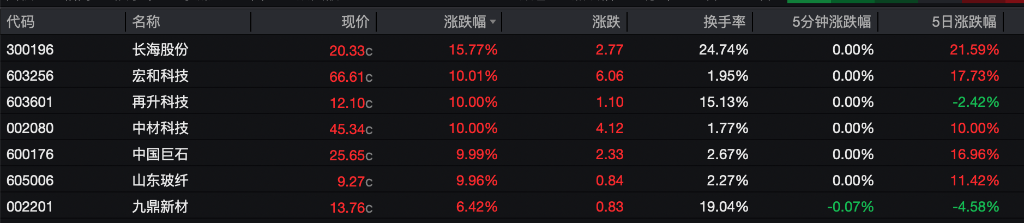
Group 1: Market Performance - The A-share fiberglass sector experienced a collective surge, with International Composites hitting a 20cm limit up, and several stocks like Honghe Technology and China National Building Material also reaching their limits [1] - The Wind fiberglass index has seen a cumulative increase of over 74% since December 1, 2025 [1] Group 2: Price Trends and Demand - Recent price hikes for electronic cloth have occurred, with ordinary electronic cloth prices rising over 10%, surpassing 10,000 yuan per ton, marking the fourth price increase since early 2025 [6] - The price of mainstream 7628 electronic cloth has risen to 5.1-5.5 yuan per meter, reflecting a significant demand-supply tension in the market [6] - The demand for electronic cloth is driven by the explosive growth in AI chip requirements, leading to a supply shortage [4][7] Group 3: Supply Constraints - Supply growth for ordinary electronic yarn is projected to be less than 10% by 2026, with limited new production lines expected to come online [8] - The industry faces structural shifts and rising costs, with some ordinary yarn production lines transitioning to high-end products, further constraining supply [11] - High investment costs and technical barriers limit capacity expansion, with a single electronic yarn furnace requiring over 500 million yuan in investment [11] Group 4: Technological Advancements - The performance characteristics of electronic cloth, such as dielectric properties, significantly impact signal transmission efficiency, with advancements in materials like quartz electronic cloth (Q cloth) enhancing performance [13] - Domestic companies have made breakthroughs in high-end electronic cloth production, with significant advancements in low dielectric cloth and quartz electronic cloth [15] Group 5: Future Outlook - The domestic market is expected to see key breakthroughs in high-end segments within the next five to six years, driven by improved production capabilities and deeper customer collaborations [17]
伯特利20260210
2026-02-11 05:58
Summary of Bertli's Conference Call Company Overview - Bertli is a significant player in the Electromechanical Brake (EMB) product market, particularly in areas where traditional giants like Bosch do not hold absolute advantages, indicating potential for substantial market share expansion [2][4]. Core Insights and Arguments - EMB technology allows for direct mechanical control via electricity, achieving response times as fast as 50 milliseconds, which is superior to mainstream Electronic Hydraulic Brake (EHB) systems. This technology effectively shortens braking distances, enhances safety, and supports advanced autonomous driving features [2][4]. - The Ideal L9 model, priced at approximately 550,000 yuan, is one of the first mass-produced vehicles to utilize Bertli's EMB technology, marking a significant breakthrough for the company in this field [2][4]. - By 2030, EMB is expected to capture 10% of the passenger vehicle market, providing Bertli with considerable market opportunities to offset limitations in the domestic market share of its One Box products [2][5]. - Bertli has made progress in lightweight solutions in collaboration with overseas clients, with limited impact from rising aluminum prices. The company has also achieved system designations in online control steering and air suspension, which are expected to contribute to revenue growth [2][5]. - Despite high penetration rates for products like One Box and EPP, the domestic production rate is only 40%, indicating ample room for domestic substitution and growth potential for Bertli [2][5]. Financial Outlook - The compound annual growth rate (CAGR) for Bertli's performance is projected to approach 25% over the next two years. The current valuation is approximately 20 times earnings (including convertible bonds), which is considered low, maintaining a positive outlook for the company [3][5]. - Risks to this outlook include potential economic growth falling short of expectations and significant increases in raw material prices [3][5].

研判2026!中国PCIe互连芯片行业市场政策、产业链图谱、市场规模、竞争格局及发展趋势分析:市场集中度极高[图]
Chan Ye Xin Xi Wang· 2026-02-11 01:28
Core Insights - The PCIe interconnect chip industry is experiencing exponential growth due to the increasing demand for high bandwidth, low latency, and multi-device high-speed interconnects, driven by advancements in large model training, inference, and distributed computing [1][7] - The global market size for PCIe interconnect chips is projected to reach $3.109 billion by 2025, with a year-on-year growth of 35.9%, where PCIe Switch accounts for approximately 81.20% and PCIe Retimer for about 18.80% [1][7] Market Overview - High-speed interconnect chips are essential for enabling high-speed data exchange in data centers, servers, and computers, addressing bottlenecks in data transmission amid the continuous upgrade of intelligent computing systems [2] - The PCIe interconnect chip market is categorized into PCIe Retimer and PCIe Switch chips, which are critical components for high-speed data interconnect in data centers and servers [2] Market Policies - China has established strategic goals for the semiconductor industry, promoting self-sufficiency and providing a favorable policy environment for the development of the PCIe interconnect chip industry through various supportive policies [4][5] Industry Chain - The upstream of the PCIe interconnect chip industry includes semiconductor material suppliers, equipment manufacturers, and IP core providers, while the midstream involves design, manufacturing, packaging, and testing [6] - The downstream applications encompass servers, storage devices, network equipment, high-end PCs, consumer electronics, industrial control, and automotive electronics, with servers being the core application market [6] Development Status - The demand for PCIe interconnect chips is significantly driven by the rapid deployment of GPUs and AI chips, with the domestic market projected to reach 5.24 billion yuan by 2025, reflecting a year-on-year growth of 28.6% [7][8] Competitive Landscape - The PCIe interconnect chip industry is characterized by high technical, financial, and ecological barriers, leading to a concentrated market where the top players dominate, with PCIe Retimer CR2 market share reaching 96.9% and PCIe Switch suppliers holding over 90% of the market [9][10] Company Analysis - Lanqi Technology Co., Ltd. is a leading international data processing and interconnect chip design company, with a reported revenue of 4.058 billion yuan in the first nine months of 2025, where PCIe/CXL interconnect chip revenue accounted for 7.56% [10] - Beijing Shudu Information Technology Co., Ltd. focuses on developing high-speed interconnect technology products, aiming to meet core demands in the global computing field [10] Development Trends - Future PCIe interface standards will evolve towards higher transmission rates and multi-functional integration, enhancing data transmission, signal optimization, and power control [12] - Domestic PCIe interconnect chip companies are expected to overcome core technology barriers and gradually penetrate high-end markets, reducing reliance on overseas IP cores [13] - The industry is moving towards a collaborative ecosystem, with leading companies forming alliances to promote technology standards and enhance overall competitiveness [14]


康达新材料(集团)股份有限公司第六届董事会第十八次会议决议公告
Shang Hai Zheng Quan Bao· 2026-02-10 19:15
Group 1 - The company held its 18th meeting of the 6th Board of Directors on February 10, 2026, with all 11 directors present, and the meeting was conducted in accordance with legal and procedural requirements [2][5] - The Board approved the proposal for its wholly-owned subsidiary to invest in a project to construct a production facility for 30,000 tons/year of Polyarylether (PAE) [3][4] Group 2 - The total planned investment for the PAE project is approximately 645.74 million RMB, with construction costs accounting for 591.94 million RMB, interest during construction at 16.60 million RMB, and working capital of 37.20 million RMB [10] - The project will occupy an area of approximately 50,215.14 square meters and is expected to produce 30,000 tons/year of PAE and 8,050 tons/year of by-product ortho-cresol [12] - The project aims to enhance the company's competitive edge in the high-performance polymer materials sector, particularly in applications for new energy vehicles, electronics, and other high-tech industries [14][15] Group 3 - The PAE project is expected to address the tight supply-demand relationship in the domestic market, thereby enhancing the company's supply chain resilience and competitiveness [16] - The project aligns with the company's strategic focus on high-performance polymer materials and aims to achieve import substitution in high-end manufacturing [14][15] - The implementation of the project is currently in the preparatory stage, with no immediate significant impact on the company's financial status or operational results [16]

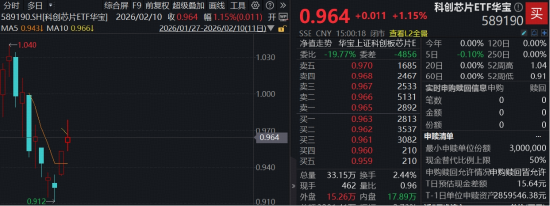
“超级周期”已至!存储芯片、半导体设备齐升,芯原股份历史新高!“全芯”科创芯片ETF(589190)上探2%
Xin Lang Cai Jing· 2026-02-10 11:48
Group 1 - The core viewpoint of the article highlights the strong performance of computing hardware, storage chips, and semiconductor equipment, with significant stock price increases for companies like Chip Origin and Huafeng Measurement Control [1][10] - The global memory price is expected to surge by 80% to 90% in Q1 2026, marking an unprecedented increase, driven by the AI wave, with storage revenue projected to reach $551.6 billion [2][11] - The semiconductor equipment industry is experiencing an upward trend, with total sales expected to reach $791.7 billion in 2025 and grow by 26% in 2026, indicating a faster-than-expected approach to the $1 trillion milestone [3][11] Group 2 - Domestic storage industry investment opportunities are viewed positively due to the rapid growth in AI server demand and domestic substitution trends [3][11] - The Sci-Tech Chip ETF Huabao (589190) tracks the Sci-Tech Board Chip Index, which includes 50 companies across the semiconductor supply chain, with over 90% weight in core areas like integrated circuits and semiconductor equipment [3][11] - The annualized return of the Sci-Tech Chip Index since its inception is 17.93%, outperforming similar indices, with a lower maximum drawdown, indicating a favorable risk-return profile [5][13]