小盘风格

Search documents
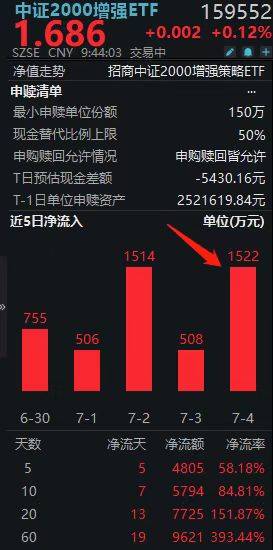
份额井喷,年内规模增近18倍!中证2000增强ETF(159552)获资金连续15日加码
Sou Hu Cai Jing· 2025-07-21 01:52
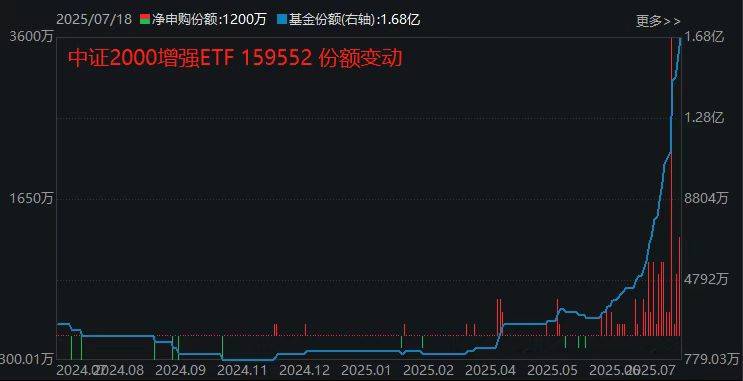
Group 1 - The core viewpoint of the article highlights the sustained high interest in small-cap stocks, particularly the CSI 2000 Enhanced ETF (159552), which has seen a year-to-date increase of 35.76% and continuous net inflows for 15 days as of July 18, accumulating over 260 million since the beginning of the year [1] - The CSI 2000 Enhanced ETF has experienced a significant expansion in shares, with a year-to-date increase of 1269.29% and a growth in scale of 1755.45%, reaching a historical high [1] - According to Zheshang Securities, July shows favorable statistical characteristics for certain factors, including a low valuation and high dividend yield, with average excess returns of 1.89%, 1.77%, 1.64%, and 1.64% for various metrics, and win rates of 70% to 90% [1] Group 2 - The momentum factor in July has shown an average return of only 0.22% with a win rate of 50%, indicating that trend-following strategies are not historically advantageous during this month [1] - Overall, July's advantageous factors exhibit significant defensive characteristics, suggesting that selecting stocks with stable profit growth and high dividends, along with low volatility, may yield both beta and alpha returns [1]

指数增强私募产品表现抢眼 上半年平均收益率超17%
Zheng Quan Shi Bao Wang· 2025-07-18 06:56
Core Insights - The index-enhanced private equity products delivered impressive performance in the first half of 2025, with an average return of 17.32% across 705 products [1] - Larger private equity firms (over 5 billion) showed a significant advantage, achieving an average return of 18.30% [1] - Smaller private equity firms (0-10 billion) underperformed, with an average return of 16.41% [1] Performance Factors - The strong performance of index-enhanced private equity products is attributed to three main factors: the structural characteristics of the A-share market, the advantages of quantitative strategies, and the relaxation of regulatory policies on mergers and acquisitions [2] - The A-share market exhibited a notable small-cap style dominance, with increased individual stock volatility and high average daily trading volume, creating an ideal trading environment for quantitative strategies [2] - Quantitative strategies effectively captured excess returns, especially in volatile markets, due to their data-driven decision-making and ability to avoid subjective emotional interference [2] Product Performance Breakdown - Among the products with performance data, 76 other index-enhanced products and 258 air index-enhanced products achieved average returns of 20.84% and 17.88%, respectively [3] - The small-cap style's strong performance laid a solid foundation for related index-enhanced products, with the CSI 1000 index-enhanced products averaging a return of 20.26% and the CSI 500 index-enhanced products averaging 15.31% [3] - In contrast, the CSI 300 index-enhanced products lagged, with an average return of only 6.31%, reflecting the overall weak performance of the CSI 300 index [3]
量化分析报告:右尾弹性下的小盘基金投资机遇分析
GOLDEN SUN SECURITIES· 2025-07-16 01:08
- The long-term returns of small-cap stocks primarily come from valuation improvements rather than dividends, buybacks, or earnings, indicating a persistent pricing error in the market that quantitative strategies can systematically exploit[1][7] - Small-cap indices exhibit a right-skewed excess return distribution, with a higher probability of extreme positive returns compared to large-cap indices, reflecting higher elasticity and stronger performance during uptrends[15][16] - During credit expansion phases, small-cap indices tend to perform better due to higher elasticity, as seen in the current economic environment characterized by loose monetary policy and credit recovery[19][22] - The systemic crash risk for small-cap stocks is currently low, as indicated by factor timing metrics such as factor momentum, factor dispersion, and factor crowding, which are not at extreme levels[20][24] - Small-cap stocks have long-term alpha potential, with quantitative strategies in small-cap index components showing higher excess return capabilities compared to mid-cap and large-cap indices[27][30][31] Quantitative Models and Factors - **GK Model**: Used to decompose historical returns of the CSI All Share Index and small-cap indices, showing that small-cap returns are driven mainly by valuation increases[7] - **Factor Timing Metrics**: Include factor momentum, factor dispersion, and factor crowding, used to assess the timing of factor investments and systemic risk[20][23] Backtesting Results - **Small-cap funds**: From 2016 to 2025, small-cap funds achieved an average cumulative return of 71.62%, significantly outperforming the CSI 1000 Total Return Index, which had a cumulative return of -34.80%[32][33][34] - **E Fund Yibai Intelligent Quantitative Strategy A**: Demonstrated a stable long-term excess return since early 2024, with an annualized return of 38.50% compared to the Wind All A Equal Weight Index's 14.45%[39][40][42] - **T-M Model Analysis**: The fund showed a stock selection ability of 0.04% and a market timing ability of 0.91, indicating strong stock-picking skills[65][66][67]
国泰海通 · 晨报0714|宏观、海外策略、建筑
国泰海通证券研究· 2025-07-13 14:34
Macro - The recent high-frequency data indicates stable performance in consumer goods, particularly in the automotive and textile sectors during the off-season [3] - Service consumption has been affected by weather and supply issues, leading to average performance in travel, cinema, and entertainment sectors [3] - Investment is accelerating with the issuance of special bonds, while new home sales are experiencing seasonal declines and the land market is cooling down [3] - Import growth from Korea to China is slowing, and Vietnam's export substitution effect remains strong, with port operations slowing and export freight rates declining [3] - Overall production is stable with a slight increase, driven by high temperatures leading to increased residential electricity usage, while traditional industries like steel and petrochemicals remain steady [3] - CPI and PPI are both showing marginal increases [3] - The dollar index has rebounded, with slight increases in funding rates and government bond yields [3] Overseas Strategy - There are misconceptions regarding the dominance of small-cap stocks, including the belief that macro liquidity is beneficial for small-cap stocks, which is historically inconsistent [6][9] - The influx of quantitative private equity is not the primary driver of small-cap stock performance, as the scale of private equity entering the market has not been as significant as perceived [6][9] - Historical data suggests that high trading congestion does not necessarily lead to significant pullbacks in small-cap stocks [6][9] - The dominance of small-cap stocks may be attributed to changes in micro-funding structures, particularly the entry of retail investors and their irrational trading behaviors [9] - The correlation between retail investor inflows and small-cap index performance indicates a direct relationship, with significant retail inflows leading to outperformance of small-cap indices [9] - Future shifts between large-cap and small-cap styles may depend on turning points in economic trends, with historical patterns showing that institutional funds become the main drivers during significant macro policy shifts [10] Construction - The article from Qiushi Network emphasizes that urban renewal is essential for transforming urban development and improving living standards [15] - It advocates for the careful advancement of dangerous housing renovations, comprehensive upgrades of old urban communities, and improvements in urban functions [15] - High standards in municipal infrastructure construction are necessary, along with the deployment of IoT devices for enhanced urban risk management and governance [15]

兼论下半年市场风格展望:对小盘风格的三个理解误区
Haitong Securities International· 2025-07-13 14:28
Group 1 - The report identifies three misconceptions regarding the dominance of small-cap stocks, emphasizing that macro liquidity and quantitative funds are not the primary reasons for small-cap outperformance [1][6][7] - The recent outperformance of small-cap stocks is attributed to a significant influx of retail investor capital, which contrasts with institutional investment trends [21][22][24] - Historical data suggests that the relative profitability trends of large and small-cap stocks serve as leading indicators for style shifts, indicating that a fundamental turnaround is necessary for large-cap dominance to return [24][27] Group 2 - The report highlights that the perception of macro liquidity being beneficial for small-cap stocks is misleading, as historical instances show both large and small-cap stocks can outperform under similar liquidity conditions [7][16][18] - It is noted that the scale of quantitative private equity funds entering the market has not been as significant as perceived, and their activity is more a response to existing market conditions rather than a driving force [16][21] - The report argues that trading intensity does not effectively predict small-cap stock performance, as historical data shows that high trading volumes can still coincide with continued small-cap strength [18][25] Group 3 - The report concludes that the future switch between large and small-cap styles will likely depend on the confirmation of an upward trend in industry cycles, particularly in the context of the AI sector [24][27][28] - It emphasizes that the current market environment, characterized by a recovery in risk appetite since September 2024, has not yet fully aligned with fundamental improvements, suggesting a cautious outlook for small-cap stocks [21][24] - The report anticipates that as the AI industry cycle gains momentum, it may lead to a resurgence of large-cap technology leaders in the market [27][28]
国泰海通证券:对小盘风格的三个理解误区
Ge Long Hui· 2025-07-13 10:14
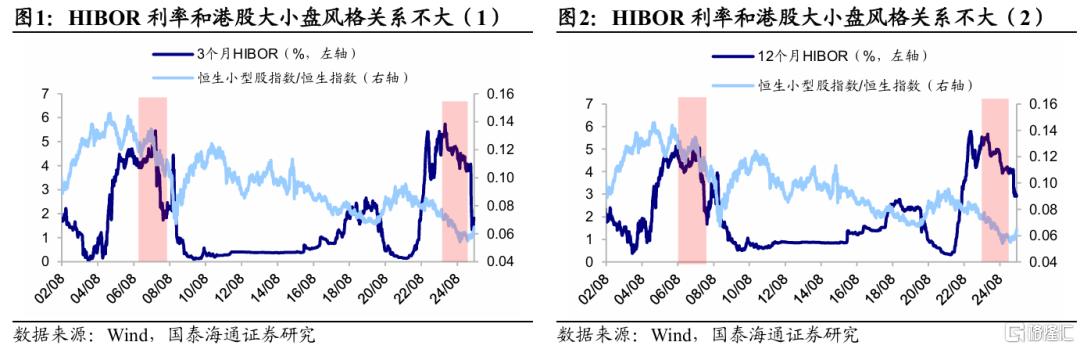
Core Insights - The recent outperformance of small-cap stocks is attributed to a significant influx of retail investor capital compared to institutional investors, indicating a rapid recovery in market risk appetite since September 2024, despite a lag in fundamental improvements [1][11] - The overall return of large-cap styles will depend on the emergence of a fundamental turning point and the return of institutional capital, with potential catalysts being the confirmation of an upward trend in the AI industry cycle or unexpected macro policy enhancements [1][11] Group 1: Misconceptions about Small-Cap Outperformance - Misconception 1: Macro liquidity easing is beneficial for small-cap stocks. Historical data shows that small-cap performance is not solely determined by macro liquidity conditions, as both small and large-cap stocks have outperformed in various liquidity environments [2] - Misconception 2: The influx of quantitative private equity funds is driving small-cap outperformance. The actual scale of private equity fund inflows has not been as significant as perceived, and quantitative funds are more likely to act as "discoverers" of excess returns rather than creators [4] - Misconception 3: Trading congestion is an effective timing indicator for small-cap stocks. Historical trends indicate that high trading activity does not necessarily lead to a downturn in small-cap stocks, as they can continue to outperform even during periods of high trading volume [6] Group 2: Drivers of Small-Cap Performance - The current small-cap outperformance may be primarily driven by changes in the micro-funding structure, particularly the irrational trading behavior of retail investors entering the market [8] - In both Hong Kong and A-share markets, the correlation between retail investor inflows and small-cap index performance suggests that retail participation is a significant factor in the recent small-cap outperformance [9] - The switch between small and large-cap styles may require a turning point in economic trends, with historical patterns indicating that institutional capital tends to lead market shifts when macro policies or industry trends experience breakthroughs [11]

中证2000ETF华夏(562660)规模创近一年新高,盘中溢价交易,机构表示当前环境或仍有利于偏小盘风格演绎
Mei Ri Jing Ji Xin Wen· 2025-07-09 03:50
Group 1 - The core viewpoint of the news highlights the performance of the CSI 2000 Index and its associated ETF, indicating a positive trend in small-cap stocks despite recent volatility [1] - The CSI 2000 ETF managed by Huaxia has seen significant net inflows, totaling 14.02 million yuan over the past three days, with a peak single-day inflow of 8.3953 million yuan [1] - The current scale of the CSI 2000 ETF has reached 212 million yuan, marking a one-year high, reflecting strong investor interest [1] Group 2 - The CSI 2000 Index focuses on small-cap stocks with high liquidity, comprising 2000 selected securities from the Shanghai and Shenzhen markets, which complements larger mid-cap indices [1] - The index emphasizes sectors such as "specialized, refined, and innovative" enterprises, with a high representation of emerging industries like machinery, electronics, and biomedicine, indicating substantial growth potential [1] - The top ten constituent stocks of the index account for less than 2% of the total weight, showcasing a significant risk diversification advantage [1]
招商中证2000增强ETF(159552)收涨超2%再刷新高,盘中净流入约1300万环比放量超400%
Sou Hu Cai Jing· 2025-07-08 07:26
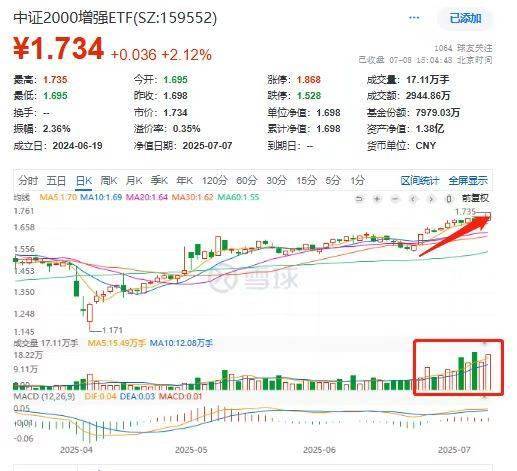
Group 1 - The core viewpoint of the articles indicates that the small-cap stocks are showing strong performance, with the CSI 2000 Enhanced ETF rising by 2.12% and achieving a cumulative increase of 33.08% year-to-date, leading its peers [1] - The trading activity remains high, with a turnover rate of 21.44% and a trading volume of approximately 29 million, indicating sustained investor interest [1] - The net inflow during the trading session was around 13 million, with a significant increase of over 400% compared to the previous period, marking seven consecutive days of net inflow [1] Group 2 - From a macroeconomic perspective, the current environment is still favorable for small-cap stocks, supported by ongoing trends in industries like AI and government policies aimed at fostering innovation and development [1] - The valuation and trading density of small-cap stocks have not yet reached extreme levels, with the turnover rate for small-cap indices at 2.1%, placing it in the 77th percentile since 2015 [2] - The small-cap index to large-cap index PE ratio is currently at 2.2, which is in the 72.5th percentile since 2015, suggesting that there is still room for small-cap stocks to perform well [2] Group 3 - There is a potential for a style switch between small-cap and large-cap stocks as the fundamentals gradually stabilize and improve, which could lead to a shift in investor sentiment towards larger stocks [2]
中证2000ETF华夏(562660)近1周涨幅排名可比基金头部,机构表示下半年环境或仍有利于偏小盘风格演绎!
Mei Ri Jing Ji Xin Wen· 2025-07-07 06:07
Core Viewpoint - The small-cap stocks are regaining momentum, with the CSI 2000 Index showing a 0.42% increase, indicating a favorable environment for small-cap style investments despite recent valuation increases and potential short-term volatility [1] Group 1: Market Performance - As of July 7, the CSI 2000 Index rose by 0.42%, with notable stocks like China Shipbuilding Industry Corporation and Suwen Electric Power reaching their daily limit [1] - The CSI 2000 ETF (Hua Xia) increased by 0.36%, with a recent price of 1.4 yuan, and has seen a cumulative increase of 1.53% over the past week, ranking among the top comparable funds [1] Group 2: Market Environment - The current macroeconomic environment is still favorable for small-cap stocks, supported by ongoing trends in industries like AI and government policies focusing on "developing new productive forces" [1] - Structural issues such as weak real estate and insufficient domestic demand remain challenges, but there is potential for increased growth-stimulating policies in the second half of the year [1] Group 3: Valuation and Liquidity - As of June 27, the turnover rate for small-cap indices was 2.1%, indicating a relatively high trading density, while the small-cap to large-cap turnover ratio is approximately 4.1 times, close to historical averages [2] - The current price-to-earnings (P/E) ratio for small-cap indices compared to large-cap indices is 2.2 times, positioned at the 72.5 percentile since 2015, suggesting room for further small-cap performance [2] Group 4: Future Outlook - There is a possibility of a style switch between small and large caps as the fundamentals gradually stabilize and investor expectations for the economy improve [2] - The CSI 2000 ETF closely tracks the CSI 2000 Index, which focuses on small-cap stocks with high liquidity and growth potential, particularly in emerging industries like machinery, electronics, and biomedicine [2]
小盘重拾升势,年内涨近30%的中证2000增强ETF(159552)规模连增10日
Sou Hu Cai Jing· 2025-07-07 02:26
Group 1 - The small-cap stocks have regained upward momentum, with the CSI 2000 Enhanced ETF (159552) increasing by 0.18% as of 9:55 AM, and showing a year-to-date increase of nearly 30% [1] - The CSI 2000 Enhanced ETF has seen a cumulative increase of 29.47% this year, with a significant inflow of funds and a continuous growth in scale for 10 consecutive days, resulting in a year-to-date scale growth of 722.42% [1] - From a calendar effect perspective, the average excess returns of various factors in July from 2015 to 2024 indicate that stocks with low valuation, low volatility, high profitability stability, and high dividend yield tend to perform well [1] Group 2 - The momentum factor shows an average monthly return of only 0.22% in July, with a win rate of 50%, suggesting that trend-following strategies are not favored during this month historically [1] - Overall, the advantageous factors in July exhibit significant defensive characteristics, and focusing on small-cap styles while selecting stocks with stable profit growth and high dividends may yield both beta and alpha returns [1]