消费结构升级

Search documents
白羽肉鸡龙头企业积极寻求突破 相关上市公司上半年业绩显著分化
Zheng Quan Ri Bao· 2025-07-15 16:42
Core Viewpoint - The domestic white feather chicken market is experiencing a significant downturn in prices due to an oversupply situation, leading to a clear performance divergence among companies in the industry [1][2]. Group 1: Market Performance - The average market price for white feather chicken in the first half of the year is estimated at 3.52 yuan per pound, a decrease of 6.96% compared to the same period last year [1]. - The estimated output of white feather chickens in the first half of the year is 4.412 billion birds, representing a year-on-year increase of 11.7%, while demand remains weak [1]. - Companies like Shandong Minhe Livestock and Poultry Co., Ltd. and Shandong Yisheng Livestock and Poultry Co., Ltd. are expected to report increased losses and significant declines in net profits due to low chicken and chick prices [1]. Group 2: Company Strategies - Fujian Shengnong Development Co., Ltd. is countering cyclical impacts by extending its industrial chain and focusing on high-value retail channels, which has supported revenue growth [2]. - Shandong Xiantan Co., Ltd. has achieved significant profit growth by optimizing production processes and reducing costs, with an expected net profit of 130 million to 143 million yuan, a year-on-year increase of 325.91% to 364.93% [2]. - Companies are encouraged to explore non-cyclical revenue sources and deepen cooperation with food processing firms to stabilize income [3]. Group 3: Future Outlook - Analysts predict that while the output of white feather chickens will continue to increase in the second half of the year, the growth rate will slow down, and there may be seasonal demand recovery leading to a potential price rebound [2]. - The performance divergence among companies is likely to persist unless supply-side adjustments and demand recovery, particularly in the restaurant and catering sectors, occur [3]. - Companies are advised to innovate product offerings and consider mergers and acquisitions to enhance competitiveness in the evolving market landscape [3].


国家统计局:上半年消费动力足 下半年消费政策还将继续加力
Sou Hu Cai Jing· 2025-07-15 13:08
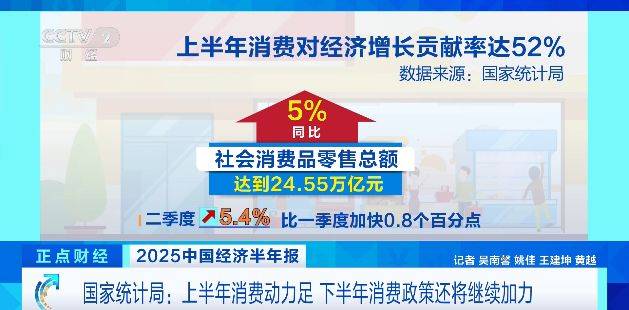
Core Viewpoint - In the first half of the year, final consumption expenditure contributed 52% to China's economic growth, highlighting the emergence of new consumption patterns and models that invigorate economic momentum [1] Group 1: Consumption Data - In the first half of the year, the total retail sales of consumer goods reached 24.55 trillion yuan, representing a year-on-year growth of 5%, with a second-quarter growth of 5.4%, accelerating by 0.8 percentage points compared to the first quarter [3] - The structure of consumption shows an increase in the proportion of service consumption, with holiday consumption driving significant growth, particularly during the "Spring Festival," "May Day," and "Dragon Boat Festival," which saw record high numbers of travelers [3][5] - Certain upgraded consumption categories, such as sports goods and gold and jewelry, experienced accelerated growth, while the "old-for-new" policy boosted the consumption of new energy vehicles, energy-saving appliances, and smart home devices [3] Group 2: Policy and Future Outlook - The expansion of the visa-free "circle" has led to an increase in foreign tourists visiting China, which in turn stimulates domestic consumption, with a 72.7% year-on-year increase in foreign visitors during the "May Day" and "Dragon Boat Festival" holidays [5] - The continuation of supportive consumption policies indicates a strong foundation for consumption development in the second half of the year, as China is at a critical stage of consumption structure upgrading, with per capita GDP stabilizing above $13,000 for two consecutive years [7] - The future growth potential of consumption in China is viewed positively, with expectations for continued policy support to improve residents' income levels and enhance the consumption environment [9]

上半年经济“成绩单”怎么看?国家统计局权威解读
券商中国· 2025-07-15 07:35
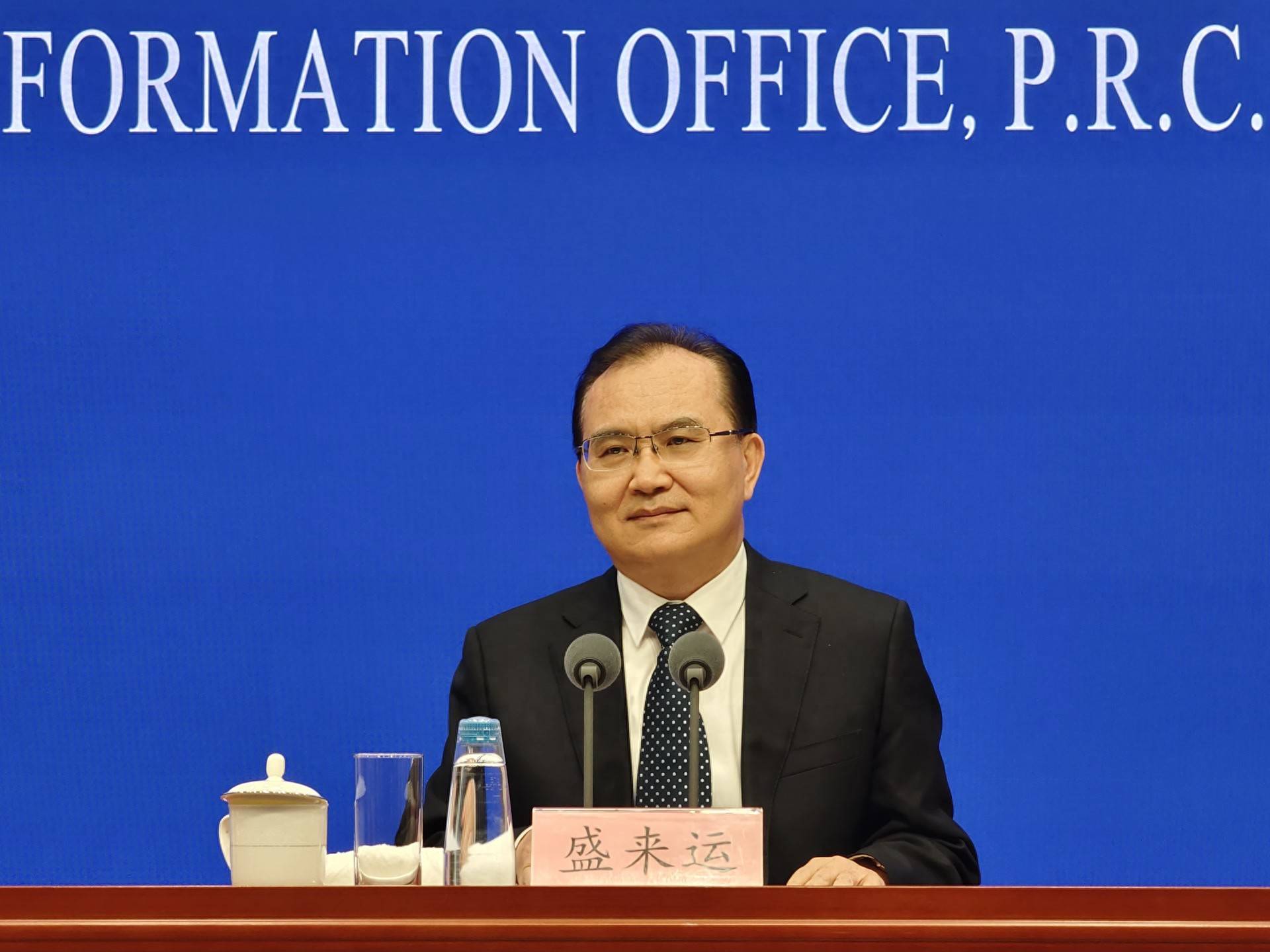
Core Viewpoint - China's economy showed stable growth in the first half of the year, with GDP reaching 66.05 trillion yuan, a year-on-year increase of 5.3% [2][3]. Economic Performance - The GDP growth rate for the first quarter was 5.4%, while the second quarter saw a slight decrease to 5.2%. The quarter-on-quarter growth for the second quarter was 1.1% [2][3]. - Key economic indicators performed better than expected, indicating a steady and positive development trend [3][4]. Stability and Growth Characteristics - The economy exhibited stability, with the GDP growth rate increasing by 0.3 percentage points compared to the same period last year [4]. - The unemployment rate remained stable, fluctuating between 5.0% and 5.4% throughout the year [4]. - Price levels remained low and stable, with international balance of payments maintaining basic equilibrium and foreign exchange reserves exceeding 3.2 trillion USD [4]. Innovation and New Developments - The economy also showed progress in innovation, coordination, green development, openness, and shared growth, with high-tech industries' added value increasing by 9.5% year-on-year [5][6]. Consumption and Investment - The contribution rates of the "three drivers" of the economy were: final consumption expenditure at 52%, capital formation at 16.8%, and net exports at 31.2% [7]. - In the second quarter, final consumption expenditure's contribution rose to 52.3%, while capital formation and net exports contributed 24.7% and 23%, respectively [8]. - Consumer spending, particularly in services and upgraded consumption, showed significant growth, supported by policies aimed at boosting domestic demand [9][10]. Real Estate Market - Fixed asset investment reached 24.87 trillion yuan, growing by 2.8% year-on-year, with non-real estate investment increasing by 6.6% [11]. - The real estate market showed signs of stabilization, with improved transaction volumes and a reduction in unsold housing inventory [13][14]. Future Outlook - Several foreign institutions have raised their economic growth forecasts for China for 2025, reflecting confidence in the country's economic resilience [15]. - Despite external uncertainties, the economy is expected to maintain stable growth, supported by effective macroeconomic policies and ongoing structural adjustments [16][17].

国家统计局:上半年的消费态势在下半年会得以持续
Sou Hu Cai Jing· 2025-07-15 04:16
Group 1 - The core viewpoint is that China's consumer market showed positive performance in the first half of 2025, driven by various policies aimed at expanding domestic demand and promoting consumption [2][3] - Key factors driving consumption include accelerated service consumption, enhanced holiday spending, increased growth in upgraded consumption, and the rise of green consumption trends [2][3] - The government plans to continue implementing stimulus measures for consumption in the second half of the year, indicating sustained support for consumer growth [3] Group 2 - The per capita GDP in China has remained stable at over $13,000 for two consecutive years, marking a critical period for consumption upgrades [3] - There is significant market potential due to the large population of over 1.4 billion and the existing urban-rural consumption gap, which presents growth opportunities [3] - The government emphasizes the need to improve residents' income levels and enhance the consumption environment to ensure sustainable and healthy consumption development [3]
14亿人,为何拉不动内需?
Sou Hu Cai Jing· 2025-07-06 11:56
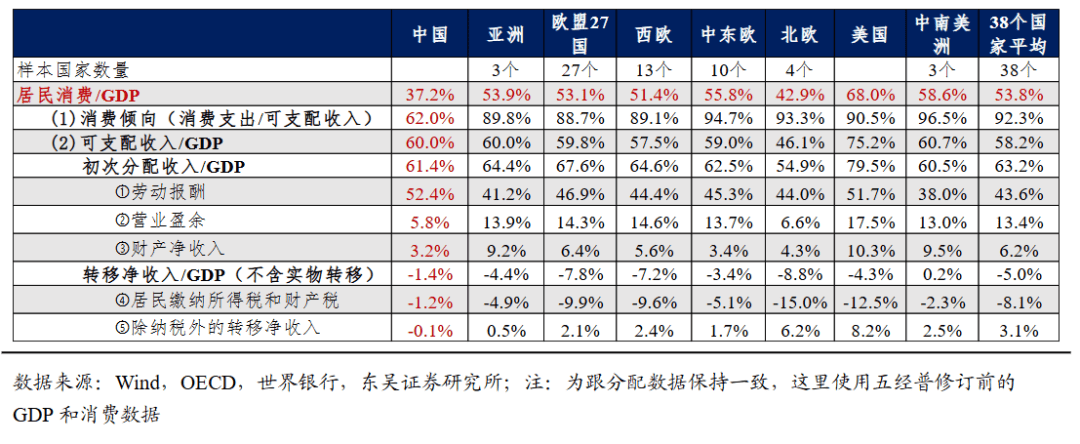
Core Insights - China's consumption growth is significantly lagging behind its large population and economic growth, raising questions about the underlying reasons for this consumption shortfall [1][2][4] Group 1: Current State of Consumption in China - The definition and measurement of consumption shortfall are established, with China's resident consumption rate at 37.2% in 2022, significantly lower than the global average of 53.8% [2][3] - The final consumption rate for China in 2023 is reported at 55.64%, which is still below the approximately 80% seen in developed countries [3] - A notable slowdown in consumption growth is observed, with a projected 3.5% increase in retail sales for 2024, contrasting sharply with historical growth rates that often exceeded 8% [2][4] Group 2: Multi-Dimensional Analysis of Consumption Shortfall - Low consumption propensity is identified as a core issue, with China's consumption propensity at 62% in 2022, compared to an average of 92.3% across 38 countries [6][8] - High housing prices contribute to consumer debt, with urban residents' real estate debt reaching 137.9% of household income, limiting their consumption capacity [9] - Income inequality is highlighted, with the top income group accounting for 46% of total income, leading to lower overall consumption rates [10] - An inadequate social security system is noted as a fundamental cause of low consumption, with high contribution rates and limited coverage increasing financial burdens on households [11] - Traditional consumption culture emphasizes saving over spending, which continues to influence consumer behavior [12] Group 3: Consumption Differences Across Demographics and Regions - Significant consumption behavior differences exist among income groups, with middle-income households contributing nearly 50% of total consumption [13] - Generational differences in consumption attitudes are emerging, particularly among the Z generation, who exhibit distinct purchasing behaviors [17][18] - Regional consumption disparities are noted, with consumption in central regions expanding while eastern and western regions show a trend towards balance [19] Group 4: International Comparisons and Lessons - China's service consumption accounts for approximately 46% of total spending, lower than that of the US (68.5%) and Japan (57.7%), indicating room for structural improvement [20][21] - Successful international experiences in enhancing consumption rates suggest that comprehensive policies are needed to boost service consumption and overall consumer confidence [22] Group 5: Future Consumption Trends - Predictions indicate that by 2030, service consumption levels in China could exceed 20,000 yuan, positioning it as a key growth driver [25][27] - The expansion of the middle-income group, projected to surpass 50% of the population by 2030, is expected to significantly enhance consumption potential [27]
5月份社会消费品零售总额同比增长6.4%——消费市场向好态势更加稳固
Jing Ji Ri Bao· 2025-06-21 22:23
Core Insights - The total retail sales of consumer goods in China reached 20.32 trillion yuan in the first five months of this year, with a year-on-year growth of 5% [1] - In May, the retail sales amounted to 4.13 trillion yuan, showing a year-on-year increase of 6.4%, the highest monthly growth rate since last year [1] - The growth in retail sales is attributed to the successful implementation of policies such as the "old-for-new" program, which has significantly boosted sales in categories like home appliances and mobile phones [1][2] Group 1: Retail Performance - The retail sales of goods increased by 6.5% year-on-year in May, with a notable acceleration of 1.4 percentage points compared to the previous month [1] - Categories such as furniture, home appliances, and communication devices saw year-on-year growth rates of 25.6%, 53%, and 33% respectively, significantly outpacing the overall retail sales growth [1] - The retail sales of sports and entertainment products showed a year-on-year growth rate of 28.3% in May, continuing a double-digit growth trend since the beginning of the year [2] Group 2: Consumer Behavior and Trends - The "May Day" and "Dragon Boat" holidays significantly boosted cultural tourism consumption, with domestic travel reaching 314 million trips during the May Day holiday, a 6.4% increase year-on-year [2] - The total expenditure of tourists during the May Day holiday was 180.27 billion yuan, reflecting an 8% year-on-year growth [2] - The retail sales of services increased by 5.2% year-on-year in the first five months, slightly higher than the growth rate of goods retail sales [2] Group 3: E-commerce and Online Retail - Online retail sales grew by 8.5% year-on-year in the first five months, with physical goods online retail sales increasing by 6.3%, accounting for 24.5% of total retail sales [3] - The early launch of e-commerce shopping festivals contributed to the growth of online consumption in May [3] Group 4: Policy Impact and Future Outlook - The optimization of the departure tax refund policy has led to a significant increase in inbound tourism and consumption, with departure tax refund transactions increasing by 116% in the first month of the policy implementation [3] - The retail sales of physical stores increased by 4.5% year-on-year in the first five months, with warehouse membership stores seeing growth rates exceeding 30% [4] - The positive consumption trend in May is supported by continuous upgrades in consumption structure and effective policy implementations [4]
开源证券:白酒弱复苏中筑底 黄酒契合新消费趋势
智通财经网· 2025-06-03 07:02
Core Viewpoint - The current liquor industry is in a bottoming phase, with stable prices for premium liquor during the off-season and no further accumulation of inventory. Major liquor companies are innovating their business models to cope with cyclical pressures and are actively seeking new growth points through scenario transformation and cultural experiences [1][2]. Group 1: Liquor Industry Overview - The liquor industry is experiencing a weak recovery, with terminal demand remaining sluggish. The decline in consumption during the Dragon Boat Festival is attributed to slow recovery in consumer spending and a reduction in business banquet scenarios. Recent regulations on government consumption have raised market concerns, but the actual impact is limited as government consumption has already been at a low level [1][2]. Group 2: Yellow Wine Opportunities - Yellow wine is breaking the stereotype of being a "traditional elderly drink" and is penetrating younger consumer scenarios. The demand for healthier and lighter drinking options is rising, and yellow wine's health attributes and cultural revival are creating a foundation for long-term category expansion. Leading companies are innovating to attract younger consumers and are expected to open new growth avenues in the low-alcohol beverage sector [3]. Group 3: Recommended Stocks - Shanxi Fenjiu (600809.SH): Facing short-term demand pressure but has high mid-term growth certainty with product structure upgrades and accelerated national expansion [4]. - Guizhou Moutai (600519.SH): Emphasizing sustainable development and increasing dividend rates, positioning for long-term growth post-cycle [4]. - Ximai Food (002956.SZ): Steady growth in the oat business with rapid channel expansion and improved profitability due to favorable raw material costs [4].
4月份经济数据释放了哪些信号?专家解读来了
Huan Qiu Wang· 2025-05-19 08:00
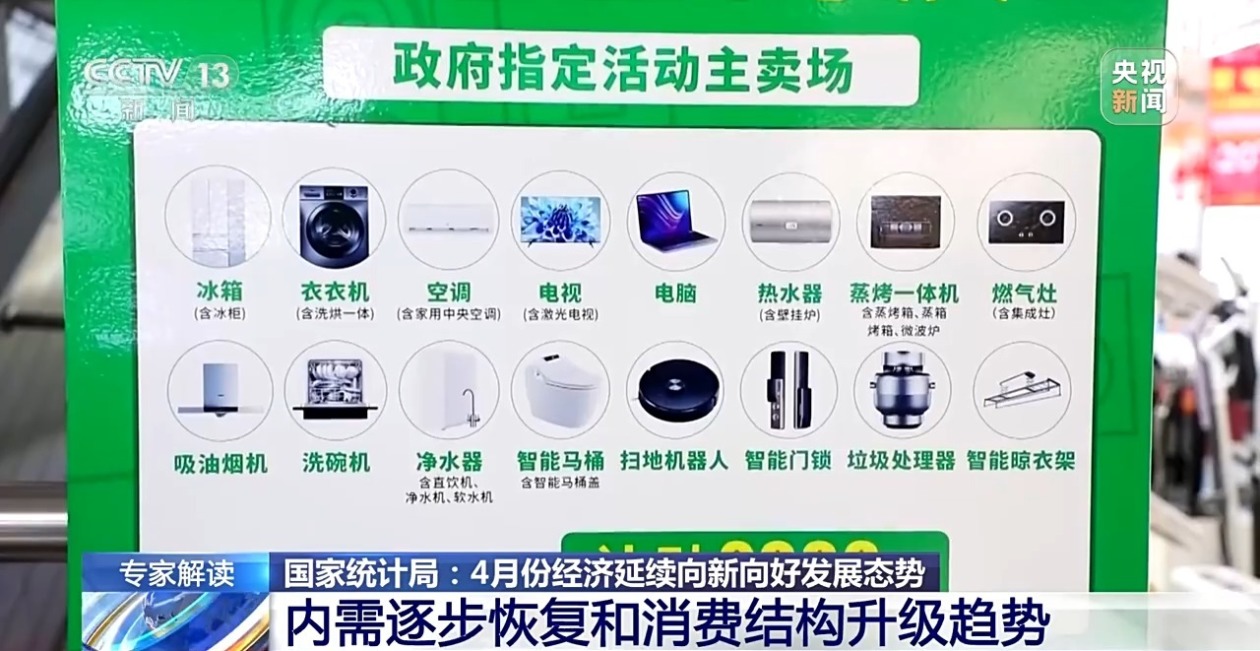
Economic Resilience and Growth - China's economy demonstrated significant resilience in April amidst a complex international environment, with multiple core indicators showing positive changes, indicating both resilience and structural breakthroughs [1] Consumer Trends - There is a noticeable recovery in consumption and an upgrade in service consumption, with retail sales of consumer goods showing a significant year-on-year growth, particularly in communication equipment and home appliances, which saw growth rates exceeding 19% and 13% respectively [3] - The trend towards green and smart products is evident, driven by policies such as trade-in programs, and offline consumption in leisure and dining sectors is also on the rise, reflecting an increasing attractiveness of the Chinese consumer market globally [3] Industrial Growth - Industrial growth is showing resilience, particularly in high-tech industries, with industrial added value and manufacturing growth exceeding 6%. The automotive manufacturing sector, especially in new energy vehicles, has seen remarkable growth [5] - Despite a decline in international commodity prices, the price drop in certain sectors is narrowing, indicating strong investment in infrastructure and equipment renewal, supported by a significant increase in local government bond issuance [5] Foreign Trade Dynamics - Foreign trade resilience is evident, with structural optimization occurring despite U.S. tariffs. Exports exceeded market expectations, particularly to ASEAN and India, while the share of exports to the U.S. is declining [7] - Policies supporting trade diversification have been effective, with integrated circuit exports showing a year-on-year growth of over 20% [7] Price Stability and Financial Environment - Overall price levels and the financial environment remain stable, with the Consumer Price Index (CPI) showing a shift from decline to increase in April, and core CPI remaining stable [9] - The financing scale in April indicates that net financing of government bonds has become a major driving force, with measures such as reserve requirement ratio cuts injecting long-term liquidity into the economy [9] Future Outlook - The economic data from April suggests that new momentum is being cultivated amidst challenges, with a focus on boosting confidence, expanding domestic demand, and enhancing innovation to transform external pressures into opportunities for upgrading the economy [9]
4月份经济数据释放哪些信号?巩固经济平稳运行发力点在哪?解读↓
Yang Shi Wang· 2025-05-19 05:50
Group 1 - China's economy demonstrated significant resilience in April, with multiple core indicators showing positive changes despite a complex international environment and ongoing tariff wars [4][24]. - The recovery of domestic demand and the trend of consumption structure upgrading are evident, with notable increases in service consumption and high-end products such as travel and luxury goods [7][11]. Group 2 - Industrial growth showed remarkable resilience, particularly in high-tech industries, with industrial value-added and manufacturing growth exceeding 6%, and a significant increase in the production of new energy vehicles [11][14]. - Foreign trade resilience is highlighted by the growth of high-tech manufacturing profits, which supported the quality and efficiency of the industrial economy, despite tariff pressures [14][16]. Group 3 - The overall price and financial environment remained stable, with the Consumer Price Index (CPI) showing a shift from decline to increase, and financial support for the real economy being continuously strengthened [18][21]. - The economic data from April indicates that China is cultivating new momentum amid challenges, with consumption recovery, optimized export structure, and precise policy support being core drivers [24][25].

食饮24年与25年一季度业绩综述:业绩分化加大,经营战略重要性凸显
LIANCHU SECURITIES· 2025-05-16 10:56
Investment Rating - The report maintains a "Positive" investment rating for the food and beverage industry [7] Core Insights - The food and beverage industry is experiencing increased performance differentiation, highlighting the importance of operational management and business strategy [3] - In 2024, the food and beverage sector is expected to achieve a modest single-digit growth, with revenue and net profit growth rates slowing down, indicating ongoing demand pressure [3][10] - Structural growth opportunities exist in sub-sectors like beverages and snacks, with some products/channels showing year-on-year growth rates exceeding 30% [3] Summary by Sections Overall Food and Beverage Industry - In 2024, the food and beverage sector achieved revenue of CNY 10,877.93 billion, a year-on-year increase of 3.91%, with a slowdown of 4.06 percentage points [10] - The net profit attributable to shareholders reached CNY 2,104.49 billion, growing by 6.07%, but also showing a slowdown of 10.35 percentage points [10] - The industry ranked 10th and 9th in revenue and net profit growth among 31 first-level industries [10] Baijiu (Chinese Liquor) - The baijiu industry saw revenue and profit growth exceeding 7% in 2024, with over half of A-share listed companies reporting growth [21] - High-end baijiu brands are shifting towards mid-to-high-end markets, with notable growth in brands like Guizhou Moutai and Wuliangye [21][24] - The competitive landscape is intensifying, particularly in the mid-range segment, with companies adopting diverse strategies to maintain market share [22][24] Soft Drinks - The soft drink sector is characterized by strong performance from functional beverages, with companies like Dongpeng Beverage leading with a revenue growth of 40.63% [26][28] - The market is facing challenges from health-conscious consumer trends and competition from tea beverages [26] - Companies are encouraged to innovate and diversify their product offerings to adapt to changing consumer preferences [27] Snacks - The snack industry is experiencing significant growth, particularly through community group buying and e-commerce channels [29] - Companies like Wancheng Group and Yanjinpuzi are expanding rapidly, with Wancheng Group's revenue from snack stores increasing by 262.94% [29] - However, some companies face pressure due to declining foot traffic in physical stores and intense competition [30] Condiments - The condiment sector is benefiting from cost reductions and the expansion of compound condiments, with major players like Haitian Flavor Industry reporting strong performance [32][33] - The industry is expected to accelerate product upgrades and national expansion as the restaurant sector recovers [32] Beer - The beer industry is seeing a slowdown in consumption upgrades, but there are still growth opportunities in the craft beer segment [34][35] - Companies are focusing on product innovation and market penetration to adapt to changing consumer demands [34][35]