
社会综合融资成本

Search documents
央行,重磅发布!
中国基金报· 2025-07-14 08:51
Core Viewpoint - The People's Bank of China (PBOC) is committed to continuing a moderately accommodative monetary policy to support economic growth and stabilize market expectations [2][5]. Group 1: Monetary Policy Implementation - Since 2020, the 1-year and 5-year Loan Prime Rates (LPR) have decreased by 115 and 130 basis points respectively, reflecting a supportive monetary policy environment [3]. - In the first half of 2025, the weighted average interest rate for newly issued corporate loans was approximately 3.3%, down about 45 basis points year-on-year, while the rate for personal housing loans was about 3.1%, down 60 basis points [4]. - The PBOC has implemented a comprehensive package of 10 monetary policy measures announced on May 7, which has positively impacted market confidence and expectations [6][7]. Group 2: Financing and Debt Market - The total loan balance in the "Five Major Areas" of finance reached 103.3 trillion yuan, a year-on-year increase of 14% [8]. - In the first half of 2025, the Chinese bond market issued various bonds totaling 44.3 trillion yuan, a 16% increase year-on-year, with net bond financing accounting for 38.6% of the total social financing increment [9]. - The issuance of technology innovation bonds has reached approximately 600 billion yuan, supporting the development of emerging industries [14]. Group 3: Consumer and Economic Support - The PBOC has established a 500 billion yuan re-loan facility for service consumption and elderly care to enhance supply in high-demand service sectors [11]. - Structural monetary policy tools are being utilized to support key areas such as technological innovation and consumption, aiming to facilitate economic transformation and upgrading [16]. Group 4: Currency Stability - The RMB exchange rate remains stable amid fluctuations, supported by a solid domestic economic foundation [12]. - The PBOC does not seek to gain international competitive advantage through currency depreciation and maintains a clear stance on exchange rate policy [13].

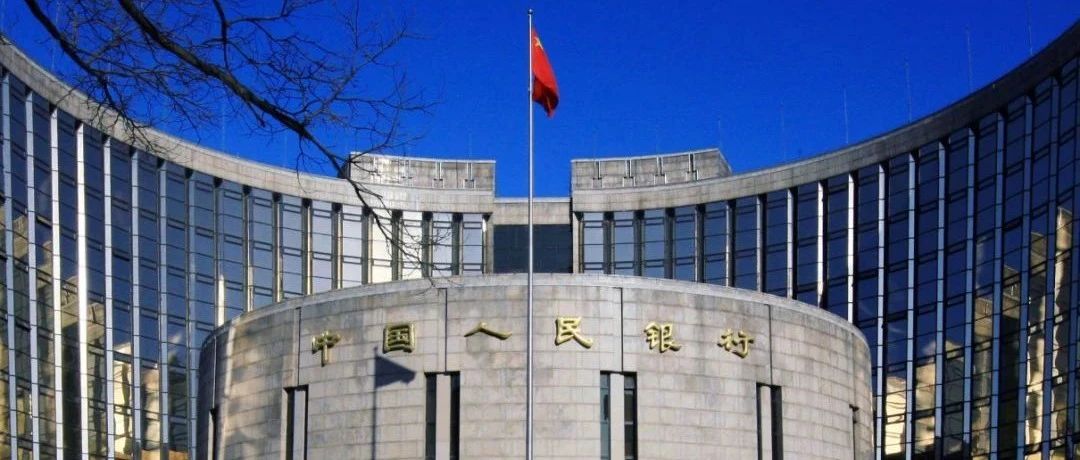
邹澜:货币政策的传导需要时间,已实施的货币政策效果还会进一步显现
Bei Jing Shang Bao· 2025-07-14 07:41
Core Viewpoint - The People's Bank of China (PBOC) is implementing a moderately accommodative monetary policy to support the economy amid a complex external environment and declining global growth momentum [1][2]. Monetary Policy Implementation - The PBOC has intensified counter-cyclical adjustments and introduced a package of financial support measures in May to ensure ample liquidity and promote reasonable growth in monetary credit [1][2]. - A market-oriented interest rate adjustment framework is being established to lower the overall financing costs in society [1][2]. Financial Data Overview - As of June, the total social financing stock grew by 8.9% year-on-year, with M2 money supply increasing by 8.3% and RMB loans rising by 7.1% [2]. - The average interest rate for newly issued corporate loans was approximately 3.3%, down about 45 basis points from the previous year, while the rate for personal housing loans was around 3.1%, down about 60 basis points [2]. Credit Structure Optimization - By the end of May, inclusive small and micro loans increased by 11.6%, medium to long-term loans for manufacturing rose by 8.8%, and technology loans grew by 12%, all exceeding the overall loan growth rate [2]. Financial Market Resilience - Major financial markets, including stocks, bonds, and foreign exchange, have maintained stable operations despite significant changes in the external environment and global financial markets [2]. Future Policy Direction - The PBOC will continue to implement a moderately accommodative monetary policy, closely monitoring the transmission and actual effects of previously implemented policies to better support domestic demand and stabilize market expectations [3].
银行深度:历次存款整改和利率下调回顾与复盘
China Post Securities· 2025-07-08 09:44
Industry Investment Rating - The industry investment rating is maintained at "Outperform" [1] Core Insights - The report discusses the impact of deposit rate adjustments on banks, indicating that the adjustments have a limited impact on financial outflows [4][7] - The establishment of a market-oriented deposit rate adjustment mechanism aims to align deposit rates with market rates, thereby reducing banks' funding costs and facilitating lower loan rates [14][17] - The report highlights a significant shift in deposit structures due to regulatory changes, with a notable migration of deposits from large banks to smaller banks and non-bank financial institutions [6][37] Summary by Sections 1. Reasons for Deposit Rate Adjustments - The adjustments are aimed at promoting interest rate marketization and improving policy transmission, breaking the rigid link between deposit rates and benchmark rates [4][14] - The adjustments are expected to lower banks' funding costs, which constitute over 70% of their liabilities, thereby creating room for loan rate reductions [17][18] 2. Review of Past Adjustments - Historical adjustments include the reduction of structured deposits from CNY 15.4 trillion to zero between 2019 and 2020, and the optimization of deposit rate ceilings in June 2021 [5][22] - The establishment of a market-oriented adjustment mechanism in April 2022 has led to multiple rounds of deposit rate reductions, with long-term deposit rates decreasing more than short-term rates [23][24] 3. Market Impact Review - The report notes that during the initial adjustment phases, there was a significant outflow of structured deposits to wealth management and insurance products [6][37] - The adjustments have generally resulted in a shift of deposits from large banks to smaller banks, as well as a migration towards wealth management and insurance products [6][37] 4. Future Outlook and Investment Recommendations - The report anticipates a significant volume of maturing fixed-term deposits in the third quarter, with potential outflows to non-bank institutions [7] - It suggests focusing on banks that may benefit from reduced funding costs and improved net interest margins, highlighting specific banks such as Bank of Communications and Chongqing Bank as potential investment targets [7]




中国人民银行等六部门:实施好货币政策,加强逆周期和跨周期调节,综合运用准备金、再贷款再贴现、公开市场操作等多种货币政策工具,保持流动性充裕,持续推动社会综合融资成本下降。
news flash· 2025-06-24 09:07
Core Viewpoint - The People's Bank of China and six other departments emphasize the importance of implementing effective monetary policy, enhancing counter-cyclical and cross-cyclical adjustments, and utilizing various monetary policy tools to maintain ample liquidity and reduce overall financing costs in society [1] Group 1 - The implementation of monetary policy will focus on maintaining liquidity and promoting a decrease in comprehensive financing costs [1] - Various monetary policy tools will be employed, including reserve requirements, relending, rediscounting, and open market operations [1] - The approach aims to strengthen both counter-cyclical and cross-cyclical adjustments to better respond to economic fluctuations [1]
新一期LPR“按兵不动”
Zhong Guo Zheng Quan Bao· 2025-06-20 20:31
Group 1 - The Loan Prime Rate (LPR) for 1-year remains at 3.0% and for 5-year and above at 3.5%, unchanged from the previous period, aligning with market expectations [1] - Following a 10 basis point decrease in May, the stability of the LPR in June indicates that the pricing basis for LPR has not changed significantly [1] - Current corporate and personal loan rates are at historical lows, with the average corporate loan rate at approximately 3.2%, down about 50 basis points year-on-year, and the average personal housing loan rate at approximately 3.1%, down about 55 basis points year-on-year [1] Group 2 - The focus is shifting from reducing financing costs for enterprises and residents to lowering overall social financing costs, emphasizing the reduction of non-interest costs such as collateral and intermediary service fees [2] - To support the real estate market, it is anticipated that financial authorities may guide a further decline in the 5-year LPR to facilitate larger reductions in residential mortgage rates [2]
招联首席研究员:降低LPR并非当务之急
news flash· 2025-06-20 04:06
Core Viewpoint - The chief researcher of Zhaolian, Dong Ximiao, stated that lowering the Loan Prime Rate (LPR) is not an urgent matter, as the marginal effect of interest rate cuts is decreasing with the continuous decline of market interest rates [1] Group 1: Interest Rate Dynamics - The external factor of the Federal Reserve slowing down its rate cuts may lead to an expanded China-U.S. interest rate differential if the LPR is lowered too quickly, which could increase pressure on the RMB exchange rate [1] - The next step should focus on reducing the overall financing costs in society, indicating that lowering the LPR is not the only method to achieve this [1] Group 2: Financing Cost Reduction Strategies - Future efforts to lower comprehensive financing costs may need to target non-interest costs, such as reducing mortgage guarantee fees and intermediary service fees [1]
增量政策出台或晚于8月
Sou Hu Cai Jing· 2025-06-20 03:56
Core Viewpoint - The Loan Prime Rate (LPR) for June remains unchanged, with the 1-year LPR at 3.00% and the 5-year LPR at 3.50%, aligning with market expectations [2][4][12]. Summary by Relevant Sections LPR Stability - The stability of the LPR is attributed to the recent policy rate cuts by the central bank and the unchanged 7-day reverse repurchase rate at 1.40% [4][12]. - The current LPR levels are seen as adequate for both corporate and personal loan rates, which are already low [7][12]. Banking Sector Insights - Commercial banks are facing pressure on net interest margins, which have decreased to 1.43%, down 9 basis points from the previous quarter, limiting their ability to lower LPR further [7][10]. - The focus for banks is on managing liability costs and optimizing asset structures to stabilize margins [10]. Economic Context and Future Outlook - The economic environment suggests that there is no immediate need for further monetary policy easing, with expectations that LPR will remain stable in the short term [9][12]. - The central bank's monetary policy aims to balance supporting the real economy while maintaining the health of the banking system, indicating a multi-faceted approach to monetary policy [9][12]. Financing Costs and Policy Measures - The current financing costs for enterprises and residents have significantly decreased, with "expensive financing" no longer being a primary concern [12]. - Future efforts to reduce overall financing costs may focus on lowering non-interest costs such as collateral and service fees rather than solely relying on LPR adjustments [12]. Potential Policy Changes - There is speculation about potential incremental policy measures in the second half of the year, particularly in response to economic conditions and external pressures [15][16]. - The introduction of new policy financial tools is anticipated to stimulate investment, with estimates suggesting that such measures could leverage significant amounts of credit demand [16].

6月LPR“按兵不动”,专家预计下半年或降息带动LPR下调
Sou Hu Cai Jing· 2025-06-20 03:37
Core Viewpoint - The People's Bank of China (PBOC) has maintained the Loan Prime Rate (LPR) at 3.0% for the one-year term and 3.5% for the five-year term, indicating a stable monetary policy outlook in the short term [1][2]. Group 1: LPR Quotation and Monetary Policy - The LPR remained unchanged in June after a 10 basis points (bp) reduction in May, aligning with market expectations and suggesting limited necessity for further monetary policy easing in the near term [1][2]. - The new monetary policy framework positions the 7-day reverse repurchase rate as the primary policy rate, enhancing the transmission of interest rates from short-term to long-term [2][4]. Group 2: Bank Margins and Economic Conditions - Bank net interest margins are under pressure, with the latest data showing a decline to a historical low of 1.43% at the end of Q1, down 9 bps from the previous quarter [2][3]. - The "four balances" principle introduced in this year's Two Sessions emphasizes the importance of maintaining stable interest margins as a key objective of monetary policy [3]. Group 3: Future Outlook and External Factors - Analysts suggest that while there is potential for LPR adjustments, external uncertainties and the need for a balanced approach to monetary policy may limit the extent of future rate cuts [4][5]. - The PBOC's recent reduction of the provident fund loan rate by 0.25 percentage points is expected to create room for further reductions in residential mortgage rates, which could stimulate housing demand [5].
企业、居民融资成本进一步降低(锐财经)
Ren Min Ri Bao· 2025-05-22 18:53
Core Points - The People's Bank of China announced a decrease in the Loan Prime Rate (LPR) for the first time this year, with the 5-year LPR at 3.5% and the 1-year LPR at 3%, both down by 10 basis points from the previous period [1] - The reduction in LPR is expected to lower financing costs for businesses and residents, thereby boosting market confidence and supporting stable growth in the real economy [1][2] - The adjustment aligns with market expectations, as the 7-day reverse repurchase rate, now a key pricing anchor for LPR, was also lowered [2] LPR and Loan Rates - The LPR decrease is anticipated to stimulate credit demand and unleash investment potential for businesses and consumer spending [2] - The weighted average interest rate for new corporate loans in April was approximately 3.2%, down about 50 basis points year-on-year, while the average for personal housing loans was around 3.1%, down about 55 basis points [2][7] - The actual loan rates may not necessarily decrease as the LPR is only one component; banks add their own margins based on various factors [3] Deposit Rate Adjustments - Alongside the LPR decrease, major banks have also lowered deposit rates, with the one-year deposit rate falling below 1% for the first time [4][5] - Specific reductions include a 5 basis point drop in demand deposit rates and a 15 basis point drop in various term deposit rates, with long-term deposit rates seeing larger reductions [4] - The overall adjustment in deposit rates is greater than that of the LPR, indicating a strategy to protect bank interest margins while encouraging lending [5] Non-Interest Costs - Future adjustments to the LPR will consider multiple factors to maintain a balance among growth, interest margins, exchange rates, and foreign trade [6] - The focus will also be on reducing non-interest costs, such as mortgage fees, guarantee fees, and intermediary service fees, which significantly impact the overall financing costs for businesses, especially small and private enterprises [7]
存贷款利率同步下降、联动增强 共促社会综合融资成本稳中有降
Xin Hua Cai Jing· 2025-05-20 09:51
5月20日,存贷款利率迎来同步下降。其中,1年期和5年期以上贷款市场报价利率(LPR)分别降10个 基点至3.0%、3.5%;主要银行的活期存款利率下降0.05个百分点,定期存款利率下降0.15-0.25个百分 点。 而若想银行能够进一步降低贷款利率,降低其自身的负债成本就是基础。由此看,此次适度下调存款利 率,有利于为降低社会综合融资成本,支持我国经济回升向好争取更大空间。 另一方面,受贷款利率较快下降等因素影响,我国银行业的净息差下降较快,目前已经处在历史低位。 而合理的净息差水平既是银行服务实体经济的基础,更是防范化解金融风险、维护金融安全的根基。 "因此适度下调存款利率,既有利于银行保持相对合理的净息差水平,也有利于增强其服务实体经济的 可持性和防范化解金融风险的能力。"上述业内人士提到。 另值得一提的是,存款利率适度下降,或有利于促进居民优化资产配置,支持资产价格上涨,利好股 市、楼市。 业内人士表示,此次LPR和大型商业银行存款挂牌利率同步下降,体现出存贷款利率联动性增强,利率 市场化程度有所提升。期间存款利率市场化调整机制作用得到有效发挥,商业银行市场化定价能力也进 一步增强。 具体来看,首先在 ...