
红利策略

Search documents
中欧睿达6个月持有混合A:2025年第四季度利润37.18万元 净值增长率0.85%
Zhong Guo Zheng Quan Bao· 2026-01-23 09:32
Core Viewpoint - The report highlights the performance and management strategies of the AI Fund, specifically the China Europe Rui Da 6-Month Holding Mixed A Fund, which has shown modest growth in a challenging market environment [4][5]. Fund Performance - The fund reported a profit of 371,800 yuan in the fourth quarter, with a weighted average profit per fund share of 0.0144 yuan [4]. - The fund's net value growth rate for the reporting period was 0.85%, with a total fund size of 43.73 million yuan as of the end of the fourth quarter [4][15]. - As of January 21, the unit net value was 1.739 yuan, with a near-term performance of 2.00% over three months, 2.75% over six months, 4.82% over one year, and 12.29% over three years, ranking 329/630, 449/630, 487/630, and 263/570 respectively among comparable funds [5]. Market Analysis - The fund manager noted a transition in the bond market from "emotional recovery" to "prudent pricing" during the fourth quarter, influenced by a retreat in the equity market and a subsequent easing of redemption pressures on bond funds [4]. - The report indicates that the market experienced a brief recovery due to ample liquidity and a cleared trading structure, although concerns about future fiscal policies and supply-demand imbalances for long-term bonds led to a notable decline in long-end yields by year-end [4]. Investment Strategy - The fund's strategy involved reallocating some long-duration interest rate bonds to short-duration credit bonds to reduce duration while enhancing static returns [5]. - The fund maintained a flexible approach to managing convertible bond positions, participating in the market with a low overall position while anchoring around valuation centers [5]. Risk Metrics - The fund's three-year Sharpe ratio was 0.9492, ranking 114/541 among comparable funds [9]. - The maximum drawdown over three years was 2.41%, with the largest single-quarter drawdown recorded at 4.09% in the first quarter of 2021 [11]. Portfolio Composition - The average stock allocation over the past three years was 7.07%, significantly lower than the comparable average of 19.23%, with a peak allocation of 36.4% at the end of 2021 and a low of 5% at the end of 2025 [14]. - As of the end of the fourth quarter of 2025, the fund's top ten holdings included companies such as Taisheng Wind Power, Tonghua Dongbao, and Chengzhi Co., among others [17].

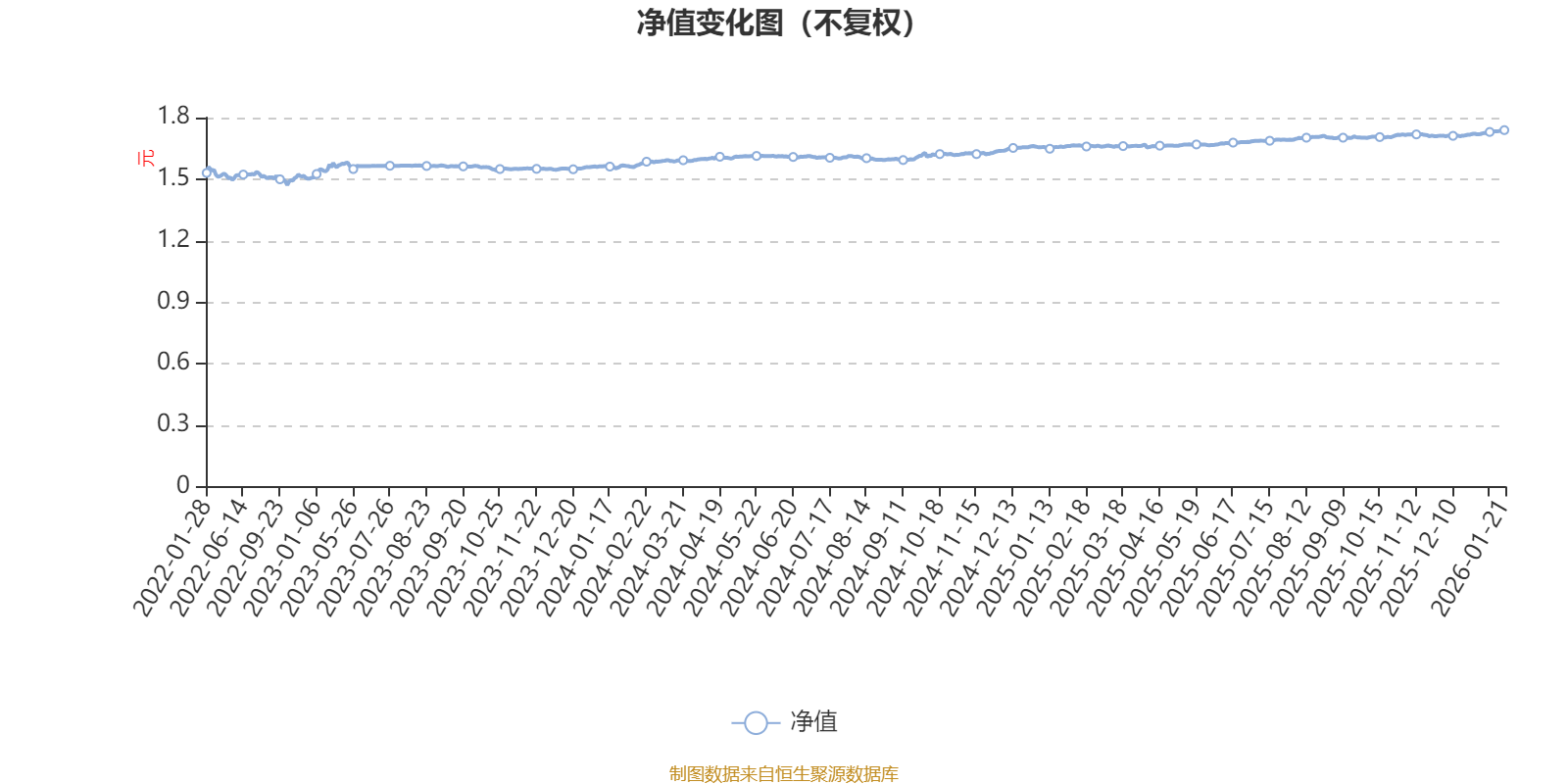
现金流ETF(159399)盘中飘红,布局板块现金流修复机会
Mei Ri Jing Ji Xin Wen· 2026-01-23 07:16
(2)以有色为例:有色金属2025年现金流显著改善,而股息率仍相对低位。红利策略对有色的配置持 续低位,错过有色大行情;而现金流策略能够快速识别有色EBIT(景气)改善并纳入样本,增强组合 收益。 投资者可关注现金流ETF(159399)。市场表现来看,标的指数富时现金流指数2016年至2024年连续9 年跑赢中证红利指数和沪深300指数。现金流ETF(159399)的标的指数聚焦大中市值,标的指数央国 企占比高于同类现金流指数,月月可评估分红,感兴趣的投资者或可持续关注。 (文章来源:每日经济新闻) 1月23日,现金流ETF(159399)盘中涨超0.1%,布局板块现金流修复机会。 西部证券指出,红利策略关注静态股息率,样本池的稳定性高,但会错过企业现金流修复的机会;而现 金流策略重视EBIT(景气)变化,能敏锐捕捉现金流修复的机会。 (1)以煤炭为例:煤炭行业2024年以后现金流明显恶化,而股息率仍维持高位。红利策略依然重仓煤 炭15%以上,煤炭大跌严重拖累组合收益;而现金流策略能够快速将煤炭行业调出样本,规避煤炭大跌 对组合收益的拖累; ...
“红利2.0”迎来里程碑!“攻守有道”中证红利质量ETF(159209)规模首破10亿
Sou Hu Cai Jing· 2026-01-23 01:29
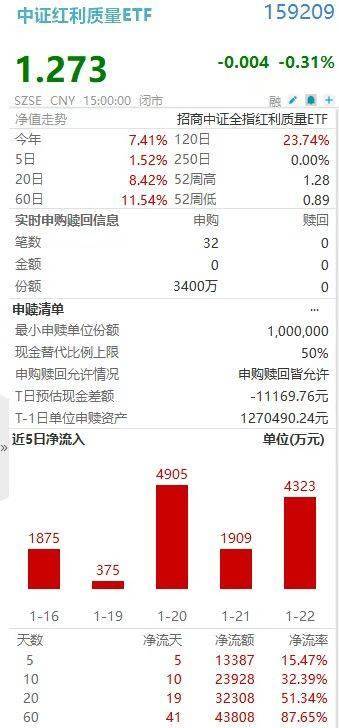
市场震荡之际,升级版的红利策略正成为资金的"避风港"与"压舱石"。1月22日,被誉为"进攻型红 利"标杆的中证红利质量ETF(159209)逆市获超4300万元资金净流入,实现连续10个交易日资金净流 入的强劲表现,其规模历史性突破10亿元大关,创下成立以来新高。作为2025年A股唯一涨幅超20%的 红利类ETF,这一里程碑事件标志着其策略已获得市场主流资金的深度认可。 | | | | SZSE CNY 15:00:00 闭市 | | | | 中 / @ + | | --- | --- | --- | --- | --- | | 净值走势 | | | 招商中证全指红利质量ETF | | | 文年 | 7.41% 120日 | | | 23.74% | | 5日 | 1.52% 250日 | | | 0.00% | | 20日 | 8.42% 52周高 | | | 1.28 | | 60日 | 11.54% 52周低 | | | 0.89 | | 实时申购随回信息 | 申购 | | | 陸口 | | 笔数 | | | 32 | 0 | | 金额 | | | 0 | 0 | | 份额 | 3400万 | | | ...
博时基金冯春远:2026年港股机会与布局之道
Xin Lang Cai Jing· 2026-01-22 08:17
Group 1 - The Hong Kong stock market experienced a significant rebound in 2025, with the Hang Seng Index rising by 27.77%, marking the best annual performance since 2017. This recovery was driven by a combination of policy changes, liquidity improvements, and industrial transformations, including a net inflow of 1.3 trillion yuan from southbound funds, a 75 basis point rate cut by the Federal Reserve, and reforms at the Hong Kong Stock Exchange attracting new economy companies to list [1][2][3] - The trend of net inflows from southbound funds is expected to continue into 2026, supported by domestic asset allocation needs, the attractiveness of Hong Kong stock valuations, and a global easing environment. The funding structure is likely to diversify, with insurance and passive funds contributing to investment preferences [2][3][4] - The Federal Reserve's rate cuts and a weaker dollar are beneficial for Hong Kong stocks, enhancing liquidity and boosting valuations, particularly in interest-sensitive sectors like technology. However, fluctuations in US-China relations may impact market sentiment and individual company fundamentals, although the marginal impact has diminished [5][6][7] Group 2 - Industry differentiation in the Hong Kong stock market reflects the transition between old and new economic drivers rather than a short-term cycle shift. Investors are favoring a "barbell" strategy, balancing high-growth sectors like technology and healthcare with high-dividend assets [8][9] - The outlook for the Hong Kong stock market in 2026 is cautiously optimistic, with valuation recovery and profit improvements expected to provide dual support. Key sectors to watch include technology (especially the AI industry), healthcare, resource commodities, and essential consumer goods [10][11][12] - The investment logic for the Hang Seng Technology Index is shifting from "valuation recovery" to "earnings-driven," with a focus on revenue growth and profit margins as key pricing indicators. Investors are advised to pay attention to companies' cash flow generation capabilities rather than short-term speculative trends [13][14][15] Group 3 - The technology sector in Hong Kong is primarily concentrated among a few internet giants, focusing on mature business models and cash flow, while the A-share technology sector encompasses semiconductors and AI, emphasizing growth and policy drivers. This difference in risk-return characteristics allows investors to view both markets as complementary [16][17][18] - The performance outlook for the Hong Kong technology sector in 2026 suggests potential recovery amid volatility, contingent on continued support from domestic policies and the onset of a Federal Reserve rate cut cycle. Profit improvements will be a key driver, although caution is advised regarding potential global AI valuation bubbles [19][20][21] - The core advantages of a dividend strategy include defensiveness and sustained cash flow, with high-dividend companies typically exhibiting strong financial health. This strategy is expected to receive significant policy and market support, making it a reliable component of an investment portfolio [22][23][24]
别人吃肉我喝汤?致那些正在“煎熬”中的红利投资者
Sou Hu Cai Jing· 2026-01-22 03:20
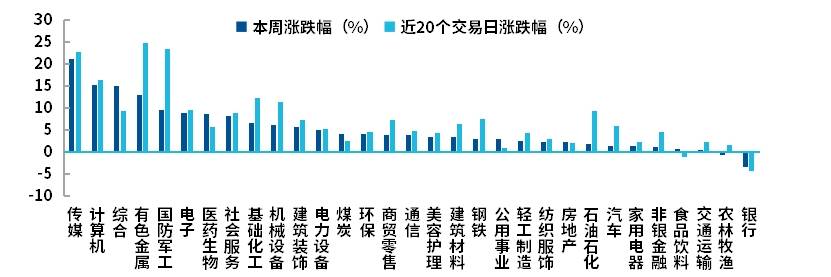
最近的行情确实让不少持仓红利的朋友感到"煎熬"。一边是半导体、AI、商业航天等科技板块热火朝天,仿佛每天都 有新的涨停板;另一边,自己在年底精心配置的红利产品却不温不火,甚至出现了小幅回调。这种"别人吃肉我喝汤, 甚至汤都没喝到"的落差感,很容易让人产生一种冲动:是不是该把手里的红利割了,去追现在的热门科技股?在做决 定之前,我们不妨先冷静下来看一组数据。历史经验往往告诉我们,当市场情绪达到极致时,也是风格可能发生反转 的时候。 一、避免在拥挤时入场,在调整时离场 图:本周及近20个交易日各申万一级行业涨跌幅 除了博弈短期的风格回归,我们更想强调的是:红利策略从来不是用来做短线博弈的工具。很多投资者买红利,是冲 着它"稳健"、"高分红"的属性来的。但红利的"稳",是建立在长期持有的基础上的。首先,红利投资的核心收益来源 之一是股息。如果你频繁进出,不仅会因为交易费用损耗收益,还可能错过了分红,这就失去了投资红利的初衷。其 次,红利的成分股通常是银行、能源、公用事业等成熟行业的龙头。这些企业的特点是经营稳定、现金流充沛,但爆 发力不如科技股。指望它们像题材股一样连拉涨停是不现实的。它们的作用,更像是账户里的"压 ...
投资进化论丨自由现金流vs红利,怎么选?
Sou Hu Cai Jing· 2026-01-20 10:15
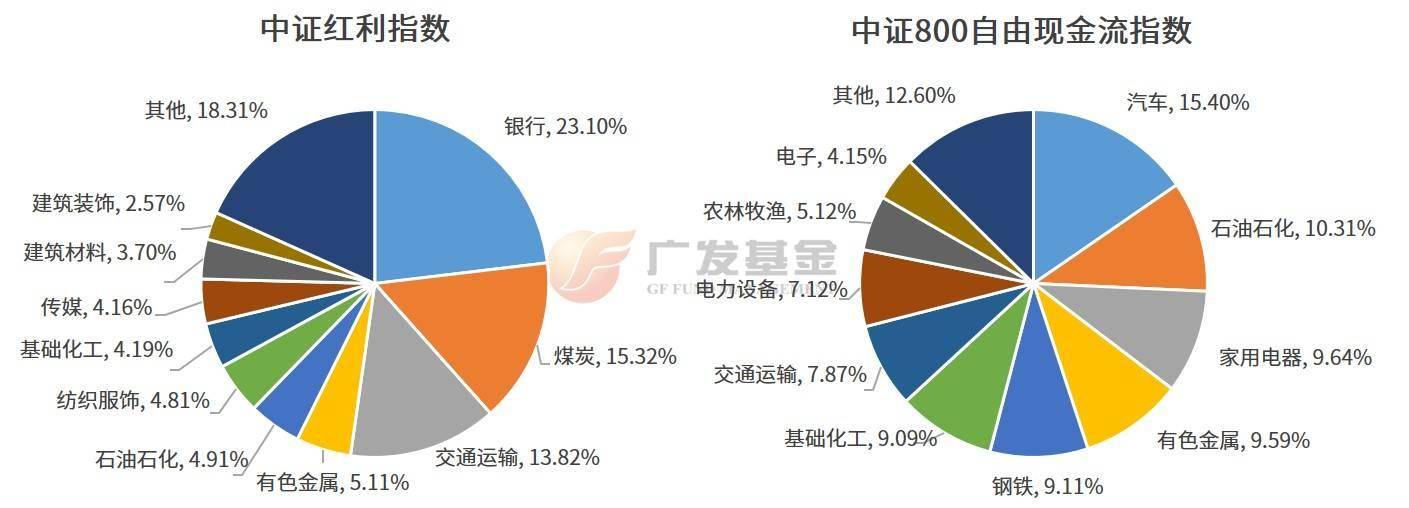
Core Viewpoint - Dividend funds have been favored by conservative investors for a long time, but since 2025, free cash flow index funds have gained significant attention in the market as another product that emphasizes shareholder returns [1] Group 1: Understanding Free Cash Flow - Free cash flow is defined as the cash available after all operating costs, taxes, debt payments, and necessary capital expenditures have been deducted, representing the cash that can be freely allocated [2] - Free cash flow serves as a "litmus test" for assessing a company's health, indicating its ability to maintain operations, manage short-term debts, and support dividends, buybacks, or reinvestments [2] Group 2: Differences Between Free Cash Flow Strategy and Dividend Strategy - The core logic of the dividend strategy focuses on a company's willingness to distribute dividends, while the free cash flow strategy emphasizes a company's ability to generate cash for distribution [4] - Dividend strategy primarily generates returns through dividend income, while free cash flow strategy focuses on capital appreciation, often involving companies in growth phases with higher potential for valuation increases [5] Group 3: Industry Distribution - The industry distribution of the two strategies differs significantly; the dividend index tends to favor traditional, mature industries like finance and energy, while the free cash flow index includes sectors such as consumer goods and cyclical industries [6] Group 4: Historical Performance - Over the past five years, the free cash flow index has shown stronger offensive performance and higher elasticity compared to the dividend index, which has demonstrated more stability and defensive characteristics [10] - The cumulative return of the CSI 800 Free Cash Flow Index was 171.47% with an annualized return of 22.92% and an annualized volatility of 20.64%, while the CSI Dividend Index had a cumulative return of 53.43% with an annualized return of 9.25% and an annualized volatility of 16.17% [11] Group 5: Investor Suitability - The dividend index is more suitable for conservative investors with cash flow needs, while the free cash flow index is better suited for investors with a higher risk tolerance seeking long-term capital growth [12]
2026,预见|红利篇:静水流深——超越股息的价值重估框架
Xin Lang Cai Jing· 2026-01-20 08:05
Group 1 - The year 2026 marks the beginning of the "14th Five-Year Plan," and the market is seeking new directions amidst macroeconomic changes and industry adjustments [1][12] - The focus for investors should be on long-term trends rather than short-term fluctuations, with a series of research and insights being shared across eight fields including macro, fixed income, equity, and technology [1][12][13] Group 2 - In 2025, the keywords for the market were "industry trends" and "risk appetite," with high-growth assets attracting significant capital attention, while dividend strategies appeared to take a backseat [2][14] - The investment rhythm does not depend on temporary shifts in focus, as dividend assets represent a deep value commitment based on companies' cash generation capabilities [2][14] Group 3 - Dividend assets have served as a safe haven in volatile markets, but by 2025, the market's balance shifted towards higher risk appetite, favoring assets with greater expected returns despite increased volatility [3][15] - The selection logic for dividend strategies has become more refined, focusing on stable and improving assets, such as banks and the electrolytic aluminum industry, while reducing exposure to traditional resources in decline [3][15] Group 4 - High dividend yields can be misleading if not sustainable, necessitating a robust evaluation framework to identify genuine dividend-paying companies [4][16] - The evaluation framework consists of three dimensions: industry analysis, company governance, and asset pricing, ensuring that dividends are supported by real cash flow generation [5][17][18] Group 5 - Looking ahead to 2026, the market is expected to be driven by "industry cycles stronger than economic cycles," with artificial intelligence continuing to be a significant growth driver [7][19] - The dual role of dividend assets is highlighted, providing basic returns and defensive attributes for low-risk appetite funds while potentially becoming a stabilizer during market volatility [7][19] Group 6 - Specific industry focuses for 2026 include the banking sector, which may see profit recovery due to improving cost of liabilities, and the electrolytic aluminum industry benefiting from supply-demand balance [8][20] - The thermal power sector is undergoing a transformation, with market reforms enhancing profitability stability, while traditional manufacturing leaders are also being considered for their solid dividend foundations [8][20] Group 7 - The strategy is evolving from a single dividend focus to a "barbell" approach, allowing for flexibility in adapting to market conditions while maintaining a balance between quality, low valuation, and reversal strategies [9][21] - The combination of strategies aims to enhance the risk-return profile of the overall portfolio, ensuring alignment with the complex and changing market environment [9][22]
现金流ETF(159399)飘红,现金流策略攻守兼备
Mei Ri Jing Ji Xin Wen· 2026-01-20 06:33
投资者可关注现金流ETF(159399)。市场表现来看,标的指数富时现金流指数2016年至2024年连续9 年跑赢中证红利指数和沪深300指数。现金流ETF(159399)的标的指数聚焦大中市值,标的指数央国 企占比高于同类现金流指数,月月可评估分红,感兴趣的投资者或可持续关注。 (文章来源:每日经济新闻) 西部证券指出,康波萧条期,地缘不确定性明显抬升,全球泛滥的流动性天然抱团黄金或者拥有稳定现 金流的类黄金"安全资产"。这是过去几年A股红利策略得到系统性重估的核心逻辑。不过今年红利策略 明显跑输,自由现金流策略的优势得到凸显:熊市不跑输大盘,牛市能跑出超额。22-24年"内卷+跨境 资本外流"导致企业自由现金流恶化,现金流策略跑输红利;但当前"反内卷+跨境资本回流"正在修复企 业的自由现金流,现金流策略不仅跑赢红利,更在牛市中跑出超额。 ...
开年高管密集增持!银行股"吸金"能否延续?
Zheng Quan Shi Bao· 2026-01-19 14:47
Group 1 - The core viewpoint of the article highlights a trend of significant share buybacks by executives and institutional shareholders in several listed banks at the beginning of 2026, indicating a positive signal for stock price support [1][4] - In 2025, over half of the A-share listed banks experienced share buybacks from institutional shareholders or executives, reflecting a strong interest in the banking sector as a low-valuation area [1][4] - The performance of bank stocks has been strong over the past two years, but the market style shift in the second half of 2025 put pressure on bank stock performance, raising questions about the sustainability of this trend in 2026 [1][4] Group 2 - Several banks, including Changshu Bank and Chongqing Rural Commercial Bank, have seen their executives increase their holdings, with specific examples of share purchases and the number of shares involved [2][3] - Notably, Nanjing Bank received significant institutional shareholder support, with a major shareholder increasing their stake by 1.23 billion shares, raising their ownership from 13.02% to 14.02% [3] - The trend of share buybacks is a continuation of the previous year's activities, with 26 banks showing significant buyback actions, and 17 of them reported net increases in holdings [5][6] Group 3 - The article notes that the banking sector's performance has been mixed, with a 7% increase in bank stocks in 2025, significantly lower than other sectors like metals and electronics [9] - Analysts predict that the banking sector will continue to attract long-term and risk-averse capital in 2026, with expectations of improved net interest income growth due to narrowing interest margins [10] - The investment focus for 2026 is expected to shift towards banks with strong performance growth or those with convertible bond expectations, as well as a potential internal differentiation within the banking sector [10]




当基金公司开始“画格子”,资管品牌正告别“说教时代”
Zheng Quan Shi Bao Wang· 2026-01-19 10:11
"怎么办?红利低波指数跌破250日均线了!" 最近,不少持有红利类基金的投资者,心里或多或少萦绕着类似的焦虑。当科技板块行情火热,红利策 略却显得"安静"甚至"遇冷",这种对比之下,情绪的波动往往比市场的波动更让人难熬。 就在此时,华泰柏瑞基金做了一件看似简单、却颇具符号意义的事——他们把红利低波指数的时间,画 在了一张A4纸上。 一格一交易日,把时间"可视化" 这张"时间方格图"并不复杂:每个格子代表一个交易日,如果当天红利低波全收益指数收盘价低于其 250日均线,格子就标为黄色;反之则留白。 结果却耐人寻味: 这不再是一段冰冷的文字描述,而是一张可凝视、可感知的"时间地图"。 为何此时推出"格子计划"? .从指数发布(2013年12月19日)至今,黄色格子仅占18.88%; .最近十年,这一比例为20.74%; .而最近五年,黄色格子占比仅5.94%。 换句话说,在绝大多数时间里,红利低波指数其实运行在均线之上。"跌破"反而是一种相对稀缺的状 态。 2025年四季度以来,AI、商业航天等主题持续吸引市场目光,资金流向阶段性转移。相比之下,注重 分红、波动较低的红利策略,暂时陷入了"逆风期"。 焦虑往往来自 ...