自动驾驶技术

Search documents
“大疆教父”发力港股IPO,“全球无人驾驶矿卡第一股”希迪智驾上市后破发
证券时报· 2025-12-19 11:28
Core Viewpoint - The article discusses the recent IPO of HiDi Intelligent Driving, a company founded by Li Zexiang, known as the "father of Chinese hard technology entrepreneurship," which focuses on autonomous mining trucks and logistics vehicles. Despite its promising technology and market potential, the company's stock price fell by 13.69% on its debut, leading to a market capitalization below HKD 10 billion [1]. Company Overview - HiDi Intelligent Driving was established in 2017 and specializes in the research and development of autonomous mining trucks, logistics vehicles, V2X technology, and intelligent perception solutions. The company aims to implement autonomous operations in mining areas and closed parks through its technology [1]. - As of mid-2025, HiDi is ranked sixth among Chinese companies in the autonomous commercial vehicle sector, having delivered 56 autonomous mining trucks. It is projected to rank third in the market for autonomous mining truck solutions based on 2024 revenue [1]. Financial Performance - HiDi Intelligent Driving exhibits significant growth characteristics, with revenue projected to increase from RMB 31.1 million in 2022 to RMB 410 million in 2024, representing over a 12-fold increase. By the first half of 2025, the company reported revenue of RMB 408 million, nearing its full-year 2024 revenue [1]. - However, the company also faces substantial losses, with a reported loss of RMB 263 million in 2022, which is expected to widen to RMB 581 million in 2024 and RMB 455 million in the first half of 2025 [2]. Market Potential - The market for autonomous commercial vehicles in China is projected to reach RMB 4.8 billion by 2024, with expectations of explosive growth to RMB 774.3 billion by 2030, driven by favorable policies and advancements in autonomous driving technology [2]. Management Team - The founder and chairman of HiDi Intelligent Driving is Li Zexiang, a professor at the Hong Kong University of Science and Technology, who is also recognized as a mentor to DJI's founder and has previously served as chairman of DJI [3]. Fundraising and Future Plans - HiDi Intelligent Driving raised a total of HKD 1.422 billion from its IPO, with plans to allocate the funds towards research and development, enhancing commercialization capabilities, integrating the supply chain, and expanding internationally [4].


汽车早餐 | 缺芯致广本工厂停产3天;中欧正就电动汽车案磋商;宁德时代与岚图签署10年深化合作协议
Zhong Guo Qi Che Bao Wang· 2025-12-19 01:26
Domestic News - The Ministry of Commerce announced that China and the EU are in discussions regarding the electric vehicle case, emphasizing the need for dialogue to resolve differences and create a stable market environment for industrial development [2] - The Ministry of Commerce confirmed that some applications for general export licenses related to rare earth items have been approved, indicating that certain exporters have met the basic requirements for such licenses [3] - A new China-Europe freight train carrying domestic auto parts departed from Harbin, marking the first such service for this type of cargo [4] - Guangzhou has launched a second round of initiatives to promote automobile consumption, allocating an additional 300 million yuan for subsidies, with specific amounts set for different subsidy standards [5] International News - South Korea and the UK have signed an upgraded free trade agreement that relaxes the rules of origin for automotive exports, lowering the local value content requirement from 55% to 25% to qualify for tariff exemptions [6] Corporate News - Honda confirmed that its GAC Honda factory will halt production for three days starting December 29 due to a semiconductor supply shortage, while production at its Dongfeng Honda factory will not be affected [11] - CATL and Lantu have signed a 10-year deep cooperation agreement, focusing on technology collaboration and the supply of battery technology for Lantu vehicles [12] - The 10,000th unit of the ZunJie S800 has rolled off the production line, marking a new phase in the collaboration between Jiangqi Group and Huawei [13] - Li Auto announced its entry into the markets of Egypt, Kazakhstan, and Azerbaijan, with plans to consider overseas market regulations in the development of new products set to launch in 2026 [14] - Zhongtai Auto appointed Lou Yuanming as the representative for securities affairs, with his term aligning with the current board's tenure [15] - SenseTime, Daxiao Robotics, and Inspur have formed a strategic partnership to build an ecosystem focused on AI infrastructure and embodied intelligence [16] - Evergrande Auto's stock remains suspended following a report regarding changes in the shareholding of its subsidiaries as part of a bankruptcy restructuring plan [17]



曾不被李彦宏和余凯等大佬看好的L3,如今支棱起来了
Sou Hu Cai Jing· 2025-12-18 05:35
文:谈擎说AI 在过去几年,L3在自动驾驶行业内并不受待见,当L2与L4被炒得火热时,它就像被皇帝打入冷宫的妃子,提都很少提,就算提了,也都是不那么看好的声 音。 2022年时,李彦宏便说过L2之后率先进入商用的很可能是L4,而不是L3。 事实上也确实如此,只是如今L3有没有可能比Robotaxi普及更快? 地平线创始人余凯曾在2023年作出更悲观的判断,他觉得10年以后连L3都不会真正的出现。 但现实的变化总是这么出乎人的意料,如今随着工信部的一纸书文,允许长安、极狐两款L3车型落地,L3的时代正式被打响。 马后炮的讲,看来大佬对于未来的判断也总是有着瑕疵啊。 所以L3究竟意味着什么? 技术革命时代,L3与豆包AI手机为何不同命? 众所周知,在L3以前,都只能被称作辅助驾驶。 L3作为有条件的自动驾驶,之所以推行这么晚,除了技术上的问题以外,最大的难点就在于责任规划。 L2的责任承担者依然是驾驶人,出了事,尽管车企宣传自己的智驾再厉害,该你承担的还是要你承担。 到L3时代,在ODD内正常激活的情况下,要是出事了,责任不归驾驶员,而是车企。 在此期间,驾驶人员可以脱手、脱眼,想看剧看剧,想吃饭吃饭。 但千万不 ...
特斯拉辟谣“加州禁售30天”报道:销售业务将照常进行
Sou Hu Cai Jing· 2025-12-18 00:42
Core Viewpoint - Tesla has refuted reports regarding a 30-day sales ban in California, following a judge's ruling that the company misled consumers about its driver assistance technology [1][2]. Group 1: Regulatory Actions - The California Department of Motor Vehicles (DMV) initially planned to enforce a penalty against Tesla but decided to postpone it for 90 days to allow the company time for compliance [2]. - The ruling is related to the use of the term "Autopilot," which the DMV and the judge have classified as a consumer protection issue [2]. Group 2: Company Response - Tesla stated that no consumers had raised concerns about the terminology, but emphasized the need to comply with the ruling to avoid penalties [2]. - The company reassured that its sales operations in California would continue unaffected [2]. Group 3: Public Reaction - The ruling has sparked strong discontent among Tesla's fanbase, with some suggesting that the company should withdraw from the California market [3]. - Supporters highlighted Tesla's contributions to job creation, engineering, and innovation in California, arguing that the state does not deserve such contributions [3]. Group 4: Terminology Changes - Tesla has been using the terms "Autopilot" and "FSD (Full Self-Driving)" for years, but earlier this year, it added "Supervised" to the "FSD" name to potentially avoid future disputes [3].

若不调整营销方式,特斯拉或将面临加州禁售处罚
Xin Lang Cai Jing· 2025-12-17 10:28
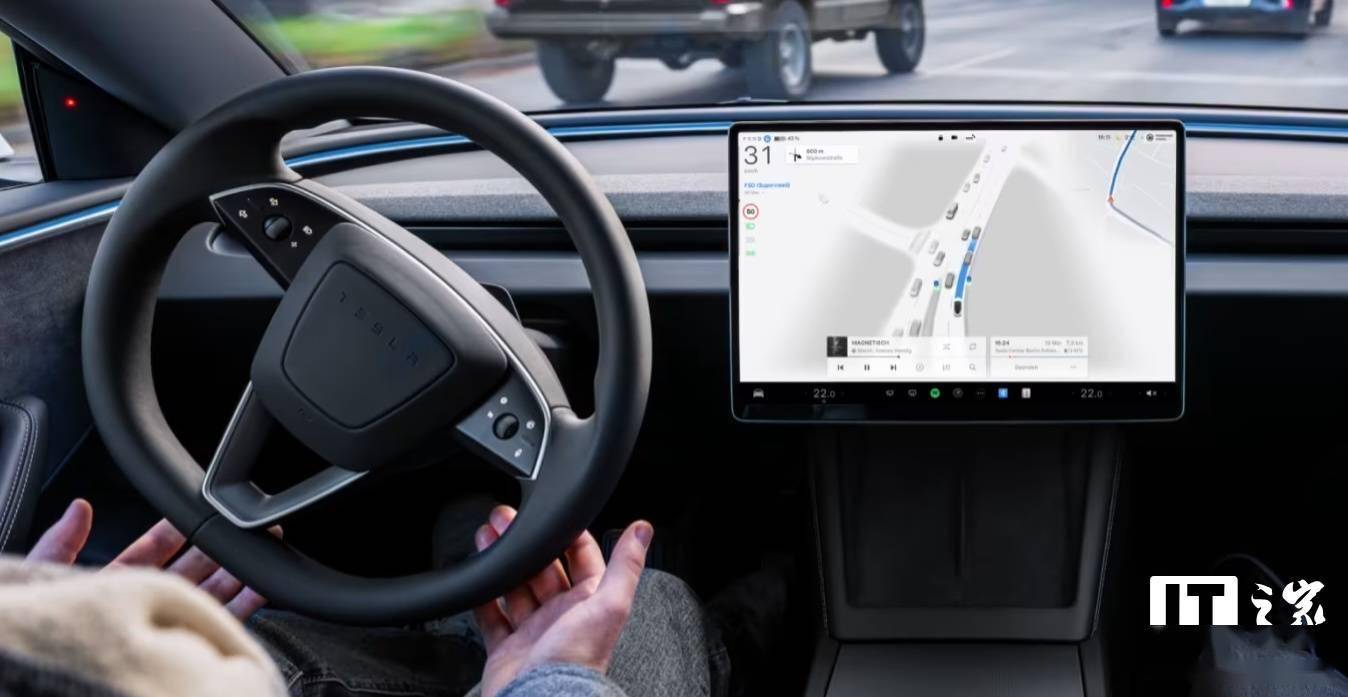
登录新浪财经APP 搜索【信披】查看更多考评等级 美国加利福尼亚州机动车管理局表示,特斯拉公司涉嫌通过营销手段误导消费者,夸大其驾驶辅助技术 的功能,若该公司不整改相关营销行为,其在加州的汽车销售将被暂停 30 天。 该管理局于周二宣布,上述禁售处罚将在 90 天后生效,为特斯拉留出上诉或整改合规的时间。此前, 加州机动车管理局指控特斯拉夸大其 "自动辅助驾驶(Autopilot)" 和 "完全自动驾驶(Full Self- Driving)" 软件的功能,并请求行政法官裁定是否有必要对特斯拉实施禁售处罚。 消息公布后,特斯拉股价在盘后交易中一度下跌 2.2%,随后跌幅收窄至约 1%。该公司股价于周二收于 历史高点,年内累计涨幅达 21%。截至发稿,特斯拉暂未回应置评请求。 对总部位于得克萨斯州奥斯汀市的特斯拉而言,销售牌照被吊销将是一记重创。加州是美国人口第一大 州,既是特斯拉在美国最大的销售市场,也是其最大工厂的所在地,即便短期的销售中断也可能给公司 带来高昂损失。特斯拉若提交声明,承诺停止使用 "自动辅助驾驶" 这一名称来描述不符合特定行业标 准的技术,或详细说明整改措施,即可避免加州机动车管理局的禁售 ...
Alphabet(GOOGL.US)旗下自动驾驶巨头Waymo寻求融资逾150亿美元 估值逼近千亿大关
Zhi Tong Cai Jing· 2025-12-17 01:08
Group 1 - Alphabet's subsidiary Waymo is in talks to raise over $15 billion at a valuation close to $100 billion, highlighting its leadership in the autonomous driving sector [1] - Waymo's valuation has significantly increased from $45 billion in October 2024 to potentially $110 billion, reflecting its ongoing investments and expansion efforts [1] - The company currently has an annualized revenue exceeding $350 million, indicating strong financial performance [1] Group 2 - Waymo leads the U.S. market in fully autonomous driving mileage, paid user base, and approved operational areas, distinguishing itself from competitors like Tesla and Amazon's Zoox [2] - Waymo operates under Alphabet's "Other Bets" segment, which includes high-risk innovative projects, and is facing pressure for independent operations to enhance overall efficiency [2] - The decision to allow Waymo to bring in external capital is partly to mitigate the operational risks associated with high investment in autonomous driving technology [2]

车百会理事长张永伟:中国汽车产业迎来转型升级关键期
Zheng Quan Ri Bao Wang· 2025-12-16 11:58
本报记者 刘钊 在汽车产业深度变革的关键节点,12月16日,在中国电动汽车百人会论坛(2026)媒体沟通会上,车百会理事长张永伟在 接受《证券日报》等媒体记者采访时,对中国汽车产业发展趋势、新能源转型、自动驾驶技术、出海战略等热点问题进行了深 入解读。他指出,当前中国汽车产业正处于转型升级的关键期,既面临着前所未有的机遇,也需要应对诸多挑战。在电动化、 智能化浪潮下,汽车产业的发展规律正在发生深刻变化,企业需要适应新的市场环境,把握发展机遇。 明年国内汽车市场销量或将增长2% 中国汽车产业正经历着前所未有的变革,市场格局和发展模式都在发生深刻变化。 车百会理事长张永伟在接受采访时表示,当前汽车产业发展呈现出三个明显的趋势特征。 首先,市场增长将保持平稳态势。张永伟预测,明年国内汽车市场销量将实现2%左右的增长,这一判断明显高于市场普 遍预期。他认为,汽车产业的平稳增长不仅是行业自身发展的需要,更是稳经济的重要支撑。从投资和消费两个维度来看,汽 车都是核心拉动领域。 其次,产业整合加速推进。随着市场竞争的加剧,汽车行业已经进入淘汰赛阶段。张永伟指出,小规模企业和技术积累不 足的企业发展将面临更大困难,而优势企业 ...
我国首批L3级自动驾驶车型获工信部准入许可
Yang Shi Wang· 2025-12-16 03:37
下一步,两款车型将分别由重庆长安车联科技有限公司、北京出行汽车服务有限公司作为使用主 体,在指定区域内开展实际道路通行试点。据悉,工业和信息化部将会同相关部门及地方管理机构,加 强对试点车辆的运行监测与安全保障,及时总结试点经验,进一步完善智能网联汽车准入管理体系与标 准法规建设,推动我国智能网联新能源汽车产业实现更高质量、更安全有序发展。 据悉,此次准入许可是依据《道路机动车辆生产企业及产品准入管理办法》等相关法规,经过严格 的受理、审查、公示流程后作出的决定。前期,工业和信息化部会同有关部门,按照《关于开展智能网 联汽车准入和上路通行试点工作的通知》要求,组织专家团队开展了多轮测试与安全评估工作,两家企 业申报车型均顺利通过各项验证。 近日,工业和信息化部正式公布我国首批L3级有条件自动驾驶车型准入许可,两款分别适配城市 拥堵、高速路段的车型将在北京、重庆指定区域开展上路试点,这标志着我国在智能网联汽车准入管理 方面取得重要突破,自动驾驶技术正式进入有条件规模化应用的新阶段。 根据公告内容,长安汽车旗下"长安牌SC7000AAARBEV型纯电动轿车"与北汽蓝谷旗下"极狐牌 BJ7001A61NBEV型纯电 ...
L3级自动驾驶车型获附条件准入许可,释放哪些信号?
Xin Hua She· 2025-12-15 16:08
Core Insights - The Ministry of Industry and Information Technology has granted conditional approval for two automotive companies to submit applications for L3 level conditional autonomous driving vehicles, indicating a significant step towards the commercialization of autonomous driving technology [1][3] Group 1: Safety and Regulation - Safety remains the top priority in the development and application of new automotive technologies, with the conditional approval allowing autonomous driving functions to be limited to typical, low-risk scenarios [2] - The approval process includes systematic evaluations of enterprise capabilities, product safety, and testing validation, ensuring that only vehicles meeting production conditions are granted access [1][3] Group 2: Technological Advancement and Industry Response - The move signifies a transition from "technical validation" to "mass production application," marking the beginning of road trials for intelligent connected vehicles [3] - The approval is seen as a recognition of technological maturity and a response to societal expectations for future smart mobility solutions, fostering a collaborative ecosystem among various stakeholders in the automotive supply chain [3] Group 3: Future Developments and Standards - The next steps involve road trials in designated areas by the two approved vehicles, with ongoing monitoring and safety assurance from relevant authorities [4] - The initiative is expected to drive innovation in automotive technology and provide valuable practical experience for standard formulation, enhancing the efficiency and scientific nature of the approval process [4]
宇瞳光学20251210
2025-12-11 02:16
Summary of Yutong Optical Conference Call Company Overview - Yutong Optical has maintained the leading position in the global security lens market for 10 consecutive years, with a market share of 38.1% in 2024, and together with Sunny Optical, they hold over 65% of the domestic market share [2][3][4] - The company is expected to achieve revenue of 1.85 billion RMB in 2025, with a stable gross margin of around 25% [2][4] Industry Insights - The overseas market is experiencing significant growth, driven by increasing demand for high-definition and intelligent security solutions [2][4] - The global market for aspheric optical glass molded lenses is projected to reach approximately $4.4 billion in 2024, with an expected compound annual growth rate (CAGR) of over 6% until 2030-2031 [9] Key Business Segments Security Lens Business - Security lenses are the core business of Yutong Optical, with a diverse product matrix including ultra-low light series, all-in-one series, 4K series, and zoom series [3] - The company has established long-term strategic partnerships with leading domestic security firms such as Hikvision and Dahua [2][3] Automotive Optical Sector - Yutong Optical is actively expanding into the automotive optical field, developing a product matrix that includes vehicle lenses, HUDs, and LiDAR systems [2][5] - The demand for vehicle cameras is significantly increasing due to advancements in autonomous driving technology, with the number of cameras required per vehicle rising from 3-5 for L1 to 15-18 for L5 levels [5] - The automotive business is expected to generate revenue of 334 million RMB in 2024, representing a year-on-year growth of 51.8% [5] New Consumption Optical Business - The new consumption optical business achieved revenue exceeding 300 million RMB in the first three quarters, with approximately 300 million RMB in the third quarter alone [3][11] - Yutong has a close partnership with DJI, providing molded glass for various camera and drone models, with an average selling price (ASP) of around 20 RMB [11] Technological Advancements - Yutong Optical has made significant advancements in molded glass technology, achieving mass production capabilities that enhance competitiveness and provide substantial growth potential [6][8] - The company has reduced production costs by over 30% compared to traditional grinding methods, while maintaining industry-leading yield rates [8] Strategic Partnerships and Future Growth - Yutong has established collaborations with major automotive manufacturers such as BYD, Geely, Toyota, and Volkswagen, integrating into their supply chains [5] - The company is also involved in projects with Apple, focusing on AI glasses camera components, which are expected to begin small-scale production in the second half of 2026 [12] Growth Drivers - Short-term growth will be driven by the rapid expansion of the automotive business and the realization of new consumption orders [13] - Long-term growth is anticipated across various business segments, including security, with a clear path for future expansion supported by robust R&D investments and a strong customer base [13]