消费升级

Search documents
讨论真问题,提供真价值 | 年度财经思想者揭晓人
Sou Hu Cai Jing· 2025-12-25 09:12
Core Insights - The article emphasizes the importance of rationality, professionalism, and courage in economic discussions, particularly in the context of the "Yi Cai Hao" platform and its annual recognition of outstanding thinkers in finance [1][2]. Group 1: Achievements and Impact - Over the past year, the "Qian V Plan" has produced over 700 in-depth articles and more than 1,500 videos, achieving over 60 million views [2]. - The "Da V Liu Shui Xi" live broadcast attracted 4.64 million viewers, while the previous year's "Annual Financial Thinker Ceremony" engaged 7.41 million participants, generating a total communication flow of 40 million [2]. Group 2: Economic Outlook - A survey of 180 economists and researchers indicates that over 60% expect China's GDP growth target for 2026 to be between 4.5% and 5.0%, reflecting a pragmatic balance between stability and progress [3]. - 88.2% of experts believe that significant advancements in 2026 will occur in "technological innovation and industrial upgrading," with a focus on artificial intelligence, robotics, and semiconductor localization as key strategic areas [3]. Group 3: Consumer Trends and Market Dynamics - Health and elderly care, along with cultural and experiential consumption, are viewed as the most promising new consumer engines, with approximately 70% agreement among experts [4]. - In the real estate sector, the focus has shifted from simple stimulus to urban renewal and improvement, indicating a transition from "housing for all" to "livable housing" [4]. Group 4: Global Economic Context - Experts anticipate that the Federal Reserve will gradually enter a rate-cutting phase in 2026, maintaining a neutral global liquidity environment, with the US dollar index expected to remain stable within a certain range [4]. - The article highlights the importance of understanding global variables to navigate domestic policy space and market fluctuations [4].
人民财评:海南封关,为何能打开消费?
Sou Hu Cai Jing· 2025-12-25 08:26
Group 1 - The core point of the news is that Hainan's free trade port has significantly expanded its duty-free shopping options, leading to a surge in sales and consumer interest, with sales exceeding 100 million yuan for four consecutive days after the closure began [1] - The number of zero-tariff items has increased from over 1,900 to 6,637, covering 74% of product categories, which indicates a substantial enhancement in consumer access to a variety of goods [1] - The policy aims to create a "quasi-offshore" low-tax environment within China, enhancing the international competitiveness of imported goods and encouraging domestic consumption to return from overseas channels [1] Group 2 - The fundamental benefit of the closure is the promotion of institutional openness, which reduces transaction costs and allows consumers to access high-quality global products at competitive prices [2] - The zero-tariff environment will also benefit local manufacturing and service industries by lowering costs for imported raw materials and components, thus improving the overall quality of the supply chain [2] - Hainan is expected to evolve into a comprehensive high-end service ecosystem that integrates display, experience, consumption, and after-sales services, attracting global brands to establish a presence in the region [2] Group 3 - Maintaining regulatory efficiency and convenience amidst high-frequency, large-scale logistics exchanges is a challenge for Hainan, as sustaining consumer growth will depend on improvements in the business environment, logistics efficiency, and consumer rights protection [3] - The operation of Hainan's free trade port represents a significant step in China's broader strategy for opening up, focusing not just on immediate consumption growth but also on long-term competitive advantages through institutional innovation [3]
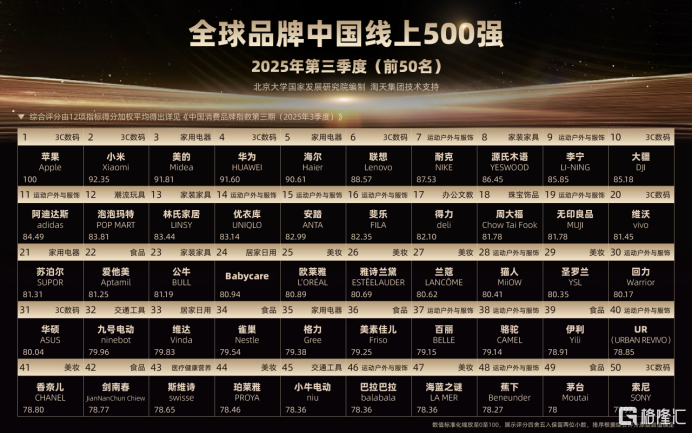
最新"全球品牌中国线上500强"季度榜单出炉,大疆首次进入前10、泡泡玛特上升显著
Ge Long Hui· 2025-12-25 06:54
Core Insights - The latest quarterly "China Online Consumption Brand Index" (CBI) and "Global Brand China Online Top 500" (CBI500) indicate a continued rise in consumer preference for brand goods, with the CBI reaching 62.65, a year-on-year increase of 0.92% [1] - DJI and Pop Mart have shown rapid growth, with DJI entering the top 10 of the CBI500 for the first time, and Pop Mart ranking 12th [1] Industry Trends - The CBI series indices reflect a macroeconomic trend of consumption recovery and a shift towards high-quality development, with a notable increase in the core CPI by 0.6% year-on-year in the first three quarters [1][4] - Significant growth in the CBI index was observed in sectors such as women's clothing, 3C smart products, daily beauty products, outdoor sports, pet supplies, men's clothing, and home furnishings, indicating a heightened consumer focus on quality and brand [4][5] - The women's clothing sector saw a notable increase of over 5 points in its index, driven by intensified competition and a focus on quality upgrades [4] Brand Performance - The top five brands in the CBI500 remain consistent with previous quarters: Apple, Xiaomi, Midea, Huawei, and Haier [6] - Brands like DJI and Pop Mart have improved their rankings significantly due to product innovation and seasonal demand, with DJI leveraging unique features in its products and Pop Mart capitalizing on its original IP [6][7] - New entrants in the food category, such as Guangzhou Restaurant and Crab Taotai, benefited from seasonal demand for mooncake gift boxes, while educational brands like Deli and Morning Glory also saw significant improvements [6] Consumer Behavior - The CBI500 rankings are based on real consumer purchasing behavior, utilizing 12 metrics including sales, price, search volume, and positive reviews to assess brand competitiveness [7] - The emphasis on quality and innovation is seen as a key driver for brand strength, moving away from cost-based competition towards a focus on quality, brand differentiation, and value [8]






中国真的消费不足吗?其实多个维度已经接近甚至超过发达国家水平
首席商业评论· 2025-12-25 04:18
Core Viewpoint - The narrative of "insufficient consumption" in China is fundamentally a misjudgment amplified by nominal indicators, as residents are not "buying less" but rather consuming at levels comparable to or exceeding those of developed economies in key dimensions [5][6]. Group 1: Consumption Analysis - Observations of per capita consumption in food, durable goods, and core services indicate that Chinese residents' consumption intensity is close to that of major global economies, with some areas even leading [5][7]. - The perception of "low nominal consumption" equating to "low real demand" is a significant error, as the macro data reflects a "weak" consumption not due to a lack of demand but rather shaped by long-term low prices and structural supply [5][6]. - The gap in consumption levels between China and major Asian economies is much smaller than surface data suggests when recalibrating macro statistical measures [5][6]. Group 2: Structural Consumption Insights - The focus should shift from "whether to stimulate consumption" to "where consumption upgrades will occur," anchoring the discussion in long-term variables such as urbanization, service supply capacity, and lifestyle evolution [6][23]. - The consumption landscape is characterized by a "nominally weak, physically strong" state, where low prices and a focus on basic supply create a perception of insufficient consumption despite high levels of actual consumption [22][20]. Group 3: Future Consumption Opportunities - Continuous urbanization, currently at approximately 65%, presents significant potential for new consumption demand as income levels rise and social infrastructure improves [24]. - There is a growing demand for preventive healthcare services and non-essential education, indicating areas for development as the population ages and urbanizes [25]. - High-quality, experience-centric services and products are increasingly sought after, particularly among younger demographics, suggesting a shift towards more experiential consumption [26]. Group 4: Historical Context and Future Outlook - Historical consumption downturns typically last around four years, with the current downturn having persisted for 3.5 years, indicating a potential for recovery in consumption patterns [29]. - The key to expanding domestic demand lies not in forcing residents to spend more but in creating stable expectations that encourage spending on better services and experiences [29].

中泰证券:电动车高端看成长兑现 建议关注九号公司-WD等
Zhi Tong Cai Jing· 2025-12-25 03:28
Group 1 - The electric vehicle industry is experiencing a shift where mass brands are focusing on trend while high-end brands are realizing growth potential, with expectations for mass brand pressure to ease by Q2 2026 and high-end brands to grow throughout the year [1] - The consumption upgrade in the two-wheeler market is transitioning from rural to urban areas and from durable goods to premium products, with significant historical growth phases identified from 2005 to 2024 [1] - The introduction of new national standards is expected to trigger a new round of industry consolidation, with a shift in focus from distribution channels to brand origins [1] Group 2 - The high-end two-wheeler market shows significant growth potential, with urban penetration rates varying widely among new first-tier cities, indicating room for expansion in high-end segments [2] - Assuming a five-year replacement cycle, the annual sales increment for the high-end market could reach approximately 6.6 million units, highlighting the expansive market opportunity [2] - The success of Ninebot in the high-end market is attributed to its focus on product design and user experience, particularly in smart features, as well as effective brand and channel development [3] Group 3 - The new national standards are seen as a starting point for a new round of market reshuffling, with short-term brand differentiation expected to be minimal but long-term success dependent on scale and product strength [3] - Leading brands like Yadea and Aima are anticipated to benefit from the scale effects resulting from the reduction in SKU numbers due to new regulations, while high-end brands like Ninebot will be evaluated based on their growth and product capabilities [3]



中泰证券:电动车高端看成长兑现 建议关注九号公司-WD(689009.SH)等
智通财经网· 2025-12-25 03:24
Group 1 - The core viewpoint of the report is that the electric vehicle industry is seeing a trend towards mass-market growth while high-end brands are expected to realize growth potential. By Q2 2026, the pressure on mass-market brands is anticipated to ease, while high-end brands are expected to grow throughout the year. The electric vehicle sector is currently undervalued, with recommendations to focus on Yadea Holdings (01585), Aima Technology (603529.SH), and Ninebot (689009.SH) [1] - The consumption upgrade in the two-wheeler market is transitioning from rural areas to urban centers, moving from durable goods to premium products. The industry has experienced rapid expansion from 2005 to 2013, followed by a slowdown and the establishment of market dynamics from 2014 to 2018. The period from 2019 to 2024 is characterized by national standard reforms that drive high sales through stock replacement, leading to a new round of capital expenditure expansion among industry leaders [1] - The current penetration rate of electric two-wheelers in urban areas has reached a high level, with significant variance in ownership across new first-tier cities. Assuming similar consumption levels and road conditions, there is considerable room for high-end two-wheelers to penetrate the market. With a total penetration rate of 45% for first-tier and new first-tier cities, the annual sales increment for the high-end market is estimated to be around 6.6 million units [2] Group 2 - Ninebot's success in the high-end market is attributed to its focus on product design and user experience, particularly in smart features. The company has also built its brand and distribution channels effectively, creating a market perception that enhances profitability and facilitates channel expansion [3] - The new national standards are seen as the starting point for a new round of industry reshuffling. In the short term, brand differentiation may not be significant, but long-term success will depend on scale and product strength. Leading brands like Yadea and Aima are expected to benefit from economies of scale, while high-end brands like Ninebot will need to focus on growth and product performance [4]
“圣诞老人”催涨海运费 聚酯为何不提“钱”抢出口?
Qi Huo Ri Bao· 2025-12-25 00:27
Core Viewpoint - The shipping market is experiencing a seasonal peak due to increased global consumption during the holiday season, but polyester exports are not seeing a corresponding surge in demand, indicating a significant shift in market dynamics [1][2]. Group 1: Shipping Market Dynamics - The Shanghai Containerized Freight Index (SCFI) has seen a rebound, with freight rates on key routes such as Europe and the US West Coast increasing by approximately 9.5% and 20% respectively [1]. - Traditionally, rising shipping costs would lead to a rush in polyester exports, but this year, there is a notable absence of such behavior due to various constraints [2][3]. Group 2: Factors Affecting Polyester Exports - The reluctance to "grab orders" is attributed to a change in the logic behind rising shipping costs, coupled with weak global demand and profit constraints [2]. - Inflation pressures in Europe and the US have limited consumer spending, while overseas clients prefer smaller, more frequent orders to avoid inventory buildup [2][3]. - The overall trade volume from Asia to North America has decreased by about 5% year-on-year due to changing tariff policies and market dynamics [3]. Group 3: Changes in Order Characteristics - Overseas orders are now characterized by a focus on essential purchases, with a reduction in speculative stocking, leading to more stable but limited order sizes [6]. - There is a growing differentiation in order types, with high-end polyester products being exported to Europe and Turkey, while low-end products face intense competition in Southeast Asia [6]. - The geographical distribution of orders is diversifying, with emerging markets in Central Asia becoming key growth areas as traditional markets shrink [6]. Group 4: Future Outlook - Short-term projections indicate that shipping costs may remain high but lack the demand support for sustained increases, leading to a stable export environment for polyester [8]. - Long-term trends suggest a need for companies to focus on product differentiation, market expansion, and supply chain efficiency to adapt to changing global dynamics [8][9]. - Confidence in exports for 2026 remains strong among many companies, with plans to expand overseas production capabilities, indicating a shift towards a more globalized polyester industry [9].
大家提前做好准备,元旦将至,国内会出现5大趋势
Sou Hu Cai Jing· 2025-12-25 00:08
Core Insights - 2026 is identified as a pivotal year marking the beginning of the "15th Five-Year Plan," with a shift in policy direction and market trends anticipated [1] Group 1: Consumer Trends - The first trend indicates that consumer spending is becoming more rational, with individuals planning their purchases and focusing on quality over quantity, particularly in areas that bring personal satisfaction such as fitness and travel [3] - Consumers are encouraged to adjust their spending habits, prioritizing expenditures that enhance happiness and value rather than making impulsive purchases [4] Group 2: Employment and Skills - The second trend highlights the increasing demand for skilled workers, with policies promoting vocational training and subsidies for skill acquisition, particularly in sectors like renewable energy [6] - The third trend emphasizes the integration of AI into daily operations across various industries, suggesting that individuals should learn basic AI applications to enhance productivity and remain competitive in the job market [8] Group 3: Flexible Employment - The fourth trend points to a growing number of flexible workers, with 240 million currently engaged in such employment, and upcoming policies aimed at improving protections and benefits for these workers [8] - Individuals with stable jobs are encouraged to explore side hustles or prepare for transitions to flexible employment, as the environment is expected to become more supportive [9] Group 4: Domestic Consumption - The fifth trend focuses on the strengthening of the domestic market, with policies aimed at boosting local consumption and supporting homegrown brands [11] - There is a growing willingness among consumers to spend on local culture and brands, which presents opportunities for entrepreneurs to tap into local demand and unique offerings [12]

“圣诞老人”催涨海运费,聚酯为何不提“钱”抢出口?
Qi Huo Ri Bao· 2025-12-24 23:47
Core Viewpoint - The shipping market is experiencing a seasonal uptick in freight rates due to the holiday season, but polyester exports are not seeing a corresponding surge in demand, indicating a shift in market dynamics and constraints on export activities [1][2]. Group 1: Shipping Market Dynamics - The Shanghai Containerized Freight Index (SCFI) has seen a rebound, with freight rates on key routes such as Europe and the US West Coast increasing by approximately 9.5% and 20% respectively [1]. - Traditionally, rising shipping costs would lead to a rush in polyester exports, but this year, companies are exhibiting restraint due to multiple factors including changes in demand and profit margins [1][2]. Group 2: Demand and Supply Constraints - Global end-consumer demand is recovering slowly, with inflation pressures in Europe and the US limiting consumer spending power [2]. - Overseas clients have completed their basic inventory stocking and are now favoring small-batch, high-frequency replenishment, which reduces the urgency for large-scale orders [2]. - The increase in shipping costs is not driven by strong demand but rather by seasonal shipping patterns and capacity constraints, leading to a unique situation of price increases during a traditionally slow period [2]. Group 3: Impact of Tariff Policies - The imposition of tariffs under the "Trump 2.0" era has disrupted the usual shipping patterns, resulting in a year-on-year decline of about 5% in shipping volumes from Asia to North America [3]. - The expected increase in tariffs led to a temporary spike in exports last year, but this year has seen an earlier decline in export volumes due to the impact of tariff policies [3]. Group 4: Structural Changes in Orders - The absence of a "rush for orders" reflects a structural adjustment in overseas orders, characterized by a focus on essential needs, increased differentiation, and a more diverse regional distribution [5][6]. - High-end polyester products are primarily exported to Europe and Turkey, while lower-end products face intense competition in Southeast Asia, leading to compressed profit margins [5]. Group 5: Future Outlook - Short-term projections indicate that shipping rates may remain high but lack the demand support for sustained increases, suggesting a stable export environment for polyester [7]. - Long-term trends point towards a restructuring of the polyester export landscape, emphasizing the need for differentiation, market expansion, and improved supply chain efficiency [7][8]. - Companies are optimistic about 2026, anticipating a resilient textile export market supported by stable monetary policies and potential growth in emerging markets [8].

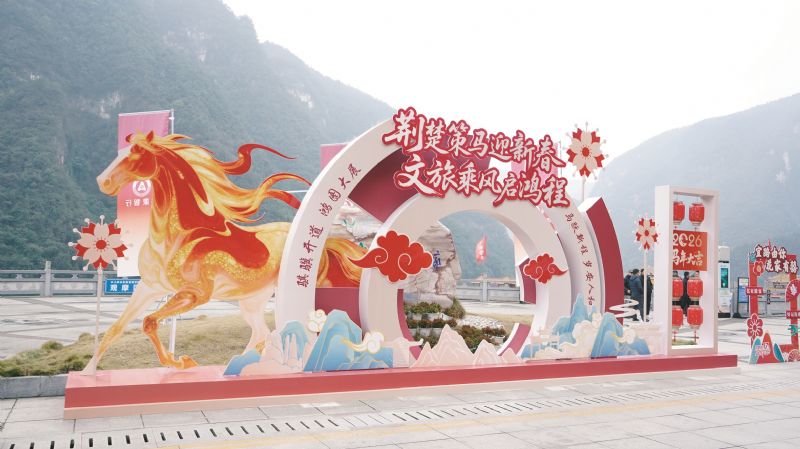
湖北文旅集团亿元惠民打造荆楚年味盛宴 锚定两大主轴超300场活动燃动新春消费
Chang Jiang Shang Bao· 2025-12-24 23:05
长江商报消息 ●长江商报记者 汪静 清江之畔,晴光和煦,岁末冬深,荆楚大地年味初绽。 12月24日,湖北文旅集团"荆楚策马迎新春?文旅乘风启鸿程"2026新春营销政策发布会在湖北清江画廊旅游度假区 正式启幕。湖北文旅集团总经理李丽,湖北省文化和旅游厅二级巡视员李和清,宜昌市副市长刘劲松,湖北文旅 集团党委副书记罗迈、副总经理罗钦、副总经理吴传彪,宜昌市文旅局党组成员马奕,长阳县县长张学书等出席 发布会。长阳县相关单位、湖北文旅集团有关单位、旅行合作商和大学生代表共同见证这场聚焦消费升级的新春 文旅盛会。 发布会紧扣2026年9天超长春节假期等节点,依托集团稳健的资本运作与全省优质文旅资源,重磅推出亿元新春文 旅福利矩阵、创新产品体系及区域协同举措,以"福利惠民+产品创新+资本护航"的三重合力激活春节文旅消费市 场,为湖北建设世界级旅游目的地注入强劲动能。 "本次新春政策的发布实际上涵盖了全年的活动内容,"湖北文旅集团景旅运营事业部总经理、文旅创意创新研究 院院长胡学进在接受长江商报记者采访时表示,"我们聚焦'神武峡''赤黄红'两大主轴,围绕文旅融合、科技赋能 以及场景的焕新,推出更新、更有科技感、更有文化韵味 ...