
资本市场改革

Search documents
锚定科技创新 资本市场以深化改革增活力
Jin Rong Shi Bao· 2025-08-01 02:30
Group 1: Capital Market Reforms - A series of significant reforms in China's capital market have been achieved this year, focusing on attracting long-term funds, public fund reforms, and M&A activities [1] - The China Securities Regulatory Commission (CSRC) has emphasized the need to deepen reforms to invigorate the multi-tiered market, particularly through the implementation of measures for the Sci-Tech Innovation Board and the Growth Enterprise Market [1][2] - The "1+6" reform plan for the Sci-Tech Innovation Board includes the establishment of a growth tier and six specific reform measures aimed at enhancing inclusivity for technology companies [2][3] Group 2: Support for Technological Innovation - The reforms in the "Two Innovation Boards" are strategically focused on supporting technological innovation, which is crucial for national competitiveness and high-quality development [3] - The CSRC has introduced a third listing standard for the Growth Enterprise Market to support high-quality, unprofitable innovative companies, encouraging increased R&D investment [2][3] Group 3: Futures Market Development - The recent meeting highlighted the importance of continuous innovation in futures products and services to better serve the real economy and national strategies [4] - In the first half of the year, China's futures and options market showed robust performance, with a total trading volume of 4.076 billion contracts and a trading value of 339.73 trillion yuan, reflecting year-on-year growth of 17.82% and 20.68% respectively [4] - Analysts expect new products in key areas such as renewable energy and carbon emissions to be launched, along with the promotion of the "insurance + futures" model across more agricultural products [5] Group 4: Market Confidence and Performance - The reforms have led to a steady increase in A-share market capitalization, surpassing 100 trillion yuan by the end of June, indicating market expansion and high-quality development [7] - The number of disclosed M&A events has more than doubled compared to the same period last year, showcasing a vibrant M&A landscape driven by value and ecological collaboration [7] - The transition from scale-driven to function-driven reforms is emphasized, with a focus on policy certainty, inclusivity, and innovation as key pillars for market confidence [7]

统筹好三方面关系 推动资本市场回稳向好
Jin Rong Shi Bao· 2025-08-01 02:30
Group 1 - The core viewpoint emphasizes the need to enhance the attractiveness and inclusiveness of the domestic capital market, focusing on long-term institutional improvement and functional optimization [1][3] - The China Securities Regulatory Commission (CSRC) has outlined seven key measures for the second half of the year to promote capital market reform and development [1][2] - The relationship between development and safety is crucial, requiring a dynamic balance to ensure a stable and active capital market that supports economic recovery and modernization [1][2] Group 2 - A well-regulated market ecosystem is essential for stimulating market vitality, necessitating the enhancement of market monitoring, risk response effectiveness, and expectation guidance [2] - The current structure of listed companies is unbalanced, with a need for improved technological content among leading firms and a focus on long-term capital investment [2][3] - The measures proposed aim to create a virtuous cycle of increased returns leading to capital inflow and market stability [3] Group 3 - The strategy for high-quality economic development remains clear, with an emphasis on enhancing foreign investment confidence through stable and predictable macro policies [4] - The need to balance internal reforms with external openness is highlighted, focusing on risk prevention and regulatory capabilities in a complex external environment [4] - The new round of comprehensive capital market reforms aims to enhance the attractiveness and competitiveness of the A-share market while promoting high-level institutional openness [4] Group 4 - Despite challenges, the certainty of high-quality economic development and macro policy expectations provides a foundation for maintaining stable market operations [5] - The capital market is expected to transition from policy-driven recovery to intrinsic momentum for improvement through positive interactions between asset and capital sides [5]


证监会:全力巩固市场回稳向好态势
Zhong Guo Chan Ye Jing Ji Xin Xi Wang· 2025-07-31 22:28
Core Viewpoint - The China Securities Regulatory Commission (CSRC) emphasizes the need to consolidate the market's recovery and stability, while implementing reforms and enhancing regulatory measures to address challenges in the capital market [1][2]. Group 1: Market Stability and Recovery - The CSRC has been actively promoting the implementation of new policies and reforms to maintain market stability, including the "National Nine Articles" and the "1+N" policy framework [1]. - Collaborative efforts have strengthened the resilience of the capital market, allowing it to withstand unexpected external shocks, leading to improved market expectations and a stable recovery trend [1][2]. Group 2: Reform and Innovation - The CSRC aims to deepen reforms to invigorate the multi-tiered market, including the implementation of measures for the Science and Technology Innovation Board and a comprehensive package for the Growth Enterprise Market [2][3]. - There is a focus on enhancing the investment value of listed companies and ensuring the effective execution of major asset restructuring and merger regulations [2][3]. Group 3: Regulatory Enhancements - The CSRC is committed to improving regulatory enforcement effectiveness, targeting significant violations and enhancing technological capabilities in supervision [3]. - A precise approach to risk prevention in key areas of the capital market is emphasized, including addressing real estate company bond defaults and illegal activities in private equity [3]. Group 4: Open Market Strategy - The CSRC is advancing a high-level institutional opening-up strategy, focusing on the overall layout and implementation paths for capital market openness, while promoting cooperation between onshore and offshore markets [3][4].
7月政治局会议解读:政策保持克制
CAITONG SECURITIES· 2025-07-31 06:12
Policy Insights - The recent Politburo meeting emphasized a "restrained" policy approach, allowing for a temporary hold on demand-side policies due to the unexpected resilience of the economy in Q2[4] - The focus has shifted from "intensifying implementation" to "sustained efforts and timely enhancements," indicating a more cautious stance on macroeconomic policies[7] - The meeting notably reduced attention on real estate, with only a mention of "high-quality urban renewal," reflecting a shift in policy focus[8] Economic Strategy - Demand-side policies will now prioritize service consumption growth rather than just goods consumption, addressing potential risks of over-subsidizing durable goods[8] - Supply-side policies are also restrained, focusing on calibrating expectations around "anti-involution" measures, which aim for fair competition rather than blanket production cuts[10] - The current macroeconomic policy aims to balance cyclical pressures and structural issues, with a clear strategy to support industrial upgrades and consumption expansion over the long term[15] Capital Market Reform - The meeting highlighted the need to enhance the attractiveness and inclusivity of domestic capital markets, with a focus on improving the quality of A-share listed companies[16] - As real estate income growth slows (2.9% in 2023 compared to 8.7% from 2015-2021), the capital market is seen as a key avenue for increasing household asset income[16] - Optimizing the quality of listed companies is viewed as essential for stabilizing the capital market and boosting long-term consumer spending[16] Risk Factors - There are uncertainties regarding overseas economic policies that could impact domestic economic strategies in the second half of the year[18] - The economic fundamentals in Q3 face downward pressure, with potential challenges in export growth and ongoing tariff negotiations[18]
中央政治局会议,如何影响你我
Di Yi Cai Jing Zi Xun· 2025-07-31 05:18
Core Viewpoint - China's economy demonstrated strong vitality and resilience in the first half of the year, achieving a GDP growth rate of 5.3%, with macro policies expected to continue to support growth in the second half [2][3] Economic Growth and Policy Measures - The Politburo meeting emphasized the need for proactive fiscal policies and moderately loose monetary policies to fully unleash policy effects [2][3] - Analysts suggest potential new measures such as interest rate cuts, increasing fiscal deficit ratios, and enhancing special bond issuance to boost domestic demand and counter external demand slowdown [2][3][4] Internal Demand and Consumption - The meeting highlighted the importance of effectively releasing internal demand potential and implementing actions to boost consumption, including support for service consumption and improving consumer environments [10][11] - The government plans to issue 690 billion yuan in special bonds to support consumption initiatives, with a focus on promoting new consumption models and enhancing consumer experiences [10][11] Foreign Trade and Investment - The meeting called for expanding high-level opening up and stabilizing foreign trade and investment, with specific support for foreign trade enterprises facing challenges [12][13] - Data showed that China's goods trade reached 21.79 trillion yuan in the first half of the year, with exports growing by 7.2% [13] Risk Management and Debt - The meeting stressed the need to prevent and mitigate risks in key areas, particularly regarding local government debt, while promoting urban renewal and infrastructure safety [6][7] - Emphasis was placed on balancing risk prevention with development, with a focus on eliminating hidden debts and ensuring the stability of financing platforms [7][8] Capital Market Development - The meeting aimed to enhance the attractiveness and inclusiveness of the domestic capital market, with reforms to attract international capital and more investors [8] - Key initiatives include promoting financial openness and deepening investment reforms to support long-term capital inflow [8]

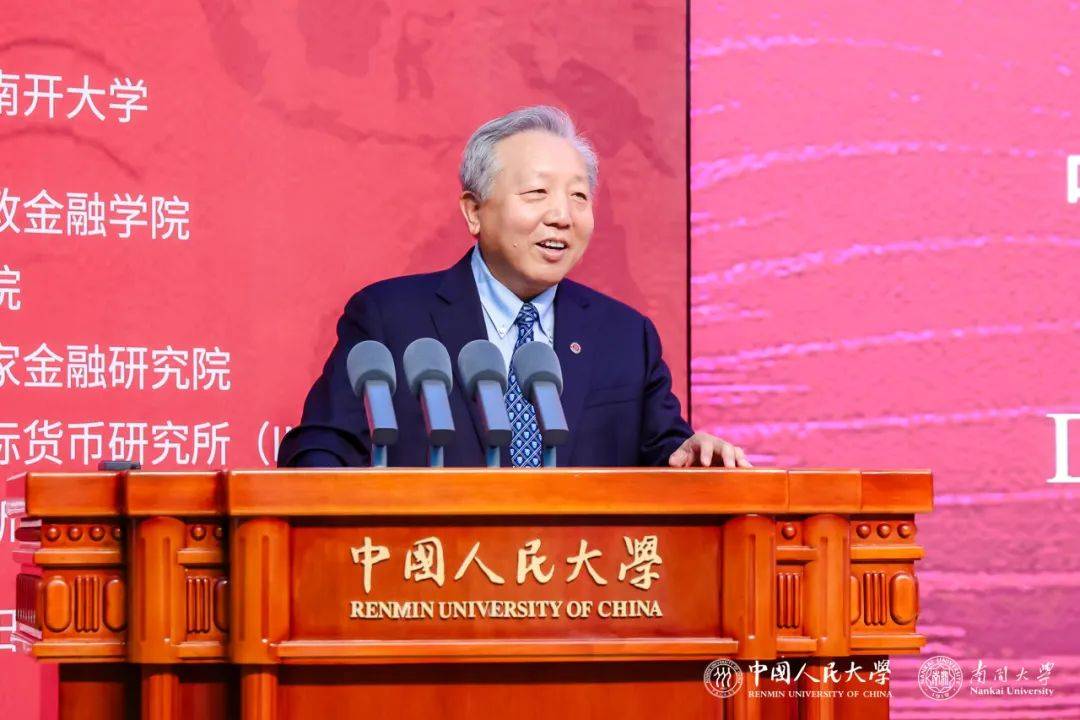
吴晓求:积极探索人民币国际化新路径
Sou Hu Cai Jing· 2025-07-31 03:07
Group 1 - The core argument emphasizes that the internationalization of the Renminbi (RMB) is a crucial indicator of building a strong financial nation, requiring a foundation of marketization, rule of law, and institutional stability [3][4][5] - The RMB internationalization process is closely linked to the improvement of public expectations and market confidence, which are essential for its smooth advancement [3][4] - The RMB has become the third-largest international currency, with an internationalization composite index reaching 5.68%, but the long-term goal is to achieve 20% by 2035 [5][6] Group 2 - The internationalization of the RMB involves multiple dimensions, including investment, financing, payment, clearing, and reserve markets, all of which need simultaneous enhancement [5][6] - The RMB's trading capability is critical for its status as an international currency, with the current weight in the IMF Special Drawing Rights (SDR) at 12.28% being a mid-term target [6][7] - The exploration of a "third path" for RMB liberalization, distinct from traditional models, is necessary to address the unique challenges faced by China [7][8] Group 3 - The RMB must not only "go out" but also be able to "come back," necessitating the establishment of an effective capital market return mechanism to support its internationalization [11][12] - Capital market reforms should focus on asset supply, investment participation, and institutional frameworks to enhance the quality and competitiveness of listed companies [12][14] - The development of the national bond market is essential for providing a stable asset pool to support RMB internationalization, with current bond balances needing significant growth [13][14] Group 4 - Institutional reforms are necessary to ensure a fair and transparent market environment, which includes stringent penalties for fraudulent activities and a shift towards market-oriented regulation [15] - The establishment of a stable and predictable asset pool is vital for the RMB's internationalization, requiring a comprehensive product system and asset market for offshore RMB [9][10] - The transition from a supply-driven to a demand-driven economic model is crucial for aligning economic structure with financial market development goals [10][11]
券商迎来多方业务机遇,券商ETF(159842)连续2日获资金净流入,机构:券商仍有较大发展增量空间
Sou Hu Cai Jing· 2025-07-31 02:47
长城证券指出,近期市场持续活跃,交易定价反应了公募考核新规基准回补效应及去产能等政策效应, 市场量能有所放大,两融波动新高,券商、多元金融板块波动上行。我们判断,8月后国内外大事将继 续迎来密集交织期,宏大叙事或是决定市场可能进一步走强的关键因素,以券商为代表的非银金融有望 波动突破。 平安证券指出,券商2025年中报业绩普遍预增,截至7月27日,已发布业绩预告的25家券商中23家预 增。证券板块近期市场景气度改善,交投活跃度维持高位,从估值到业绩均具备β属性,全面受益。长 期看资本市场新一轮改革周期开启,券商仍有较大发展增量空间。证监会年中工作会议强调巩固市场回 稳向好态势,健全稳市机制,深化改革激发市场活力,推动中长期资金入市,利好行业长期发展。 (本文机构观点来自持牌证券机构,不构成任何投资建议,亦不代表平台观点,请投资人独立判断和决 策。) 资金流向来看,Wind数据显示,证券ETF(159842)昨日获资金净流入8073万元,已连续2日获资金净 流入,累计净流入额近1.3亿元。 券商ETF(159842)跟踪中证全指证券公司指数。该指数选取中证全指样本股中至多50只证券公司行业 股票组成,以反映该行 ...

中证报评论员:不断增强资本市场吸引力包容性
Zhong Guo Zheng Quan Bao· 2025-07-31 00:28
Core Viewpoint - The Central Political Bureau of the Communist Party of China emphasizes enhancing the attractiveness and inclusiveness of the domestic capital market, aiming to consolidate the positive momentum of market stabilization and improvement [1] Group 1: Market Stability and Resilience - The capital market has demonstrated significant resilience against unexpected external shocks this year, with improved mechanisms for stability and asset price stabilization being integrated into monetary policy [1][2] - The role of the Central Huijin Investment Ltd. is highlighted as it acts similarly to a "stabilization fund," strengthening the strategic efforts to stabilize the market [1] Group 2: Long-term Investment and Market Ecology - There is a strong focus on enhancing the investment value of listed companies, which are considered the cornerstone of the capital market, to ensure stability and attractiveness [2] - Regulatory bodies are working to expand the pool of quality listed companies and enhance their ability to return value to investors through various market management techniques [2] Group 3: Long-term Capital and Investment Coordination - Long-term capital is identified as a "stabilizer" for the capital market, with ongoing efforts to promote long-term investment strategies and improve the policy framework [3] - The importance of creating a conducive environment for long-term capital to enter, remain, and thrive in the market is emphasized as a key indicator of high-quality market development [3] Group 4: Support for Technological Innovation - The capital market is positioned as a "incubator" and "accelerator" for technological innovation, necessitating the establishment of a new institutional framework that aligns with the characteristics of innovative enterprises [3] - Regulatory authorities are actively promoting reforms in the Sci-Tech Innovation Board and plan to introduce comprehensive measures for the reform of the Growth Enterprise Market [3] Group 5: Ongoing Reforms and Challenges - Despite the complex internal and external environment, the steady economic fundamentals and proactive macro-control measures provide a clearer underlying logic for enhancing market stability and attractiveness through institutional reforms [4]
中泰证券总经理冯艺东:深化机构投资者战略协同 共绘成长共赢新篇章
Zhong Guo Zheng Quan Bao· 2025-07-31 00:24
Group 1 - The core viewpoint is that institutional investors in China are transitioning from "market participants" to "value leaders" as capital market reforms deepen, enhancing their market position and influence [1] - The private equity sector plays an irreplaceable role in optimizing resource allocation and supporting the high-quality development of the real economy, with nearly 20,000 private fund managers managing over 20 trillion yuan [2] - The company has developed a comprehensive financial service system for institutional clients, providing "concierge-style" services and transforming its service model from decentralized and standardized to integrated and diversified [2] Group 2 - The company has launched the "Zhongtai Quantitative 30" brand to collaborate with top quantitative private fund managers, achieving cumulative sales exceeding 17 billion yuan and serving over 10,000 high-net-worth clients [3] - The event aims to create an efficient platform for resource integration among various financial institutions, facilitating mutual benefits and win-win outcomes [4] - The company offers a unique "8+3" service package for private equity institutions, covering eight core rights and three industry empowerment initiatives, supporting partners' growth comprehensively [4]

深化机构投资者战略协同 共绘成长共赢新篇章
Zhong Guo Zheng Quan Bao· 2025-07-30 21:09
Group 1 - The core viewpoint of the article highlights the transformation of institutional investors in China's capital market from "market participants" to "value leaders" as a result of ongoing market reforms [1] - The private equity sector plays an irreplaceable role in optimizing resource allocation and supporting the high-quality development of the real economy, with nearly 20,000 private fund managers managing over 20 trillion yuan [1] - The company emphasizes the importance of providing "concierge-style" services to institutional clients, enhancing its service capabilities through a diversified financial service system [2] Group 2 - The company has developed the XTP trading platform, which integrates advanced technologies to provide low-latency and efficient trading services, catering to mainstream quantitative private equity [2] - The "Zhongtai Quantitative 30" brand aims to collaborate with top quantitative private equity managers to meet the asset allocation needs of high-net-worth and institutional clients, achieving sales exceeding 17 billion yuan [2] - The event aims to create an efficient platform for resource integration among various financial institutions, fostering collaboration and mutual benefits [3] Group 3 - The event invites experts and industry leaders to discuss trends in technology innovation, macroeconomic conditions, and high-quality capital market development, providing valuable insights for industry institutions [3] - The company offers a unique "8+3" service package for private equity institutions, covering eight core rights and three industry empowerment initiatives to support partner growth [3]